About Us
 Careers
 Leadership
 Board
Board Newsroom
Agencies find clients by layering zero-budget tactics, including personal network outreach and referrals, with structured acquisition systems: cold email, LinkedIn, signal-based prospecting, inbound content, paid ads, and marketplace listings. Agency teams use each channel to target prospects that match a narrow ideal client profile. As the client base grows, agency leaders shift their focus to delivering more per client to protect margins and reduce churn.
Finding clients for a digital marketing agency runs on a repeatable system. Promethean Research puts the average agency at 4.4 months and 3.6 meetings to close a deal, so leaving client acquisition to word of mouth means absorbing that full cycle with no way to shorten or predict it. Learning how to find clients for digital marketing means building a stack: zero-budget tactics first, followed by acquisition systems that compound as the agency grows.
This guide breaks down exactly how agencies get customers, layer by layer.
Attract, convert, and retain more customers with less manual work
TL;DR
- Zero-budget channels first: Warm introductions through your personal network reply at a 27% rate versus cold email (KnowledgeNet), and formal referral programs generate twice the high-quality referrals of informal ones (Influitive). These client acquisition approaches cost nothing but time and relationship capital, making them the smartest place to start your client acquisition efforts before investing in paid channels.
- Acquisition systems that compound: Signal-based cold email and LinkedIn outreach perform better when aimed at a narrow ICP. Inbound content does too. Specialist agencies close new business in 67 days versus 94 days for generalists (The Starr Conspiracy), so narrowing your target accelerates revenue and sharpens positioning.
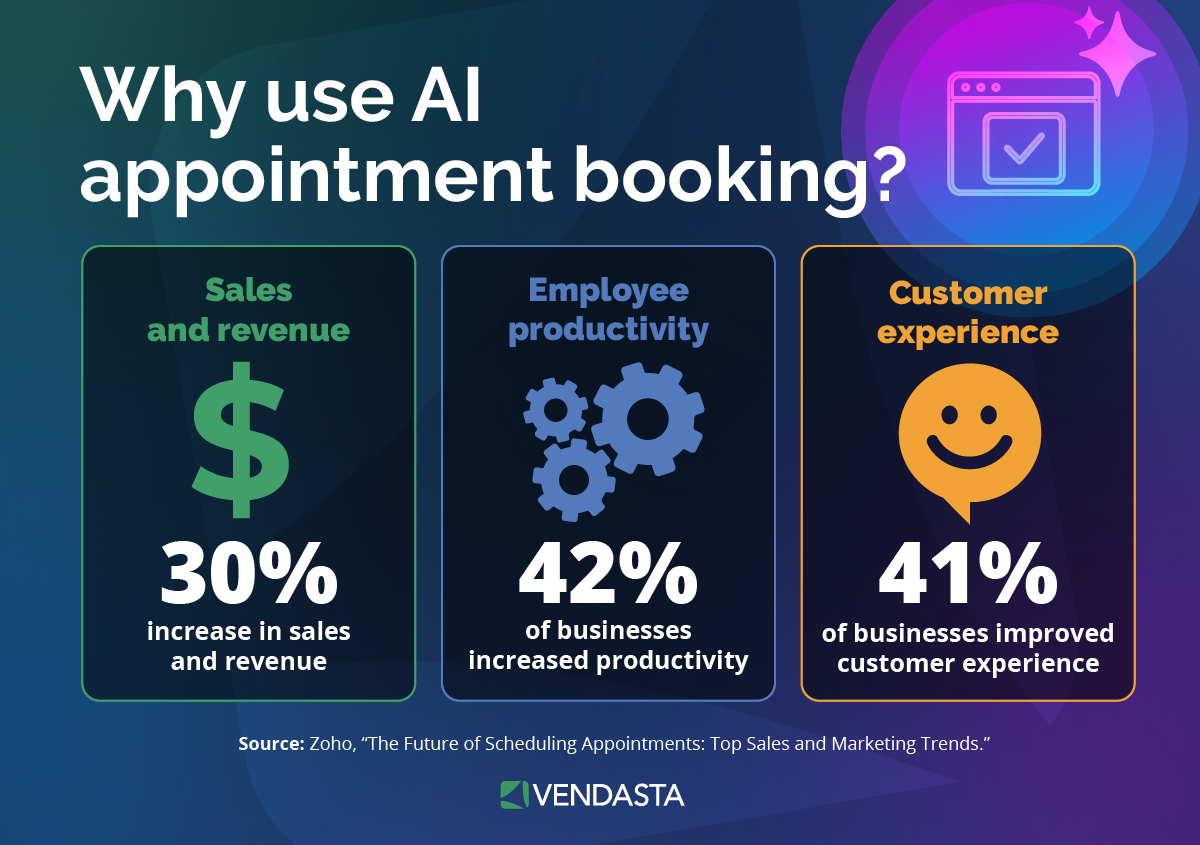
- Protect margins by delivering more per client: Adding products to an account lifts long-term retention significantly. One product retains 30% of clients at two years while four products retain 78% (Vendasta). AI Employees add fulfillment capacity across service lines without requiring a specialist hire for each one.
Start With Your Ideal Client Profile
Agency teams improve every strategy below by aiming it at a narrow target. Agency Edge research from the Agency Management Institute (AMI), which surveyed 400 client-side decision-makers, found 71% of clients give agencies with a niche an advantage during hiring, and Promethean Research found agencies specialized by both service mix and industry grew 93% faster than pure generalists.
In The Starr Conspiracy’s business-to-business (B2B) fintech benchmark, specialist agencies had a 67-day average sales cycle versus 94 days for generalist-generated leads, with median monthly retainers of $18,500 versus $13,700, a 35% premium.
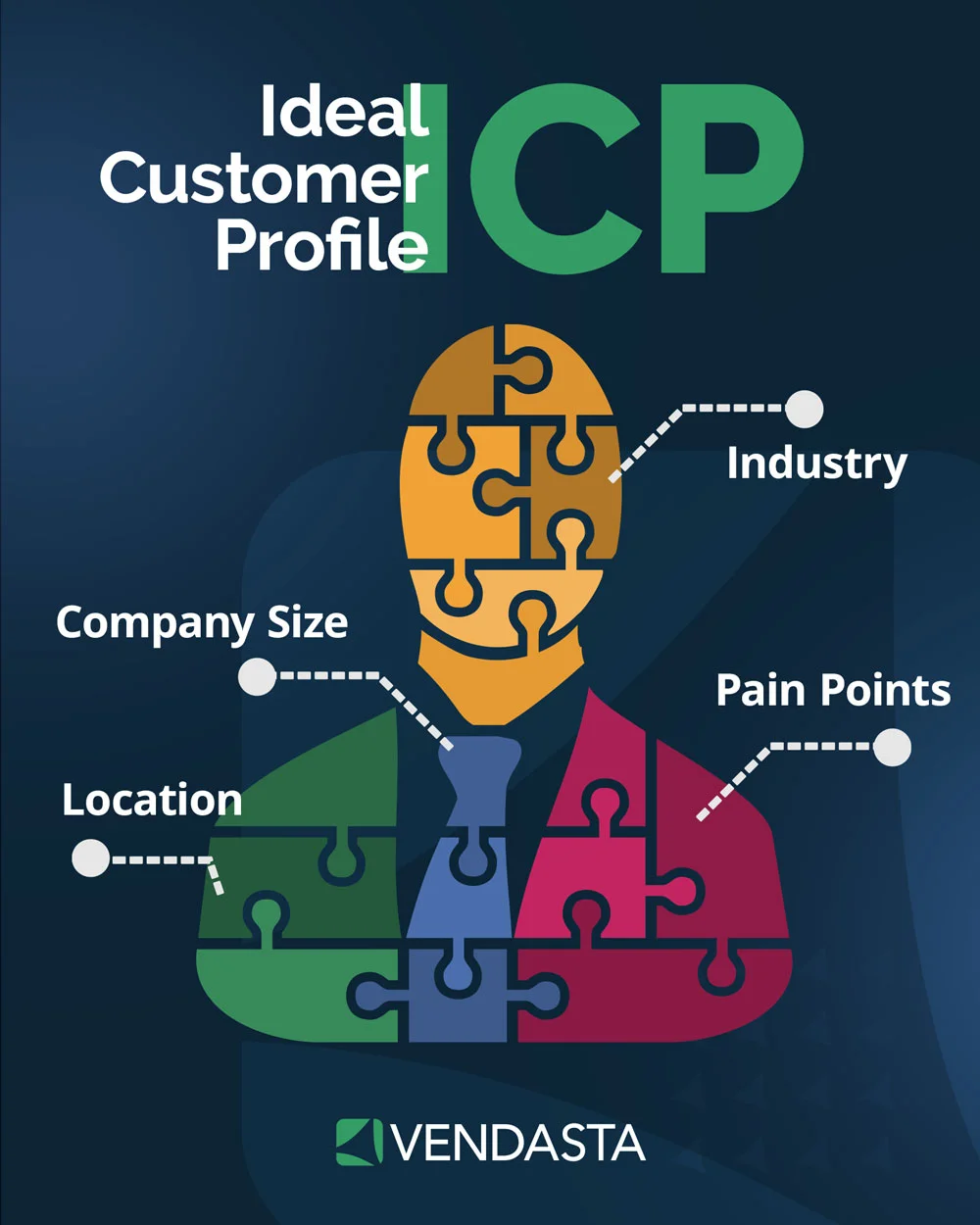
Use your ideal client profile (ICP) to build your ideal buyer persona from your current best clients, using a qualitative and quantitative process that covers:
- Account fit: Record industry, employee count, annual revenue, geography, and technology stack for every account you keep.
- Psychographics: Pain points, buying triggers, risk tolerance, and evaluation criteria.
Activate Your Personal Network First
Referrals were the leading source of new business for 73% of professional-service firms in RSW/US’s 2025 survey, ahead of existing-client expansion (51%) and networking (38%). Prospects also reply to warm introductions at rates cold channels never touch: KnowledgeNet’s analysis of 2.1 million outbound touches found warm intros produce a 27% reply rate, 19 times the rate of cold email alone.
For a new agency, this is the fastest zero-budget path to a first client. Work it systematically:
- List the former colleagues, past clients, classmates, and friends who work at or near businesses matching your ideal client profile.
- Send each a personal message covering who you help and the result you produce, then ask for an introduction. “Who do you know that struggles with this?” is easier to say yes to than “hire me.”
Document the outcomes from your first two or three clients; later strategies depend on that proof.
Build a Cold Email System That Books Calls
Agency teams can still book meetings through cold email, but only when they manage it as a full workflow, treating it as a dedicated outbound marketing channel rather than an ad-hoc tactic. The process starts with pulling and verifying a prospect list to source and validate contacts before a single message goes out. Every email must then lead with a clear value proposition tied to the recipient’s specific situation, or reply rates collapse toward the bottom of the benchmark range.
Instantly’s benchmark report analyzed billions of interactions, which puts the average reply rate at 3.43% and the top quartile at 5.5%. RevenueFlow’s benchmarks report marketing agencies earning 4–10% reply rates, with average agencies booking 5–15 meetings per 1,000 cold emails and top performers booking 30–50.
The 4 Components That Separate Average From Top-Performing Cold Email
The gap between average and top comes down to four components:
- List building: Pull prospects that match your ICP and verify every address before sending. Woodpecker attributes the platform-wide reply decline from 5.1% in 2024 to 3.43% partly to tighter Gmail and Outlook spam enforcement, so sloppy lists burn sending domains before your copy ever gets read.
- Personalization: Gangly’s 2026 cohort study found personalization based on intent signals such as job changes or funding earned an 11.2% reply rate versus 2.1% for generic blasts, a 5.3× lift.
- Sequencing and follow-up: Build three to five follow-up steps into every sequence before you write a single new line of copy. Woodpeckers’ analysts found campaigns with 3–5 follow-up steps hit 8.3% reply rates versus 4.1% with none, and instantly found 42% of all replies come from follow-ups.
- A human voice: Hunter’s 2026 study found 69% of decision-makers say it bothers them if artificial intelligence (AI) wrote the email, unless the output feels human. Let templates draft; have a person edit.
Track every reply and booked call with a customer relationship management system (CRM) built for agencies, such as Vendasta’s CRM AI, and treat cold email as one arm of a broader lead generation engine.
Attract Inbound Leads with Content Assets
Buyers decide before they ever talk to you. Build assets that compound:
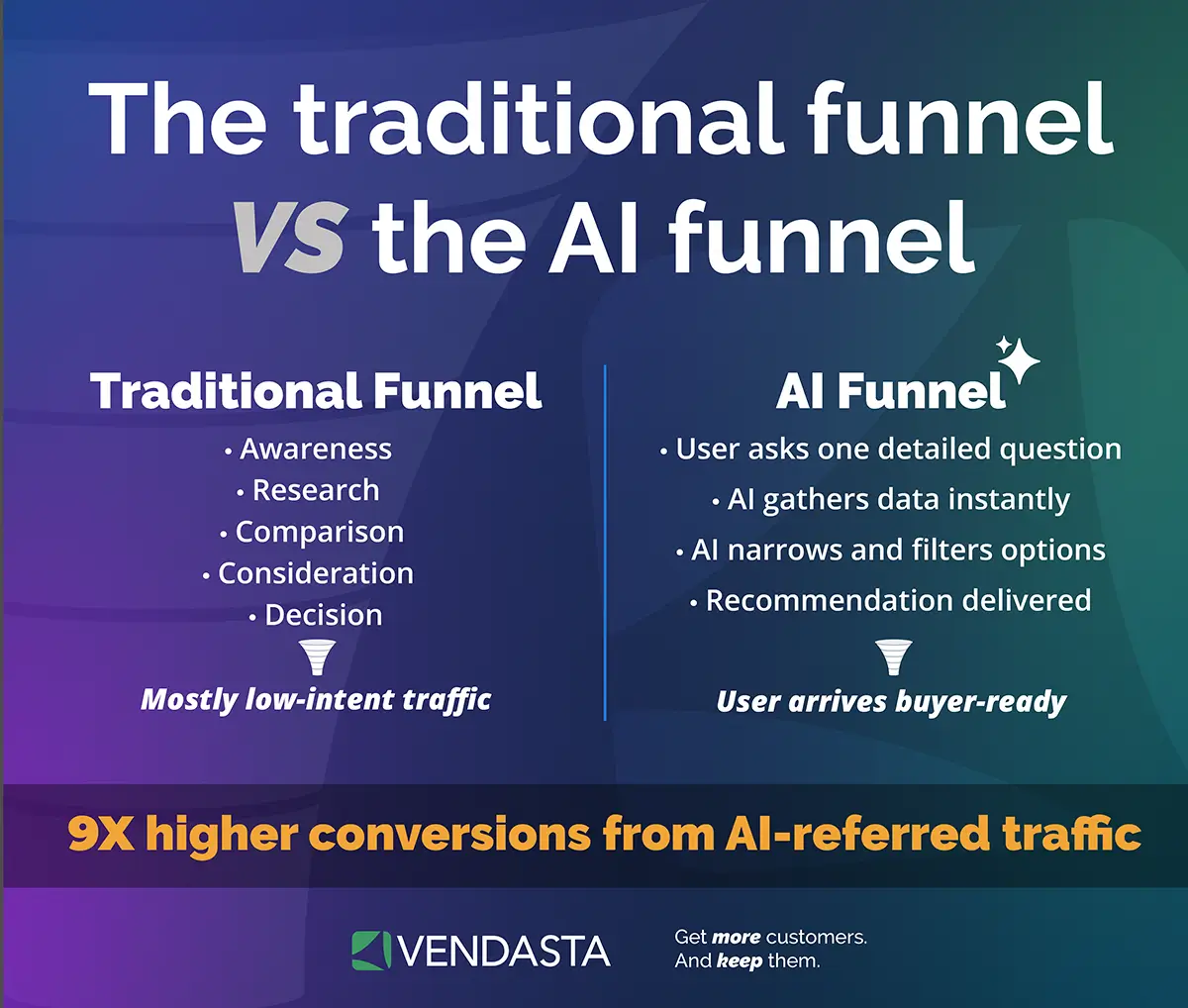
Niche content and personal brand: Publish for the exact problems your ideal clients search for. Forrester’s 2026 survey of 17,000+ business buyers found generative AI search tools are now the most meaningful information source for buyers, with social media second, so your content needs visibility in AI answers as much as in Google results.
Lead magnets: Free audits and SEO reports convert anonymous readers into named leads. Vendasta’s Snapshot Report automates the audit: it scans a prospect’s digital presence across 70+ directories and 30+ review sites and produces a brandable needs assessment in minutes instead of hours.
Inbound is slow to start and hard to stop. Anchor it in a documented digital marketing strategy and a lead generation workflow that captures and routes every hand-raiser.
Use LinkedIn For Prospecting and Organic Content
Agency teams can use LinkedIn on two fronts: LinkedIn Sales Navigator to build and segment a prospecting database for outbound marketing outreach, and LinkedIn’s organic feed as a distribution channel for thought leadership. eMarketer reported LinkedIn delivered 121% return on ad spend (ROAS) in 2025, the only platform with positive ROAS, and Content Marketing Institute’s research found 76% of B2B marketers rate it the most effective thought-leadership channel.
On the outbound marketing side, Sales Navigator’s advanced filters let agency teams define precise audience segments by role and industry before they send a single message. This turns a broad contact list into a targeted pipeline. On the distribution side, organic posting on the same platform means the audience agencies are prospecting is also seeing their content, reinforcing credibility on both fronts.
On the outreach side, analyses from Expandi and Belkins support short, deliberate cadences:
- Send in the morning: Expandi’s analysis of 13.2 million connection requests found a 28.5% platform-wide acceptance rate, and sends between 7 and 11 a.m. reached roughly 32%.
- Keep the sequence short: Belkins found notes slightly lowered acceptance (25.3% versus 27.6% without) but lifted post-acceptance replies roughly 70% higher: 9.36% versus 5.44%. Expandi’s analysts found that three-message campaigns peaked at a 9.8% reply rate while five or more messages dropped to 5.0%, and messages of 151–200 characters replied best at 8.5%.
On the organic side, post from your personal profile first:
- Metricool measured average engagement of 2.60% for personal profiles versus 1.74% for company pages, so publish from the founder profile first and then reshare to the company page.
- Socialinsider measured native document posts at 7.00% engagement against a 5.20% overall average. Publishing niche-specific insight builds connections with potential clients before you ever send a message, so the outreach lands warm.
Turn Referrals Into a Repeatable System
Most agencies wait for referrals instead of engineering them, and Influitive quantified the gap. Influitive’s research found that 45% of organizations with formal referral programs reported increased referral-to-close conversion, compared with 21% without, and that formal programs generated twice as many high-quality referrals.
Referred clients are also worth more. A Wharton study of 9,495 bank customers found referred customers delivered 25% higher contribution margins and were 18% less likely to churn.
Build the system with four moves:
- Time the ask. Request referrals right after a reported win or a strong quarterly review, when the value you delivered is freshest.
- Give people the words. Send a two-line template naming exactly who you help, because a specific ask travels further than “know anyone who needs marketing?”
- Size the incentive carefully. Amplifinity found rewards of $41–$100 converted best at 13%.
- Close the loop. Wharton’s Gershon and Jiang found that reminding referred customers they joined through a referral raised their own referral likelihood by 21%.
The program only works on top of strong delivery. Hinge’s research found Visible Expertise was the largest single referral driver at 37.3% of all factors, and 81.5% of professional-services firms received referrals from people they had never worked with, almost entirely on reputation.
This makes client relationship nurturing and retention marketing the upstream inputs of your referral engine.
Turn Networking Into a Client Pipeline
Networking, both online and in-person, is one of the most reliable ways for a digital marketing agency to build a steady flow of new business before paid acquisition or SEO gains traction.
Online networking compounds over time. Engaging consistently in professional online communities and virtual events puts your name in front of decision-makers who are already discussing the problems you solve. Publishing original insights through LinkedIn posts and comment threads builds a personal brand that draws inbound conversations without a single cold pitch.
In-person networking creates the kind of trust that digital channels struggle to replicate. Local and industry events give you face-to-face access to prospects and referral partners in a single afternoon. Showing up regularly at the same events signals stability and commitment, two qualities buyers weigh heavily when hiring an agency.
According to the RSW/US Professional Services Survey Report, networking was the third-leading source of new business for professional-service firms at 38%, behind referrals at 73% and existing-client business at 51%. Treat networking as the pipeline that feeds your referral engine. Relationships built in rooms and online communities become tomorrow’s word-of-mouth introductions.
Agencies that invest in networking consistently find that it shortens the cold-outreach cycle: a prospect who already knows your name from a conference panel or a LinkedIn thread requires far less convincing than one receiving a first-touch email, which means your outreach and referral systems described in this guide work harder when networking activity runs alongside them.
Run Your Own Ads to Generate Leads and Prove Competence
Paid ads do double duty for an agency: they generate leads, and your own account becomes the proof you show prospects. An agency that can’t make its own cost per lead work has a credibility problem in the sales call.
Budget against real benchmarks. WordStream’s 2026 benchmarks, covering 13,474 campaigns, put the business services vertical at a $93.69 average cost per lead (CPL) and a 4.85% conversion rate. Average cost per click (CPC) was $5.87. At that cost per lead, a 20-lead month runs into four figures before you count your own management time.
On Meta, WordStream’s Facebook data reports all-industry lead campaigns averaging a $27.66 CPL at a 7.72% conversion rate. Use those figures to set expectations for pay-per-click (PPC) advertising, including your own PPC campaigns, and to establish a baseline to beat when pitching ad management to clients.
Your team can scale the same tactic into a service line. When client campaign volume outgrows your bandwidth, Vendasta’s white-label fulfillment teams run the work under your brand as an extended department, and the Vendasta Marketplace carries 250+ resellable products at wholesale pricing, up to 65% below retail.
Time Outreach With Signal-Based Prospecting
When you reach out, it matters as much as what you send. Bloomberry’s analysis of 1 million B2B software purchases ranked buying signals by the purchase lift they predict:
| Signal | Purchase lift |
|---|---|
| Recent enterprise AI tool adoption | +46% |
| 20%+ headcount growth | +38% |
| Vice president (VP)-level hire | +28% |
| Recent funding round | +25% |
| Generic increase in job openings | +7% |
Bloomberry’s analysts compared a VP-level hire (+28%) with generic job-posting volume (+7%) and concluded that specificity matters more than volume.
Run each signal through a multi-channel cadence. KnowledgeNet’s analysts found in the dataset cited earlier that cold email alone earned a 1.4% reply rate, adding a LinkedIn connect lifted it to 3.2%, and adding a LinkedIn message plus voice note reached 4.8%. Collect signals by monitoring company events through Crunchbase and LinkedIn Talent Insights, using the former for funding and the latter for hiring, while tracking people moves through tools like UserGems and aggregating everything in an orchestration layer like Clay.
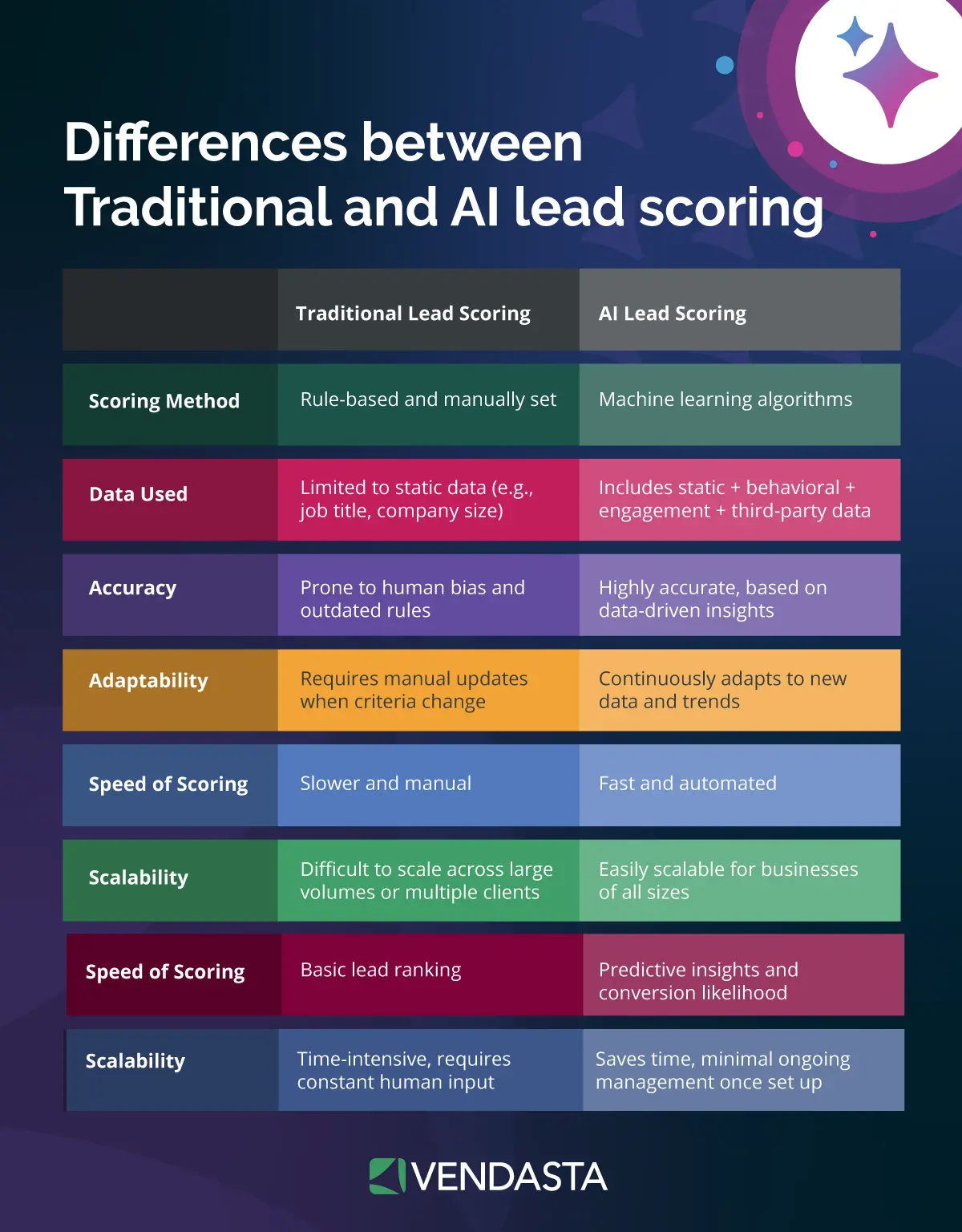
Prioritize these accounts with AI lead scoring to decide which triggered accounts get a call first.
Win Early Clients on Freelance Marketplaces and Directories
On a marketplace, new digital agencies or startups can access buyers actively seeking services, and platform reviews can substitute for the credentials they don’t have yet. The trade is fees and rules worth understanding before you build on rented land.
Upwork: Freelancer service fees became variable at 0–15% for new contracts on May 1, 2025; Upwork did not apply the change to agency accounts. Write the profile headline and portfolio around niche outcomes, and win work with proposals that reference the client’s actual business and open with a relevant result.
Fiverr and Clutch serve different roles:
- Fiverr: Sellers pay a flat 20% commission. Treat productized gigs as profile work: package and title each gig by the niche outcome buyers search for, which fits the platform’s packaged-service format and lets you test positioning cheaply.
- Clutch: Reviews are the heaviest ranking input. Clutch states reviews are 50% of your Ability to Deliver score and recommends collecting them at least quarterly. It also suggests maintaining 8+ portfolio items.
Know the exit rules before you plan to graduate clients off-platform. Upwork’s non-circumvention policy requires all payments to run through the platform for 24 months unless you pay a Conversion Fee of $1,000–$50,000, which drops to $1 once the relationship has lasted two years. Fiverr prohibits off-platform payments at all times with no compliant exit mechanism, so either plan for permanent platform economics there or focus marketplace efforts where a legal exit exists.
Build Credibility With Client Proof
6sense’s buyer research found 81% of buyers had picked a winner before talking to a sales rep, which means buyers read your proof before you ever speak to them. Content Marketing Institute’s benchmarks show 75% of B2B organizations publish customer stories, with 53% rating them among their most effective formats.
Structure each one as a client-led story that connects your work to business outcomes, with the client as protagonist and your agency as the enabling partner. Quantify everything, because buyers want to know the expected result and timing. G2’s research found 57% of buyers expect positive return on investment (ROI) within three months of purchase, which is why G2 recommends publishing 90-day time-to-value case studies.
New agencies without a client roster can build proof:
- Do pro-bono or discounted work for one or two businesses matching your ICP in exchange for a documented, quantified result and a testimonial.
- Protect client confidentiality. When clients won’t go on record, describe the client one level up (“a B2B software business in the finance space”) and convert sensitive dollar figures to percentages or ranges, which survive client review when raw numbers don’t. Get written approval on the exact draft before publishing, and only publish numbers the client confirmed.
Place the proof on your website and in your outreach sequences. Add it to your directory profiles, where recent verified reviews carry the most ranking weight. Consistent client reporting generates the metrics. Your team can turn the strongest results into full case studies.
Deliver More Per Client Without Hiring
Every strategy above helps your team fill the pipeline; your delivery model determines whether the revenue is worth having. Promethean Research’s 2026 survey of 119 agency leaders found average agency net margins slipped to 13% in 2025 from 14% in 2024, and agencies expanding their service offerings averaged 10% net margins versus 30% for those that narrowed. Expansion has traditionally meant a new specialist hire or subcontractor for every service line, so headcount grows in lockstep with revenue. Human-staffed service lines outside your niche cause the margin damage. Delivering more services to the same narrow client base creates a different model.
Vendasta observed higher retention among multi-product clients. In Vendasta’s client churn study of 200,000 client accounts, two-year retention climbs from 30% with one product to roughly 50% with two, and to 80% with four.
AI employees can add fulfillment capacity without requiring a specialist hire for every service. You deploy Vendasta’s AI Workforce across every client account, and each AI Employee operates in that specific client’s brand context.
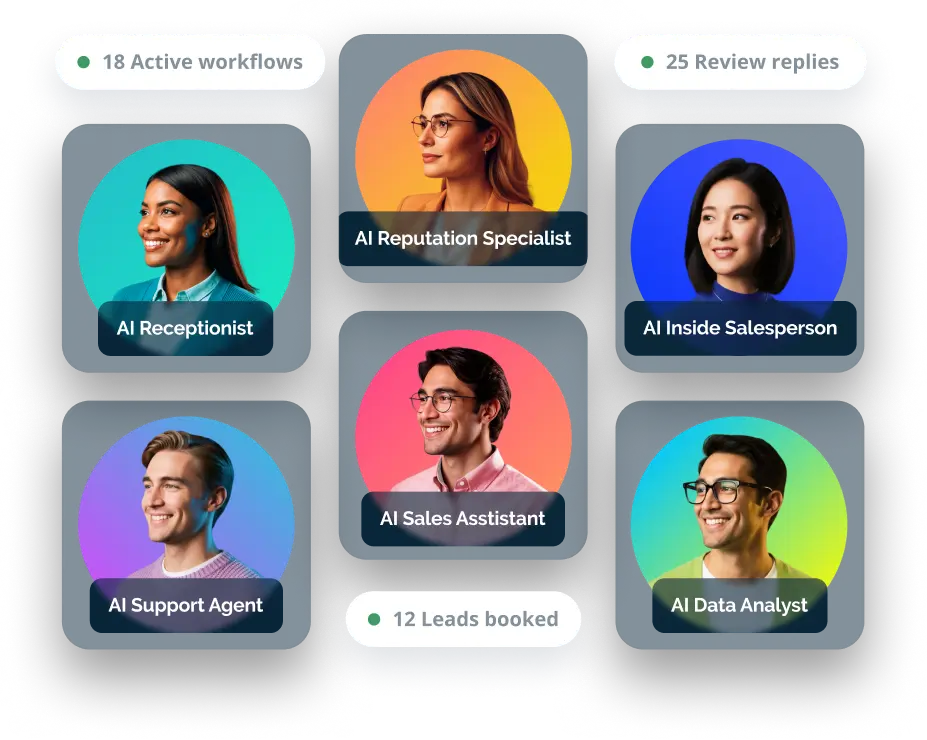
What Each AI Employee Covers
Here’s what each AI employee covers:
- AI Receptionist: Handles voice calls 24/7 as the always-on version of AI phone answering services. It also manages written conversations across chat or text and handles AI appointment booking against real calendars. In a verified deployment, Elite Web Professionals’ AI Receptionist handled 1,017 calls and captured 778 qualified leads, a 76% conversion rate, within four months.
- AI Social Media Manager: Learns the brand’s voice and visuals, then generates, schedules, and publishes platform-adapted posts across Google Business Profile, Facebook, Instagram, LinkedIn, X, TikTok, and YouTube, pairing each post with stock or AI-generated images.
- AI Blogger: Researches what customers are searching for, writes one SEO-optimized FAQ-style article per week, and publishes it to WordPress. It then hands this content off to the AI Social Media Manager to turn into a week of social content.
- AI Reputation Specialist: Responds to reviews and sends review requests to strengthen online visibility. This keeps AI customer engagement running between human touchpoints.
- AI Sales Assistant: Keeps client records up to date by automatically updating contact and company details after every call or activity. Also get quick answers via chat instead of digging through the CRM.
- AI Support Agent: Resolves routine questions from your knowledge base around the clock.
- AI Data Analyst: Pulls together CRM activity, review trends, and social performance into one place, flagging what needs attention and generating reports automatically.
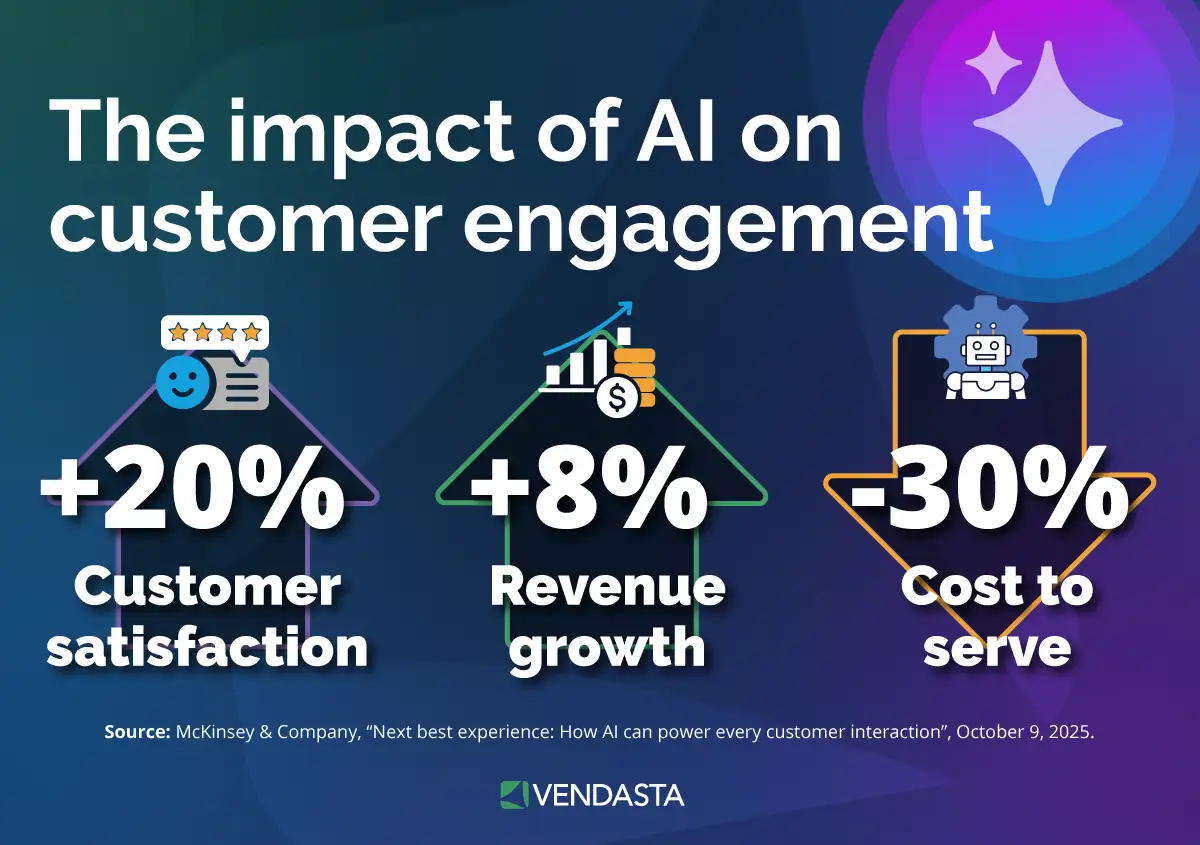
Bundling every service this way helps your team deepen the client relationship and improve the AI customer experience your agency delivers under your brand, without vetting white-label agencies or negotiating another vendor contract.
In an AI Workforce case study, one Vendasta partner doubled its revenue after deploying an AI Workforce across its client base. That is the margin mechanism: AI agents and fulfillment add recurring revenue capacity without requiring headcount to grow in lockstep.
How to Find Clients for Digital Marketing: The Bottom Line
Finding clients for digital marketing requires a layered system built in sequence. Zero-budget channels generate early traction. Acquisition mechanisms then compound over time while the delivery model protects margin as the client base grows. Each layer depends on the one beneath it, which means the order of operations matters as much as the tactics themselves.
If you want to see how this margin engine works in practice, Vendasta offers a 14-day free trial (no credit card required), or request a demo here for a personalized walkthrough.
Finding Clients for Digital Marketing FAQs
Quick answers to the questions agency owners ask most about winning new business.
1. How do I define an ideal client profile for a digital marketing agency?
Start from your current best clients: identify shared industry, company size, revenue, and geography, then interview them about pain points and buying triggers, including how they evaluated you. Pair that qualitative input with data on which accounts renew and expand. Revisit the profile regularly; Hinge’s 2026 research found high-growth firms are twice as likely to research their target audience.
2. What’s the fastest way to get clients with little or no budget?
Your personal network. Warm introductions reply at far higher rates than any cold channel, and messaging former colleagues and past clients costs nothing but time. Freelance marketplaces can provide access to buyers actively seeking services, but no reliable benchmark compares their time to first client with direct outreach. Platform fees and off-platform rules also apply.
3. How do I write cold emails that get replies?
Anchor each email to a specific signal such as funding or an executive hire. Keep the message short and mobile-friendly, then follow up three to five times because a large share of replies arrive after the first touch. Human review matters because most decision-makers say AI-written outreach bothers them unless it reads as human-written.
4. How do I generate leads on LinkedIn?
Pair direct outreach with organic posting. Send connection requests in the morning with a short note referencing a shared tie, followed by no more than three messages under about 200 characters. Post from your personal profile using document-style posts, which earn the highest engagement of any format.
5. How do I build a referral system instead of waiting for referrals?
Ask at a moment of delivered value, give clients a specific description of who you help, offer a modest reward (most programs reward only the referrer), and log every referral in your CRM. Formal programs produce roughly double the high-quality referral volume of passive word of mouth.
6. Should my agency focus on inbound or outbound?
Run both on different clocks. Outbound channels, including signal-based cold email and LinkedIn prospecting, produce meetings in weeks and keep the pipeline predictable, while inbound compounds over quarters and wins the buyers who shortlist vendors before taking a call. Most owners working out how to find clients for digital marketing start outbound-heavy and shift the mix as inbound matures.
7. Is Upwork worth it compared to direct outreach?
Upwork can be useful for a new agency, but the available research does not show that it produces a first client faster than direct outreach. Established agencies typically earn more going direct, since Upwork charges a variable service fee and locks payments to the platform for two years unless you pay to convert the relationship.
8. How do I build social proof when my agency is brand new?
Take one or two discounted or pro-bono projects for businesses in your target niche in exchange for documented, quantified results and a testimonial. Publish each outcome as a client-led results story and collect verified reviews on directories like Clutch. Once you have the proof, add the numbers to your outreach from day one.
9. How long does it take a digital marketing agency to get a client?
According to Promethean Research (2026, n=91), the average agency takes 4.4 months and 3.6 meetings to close a deal. Warm-network outreach and referrals shorten that timeline considerably, while inbound channels like SEO and content compound over quarters and gradually reduce the average close time.
10. How do agencies get clients using paid ads?
Running your own paid campaigns generates leads and doubles as proof on the sales call. WordStream by LocaliQ benchmarks business services at a $93.69 average cost per lead and a 4.85% conversion rate. An agency that makes its own numbers work has immediate, credible evidence when pitching ad management to prospective clients.
This article was originally published in February 2024 and was updated in September 2026 to include the latest information and insights.