
If you’re still deciding which AI marketing trends should guide your strategy this year, you’re not alone. Marketers everywhere are racing to keep up with the pace of AI innovation, and the rewards for doing so are growing fast.
Recent data shows that most marketing teams have already integrated AI into at least part of their workflow. The real opportunity now lies in bridging the gap between adoption and execution.
The businesses that thrive in 2025 will be the ones that use AI to personalize every customer interaction, automate routine work, and make smarter, faster decisions powered by data.
This guide explores the ten most influential AI marketing trends shaping how businesses attract, engage, and retain customers in 2025.
Empower your team with AI that adapts to every client’s needs
TL;DR
- AI marketing trends are redefining how businesses operate, with 70% of marketers already leveraging AI.
- Key trends include predictive analytics, AI personalization, and smarter automation across the customer journey.
- Vendasta’s AI-powered marketing tools help scale outreach, improve conversions, and reduce manual work across every stage of growth.
1. AI-Powered Personalization at Scale
These days, customers are no longer satisfied with subpar marketing communications that feel generic and lack a unique brand identity and voice.
Customers want to be appreciated as individuals, such as by being greeted by their first names in email newsletters or receiving product recommendations aligned with their purchase history.
Personalized marketing techniques offer indisputable advantages:
- People are more likely to click on emails when they see their first name in the preview.
- When customers feel valued, they are more likely to become loyal advocates.
So far, AI algorithms excel in personalizing the following marketing strategies:
- Email and SMS marketing
- Upselling and cross-selling through product recommendations
- Customizing websites to better align with current users
There are many AI marketing tools available to achieve the level of marketing personalization customers need. Here’s an example:
Vendasta’s AI Workforce makes personalization effortless through customer journey automation. It analyzes behavior, generates tailored messaging, and delivers it automatically across channels so you can scale one-to-one marketing without losing authenticity.
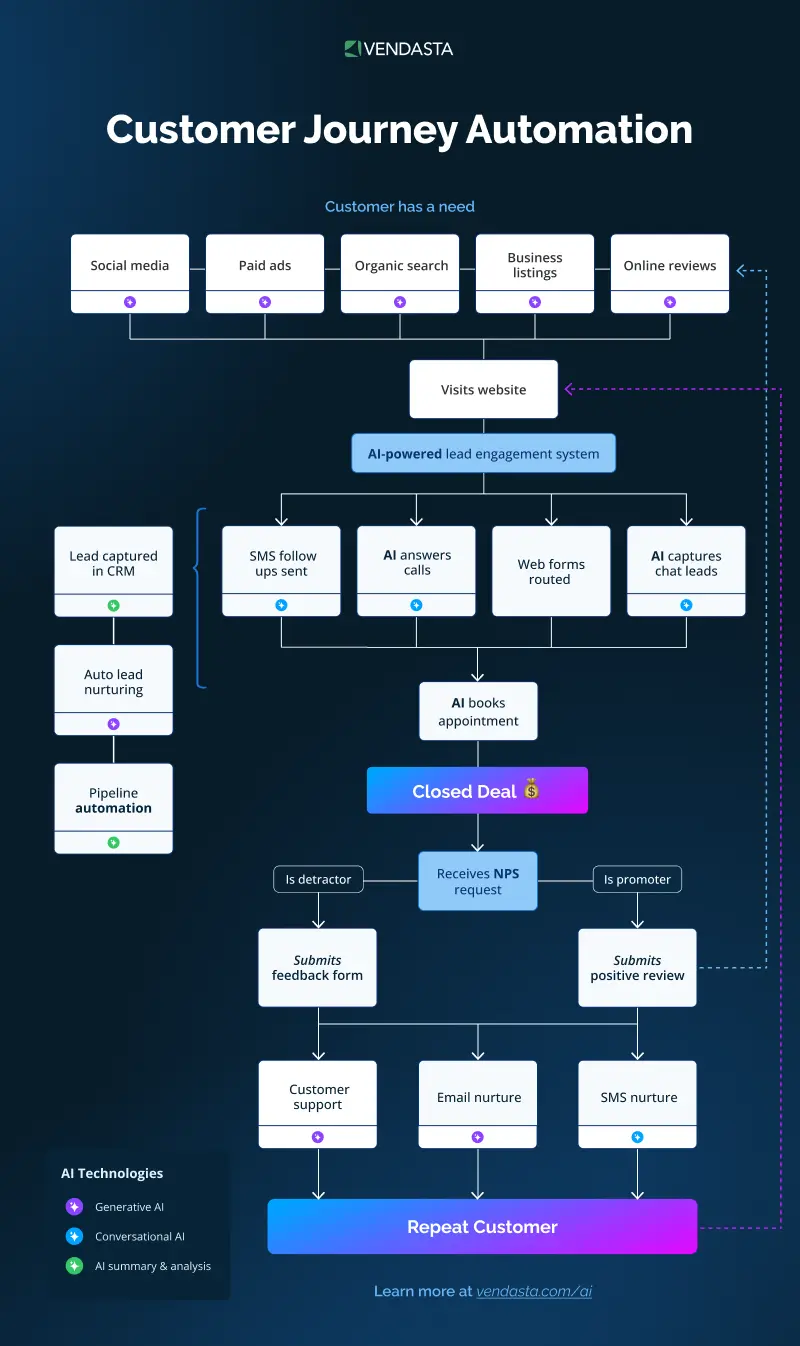
Pro Tip: Start with one channel where personalization creates the biggest lift, such as email or SMS. Build a simple workflow that tailors messages based on behavior like pages viewed or services browsed. Once you see results, expand personalization to your website with dynamic recommendations or tailored CTAs. This approach helps you scale one-to-one experiences without adding extra work.
2. AI-Driven Voice Search Optimization
Another marketing trend that businesses should consider is the increase in voice searches. Huddle Creative noted the following trends:
- With 4.2 billion voice assistants currently in use, Demand Sage estimated that the number will reach 8.4 billion by the end of the year.
- On average, 93.7% of search queries are answered by voice search assistants.
These trends are important because they underscore the need to adapt your marketing services to facilitate voice searches.
First, what makes voice searches unique?
- Length: Voice searches tend to be longer and more conversational, reflecting natural speech patterns. Instead of short phrases, users often ask full questions or provide detailed instructions.
- Use of Personal Pronouns: Voice queries frequently include personal pronouns like “I,” “me,” or “my,” as they often relate to specific, immediate needs (e.g., “Where can I find coffee near me?”).
- Focus on Local Information: Many voice searches prioritize local results, as users often seek immediate, location-based answers (e.g., “What’s the best pizza place nearby?”).
Now, here’s how to optimize for voice search using AI:
- Target conversational keywords: Use AI-powered SEO tools like Local SEO to identify long-tail, question-based phrases your customers actually speak (e.g., “best plumber near me” instead of “plumber services”).
- Create FAQ-style content: Structure blog posts and landing pages around common voice queries so search engines can surface them in voice results.
- Prioritize local SEO: Keep your business information consistent across directories and listings. AI tools can help detect inaccuracies that might prevent your business from showing up in “near me” searches.
- Leverage schema markup: Add structured data to your site to help AI Employees understand your business details, services, and reviews more easily.
Pro Tip: To improve voice search performance, create content that answers natural, conversational questions your customers ask. Add clear, direct responses at the top of your pages and include geographic cues for local audiences. Review analytics to find question-style queries and optimize those first. AI tools can monitor listings for accuracy so you appear more often in “near me” searches.
3. Generative AI for Content Creation and Curation
AI in content marketing is becoming increasingly ubiquitous. Generative AI tools like ChatGPT, Jasper, and others have revolutionized content creation.
Here are just a few trends:
- AI speeds up blog writing by generating topic ideas, outlining, and writing paragraphs.
- Generative AI can craft social media captions, tweets, and posts.
- Generative AI can also write scripts for promotional, explainer, or YouTube tutorials.
It’s important to strike the right balance when using AI for content creation. While these tools can significantly increase efficiency, marketers should establish clear practices to ensure quality and authenticity remain intact.
Here are a few best practices to follow:
- Create AI prompts that clearly define brand tone, audience intent, and campaign goals so the output aligns with your overall marketing strategy.
- Use AI as a creative partner, not a replacement. Combine its efficiency with human creativity to add insight, originality, and emotional depth to your content.
- Review AI-generated content carefully before publishing to catch any missed nuances or inconsistent phrasing.
- Verify facts and data points from AI-generated material to maintain credibility and accuracy.
What are some AI-powered content creation tools? You can use Vendasta’s AI customer acquisition and engagement platform to offer social media management services more effectively.
For example, you can provide Vendasta’s AI with key details about your clients, and it will generate social media posts that reflect each brand’s unique voice and style.
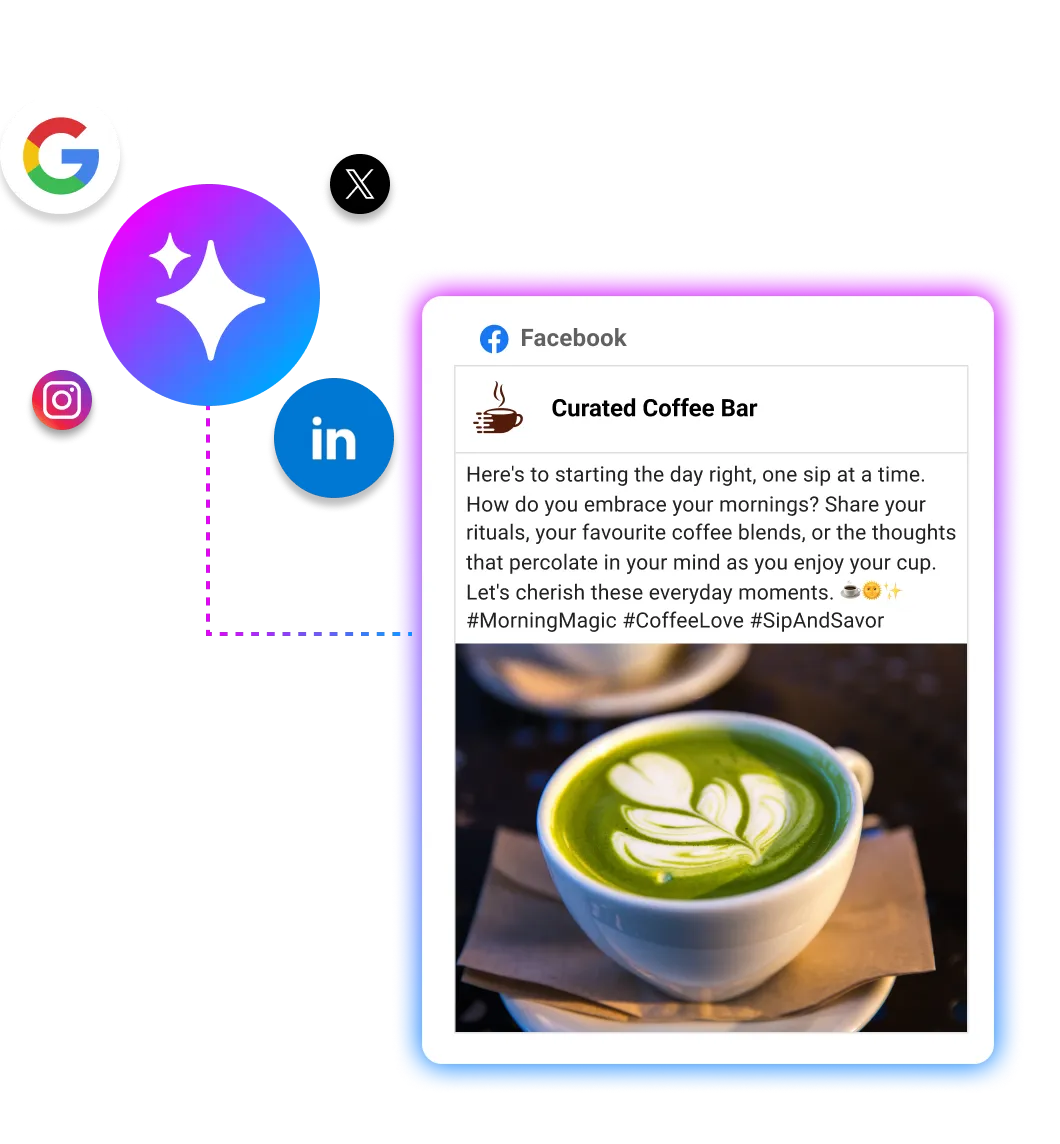
Pro Tip: Let AI handle structure, drafts, and repurposing while you add insight and brand personality. Provide clear prompts that outline tone, audience, and desired outcomes. Use the initial draft as a starting point, then enrich it with real examples or data. Repurpose the finished piece into shorter formats such as social posts, emails, and scripts so you get more output without increasing production time.
4. AI for Predictive Customer Behavior Analysis
AI can analyze factors such as seasonal demand, purchase history, and market trends to predict future sales performance. Based on these insights, your team can identify the best times to run promo campaigns for your clients or pinpoint periods of downtime to focus on developing and fine-tuning marketing strategies.
Retaining customers is often more cost-effective than acquiring new ones. Predictive analytics helps businesses identify customers who are at risk of leaving by analyzing behaviors such as reduced engagement, prolonged inactivity, or reduced spending. These insights can help you take preemptive actions, such as offering personalized incentives or running outreach campaigns.
Predictive models can also determine the best times to send emails to ensure high open and click-through rates.
How to turn predictive insights into action:
AI-driven predictive analytics empowers businesses to shift from reactive to proactive marketing. Here’s how you can turn data into measurable growth.
- Automate campaign timing: Use AI to detect the ideal moment for promotions, upsells, or re-engagement campaigns based on customer intent and purchase likelihood.
- Personalize retention efforts: Trigger automatic outreach like discount offers, check-in emails, or loyalty rewards when a customer shows signs of disengagement.
- Enhance lead scoring: Prioritize prospects with the highest conversion probability so your sales team can focus on the most valuable opportunities.
- Optimize cross-channel strategy: AI can forecast which channels (email, SMS, social, etc.) are most likely to drive conversions for each audience segment.
Tools like Vendasta’s Executive Report give SMBs and partners predictive visibility into performance trends, revealing which campaigns are driving engagement, which clients are at churn risk, and where to focus next for maximum ROI.
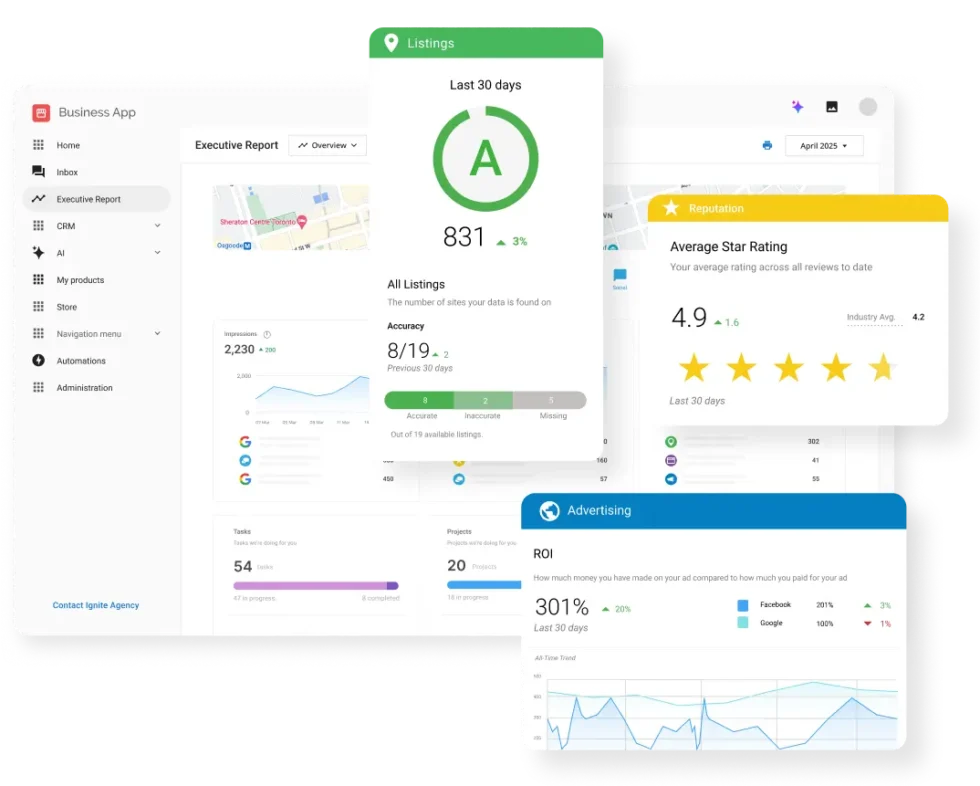
Pro Tip: Define clear triggers for outreach. For example, send a win-back message after a period of inactivity or route a high-intent lead to sales based on scoring signals. Build automated retention or upsell sequences that activate when behavior changes. This ensures you respond to customers at the right moment and increase conversions without relying on manual monitoring.
5. AI in Programmatic Advertising
Your team no longer needs to manually set bids for Google and Bing ads and assess the marketing campaigns’ performance. AI in digital marketing makes it far more cost-efficient than traditional advertising with banners and other printed materials.
So, what’s real-time bidding, and what are the benefits of using it when running marketing campaigns for your clients?
Real-time bidding is a process that allows marketers to buy and sell ad impressions in real-time, within milliseconds.
Here’s how it works:
- When a user visits your client’s website or app, it triggers an ad impression opportunity.
- Publishers send information about the user and the ad space to an ad exchange, where advertisers bid for that impression.
- The advertiser with the highest bid wins the auction, and the ad is displayed to the user instantly.
- Advertisers only pay if they win the bid and their ad is shown.
The benefits of real-time bidding for your SMB clients are indisputable:
- Cost Efficiency: Instead of wasting budget on broad, non-targeted campaigns, you can reach prospects who are most likely to become your clients’ customers.
- Real-Time Flexibility: Unlike traditional advertising, real-time bidding allows you to adjust campaigns in real-time based on performance metrics.
AI-powered tools, such as Vendasta MatchCraft, facilitate an efficient campaign creation process for multiple SMBs under one roof, as well as intelligent ad spend allocation and automated conversion optimization.
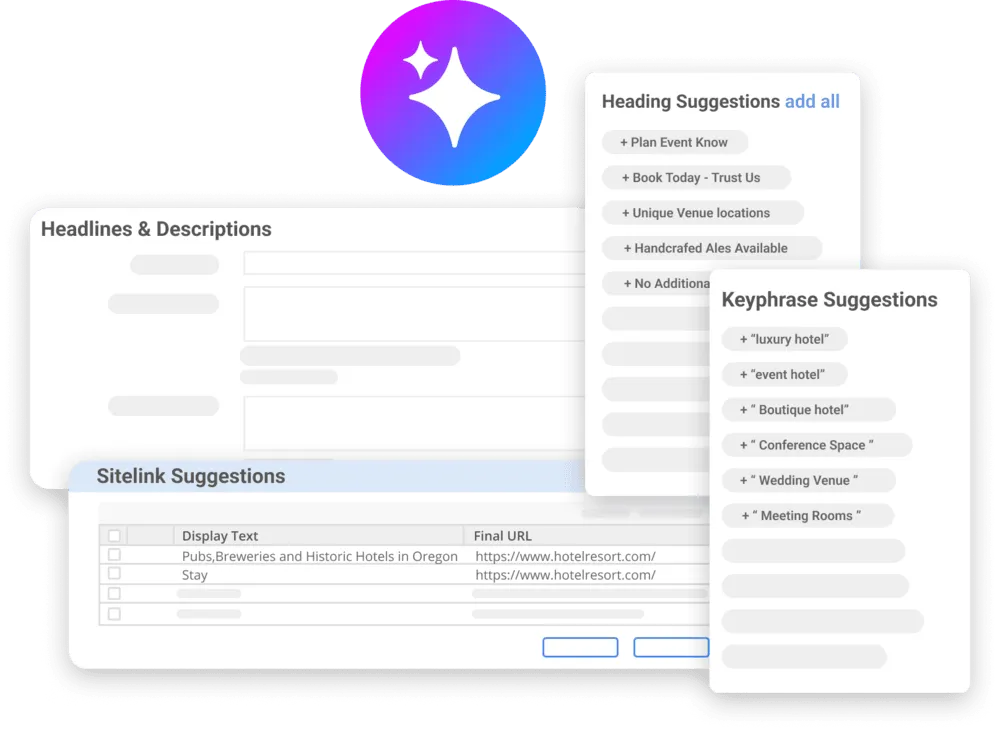
Pro Tip: Upload multiple versions of your creative and allow AI to test and select the strongest performers. Pair automated bidding with high-quality audience data, such as recent site visitors or engaged shoppers. Review performance regularly and adjust your goals based on what AI identifies as the most efficient paths to conversion. This method keeps ad spend focused on what produces results.
6. AI-Driven Chatbots and Virtual Assistants
You’ve probably noticed that most business websites today feature AI-powered chat tools that are ready to answer questions, collect contact information, or connect visitors to a sales representative. This shift toward conversational AI isn’t slowing down—it’s quickly becoming a customer expectation.
As consumers demand faster, more personalized interactions across every channel, businesses that adopt AI-driven communication gain a distinct competitive edge.
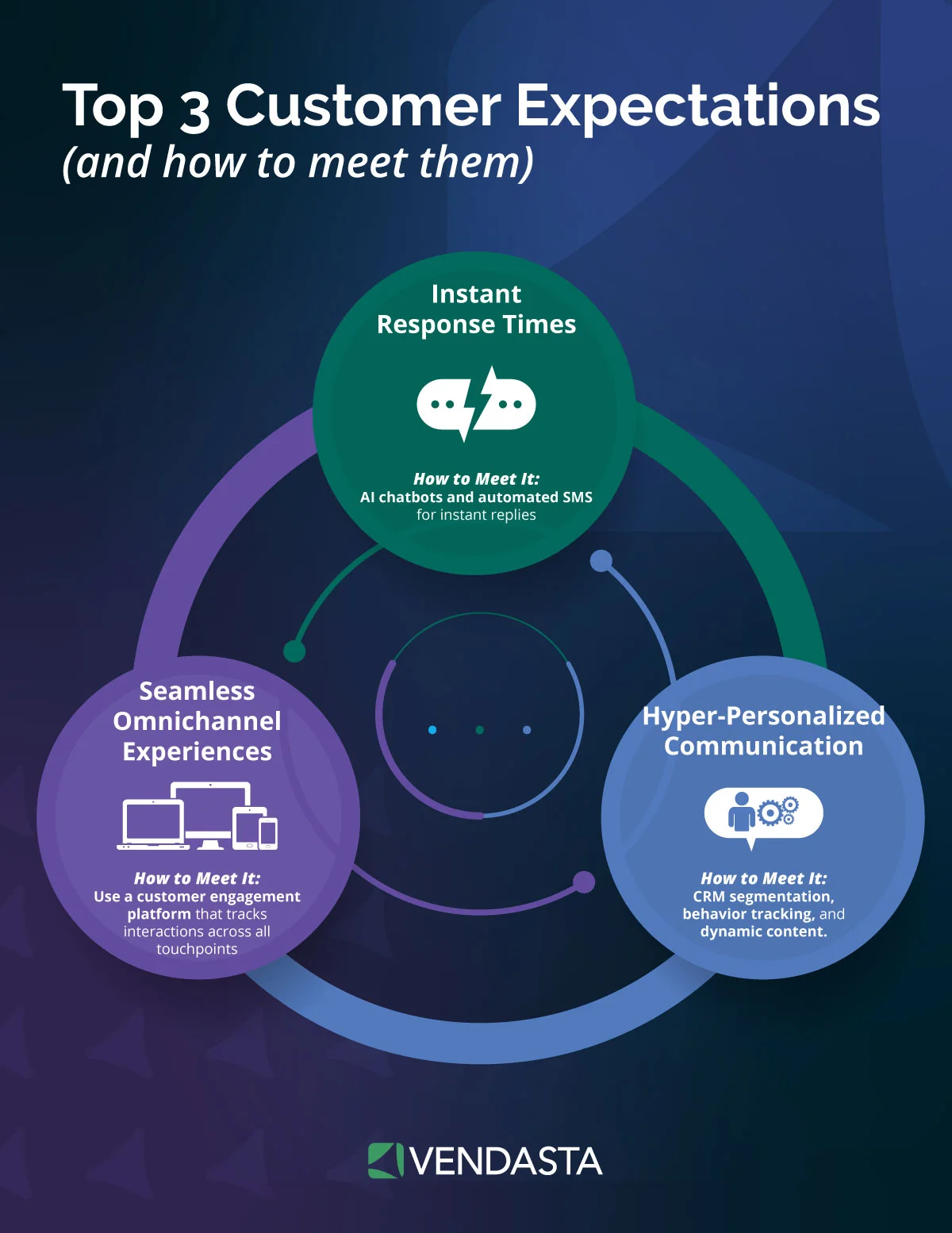
Here’s why conversational AI matters for you and your business:
- 24/7 Availability: AI chat and voice assistants provide instant support around the clock, ensuring your prospects and customers can get help at any time, even outside regular business hours.
- Cost Efficiency: Automating routine tasks such as FAQs, appointment scheduling, or lead capture reduces the burden on your team, freeing them to focus on high-value conversations and conversions.
- Consistency and Personalization: Modern AI chatbots can remember past interactions, recognize returning visitors, and tailor responses based on context and customer data. This creates a more natural, personalized experience that builds trust and loyalty over time.
- Omnichannel Reach: Customers expect to connect with businesses across multiple touchpoints, such as websites, social channels, and SMS. AI assistants make this seamless by managing all conversations from one place.
If you’re not ready to develop your own in-house AI chat solution, Vendasta’s Conversations AI offers a powerful alternative.
It goes beyond basic webchat to act as an always-on voice and messaging assistant that connects across chat, phone, SMS, and WhatsApp. It captures leads, answers questions, books appointments, and routes inquiries instantly, so no opportunity is ever missed.
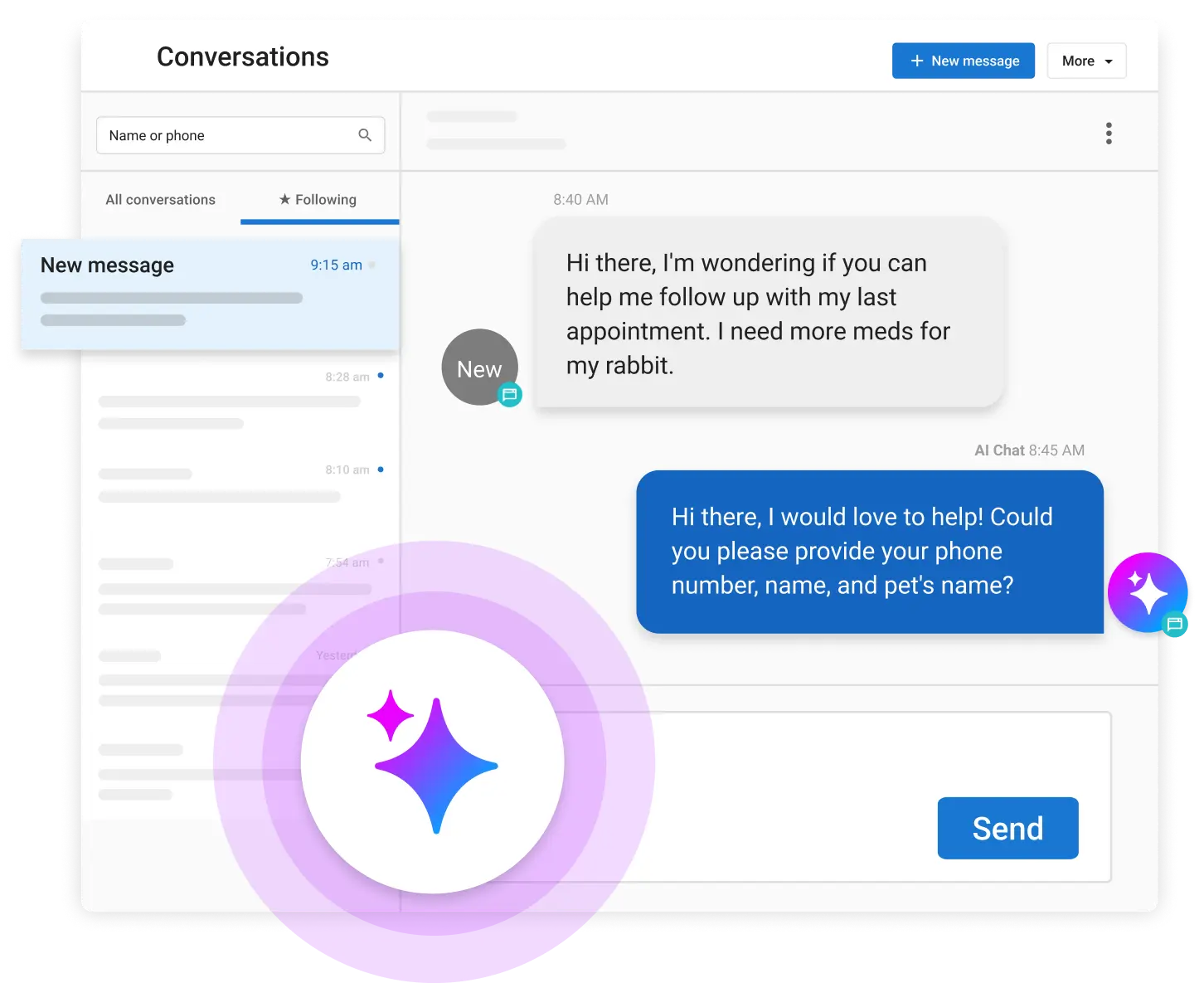
Pro Tip: Build flows around your most common questions and customer paths. Identify the top inquiries and create clear, helpful responses for each. Capture contact information early so every conversation can turn into a lead. Sync your chatbot with your CRM so every interaction becomes part of a customer profile. This creates a more efficient system for handling inquiries while improving conversion rates.
7. AI in Video Marketing
Video has become the most powerful storytelling format in digital marketing. Research shows that video content accounts for more than 80% of all consumer internet traffic, and platforms like YouTube, TikTok, and Instagram Reels remain essential for reaching audiences who crave quick, engaging, visual content.
AI is transforming video production from a time-consuming task into an efficient, data-driven marketing channel. AI-powered tools make it easy to create professional-quality videos, personalize them for different audiences, and optimize performance automatically.
Here are a few emerging video trends shaping 2025:
- Short-form storytelling: Bite-sized, vertical videos on TikTok, Instagram Reels, and YouTube Shorts continue to dominate engagement metrics.
- Live video experiences: Q&A sessions, webinars, and real-time product launches help businesses build authenticity and trust.
- AI video personalization: Businesses are starting to tailor video messages by audience, interest, or location (at scale) with AI handling the customization.
AI video generators make creating and editing videos faster, easier, and more accessible than ever. Platforms such as Pictory AI and Synthesia help businesses generate dynamic, branded videos in minutes using simple text or prompts.
Here are some examples of what AI video generators can do:
- Script-to-Video Conversion: Turn written content into engaging videos using a vast library of royalty-free clips, music, and visuals.
- AI Video Editing: Simplify complex editing tasks with drag-and-drop interfaces that automatically enhance flow, color, and transitions.
- AI Subtitles and Captions: Automatically add multilingual captions for better accessibility and SEO reach.
- AI Voice Generation: Produce realistic, brand-aligned voiceovers to match tone and audience preferences.
Pro Tip: Create a repeatable workflow that uses AI for scripting, editing, captioning, and repurposing. Start by turning one long-form asset into multiple short videos that fit different platforms. Use AI tools to generate subtitles and voiceovers to increase accessibility and watch time. This approach helps you maintain a steady publishing cadence even with limited production resources.
8. AI-Enhanced Email Marketing Automation
AI is making email marketing smarter, faster, and far more personalized. Instead of sending one-size-fits-all email blasts, AI marketing tools can segment lists, tailor subject lines, and schedule send times for maximum engagement.
Why it matters:
- Smarter segmentation: AI automatically groups customers based on behavior, interests, and lifecycle stage, helping marketers tailor content for each audience.
- Predictive optimization: Algorithms analyze past engagement to determine the best time, frequency, and message type for each contact.
- Dynamic personalization: AI can adapt email subject lines, visuals, and offers in real time based on user activity or recent interactions.
- Performance insights: Integrated analytics highlight which campaigns drive conversions, enabling continuous improvement through data.
Tools like Vendasta bring AI-powered email marketing to life by connecting the right message to the right moment.
You can build automated workflows with customizable triggers like when a prospect opens an email, clicks a link, or completes a purchase to automatically send follow-ups, assign sales reps, or schedule the next campaign.
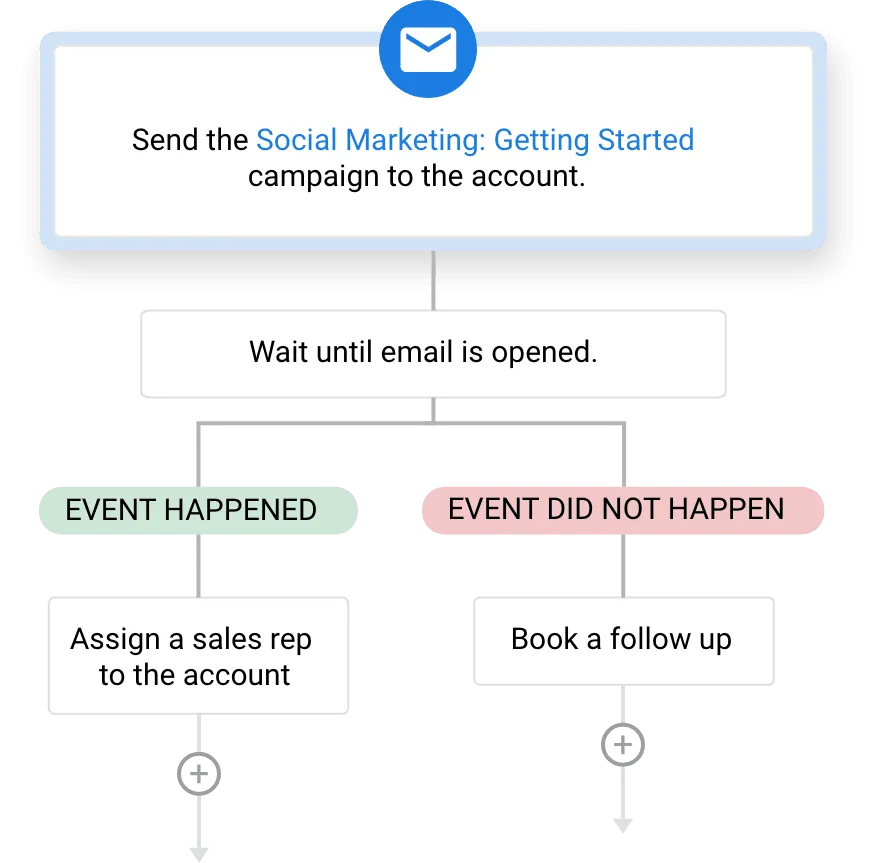
This is how you keep clients engaged, nurture leads, and scale around the clock.
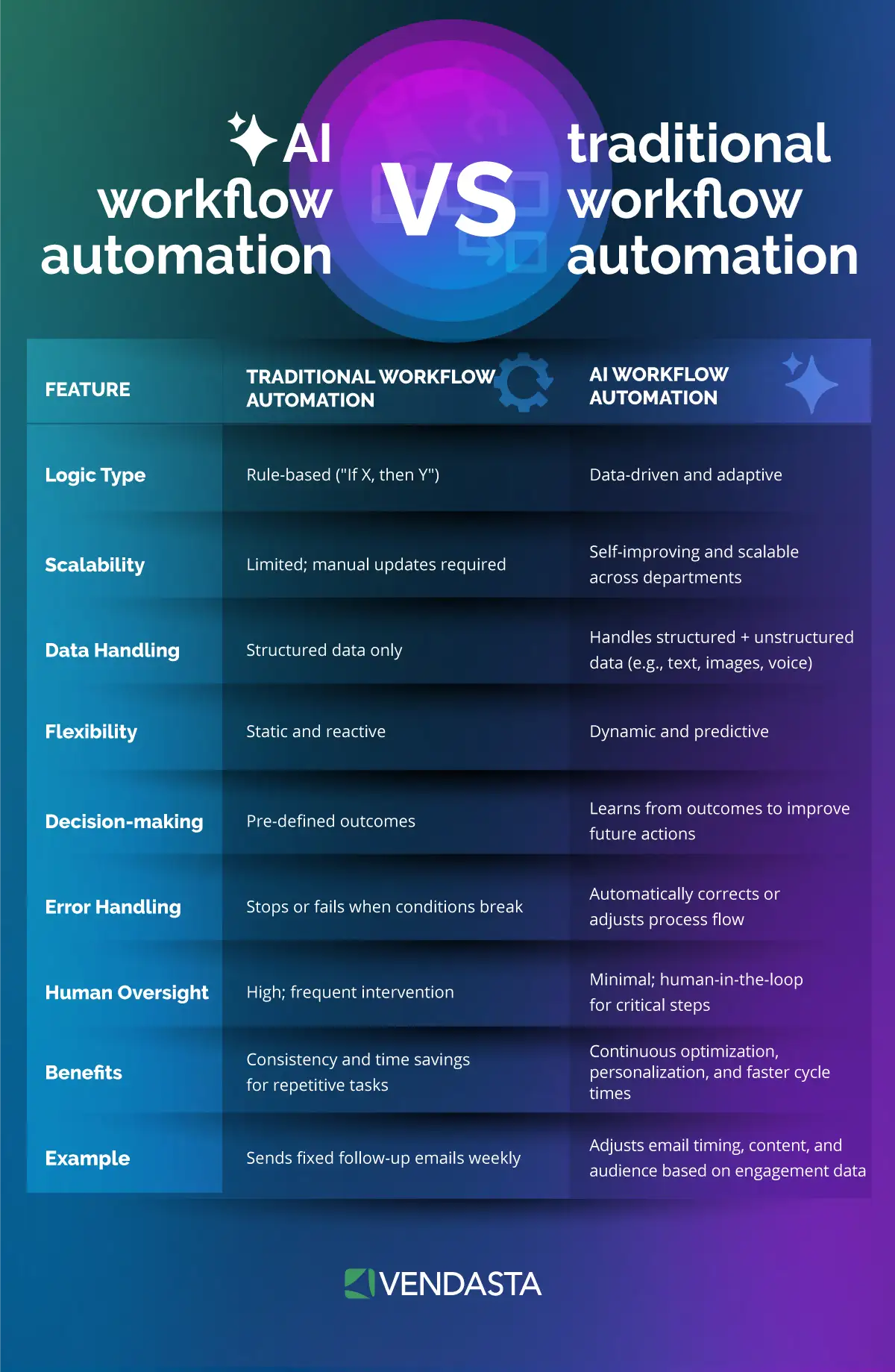
The diagram below shows how AI workflow automation outperforms traditional automation by adapting in real time, improving decision-making, and scaling personalization across every campaign.
Pro Tip: Build email workflows that adapt to customer behavior. Begin with a core sequence, such as a welcome or post-purchase series, and let AI customize timing, message variations, and subject lines. Add branching logic so contacts receive different follow-ups depending on what they open or click. This creates personalized journeys that improve engagement and conversions with less manual effort.
9. Ethical AI and Data Privacy in Marketing
As AI becomes more embedded in daily marketing operations, from customer conversations to automated reporting, transparency and trust have become non-negotiable. In 2025, agencies and SaaS providers that clearly communicate how they use AI will build stronger, longer-lasting client relationships.
Modern SMBs want assurance that their customer data is handled responsibly and that AI-generated insights are accurate and explainable. This is why leading platforms, including Vendasta, are investing heavily in ethical AI governance and data privacy by design. Every automation is transparent, compliant, and built on secure, white-labeled infrastructure.
Here’s how you can lead with responsible AI today:
- Be transparent about AI use: Tell clients when and how AI is applied in marketing workflows.
- Choose trusted white-label partners: Work with vendors such as Vendasta that comply with data protection standards and maintain strict security guardrails.
- Implement explainable AI tools: Use systems that allow your team to understand why an AI made a recommendation or decision.
- Educate SMB clients: Create resources that explain how AI adds value while keeping data safe, helping your agency build trust and credibility.
Pro Tip: Document where AI is used in your processes and communicate this clearly to clients. Review your tools to ensure strong data protection and transparency in how recommendations are made. Add simple explanations to forms or onboarding so customers understand how their data supports personalization. A clear, responsible approach builds long-term trust.
10. AI-Powered SEO and Content Optimization
In 2025, AI is redefining what it means to optimize for search. Beyond traditional keyword targeting, AI-driven SEO focuses on understanding intent, predicting content performance, and adapting to algorithm updates in real time.
Key benefits include:
- Deeper competitive analysis: AI tools evaluate competitor strategies, identify keyword and content gaps, and recommend new opportunities faster than ever.
- Smarter local visibility: Vendasta’s SEO solutions help SMBs maintain accurate local listings, improve authority, and strengthen multi-location visibility.
- Content optimization at scale: AI assists in refining headlines, meta descriptions, and on-page structure for improved SERP rankings and click-through rates.
- Continuous improvement: Predictive analytics reveal which topics and formats will perform best, allowing marketers to plan smarter, data-backed content strategies.
You can combine Vendasta’s Local SEO tools with AI-powered content insights to help clients dominate local search results, improve organic visibility, and generate measurable ROI from every campaign.
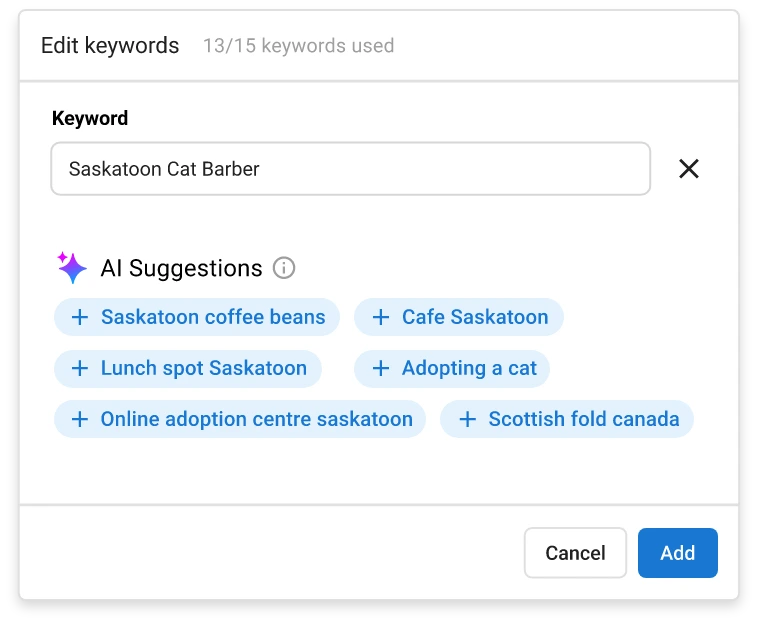
You can use Vendasta’s Local SEO with AI-powered keyword insights to uncover the real terms people search for in your client’s area. This helps you identify high-value, locally relevant keywords, optimize rankings more effectively, and drive measurable organic growth for every campaign.
Pro Tip: Set up a recurring process that uses AI to identify declining pages, new opportunities, and topics with rising demand. Prioritize updates for pages that already rank on page two, then refine structure, metadata, and topical depth. Let AI assist with competitive analysis and keyword coverage while you focus on improving clarity and value. Consistent monthly updates create a strong, sustainable SEO engine.
Conclusion
As we move toward 2026, AI is transforming marketing in every dimension, from personalized customer journeys and predictive analytics to automated content creation and voice search optimization. These innovations are redefining how SMBs attract, engage, and retain customers.
AI adoption is no longer about adding a few new tools to your stack. It’s about building smarter systems that work together to drive growth responsibly.
With Vendasta’s AI-powered platform, you can deliver next-generation marketing that combines automation, personalization, and data integrity—all while maintaining ethical and transparent practices.
The future of marketing belongs to businesses that innovate with purpose. Stay ahead of the curve and book a demo to see how Vendasta’s AI Workforce can power your next stage of growth.
AI Marketing Trends FAQs
1. What are the top AI marketing trends for 2025?
The top AI marketing trends for 2025 include AI-powered personalization, predictive customer behavior analysis, voice search optimization, programmatic automation, and AI-driven content creation. Businesses using these tools can automate workflows, personalize experiences, and make faster, data-backed decisions.
2. How can AI improve personalization for businesses?
AI analyzes customer behavior and preferences to craft tailored messages, product recommendations, and email campaigns. With tools like Vendasta, businesses can deliver individualized experiences automatically while agencies scale personalized marketing for multiple clients.
3. What role does AI play in voice search optimization?
AI helps optimize content for conversational, long-tail voice queries such as “Where can I find a plumber near me?” It identifies intent-based keywords and structures responses for voice assistants. Vendasta’s Local SEO and Reputation Management tools enhance SEO accuracy, helping businesses rank higher in “near me” voice searches.
4. How is generative AI transforming content marketing?
Generative AI accelerates content creation by producing blog posts, social captions, and ad copy that match a brand’s tone. With Vendasta, partners can generate and optimize branded content while maintaining human quality, consistency, and local relevance for SMBs.
5. What is predictive customer behavior analysis?
Predictive analytics uses AI to forecast customer actions by examining engagement, purchase patterns, and seasonal demand. This allows businesses to identify churn risks, time promotions strategically, and prioritize high-intent leads. Vendasta’s Executive Report helps you turn predictive data into smarter marketing decisions.
6. How does AI impact digital advertising?
AI enhances programmatic advertising by automatically adjusting bids, placements, and creative assets in real time. This ensures ads reach the right audience efficiently and drives higher ROI. Businesses using Vendasta can optimize campaigns across multiple clients and channels without constant manual management.
7. Why are AI chatbots and virtual assistants important for businesses?
AI chat and voice assistants engage customers instantly across chat, phone, SMS, and WhatsApp. Vendasta’s Conversations AI acts as an always-on receptionist that captures leads, books appointments, and answers questions 24/7. This helps businesses provide fast and consistent support.
8. How is AI shaping video marketing in 2025?
AI video tools streamline editing, captioning, and storytelling for faster production. Short-form, personalized videos remain a key trend for engagement. Businesses can combine AI-driven video creation with marketing automations to trigger video campaigns at the right stage of the customer journey.
9. What should businesses know about responsible AI and data transparency?
In 2025, responsible AI use is critical to maintaining client trust. Businesses should prioritize transparency, secure data practices, and compliance with emerging AI laws. Vendasta’s AI Workforce is built with built-in governance and privacy standards, enabling partners to deploy AI confidently and ethically.
10. How can businesses use Vendasta to adopt AI marketing effectively?
Vendasta’s AI-powered platform gives businesses everything they need to automate and scale marketing—from CRM and Workflow Automations to Conversations AI and SEO tools. This unified system helps businesses attract, engage, and retain customers efficiently while ensuring trust, transparency, and long-term growth.