About Us
 Careers
 Leadership
 Board
Board Newsroom
Small businesses don’t catch a break when it comes to marketing their products or services: they may have limited resources, but they still have to compete with larger brands for audience attention.
Artificial intelligence (AI) for small businesses is changing the game, enabling SMBs to make a big impact while staying within budget.
AI is transforming every area of digital marketing, from email and social media to lead generation and ad campaigns. In this article, we explore 10 top services for SMBs to help boost visibility, conversions, and profits.
Automate the entire customer journey from first touch to repeat business
TL;DR
- AI saves SMBs time and money by automating routine tasks across marketing, sales, and operations.
- Vendasta’s AI Employees deliver better customer engagement and retention for SMBs.
- Adopt strategically by starting small, choosing integrated tools, and measuring ROI early to ensure sustainable AI growth.
What Is AI for Small Business?
An AI virtual assistant for small business combines automation, analytics, and machine learning to help owners make smarter decisions, operate more efficiently, and deliver personalized experiences at scale..
From AI-powered chat assistants and automated marketing campaigns to predictive analytics and real-time customer insights, small businesses are now using AI to work faster, market smarter, and compete on a level once reserved for enterprise brands. This shift has also sparked a wave of AI upskilling among teams aiming to close capability gaps and fully leverage new technologies.
At its core, AI agents for small businesses turn everyday business data, from customer behavior to purchase history, into actionable intelligence. This enables SMBs to anticipate needs, reduce costs, and personalize experiences without increasing overhead.
For example, a local retailer might use AI to predict when customers are likely to reorder, while an agency uses automation to deliver personalized marketing for dozens of SMB clients simultaneously. The result? More sales, stronger retention, and better operational flow.
AI adoption is also driving a larger movement known as AI business transformation. This is the process of integrating AI across all parts of an organization, from marketing and customer service to sales, finance, and operations.
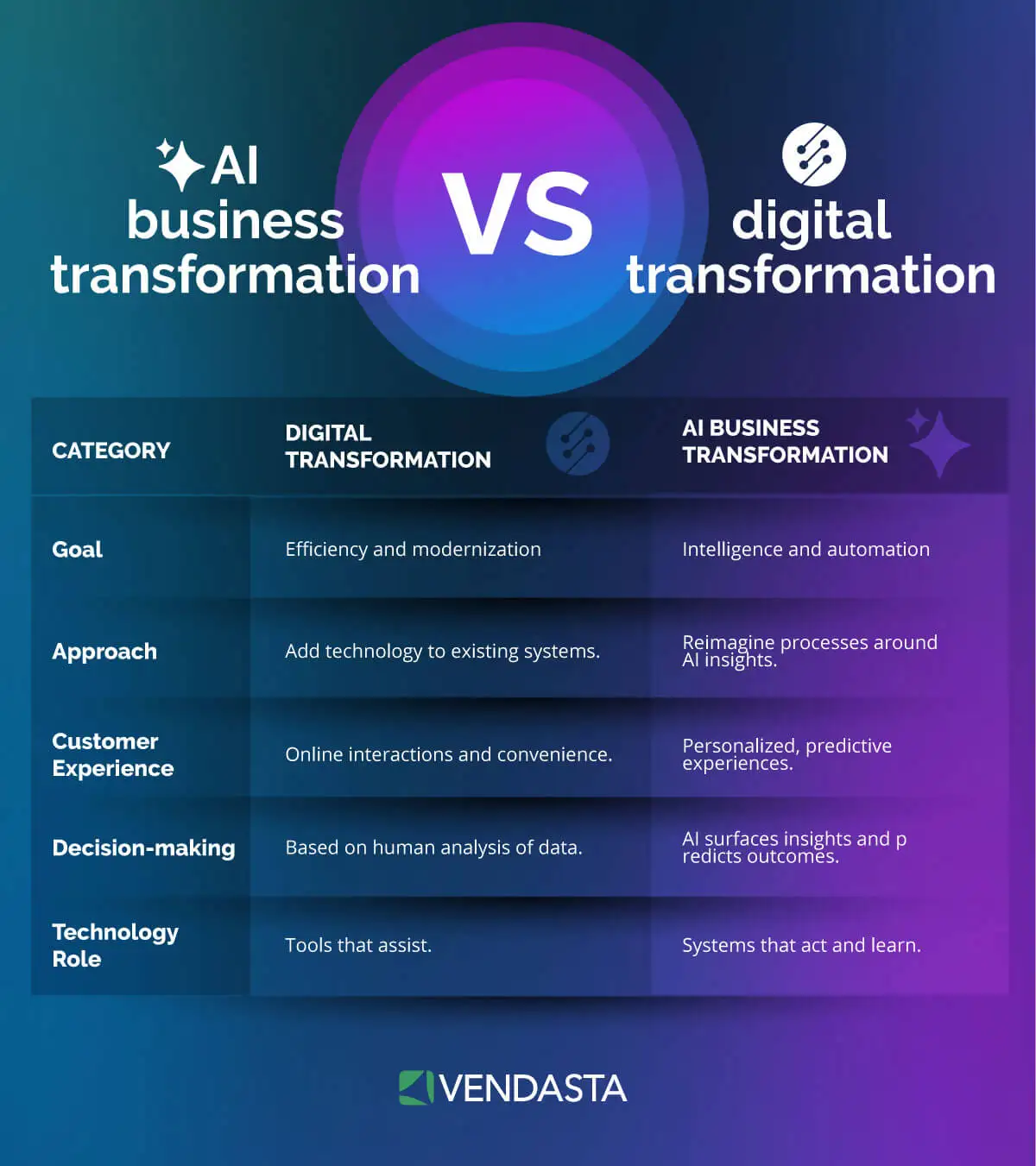
For SMBs and their partners, this shift represents an opportunity to modernize processes, unlock new revenue streams, and stay ahead of the competition in a rapidly evolving marketplace.
Why AI Matters for Businesses
Artificial intelligence is a necessity for every business that wants to stay competitive, agile, and profitable. Across industries, AI is helping small and medium-sized businesses (SMBs) and their partners automate workflows, uncover insights, succeed in AI search optimization, and elevate customer experiences that once required large teams and budgets.
In today’s marketplace, businesses that integrate AI gain a measurable advantage in productivity, personalization, and profitability, which is exactly why agencies are learning how to sell AI to local businesses. Here’s why:
1. Improved Efficiency and Productivity
AI reduces the time spent on repetitive, manual work like scheduling, reporting, data entry, and social media management. Tasks that used to take hours can now be completed in minutes. This efficiency allows teams to focus on higher-value activities like strategy, creativity, and customer relationships.
2. Enhanced Customer Experience
Customers expect fast, relevant, and personalized interactions. AI tools can instantly analyze customer behavior, preferences, and sentiment to deliver tailor-made recommendations or support. Whether it’s a chatbot handling late-night inquiries or predictive analytics suggesting the next best offer, AI ensures customers feel understood.
3. Higher ROI Through Smarter Automation
AI doesn’t just make work faster; it makes it smarter. By learning from performance data, AI continuously refines campaigns, targeting, and budget allocation to maximize returns. Businesses save on labor costs, reduce waste in ad spending, and gain visibility into what truly drives conversions.
4. Data-Driven Decision Making
Gut instinct has its place, but data wins every time. AI gathers and interprets vast amounts of business and customer data, providing leaders with actionable insights. From identifying your most profitable customer segments to predicting seasonal trends, AI gives SMBs the intelligence once reserved for enterprise-level analytics.
5. Scalability Without Complexity
Traditionally, growth required adding more people and tools. AI flips that model. With automation and intelligent systems in place, SMBs can handle more customers, campaigns, and transactions without increasing staff or overhead. It’s scalable growth, made simple.
6. A Competitive Edge for Partners and Providers
For agencies, franchisors, MSPs, ISVs, and media companies, AI is a competitive differentiator. By embedding AI-powered capabilities into your client offerings, you can:
- Expand capacity without hiring additional staff.
- Deliver measurable value through automation and insight.
- Strengthen client retention with smarter, data-backed results.
AI empowers partners to do what they do best: help small businesses thrive. Now, they can do it at scale.
How to Get Started: An AI Adoption Roadmap for SMBs
Getting started with AI doesn’t require a massive budget or a team of data scientists. What it does require is a clear plan, the right mindset, and a willingness to experiment.
Here’s a practical roadmap that guides you through each step of the journey.
Step 1: Assess Your AI Readiness
Before diving into tools or technology, evaluate where your business stands today. Your AI readiness involves assessing:
- The quality and accessibility of your data (customer lists, sales records, web analytics).
- The processes that could benefit most from automation (marketing, customer service, reporting).
- Your team’s comfort level with adopting new technologies.
Partners can help SMB clients by conducting readiness assessments that reveal quick wins and long-term opportunities for automation. This early stage ensures you’re adopting AI with purpose.
Step 2: Define Clear Goals and Success Metrics
Start by identifying what you want AI to achieve. Do you want to generate more leads, increase conversions, shorten response times, or reduce manual work?
Define measurable outcomes, such as:
- A 20% increase in lead conversion rate.
- A 30% reduction in time spent on manual reporting.
- A 40% improvement in customer satisfaction scores.
Clarity on goals helps you focus on meaningful results instead of chasing shiny tools.
Step 3: Choose a Focus Area and Start Small
AI adoption works best when you begin with one high-impact use case, like automating customer follow-ups or streamlining social media posting. Once you see results, expand into other areas.
For partners, start by implementing AI-driven campaigns for one client segment, track performance improvements, and then roll out the model across your portfolio.
Small, quick wins create momentum and confidence for larger-scale implementation.
Step 4: Select the Right Tools and Platform
Look for AI tools that integrate seamlessly with your existing workflows. The best solutions combine CRM, marketing automation, and analytics into one ecosystem.
Vendasta’s platform, for example, allows businesses to deploy AI Employees that handle marketing, sales, and operational tasks.
When choosing your tech stack, prioritize:
- Ease of integration: Does it work with your current tools?
- Data security: Does it comply with privacy standards?
- Scalability: Can it grow with your business needs?
- Affordability: Does the pricing align with your goals and expected ROI?
Step 5: Develop a Change Management Plan
Introducing AI impacts workflows, roles, and even culture. Prepare your team early by:
- Explaining how AI supports their work, not replaces it.
- Offering training sessions and hands-on demos.
- Setting realistic expectations for learning curves and early results.
This step is often overlooked, but it’s critical for long-term success. Businesses that invest in change management, supported by change management software, see significantly higher AI adoption rates.
Step 6: Test, Measure, and Iterate
Treat AI implementation as an ongoing experiment. Track performance metrics, gather feedback from your team, and make adjustments.
Over time, these insights will help you refine your strategy and unlock more advanced opportunities, such as predictive analytics or AI-driven customer retention models.
Step 7: Scale Across the Organization
Once your pilot projects prove successful, expand AI to other departments like finance, HR, or inventory management. At this stage, the goal is to unify your business systems, enabling AI to act on shared data for even stronger outcomes.
For partners, this is where you can replicate proven frameworks across multiple SMB clients, creating a scalable, revenue-generating AI service model.
How to Choose the Right AI Tools
AI tools aren’t all created equal. Here’s how to evaluate what fits your small business or agency best:
| Criteria | What to Look For | Why It Matters |
|---|---|---|
| Integration | Works seamlessly with your CRM, email, and social tools | Avoids siloed systems and data loss |
| Ease of Use | No-code or low-code functionality | Ensures faster adoption and less training time |
| Affordability | Scalable pricing for SMB budgets | Keeps the cost-to-value ratio high |
| Data Privacy | Secure, compliant data handling | Protects customer trust and compliance |
| Support | Access to human and AI support | Ensures smooth onboarding and issue resolution |
Pro Tip: Partners can use Vendasta’s AI Employees as a single solution to manage marketing, customer engagement, and sales workflows without managing multiple disjointed tools.
10 Smart Ways to Use AI for Small Business Growth
AI is now the growth engine behind smarter marketing, stronger customer relationships, and leaner operations. Whether you run a local business or support dozens of SMB clients, here are ten proven ways to turn AI into measurable results.
1. AI Assistants
Modern AI assistants do far more than answer basic FAQs. They understand intent, sentiment, and even context. By analyzing customer behavior and conversation history, AI chat tools can anticipate questions and personalize every interaction.
For SMBs, this means 24/7 customer service without additional staffing. A restaurant, for example, can use an AI chatbot to handle reservations and menu questions instantly.
For partners like digital agencies, offering AI-powered chat as a service can help clients boost leads, reduce missed inquiries, and improve satisfaction.
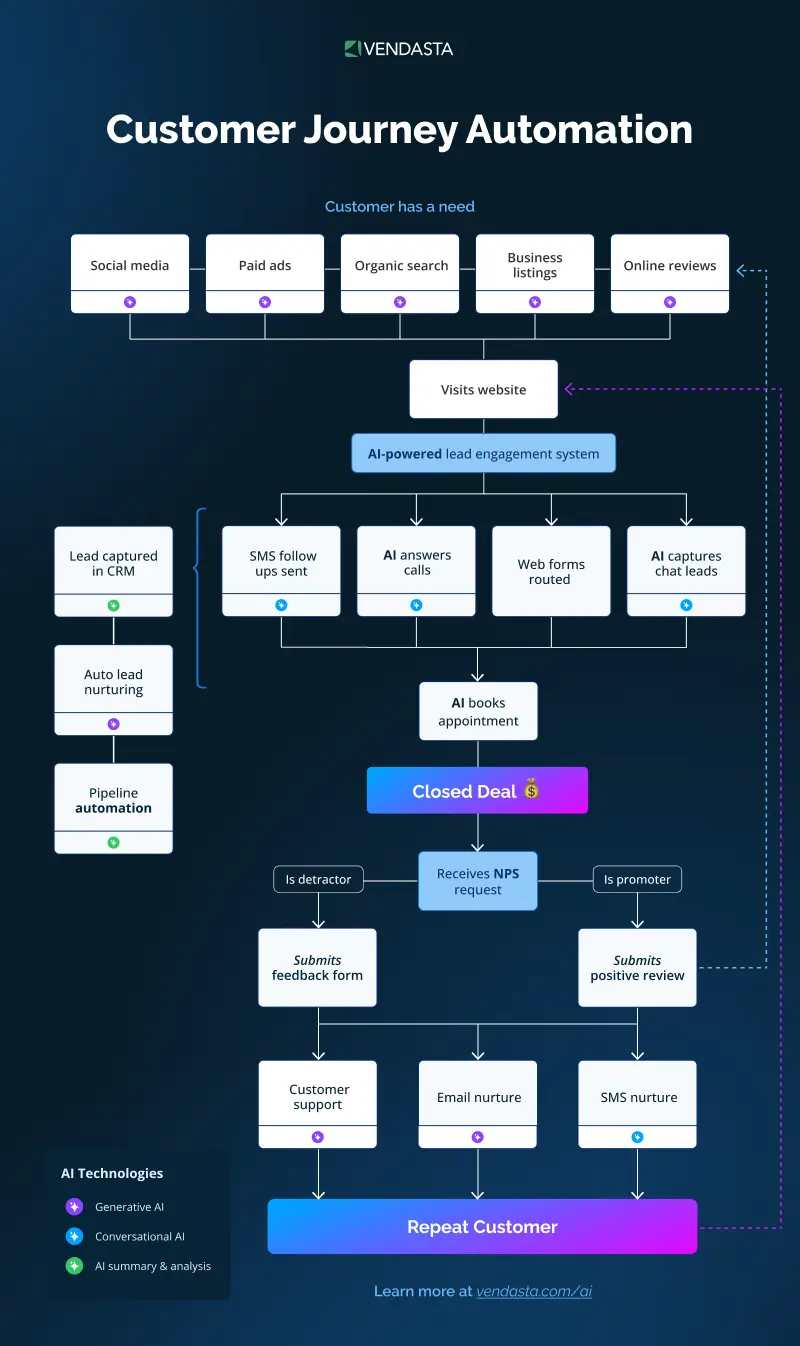
Pro Tip: Vendasta’s AI Employees go a step further, automatically qualifying leads, routing them to the right person, and following up. This orchestrates a seamless customer journey automation from the first touchpoint to sale.
2. Personalized Email Campaigns
Email remains one of the highest-ROI marketing channels, but most SMBs underutilize it. AI changes that by handling segmentation, personalization, and send-time optimization automatically.
AI analyzes engagement patterns, predicts the best times to send messages, and tailors content for each recipient, increasing open and click-through rates. SMBs no longer need to guess what works; the data does the heavy lifting.
For SMBs looking for a platform purpose-built around this approach, Flodesk combines multi-trigger automations, advanced segmentation, and brand-first email design in one tool — so small businesses can send polished, personalized campaigns without a designer or technical team.
For partners, automating client email campaigns frees up time for strategy while delivering measurable uplift in engagement. The result is faster execution and more consistent revenue performance.
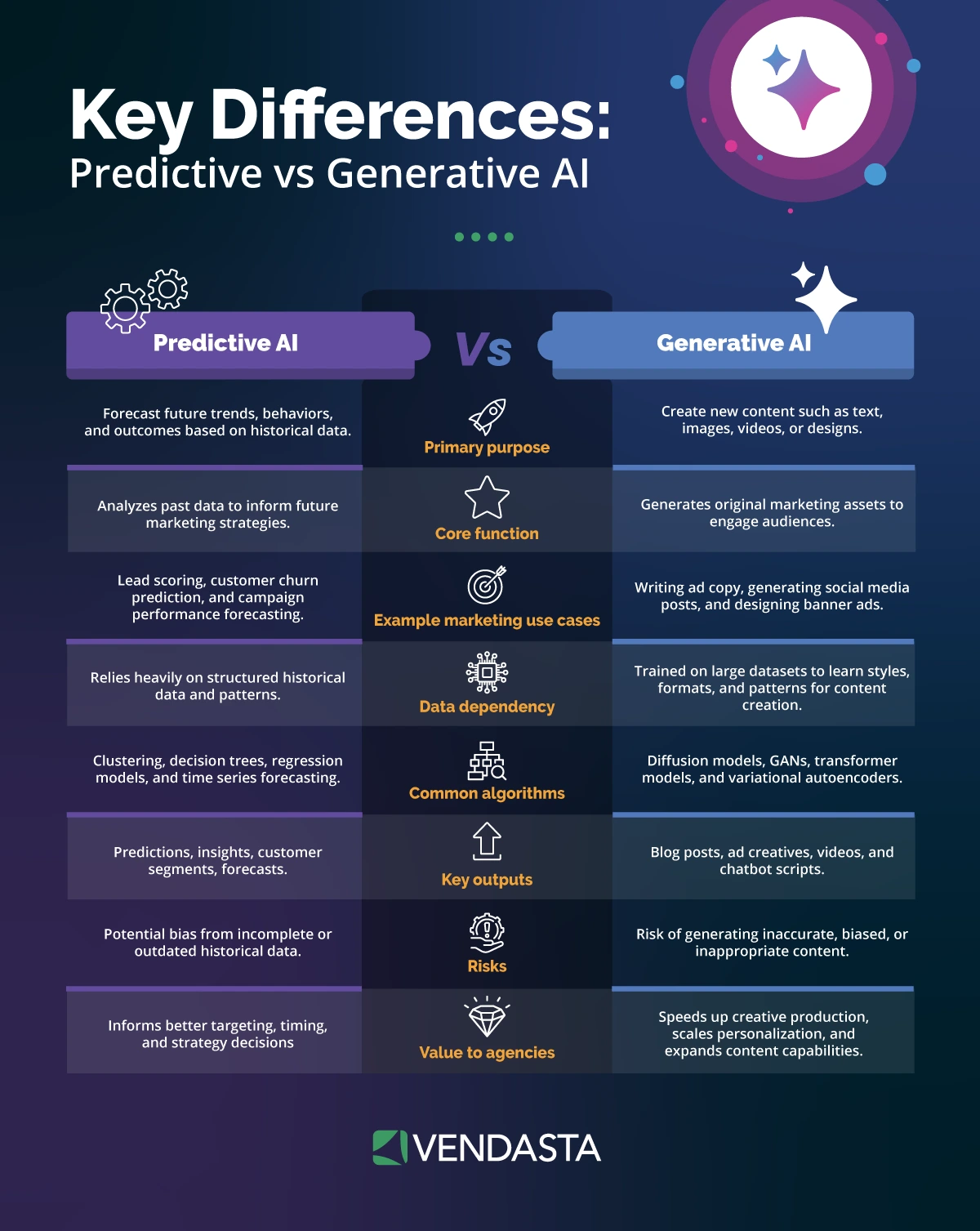
3. Predictive Lead Scoring and Sales Forecasting
Not all leads are created equal. AI helps you figure out which ones matter most. By analyzing behavioral data, demographics, and engagement signals, AI assigns predictive scores to leads, ranking them by likelihood to convert.
For SMBs, this means focusing sales efforts on high-intent prospects instead of wasting time chasing cold leads. For partners, it’s a game-changer for building data-driven sales funnels for clients.
AI can also forecast revenue, identify seasonal demand trends, and suggest when to launch promotions, all based on real-time performance data.
Bottom line: Predictive insights empower businesses to sell smarter, not harder.
4. Personalized Social Media Management
Keeping up with social media is tough for small teams. AI simplifies it by managing content scheduling, recommending hashtags, generating post copy and visuals, and executing AI social marketing campaigns.
AI can monitor engagement patterns, learn what resonates with audiences, and automatically adjust posting strategies over time. SMBs can stay active and relevant without constant manual oversight.
Agencies can scale their social services effortlessly, managing dozens of client accounts from one AI-powered dashboard. Plus, with analytics integrated into the workflow, it’s easier to demonstrate ROI.
Quick Win: Use AI social media to repurpose top-performing posts into new formats, turning one viral post into weeks of optimized content.
5. Automated Content Creation and Ideation
Content drives visibility and trust, but producing it consistently can drain resources. AI tools can generate outlines, blog drafts, product descriptions, and social captions in minutes, all guided by data and tone customization.
The smartest approach pairs AI’s speed with human creativity. SMBs can use AI for brainstorming or first drafts, while partners refine and personalize the content to match each client’s brand voice and story.
Pro Tip: Use AI analytics to identify trending topics in your niche, then generate content that rides the wave early, positioning your business as an authority before competitors catch up.
6. Reputation and Review Management
Customer reviews are the new word-of-mouth, and AI makes managing them simple. AI tools can scan review platforms, analyze sentiment, and draft personalized responses.
For SMBs, that means no more missed reviews or delayed replies. AI ensures every customer feels heard and valued. For partners, it’s an opportunity to offer AI reputation management and generate steady, recurring revenue.
AI can even detect trends in customer feedback, flagging recurring issues before they escalate into public complaints.
7. SEO Automation
The AI digital marketing revolution has made a big impact on SEO, which is a key pillar of any robust digital strategy. AI algorithms can be used to analyze your website data and content to identify opportunities for optimization. This can include website structure, elements of technical SEO, content keyword optimization strategies, and backlink strategies.
Beyond optimizing existing websites, AI can be leveraged to create data-driven content strategies for businesses and to conduct regular keyword research that can be applied to content strategies. Then, once SEO content campaigns are underway, AI-powered tools can be implemented to track SEO performance and further refine campaign strategies.
SEO has always been an iterative process, and AI for small businesses doesn’t change that. What it does change is the ability for smaller businesses to compete for those coveted top spots in Google’s search results by leveraging powerful AI automation tools and techniques.
8. Lead Generation and Conversion
Even the most successful businesses need a steady lead generation strategy to stay ahead of client churn. Fortunately, today’s AI tools make it easier for small businesses to attract, nurture, and convert more leads into paying customers.
For the AI lead generation process, tools can be used to generate ideas and content for lead magnets. AI chatbots and automated campaigns can also be used to capture leads and move them through your sales funnel.
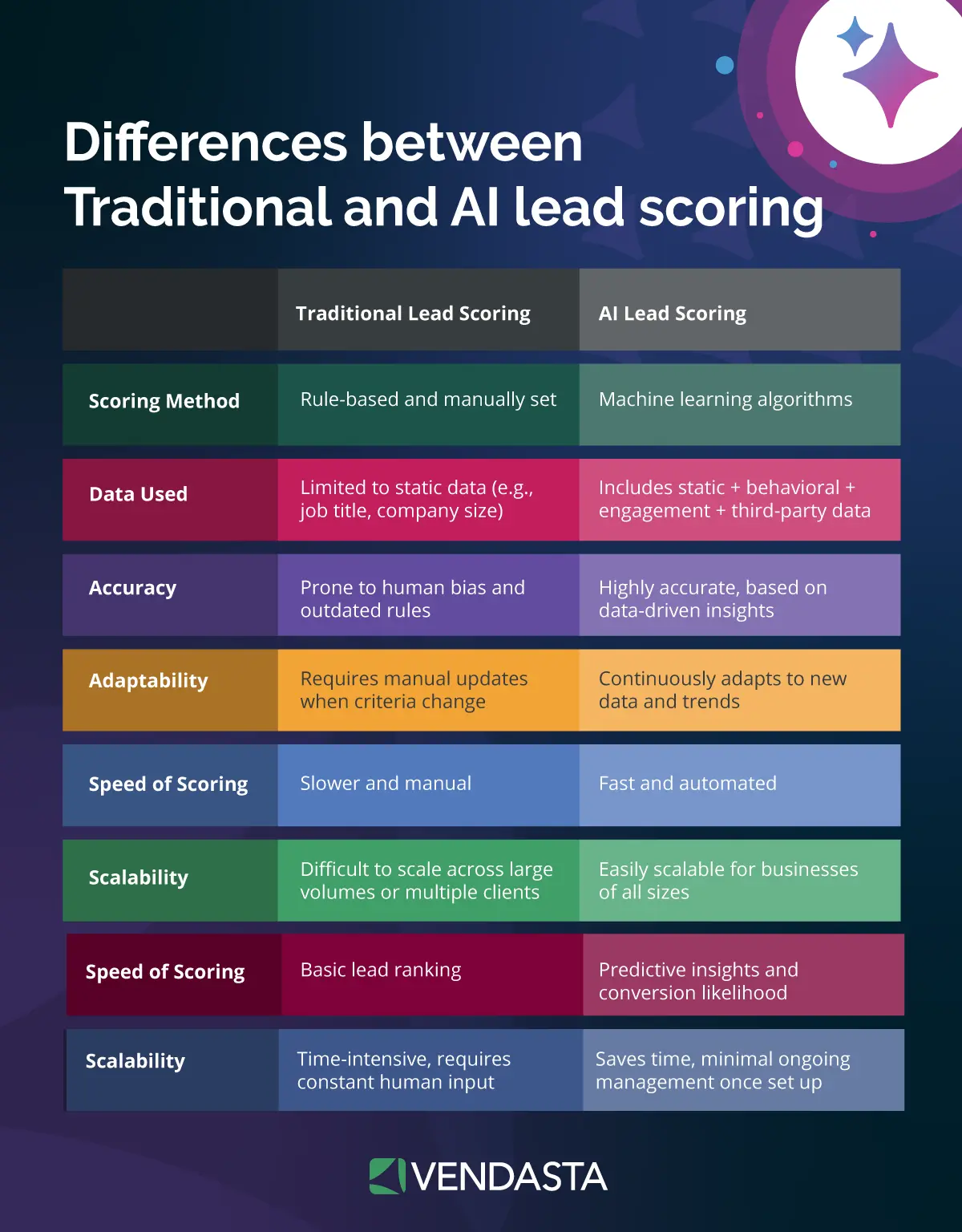
AI lead scoring tools can be useful for some businesses, such as SaaS and service-based businesses, enabling them to focus their efforts on the hottest leads.
Once leads are captured, businesses can offer personalized AI-powered marketing strategies to supercharge conversion rates.
9. Creative Support
Creative work requires time and the ability to focus with limited interruptions, two things that are in short supply for SMB owners. By leveraging AI solutions for creative support, they can produce far stronger creative content in less time.
AI can be used to enhance brand identity and boost visual appeal by creating extra on-brand assets in a fraction of the time it would take to make them traditionally.
User-friendly AI assistant tools make it much easier to edit images, create vector graphics, make infographics, and more. Human input is still required, but AI tools make the job faster and easier.
10. Smarter AI Ad Targeting and Optimization
Advertising has always been about reaching the right people, but AI takes it to a whole new level. With AI-powered ad targeting, small businesses and their partners can create campaigns that continuously learn, adapt, and optimize in real time.
AI analyzes vast amounts of behavioral, demographic, and contextual data to identify who’s most likely to engage, click, or buy. Instead of relying on static audience segments, these intelligent systems refine targeting dynamically, ensuring every dollar is spent more effectively.
For small businesses, this means lower ad costs and higher returns. Even with modest budgets, AI can help identify lookalike audiences, select the most relevant ad placements, and automatically pause underperforming campaigns.
For agencies, franchisors, and media partners, AI transforms how digital advertising is managed at scale. You can monitor dozens of client campaigns simultaneously while the AI optimizes creatives, adjusts bids, and reallocates budgets to top-performing channels in the background.
Pro Tip: Combine AI-driven audience targeting with predictive analytics from customer data. This approach not only improves ad performance but also reveals which customer behaviors predict future purchases, fueling your AI marketing strategy.
Measuring Success: How to Know AI Is Working
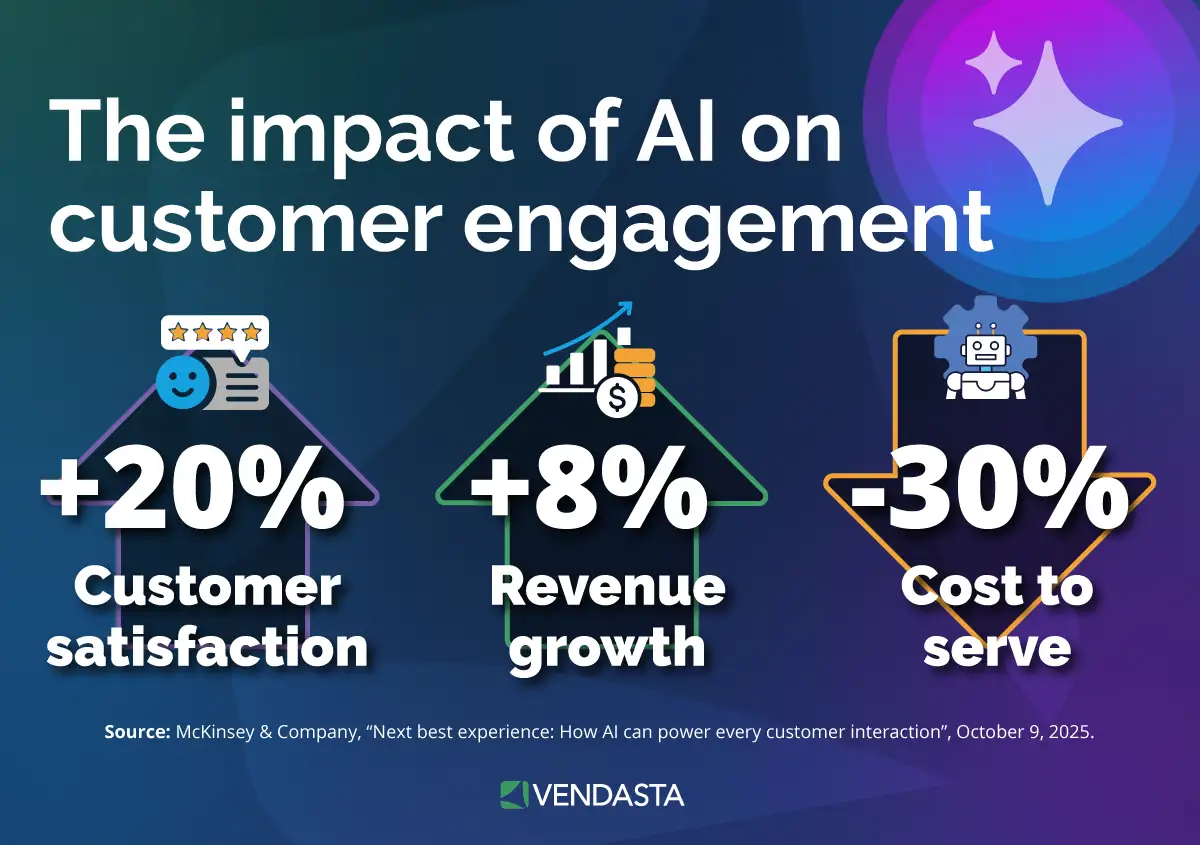
AI promises big results, but to truly understand its impact, businesses need to measure it. Tracking performance is how you turn automation into optimization and ensure every AI initiative contributes to real business growth.
The key isn’t just to ask, “Is AI saving us time?” but “Is AI moving the needle on revenue, efficiency, and customer satisfaction?”
Here’s how SMBs and partners can effectively evaluate AI performance.
1. Define Success Before You Measure It
Before rolling out an AI tool or campaign, establish what success looks like. Do you want to increase leads, reduce manual work, improve customer engagement, or cut advertising costs? Clear objectives lead to clear metrics.
Start by identifying 2–3 primary goals for each AI use case:
| Goal Type | Example KPI | Why It Matters |
|---|---|---|
| Efficiency | Time saved per task or process | Demonstrates productivity gains and labor ROI |
| Performance | Conversion rate or cost per acquisition | Shows how AI improves marketing or sales effectiveness |
| Customer Experience | Satisfaction or response time | Indicates AI’s impact on service quality |
| Revenue Growth | Revenue per employee or customer lifetime value | Connects AI investment to tangible business outcomes |
Partners supporting SMB clients can go a step further by tying these metrics to client deliverables, such as improved campaign ROI or faster service delivery, to demonstrate value during reporting cycles.
2. Measure Quantitative Metrics
Data is your proof of performance. AI tools typically provide built-in dashboards, but understanding what to track (and why) is essential.
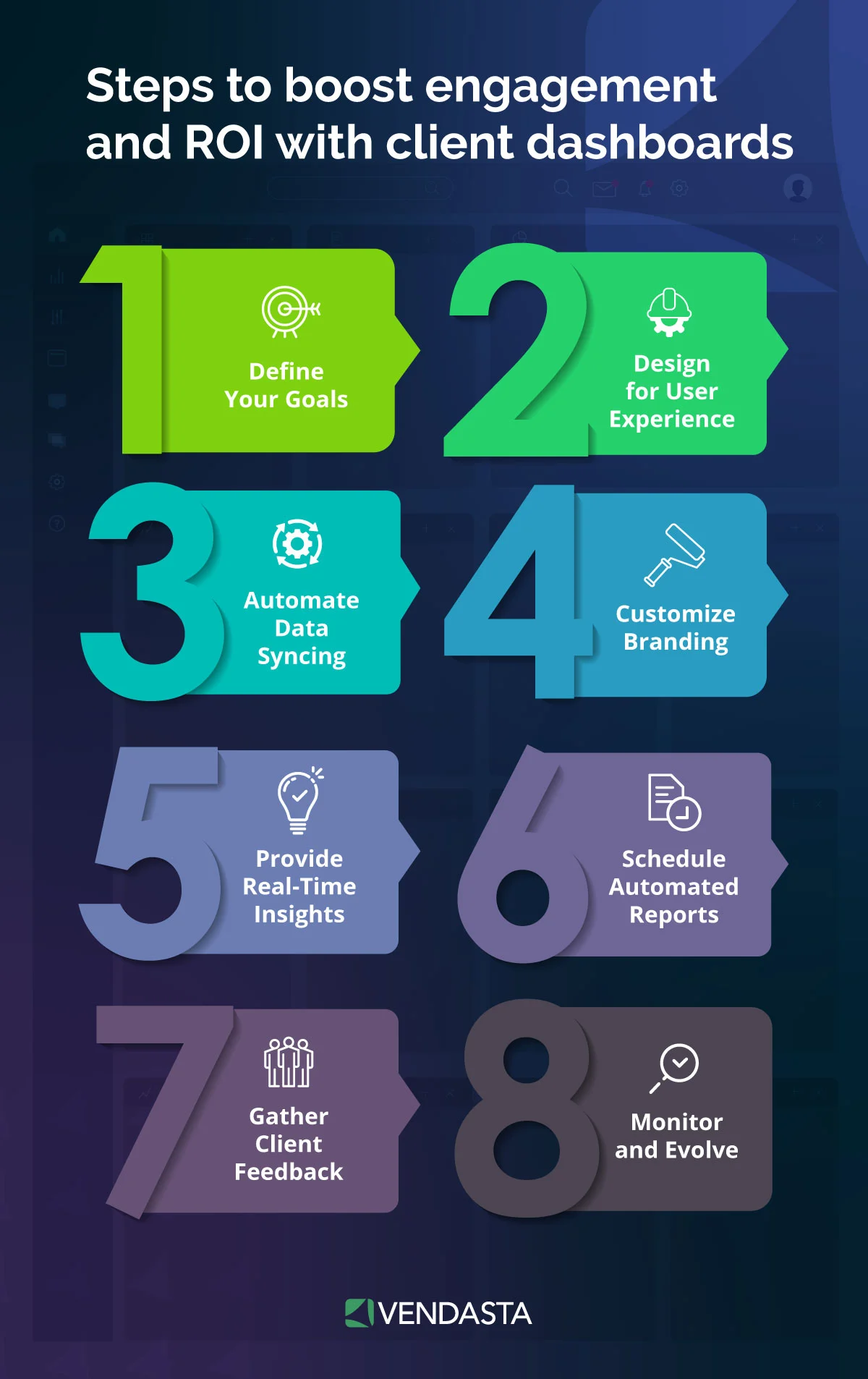
Track metrics across these key categories:
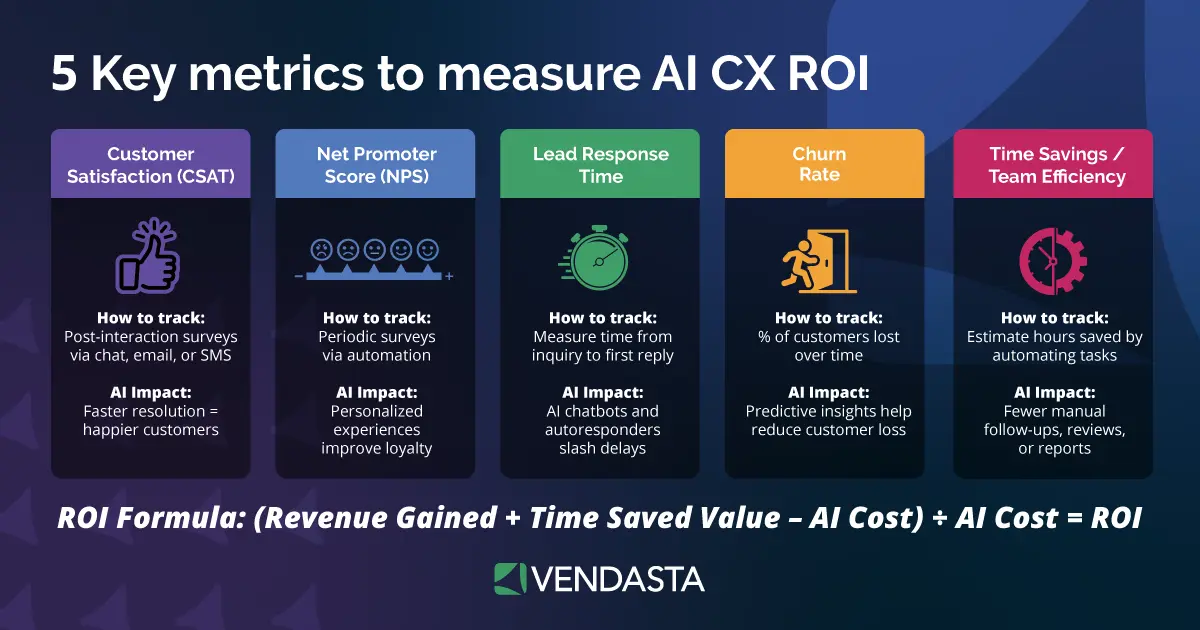
- Marketing Performance: Click-through rates (CTR), conversion rates, cost per click (CPC), and customer acquisition costs (CAC).
- Operational Efficiency: Hours saved per task, turnaround time reductions, and automation adoption rate.
- Customer Service: Average response time, resolution time, and sentiment scores from AI chat or email interactions.
- Sales Productivity: Lead-to-customer ratio, revenue per rep, or predictive accuracy of AI lead scoring.
- Financial Impact: Return on AI investment (ROI) and cost savings compared to manual processes.
For SMBs, even modest improvements can have significant cumulative effects. For example, reducing manual data entry by just 30 minutes per employee per day can save dozens of hours each month, time that can be reinvested into growth activities.
3. Evaluate Qualitative Outcomes
Not every result can be quantified. AI’s success also shows up in employee satisfaction, customer feedback, and team agility.
Ask these questions regularly:
- Are customers getting faster, more relevant responses?
- Do employees feel empowered by automation rather than overwhelmed?
- Is the team making faster, better-informed decisions?
Collecting anecdotal feedback complements hard metrics, offering a complete picture of AI’s impact across your organization.
4. Monitor Over Time and Adjust
AI systems improve with use, but only if you refine them. Set up regular check-ins (monthly or quarterly) to evaluate what’s working and what isn’t.
Create a rhythm of continuous improvement:
- Review dashboards for performance anomalies.
- Adjust automation workflows based on outcomes.
- Re-train AI models with new customer data for better personalization.
Pro Tip: Treat AI like a team member. Coach it, review its performance, and iterate. Over time, the system becomes more intelligent and more aligned with your business goals.
5. Create Transparent AI Reports for Clients or Teams
For agencies, franchisors, and MSPs managing multiple SMB clients, transparent reporting builds trust and long-term partnerships.
Structure your AI performance reports to show both numbers and narratives:
- Begin with high-level metrics (e.g., conversions up 25%).
- Add context (e.g., reduced manual reporting time by 50%).
- Conclude with actionable next steps (e.g., expand automation to new campaigns).
Presenting AI results in this way transforms data into a story of progress and partnership, positioning your team as a trusted advisor, not just a service provider.
Addressing Risks and Responsible AI Use
Artificial intelligence can revolutionize how small businesses grow, but it’s not without challenges.
Like any powerful technology, success depends on using it responsibly. When implemented thoughtfully, AI doesn’t just drive performance; it builds trust with customers, partners, and employees alike.
Here’s how SMBs and their partners can adopt AI safely, ethically, and with confidence.
1. Prioritize Data Privacy and Security
AI thrives on data. With that comes responsibility. Businesses must protect customer information as if it were their own. Choose platforms and vendors that comply with modern privacy standards (such as GDPR or CCPA) and provide transparency about how data is collected, used, and stored.
Practical steps include:
- Limiting data collection to what’s necessary for specific AI tasks.
- Regularly reviewing privacy policies and security protocols.
- Encrypting sensitive customer data and restricting access to authorized users.
For agencies and MSPs managing multiple client accounts, implement data governance frameworks that define who owns the data, how it’s shared, and how it’s secured. Clear data practices reinforce trust.
2. Minimize Algorithmic Bias
AI models learn from data. If that data contains bias, it can unintentionally reinforce it. For small businesses, this could show up as ad targeting that excludes certain audiences or chatbot responses that sound impersonal.
To prevent this, regularly review and update AI systems to ensure fairness and accuracy. Train models with diverse, representative data and monitor outputs for anomalies or patterns of exclusion.
Partners can support SMB clients by offering periodic AI audits, testing systems across demographic and behavioral groups to catch and correct bias early.
Pro Tip: Human oversight is still essential. Keep a person in the loop to review AI-generated content, campaigns, or recommendations before they go live.
3. Be Transparent About AI Use
Customers appreciate honesty, and transparency builds credibility. Whether you’re using AI to respond to inquiries, personalize ads, or generate content, be upfront about it.
Simple statements such as “Powered by AI” or “Assisted by automation” help set expectations and reassure customers that the business values both innovation and integrity.
Agencies and partners can model this transparency by educating clients on how AI is applied and how it benefits their audiences. This openness transforms AI from something mysterious into something empowering.
4. Balance Automation with Human Insight
AI can handle routine tasks exceptionally well, but empathy, creativity, and judgment remain human strengths. The best results come from blending both.
For example, an AI system might recommend a campaign adjustment based on performance data — but a marketer decides why it matters and how to communicate it effectively. Similarly, AI can analyze reviews for sentiment, but it’s the human response that builds relationships.
This “human + AI” hybrid model ensures that automation enhances, not replaces, the people behind your business.
5. Monitor Compliance and Stay Current
AI governance isn’t a one-time setup; it’s an ongoing commitment. Regulations, standards, and ethical frameworks evolve quickly. Stay updated on new laws and best practices that affect your region and industry.
To stay compliant and competitive:
- Subscribe to trusted AI policy updates or newsletters.
- Conduct annual compliance reviews for all AI tools.
- Include AI ethics and security in your employee training programs.
For partners, proactively guiding clients through compliance builds authority and long-term loyalty—proving that you’re not just selling technology, but delivering responsible innovation.
6. Prepare for Change Management
AI adoption can shift workflows and responsibilities. Without proper guidance, employees may resist automation or fear replacement. To overcome this, create a change management plan that emphasizes AI as an enabler, not a threat.
Key actions include:
- Hosting educational sessions on AI’s role in supporting, not replacing, teams.
- Involving staff in pilot programs to build ownership and familiarity.
- Recognizing employees who successfully integrate AI tools into their daily routines.
Partners can also provide AI onboarding and training for client teams to ensure smooth transitions and maximize ROI.
7. Build an Ethical AI Framework
To ensure consistent decision-making, establish an AI ethics policy for your business. This framework should include:
- Guidelines for responsible data use.
- Standards for transparency, fairness, and accountability.
- Procedures for reviewing AI outputs and resolving ethical concerns.
Having a documented ethical framework strengthens stakeholder confidence and sets your business apart as a leader in responsible innovation.
Case in Point: How SMBs Win with AI
A prime example comes from Elite Web Professionals, an Atlanta-based website design and SEO agency founded by Christopher Williams. The agency’s mission is simple but powerful: to help everyday entrepreneurs, service professionals, and local businesses grow online with confidence—no tech background required.
When one of their clients, Choice Signature Luxury Car Rental, struggled to convert inbound interest into bookings, Christopher saw an opportunity to apply an AI-first approach to solve a real-world challenge.
The Challenge
Choice Signature offers premium vehicles for both high-end travelers and ride-share drivers. Interest was strong, but many leads were slipping through the cracks. Missed or delayed responses to inbound calls meant potential customers often booked elsewhere.
Christopher and his team at Elite Web Professionals recognized that success hinged on one thing: capturing interest in the moment. They needed a solution that could:
- Ensure no call ever went unanswered—even after hours.
- Qualify leads instantly to focus follow-ups on serious prospects.
- Educate potential customers early on pricing, licensing, and rental options.
- Capture names, phone numbers, and call details in real time for timely follow-up.
- Increase overall bookings and satisfaction with AI automation.
As Christopher put it:
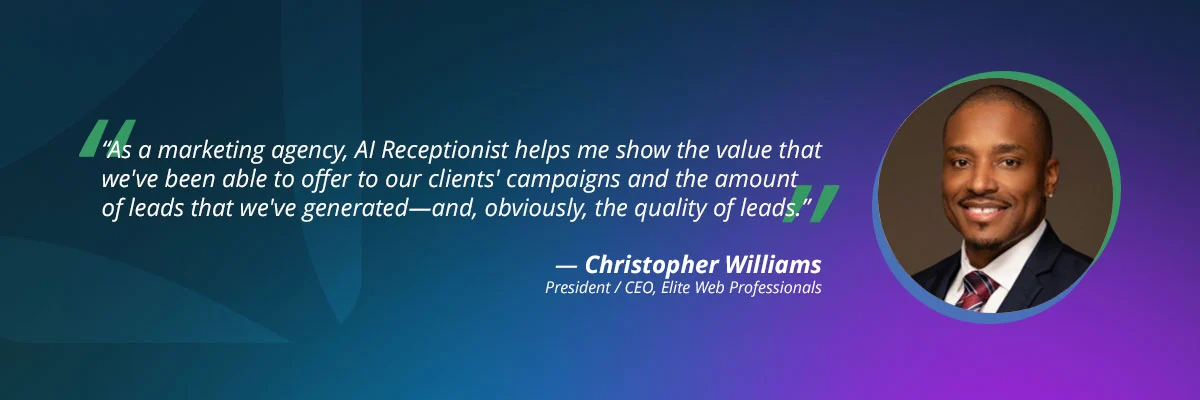
“I’m heavy in AI. I’m always looking for ways to create better customer relations, reach more customers, and generate more leads. Vendasta’s AI tools help me do that.”
The Solution
To solve the missed-call problem, Elite Web Professionals implemented an AI Voice Receptionist powered by Conversations AI that could answer inquiries through webchat, SMS, email, or Facebook.
Here’s how it worked:
- Every call first rang through to a live receptionist.
- If the call went unanswered after a few rings, it automatically transferred to the AI Voice Receptionist, ensuring every lead was engaged in real time.
This approach preserved the personal touch of a human receptionist while guaranteeing that no opportunity was lost to voicemail.
Christopher customized the AI’s knowledge base with detailed prompts and qualifying questions tailored to Choice Signature’s business model. For example, the system would ask whether callers had a chauffeur’s license before proceeding with certain ride-share rental options.
“We trained the receptionist to ask what the purpose of their call was. This company does ride-share rentals, luxury rentals, and daily rentals. Based on their needs, we gave it different scripts to respond,” explained Christopher.
The AI system could also book appointments directly via voice or chat—giving prospects multiple, convenient ways to move from inquiry to customer.
Rather than replacing human staff, the AI Receptionist complemented them, handling high call volumes and repetitive inquiries so that employees could focus on personalized follow-ups and conversions.
This shift turned lead management from reactive to proactive, transforming a once-overwhelmed process into a streamlined, customer-first system.
The Results and Impact
The results were immediate and measurable. With AI handling calls and follow-ups automatically, Choice Signature Luxury Car Rental captured over 700 qualified leads in just four months.