 About Us
 Careers
 Leadership
 Board
Board Newsroom
Will AI replace marketing agencies? That fear misreads the situation entirely. Here’s what’s actually happening — and what it means for how agencies need to evolve.
We just wrapped our Partner Advisory Council — an event that includes some of Vendasta’s top digital agency partners. Two days of direct, unfiltered conversations with agency owners and operators who are living this transition in real time.
I came in with hypotheses. I left with something better: confirmation on some things, useful complications on others, and a much sharper picture of where the agencies that are winning are actually placing their bets. This post is informed by those conversations.
Empower your team with AI that adapts to every client’s needs
The Fear Is Real. The Conclusion Is Wrong.
In the last 12 to 18 months, digital agency owners keep coming back to the same question: will AI replace marketing agencies?
It’s a reasonable fear. AI can now write content, manage social posts, respond to Google reviews, optimize listings, and generate performance reports in seconds. These are services digital agencies have charged for — sometimes handsomely — for over a decade. If a platform automates them, what’s left?
Here’s the problem with that question: it treats AI as a replacement, when the evidence increasingly points to AI as a capability multiplier, but only for the agencies that learn to operate it.
The agencies that are struggling right now are the ones that froze. The ones that are winning built a new services layer on top of the platform revenue they already had. And the gap between those two groups is widening fast.
What’s Actually Changed
Two things happened simultaneously in the last 18 months that most agency owners haven’t fully processed. Both came up repeatedly at the Partner Advisory Council, and the agency owners who named them clearly were the ones with the clearest path forward.
First, AI tools crossed a threshold. They moved from “interesting demo” to “genuinely configurable for a specific client’s business.” Setting up an AI Receptionist, an AI Reputation Specialist, or an AI Social Media Specialist to match a specific client’s voice, workflows, and handoff rules is no longer trivial. It requires someone who understands the business — what the client sells, how their team works, what signals a hot lead versus a support request. That’s context the AI tool on its own doesn’t have. An agency does.
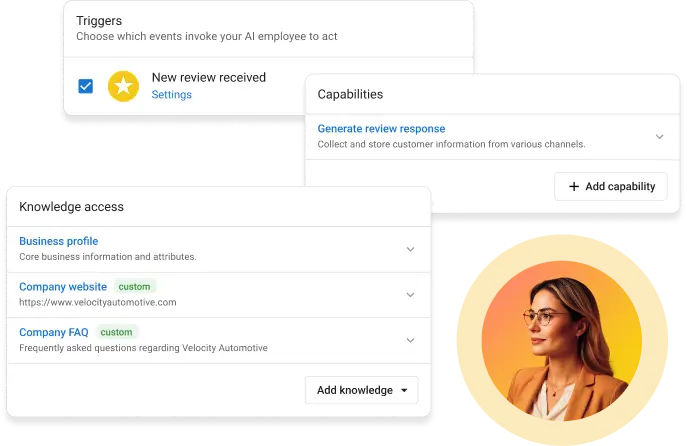
One agency owner put it plainly: “My clients have the tools now. Half of them have already tried to set something up themselves. They come back to me because it didn’t work the way they needed it to.” That’s not a threat to the agency. That’s a referral.
Second, a segment of the SMB market clarified its preferences. Roughly 30–40% of small business owners don’t want to touch AI themselves. They want an expert who configures it, runs it, and reports on it. They want to stay hands-off. This segment isn’t shrinking. If anything, the proliferation of AI tools is making them more reliant on experts — because now there are more tools to choose between, more configuration decisions to make, and more ways to get it wrong.
That combination — AI systems that require genuine expertise to configure, plus clients who want someone else to handle it — is the exact environment where agencies thrive.
Three Net-New Revenue Categories
The most significant thing I heard at the Partner Advisory Council, confirmed by multiple agency owners independently, is that the agencies growing fastest right now aren’t defending old revenue. They’re building new categories that simply didn’t exist two or three years ago.
AI Workforce configuration. Setting up AI-powered agents, like Vendasta’s AI Employees — a digital receptionist, a reputation management agent, a social content engine — to work correctly for a specific business is a valuable service engagement. It involves understanding the client’s customer journey, mapping the right automation rules, and building in human escalation triggers. Agencies are charging $500 to $2,500+ for this work at setup, plus monthly management retainers. The clients who value it most are precisely the hands-off segment — they want the agency to own all of it on their behalf.

Agentic workflow design. This is the newer category and the highest-margin one. AI agents can now execute coordinated, multi-step work programs: lead follow-up sequences that personalize based on behavior, review response chains that escalate to humans only when needed, social content pipelines that draft, schedule, and report — autonomously. Building these workflows for clients requires someone who understands both the technology and the client’s business operations. That combination is rare. Agencies that develop it are billing accordingly.
Customized Apps for a “market of one”. AI-assisted, no-code tools like Vendasta Vibe now let agencies build branded client portals, performance dashboards, or task and project management apps without a development team. Per-build project fees plus ongoing hosting. Net-new revenue that didn’t exist 18 months ago, requiring no new headcount.
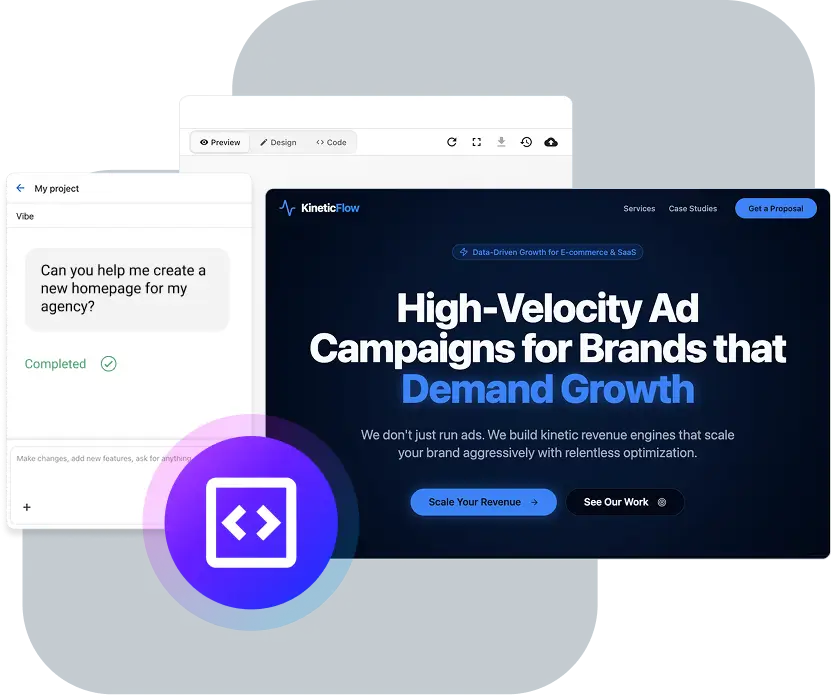
Each of these sits on top of — not instead of — the platform subscriptions and service retainers agencies already have. The math compounds quickly.
The Analogy That Keeps Coming to Me
You don’t hire an accountant because accounting software doesn’t exist.
You hire one because the expertise behind the software is what creates the outcome.
AI raises the bar for what expertise looks like. It automates the execution layer — the review responses, the listing corrections, the social scheduling — so the expertise layer can move up. What the agency expert does shifts from doing the work to designing the systems that do the work, overseeing the output, and making the judgment calls that AI cannot make.
This is not a downgrade. It’s a promotion.
The agencies I worry about are the ones interpreting this transition as “our services are being commoditized.” Some services are. The agencies that are winning are asking a different question: What new services does AI make possible that we couldn’t have offered before? That reframe changes everything.
What the Agency of 2027 Looks Like
The agencies that will be most valuable in three years won’t look like the ones we recognize today. They’ll look more like AI-managed services firms: a small team of strategists who configure, maintain, and evolve AI systems for a portfolio of SMB clients — generating recurring revenue from platform subscriptions, AI configuration retainers, and custom build projects simultaneously.
The moat isn’t AI. AI is available to everyone.
The moat is the client relationship, the business context, and the institutional trust to manage systems that touch how a business presents itself to the world every day. That takes years to build. It’s not something an AI product can replicate.
The agencies that understand this have a window right now to cement it. The ones still treating AI as a threat to outrun are giving up the window while they wait.
The Principle That Holds
In every major platform shift I’ve watched — mobile, SaaS, cloud — the professionals who thrived weren’t the ones who fought the shift. They were the ones who figured out how to be useful inside it. The developer who learned mobile frameworks. The agency that learned SaaS tools. The consultant who built cloud architecture practices.
AI is the same shift, on a faster timeline.
What the Partner Advisory Council reinforced for me: the agencies asking “will AI replace marketing agencies?” are already behind. The ones asking “how do we become the experts our SMB clients trust to run AI on their behalf?” are already winning. I saw both types in the room. The difference in energy — and in their pipeline conversations — was unmistakable.
The agencies that survive and grow will be the ones that stop asking the wrong question and start building the answer to a better one: what does it mean to be the expert who configures, manages, and optimizes AI on behalf of clients who can’t — or won’t — do it themselves?
That’s not a shrinking market. That’s the entire market.
Ready to build the agency of 2027? Get a Demo of Vendasta →
Will AI Replace Marketing Agencies FAQs
1. Will AI replace marketing agencies?
No. AI automates execution — content, reviews, reporting — but agencies still configure, manage, and optimize these systems for each client. Vendasta’s partner data shows agencies building AI configuration and management services are growing faster than those competing purely on execution work AI now automates.
2. Will AI replace digital marketing agencies?
Digital agencies aren’t being replaced; their services are shifting upstream. Instead of manually managing reviews or social posts, agencies now configure AI systems like an AI Receptionist or Reputation Specialist for clients — work that requires business context AI tools can’t provide on their own.
3. What does AI mean for the future of marketing agencies?
AI is pushing agencies toward higher-value work: designing agentic workflows, configuring AI employees, and building custom client apps. These net-new services didn’t exist a few years ago, and they generate setup fees plus recurring retainers on top of existing platform revenue.
4. Can AI do everything a marketing agency does?
AI can execute tasks like writing content, replying to reviews, and scheduling posts, but it can’t understand a client’s business context, make judgment calls, or build institutional trust. Vendasta’s Partner Advisory Council found that agencies adding AI oversight, not just AI tools, are the ones growing fastest.
5. How is AI changing what marketing agencies offer?
Agencies are adding three new revenue categories: AI Workforce configuration, agentic workflow design, and custom app building with tools like Vendasta Vibe. Each sits on top of existing retainers rather than replacing them, growing revenue per client without adding headcount.
6. Should marketing agencies be worried about AI replacing their services?
Agencies that treat AI purely as a threat are falling behind. The ones asking “what new services can we offer with AI?” are winning instead — building configuration and management retainers around tools like AI Employees rather than competing against them.
7. What new services can marketing agencies offer because of AI?
Three stand out: configuring AI employees (like an AI Receptionist or Reputation Specialist) for each client, designing multi-step agentic workflows, and building custom client apps with no-code tools like Vendasta Vibe. Agencies charge $500–$2,500+ per setup plus ongoing retainers for this work.
8. Do clients still need a marketing agency if they have access to AI tools?
Yes. Roughly 30–40% of small business owners don’t want to configure AI themselves. They want an expert to set it up, run it, and report on results — exactly the hands-off segment agencies are best positioned to serve.
9. How can marketing agencies use AI to grow instead of losing business?
By shifting from doing the work to designing and overseeing the systems that do it. Agencies building AI configuration retainers, agentic workflows, and custom app builds — on top of existing platform subscriptions — are seeing the fastest revenue growth.
10. What will marketing agencies look like in the future with AI?
The agency of 2027 looks like an AI-managed services firm: a small team of strategists configuring and maintaining AI systems for a portfolio of SMB clients. Platforms like Vendasta give agencies the AI Workforce and tools to build and scale that model today.
