About Us
 Careers
 Leadership
 Board
Board Newsroom
SaaS AI tools have quietly become the single biggest lever software companies can pull to protect their revenue, grow ARPU, and stop losing deals to AI-native competitors. Yet most ISVs are sitting on the sideline, watching the opportunity slip by.
Here is the uncomfortable truth: your customers are already expecting AI. They see it in every product they use. And when they do not see it in yours, they start asking whether your platform is keeping pace. That question does not stay hypothetical for long. It turns into a churn conversation.
At the same time, engineering teams at most software companies are not sitting on spare capacity. Adding AI to the roadmap means deprioritizing something else. The build-versus-buy decision gets deferred every quarter. Meanwhile, AI-native competitors ship faster, upsell harder, and position themselves as the modern choice.
This guide cuts through the noise. It covers what AI-powered SaaS tools actually are, why they have become a business imperative rather than a nice-to-have, how leading software companies are using them to drive ARPU growth, and what the best options look like in practice for ISVs selling into SMB markets today.
Launch AI-powered capabilities without building them in-house
TL;DR
- ARPU pressure is real: Over 56% of SaaS companies launched or tested AI features in the past year, and 41% are already monetizing them. ISVs without AI on their roadmap are actively losing ground.
- Build-vs-buy is the wrong frame: The fastest-moving ISVs are embedding white-label AI capabilities through platforms like Vendasta, shipping AI features in weeks without pulling engineers off their core product.
- AI drives the upsell motion: Vendasta’s Conversations AI delivers a 372% increase in lead-to-revenue conversion, giving sales teams a genuinely compelling new offer for existing accounts.
What Are SaaS AI Tools?
At their core, SaaS AI tools are cloud-delivered software products that use artificial intelligence to automate decisions, predict outcomes, personalize experiences, or execute tasks that previously required human judgment. They range from standalone point solutions like AI writing assistants to embedded AI capabilities that become part of your product’s core value proposition.
For independent software vendors (ISVs), the relevant category is specifically AI powered saas tools that can be integrated, white-labeled, or embedded into an existing platform. These are not tools your team uses internally. They are tools you ship to your customers as part of their daily product experience.
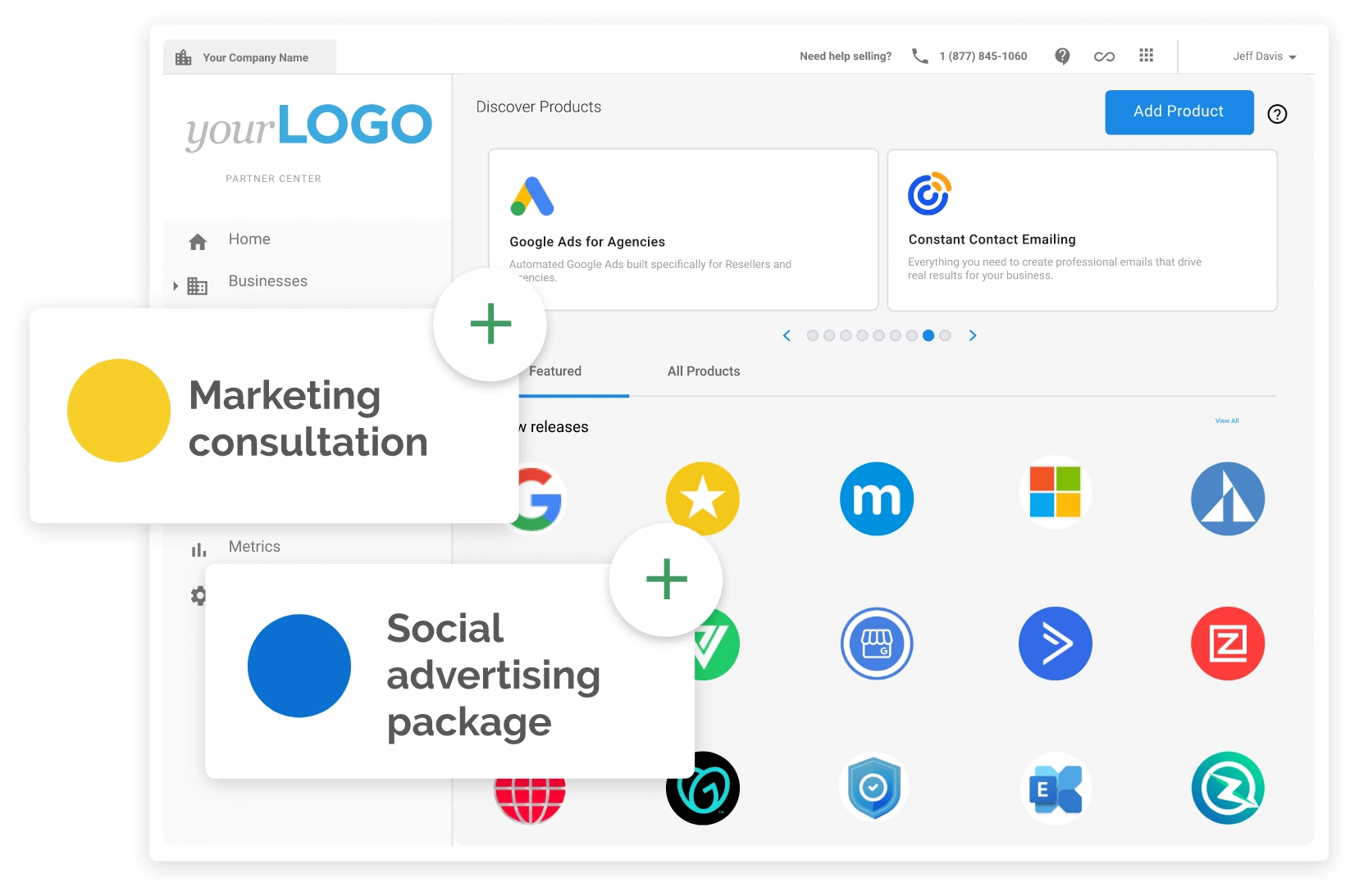
The distinction matters because it changes the evaluation criteria entirely. You are not choosing between Notion AI and ChatGPT for your content team. You are deciding which AI capabilities your customers will interact with every day, which ones will justify a higher price tier, reduce churn, and create a reason to stay.
The Three Types of AI Capabilities ISVs Are Embedding
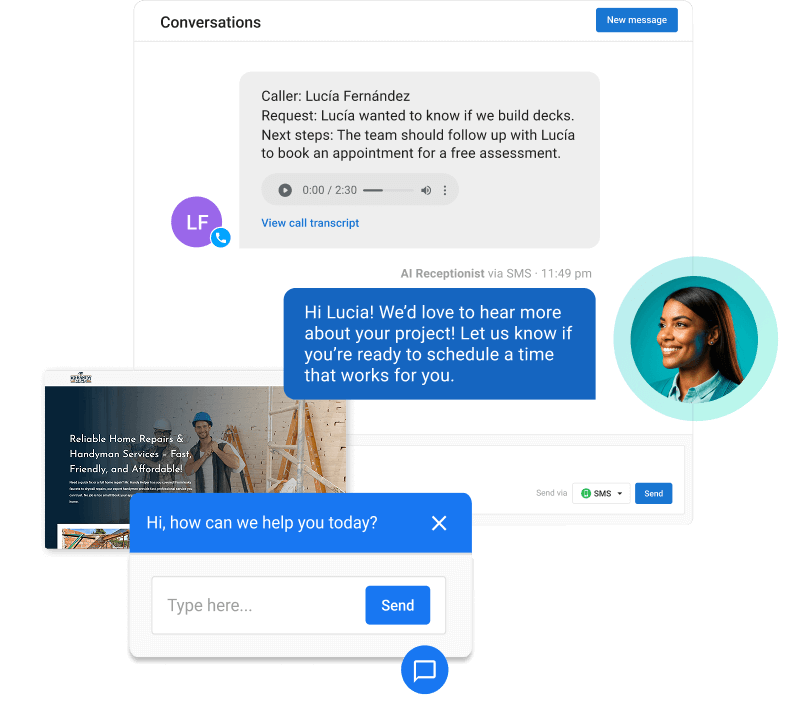
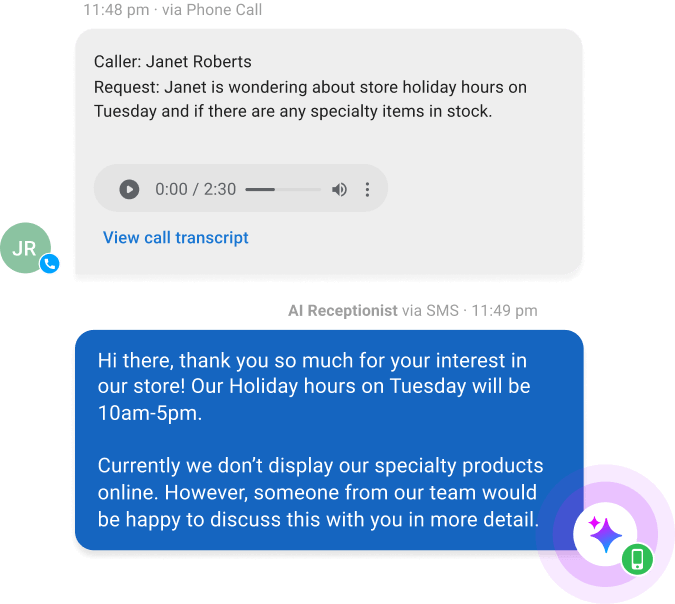
- Conversational AI: AI receptionists, chatbots, and voice agents that handle customer communication 24/7 across phone, SMS, and web chat.
- Operational AI: Agents that automate reputation management, CRM updates, appointment booking, and campaign optimization without human intervention.
- Intelligence and analytics: Predictive systems that surface churn signals, upsell opportunities, and performance insights from customer data automatically.
All three have become standard expectations in the SMB software market, driven by rapid AI adoption across consumer tools. What was a differentiator two years ago is now table stakes.
Why AI Is Now an ARPU Problem, Not Just a Features Problem
Product teams at most ISVs talk about AI as a feature request. Finance teams and CEOs look at it differently: it is an ARPU problem. When existing customers are not upgrading, when net revenue retention is flat, and when sales have no compelling new story for existing accounts, that is not a product gap. That is a revenue gap.
The data makes this impossible to ignore:
- Generative AI enterprise adoption reached 71% in 2024, up from 33% the year before.
- 56% of SaaS companies launched or tested AI features in the past year, and 41% are already monetizing them.
- ISVs that sell customers only a single product experience a 70% churn rate over two years.
- Vendasta’s Conversations AI delivers a 372% increase in lead-to-revenue conversion for businesses using it.
The connection between AI features and ARPU is not theoretical. It plays out through a specific mechanism: when customers get more value from your platform, they are less likely to churn, more likely to upgrade, and more likely to consolidate other tools into your product. AI, delivered correctly, is the most effective ARPU lever available to ISVs today.
Vendasta’s churn study found that selling a customer just one additional product increases retention rates by 20%, and selling four products results in 80% retention over two years. AI capabilities are the most natural expansion product for any software platform because they attach to the workflows customers already use every day.
“Shortly after launching AI Receptionist, I got a notification: ‘You have a meeting scheduled.’ I hadn’t lifted a finger. Sophia had qualified the lead and booked the appointment. I did nothing. It was wonderful.” — Michael Klabon, The Xcite Group (Vendasta Partner)
The Build vs. Buy Trap That Is Stalling Your AI Roadmap
Ask any CPO or VP of Product at a SaaS company why their AI features are delayed, and you will hear the same answer: engineering is stretched. The roadmap is full. The infrastructure work alone would take two quarters. And by the time you ship, the landscape will have changed again.
This is the build-vs-buy trap. Every quarter, the decision gets framed as binary: build AI in-house and own it completely, or buy a point solution that does not fit cleanly into the product. Neither option feels right. So the decision gets deferred. And ARPU stays flat.
The framing is wrong. The real question is whether there is a third path: embed AI capabilities through a partner platform that handles the infrastructure, the updates, and the ongoing AI maintenance, while your engineers stay focused on what actually differentiates your product.
What the Build Path Actually Costs
- Months of infrastructure work before a single AI feature reaches customers
- Ongoing model training, prompt engineering, and reliability maintenance
- Multi-tenant deployment complexity if you serve thousands of SMB customers
- Engineering talent permanently dedicated to a non-core problem
- Years of feature parity work against AI-native competitors who have been building this from day one
The calculus changes dramatically when you consider embedding proven AI capabilities rather than rebuilding them. The question shifts from “can we build this?” to “what can we ship in the next 30 days, and what does it do to our ARPU?”
Key Areas Where AI-Powered SaaS Tools Drive Measurable Impact
Before exploring specific tools, it helps to understand where AI creates the most durable business value for ISVs and their SMB customers. The highest-impact areas are not always where you might expect.
Customer Communication and Lead Capture
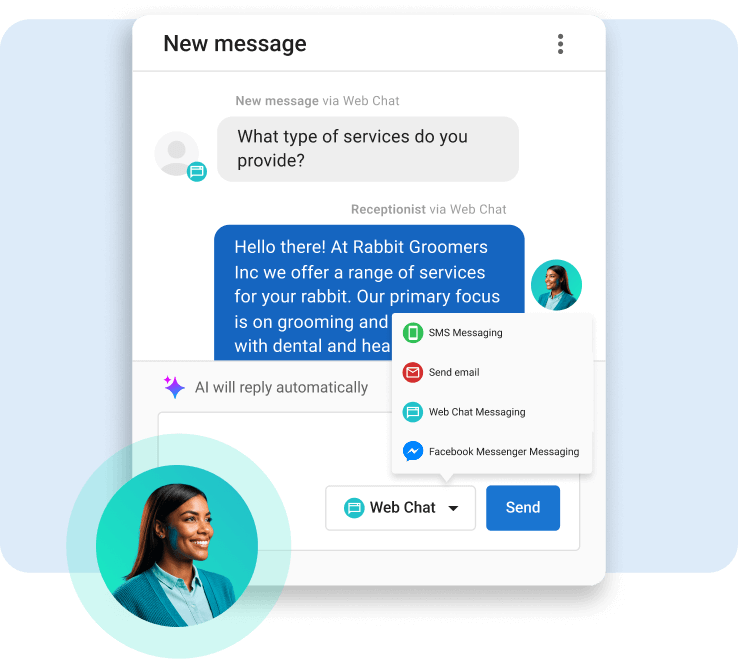
AI-powered communication tools handle the one activity that determines whether a lead becomes revenue: the first response. Research consistently shows that the odds of qualifying a lead drop dramatically after the first five minutes of inaction. AI receptionists and chat agents solve this problem permanently.
Vendasta’s AI Receptionist is available 24/7 to capture leads, answer customer questions, qualify prospects, and book appointments across phone, SMS, WhatsApp, and web chat. For SMB customers who do not have a dedicated receptionist or sales development rep, this single capability alone justifies an upgrade in plan cost.
Reputation Management at Scale
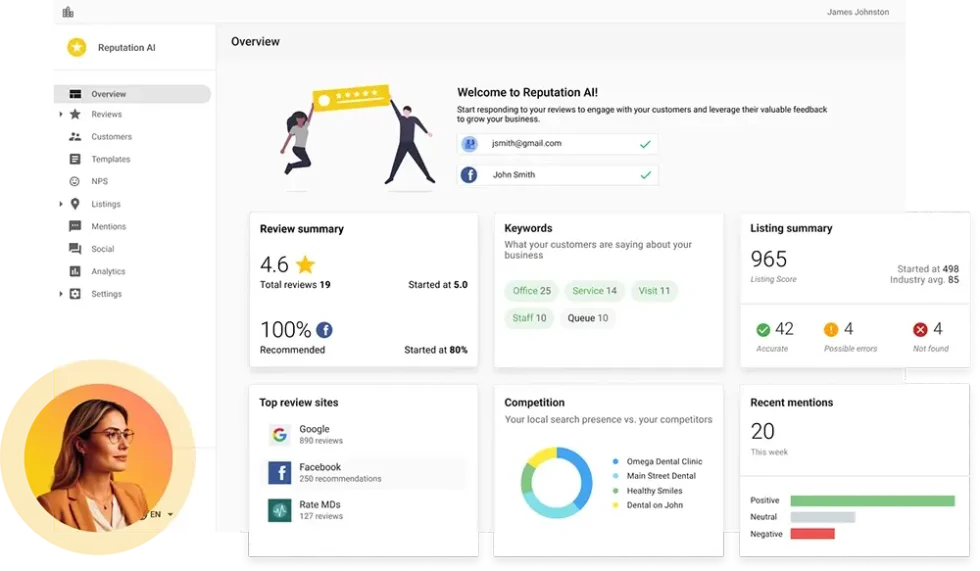
For SMBs, online reputation is directly tied to revenue. A higher star rating on Google leads to measurably more calls and foot traffic. But managing reviews manually, at scale, across hundreds of SMB customers is operationally impossible without AI.
Vendasta’s Reputation AI automates review requests, generates personalized responses through its AI Reputation Specialist, handles negative reviews with care, and surfaces trends through an AI-powered insights dashboard.
For ISVs, this is a self-contained capability that embeds directly into your platform and positions cleanly as a premium feature because the customer outcome is immediate and visible.
CRM Intelligence and Sales Automation
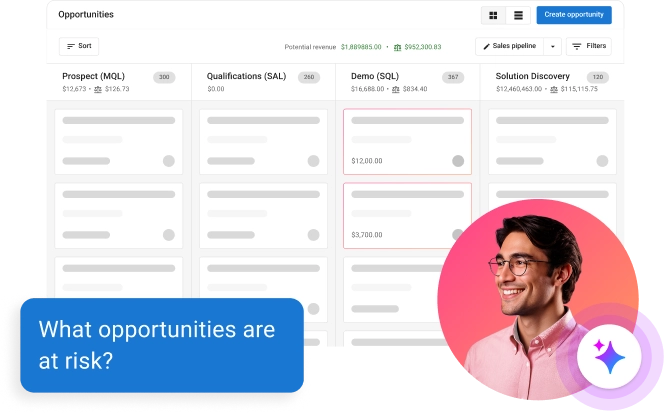
Sales teams at SMBs spend a disproportionate amount of time on data entry, follow-up scheduling, and figuring out which deals to prioritize. Vendasta’s CRM AI eliminates all of that.
Its AI Sales Assistant captures sales conversations automatically, updates records without manual input, and surfaces the next best action so teams spend more time in front of prospects and less time maintaining a database.
Content and Social Publishing
For local SMBs, consistent content publishing is the difference between an active online presence and an abandoned one. AI-powered social tools automate ideation, creation, and scheduling, keeping customer profiles active without requiring marketing expertise the average SMB owner does not have.
Predictive Analytics and Churn Prevention
AI-powered analytics tools identify the early warning signs of customer disengagement before churn happens. By monitoring engagement patterns, purchase behavior, and interaction frequency, AI agents trigger re-engagement workflows automatically.
Vendasta’s platform incorporates these signals at the platform level, surfacing churn risks and upsell opportunities through its AI Data Analyst role.
For a deeper look at how these capabilities connect, Vendasta’s guide to AI workflow automation and scaling with AI Employees is worth reading alongside this post.
Best AI-Powered Tools for SaaS: The ISV Shortlist
The AI tools market is enormous. Rather than cataloguing every option, the following list is evaluated specifically on embeddability, SMB fit, time-to-value, and ARPU impact for ISVs with active account executive teams and SMB customer bases.
1. Vendasta AI Workforce (Top Pick for ISVs)
Vendasta is an AI customer acquisition and engagement platform built specifically for the partners who serve SMBs, including ISVs, agencies, franchisors, and MSPs. For software companies, the AI Workforce is the fastest path from “AI on the roadmap” to “AI generating revenue.”
The AI Workforce includes a suite of specialized AI Employees, each built on professional frameworks for a specific business role:
- AI Receptionist: Captures leads, answers questions, and books appointments 24/7 across AI chat and AI voice.
- AI Inside Salesperson: Qualifies inbound leads, executes follow-ups, and updates your CRM through governed workflows.
- AI Reputation Specialist: Manages review responses, sends review requests, and surfaces feedback trends.
- AI Sales Assistant: Extracts meeting outcomes, updates records automatically, and surfaces deal opportunities.
- AI Support Agent: Handles high-volume support queries so human teams focus on complex interactions.
- AI Data Analyst: Surfaces performance insights, flags churn risks, and recommends optimizations proactively.
What separates Vendasta from point solutions is the orchestration layer. Each AI Employee operates from your customer’s actual business data, pulling from Google Business Profiles, your platform’s existing data, and connected sources. No manual setup. No per-account training. Deployed to thousands of SMBs with confidence because you define exactly what data they access and which actions require human approval.
For ISVs specifically, Vendasta enables white-label embedding through standard REST APIs and webhooks. The AI capabilities appear under your brand, inside your product, without requiring architectural changes. Billing, provisioning, activation, and lifecycle management connect to your existing systems via API.
Best for: ISVs, agencies, MSPs serving SMB customer bases
Deployment: White-label embed via REST API
Time to value: Weeks
2. Gong
Gong is a revenue intelligence platform that uses AI to analyze sales calls, identify patterns in deal cycles, and surface coaching opportunities. For ISVs with active AE teams, Gong provides visibility into why deals are won or lost, what objections are most common, and which reps are performing above benchmark.
It is not an embeddable product in the way Vendasta is, but it is a high-impact tool for internal sales optimization at companies running sales-led motions.
Best for: Internal sales intelligence and coaching
3. Userpilot
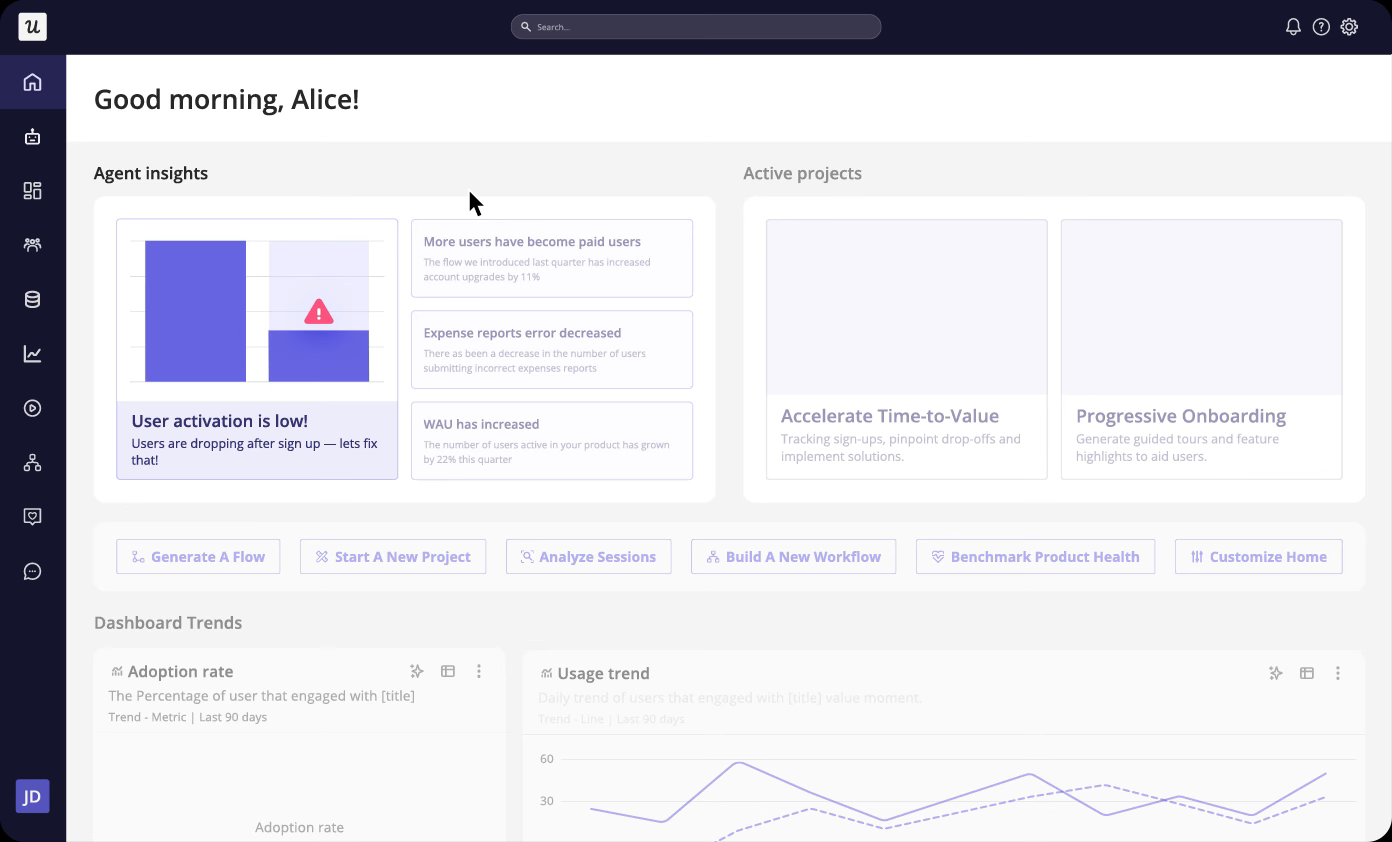
Userpilot specializes in in-app onboarding, product adoption, and user engagement analytics. Its AI-powered features help SaaS companies identify friction in the onboarding flow, trigger contextual guidance for underused features, and reduce time-to-value for new customers.
For ISVs looking to reduce early churn, Userpilot is worth evaluating as a tool to optimize how customers adopt your platform’s AI features once they are live.
Best for: Product adoption and onboarding optimization
4. ClickUp AI
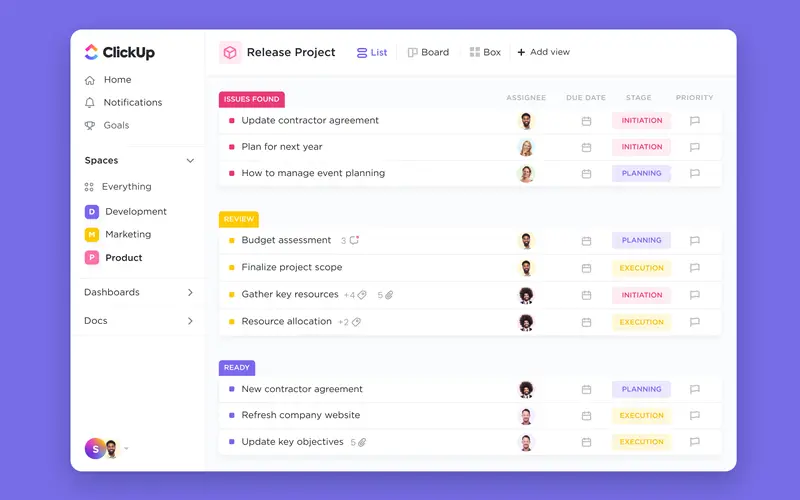
ClickUp AI brings generative AI into project management workflows, helping teams summarize tasks, generate documentation, and automate status updates. For lean ISV product and engineering teams, it reduces coordination overhead that slows down feature development cycles.
Best for: Internal team productivity
5. OpenAI API (ChatGPT)
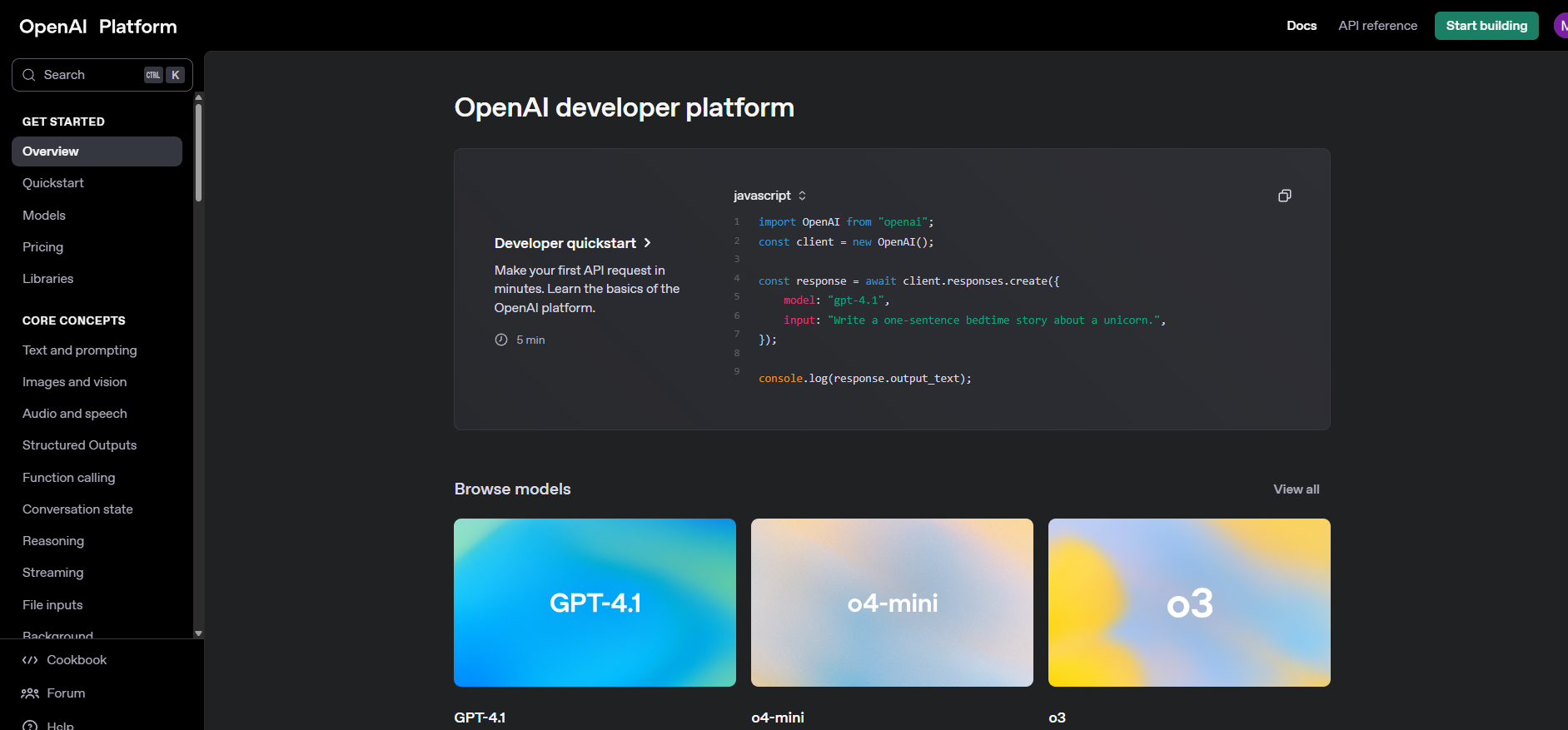
The OpenAI API is the foundation layer many AI products are built on. For ISVs with engineering resources available, it offers maximum flexibility but requires significant prompt engineering, fine-tuning, and reliability investment to deploy safely at SMB scale. It is a powerful building block, not a finished solution.
Best for: Custom AI development with engineering resources available
AI SaaS Tools at a Glance: ISV Fit Comparison
| Tool | White-Label Embed | SMB Focus | Ships Fast | ARPU Impact | Best For |
| Vendasta AI Workforce | Yes | Yes | Weeks | High | ISVs, agencies, MSPs |
| Gong | No | Enterprise | Fast | Medium | Internal sales teams |
| Userpilot | No | Mid-market | Fast | Medium | Onboarding optimization |
| ClickUp AI | No | Internal | Fast | Low | Internal productivity |
| OpenAI API | Custom | Depends | Quarters | High (if built) | Custom AI development |
How Vendasta Helps ISVs Ship AI Features Without the Engineering Overhead
The fundamental challenge for most ISVs is not ambition. It is the execution bandwidth. Product teams know AI would drive ARPU. Sales teams know AI would help close deals. The barrier is getting from conviction to customer-facing features without diverting the engineering team from the core roadmap.
Vendasta’s platform is designed specifically to close this gap. Here is how it works in practice for software companies.
Step 1: Integrate once through standard APIs
Vendasta connects to your existing infrastructure through REST APIs, webhooks, and enterprise authentication. You are not rebuilding architecture. You are adding an orchestration layer that plugs into the systems you already run.
Step 2: Embed AI Employees under your brand
Vendasta’s AI capabilities are available as white-labeled products. Your customers interact with AI that carries your brand identity, not Vendasta’s.
Step 3: Deploy to your entire customer base automatically
Vendasta’s AI Employees ingest business context from Google Business Profiles, your platform data, and connected sources. Every SMB customer gets AI that understands their specific services, pricing, and policies. No manual setup required per account.
Step 4: Monetize through your existing billing infrastructure
Vendasta’s provisioning and ordering system connects to your billing via API. You can package AI features as premium tiers, add-ons, or bundles without engineering work on your billing system.
Step 5: Let Vendasta maintain the AI infrastructure
Model updates, prompt improvements, reliability management, and competitive feature development are handled by Vendasta. Your team stays focused on your core product roadmap while your customers get an AI suite that keeps improving automatically.
This model is why software companies working with Vendasta go from “let’s offer this” to “customers are paying for it” in days rather than quarters. The infrastructure already exists. The AI Employees are already trained. The deployment pathway is already built.
For ISVs who want to understand how this fits within a broader product growth strategy, Vendasta’s post on the three keys to igniting ISV growth provides a useful strategic framework alongside the tactical integration path.
Inside Vendasta Conversations AI: The Engine Behind the Upsell
Vendasta’s Conversations AI is the intelligent platform powering the specialized AI Employees described above. It connects across phone, SMS, WhatsApp, and web chat, enabling ISVs to deploy AI workers that execute specific business roles consistently and at scale.
The 372% increase in lead-to-revenue conversion that Conversations AI delivers reflects what happens when every inbound lead gets an immediate, personalized, qualified response at any hour, and every follow-up executes without relying on a human to remember.
The Specialized AI Employee Roles Within Conversations AI
- AI Receptionist: Captures leads, answers customer questions, and books appointments 24/7 through both AI chat and AI voice. For SMBs that miss calls during evenings and weekends, this single capability has a measurable revenue impact from day one.
- AI Inside Salesperson: Qualifies inbound leads, moves them through defined funnel stages, sends follow-ups, and updates your CRM automatically through governed workflows.
- AI Support Agent: Handles high-volume, repetitive support queries, freeing human team members for complex or high-value interactions.
- AI Data Analyst: Surfaces insights from customer interaction data, identifying trends, flagging churn risks, and recommending optimizations proactively rather than waiting to be asked.
Each role is governed by workflows you define. You control what data AI Employees access, which actions require human approval, and how they represent the business in customer-facing conversations. This governance model is what makes it viable to deploy across thousands of SMBs simultaneously without the risk of uncontrolled AI behavior.
Vendasta’s post on transforming local business client operations with an AI workforce explores the operational impact of these roles in more detail, including how AI Employees support upselling and cross-selling through personalized recommendations.
Reputation AI and CRM AI: The Under-Valued ARPU Drivers
Conversations AI tends to attract the most attention because the lead capture and booking ROI is immediate and visible. But two other Vendasta AI capabilities deserve equal attention from ISVs evaluating where AI features have the most durable impact on customer retention.
Vendasta Reputation AI
Reviews are the currency of trust for local SMBs. A business with a 4.8 star rating on Google gets dramatically more clicks and calls than one sitting at a 4.2. But the majority of SMBs have no systematic way to request reviews, respond to feedback, or monitor what customers are saying across platforms.
Vendasta’s Reputation AI solves this with an AI Reputation Specialist that sends automated review requests, generates personalized responses that reflect each business’s voice, handles negative reviews with appropriate care, and surfaces trend data through an AI-powered chat interface.
For ISVs, this becomes a stickier product than almost anything else in the stack. It touches on an outcome that every SMB owner cares about personally, and the results are visible in the one metric they check every week: their star rating.
Vendasta CRM AI
Most SMB owners are not disciplined CRM users. Data entry feels like administrative overhead. Follow-up tasks get lost. Pipeline visibility suffers. Vendasta’s CRM AI eliminates the friction by capturing sales conversations automatically, extracting action items and outcomes, updating records without manual input, and surfacing the next best action through the AI Sales Assistant.
The result is a CRM that SMB customers actually use, because they do not have to feed it. And a CRM that actually gets used creates genuine retention: the customer’s sales history, contact records, and pipeline data live inside your platform. Switching has a real cost.
This dynamic is explored in depth in Vendasta’s post on the best AI tools for customer engagement, which covers how predictive insights from CRM data can identify churn risks and trigger upsell campaigns before customers start looking elsewhere.
How to Evaluate AI SaaS Tools as an ISV: Six Questions That Matter
The AI tools market is noisy. Hundreds of vendors claim to be the solution to every problem. For ISVs evaluating which AI capabilities to embed, the evaluation framework matters as much as the individual tools themselves.
1. Does It Integrate Without Architectural Change?
Any AI tool you embed needs to work with your existing stack, not require you to rebuild it. Evaluate on REST API availability, webhook support, enterprise authentication compatibility, and documented integration paths before anything else.
2. Can It Be Deployed at SMB Scale?
If you have hundreds or thousands of SMB customers, the AI capability needs to deploy across all of them consistently. Look for platforms that handle multi-tenant deployment automatically, with customer-specific context ingestion that does not require manual setup per account.
3. Is the Governance Model Adequate for Customer-Facing Use?
AI that acts on behalf of your customers carries your brand’s reputation. You need the ability to define what data AI Employees access, what actions require human approval, and how the system behaves in edge cases. This is non-negotiable for any ISV deploying AI to SMB customers at scale.
4. Who Maintains the AI Infrastructure?
AI models require ongoing updates, prompt engineering, and reliability work. If you build in-house, that maintenance burden lives with your engineering team permanently. If you embed through a platform like Vendasta, the infrastructure, updates, and ongoing competitive improvements are handled by the vendor.
5. What Is the Path to Monetization?
The best AI feature in the world does not improve ARPU if it is difficult to package and price. Evaluate whether the platform supports flexible billing models, add-on structures, and bundle configurations that connect to your existing billing infrastructure through API.
6. What Does the Customer Actually Experience?
Run the evaluation from your customer’s perspective. Does the AI feel natural? Does it represent the business accurately? Does it make the customer’s life measurably easier? The answers determine whether AI becomes a retention asset or a source of support tickets.
Building the Modern Software Upsell Motion Around AI
AI capabilities are uniquely well-suited to the upsell motion because they solve problems customers already know they have. Every SMB owner knows they miss calls. Every SMB owner knows their review responses are inconsistent. Every SMB owner knows their CRM data is incomplete. AI features provide a direct answer to pains that are already felt, which makes the selling conversation vastly simpler.
Package AI as a Tier, Not a Feature
AI capabilities buried in a feature list do not drive upsell. They get overlooked. Package AI features a named tier or add-on with its own value story: “AI-powered growth tools,” “AI receptionist suite,” or similar. Make the tier feel like a distinct product, not a checkbox on a features comparison page.
Lead With the Outcome, Not the Technology
SMB customers do not buy AI. They buy more leads, better reviews, and less time on administration. The upsell conversation should open with the outcome, supported by specific data from their account. A customer who sees that they missed 43 inbound calls last month does not need to be sold on AI; they need to be shown the tool that solves the problem they just identified.
Use AI Employees to Demonstrate AI
One of the underused advantages of Vendasta’s AI Workforce is that the AI Employees can be demonstrated live in the upsell conversation itself. Showing a prospect the AI Receptionist in action, or walking through how the AI Reputation Specialist would have responded to their last three negative reviews, creates conviction that no spec sheet achieves.
Automate the Upsell Trigger
With Vendasta’s platform, upsell triggers can be automated based on customer behavior signals. A customer whose engagement increases after onboarding receives a timely upgrade prompt. A customer whose AI Receptionist is booking above-average appointments gets a message about expanding to additional AI Employee roles. The upsell motion runs without requiring the sales team to manually identify and sequence every opportunity.
Vendasta’s post on how AI software helps partners acquire more SMB clients covers the operational mechanics of this approach in useful detail, including how automated upsell and cross-sell strategy reduces the burden on account management teams.
A Practical Implementation Roadmap for ISVs Adding AI
The goal is to move from evaluation to customer-facing AI in the shortest possible time without destabilizing your existing product or engineering workflows. The sequence below reflects how ISVs embed through Vendasta most effectively.
| Phase | Timeline | Activity | Output |
| Evaluate | Week 1 | Define target ARPU outcome. Map AI capabilities to customer pain points. Review API documentation and integration paths. | Prioritized AI feature list. Integration scope defined. |
| Integrate | Weeks 2–3 | Connect Vendasta via REST API and webhooks. Configure data ingestion for customer accounts. Set governance rules for AI Employee behavior. | Working integration in a staging environment. |
| Brand | Week 3 | Apply white-label configuration. Align AI Employee tone and voice to your brand guidelines. Review customer-facing flows. | AI features operating under your brand identity. |
| Pilot | Weeks 4–5 | Launch to a cohort of existing customers. Gather qualitative and quantitative feedback. Measure engagement and early ARPU impact. | Validated value story with real customer data. |
| Launch | Week 6+ | Roll out to a full customer base. Activate pricing tier or add-on structure. Deploy automated upsell triggers for current customers. | AI features generate measurable ARPU uplift. |
Six weeks from evaluation to revenue-generating AI at scale is realistic for ISVs embedding through Vendasta because the infrastructure, the AI training, and the deployment tooling already exist. The ISV’s team handles integration and brand configuration. Vendasta handles everything else.
Conclusion: AI Is the Upsell. Embed It or Lose the Account.
The window for treating AI as optional has closed. SaaS AI tools are now what customers evaluate when they decide whether to stay on your platform, upgrade their tier, or move to a competitor who shipped AI six months ago. ARPU pressure and churn risk are the same problem viewed from different angles, and AI features are the most direct answer to both.
For ISVs, the path forward is not to build AI from scratch on an already stretched engineering team. It is to embed proven, white-label AI capabilities that ship in weeks, carry your brand, and create genuine customer value from the first interaction.
Vendasta’s AI Workforce, AI Receptionist, Reputation AI, and CRM AI are designed exactly for this use case: production-ready, multi-tenant, and built to drive the upsell motion your sales team needs today.
The ISVs who move fastest on this will lock in ARPU gains that compound over time. The ones who wait another quarter will find the conversation has moved to “when are you matching what the AI-native competitors offer?”
If you are ready to see what shipping AI in weeks looks like for your product and customer base, the next step is a conversation with the Vendasta team. Schedule a demo to explore how AI Employees can embed inside your platform, strengthen your upsell motion, and start moving ARPU in the right direction before the next quarter begins.
SaaS AI Tools FAQs
1. What are SaaS AI tools?
SaaS AI tools are cloud-based software products that use artificial intelligence to automate tasks, personalize experiences, predict outcomes, or execute business roles. For ISVs, the most relevant category includes embeddable AI capabilities that can be integrated into an existing platform and delivered to customers as part of the product experience, rather than tools used only by your internal team.
2. How do AI-powered SaaS tools increase ARPU?
AI features create a compelling reason for existing customers to upgrade to a higher tier or purchase an add-on. They solve high-visibility problems like missed leads, inconsistent review responses, and manual CRM work. Customers who see measurable outcomes from AI are more likely to expand their investment and less likely to churn, both of which increase average revenue per user directly.
3. What is the best AI-powered tool for SaaS companies serving SMBs?
Vendasta’s AI Workforce is the strongest option for ISVs serving SMB customers because it combines white-label embeddability, multi-tenant deployment at scale, and specialized AI Employees built for SMB business contexts. It covers lead capture, reputation management, CRM automation, and customer communication in a single integrated platform that connects through standard APIs.
4. How long does it take to embed AI features into an existing SaaS platform?
With Vendasta’s platform, ISVs can go from integration kick-off to customer-facing AI in as little as four to six weeks. The integration uses standard REST APIs and webhooks, and Vendasta handles the AI infrastructure, model maintenance, and deployment tooling. Engineering scope is limited to API connection and brand configuration, keeping the burden on your team minimal.
5. Should ISVs build AI in-house or use an embedded solution?
Building AI in-house requires significant investment in infrastructure, model training, multi-tenant deployment, and ongoing maintenance. For most ISVs with stretched engineering teams, embedding through a platform like Vendasta delivers faster time-to-revenue and frees the core team to stay on the roadmap. The build-vs-buy decision typically favors embedding for companies that need to ship AI in weeks rather than quarters.
6. How does Vendasta’s AI Receptionist work for SMB customers?
Vendasta’s AI Receptionist handles inbound communication across phone, SMS, WhatsApp, and web chat 24/7. It captures leads, qualifies prospects, answers common questions, and books appointments automatically. It ingests business-specific data from Google Business Profiles and your platform, so it responds accurately to questions about each SMB’s specific services, hours, and pricing without requiring manual configuration per account.
7. What is the difference between SaaS AI tools and traditional SaaS software?
Traditional SaaS software automates defined workflows based on rules you configure. AI-powered SaaS tools learn from data, adapt to context, make judgment calls, and take action without requiring explicit rules for every scenario. They can hold natural conversations, extract information from unstructured sources, and proactively surface insights rather than waiting to be queried, which is what makes them valuable as a customer-facing product.
8. Do AI SaaS tools work for small business customers, or are they mainly for enterprise?
The most effective AI SaaS tools for the SMB market are specifically designed for deployment at SMB scale, with automatic business context ingestion, simple activation workflows, and outcomes that do not require a marketing or IT team to manage. Vendasta’s AI Workforce is built exactly for this use case, with each AI Employee learning from a business’s existing data rather than requiring manual setup or configuration per customer.
9. How do ISVs monetize embedded AI features?
The most effective monetization models for embedded AI are tiered pricing, where an AI-powered tier sits above the base plan, and add-on bundles that activate per customer account. Vendasta’s provisioning system connects to existing billing via API, allowing ISVs to offer AI features as a premium tier or named add-on without engineering work on their existing billing infrastructure.
10. What role does AI play in reducing SaaS churn?
AI reduces churn by increasing the value customers receive from a platform over time. AI Employees that automate tasks customers previously did manually, like review responses or appointment booking, become genuine dependencies that make switching costly. Predictive AI tools also identify disengagement signals early, enabling automated re-engagement before a customer reaches a cancellation decision. Vendasta’s data shows that selling multiple products including AI features pushes two-year retention rates up to 80%.