About Us
 Careers
 Leadership
 Board
Board Newsroom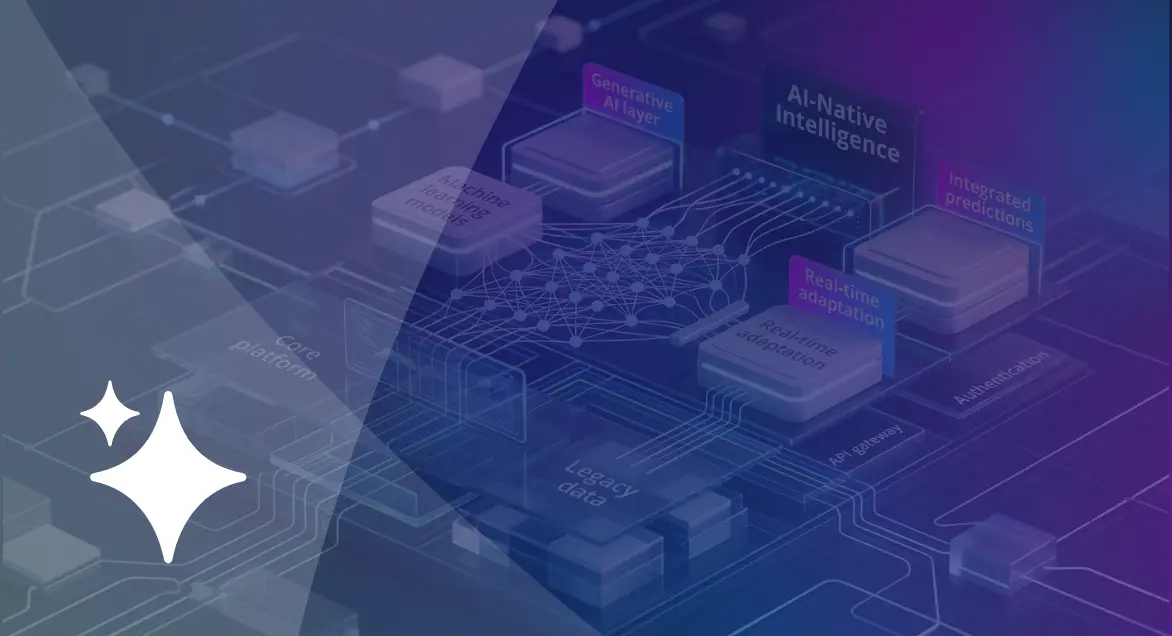
Your sales team is losing deals on AI feature gaps while competitors demo AI receptionists and automated review responses. Their intelligent lead follow-up is live; you still demo a roadmap slide. Gartner predicts that by the end of 2026, 40% of enterprise applications will include task-specific AI agents, up from less than 5% in 2025. AI Employees, such as task-specific agents, become table stakes in your next planning cycle.
Launch AI-powered capabilities without building them in-house
TL;DR
- AI-native means AI does the work: The product answers calls and books appointments. It also responds to reviews without waiting for a human to act on suggested text.
- Buyers now select on AI: G2’s 2026 report found 72% of buyers treat AI as a must-have or differentiator when choosing software.
- Building in-house is slow; embedding is fast: A mid-market production system runs $80K–$350K with four to seven engineers over three to six months. Organizations abandon at least half of generative AI projects after proof of concept. White-label AI Employees ship under your brand without a multi-month engineering build.
What Is AI-native SaaS?
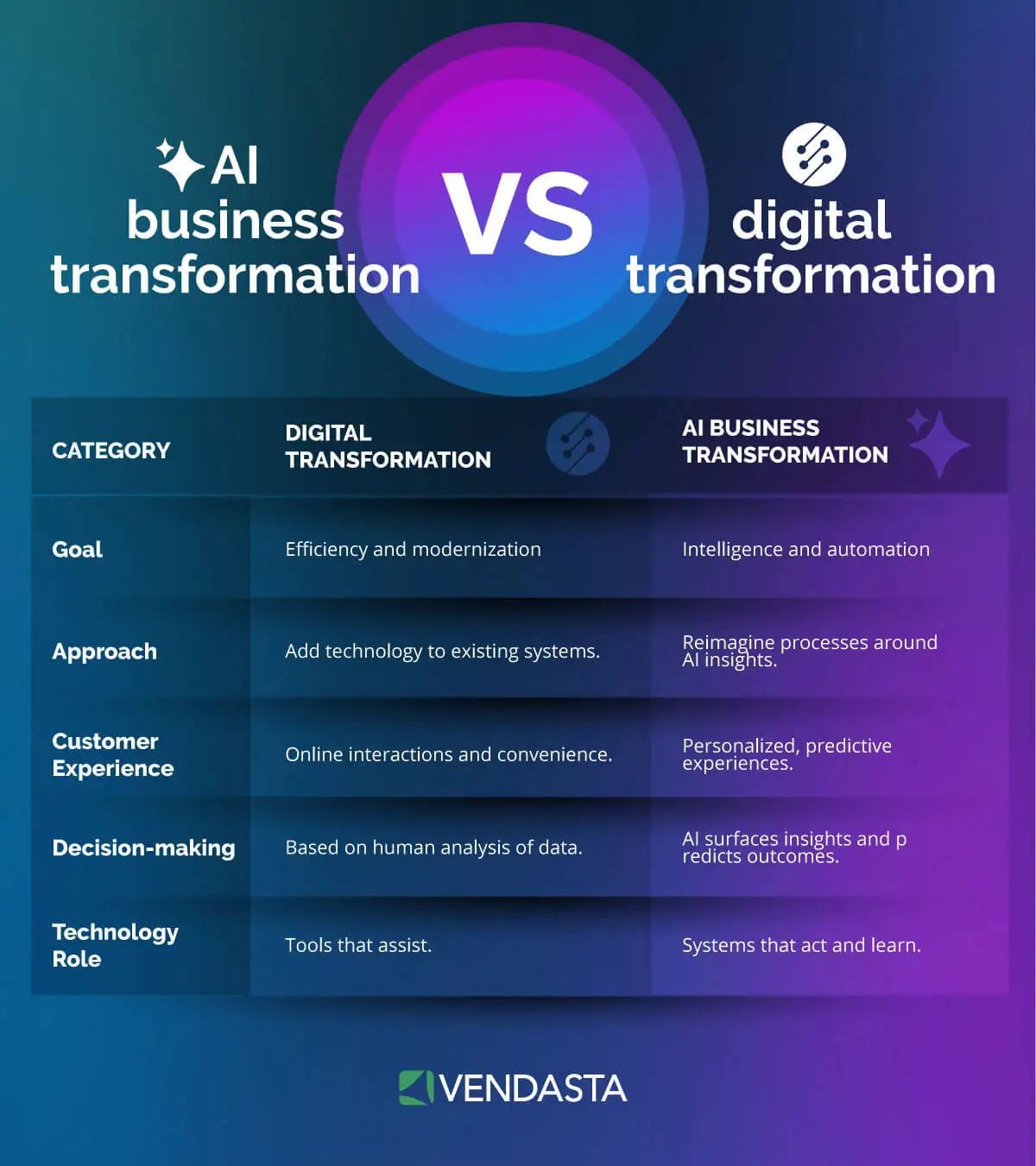
AI-native SaaS is software in which AI executes the core workflow. Gartner defines AI-native as a framework that puts AI at the core of how a business creates and delivers value. AI also shapes how the business captures value. This makes AI inseparable from the company’s products and operations, as well as its competitive advantage.
The practical test is subtraction. Remove the AI: if the product still delivers its core value, you have AI-enabled software with features attached. That is the shift in how AI transforms business operations: software that completes the work instead of organizing it for humans.
Core Characteristics of AI-Native SaaS Products
Products that pass the subtraction test share four traits:
- End-to-end workflow execution: The system completes multi-step tasks, the pattern behind AI workflow automation.
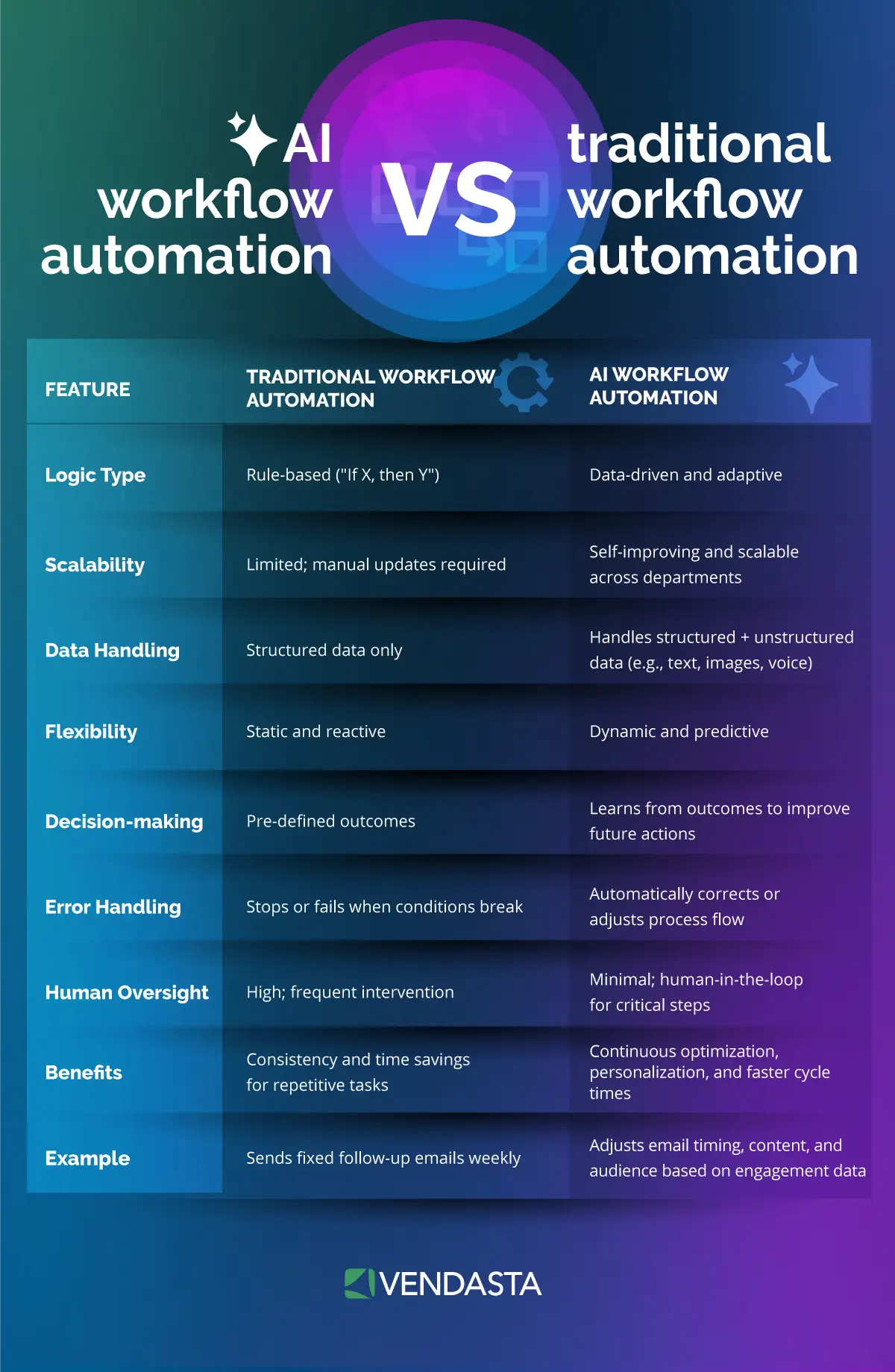
- Context from business data: Every response draws on the specific business’s operational records, including its calendar. The business’s knowledge base then grounds the response instead of leaving the model to produce generic output.
- Governance as architecture: IDC’s definition of AI-native includes “policy controls, observability, auditability, recovery, and human accountability” as structural requirements of the architecture.
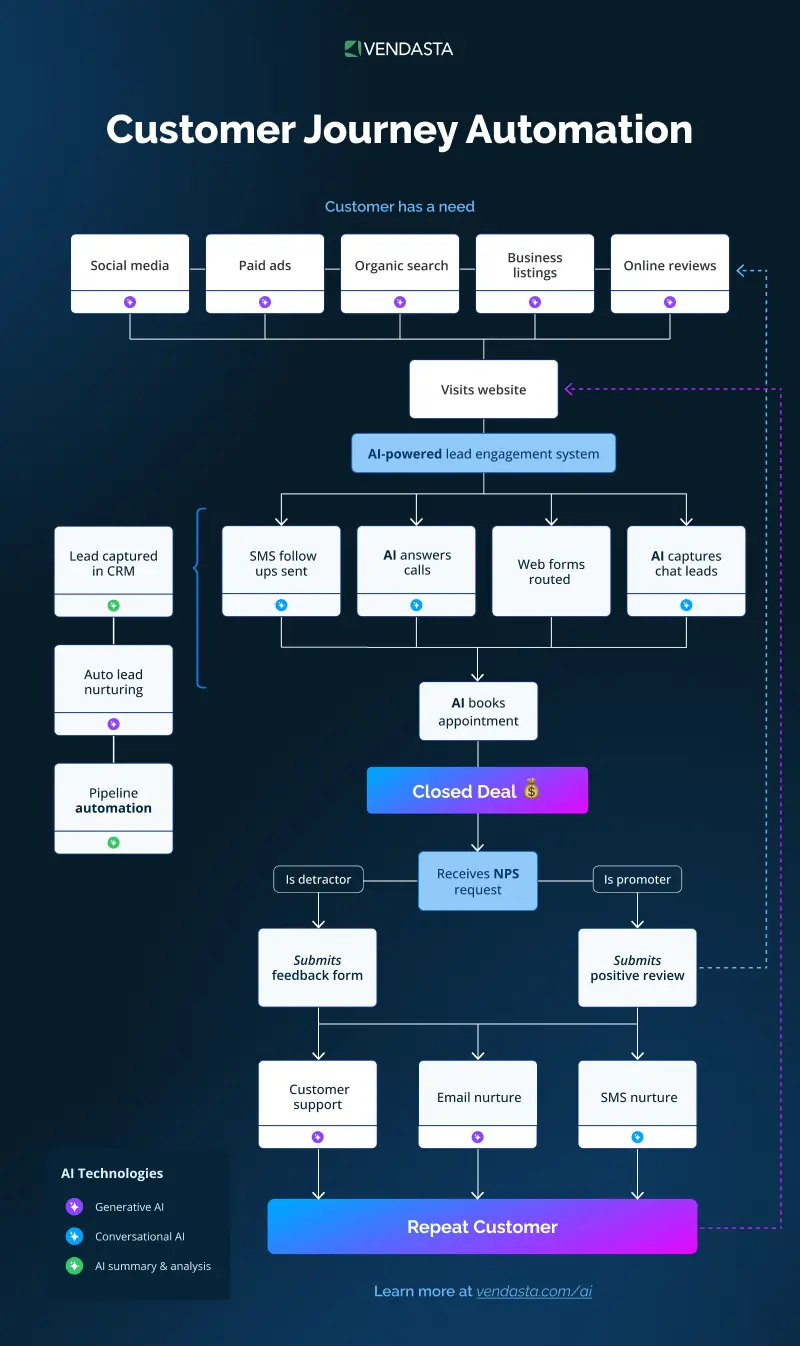
- Journey-level orchestration: AI handles acquisition and engagement workflows. It then supports retention, the foundation of customer journey automation.
AI-Native Apps vs. AI-Enabled SaaS: What’s the Real Difference?
ICONIQ Growth’s playbook (n=300 software executives) split the field three ways: 31% embedded AI features into existing products, 37% launched standalone AI products, and 32% built AI-native, where model inference and continuous learning drive customer value. ICONIQ found 47% of AI-native companies had reached critical scale and proven market fit, against 13% of AI-enabled companies. Buyers distinguish AI-native companies from feature-led vendors by examining their architecture.
Forrester now states that customer relationship management (CRM) software must place AI in its foundation.
Why the Shift to AI-Native Is Accelerating in 2026
G2’s 2026 report also found 87% of buyers are more likely to purchase from a vendor offering transparent AI than a cheaper black-box competitor, and its 2025 edition found 49.5% of enterprise buyers had already switched vendors for better AI features.
Menlo Ventures reported enterprise generative AI spending at $37 billion in 2025, up 3.2× from $11.5 billion in 2024. As enterprises spend more on generative AI, buyers expect comparable capabilities before a vendor’s demo starts. The Federal Reserve Banks’ survey (n=6,500+) found 46% of small employer firms use AI, with writing and marketing the top task at 83%, the pattern behind broader AI marketing trends.
The Build-vs-Buy Trap That Is Costing Vendors Deals
When product teams defer a build-vs-buy decision, competitors gain more time to ship.
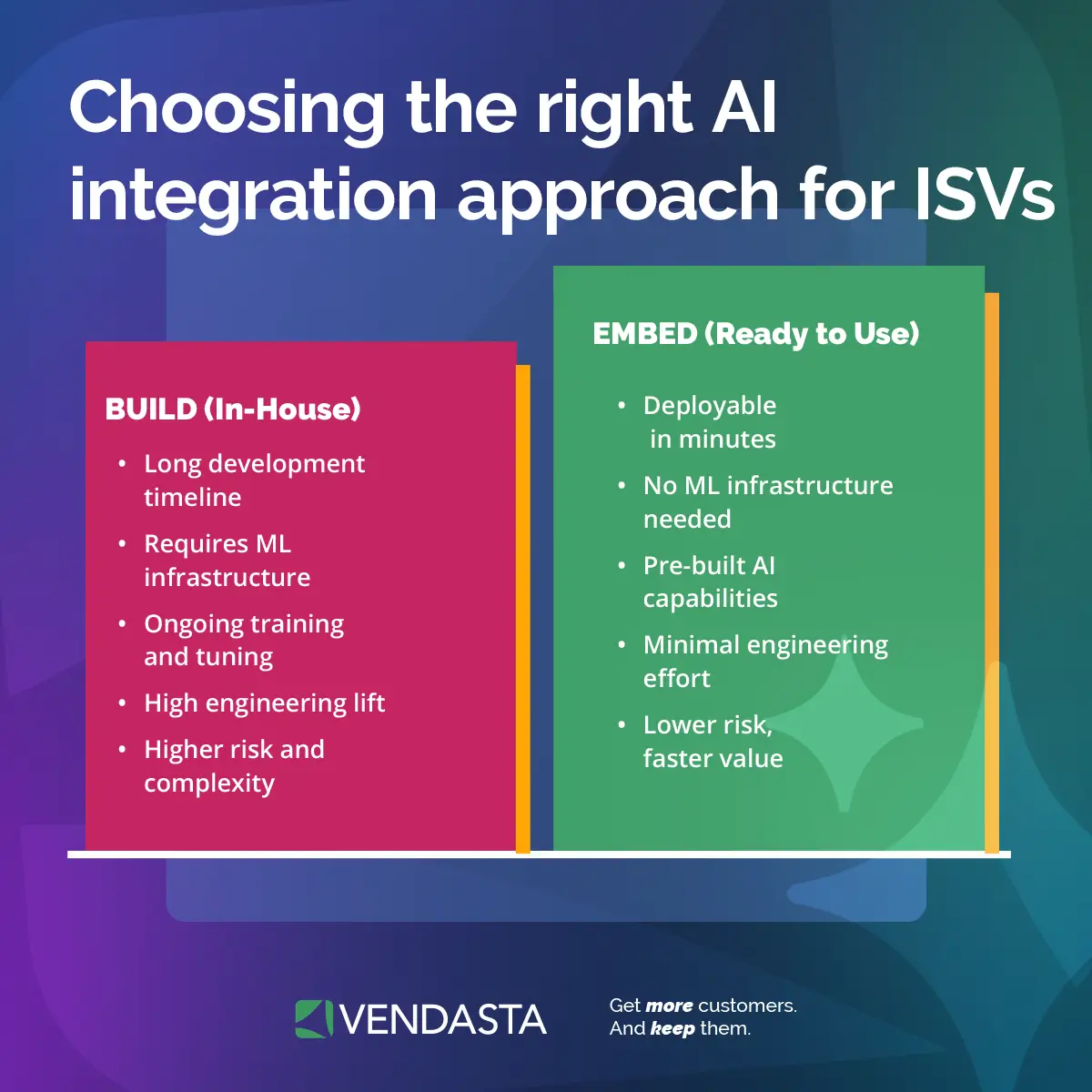
Product leaders can assess that cost through the following figures:
- Economics: A mid-market production AI system runs $80K–$350K; enterprise platforms run $400K–$1.2M+ (Netguru, 2026). Fully loaded machine learning (ML) engineers cost $220K–$340K per year each. Mavvrik and Benchmarkit found 85% of companies miss AI cost forecasts by more than 10% (2025, n=372).
- Delivery risk: Gartner’s January 2026 retrospective found that organizations abandoned at least 50% of generative AI projects after proof of concept. Forrester was blunter: three out of four companies that build aspirational agentic architectures on their own will fail.
Most teams already buy commodity workflows: Menlo Ventures’ 2025 enterprise survey (n=495) found enterprises now purchase 76% of AI use cases, up from a 47%/53% split in 2024.
What AI-Native Agentic SaaS Looks Like in Production
Agentic means the AI completes the whole workflow. An AI employee answers the 11 p.m. call your customer’s voicemail would have lost. It qualifies the lead. The system then books against a real calendar through AI appointment booking.
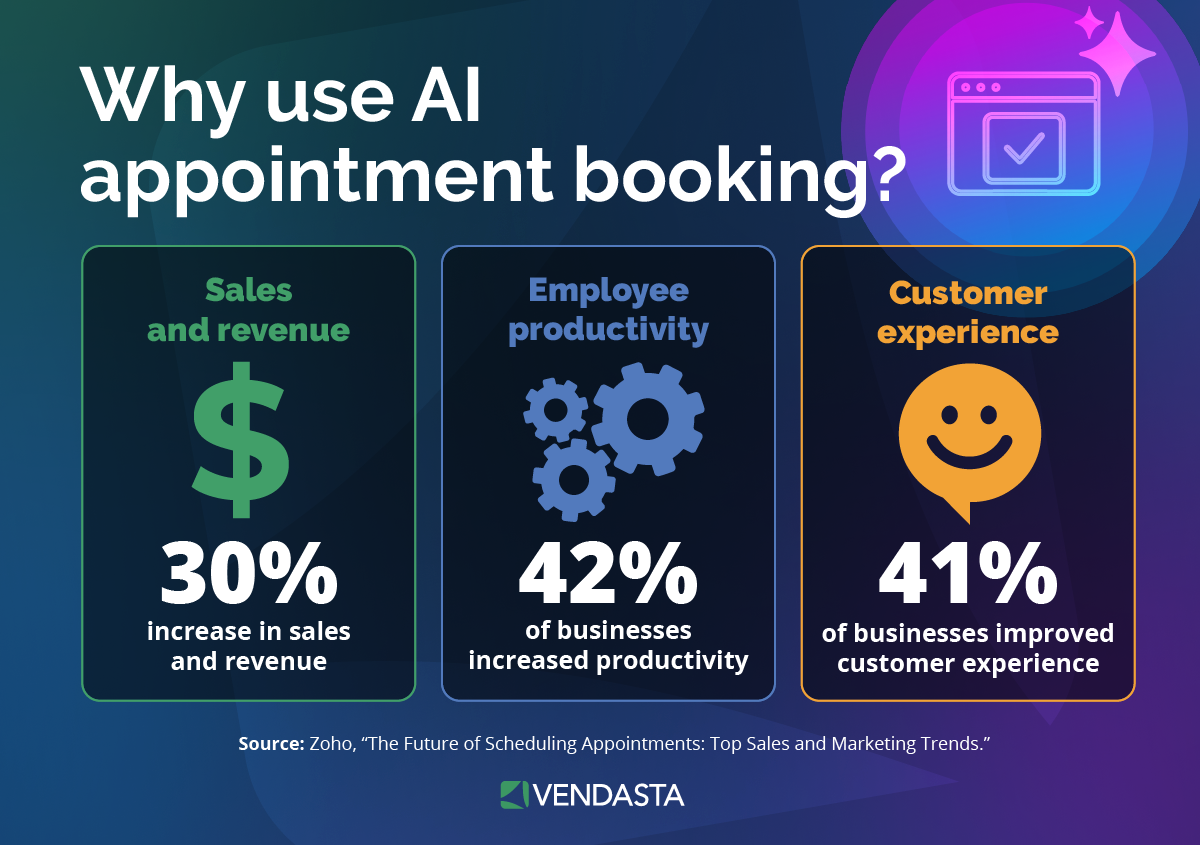
In one verified deployment, Elite Web Professionals’ AI Receptionist handled 1,017 calls and captured 778 qualified leads, a 76% conversion rate, within four months.
The Architecture Behind AI-Native SaaS Products
Production deployments depend on the infrastructure layer.
1. Multi-Tenant Context Isolation
In multi-tenant SaaS, isolation is where costs hide. Pinecone documents that querying one tenant’s namespace costs one read unit while metadata filtering across a shared 100 GB namespace costs 100.
The shared-namespace shortcut looks cheap in a pilot; at thousands of tenants it is a per-query cost multiplier and a permanent maintenance burden.
2. Orchestration and Governed Workflows
UC Berkeley’s taxonomy of multi-agent failures (NeurIPS 2025) measured failure rates of 41%–86.7% across seven state-of-the-art open-source multi-agent systems. Production systems need deterministic guardrails and escalation paths around probabilistic models. They also need audit trails.
3. Real-Time Multi-Channel Communication
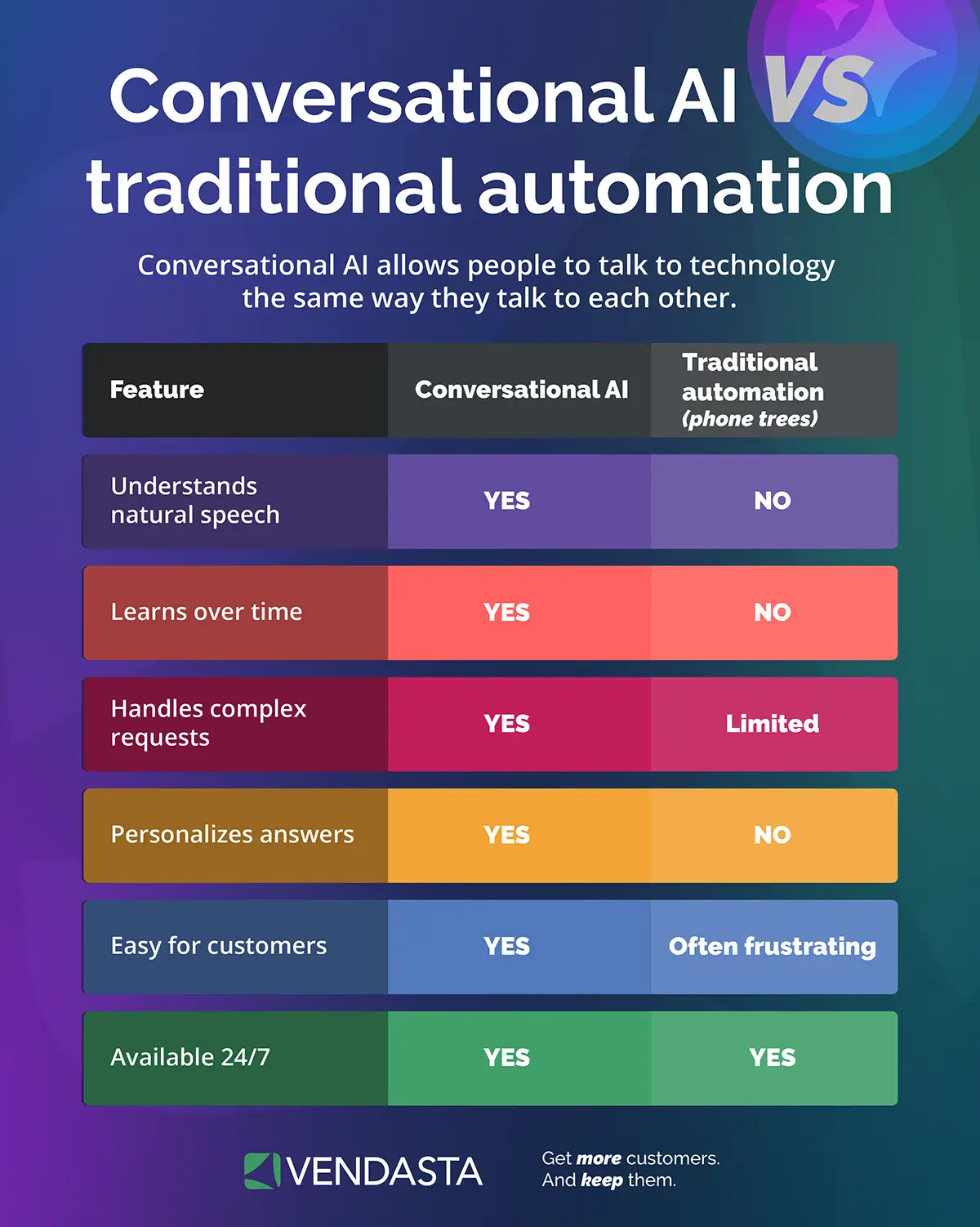
Conversational AI infrastructure with a unified inbox and CRM logging holds one conversation across phone, web chat, SMS, and social messaging.
4. Continuous Data Ingestion and Learning
Production systems start with training AI on business-specific data, then keep ingesting appointments and reviews. They update CRM records as a separate step.
5. Billing and Provisioning Infrastructure
Futurum found that 42.3% of buyers prefer per-seat pricing when vendors bill AI functionality separately, so meter the AI as its own line rather than folding it into the seat price.
How ISVs Can Compete With AI-Native Platforms Without Building From Scratch
Independent software vendors (ISVs) need to close the demo gap in their vertical before competitors drive more customer churn. They do not need to out-build Salesforce.
Step 1: Separate Core Roadmap From AI Infrastructure
Keep engineers on what differentiates you; embed what doesn’t. An IBM executive told CIO.com: if you need to get something into production quickly, speed may outweigh the desire to build. Map your AI integration path for SaaS companies around that split.
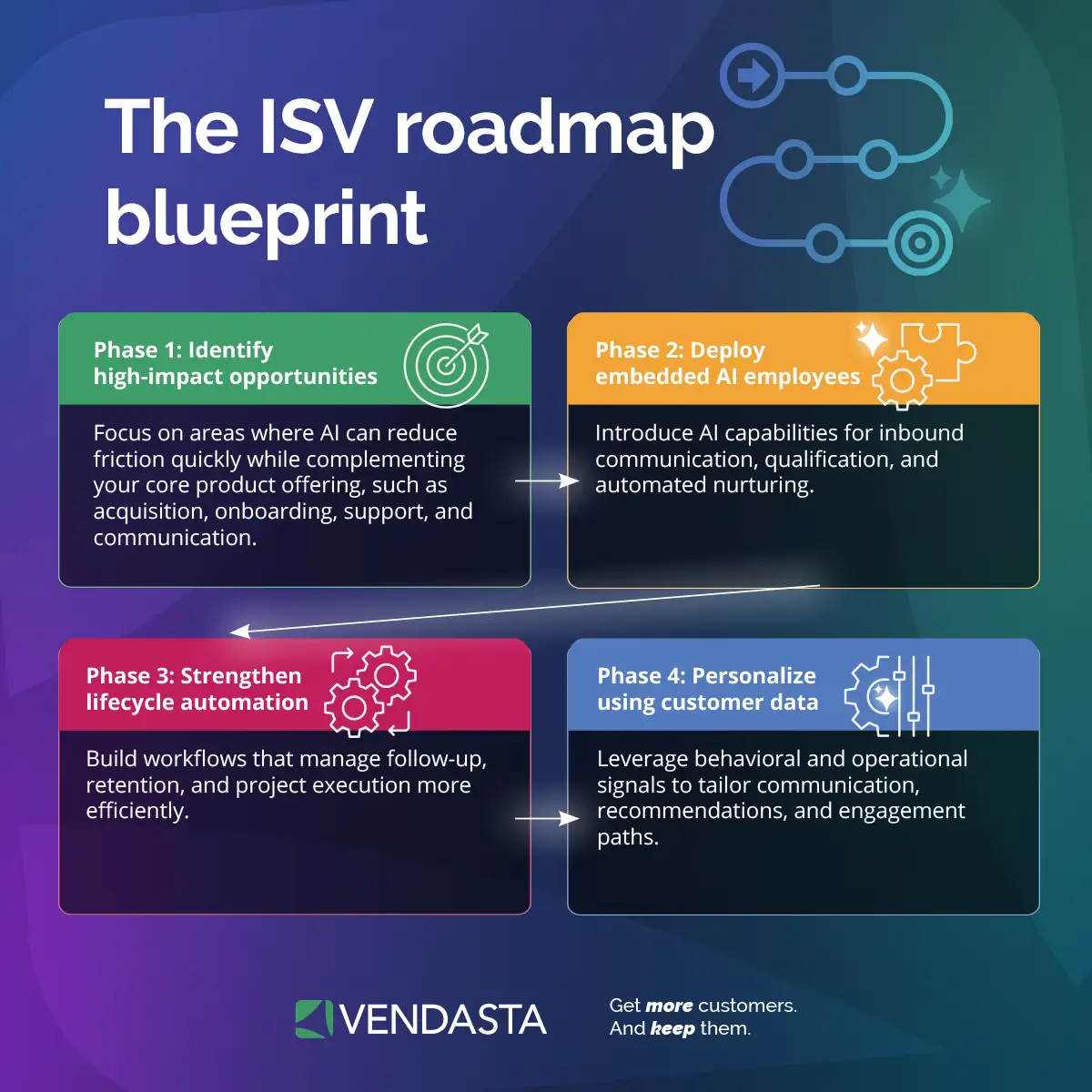
Step 2: Evaluate Embed-First Platforms With Real Production Depth
Gartner estimates that only about 130 of the thousands of agentic AI vendors are real, a pattern it calls agent washing. Ask any prospective partner for a live multi-tenant deployment at your scale and isolation guarantees. Then inspect its escalation logic.
Step 3: Start With One High-Value Workflow
Missed calls are a practical first workflow for vertical SaaS: an AI receptionist for small business turns a universal pain into attributable bookings. On a home services or dental platform, the 9 p.m. call that hits voicemail is a lost job; the AI Receptionist books it against the live calendar instead. AI reputation management is a strong second; BrightLocal’s 2025 survey found the majority of consumers preferred an AI-generated review response in a blind test.
Step 4: Build a Monetization Model Before You Launch
SMB Group found 81% of small and medium businesses (SMBs) are willing to pay a premium for AI capabilities in applications they already use. Decide the packaging up front. For recurring packaging, choose an add-on SKU or premium tier. Alternatively, use outcome pricing, the model Intercom proved with $0.99 per resolution.
Step 5: Track AI-Attributable Revenue Outcomes
Instrument the AI layer like a revenue line: track calls answered and appointments booked. Log the AI customer acquisition pipeline in a CRM with AI. In Vendasta’s own study of 200,000 client accounts, two-year retention climbs from 30% with one product to roughly 50% with two, and to 80% with four, which turns your product into a customer retention platform.
How Vendasta Helps Software Vendors Ship AI-Native Capabilities
Vendasta built this infrastructure for its own channel: 66,000+ partners serving 8.2 million local businesses.
AI Employees You Can White-Label and Ship
The Vendasta AI Workforce includes AI Receptionist, AI Reputation Specialist, AI Sales Assistant, and AI Support Agent, each completing end-to-end workflows using the business’s own data.
Built for Multi-Tenant Scale
Dedicated single-tenant architectures require teams to provision infrastructure for each client. Vendasta’s multi-tenant AI orchestration deploys AI Employees across thousands of partner accounts simultaneously, each with brand context isolation. The Multi-Location Portal monitors reviews and listings across thousands of locations for franchise customers, including their Google Business Profiles.
Clean Integration Into Your Existing Stack
Your customers see only your brand. The Vendasta Marketplace adds 250+ resellable products, and billing runs through Stripe-backed Merchant Services at 2.9% + $0.30, so the AI layer runs and bills inside your existing product.
Deployment and Monetization
AI Employees deploy through that orchestration layer under your brand, and wholesale pricing runs up to 65% below retail with no volume commitments, so you keep the margin you set. Product leaders evaluating the embed path can walk through multi-tenant deployment and tenant isolation with Vendasta’s team at the weekly AI Jump Start session.
AI-Native SaaS Tools and Platforms Worth Knowing in 2026
Salesforce Agentforce reached $1.2 billion in ARR, or annual recurring revenue, per CRN, tripling year over year, though KeyBanc estimates only about 23,000 of 150,000 Salesforce customers use it.
An August 2026 audit found that while vendors advertise resolution rates of 65 to 86 percent, production evidence clusters at 40 to 70 percent. ServiceNow is a Leader in both Gartner’s Customer Engagement Center Magic Quadrant and Forrester’s Q1 2026 evaluation.
Zendesk lands as a Forrester Strong Performer, while HubSpot Breeze sits as a Challenger in Gartner’s 2026 CRM Sales Magic Quadrant.
For an ISV serving local businesses, the relevant category is embeddable, white-label AI infrastructure.
Common Mistakes When Transitioning to AI-Native SaaS Architecture
Five recurring implementation risks appear across the cited analyst, academic, and regulatory evidence.
Mistake 1: Shipping Isolated Features Instead of Complete Workflows
IDC warns that application programming interfaces (APIs), Model Context Protocol (MCP) servers, assistants, and tool wrappers provide agent access but do not by themselves create true AI-native architecture. A summarize button doesn’t defend against a competitor whose AI books the appointment.
Mistake 2: Underestimating Multi-Tenant Complexity
Embeddings aren’t anonymized data — access controls need to carry through chunking, embedding, and retrieval, not just the application layer. In a regulated vertical, one tenant’s embedding surfacing in another tenant’s retrieval is a reportable security incident against your brand.
Mistake 3: Ignoring Governance and Escalation Logic
A tribunal ordered Air Canada to pay CAD $650.88 after finding it did not take reasonable care to ensure its AI assistant was accurate. Regulators now assume governance is in place: EU AI Act Article 50 transparency obligations took effect August 2, 2026, and California’s ADMT rules require compliance for significant decisions beginning January 1, 2027.
Mistake 4: Measuring Adoption Instead of Outcomes
A Gartner survey found 40% of IT leaders piloting M365 Copilot, but only 5% of completed pilots moved to larger deployment. Report resolved conversations and booked appointments, then connect them to attributed revenue.
Mistake 5: Waiting Until the Product Is Perfect
Menlo Ventures found that 47% of AI deals convert to production, compared with 25% for traditional SaaS. Start with one production workflow rather than waiting to define a full platform.
The Future of AI-Native SaaS: What’s Coming Next
Product teams are moving from prompted AI toward systems that initiate actions.
Proactive Intelligence
AI lead nurturing follows up before a rep remembers to. An automation platform can monitor transaction data and trigger re-engagement.
Cross-Agent Coordination at Scale
The Model Context Protocol had 10,000+ active public servers when Anthropic donated it to the Linux Foundation’s Agentic AI Foundation in December 2025, and the Agent2Agent protocol passed 150 supporting organizations with version 1.0 in production. Build against these two; the IETF and W3C drafts are not yet standards.
Personalization at the SMB Level Without Manual Configuration
The U.S. Chamber’s 2025 survey found 87% of AI-using SMBs agree AI improves customer communication. Vendors can tune the AI customer experience for each business using its own data as the next step.
AI-Powered Pricing Intelligence for SaaS Vendors
Forrester analyst Lisa Singer says vendors will continue charging per seat for copilots because humans drive their use. She expects workflow automation agents to migrate to pricing based on usage. Other models will tie price to outputs or outcomes.
Ship AI-Native SaaS Before Your Next Evaluation
AI-native SaaS is now a buying criterion, and competitors win more evaluations each quarter you defer. Pick the one workflow your customers lose money on today, usually the missed call, and embed a white-label AI layer under your brand while your engineers stay on your core roadmap.
Run that evaluation this quarter, using multi-tenant isolation and escalation logic as your first two test criteria. If you want to walk through multi-tenant deployment and tenant isolation with a team that has already done it, Vendasta designed its weekly AI Jump Start session for exactly that conversation. Bring your architecture questions and leave with a clearer path to your first embedded AI workflow.
If you’re ready to move faster, request a demo and see how the platform fits your existing stack before you commit to a build.
AI-Native SaaS FAQs
Vendors apply “AI-native” to everything from a summarize button to full workflow execution.
1. What is AI-native SaaS?
AI-native SaaS executes core workflows; remove the AI and the product loses its primary value.
2. How is AI-native SaaS different from AI-enabled SaaS?
AI-enabled products bolt features onto an existing experience; AI-native products deliver the value itself. ICONIQ found the AI-native group reached scale at more than three times the rate of AI-enabled peers.
3. What are the benefits of AI-native products for SMB software vendors?
Vendors close competitive gaps and add revenue per account from AI add-ons or premium tiers. Vendasta’s own 200,000-client study found two-year retention rises from 30% at one product to 80% at four, a pattern that holds for embedded AI features too.
4. What is AI-native agentic SaaS?
AI-native agentic SaaS completes multi-step workflows autonomously. It handles the call through qualification, then books the appointment and logs the interaction.
5. How long does it take to add AI-native features to an existing SaaS product?
In-house builds take three to six months for a mid-market system and longer at enterprise scope. Embedding white-label AI Employees reduces the amount of infrastructure your team must build.
6. What AI features do SMB customers want from SaaS products?
In the U.S. Chamber’s 2025 survey, 87% of AI-using SMBs said AI improves how they communicate with customers.
7. Can I white-label AI features without building them myself?
Yes. Vendasta’s AI Employees deploy under your brand across your customer base, with wholesale pricing that lets you set your own retail price and margin.
8. What is the risk of not offering AI-native features as a software vendor?
Nearly half of enterprise buyers have already switched vendors for better AI features. G2’s AI Search report found 69% of buyers chose a different vendor after an AI assistant interaction, and 33% bought from a vendor they had never heard of.
9. How do AI-native SaaS platforms handle data privacy and governance?
A credible platform isolates data at the tenant level and carries access controls through embedding and retrieval. It also keeps audit logs and meets EU AI Act and GDPR disclosure obligations.
10. What should software vendors look for when evaluating an AI-native platform to embed?
Look for live multi-tenant deployments at comparable scale and brand context isolation. Evaluate escalation and override controls alongside integration APIs. Then confirm that the billing model preserves your margin.