About Us
 Careers
 Leadership
 Board
Board Newsroom
Most content about lead generation for marketing agencies sounds familiar for a reason. Blog posts recycle the same ideas: run ads, post on LinkedIn, publish content, send cold emails. Yet many agencies and service-based businesses still struggle with unpredictable pipelines, low-quality leads, and long sales cycles that drain time and margin.
The frustration builds when you realize your competitors are not necessarily better marketers. They are simply better system builders. While your business chases cold leads across disconnected tools, others are capturing demand earlier, responding faster, and nurturing prospects automatically until they are ready to buy.
This guide breaks that cycle. You will learn a modern, repeatable approach to lead generation for marketing agencies that combines proven acquisition channels, automation, and AI-powered workflows. These are systems you can realistically implement in under 90 days, without hiring a larger sales team or adding more fragmented software.
Attract, convert, and retain more customers with less manual work
TL;DR
- Lead generation for marketing agencies works best as a system, not a collection of disconnected tactics.
- Speed, follow-up, and qualification matter more than volume, especially for high-value agency services.
- AI-powered platforms like Vendasta help automate capture, response, and nurturing, so your team can focus on closing and strategy.
What Is Lead Generation for Marketing Agencies?
Lead generation for marketing agencies is the process of attracting, qualifying, and nurturing businesses that are actively evaluating ongoing marketing support, not one-time services.
Unlike traditional SMB lead generation, agency lead generation involves longer sales cycles, higher average contract values, and relationship-driven buying decisions where trust and expertise matter as much as price.
For digital agency lead generation, quality and intent outweigh raw volume. A small number of well-qualified leads can outperform hundreds of unvetted inquiries.
The agencies that win focus on clear positioning, fast follow-up, and consistent nurturing. Strong systems, supported by the right online lead generation tools for agencies, are often the biggest differentiator between inconsistent pipelines and predictable growth.
Why Lead Generation Is Harder for Marketing and Digital Agencies Today
Lead generation for marketing agencies has become more challenging over the past few years, even for teams doing “all the right things.” The issue is not a lack of tactics. It is that the market, buyer behavior, and economics have shifted faster than most agency playbooks.
Increased Competition and Service Commoditization
The barrier to entry for digital services is lower than ever. New agencies, freelancers, and productized service providers enter the market daily, often competing on price rather than outcomes.
When services look interchangeable on the surface, lead quality drops, and prospects take longer to commit.
This commoditization makes lead generation for digital marketing agencies less about visibility and more about clear differentiation.
Buyers Do More Research Before Talking to Sales
Agency buyers are far more informed than they used to be. Gartner reports that B2B buyers spend only about 17% of their buying journey meeting with potential vendors. The rest of the time is spent researching independently, comparing options, and validating trust signals.
For agencies, this means leads often arrive later in the journey and expect immediate, relevant responses. If follow-up is slow or generic, they move on quickly.

Rising Ad Costs and Declining Outreach Performance
Paid acquisition is also getting more expensive. While the average cost per lead continues to rise year over year across most digital channels, cold email and outbound response rates are declining as inboxes become more crowded.
Digital agency lead generation can no longer rely on volume-based outreach alone. Precision, timing, and personalization now determine whether a lead converts.
Fragmented Tools Slow Everything Down
Many agencies still rely on disconnected tools for ads, forms, CRM, email, and follow-up. This fragmentation creates gaps where leads are missed, responses are delayed, or context is lost.

In practice, systems and speed are often the difference between winning and losing a deal. Agencies that streamline lead capture, qualification, and nurturing consistently outperform those juggling multiple tools and manual workflows.
These challenges explain why modern lead generation for agencies requires more than tactics. It requires a connected system designed for how buyers actually behave today.
The Core Lead Generation Channels Every Agency Should Use
There is no single “best” channel for lead generation for marketing agencies. The agencies that build predictable pipelines use multiple channels, each aligned to a different level of buyer intent.
What matters most is not how many channels you use, but how intentionally you execute and connect them as part of a broader system for how to find clients for digital marketing services.
Below is a practical breakdown of the core lead generation channels every agency should use, organized by intent level and paired with execution tips that improve quality, not just volume.
Inbound Lead Generation Channels for Agencies
Inbound channels capture demand from buyers who are already searching for solutions. These leads tend to convert at higher rates, especially when content and follow-up are aligned.
Content Marketing and SEO
Content and SEO remain foundational for digital agency lead generation because they compound over time. Educational articles, guides, and comparison pages attract prospects early in their research process.
Execution tips:
- Focus on problem-driven keywords, not just service terms
- Build topic clusters around core services to signal authority
- Include clear calls to action that match the reader’s intent, such as audits or assessments
For the full set of channels and tactics, see our lead generation strategies for agencies.
Paid Search and Paid Social
Paid channels are effective for capturing high-intent searches and accelerating results. However, rising costs mean targeting and messaging must be precise.
Execution tips:
- Bid on bottom-funnel keywords tied to urgency and outcomes
- Use retargeting to re-engage visitors who consumed content but did not convert
- Align ad copy closely with landing page messaging to improve quality scores
Conversion-Focused Landing Pages and Forms
Traffic alone does not generate leads. Conversion-focused pages turn attention into action.
Execution tips:
- Use single-purpose landing pages with one clear offer
- Reduce form friction by asking only for essential information.
- Add trust signals such as testimonials, certifications, or case highlights
Educational Assets: Audits, Benchmarks, and Calculators
Educational offers convert well because they provide immediate value while qualifying intent.
Execution tips:
- Tie assets to a specific problem your ideal client wants solved
- Use gated content to segment leads by service interest
- Follow up with insights based on the data prospects submit
Outbound and Proactive Lead Generation Strategies
Outbound channels create demand by reaching prospects before they start searching. These strategies work best when they are targeted, personalized, and supported by strong follow-up systems.
Cold Email and LinkedIn Outreach
Outbound outreach still works, but only when it feels relevant and human.
Execution tips:
- Personalize messages using industry, role, or recent activity
- Lead with insights or observations, not a sales pitch
- Automate follow-up sequences without automating tone
Account-Based Marketing for High-Value Prospects
Account-based marketing focuses efforts on a defined list of high-fit accounts rather than broad outreach.
Execution tips:
- Identify accounts with clear growth signals or recent changes.
- Coordinate ads, outreach, and content around the same accounts.
- Measure success by engagement and meetings, not lead volume.
Partnerships and Co-Marketing
Partnering with complementary providers expands reach without increasing ad spend.
Execution tips:
- Choose partners that serve the same audience without competing
- Co-host webinars, publish joint content, or bundle offers
- Share lead data and follow-up responsibilities clearly
Event-Based Outreach
Webinars, workshops, and local events create urgency and a reason to engage.
Execution tips:
- Promote events through email, social, and paid retargeting
- Capture questions and attendance data for personalized follow-up
- Repurpose event content into on-demand assets
Referral and Ecosystem-Driven Lead Generation
Referral-based channels consistently produce some of the highest-quality leads for agencies because trust is already established.
Client Referral Programs
Happy clients are often your best lead source, but referrals rarely happen by accident.
Execution tips:
- Ask for referrals at clear success milestones
- Make it easy with templates, incentives, or simple referral forms
- Follow up quickly to maintain momentum and trust
Strategic Technology and Channel Partnerships
Technology vendors and platform partners can be powerful lead sources.
Execution tips:
- Align with platforms your ideal clients already use
- Position your business as an implementation or growth expert
- Share success stories that demonstrate joint value
Marketplace Listings and Reseller Ecosystems
Marketplaces and partner directories connect agencies with buyers actively seeking help.
Execution tips:
- Optimize profiles with clear positioning and proof points
- Respond quickly to inquiries to stand out
- Use marketplace leads to start long-term client relationships, not one-off projects
The strongest lead generation for agencies combines inbound, outbound, and ecosystem channels into a single, connected system. Customer engagement platforms like Vendasta support this approach by unifying lead capture, CRM, automation, and follow-up, helping agencies respond faster, qualify better, and convert more consistently across every channel.

A Step-by-Step Lead Generation Framework for Digital Marketing Agencies
Effective lead generation for digital marketing agencies is not about chasing the next tactic. It is about building a repeatable system that consistently attracts the right prospects, engages them at the right moment, and moves them toward a sales conversation.
The framework below breaks lead generation into five clear steps that work together as a single engine rather than as standalone activities.
Step 1: Define Your Ideal Client Profile and Buying Triggers
Every successful lead generation system starts with clarity. Without a well-defined ideal client profile, even high volumes of leads will feel unqualified and hard to close.
Start by documenting:
- Industry focus and business model
- Company size, typical budget range, and decision-maker roles
- Growth signals such as new locations, funding, hiring, or declining performance
Next, map common pain points and moments of urgency. These are the triggers that cause prospects to actively seek help, such as declining lead volume, rising ad costs, or internal marketing turnover.
Lead generation for agencies improves dramatically when messaging aligns with real-world pressures rather than generic service descriptions.
Step 2: Capture Leads across Every Touchpoint
Modern buyers engage across multiple channels before raising their hand. If your business only captures leads through a single form or page, you are missing opportunities.
High-performing digital agency lead generation systems capture leads through:
- Website forms and landing pages
- Live chat and AI-powered chat experiences
- Voice and call handling for inbound inquiries
- Paid ads, social platforms, and content downloads
Always-on capture matters because buyers expect instant responses.

Step 3: Qualify, Route, and Respond Instantly
Speed-to-lead is one of the strongest predictors of conversion. Multiple studies show that responding within the first five minutes significantly increases the chance of connecting with a prospect.
To improve response speed:
- Automatically qualify leads based on intent, service interest, or firmographic data
- Route high-intent leads directly to sales while nurturing early-stage inquiries
- Use workflow automation and AI to handle first responses when teams are unavailable
AI-powered tools matter here because they remove human bottlenecks.
Step 4: Nurture Leads Until They are Sales-Ready
Not every lead is ready to buy immediately. Nurturing bridges the gap between first touch and sales readiness, especially for longer agency sales cycles.
Effective lead nurturing includes:
- Email and SMS follow-up sequences
- Retargeting ads that reinforce key messages
- Content sequencing based on service interest and behavior
Personalization is the differentiator. Using first-party data, such as page visits, content engagement, or previous conversations, allows your business to send relevant messages rather than generic follow-ups. This approach builds trust and keeps your agency top of mind until timing aligns.
Step 5: Track, Optimize, and Scale What Works
A repeatable lead generation framework depends on visibility. Without clear data, it is impossible to know which channels and messages drive real revenue.
Focus on:
- Funnel visibility from first touch to closed deal
- Attribution basics to understand which channels influence conversion
- Performance trends across lead quality, conversion rates, and response times
Use this data to refine campaigns, double down on high-performing channels, and remove friction from underperforming steps. When lead generation for agencies is treated as a system, small improvements at each stage compound into meaningful growth.
This step-by-step framework creates consistency, reduces guesswork, and enables predictable scaling. With the right systems and tools in place, digital marketing agencies can move from chasing leads to confidently managing demand.
How AI Is Changing Lead Generation for Agencies
Automation has been part of lead generation for years, but AI is changing how agencies execute, not just how they save time. Instead of automating individual tasks, modern AI systems actively participate in the lead generation process.
They engage prospects, interpret intent, and take action in real time. For marketing and digital agencies, this shift is redefining what scalable growth looks like.
AI Chat and Voice Receptionists Qualifying Leads 24/7
Today’s buyers expect immediate responses, regardless of when or how they reach out. AI-powered chat and voice receptionists meet that expectation by engaging prospects the moment interest appears.
These AI-driven experiences:
- Answer common questions instantly through chat or phone
- Qualify leads based on services, urgency, and fit
- Route high-intent prospects to sales or book meetings automatically
For lead generation for agencies, this means no missed opportunities after hours or during busy periods. Vendasta’s AI Employees are designed to be live in minutes, giving your business always-on coverage without adding headcount.
AI-Assisted Follow-Ups and Lead Nurturing
Manual follow-up is one of the most common breakdowns in digital agency lead generation. AI changes this by maintaining consistent, personalized engagement at scale.
AI lead nurturing can:
- Trigger follow-ups based on behavior, not just time delays
- Adjust messaging based on previous interactions
- Maintain tone and brand consistency across channels
By handling routine follow-up and nurturing tasks, AI ensures every lead receives attention, even when your team is focused on active deals.
Predictive Insights from Historical Lead Data
AI is not limited to reacting to leads as they come in. It also learns from past performance. By analyzing historical lead data, AI can surface patterns that humans often miss.
These insights help agencies:
- Identify which leads are most likely to convert
- Predict optimal timing for outreach
- Spot trends in channel performance or buyer behavior
This predictive layer helps lead generation for digital marketing agencies move from reactive to proactive, improving efficiency and close rates.
AI that Acts, not Just Reports
The biggest shift is that modern AI does more than analyze data. It takes action. It is built to proactively suggest and execute next steps, such as recommending follow-ups, adjusting campaigns, or flagging stalled opportunities.
Instead of waiting for manual input, AI becomes an active participant in your lead generation system. It helps agencies respond faster, nurture smarter, and focus human effort where it has the greatest impact.
As AI continues to mature, the agencies that adopt it as an execution partner, not just a productivity tool, will set the pace for growth and client acquisition.
The Top 11 Lead Generation Tools for Agencies (2026)
To build a predictable pipeline in 2026, you need a tech stack that doesn’t just collect data but actually acts on it. Here are the top tools currently helping agencies scale their acquisition efforts through automation, intelligence, and unified workflows.
1. Vendasta
Vendasta is the leading AI-powered customer acquisition and engagement platform specifically built for those serving SMBs. Unlike fragmented tools, it provides a unified end-to-end system where AI Employees handle the heavy lifting of lead capture and qualification.
- Best for: Midsize and growth-focused agencies looking for an all-in-one platform to attract, engage, and retain clients at scale.
- Pros: Out-of-the-box AI Employees (chat and voice) that deploy in minutes; 17+ years of proprietary local business data for smarter AI; unified CRM and marketing automation.
- Cons: The sheer breadth of the platform can have a learning curve for very small, single-service freelancers.
2. VitaMail
VitaMail helps agencies manage outreach campaigns from a single platform. With VitaMail V5, teams can define their ideal audience, work with their own contact lists or matched leads, connect inboxes, and launch campaigns without switching between multiple tools. The platform also includes email verification, domain health monitoring, and automated warmup to support healthier outreach campaigns.
Best for: Agencies looking to simplify outbound email campaigns and manage outreach from one place.
Pros: Campaign setup and outreach in one platform; built-in email verification and domain health monitoring; automated inbox warmup.
Cons: Some advanced features require higher-tier plans, and free credits may limit initial exploration of the platform.
3. LinkedIn Sales Navigator
The gold standard for social selling, Sales Navigator allows agencies to pinpoint decision-makers within their ICP using advanced search filters and real-time interest signals.
- Best for: Agencies utilizing Account-Based Marketing (ABM) and high-touch outbound prospecting.
- Pros: Access to the world’s largest professional network; highly accurate firmographic data; integration with most major CRMs.
- Cons: Can be expensive for larger teams; requires a significant manual time investment to see high ROI.
4. HubSpot
HubSpot remains a powerhouse for inbound marketing, offering a seamless way to track how prospects interact with your content before they ever speak to a salesperson.
- Best for: Content-heavy agencies that rely on blogging, whitepapers, and webinars to drive inbound inquiries.
- Pros: World-class automation workflows; excellent user interface; comprehensive reporting on the buyer’s journey.
- Cons: Pricing scales quickly as your lead database grows; it can become a Frankenstein of features if not managed properly.
5. Apollo.io
Apollo combines a massive B2B database with an integrated cold outreach platform, making it a favorite for agencies that need to move fast on outbound campaigns.
- Best for: Scaling cold email and LinkedIn outreach sequences quickly and affordably.
- Pros: Massive database of 275M+ contacts; built-in email sequencing; very competitive pricing for small teams.
- Cons: Data accuracy for smaller, local businesses can sometimes be inconsistent compared to niche providers.
6. Leadfeeder
Leadfeeder identifies the companies visiting your website, even if they never fill out a form, by tracking IP addresses and matching them to corporate data.
- Best for: Sales teams that want to follow up with “warm” prospects who are already showing interest in their services.
- Pros: Reveals “hidden” intent; integrates with Slack for real-time alerts when a high-value target is on your site.
- Cons: Only identifies the company, not the specific individual visitor, requiring additional prospecting to find the right contact.
7. Seamless.ai
Seamless uses a search engine approach to find verified cell phone numbers and direct emails in real-time, helping sales teams bypass gatekeepers.
- Best for: High-volume cold calling and direct outreach to executive-level decision-makers.
- Pros: Real-time data verification; powerful Chrome extension that works directly on LinkedIn.
- Cons: The aggressive “social” features in the platform can be distracting; some users report a steeper learning curve for the search syntax.
8. Clearbit
Clearbit focuses on data enrichment, instantly turning a single email address into a full profile including company revenue, tech stack, and job title.
- Best for: Agencies that want to automatically qualify leads the moment they sign up for a newsletter or audit.
- Pros: Exceptional data accuracy; allows for highly personalized automated messaging based on enriched attributes.
- Cons: Primarily geared toward enterprise-level budgets; requires technical setup to get the most value.
9. Instantly.ai
Instantly is a specialized cold email platform designed for high-volume sending while maintaining a focus on deliverability and domain health.
- Best for: Agencies running large-scale cold outreach campaigns across multiple domains.
- Pros: Unlimited email accounts for one flat fee; automated warm-up features to keep emails out of spam folders.
- Cons: Lacks a built-in CRM, meaning you’ll need to export leads to a platform like Vendasta to manage the deal.
10. Loom
Loom allows agency owners to send quick, personalized video audits or pitches, which consistently see higher engagement rates than plain text emails.
- Best for: Breakthrough outreach where showing expertise and personality is more important than volume.
- Pros: Humans connect better with video; shows immediate value (e.g., a 2-minute audit of a prospect’s site).
- Cons: Not a scalable volume play; requires significant time to record personalized videos for every lead.
11. SurferSEO
SurferSEO ensures that your inbound content is built to rank by analyzing top competitors and providing a recipe for your articles.
- Best for: Agencies focused on long-term organic lead generation through high-ranking blog content.
- Pros: Data-backed content optimization; easy-to-use Content Score system; helps predict ranking success.
- Cons: Focuses purely on SEO metrics, so you still need a skilled writer to ensure the content remains engaging and human.
How Vendasta Supports Lead Generation for Agencies at Every Stage
Strong lead generation for marketing agencies depends on how well each stage of the customer journey connects. Gaps between capture, follow-up, and sales are where opportunities are lost.
Vendasta is designed to close those gaps by supporting the full lead lifecycle in one platform, making it easier for agencies to manage demand without juggling disconnected tools.
This includes Vendasta’s AI Workforce, a set of AI Employees that work alongside agency teams to capture, qualify, respond to, and move leads forward automatically.
Lead Capture Across Forms, Chat, Voice, and Campaigns
Leads come from more places than a single website form. Vendasta helps agencies capture inquiries across multiple touchpoints, including website forms, digital campaigns, chat, and inbound phone calls.
This unified approach ensures every interaction is logged in one system, regardless of where it originates.
AI Employees Handling Qualification and First Responses
Fast, relevant responses are critical for lead generation for agencies. Vendasta’s AI Employees handle initial engagement by responding instantly, asking qualifying questions, and routing leads appropriately.
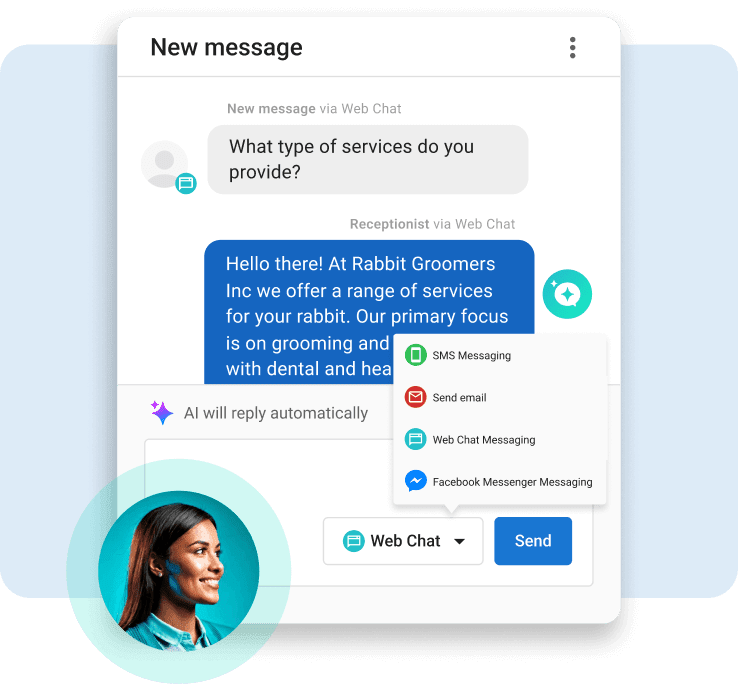
The AI Receptionist plays a key role here. It answers calls and chats 24/7, gathers intent and service details, and ensures high-priority leads are directed to the right person or scheduled automatically. This allows agencies to maintain responsiveness without increasing staffing costs.
CRM and Pipeline Visibility Across Teams
Once a lead is captured and qualified, visibility matters. Vendasta’s CRM gives agencies a shared view of every lead, conversation, and deal stage. Sales, marketing, and account teams can see where each opportunity sits and what actions have already been taken.
This transparency improves handoffs, reduces duplicate outreach, and helps teams focus on the opportunities most likely to convert.
Automation for Follow-Up, Nurturing, and Handoff
Consistent follow-up is one of the biggest drivers of conversion, yet it is often manual and inconsistent. Vendasta automates follow-up and nurturing through email, SMS, and task workflows.
Agencies can build sequences that trigger based on lead behavior, engagement, or stage changes. Automated handoffs ensure leads move smoothly from marketing to sales, without relying on manual reminders.
By connecting capture, qualification, CRM visibility, and automation in one system, Vendasta helps agencies build lead generation processes that are reliable, scalable, and easier to manage as demand grows.
Benchmarks and Metrics That Matter for Agency Lead Generation
Lead generation for marketing agencies becomes predictable when performance is measured against the right benchmarks. While exact numbers vary by niche, deal size, and service mix, understanding industry ranges helps your business identify where systems are working and where improvement will have the greatest impact.
Below are the core metrics that matter most, along with realistic benchmarks to guide optimization.
Conversion Rates by Channel
Not all lead sources perform equally. Tracking conversion rates by channel helps agencies focus investment on quality, not just volume.
Typical benchmarks:
- SEO and content-driven leads often convert at 2 to 5%
- Paid search and paid social range from 3 to 7%, depending on targeting and offer
For digital agency lead generation, higher-intent channels tend to produce fewer leads but stronger close rates.
Speed-to-Lead Benchmarks
Response time is one of the most controllable variables in lead generation for agencies. Multiple studies show that contacting a lead within five minutes significantly increases the chance of conversion.
Common benchmarks:
- Under 5 minutes: highest connection and qualification rates
- 5 to 30 minutes: noticeable drop in engagement
- Over 1 hour: sharp decline in response and close rates
Always-on tools such as AI chat and AI voice agents help agencies meet these expectations consistently.
Cost Per Lead vs Cost Per Acquisition
Cost per lead (CPL) shows how efficiently leads are generated, while cost per acquisition (CPA) reveals the true cost of winning a client.
Key considerations:
- Low CPL does not guarantee a strong ROI if leads do not convert
- Higher CPL can be justified if close rates and contract values are strong
- Tracking both metrics together provides a clearer picture of performance
High-performing agencies optimize for CPA, not just CPL.
How to Measure Success: B2B Lead Generation Benchmarks for Agencies (2026)
To improve your lead generation, you need to know where you stand. Use these 2026 industry benchmarks as a guide.
| Metric | Industry Average | Top 10% Agencies |
| Landing Page Conversion Rate | 2.5% | 8% – 12% |
| Average Response Time | 42 Hours | < 5 Minutes |
| Lead-to-Meeting Rate | 15% | 35%+ |
| Cost Per Lead (B2B Services) | $150 – $300 | $80 – $120 |
Common Lead Generation Mistakes Agencies Still Make
Even experienced teams struggle with lead generation for marketing agencies when small process gaps compound over time. The mistakes below are common across agencies of all sizes and often explain why pipelines feel inconsistent, even when demand exists.
Relying on One Channel Only
Agencies that depend entirely on SEO, paid ads, or outbound outreach expose themselves to volatility. When costs rise, algorithms change, or performance dips, lead flow can stall overnight. A balanced mix of inbound, outbound, and referral channels creates resilience and more predictable growth.
Slow or Inconsistent Follow-Up
Leads lose value quickly. Delayed responses reduce connection rates and signal low urgency to prospects. Without clear ownership or automation, even high-intent leads can go cold before a conversation begins, undermining otherwise strong lead generation efforts.
Sending Every Lead Directly to Sales
Not all leads are ready for a sales conversation. Routing every inquiry straight to sales wastes time and frustrates both teams and prospects. Effective lead generation for agencies includes qualification and nurturing, so sales teams focus on leads that are truly ready to engage.
Using Disconnected Tools with No Shared Data
Fragmented systems create blind spots. When forms, chat, CRM, email, and reporting tools do not share data, context is lost, and follow-up becomes inconsistent. This often leads to missed opportunities, duplicated outreach, and unclear accountability across teams.
Measuring Volume Instead of Revenue Impact
High lead volume can feel productive, but it rarely tells the full story. Agencies that optimize for lead quality, close rates, and revenue per client build stronger pipelines than those focused only on how many leads they generate.
Addressing these mistakes shifts lead generation from reactive to intentional. Clear processes, connected systems, and a focus on outcomes help agencies turn demand into consistent revenue.
Conclusion
Lead generation for marketing agencies is not about finding one perfect channel. It is about building a system that consistently attracts the right prospects, captures them wherever they show intent, and follows up fast enough to win the conversation.
The agencies that grow predictably do a few things well. They diversify lead sources across inbound, outbound, and referrals. They qualify leads before handing everything to sales. They use automation and AI to respond quickly, nurture consistently, and keep opportunities from slipping through the cracks. They track the metrics that matter, then improve what is working instead of chasing volume.
Vendasta supports this approach by giving your business one place to capture leads, qualify, and respond, manage pipeline visibility across teams, and automate follow-up and nurturing workflows. It is a practical way to reduce tool sprawl and build a scalable lead-generation engine.
If you want to tighten your system and generate more qualified opportunities, book a demo and see how Vendasta can help you turn lead generation into predictable growth.
Lead Generation for Marketing Agencies FAQs
1. What is lead generation for marketing agencies?
Lead generation for marketing agencies is the process of attracting, qualifying, and nurturing businesses that need ongoing marketing services. It focuses on high-intent leads, longer sales cycles, and relationship-building rather than one-time transactions.
2. How is lead generation for digital marketing agencies different from SMB lead generation?
Lead generation for digital marketing agencies targets decision-makers evaluating long-term partners, not quick purchases. Sales cycles are longer, deal values are higher, and trust, expertise, and follow-up consistency play a much bigger role.
3. What are the best lead generation channels for agencies today?
The most effective channels include SEO-driven content, paid search, LinkedIn outreach, partnerships, and referrals. Agencies that combine inbound and outbound strategies with automation consistently outperform those relying on a single channel.
4. How long does lead generation take to work for agencies?
Outbound and paid campaigns can generate leads in weeks, while SEO and content typically take three to six months. Platforms like Vendasta help accelerate results by automating capture, follow-up, and nurturing across all channels.
5. Do agencies need different tools for lead generation and CRM?
Many agencies still use separate tools, which slows response times and causes dropped leads. Vendasta combines lead capture, CRM, automation, and AI Employees in one platform, helping agencies respond faster and manage pipelines more efficiently.
6. What are online lead generation tools for agencies?
Online lead generation tools include platforms for ads, landing pages, chat, CRM, automation, and analytics. All-in-one platforms like Vendasta reduce complexity by centralizing these tools into a single system.
7. How does AI improve lead generation for agencies?
AI improves lead generation by qualifying leads instantly, responding 24/7, personalizing follow-ups, and identifying high-intent opportunities. Vendasta’s AI Employees proactively engage and route leads using real business data.
8. How many leads does a marketing agency need per month?
The right number depends on close rates and average deal size. Many agencies aim for 20–50 qualified leads per month to maintain predictable growth, focusing on quality rather than raw volume.
9. What metrics should agencies track for lead generation?
Key metrics include conversion rate, cost per lead, speed to first response, lead-to-client close rate, and revenue per client. Tracking these together gives a clearer picture of lead quality and ROI.
10. Can agencies scale lead generation without hiring more staff?
Yes. Automation and AI allow agencies to scale lead capture and follow-up without adding headcount. Vendasta enables this by handling repetitive tasks while your team focuses on strategy and closing deals.
This article was originally published in February 2026 and was updated in April 2026 to include the latest information and insights.