About Us
 Careers
 Leadership
 Board
Board Newsroom
Most businesses are feeling the shift. Search traffic is dropping, click-through rates are thinning out, and long-held SEO strategies aren’t delivering the same results.
It’s not because demand is shrinking. Buyers are simply changing where and how they search. Today, many turn to ChatGPT, Perplexity, and other AI tools for answers long before they open a browser tab.
That change creates a new challenge. If your business isn’t showing up inside these AI-driven conversations, you’re invisible at the exact moment buyers are making decisions. This is why understanding how to rank on ChatGPT is becoming increasingly important for every business.
Ranking on ChatGPT doesn’t require guessing. It requires clarity. AI tools reward businesses that answer real buyer questions in natural language with structured, transparent, trustworthy information.
Once you understand how these systems evaluate content, you can position your business to be the answer users see first.
This guide walks you through how to rank on ChatGPT effectively. You’ll learn what ranking really means, how the AI funnel has reshaped the customer journey, and how to create content that both humans and AI tools value.
Let’s break down the new landscape and show you how to win in it.
Automate the entire customer journey from first touch to repeat business
TL;DR
- ChatGPT has replaced the old buyer journey. Winning visibility now means showing up inside AI conversations.
- You rank by answering real, natural-language questions with structured, trustworthy, comparison-rich content.
- Vendasta helps your business convert this AI-qualified traffic instantly through AI employees that handle engagement, booking, and follow-up.
The AI Funnel Has Changed: ChatGPT Sends Buyer-Ready Traffic
How the Traditional Funnel Worked
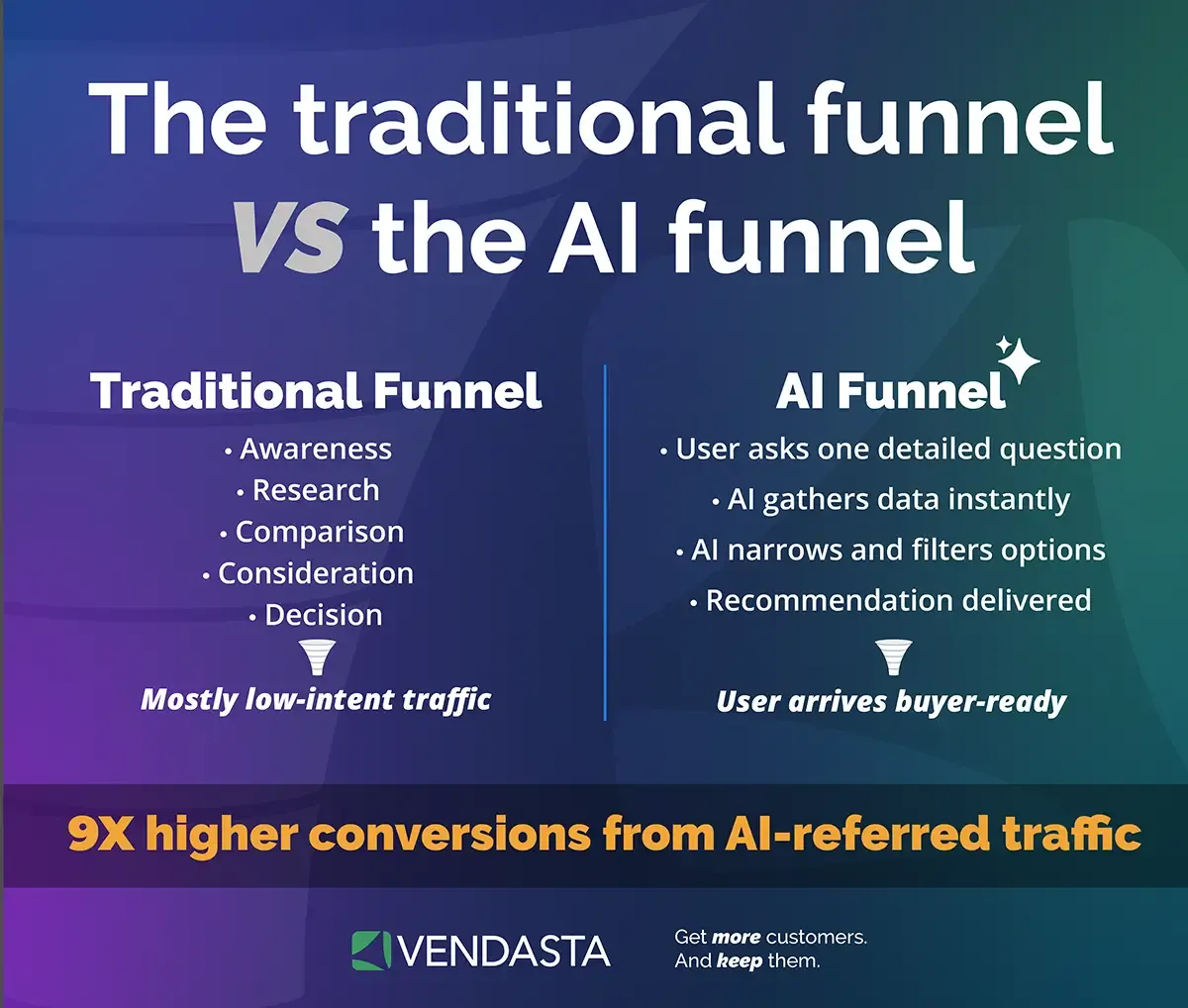
For years, discovery started with Google. Buyers typed broad questions, opened multiple tabs, scanned listicles, compared review sites, and followed a long, fragmented path across the customer journey. It was slow and filled with low-intent visitors who were still educating themselves.
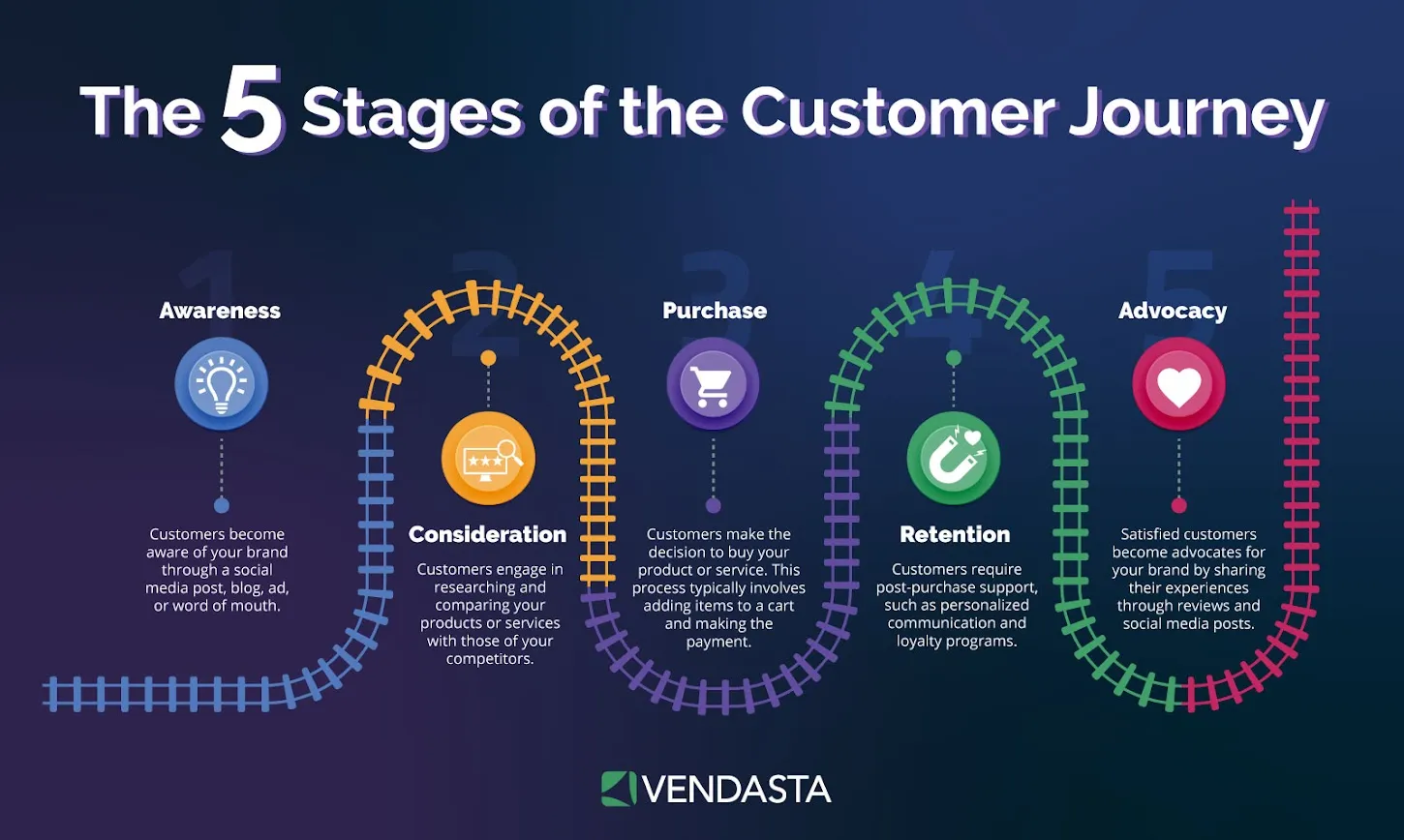
Large language models have changed that. Instead of jumping between searches, buyers now begin with a single, detailed prompt that captures everything they want to know. AI tools condense most of the awareness and consideration stages into one conversation, giving people a clear starting point without the extra steps.
How the AI Funnel Works Today
Buyers now ask precise, conversational questions such as:
- What’s the best marketing platform for a growing agency that needs automation and AI features?
- Compare Provider A and Provider B for franchise operations.
- Who offers SEO, review management, and an AI receptionist in my area?
ChatGPT gathers insights from across the web, weighs the options, and delivers a focused recommendation. Instead of skimming 15 articles, buyers get a shortlist that already fits their needs, budget, and constraints.
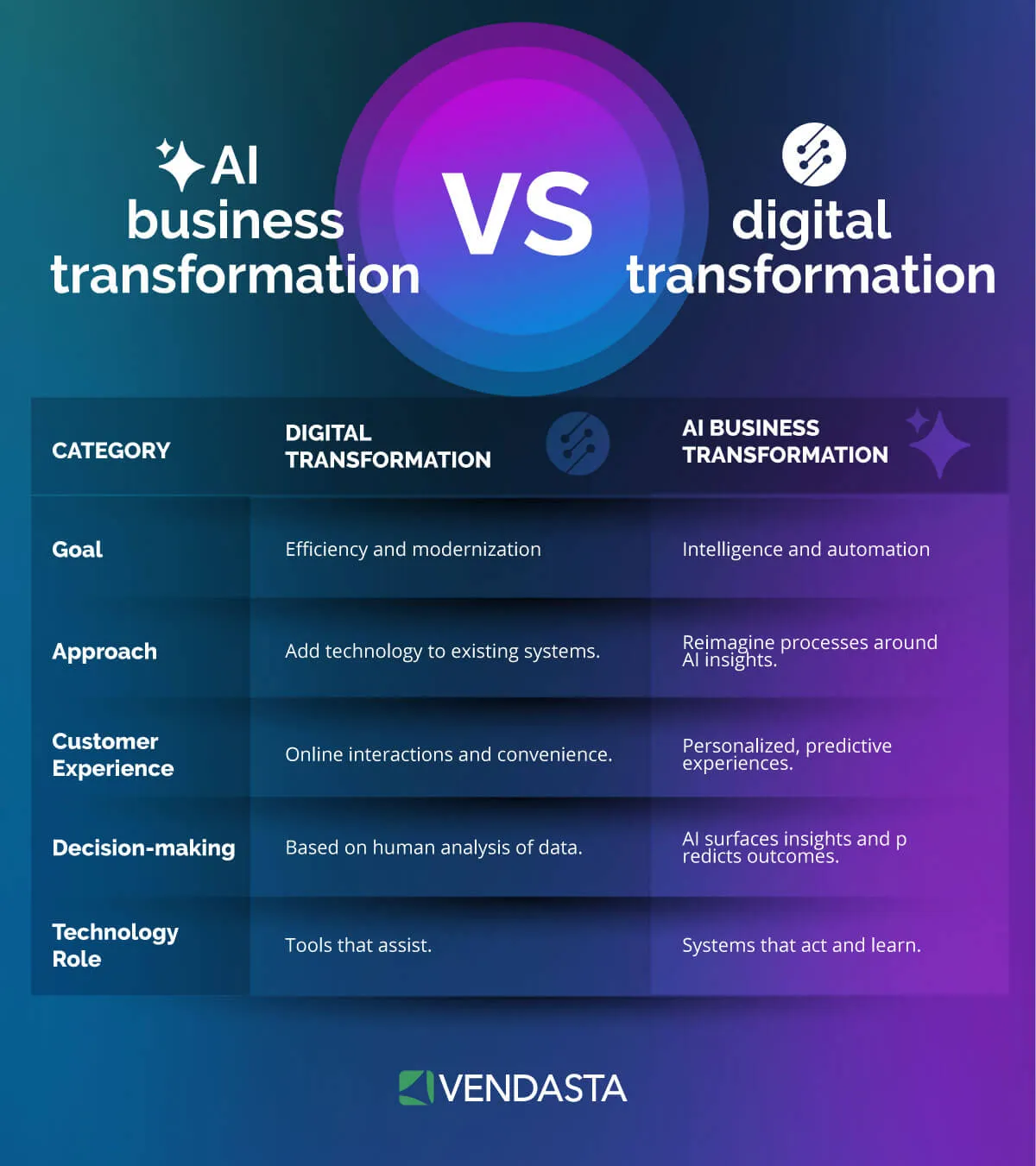
This shift is a key part of AI business transformation happening across every industry. Decision-making is faster, and expectations for clarity and responsiveness are higher.
What AI-Qualified Traffic Looks Like
Visitors arriving from AI recommendations behave differently from traditional search traffic. They show up with intent, not curiosity. By the time they reach your site, they’re already asking:
- How quickly can you onboard me?
- What happens after I book a meeting?
- How do you compare to the other vendor AI mentioned?
This is why AI-referred traffic often converts much higher than visitors coming from traditional search. Buyers have already done the research. They’re arriving to make a decision.
Why Declining Search Traffic Isn’t a Warning Sign
As AI tools take over early-stage education, many businesses see less top-of-funnel traffic. This is not a signal that visibility is dropping. It reflects a new filtering effect where:
- Casual researchers stay inside AI tools, and
- High-intent buyers click through.
The result is better-quality traffic, stronger conversion rates, and fewer wasted sessions.
What This Shift Means for Your Marketing Strategy
To understand how to rank on ChatGPT and earn a place inside AI-generated recommendations, your marketing must mirror how people naturally ask questions.
High-performing businesses now focus on:
- Creating question-based headings that match the real phrasing buyers use.
- Providing clear answers at the top of each page.
- Offering transparent pricing, timelines, and service details.
- Publishing comparison pages and pros-and-cons breakdowns.
- Structuring content so AI systems can parse and cite it easily.
Content that reads as a complete explanation performs best. AI favors information that is specific, thorough, and easy to extract.
What Does “Ranking on ChatGPT” Actually Mean?
Why Ranking Works Differently in AI Search
Ranking on ChatGPT isn’t the same as ranking on Google. There are no pages 1–10, no blue links, and no traditional positions.
ChatGPT evaluates information on demand and decides whether your business provides the clearest, most helpful answer.
Instead of optimizing for keywords, you’re optimizing for usefulness, which is a core shift that aligns closely with any modern AI marketing strategy.
How ChatGPT Chooses What to Include
When a user asks a question, ChatGPT reviews relevant information from across the web. It compares sources, weighs credibility, checks for detail, and prioritizes content that helps eliminate confusion.
Pages that are structured, transparent, and written in natural language rise to the top because they make it easier for the model to reason.
ChatGPT tends to prefer content that includes:
- Direct, concise answers to common questions
- Clear explanations of features, benefits, and processes
- Pricing ranges, timelines, and implementation details
- Comparison-friendly breakdowns
- Headings that mirror how real people phrase questions
When your content checks these boxes, it’s more likely to be blended into ChatGPT’s final response, whether you’re mentioned by name or not.
What “Showing Up” Looks Like in Practice
There are three primary ways your business can appear in an AI-generated answer:
- Direct Mentions: ChatGPT recommends your business as a top option for a specific problem.
- Informational Pull-Through: The model uses details from your site to build part of the answer.
- Cited Sources: In some cases, ChatGPT links directly to the pages it finds most valuable.
All three forms of visibility influence buyer decisions. Even when ChatGPT summarizes behind the scenes, your messaging still shapes the final recommendation.
Why Ranking Is Tied to Real Buyer Questions
One of the most important parts of learning how to rank on ChatGPT is understanding that people rarely type short, keyword-based queries anymore.
They ask full questions that sound like real conversations, such as:
- What’s the best platform for managing marketing and automation in one place?
- How do I compare Provider A and Provider B for small businesses?
- What should I look for in an AI platform that improves AI customer experience?
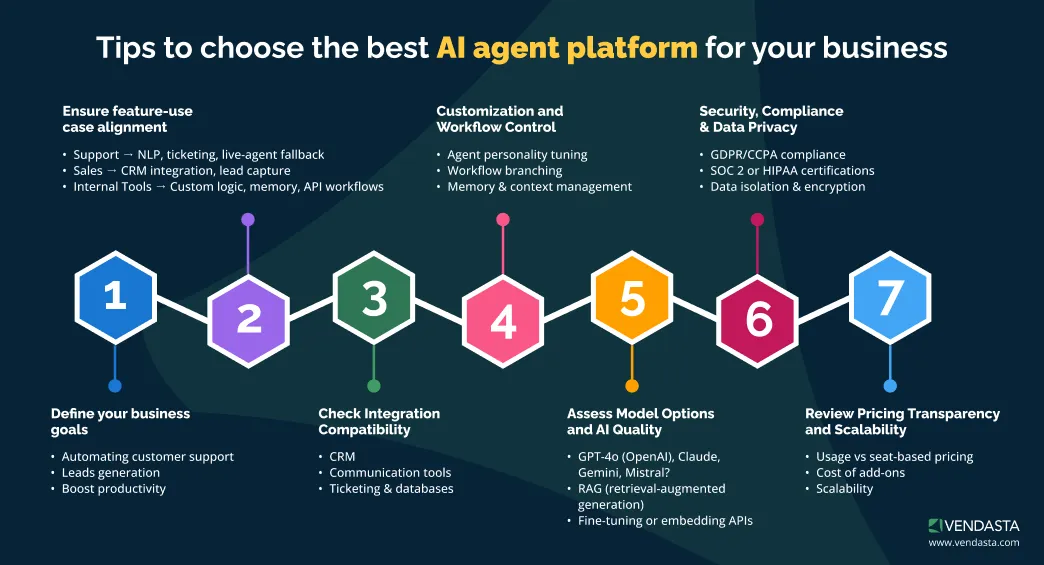
Pages that reflect this natural-language phrasing perform better. The more your content matches how buyers think and talk, the more likely ChatGPT is to select your answer.
Why This Matters for Partners Supporting SMBs
Your clients depend on you to help them stay visible in the channels that matter most. As generative AI becomes the first stop for research, showing up inside these answers is becoming essential for growth.
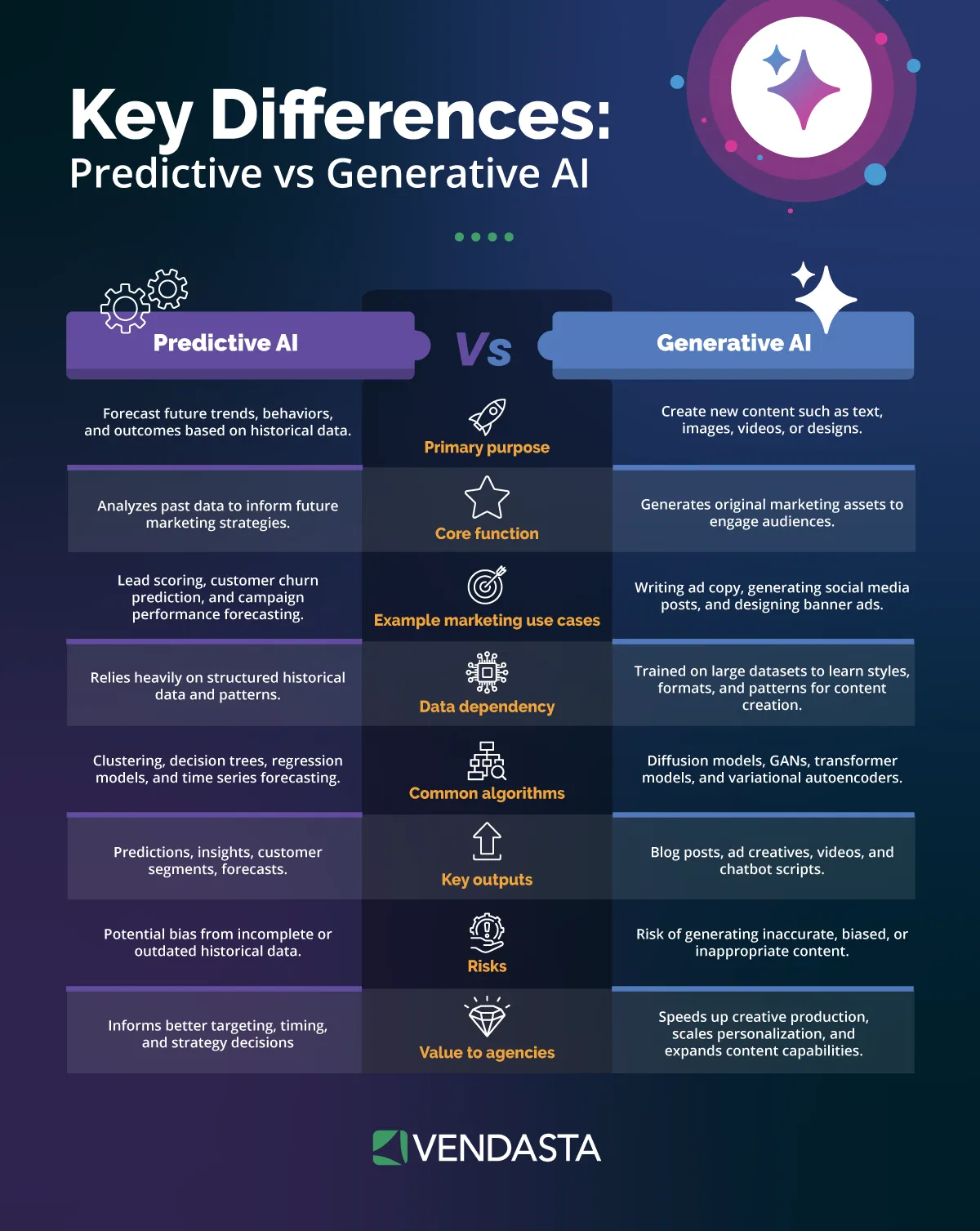
Knowing how ChatGPT evaluates content helps you build stronger visibility for your clients and drive higher-intent traffic for their businesses.
When your content is clear, structured, and genuinely helpful, ChatGPT is more likely to trust it, and your business becomes part of the conversation when buyers are ready to act.
How ChatGPT Chooses What to Cite (The Real Ranking Factors)
Why Structure Matters for AI Interpretation
ChatGPT doesn’t skim your page the way a human does. It parses the structure. The model relies on clear formatting, logical flow, and predictable patterns to understand what your content actually means.
Pages with well-organized headings, clean lists, and scannable sections are easier for AI systems to read, extract, and trust.
When content is messy or overly dense, ChatGPT is less likely to use it. Strong formatting signals that you’re offering purposeful, high-quality information.
Pro Tip: Want to understand how different AI models interpret and evaluate content? This breakdown is a quick way to get up to speed on how today’s systems work.
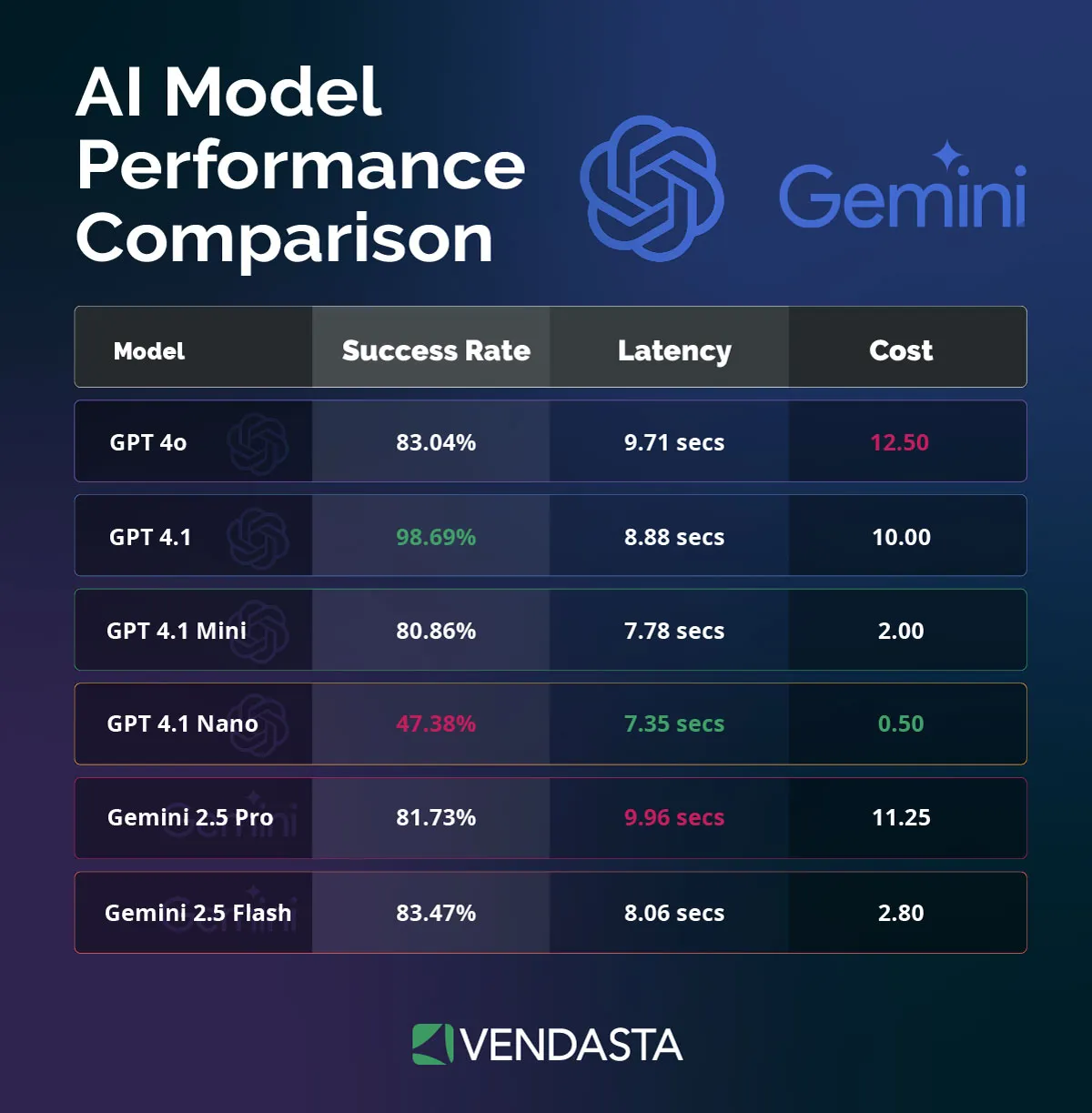
Why Depth and Specificity Win
Shallow explanations are a red flag for AI models. ChatGPT favors content that answers questions fully, not content that dances around them. Pages with specific details such as cost ranges, timelines, comparisons, and implementation steps give the model more context to work with.
This level of detail is especially important for partners like agencies, franchisors, ISVs, and MSPs. Your prospects ask questions that involve nuance, trade-offs, and real-world constraints. When your content reflects that depth, ChatGPT can confidently pull from it.
Why Transparency Improves Trust
AI systems reward transparency. If your page explains what something costs, how long it takes, what’s included, and what to expect next, it becomes more valuable. ChatGPT prioritizes information that reduces uncertainty for the user.
Examples of transparency signals include:
- Pricing ranges or package overviews
- Clear service descriptions
- Onboarding timelines
- Step-by-step processes
- FAQs that address common concerns
These details strengthen your perceived authority and help AI systems validate your content.
Why Off-Site Signals Influence Citations
ChatGPT doesn’t limit itself to your website. It looks across the broader ecosystem to understand how the market perceives your business.
Positive signals on third-party platforms can increase the likelihood of being cited in an AI-generated answer.
Valuable off-site signals include:
- Customer reviews
- Reddit discussions
- Q&A threads
- YouTube transcripts
- Industry roundups
- Guest appearances on podcasts
When these signals affirm what your website says, ChatGPT can use them to support its reasoning.
Why Consistency Across Your Ecosystem Matters
Inconsistent information creates confusion for AI systems. If your pricing differs across pages or your messaging changes from one channel to another, ChatGPT may ignore your content entirely. Consistency helps the model verify accuracy and reduces perceived risk.
To maximize credibility:
- Keep service descriptions aligned across all pages
- Maintain uniform pricing data
- Use the same terminology throughout your ecosystem
- Update outdated or conflicting content
Consistency helps AI confirm your authority and trustworthiness.
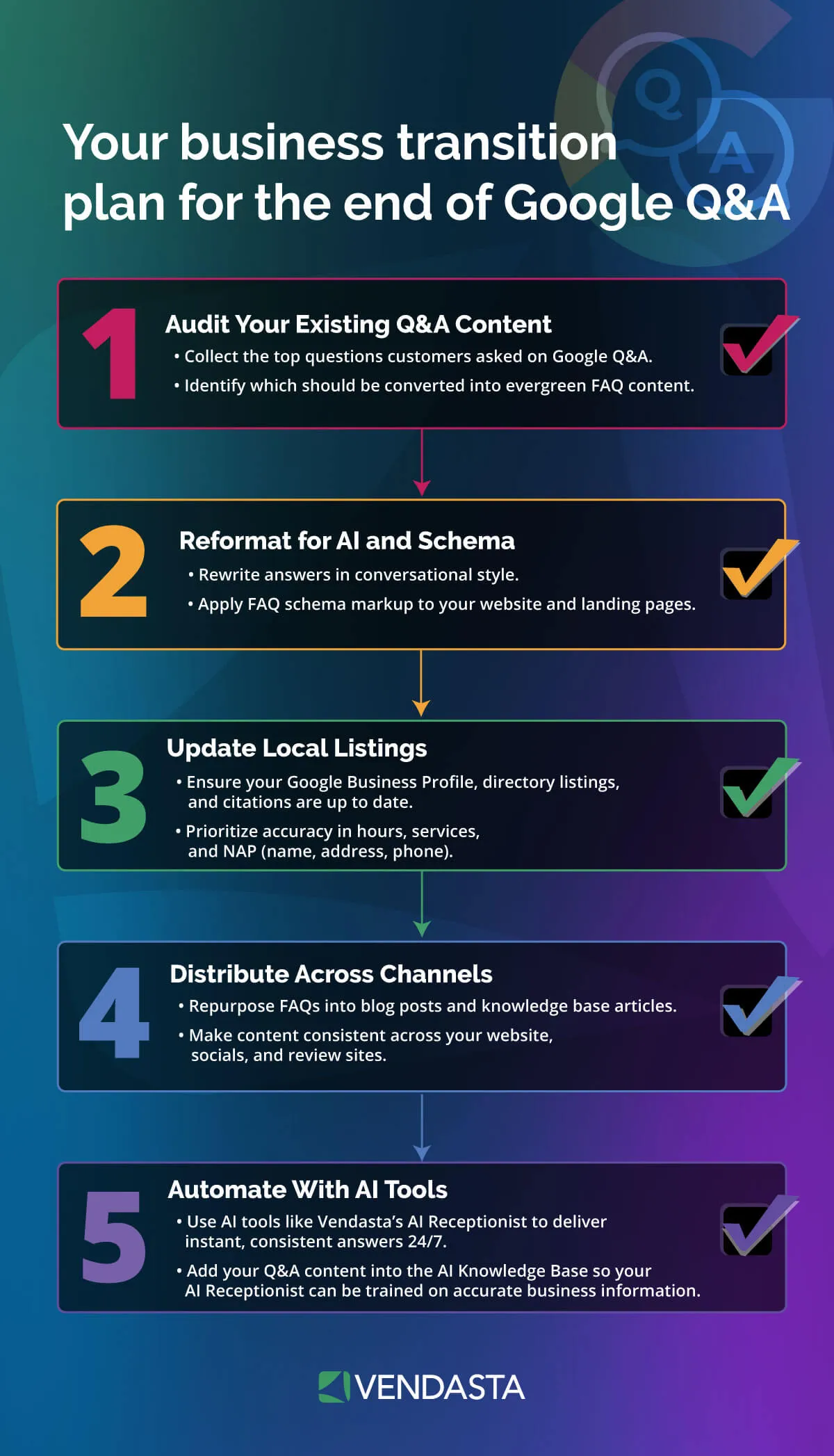
Pro Tip: If you want practical ideas for maintaining consistency across platforms, this guide on the Google Q&A retiring is a great resource.
Why Natural-Language Phrasing Drives Better Inclusion
ChatGPT is built around conversational interactions. If your content matches the way people actually ask questions, instead of relying on keyword-heavy phrasing, you’ll perform better in AI results.
Strong examples of natural-language queries include:
- What’s the best option for my situation?
- How does Provider A compare to Provider B?
- What should I look for in this type of solution?
- What’s the timeline, and what happens after I sign?
Pages that align with these patterns give ChatGPT exactly what it needs to answer confidently.
Pro Tip: Want to see these ranking factors in action? Watch this breakdown on how ChatGPT evaluates sources and decides who shows up in AI answers. It’s packed with practical insights you can apply right away:
How to Optimize Your Website for ChatGPT (Step-by-Step GEO Checklist)
Step 1: Identify Real Buyer Questions
Start by collecting the questions your buyers already ask. These often come from sales calls, onboarding conversations, support tickets, live chat logs, and discovery forms.
When you pair those with what users ask on Reddit, “People Also Ask,” and community forums, you get a clear picture of the decisions buyers are trying to make.
This step isn’t about keywords. It’s about uncovering the specific problems, comparisons, and concerns buyers raise right before taking action, which is essential for anyone learning how to rank on ChatGPT.
Step 2: Turn Questions Into Decision-Focused Pages
Once you know the questions, turn each one into a dedicated page that answers it directly. Focus on clarity and usefulness. Give buyers the information they need to move forward without making them hunt for it.
Think of these as “decision accelerators.” They help a buyer understand whether you’re the right fit, and they help AI systems see that your content resolves the exact intent behind the question.
Pro Tip: End each page with “What to do next” to guide both buyers and AI tools toward the next logical step.
Step 3: Create Clear, Honest Comparison Content
Comparison pages aren’t about ranking competitors. They’re about helping buyers understand the differences that matter: onboarding, pricing approach, contract structure, feature depth, support quality, and who each solution is best suited for.
When done right, these pages reduce friction for your buyers and strengthen your reputation as a transparent provider.
Pro Tip: Use side-by-side tables to make differences easier to interpret at a glance.
Step 4: Build Pages That Explain How You Work
Many businesses skip this step, yet it’s one of the most influential pieces of content you can create. Buyers want to know what happens after they choose you. Clear process pages show them:
- What the first week looks like
- What information you’ll need
- How long onboarding takes
- Who they’ll work with
- What success looks like
These pages help remove uncertainty and give AI systems a solid framework for describing how you deliver value.
Step 5: Add Structured Data to Support Extraction
Schema helps AI tools interpret your content correctly. Instead of guessing what’s on the page, the model receives structured cues about your FAQs, services, reviews, and business details.
Focus on markup that supports your most important decision-focused pages, not just your homepage or blog.
Step 6: Strengthen External Validation
Your website is only one part of the story. AI tools cross-reference what they see with what the rest of the web says about you. This step is about ensuring your reputation and messaging extend beyond your domain.
Practical ways to strengthen your external footprint include:
- Keeping reviews fresh and detailed
- Participating in discussions where your audience already asks questions
- Posting helpful, educational content with transcripts on YouTube
- Sharing practical insights on podcasts and industry blogs
- Ensuring your directory listings are accurate and complete
These signals help reinforce the information on your site and demonstrate reliability across the broader ecosystem.
Step 7: Keep Everything Consistent and Current
Your content, messaging, pricing, and product details should match everywhere your business appears. Inconsistent information creates uncertainty for both buyers and AI systems.
If something changes, like pricing, packages, features, or timelines, update it everywhere, not just on your website. This keeps your digital footprint aligned and strengthens confidence in your brand.
Best Practices for ChatGPT Prompts (To Improve Your GEO Results)
Use Clear Roles and Instructions
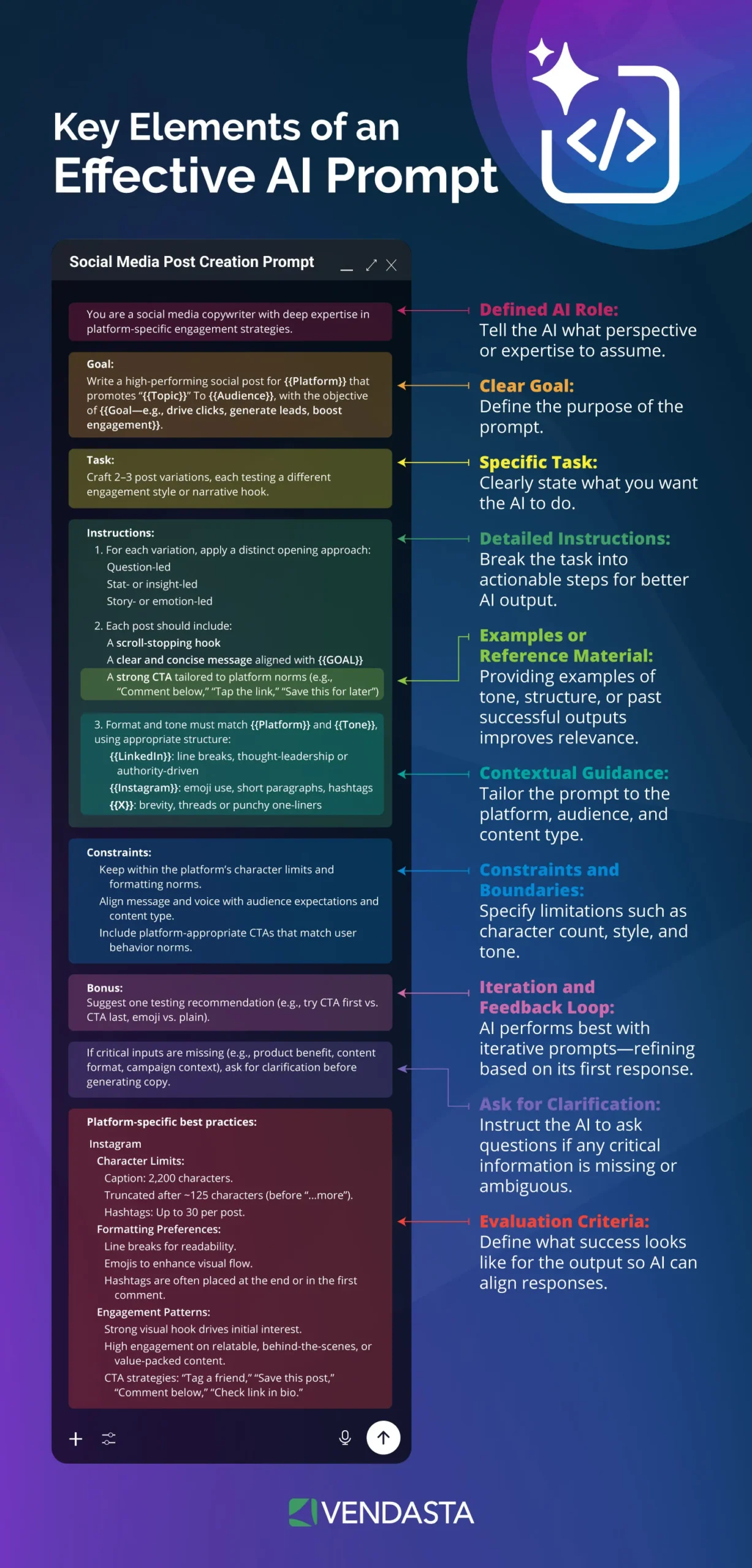
Start by giving ChatGPT a role. This is one of the simplest ways to strengthen output quality and eliminate vague or generic responses.
Clear roles such as “senior strategist,” “customer experience consultant,” or “technical writer for SMB onboarding” help the model understand your expectations and the style of reasoning you want it to use.
If you need a refresher on how to structure these roles effectively, this guide on AI prompting is a helpful starting point.
Add Context So the Model Can Reason Accurately
Strong prompts include audience details, desired outcomes, constraints, and preferred formats. The more context you provide, the more accurate and aligned the output becomes.
This step matters most when you’re building GEO-focused assets like FAQ clusters, landing pages, or comparison guides, where precision directly affects visibility.
Ask for Step-By-Step Reasoning
When you want deeper insights or more reliable explanations, ask the model to show its reasoning. Simple instructions like “Explain your logic step by step” or “List key assumptions behind your answer” help you catch inaccuracies early and extract more strategic value from the response.
This approach is especially useful when researching competitor differences or mapping buyer questions.
Request Clarifying Questions First
Invite ChatGPT to ask clarifying questions before it responds. This reduces revision cycles and aligns the results with your exact objectives. It’s one of the most effective ways to prevent confusion and ensure the model understands your intent upfront.
Tell ChatGPT to “Think Harder”
One of ChatGPT prompt hacks is that ChatGPT often defaults to lighter reasoning unless you explicitly request more depth. Simple instructions like:
- “Think deeply about this.”
- “Use a higher level of reasoning.”
- “Spend more tokens analyzing this.”
…can dramatically improve the quality of the output.
This technique is especially effective for content that supports decision-making, such as comparison pages, buyer-question mapping, or onboarding flows.
Use the Feedback Loop to Improve Output Quality
A feedback loop transforms one-and-done prompts into a structured, repeatable process. Ask ChatGPT to:
- Draft an initial answer.
- Identify gaps or weak points.
- Score its response against your criteria.
- Revise until it meets your standard.
This method works exceptionally well for building consistent content across multiple pages or campaigns.
Use the Prompt Optimizer Tool to Strengthen Your Inputs
If a prompt feels off or you’re not getting the insight you expect, drop it into the Prompt Optimizer tool. It rewrites your prompt for clarity and completeness, making sure the model understands the required direction. Think of it as a preflight check before generating final content.
Layer Logic, Verification, and Honesty
High-quality prompts ask for validation. Add instructions that force ChatGPT to check its reasoning and acknowledge uncertainty if the data isn’t clear. Prompts like:
- “Verify each step before responding.”
- “State any assumptions or gaps in information.”
- “Provide alternatives where appropriate.”
These techniques produce more accurate content and reduce the risk of misleading answers.
Provide Examples of What “Great” Looks Like
If you want a specific tone, depth, or structure, show ChatGPT an example. It learns from patterns and can easily emulate a format you like. You can reference your own best-performing pages or curated examples.
Here is a practical resource with a list of AI prompt examples.
Use Prompts to Build Geo Assets Faster
Prompting isn’t just for ideation. You can use it to generate:
- Buyer question maps
- Comparison tables
- Pricing breakdowns
- Onboarding flows
- Implementation outlines
- Decision checklists
- Resource pages
- Knowledge base content
These content types align naturally with how AI systems evaluate expertise. For marketers who want a ready-made library of high-performing prompts, Vendasta’s 100 AI Prompts Every Marketer Needs is a great resource.
Pro Tip: If you want to level up your prompting skills fast, this video breaks down the exact techniques experts use to get sharper, more strategic outputs from ChatGPT. It’s a must-watch for anyone building GEO content:
How Vendasta Helps Your Business Convert AI-Qualified Traffic
The platform provides AI employees trained on your business’s own data — the same AI Employees that turn AI-qualified visibility into actual conversions, 24/7.
Why High-Intent Traffic Needs Instant Engagement
When someone reaches your website from an AI-generated recommendation, they’re often far closer to making a decision than a typical search visitor.
They’ve already compared options, weighed trade-offs, and clarified their needs through ChatGPT. At this stage, speed matters. If they can’t get an answer, book a meeting, or talk to someone right away, the opportunity disappears.
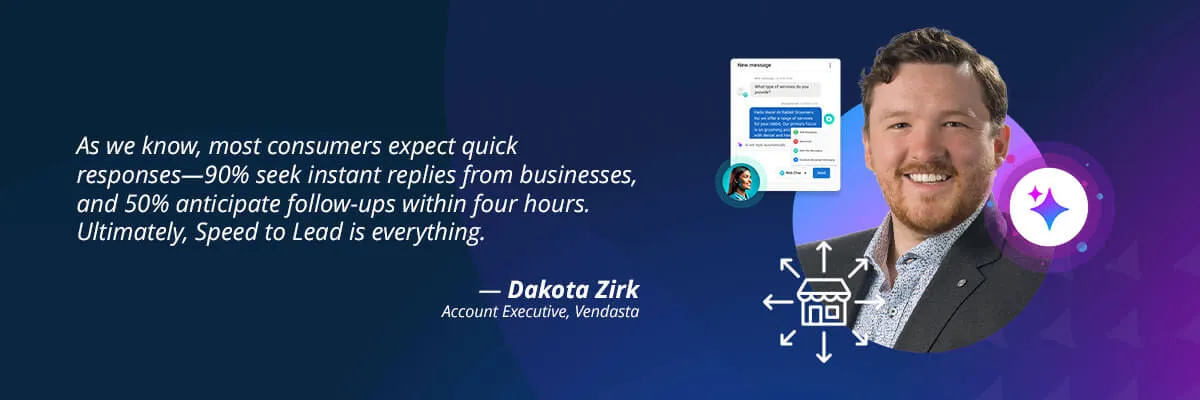
The reality is that many small and medium businesses still miss these moments. Calls go unanswered. Chats time out. Forms are ignored. And because AI-qualified buyers have little patience for delays, they’re quick to choose a competitor who responds faster.
How Vendasta’s AI Employees Capture Demand Immediately
Vendasta solves that gap by meeting buyers the moment they act. The platform provides AI employees trained on your business’s own data: FAQs, policies, product details, tone of voice, availability, and workflows.

These AI employees aren’t generic chatbots. They function as true extensions of your team.
They can:
- Answer inbound questions instantly
- Qualify prospects with natural conversation
- Provide accurate details based on your business data
- Route leads to the right channel or team member
- Follow up automatically if the buyer steps away
- Automatically book appointments
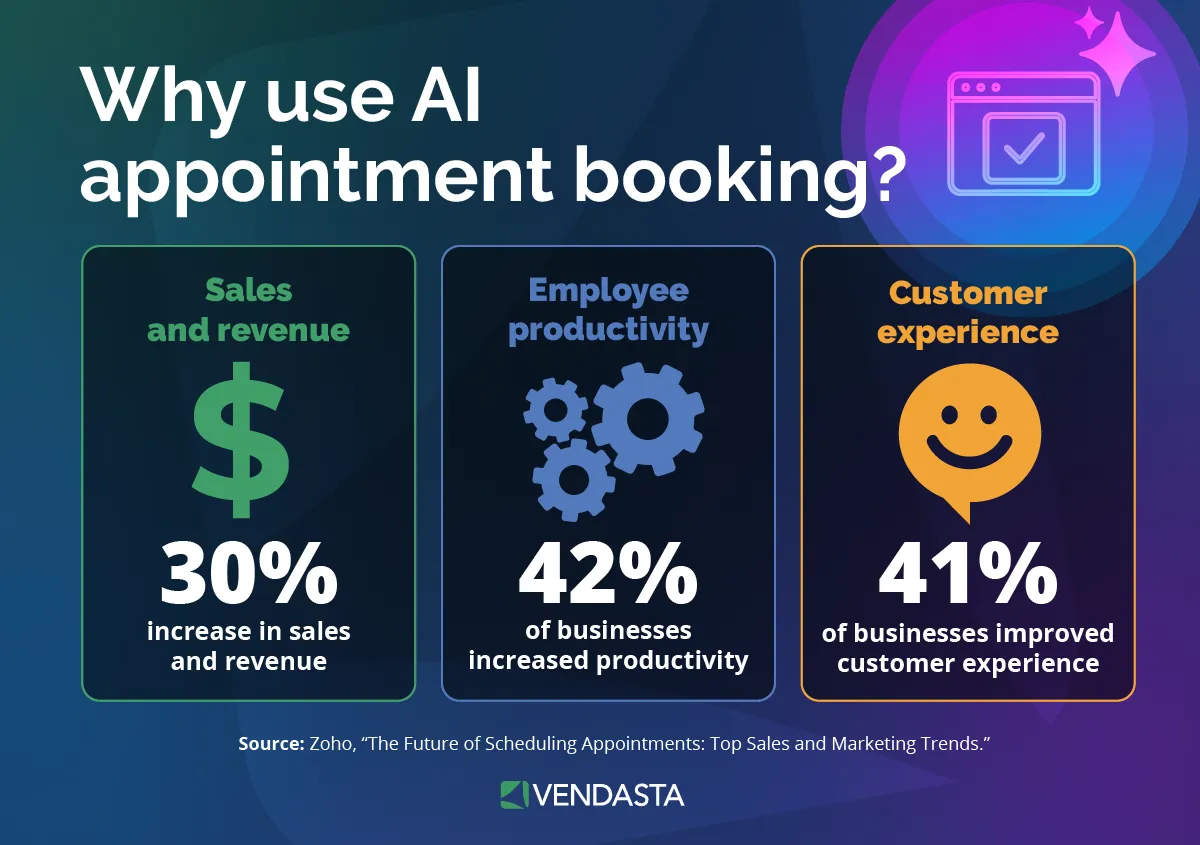
This creates a seamless, always-on engagement layer that converts AI-qualified traffic without burning out human staff or letting leads fall through the cracks.
Why 24/7 Coverage Changes Conversion Rates
AI referrals don’t follow standard business hours. Buyers research late at night, during weekends, or between meetings. And since many use ChatGPT on mobile devices, they often call the business directly after reading a recommendation.
Unfortunately, a large portion of SMB calls still go unanswered, and most of those callers never try again.
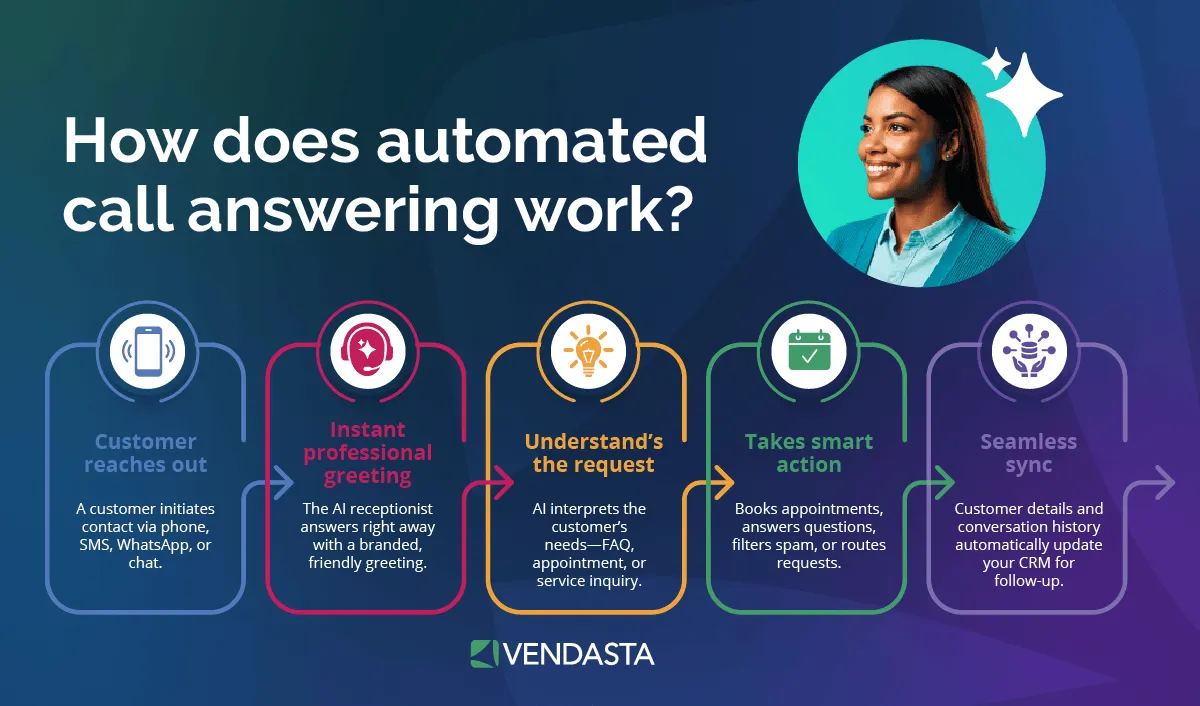
Vendasta’s AI employees fill that gap with the help of automated call answering. Whether a buyer calls your number at 2 p.m. or 2 a.m., your business responds immediately with the same accuracy, professionalism, and helpfulness every time.
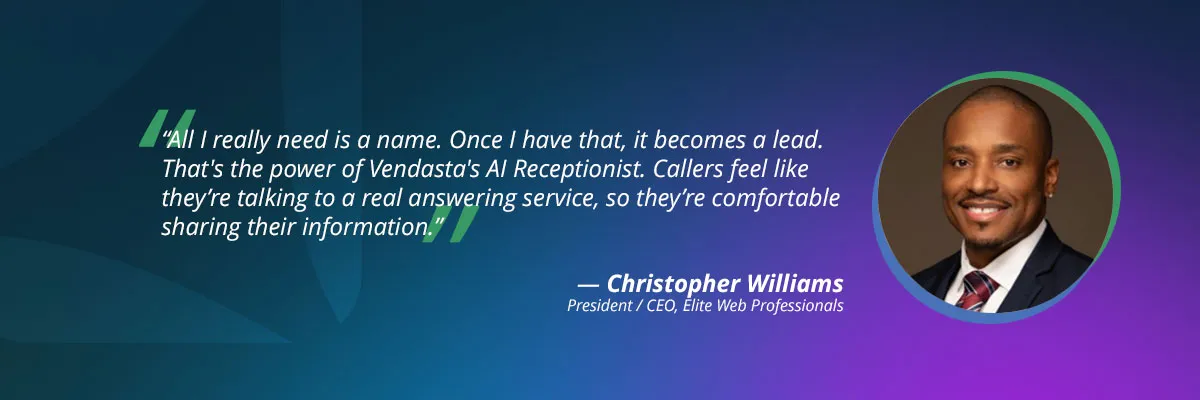
A strong example of this impact comes from Elite Web Professionals, an Atlanta-based website design and SEO agency founded by Christopher Williams.
One of their clients, Choice Signature Luxury Car Rental, frequently lost leads because prospects couldn’t reach the team fast enough, especially during peak periods or after hours. Many callers simply moved on, costing the business valuable bookings.
To solve this, Elite Web Professionals deployed Vendasta’s AI Voice Receptionist, powered by Conversations AI, as a backup to the human receptionist.
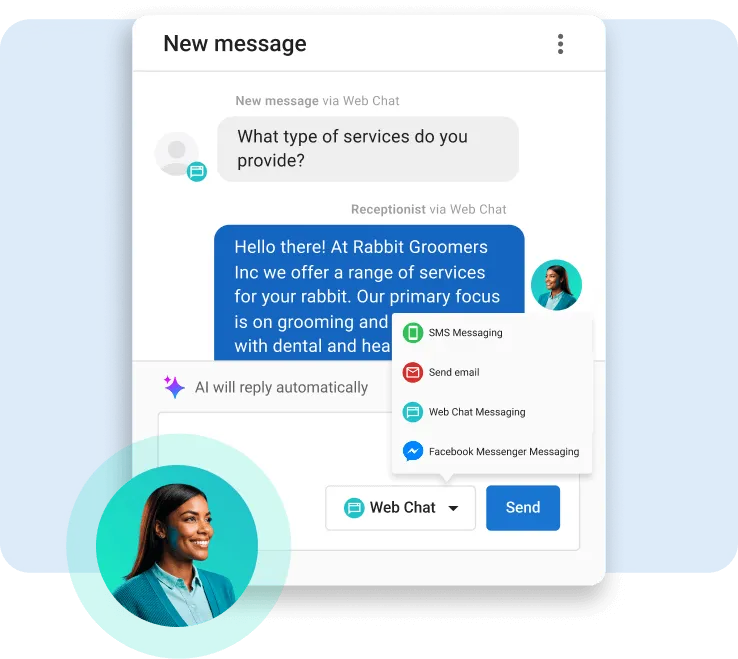
If a call wasn’t answered within a few rings, the AI stepped in immediately, greeting callers, asking qualifying questions, collecting names and details, and educating prospects about rental requirements, pricing expectations, and available options.
With AI handling consistent engagement, Choice Signature captured more than 700 qualified leads in four months, transforming missed opportunities into predictable revenue and proving how powerful instant, AI-driven call coverage can be for growing businesses.
Why Omnichannel Matters for AI-Driven Leads
AI-qualified buyers don’t convert through a single channel. Sometimes they call. Sometimes they chat. Sometimes they text.
Vendasta supports all of them, giving partners and SMBs a unified way to handle inbound demand and automate the entire customer journey.
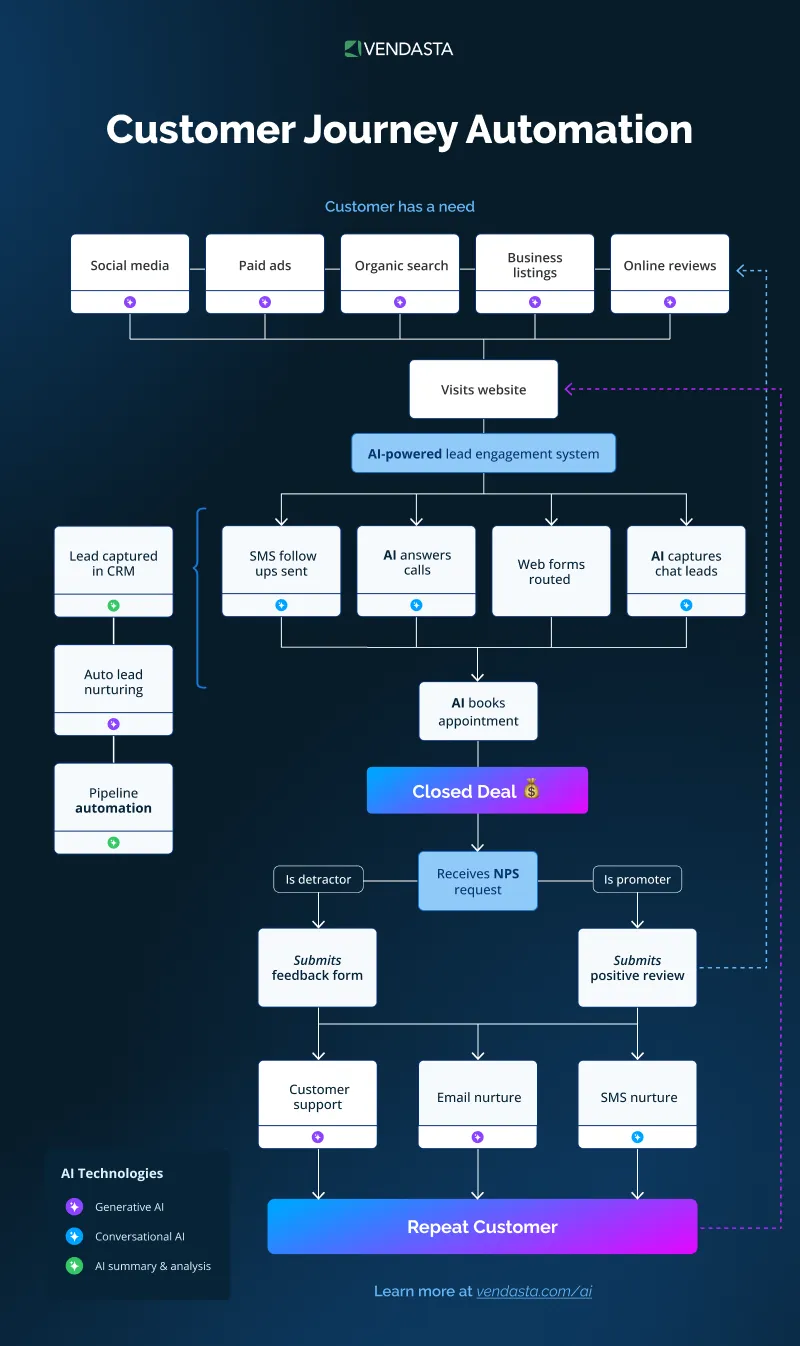
Here’s what the platform covers:
- Website chat
- Two-way SMS
- Phone calls
- Email follow-up
- Social messaging (where applicable)
This flexibility ensures you meet buyers wherever they show up, not where it’s convenient for your team.
Why This Matters for Partners Supporting SMBs
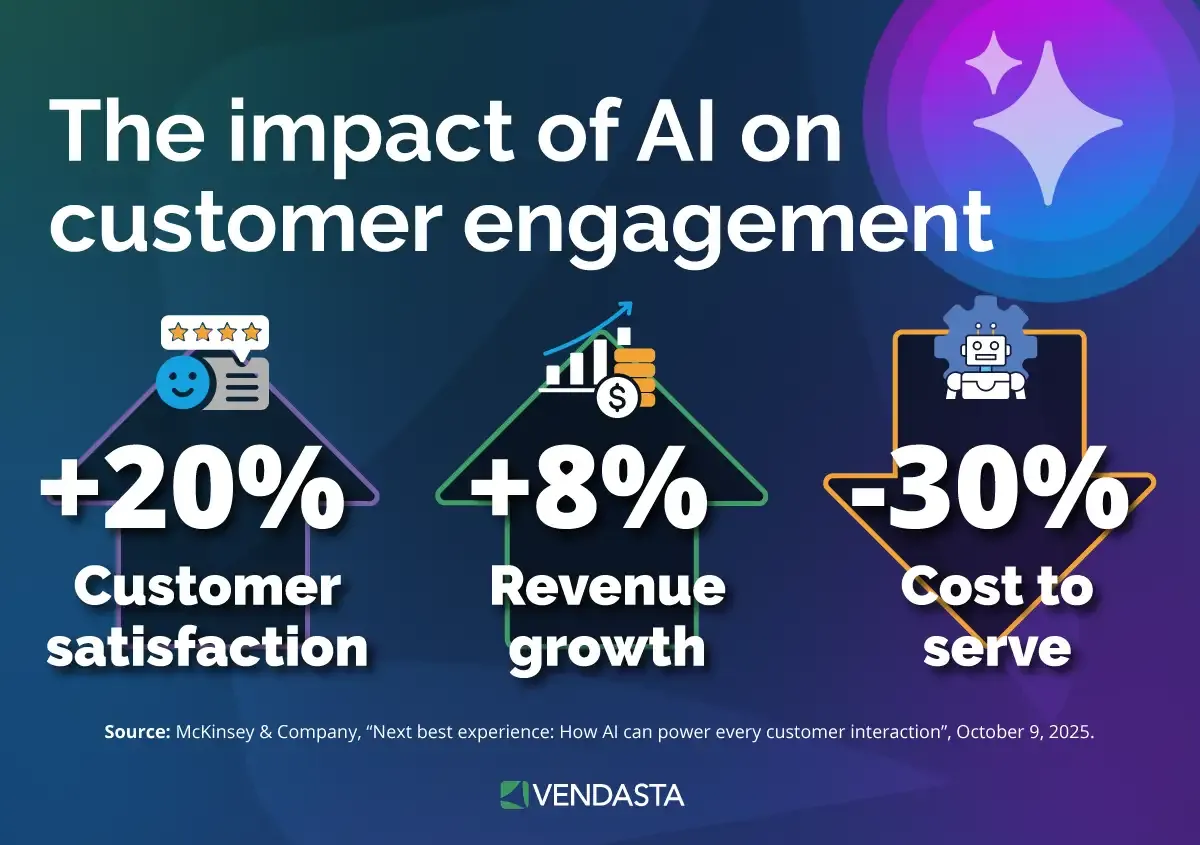
Your clients rely on you to deliver growth. As AI funnels optimize the buyer journey, the businesses that respond instantly with accuracy, friendliness, and consistency will win more customers at a lower cost.
Vendasta gives partners the ability to:
- Offer AI-powered engagement as a service
- Reduce missed opportunities for every SMB client
- Stand out with a modern, AI-driven service offering
- Improve client ROI and retention
- Manage engagement from a single, unified platform
This transforms AI visibility into real revenue rather than lost potential.
Conclusion
AI search isn’t something to brace against. It’s a chance to grow. As buyers turn to ChatGPT and other AI systems for fast, trustworthy guidance, the businesses that rise to the top are the ones that answer real questions clearly, confidently, and completely.
Ranking in these AI-driven conversations isn’t about keywords or volume. It’s about offering the most helpful, decision-ready information when a buyer needs it.
Once you earn that visibility, the next step is making it effortless for prospects to connect. That’s where Vendasta comes in.
AI employees help your business convert AI-qualified traffic by handling conversations, scheduling appointments, answering questions, and following up across chat, SMS, phone, and more. They make sure your business never misses a moment, and your buyers never wait for one.
If you’re ready to turn AI visibility into revenue, book a free demo of Vendasta and see how AI employees can help your business work smarter, respond faster, and win more customers.
How to Rank on ChatGPT FAQs
1. What does “rank on ChatGPT” actually mean?
Ranking on ChatGPT means your content is selected, referenced, or summarized inside an AI-generated answer. Instead of competing for traditional keyword positions, you’re competing to provide the clearest, most helpful response to a user’s question.
2. How does ChatGPT decide which businesses to recommend?
ChatGPT looks for accurate, well-structured information that directly answers a user’s question. It checks your website, off-site signals, and consistency across platforms. Businesses with clear explanations, transparent details, and natural-language content are more likely to be included.
3. What type of content helps me show up in ChatGPT answers?
ChatGPT prioritizes content that removes guesswork for the user, such as FAQs, comparisons, pricing context, timelines, and step-by-step explanations. Pages written in conversational language tend to perform better because they align with how users phrase questions.
4. Do I need a different SEO strategy to rank on ChatGPT?
Traditional SEO helps, but Generative Engine Optimization focuses on answering questions, not ranking keywords. A strong strategy includes decision-focused pages, structured formatting, FAQs, and detailed content that AI systems can easily interpret and summarize.
5. Does structured data help me appear in ChatGPT results?
Yes. Schema markup, such as FAQPage, LocalBusiness, and HowT,o helps AI understand your content faster and reference it more confidently. Structured data also reduces ambiguity, increasing your chances of being used in AI-generated answers.
6. How can Vendasta help my business convert AI-driven traffic?
Vendasta provides AI employees who instantly handle inbound calls, chats, and scheduling requests. When ChatGPT sends buyer-ready traffic your way, Vendasta ensures no lead goes unanswered, improving conversion rates and creating a seamless customer experience.
7. What kind of questions should my content answer to rank on ChatGPT?
Focus on real questions buyers ask, like: “What’s the best option for my situation?” or “How do Provider A and B compare?” Content that mirrors natural phrasing performs better in AI search because it directly fits user intent.
8. Do local businesses have a chance to appear in ChatGPT recommendations?
Absolutely. Local businesses can rank well by offering clear service details, transparent pricing, location-specific information, and consistent data across directories. Vendasta partners often use these tactics to help SMB clients show up in AI-driven local searches.
9. Does ChatGPT use customer reviews when generating answers?
Yes. AI tools look at reviews to validate credibility, understand service quality, and learn common themes. Fresh, detailed reviews across platforms help reinforce your expertise and improve the likelihood of being cited.
10. How long does it take to start ranking in ChatGPT?
There’s no fixed timeline, but businesses that publish clear, transparent, question-focused content often see improvements quickly. Consistency, strong off-site signals, and well-structured pages help ChatGPT understand and trust your information faster.