About Us
 Careers
 Leadership
 Board
Board Newsroom
AI appointment booking uses conversational AI to answer calls, texts, and web chats around the clock and book appointments without a person touching the phone. For service businesses, that turns after-hours inquiries into booked jobs instead of voicemails, cuts no-shows through automated reminders, and scales scheduling across staff and locations without adding payroll.
The demand side is measurable: Experian Health’s State of Patient Access survey found 80% of patients want to schedule appointments anytime, from home or a mobile device.
In this blog, we cover how AI appointment booking works, how to implement it step by step, the best tools in each category, and how to calculate the return.
Capture leads and book appointments 24/7 with AI voice and messaging
TL;DR
-
AI appointment booking runs 24/7: AI answers calls, texts, and chats, checks real calendar availability, and books confirmed appointments, converting after-hours demand into booked jobs instead of voicemail.
-
Reminders and prediction cut no-shows: A BMJ Open meta-analysis of 21 studies found automated reminders reduce no-shows from 21% to 15%.
-
Vendasta AI Receptionist: It qualifies leads and books through phone and messaging channels, including SMS and web chat, and deploys in under 30 minutes after learning from your website and business data.
Capture Leads and Book Appointments 24/7 With AI Voice and Messaging
Vendasta built an AI Receptionist for exactly this job: it answers phone calls, SMS, and web chats at any hour, qualifies the lead, and books directly against a real calendar. It is one of the AI Employees that completes scheduling work using your business’s own data, with every action logged.
What Is AI Appointment Booking?
AI appointment booking is software that holds a scheduling conversation on your behalf. A customer calls, texts, or opens a chat; the AI interprets the request, checks the calendar, offers times, books the slot, and sends the confirmation. It behaves less like a form and more like a virtual assistant that never clocks out.
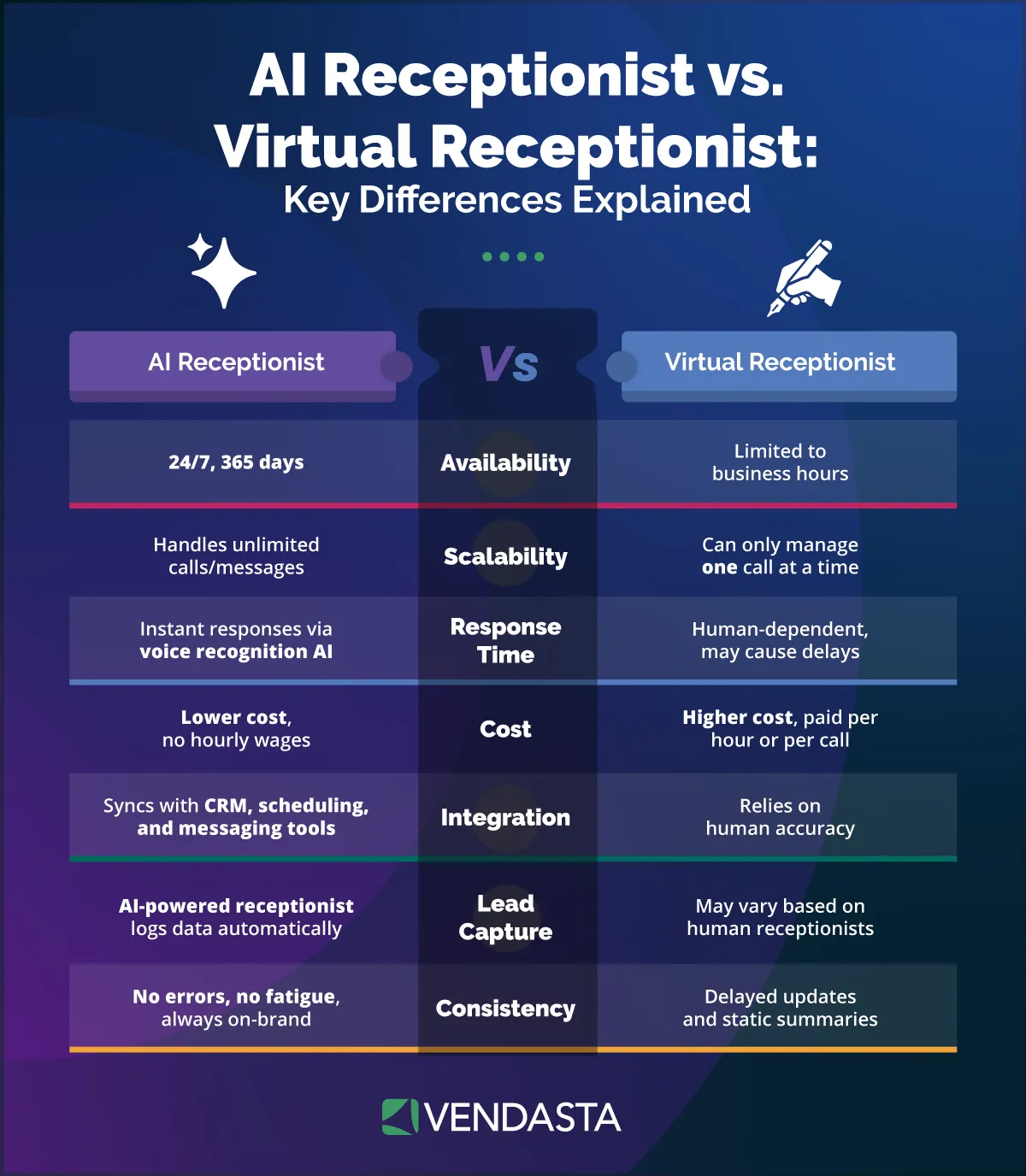
That distinction matters commercially. A booking link waits for the customer to do the work; conversational booking meets the customer on whatever channel they picked and finishes the transaction there. Kyruus Health’s 2024 Care Access Benchmark Report found 35% of consumers would switch providers for online booking, rising to 62% among Gen Z.
Buyers are already comfortable with the mechanism. Salesforce’s Connected Shoppers Report (8,350 respondents) found that 59% of shoppers are interested in AI agents booking appointments for them. Demand is driving market growth: Fortune Business Insights projects the appointment scheduling software market to grow from $546.1 million in 2025 to $1.9 billion by 2034.
How Does AI Appointment Booking Work?
Modern booking systems built on Conversational AI commonly use this pipeline: understand the request, resolve it against a live calendar, commit the booking, and confirm in plain language. Two technologies carry that pipeline.
Natural Language Processing (NLP): Decoding Intent
NLP converts a messy human request into structured data. Intent classification identifies whether the customer wants to book, cancel, reschedule, or check availability, while slot extraction pulls details such as date and time, duration, service type, and location. Temporal parsing then normalizes phrases like “next Tuesday afternoon” into an exact date and time, including negation constraints such as “any day but Tuesday.”
Current-generation systems use large language models with function calling to close the loop. The flow runs in five steps: the customer makes a request, the model returns a structured tool call, the application executes the calendar API, the result comes back, and the model confirms the booking conversationally.
Well-designed systems query only busy/free time ranges rather than full event content, so the AI never sees other customers’ details; Google Calendar’s freeBusy endpoint exists for exactly this purpose.
On voice calls, speech recognition converts audio to text before that pipeline runs, and text-to-speech carries the response back. This is the model Google demonstrated with Duplex: a closed-domain system that monitors itself and hands off tasks it cannot complete.
Machine Learning (ML) and Predictive Availability: The Smart Calendar
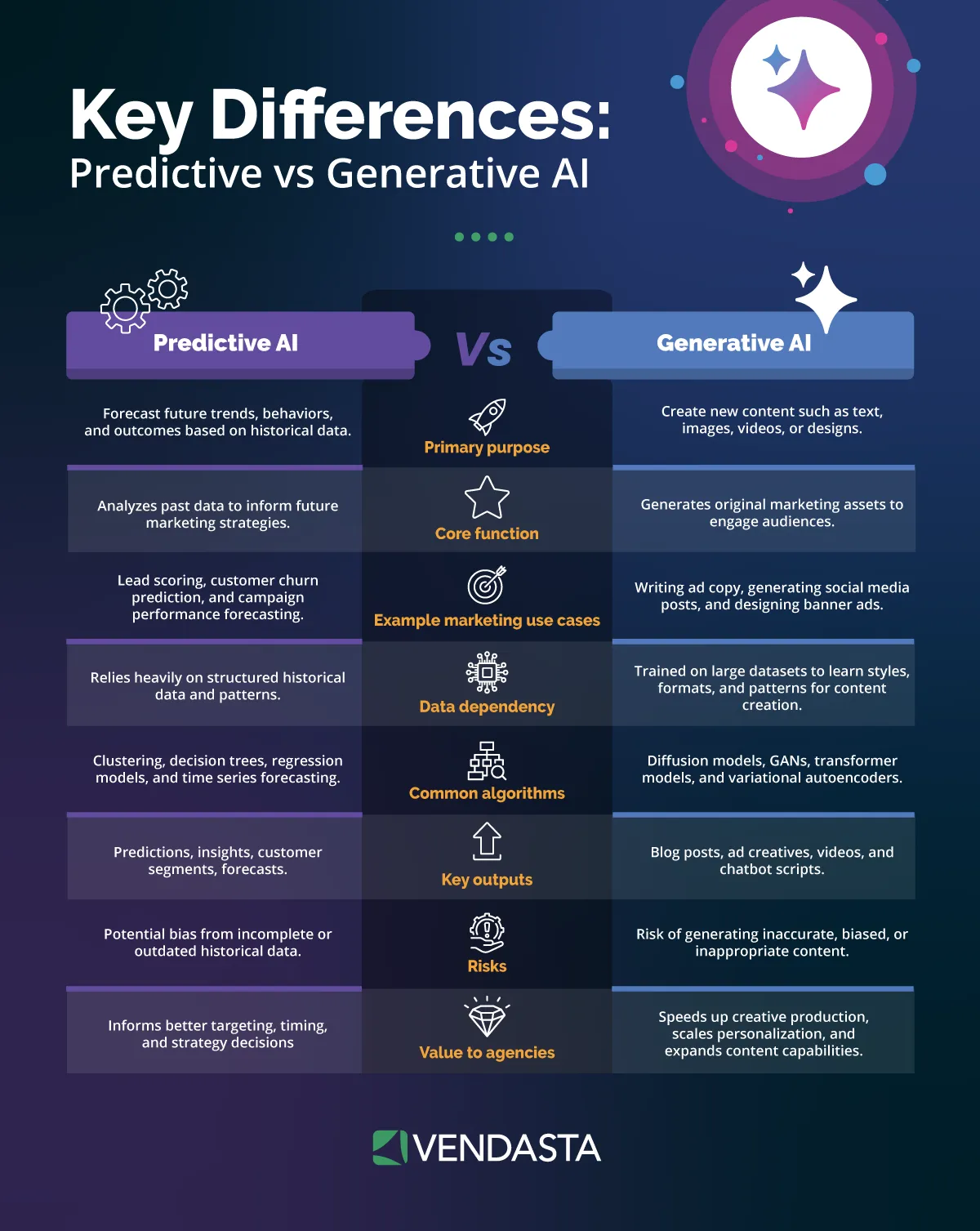
Researchers trained the strongest published no-show model on 1,118,236 appointments and reported the results in Annals of Family Medicine. Using gradient boosting, the model reached an AUROC of 0.852 for predicting no-shows.
Behavioral factors such as booking lead time and prior no-show history are strong predictors across studies; confirmation status also matters. One large study found appointments booked 60+ days out had a no-show rate of 7.73% versus 4.31% for those booked within 15 days.
These are predictive analytics with direct operating uses: trigger extra reminders for high-risk bookings, inform overbooking decisions, and focus staff follow-up where it pays. A UAE primary-care deployment published in JMIR Formative Research used an 86%-accurate model across 135,393 appointments and cut the no-show rate from 20.82% to 10.25%, a 50.7% reduction.
Why AI Appointment Booking Matters for Your Business
A missed call is a routed lead: the caller dials the next business in the search results. Health Affairs Scholar’s 2025 survey of 3,661 U.S. adults found that phone remains the primary scheduling method for 56.4% of patients, so the channel most likely to carry your next customer is the one nobody answers from a ladder, a job site, or after 5 p.m.
The gap between phone-heavy behavior and the near-universal desire for anytime scheduling documented by Experian Health is the entire case for AI voice and messaging.
No-shows compound the loss. The costs are documented across industries:
-
Healthcare: A 2026 systematic review of 27 studies covering 13+ million appointments found a median non-attendance rate of 14.2%.
-
Cost per empty slot: A VA Medical Center study measured an average marginal cost of $196 per no-show patient.
-
Salons: The Professional Beauty Association estimates missed appointments cost the average salon roughly $67,000 annually.
-
Hospitality: CGA by NIQ measured a 14% no-show rate across UK hospitality in 2024, worth an estimated £17.59 billion in lost sales.
AI booking addresses both problems at once, and the upside shows up in real ledgers. Blue River Digital’s auction-house client sourced a $20,000–$30,000 commission from a single 11 p.m. lead the AI matched and captured while everyone slept. Answering every inquiry instantly also changes the customer experience: no hold queue, no voicemail, no callback loop.
How to Implement AI Appointment Booking (Step-by-Step)
Implementation is a workflow project, and the sequence below keeps it from becoming a science project.
Step 1: Define Your Booking Workflow and Goals
Map where booking requests originate today (phone, website, ads, social) and what happens to each. Set numeric targets before launch: answer rate, booking conversion, after-hours bookings, no-show rate. Anchoring those goals inside a broader AI marketing strategy prevents the booking tool from becoming another disconnected point product.
Step 2: Choose the Right Technology and Integrations
Your calendar and system of record decide the shortlist. If jobs live in Jobber, Housecall Pro, or ServiceTitan, the booking AI tools you evaluate must write into those systems directly; Vendasta integrates with all three, plus QuickBooks, Clio, Dentrix, Zapier, and Google products. Prefer tools that request least-privilege calendar access (busy/free ranges only) over full event-read permissions that expose client data unnecessarily.
Step 3: Configure Your AI System and Booking Rules
Give the AI your service catalog, durations, buffers, business hours, service areas, and pricing boundaries. Define what it may book autonomously and what triggers a human handoff, such as jobs above a dollar threshold or callers who ask for a person.
Vendasta’s AI Employees learn from your website, business profile, and uploaded knowledge, which is why most deploy in under 30 minutes.
Step 4: Connect Booking to Your Customer Journey
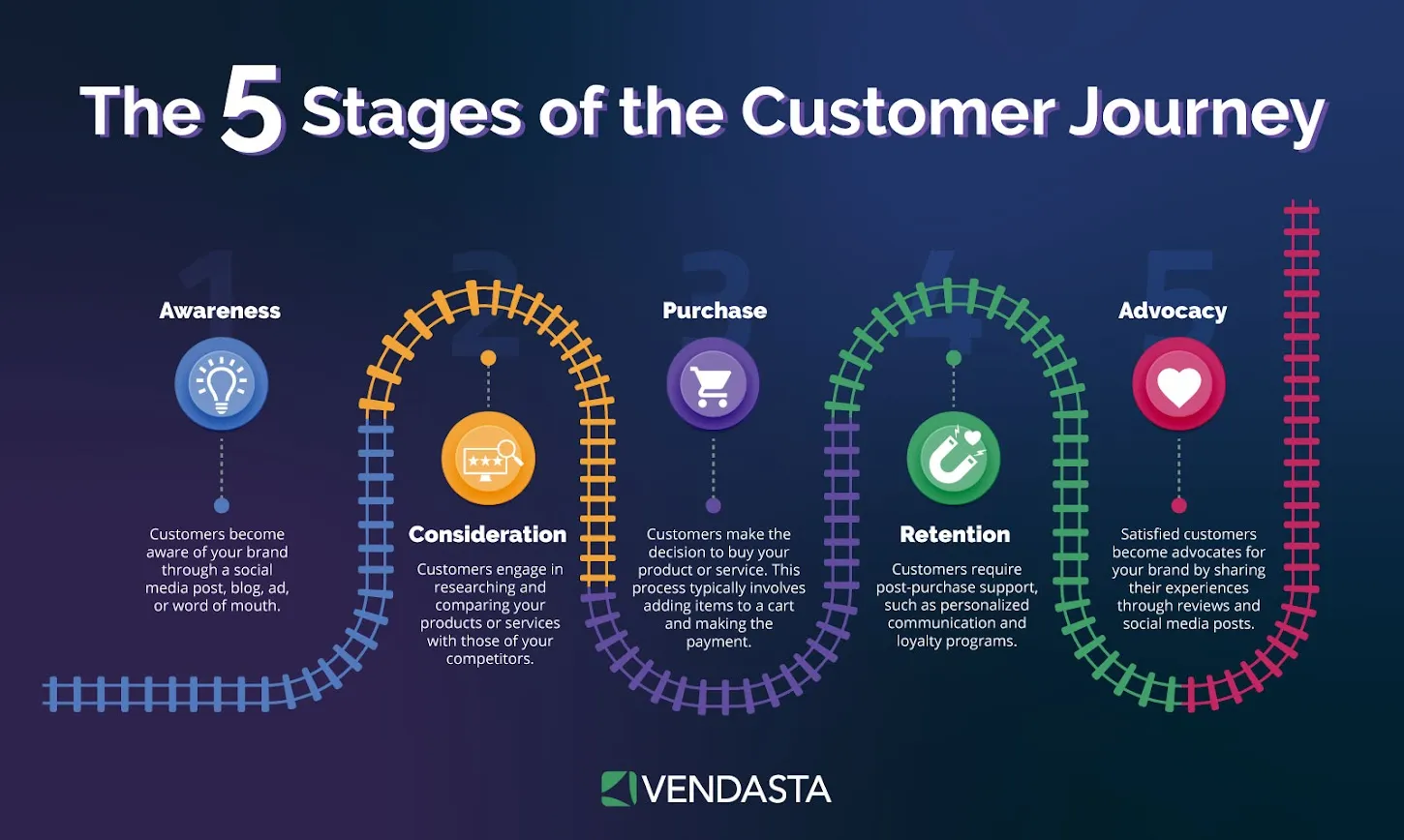
A booked appointment should trigger the next step automatically at every stage of the customer journey: confirmation on booking, reminder before the appointment, review request after the job.
Wiring those triggers through customer journey automation also ensures every booking lands in the CRM with its acquisition source and booking outcome attached. That record is what lets you prove revenue attribution later.
Step 5: Test and Train Your AI
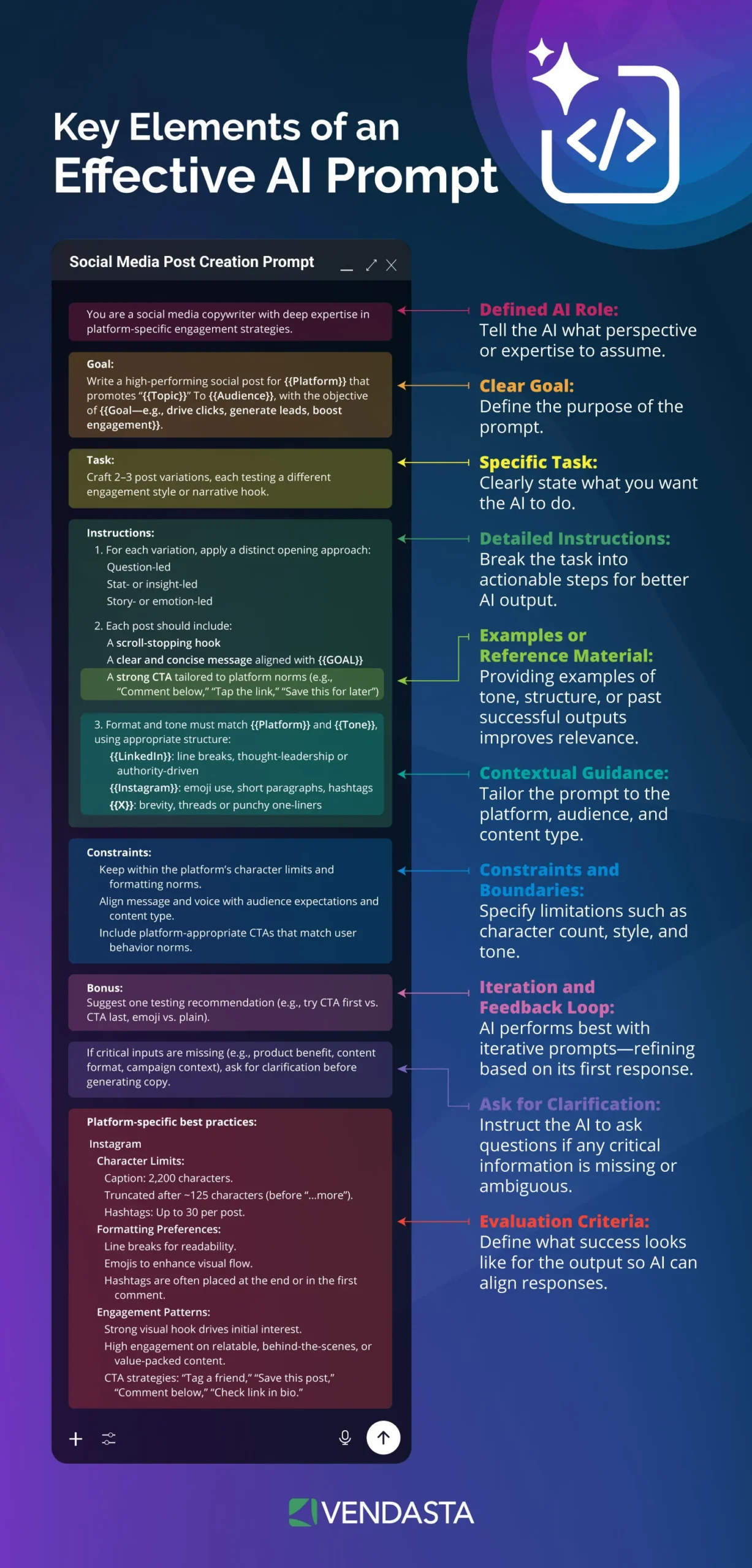
Test the failure cases, because that is where money leaks: two customers requesting the same slot simultaneously, a reschedule across a daylight-saving boundary, a cancellation mid-conversation, a caller who demands a human. Confirm that a failed calendar write is never presented to the customer as a confirmed booking. Refining behavior is largely a matter of AI prompting: tightening instructions, adding edge-case rules, and rerunning the scenarios until they pass.
Step 6: Put Voice AI on Your Phone Line
Voice is the highest-value channel to automate because it is where the most demand already lives. Deployment means forwarding your business line (or missed and after-hours calls) to the AI, which answers, converses, checks availability, and books during the call. Conversations AI Premium adds voice handling with 300 minutes per month in the US and Canada, alongside SMS, web chat, WhatsApp, email, Messenger, and Instagram in one inbox.
Three practices separate voice deployments that book jobs from ones that annoy callers. Have the AI read the booking back before committing it (“So that’s a furnace inspection Tuesday the 9th at 2 p.m., correct?”), because phone audio gets misheard and the read-back separates speech recognition from the authoritative write. Keep responses fast because long pauses make callers hang up. Know the rules: the FCC’s February 2024 ruling confirmed AI-generated voice calls fall under TCPA restrictions, requiring prior express consent for outbound calls and business identification at the start of the message.
Done well, automated call answering converts at rates human teams struggle to match on volume. Elite Web Professionals deployed AI Receptionist for Choice Signature Luxury Car Rental. AI Receptionist handled 1,017 calls and qualified 778 leads, producing a 76% conversion rate over four months.
Step 7: Monitor Performance and Optimize Continuously
Review the logs weekly for the first month. Track answer rate, booking conversion, escalation rate, and abandoned conversations, and read transcripts of the calls that did not convert. Vendasta logs and reports every AI action, so the review audits completed work directly instead of relying on a guess about what the AI did.
Step 8: Scale Across Clients, Teams, or Locations
Agencies and franchisors gain economies at scale: they can turn one tested configuration into a template and deploy it across an entire portfolio through Partner Center, with each instance in the right brand context. Xcite Group used this model to lift client lead-to-appointment conversion from 50% to 70% while retaining 100% of its AI clients.
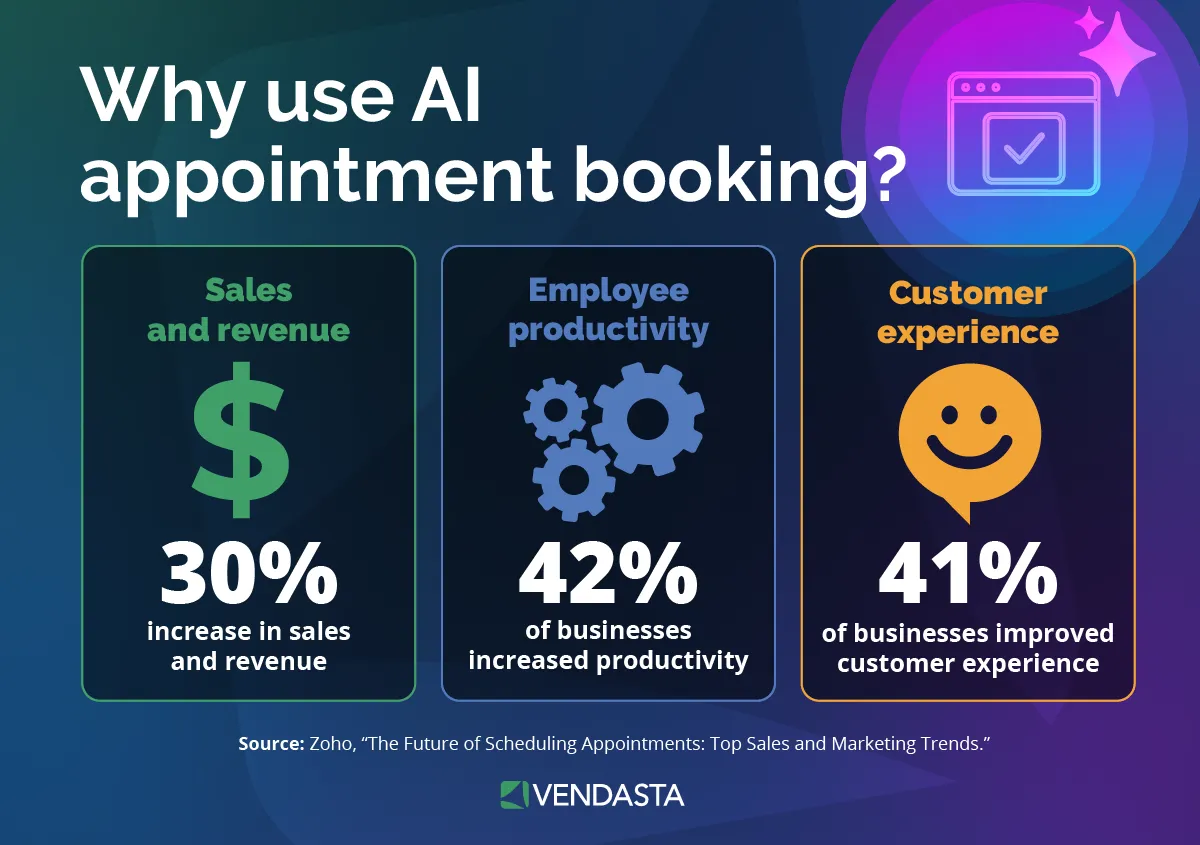
Neighborly’s franchise deployment converted 35,700 conversations into 3,400 conversions, a 372% year-over-year increase in lead-to-revenue performance, and roughly 30% of those leads had previously gone uncontacted entirely.
Delivering that result under your own brand is also relationship building with proof attached: the client sees booked appointments in their portal, attributed to the service you sold them.
How to Choose the Best AI Booking Tool for Your Business
Evaluate every option against the same criteria: integration depth, branding control, scheduling logic, and compliance posture. The four factors below decide whether a tool holds up past the demo.
Native CRM Integration: Connecting to Your Source of Truth
The CRM should own contact identity, lifecycle stage, and history; the calendar should own availability and confirmed events. Tools that blur that ownership create duplicate records and overwritten data. Email-only contact matching fails whenever a customer books with a different address, and Salesforce’s upsert API returns an error when multiple records match, changing nothing.
Also ask how the tool handles sync failures. Platforms such as HubSpot and Cronofy may deliver webhook events more than once, so a well-built integration deduplicates events and runs a periodic reconciliation job to catch anything missed. Vendasta sidesteps much of this by including Vendasta CRM AI natively, priced per organization with unlimited seats, so bookings, conversations, and contacts live in one system.
White-Label Capabilities: Building Your Agency’s Authority
Most booking tools sell directly to the end business, which means your client sees another vendor’s brand inside a service you sold. Vendasta’s channel-native architecture reverses that: white-label portal, wholesale pricing up to 80% off retail, spend-offset subscriptions, and portfolio-wide deployment, so the client experiences your agency throughout.
Agencies that retain brand control can improve retention economics. Vendasta’s retention research, based on 200,000 client relationships, found two-year retention rises from 30% with one product to 80% with four. A white-label booking service is often the second or third product that moves a client up that curve.
Conflict Resolution Logic: Managing Multi-Calendar Chaos
Availability checks and calendar writes are separate operations, so two concurrent requests can both pass the check before either commits. Nylas attributes double-booking to concurrency between the availability check and calendar write. The correct sequence locks the slot, re-checks availability for that exact window, writes the event, then releases the lock.
Ask vendors two questions directly: does the system re-verify availability immediately before the write, and does the language model ever decide availability itself? If the LLM decides, expect double-bookings. Multi-staff and multi-location businesses should also test routing logic for the right technician and room at the correct branch.
Security and Compliance: Protecting Your Reputation
Compliance determines whether a vendor qualifies. If the tool touches patient information, HHS guidance explicitly names a third-party scheduling chatbot on a provider’s portal as a HIPAA business associate, which means a signed BAA before any patient data flows. GDPR requires breach notification within 72 hours; California’s new automated decision-making rules add pre-use notices and opt-outs starting January 1, 2027.
Voice adds its own exposure. Illinois’s Biometric Information Privacy Act treats voiceprints as biometric identifiers, with statutory damages of $1,000 to $5,000 per violation, and California requires all-party consent before recording confidential communications. Certifications like SOC 2 leave key contract terms unresolved. Require:
-
Encryption specifics
-
Data-retention schedules
-
Subprocessor lists
-
A written prohibition on training AI models with your customer data
The Best AI Appointment Booking Tools by Category
The market splits into seven categories, and the right choice depends on whether you are a single-location operator, a multi-location brand, or an agency serving clients. The pricing below reflects vendor pages from August–September 2026.
1. Customer Engagement Platforms
These combine booking with messaging, reputation, and CRM in one customer engagement platform, the natural fit for local businesses and the agencies that serve them.
|
Platform |
Intended User |
Primary Strength |
Meaningful Limitation |
Verified Pricing |
Best Fit |
|---|---|---|---|---|---|
|
Vendasta |
Local businesses and their partners (agencies, franchisors, ISVs) |
Multi-channel booking with CRM, reputation, and campaigns |
Voice and SMS limited to the US and Canada; Premium includes 300 voice minutes |
Spend-offset subscriptions; $99/mo starter |
Businesses wanting one AI Workforce instead of several disconnected tools |
|
Podium |
Auto, home services, and retail businesses |
SMS-first lead conversion |
Custom pricing and reviewer concerns about cost and cancellation |
Custom quote only |
Text-heavy businesses prepared to negotiate a contract |
|
Thryv |
Single-location local businesses |
Scheduling, CRM, listings, reputation, and invoicing |
AI lead insights require the Signature plan |
From $99 per month; Signature at $399 |
Businesses wanting software and a dedicated success manager |
|
GoHighLevel |
Technical agencies |
Configurable white-label conversation and voice booking |
Steep learning curve and additional AI and telecom fees |
$97 to $497 per month; AI Employee add-on at $50 to $97 per enabled location |
Businesses willing to trade setup time for configurability |
Vendasta
Vendasta’s AI Receptionist answers phone, SMS, and web chat, qualifies leads, and books appointments, backed by Vendasta CRM AI, campaigns, and reputation tools in one platform.
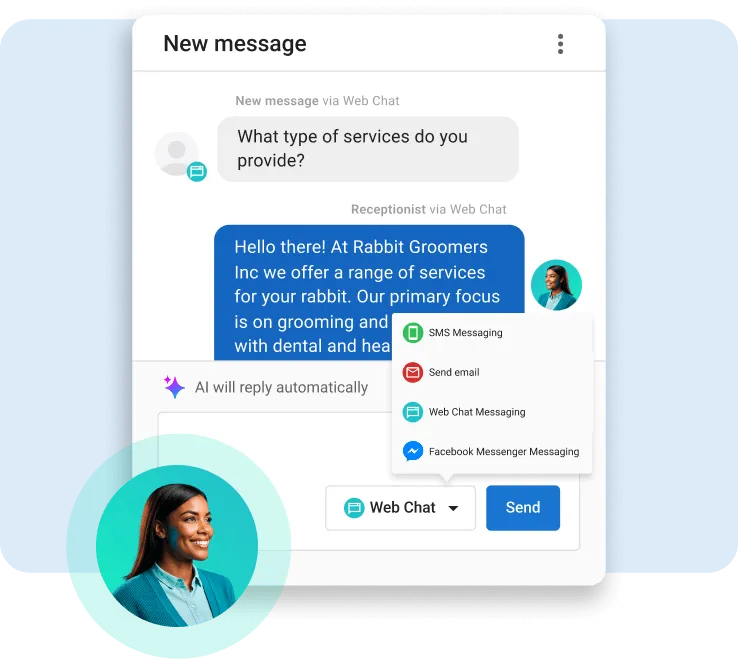
Partners buy at wholesale and resell under their own brand; local businesses can buy a full AI Workforce package with no setup fee and a 14-day free trial. Tradeoffs: voice and SMS are limited to the US and Canada, and Premium voice includes 300 minutes per month before overages. Users rate AI Receptionist 4.4/5 on G2 (195 reviews) and 4.8/5 on Google (191 reviews).
Best fit: Agencies that want to grow monthly recurring revenue without adding headcount to handle client fulfillment, and local businesses that would rather run one AI provider than stitch together separate tools for booking, reviews, and CRM.
Podium
Strong SMS-first lead conversion for auto, home services, and retail, rated 4.3/5 across 522 GetApp reviews. Pricing is custom-quote only, and reviewers on Software Advice and GetApp cite expensive plans and difficult-to-cancel contracts.
Best fit: Text-heavy businesses comfortable negotiating an opaque contract.
Thryv
An all-in-one platform (listings, reputation, scheduling, CRM, invoicing) from $99 per month, though AI lead insights require the $399 Signature plan.
Best fit: Single-location businesses that want software plus a dedicated success manager.
GoHighLevel
A white-label agency platform ($97 to $497 per month) with an AI Employee add-on at $50 to $97 per enabled location for conversation and voice booking. Rebilling AI to clients requires the $497 plan, usage-based AI and telecom fees stack on top, and reviewers cite a steep learning curve.
Best fit: Technical agencies willing to trade setup time for configurability.
2. AI Scheduling Assistants
These optimize your own calendar rather than booking customers, making them useful for consultants and internal teams.
Reclaim.ai
Reclaim.ai auto-schedules habits, tasks, and meetings for individual professionals and teams. It offers a free tier, with paid plans from $10 per seat monthly, and holds a 4.8/5 G2 rating across 135 reviews.
Best fit: Users who want calendar optimization without customer-facing booking conversations.
Motion
Motion adds AI project management and automatically prioritizes work for professionals and small teams. It costs $19 per seat monthly with annual billing, has no free tier, and users report the AI moving tasks without permission.
Best fit: Teams willing to trade more control for automated task and calendar planning.
Clockwise
Clockwise creates focus time across team calendars and offers a free plan, with team pricing from $6.75 per user. Its homepage signals a product transition, so buyers should check current availability before committing.
Best fit: Teams focused on meeting coordination and protected work time.
3. Chatbot and Voice-Based Booking Systems
This category supplies the conversational layer, from website chatbots to full voice agents, and most options here assume you will assemble the integrations yourself.
Retell AI
True pay-as-you-go voice AI at $0.07–$0.31 per minute with transparent component pricing and native Cal.com booking. It is developer-oriented with no managed onboarding.
Best fit: Agencies with engineering capacity building custom voice agents.
Bland AI
Tiered self-serve pricing (free Start plan at $0.14/min; Build at $299 per month and $0.12/min) covering the full appointment lifecycle including waitlists and multi-location routing. The Start plan caps at 100 calls per day.
Best fit: Businesses scaling call volume with predictable per-minute economics.
Synthflow AI
Enterprise voice AI handling 65M+ calls monthly with SOC 2, GDPR, HIPAA, and ISO 27001 certifications, but contracts start at $30,000 annually.
Best fit: Regulated, high-volume organizations only.
Phonely
A free 100-minute tier and a $50 per month starter make it the cheapest entry point, though the HIPAA BAA and full agent buildout are Enterprise-only.
Best fit: Local businesses testing voice AI before committing.
4. Industry-Specific Booking Platforms
Vertical platforms trade breadth for depth in one industry’s workflow.
Housecall Pro
Housecall Pro starts at $59 per month and offers CSR AI to answer and book 24/7. Housecall Pro may fail to book when the business has not configured availability in the schedule.
Best fit: Home-service businesses already using its operating platform.
ServiceTitan
ServiceTitan’s AI Virtual Agent books jobs using real-time ServiceTitan data. Pricing starts at $2.75 per call, with volume pricing available.
Best fit: ServiceTitan customers that want booking tied directly to their existing job data.
Boulevard
Boulevard serves beauty and wellness businesses, and its AI Receptionist costs $125 per location monthly for 200 minutes. Overage usage costs $0.60 per minute.
Best fit: Location-based operators that want voice booking connected to their salon or spa workflow.
Fresha
Fresha’s AI Concierge costs $99.95 per location with 200 minutes and books directly into the Fresha calendar. Leaving Fresha’s marketplace disables all its online booking channels, which creates a meaningful platform dependency.
Best fit: Businesses already committed to Fresha’s marketplace and calendar.
Vagaro
Vagaro’s Vera Connect AI costs $10 per month. It cannot view calendar availability or book appointments, so it sends customers a link instead.
Best fit: Businesses that need low-cost conversational routing rather than completed booking.
Zocdoc
Zocdoc charges no upfront fee and bills per new-patient booking. Its AI phone assistant books directly into the electronic health record.
Best fit: Healthcare providers willing to use a marketplace model for patient acquisition.
5. Calendar and Workflow Integrators
These are scheduling backbones that AI layers attach to.
Calendly
Calendly is the highest-rated scheduling tool in the research at 4.7/5 across 4,071+ reviews, with plans from $10 per seat monthly. Its Callie assistant books meetings after a user adds it to an email thread, though Callie is English-only.
Best fit: Teams that rely on scheduling links and email-based meeting coordination.
Acuity Scheduling
Acuity Scheduling costs $16 to $49 monthly with annual billing and includes unlimited appointments on all plans. It offers a HIPAA BAA on Premium.
Best fit: Appointment-based businesses that need a conventional scheduling backbone with a healthcare compliance option.
YouCanBookMe
YouCanBookMe offers a free-forever plan with automated reminders and no-show management. It suits teams that need configurable scheduling links without a conversational voice layer.
Best fit: Appointment-light businesses that prioritize reminders and self-service booking.
6. Marketplace or Multi-Location Booking Systems
Marketplace platforms trade commission for discovery.
Booksy
Booksy costs $29.99 per month plus $20 per additional team member and exposes businesses to 44 million users. Its optional Boost program charges a 30% one-time commission on a new client’s first visit.
Best fit: Consumer-discovery businesses willing to trade commission for marketplace reach.
Setmore
Setmore offers a free plan for up to four users. A $99 per month live receptionist add-on expands it beyond self-service scheduling.
Best fit: Budget operators that want a low-cost entry point and an optional human answering service.
Zenoti
Zenoti serves multi-location salon, spa, and wellness chains on custom pricing. It centralizes appointment books, unified guest profiles, and cross-branch booking.
Best fit: Franchise chains that need consistent scheduling across locations.
Best Practices for AI Appointment Booking
Operators set the performance ceiling through tool selection, then determine results through configuration, testing, and review. Seven practices consistently separate strong deployments from shelfware.
1. Keep Your Booking Forms Short and Mobile-Friendly
Every added field costs completions, especially on phones where most local searches happen. Collect only what booking requires (name, contact, service, time) and let the AI gather details conversationally afterward.
2. Offer Multiple Time Slots and Self-Service Options
Dead ends push customers to competitors. The Kyruus benchmark found 57% of people who skipped care wanted to schedule online but could not, so always present alternatives when the requested slot is taken, and let customers reschedule themselves without calling.
3. Automate Reminders via SMS or Email
The BMJ Open meta-analysis cited earlier puts the reminder effect at roughly five percentage points of absolute no-show reduction, and the Cochrane review of eight randomized trials found SMS reminders lifted attendance from 67.8% to 78.6%. Build reminders into marketing automation workflows that fire without anyone remembering to send them, and add extra touches for far-out bookings where risk concentrates.
4. Personalize Confirmations and Follow-Ups
A confirmation naming the service, technician, and prep instructions gets read; a generic one gets ignored. AI marketing automation drawing on the business’s own records makes that personalization automatic rather than manual, and the same system can request a review after the job closes.
5. Sync All Calendars and Systems in Real Time
Stale availability produces double-bookings and phantom slots. Confirm your vendor renews calendar push channels before they expire, runs reconciliation polling for missed webhook events, and stores timezones as named IANA zones rather than UTC offsets, which silently break around daylight-saving transitions.
6. Use Analytics to Improve Performance
Read the booking funnel monthly: inquiries, conversations completed, appointments booked, appointments kept. Vendasta’s retention research found regular proof-of-performance reporting improves client retention by 38%, so agencies should put these numbers in front of clients as well as operations teams.
7. Continuously Test and Refine
Rerun your launch test scenarios quarterly and after any change to services, hours, or pricing. Transcripts from escalated and abandoned conversations are the cheapest training data you will ever get.
How to Calculate AI Appointment Booking ROI
ROI here is a recovery calculation: the system captures revenue that was already knocking and getting no answer. Four steps make the math defensible.
1. Establish Your Baseline Metrics
Measure the pre-AI state for at least one month:
-
Call answer rate: The share of inbound calls a person answers, including evenings and weekends.
-
Booking conversion: Inquiries that become scheduled appointments.
-
No-show rate: Booked appointments that produce no revenue.
-
Average appointment value: Revenue per completed appointment or job.
-
Admin hours: Weekly staff time spent scheduling, confirming, and rescheduling.
2. Track Key ROI Drivers
Post-launch gains come from four places: after-hours and missed-call capture, higher booking conversion, fewer no-shows, and reclaimed staff time. The scale can be large; iMedia Audiences built a $200,000 monthly appointment pipeline for a luxury appliance showroom from 80 AI-driven bookings averaging $2,500 each. The UAE deployment cited earlier shows what prediction-plus-reminders can do to the no-show line.
3. Use the ROI Formula
The formula is standard: ROI = (revenue gained − total cost) ÷ total cost × 100. Total cost includes the subscription, usage minutes, setup, and integration work. As an illustration, a home-services business recovering 15 previously missed bookings a month at a $400 average job adds $6,000 in monthly revenue; against Vendasta’s $799 per month AI Workforce package, that is roughly a 650% monthly return. G2’s analysis of 2,705+ verified reviews found AI agents reach ROI in an average of 5.03 months, with 46% of buyers implementing in under a month.
4. Factor in Intangible Benefits
Some gains resist the formula: response speed as a competitive signal, customer convenience, staff freed from phone triage, and consistent intake quality on every call. Be honest about the other side too.
Gartner projects generative AI cost per resolution will exceed $3 by 2030, higher than many offshore human agents, which argues for tracking usage costs per booking rather than assuming automation stays cheap forever.
Real-World Example: Smarter Scheduling, Happier Clients
Agency deployments show the model end to end, and Live 360 Marketing documented one of the cleanest.
The Challenge
Leads reaching Live 360 Marketing’s clients faced the standard local-business intake problem: inquiries arriving faster than staff could respond, and anything outside business hours defaulting to voicemail. Every delayed response was a lead free to book with a competitor.
The Execution
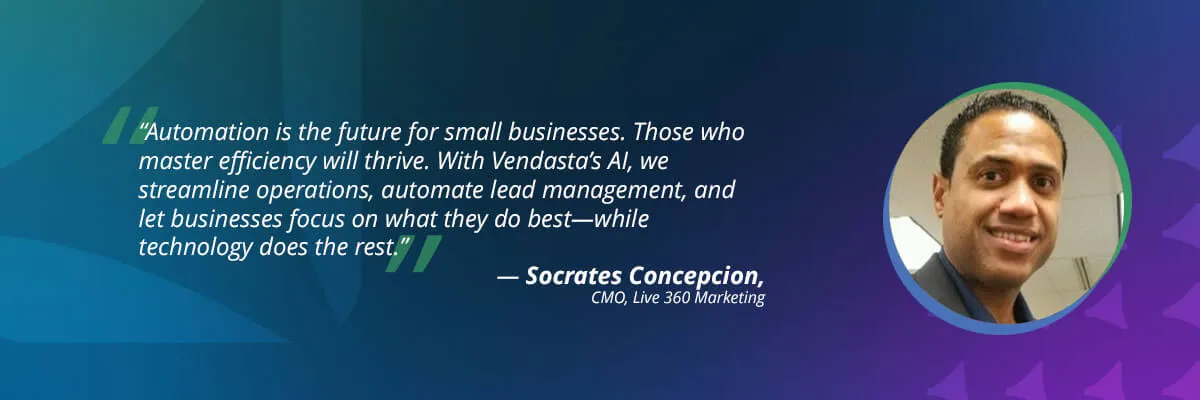
The agency deployed Vendasta AI Receptionist, configured to capture and qualify leads and book appointments within seconds of first contact. Because setup draws on each business’s own website and knowledge, the AI answered as the client’s business, not as a generic bot.
The Results
The case study, published March 10, 2025, reports a 70% ROI from the deployment. Other partners running the same playbook show the pattern holds across verticals: Social Ordeals attributed $47,698 in monthly revenue and 57 new clients in a single month to AI intake for a nine-location veterinary group. For an agency, each result becomes a documented, resellable service rather than a one-off win.
Future Trends: Where AI Appointment Booking Is Headed
The next phase of AI adoption in scheduling is already visible in analyst forecasts, and seven trends matter most for operators planning 12 to 36 months out.
1. Conversational AI and Voice Scheduling Are Becoming Mainstream
Grand View Research projects the AI voice agents market to grow from $2.54 billion to $35.24 billion by 2033, a 39% compound annual rate. Supply-side pressure matches: a Gartner survey of 321 service leaders found 91% face executive pressure to implement AI in 2026. Businesses that wait will increasingly compete against phones that always answer.
2. Predictive Scheduling Will Spread Beyond Healthcare
Deloitte’s health care outlook found 61% of health executives already building agentic AI initiatives, and McKinsey documented a field-services case where AI scheduling raised technician capacity 40%. The same no-show prediction and capacity optimization proven in clinics translates directly to HVAC routes and salon chairs.
3. Deep Integration Across the Customer Journey
Gartner predicts 40% of enterprise applications will carry task-specific AI agents by end of 2026, up from under 5% in 2025. Forrester’s conversational AI research makes the booking-specific point: without back-end scheduling connectivity, automation falls short. Standalone booking widgets lose to systems wired into CRM, payments, and follow-up.
4. Hyper-Personalization Will Become the Standard
IDC projects 30% of travel bookings will be executed by AI agents by 2030, with half of hospitality AI budgets going to personalization. Salesforce’s State of the AI-Connected Customer (15,015 respondents) found comfort with AI rises 44% when the system’s logic is clearly explained, which favors AI trained on each business’s own data over generic models.
5. Privacy and Data Security Will Take Center Stage
California’s ADMT rules land January 1, 2027, and European regulators’ guidance on virtual voice assistants (EDPB) presses data minimization, including whether voice recordings need to be kept once transcribed. Expect contractual prohibitions on training vendor models with customer data to become a standard procurement demand, and vendors who cannot sign them to lose deals.
6. 24/7 Self-Service Will Become a Competitive Baseline
Forrester predicts one in four brands will see a 10% increase in successful simple self-service interactions by end of 2026. A separate Gartner survey of 4,879 customers found 51% would let a GenAI assistant handle service interactions on their behalf. When the customer’s own AI does the booking, businesses without a machine-readable, always-on booking layer become invisible.
7. AI Employees and Human Collaboration Will Define the Next Era
The autonomous-AI hype has a documented ceiling. Gartner’s August 2026 survey of 3,566 customers found 87% say access to a human agent is essential when companies use GenAI, and Gartner separately predicts half of companies that cut service staff for AI will rehire by 2027.
Forrester’s Q2 2026 evaluation of conversational AI platforms found “zero appetite in this market for fully autonomous agentic applications.” The winning design divides work between AI and human: AI handles volume, speed, and off-hours coverage, while people handle judgment calls and complex sales, with a reliable escalation path connecting the two.
The Bottom Line on AI Appointment Booking
AI appointment booking pays for itself by recovering demand you already generate: the after-hours caller, the missed call during a job, the booking that no-shows for lack of a reminder. The evidence runs from peer-reviewed reminder studies to named partner results like Xcite Group’s 50%-to-70% lead-to-appointment lift and iMedia’s $2,500-average bookings.
Success depends on the fundamentals covered above: integration with your real calendar and CRM, conflict-resolution logic that prevents double-bookings, a human escalation path, and compliance handled in the contract rather than assumed.
For local businesses, Vendasta packages this as AI Receptionist with done-for-you setup; for agencies, it is a white-label service deployable across an entire client portfolio through Partner Center, with every action logged as proof of performance.
Book a demo to see how AI appointment booking would run on your own calendar and phone line.
AI Appointment Booking FAQs
1. What is AI appointment booking?
AI appointment booking uses conversational AI to handle scheduling requests over phone, web chat, SMS, and email. The system interprets the request, checks live calendar availability, books the appointment, logs it to the CRM, and sends confirmations and reminders. It operates 24/7, so inquiries outside business hours still become booked appointments.
2. How does AI appointment booking reduce no-shows?
Through two mechanisms: automated reminders and predictive targeting. The BMJ Open meta-analysis of 21 studies found reminders cut no-shows from 21% to 15%. Prediction models flag high-risk bookings, such as appointments made 60 or more days out, so extra reminders and follow-up effort concentrate where the risk actually sits.
3. Do I need a CRM to use AI appointment booking?
Most tools can book against a calendar alone. A connected CRM adds meaningful value, though: it deduplicates contacts, preserves booking history, triggers follow-up campaigns, and attributes revenue by channel. Vendasta includes CRM AI priced per organization with unlimited seats, so booking data lands in one system of record automatically.
4. What features should I look for in an AI appointment booking tool?
Prioritize multi-channel coverage (voice, SMS, web chat), native calendar and CRM integration, conflict-resolution logic that prevents double-bookings, a reliable human escalation path, logged activity for proof of performance, and compliance support such as a HIPAA business associate agreement where required. Agencies should add white-label branding and multi-location deployment.
5. How quickly can AI appointment booking be implemented?
Self-serve deployments take minutes to hours; most Vendasta AI Employees deploy in under 30 minutes after learning from your website and business profile. Managed deployments involving CRM integration and custom rules typically run one to two weeks. Regulated or multi-location rollouts requiring security reviews and BAAs can take six to eight weeks.
6. Is AI appointment booking useful for agencies and franchisors?
Yes. Agencies resell it as a productized white-label service: Xcite Group retained 100% of its AI clients while lifting their booking conversion. Franchisors deploy one tested configuration across every location; Neighborly’s deployment recovered roughly 30% of leads that had previously gone uncontacted and drove a 372% lead-to-revenue increase.
7. How does AI appointment booking improve customer experience?
Customers get an immediate answer on the channel they chose, at any hour, with no hold queue, voicemail, or callback loop. Reminders reduce forgotten appointments, and a clear escalation path handles complex requests. Salesforce’s shopper research found 59% of consumers are interested in AI agents booking appointments for them.
8. Can AI appointment booking handle phone calls as well as web forms?
Yes. Voice AI answers the call, converses naturally, checks the calendar, and books before the caller hangs up. Vendasta’s Conversations AI Premium adds voice handling with 300 minutes per month in the US and Canada. The FCC requires callers to obtain prior express consent before making outbound AI-voice calls.
9. What metrics should I track to measure success?
Track call answer rate, booking conversion rate, after-hours bookings, no-show rate, escalation rate, and revenue per booked appointment, each compared against your pre-launch baseline. G2’s review analysis found AI agents reach ROI in an average of 5.03 months, so evaluate performance over at least two quarters before judging.
10. How does Vendasta support AI appointment booking end-to-end?
AI Receptionist answers calls, texts, and chats and books appointments; Vendasta CRM AI logs every contact and action; Campaigns Pro sends reminders and follow-ups; Business App gives each client one portal; and Partner Center lets agencies deploy the whole stack white-label across their portfolio, with every AI action logged as proof of performance.
This article was originally published in November 2025 and was updated in September 2026 to include the latest information and insights.