About Us
 Careers
 Leadership
 Board
Board Newsroom
In 2026, most businesses still manage Google reviews manually. Requests go out inconsistently. Responses come days later, if they come at all. That approach no longer works.
Google reviews now influence local rankings, AI-powered recommendations, and buyer trust before someone ever clicks through to a website. Reviews are no longer a passive reputation signal. They are active inputs for search engines and AI systems that determine which businesses get visibility.
If you’re not deliberately managing reviews, you’re leaving growth on the table.
And the gap is only widening.
Businesses with strong review velocity, fast response times, and consistent sentiment are winning local pack placements and appearing in AI-driven answers like “best option near me.” Teams that rely on manual review requests and generic responses are falling behind.
This challenge becomes even more complex when you support multiple SMBs, locations, or franchisees. Manual workflows do not scale. Slow responses erode trust. Disconnected tools make it difficult to identify patterns or act on feedback before it impacts visibility and conversions.
In short, reputation management has become a growth bottleneck.
Improving Google reviews in 2026 requires a system, not a series of one-off tactics.
This guide breaks down how to improve Google reviews using automation, AI-generated review responses, and centralized reputation insights. You’ll learn how to increase review volume, respond instantly and on brand, and turn customer feedback into visibility and trust signals that matter in both search and AI-driven discovery.
Respond to every review faster, smarter, and on brand with AI
TL;DR
- Google reviews now drive rankings, AI recommendations, and buyer trust, not just social proof.
- Consistent review requests and fast, on-brand responses outperform manual efforts, especially at scale.
- Vendasta’s Reputation AI automates review generation, AI-powered responses, and insights from one centralized platform.
Why Google Reviews Matter More in 2026 than Ever Before
In 2026, Google reviews are no longer just a trust signal for human buyers. They are a ranking factor, a conversion driver, and a data source that AI systems actively use to decide which businesses get visibility.
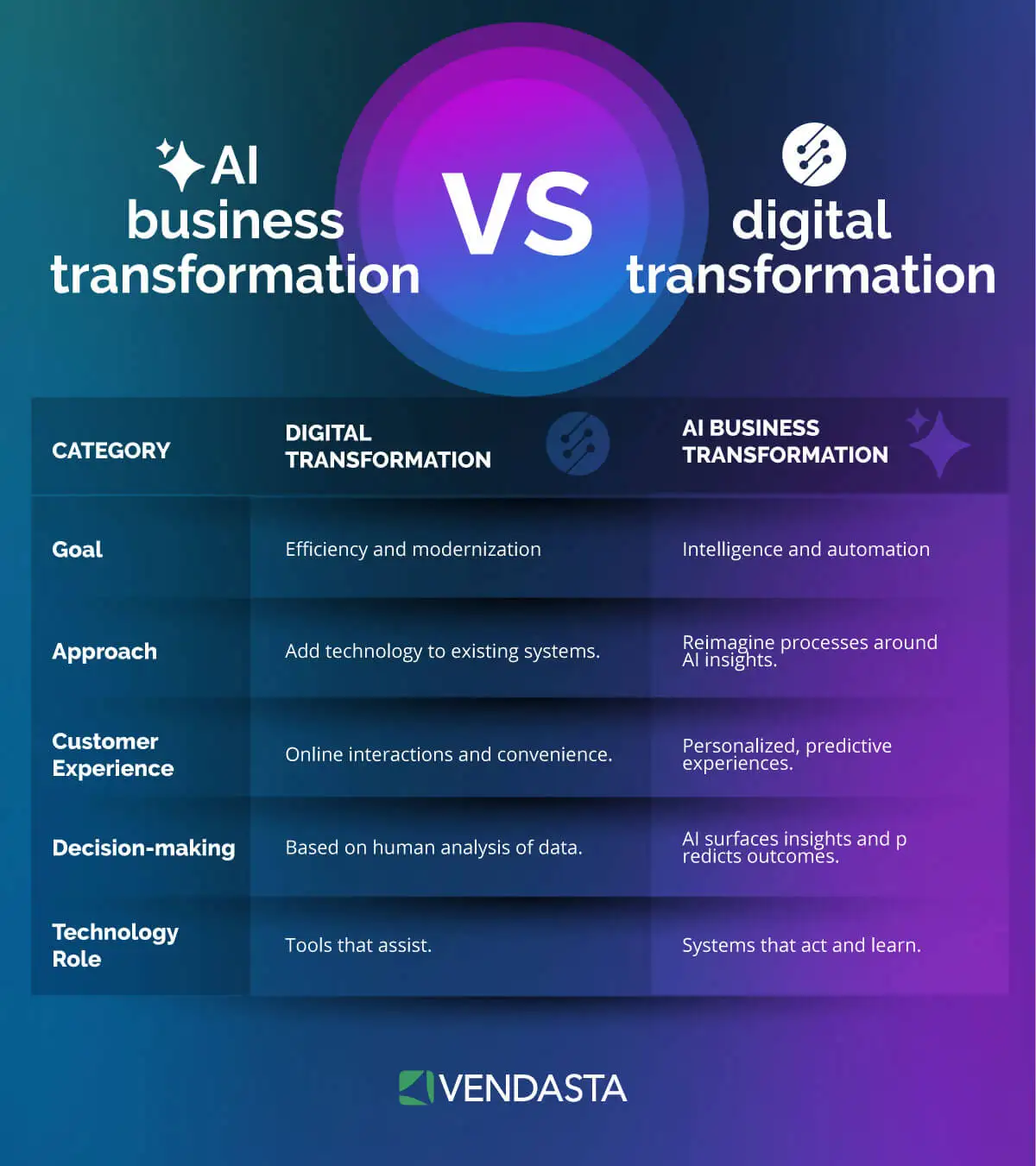
If your business or your clients rely on local discovery, reviews directly influence who gets seen and who gets skipped. This shift aligns with a broader wave of AI business transformation, where search engines and recommendation systems increasingly rely on real customer signals to guide decisions.
Google Reviews Now Shape Search and AI Recommendations
Google has continued to evolve local search beyond keywords and proximity. Review signals play a larger role in how businesses are ranked and recommended, especially in competitive markets.
In 2026, Google reviews influence:
- Local pack rankings and map visibility.
- Click-through rates from search results.
- AI-generated summaries and recommendations that surface “best” or “most trusted” options.
- Buyer confidence happens before a website visit or phone call.
As Google introduces more AI-driven shortcuts in the buying journey, including features like Google’s “Have AI Check Prices”, reviews increasingly shape which businesses are surfaced and trusted before users ever compare options themselves.
The majority of consumers still read online reviews before choosing a local business, and businesses with higher ratings and recent reviews consistently earn more clicks and conversions.
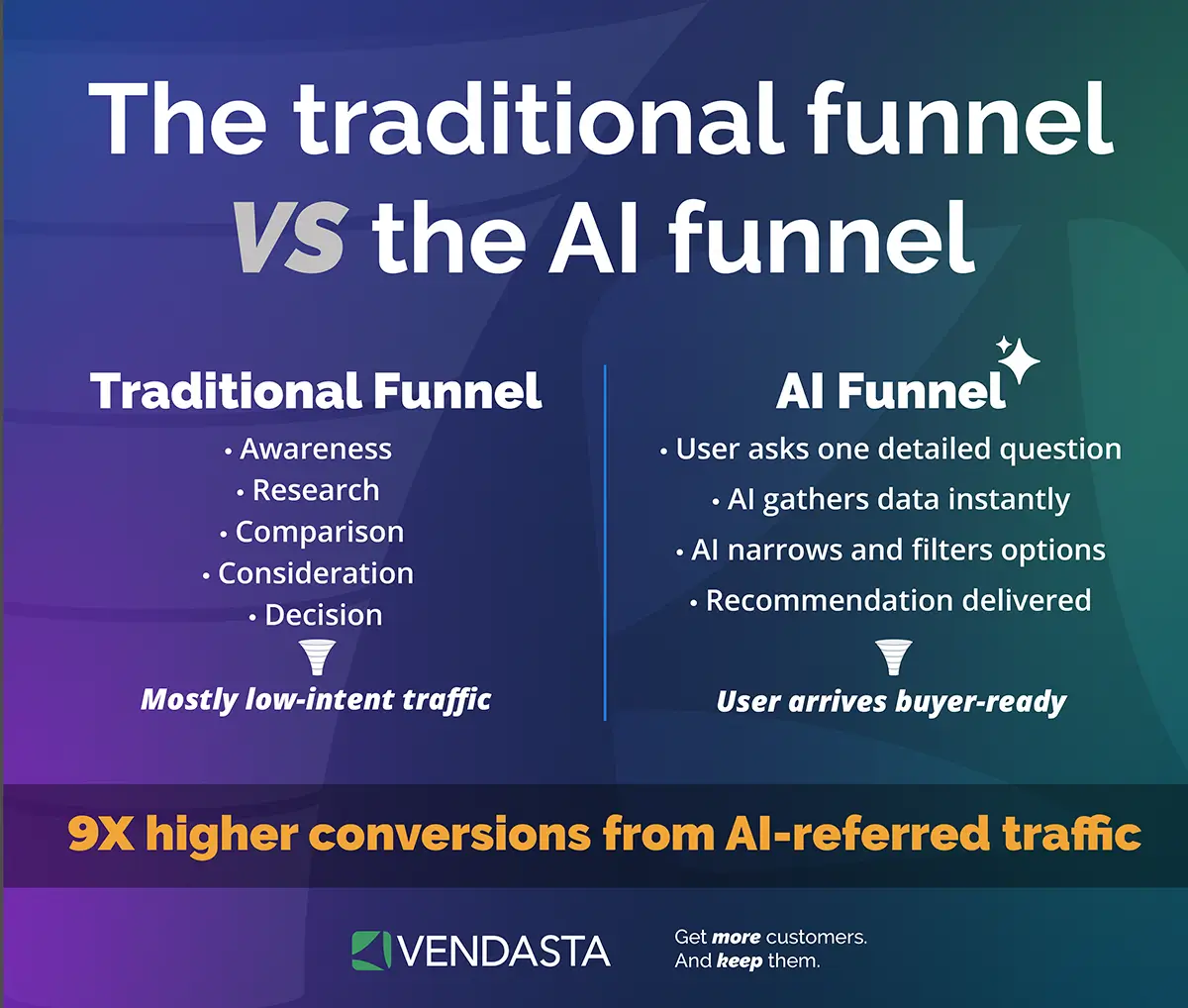
As AI-driven search grows and the AI funnel becomes the new reality, those same review signals are increasingly treated as structured trust data, not just text on a profile.
Review Quality and Freshness Matter More than Volume Alone
In earlier years, review count was often the primary focus. In 2026, quality, freshness, and engagement matter just as much.
Google evaluates:
- How recent reviews are
- Whether reviews show detailed, experience-based feedback
- How often businesses respond, and how quickly
- Sentiment trends over time, not just star average
A business with fewer, recent, well-managed reviews can outperform a competitor with hundreds of outdated or unanswered reviews. This shift rewards consistency and responsiveness, not brute volume.
Review Responses Are Now a Visibility Signal
Responding to reviews is no longer optional.
Google has publicly stated that businesses that engage with customer feedback build trust and credibility. In practice, fast and thoughtful responses also send engagement signals that support local performance.
Strong response behavior helps:
- Improve perceived trust and professionalism
- Influence undecided buyers comparing options
- Reinforce relevance signals used in local ranking systems
- Provide AI systems with additional context about the business
This is where many teams fall behind. Manual responses do not scale, especially across multiple locations or clients. Delayed replies weaken trust and create missed opportunities, which is why reputation management is increasingly tied to broader AI leadership strategies rather than isolated marketing tasks.
Reviews Influence the Entire Customer Journey
In 2026, reviews impact more than discovery.
They affect the digital marketing customer journey:
- Whether a prospect clicks, calls, or books
- How confident a buyer feels before their first interaction
- Whether existing customers stay loyal or churn
- How AI assistants summarize and recommend businesses
Reviews also provide valuable insight into what customers actually experience. When analyzed properly, they highlight strengths, surface issues early, and guide smarter decisions across marketing, operations, and customer experience.
Google review management software like Vendasta’s Reputation AI helps turn this feedback into action by combining automated review collection, AI-generated responses, and conversational insights in one place. Instead of reacting after problems escalate, businesses and partners can spot trends early and protect visibility before it drops.
In short, Google reviews have become an active growth signal in 2026. Businesses that treat them as a managed system, not a side task, are the ones that win visibility, trust, and long-term customers.
What “Improve Google Reviews” Actually Means in 2026
In 2026, improving Google reviews is not about chasing star ratings or sending occasional review links. It’s about building a system that consistently earns feedback, responds intelligently, and turns customer sentiment into visibility and trust signals that search engines and AI systems can use.
When buyers ask AI tools who to trust or where to go, reviews help them decide. That shift is why many businesses are now adopting an AI reputation management agent instead of relying on manual, fragmented workflows.
It Means Improving More than the Review Count
Review volume still matters, but it is no longer the primary signal on its own. Google and AI-driven discovery systems look at the full context around reviews.
Tips on how to improve Google reviews now include:
- Steady review velocity over time, not short bursts
- Recent reviews that reflect current experiences
- Detailed feedback that signals real customer interactions
- Balanced sentiment that shows authenticity and credibility
A business with consistent, recent reviews often outperforms one with a higher total count but outdated feedback.
It Means Faster, More Thoughtful Responses
Response behavior is now a core part of reputation performance.
In 2026, improving Google reviews also means:
- Responding to every review, positive or negative
- Reducing response time from days to minutes or hours
- Matching tone and language to the reviewer
- Handling negative feedback in a way that protects trust
This is where approaches like an AI review response become essential. Faster, context-aware replies improve buyer perception while giving search engines and AI assistants stronger engagement signals to work with.
It Means Treating Reviews as a Growth Signal
Reviews are no longer just feedback. They are operational data.
When managed properly, reviews help businesses:
- Identify recurring service issues early.
- Understand what customers value most.
- Improve local SEO and click-through rates.
- Strengthen conversion rates across search and AI-driven recommendations.
This is why improving Google reviews now requires insight, not just activity.
It Means Using Automation without Losing Control
Manual review management does not scale in 2026, especially for businesses supporting multiple SMBs or locations.
Improvement today includes:
- Automated review requests tied to real customer milestones
- AI-generated review responses that stay on-brand
- Centralized visibility across Google and Facebook reviews
- Clear rules and approvals to maintain quality and compliance
Google review management software like Vendasta’s Reputation AI supports this approach by combining automated review generation, AI-powered responses, and conversational insights in one place. Businesses and partners can scale reputation management while staying informed and in control.
In 2026, Improvement Is a System, not a Tactic
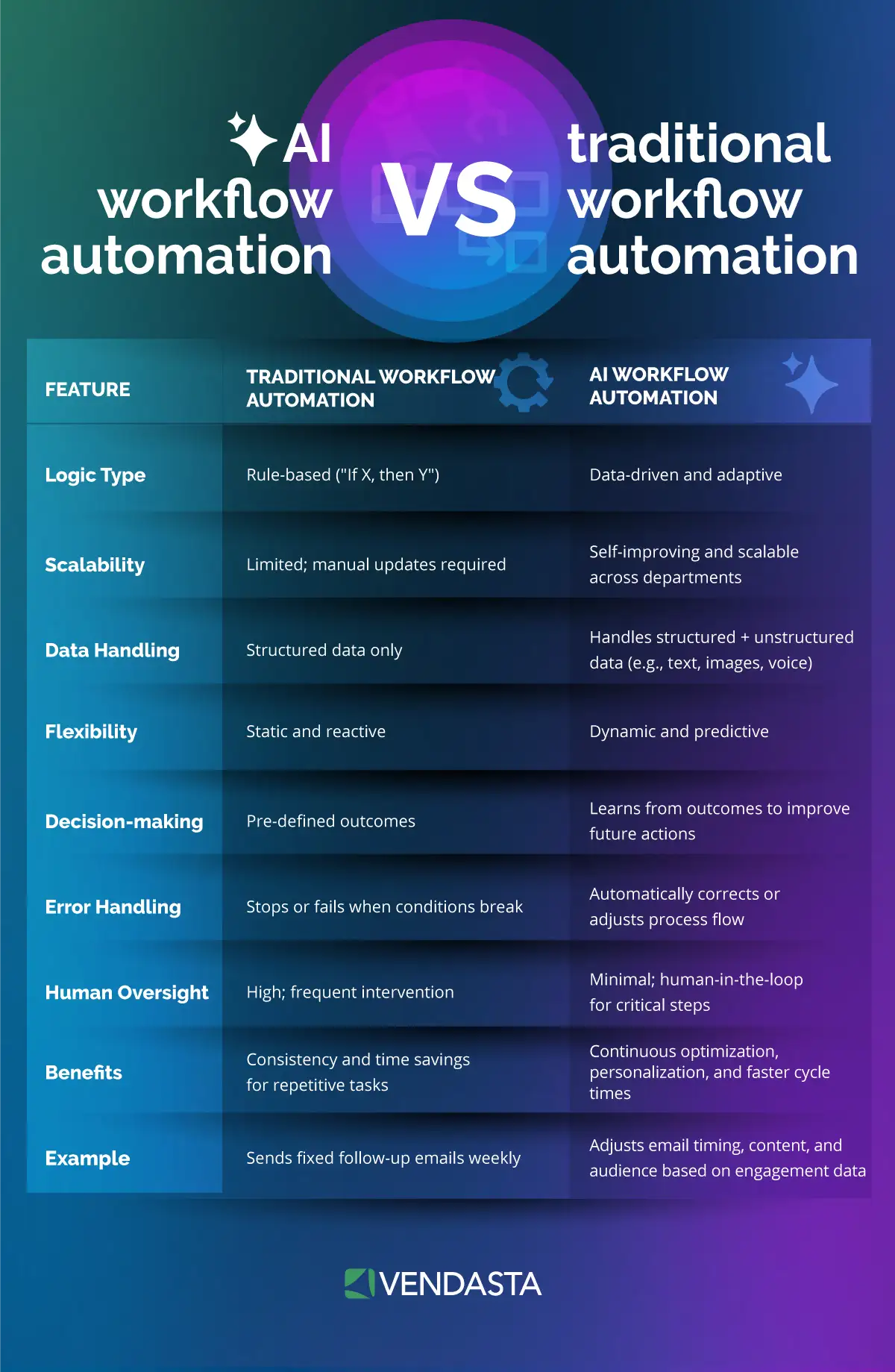
Improving Google reviews now means building a repeatable process that earns trust continuously. It blends consistency, speed, insight, and AI workflow automation into a single system.
Businesses that approach how to improve Google reviews this way are not just improving ratings. They are improving visibility, credibility, and long-term growth in a search landscape increasingly shaped by AI.
How to Improve Google Reviews Step by Step in 2026
If you want more Google reviews in 2026, you need a repeatable system. The goal is simple: make it easy for happy customers to leave feedback, and make sure your profile consistently signals trust to both people and search engines.
Use the steps below to improve review volume, quality, and consistency without adding a pile of manual work.
Step 1: Optimize Your Google Business Profile for AI-Driven Discovery
A strong Google Business Profile (GBP) does two things at once. It improves how you show up in local search, and it increases the odds that customers will actually leave a review after an interaction.
When it comes to Google Business Profile optimization, start with the basics, then tighten the details.
Focus on profile completeness and accuracy:
- Confirm your business name, address, and phone number are correct and consistent everywhere online.
- Add your website, hours, service area, and attributes that matter to customers.
- Make sure your hours are updated for holidays and seasonal changes.
- Enable messaging and appointment or booking links if they apply.
Dial in categories, services, and descriptions:
- Choose the most accurate primary category. This impacts relevance in search.
- Add secondary categories only when they genuinely apply.
- List services or products using clear, customer-friendly wording.
- Write a description that reflects what you actually do, who you serve, and what makes the experience different.
Keep photos fresh, and engagement signals active:
- Upload new photos regularly, not just once.
- Include a mix of exterior, interior, team, and “in action” images.
- Add short videos if possible, especially for service businesses.
- Use posts and updates to show activity and keep the listing current.
This creates more review opportunities and higher trust because of the following reasons:
- Customers are more likely to review a business that looks active, legitimate, and easy to understand.
- Clear services and categories reduce confusion, which leads to better-fit customers and stronger review sentiment.
- Fresh activity signals tell both buyers and Google that the business is operating and engaged.
Quick self-check:
- If someone searched your category today, would your listing make them confident enough to contact you?
- If they did contact you, would your listing still look current a week later when they are deciding whether to leave a review?
Step 2: Ask for Reviews at the Moments that Matter Most
Most businesses ask for reviews at random, or they wait until someone remembers. In 2026, timing and context are what drive results.
High-intent moments to request reviews:
- Right after a completed job, delivery, or appointment
- Immediately after a problem is resolved by support
- After a successful payment or invoice is paid
- After a milestone such as a project launch, onboarding completion, or renewal
- After a compliment, thank-you email, or positive in-person moment
Why timing and context outperform generic review links:
- When the experience is fresh, customers can recall details and write better feedback
- The request feels earned, not automated, because it matches what just happened
- The customer is less likely to procrastinate and forget
Why SMS and email work better than passive requests:
- SMS tends to perform well for speed and convenience, especially after on-site services
- Email works well for providing context, links, and brand reassurance, especially for higher-consideration purchases
- Passive prompts, like “leave us a review” signage or footer links, help, but they rarely create consistent review velocity on their own
| Customer Moment | Channel | Expected Outcome |
| Job Completed | SMS | Fast response, high completion rate. |
| Issue Resolved | More detailed reviews, stronger sentiment. | |
| Payment Processed | SMS or Email | Timely feedback tied to a clear milestone. |
| Project Milestone Hit | Longer, higher-quality reviews with specifics. | |
| Positive Compliment Received | SMS | High likelihood of immediate submission. |
Pro Tip: Use a short message that references the moment. One sentence of context can improve completion rates because it feels personal and relevant.
Step 3: Automate Review Requests without Losing Authenticity
Manual review outreach breaks down quickly in 2026. People forget to ask. Teams get busy. Different staff use different scripts. And when you support multiple clients or locations, the inconsistencies multiply.
Why manual review outreach does not scale:
- It depends on individual behavior, which is never consistent.
- It creates gaps in review velocity, which hurts momentum and visibility.
- It often leads to “bursts,” which look unnatural and are hard to sustain.
How marketing workflow automation ensures consistency and compliance:
- Every customer receives the same type of request at the right time.
- Messaging stays aligned with policy guidelines and brand voice.
- You can set rules for when requests should and should not be sent.
- You can standardize workflows across multiple locations or SMB clients.
Why milestone-based requests perform better:
- They are tied to real customer events, so they feel justified.
- They reach customers when the experience is top of mind.
- They produce higher-quality reviews because customers remember specifics.
Vendasta’s Reputation AI automates review requests through email and SMS so your business can improve Google reviews without relying on staff to remember. Review requests can be triggered by real events using integrations with tools like QuickBooks Online, Jobber, and PetExec.
That means you can:
- Automatically send review requests after a payment, completed job, or milestone.
- Use branded templates that feel consistent across locations or clients.
- Maintain steady review velocity without last-minute campaigns.
- Increase review volume while reducing manual follow-up.
Simple starting point for most businesses on how to improve Google reviews through automation:
- Automate one trigger first, such as “payment received” or “job completed.”
- Measure review volume and response rate for 30 days.
- Add a second trigger once the first is performing consistently.
How to Get More Google Reviews Fast (The 2026 Checklist)
In 2026, the distance between a happy customer and a 5-star review must be as short as possible. If a customer has to “search for you on Google” and then find the “Reviews” tab, you’ve already lost them to friction. To skyrocket your volume, you need to bring the review screen to them.
Creating Your “Google Review Shortcut”
The most effective way to drive reviews is with a direct, “one-tap” link that opens the review dialog box immediately. Google provides this short URL natively within your dashboard.
How to generate your short link:
- Access Your Dashboard: Sign in to the Google account associated with your business and search for your business name in Google Search or Maps.
- Find the “Ask for Reviews” Card: In the Business Profile menu (usually a grid of icons like “Edit Profile” and “Promote”), look for the button labeled “Ask for reviews” or “Get more reviews.”
- Copy the Short URL: A pop-up will appear with a link that looks like
https://g.page/r/[unique-id]/review. - The Magic of the Link: When a customer clicks this, it doesn’t just go to your profile; it automatically opens the star-rating box. They can tap a star, type a quick note, and hit “Post” in under 10 seconds.
Pro Tip: Don’t just bury this link in a generic email footer. In 2026, the best practice is to send this via SMS immediately after a service is completed.
The QR Code Strategy (Bridging the Offline-to-Online Gap)
For “brick-and-mortar” businesses, the biggest challenge is getting an in-person customer to take action once they leave. QR codes are the ultimate bridge, transforming physical space into a digital review engine.
Strategic Placement for Maximum Scans:
- The “Thank You” Receipt: This is the most natural moment of exchange. Add a small QR code at the bottom of every receipt with the text: “Did we earn 5 stars? Scan to let us know!”
- Table Tents & Counter Displays: In restaurants or clinics, place a sleek, branded acrylic stand at the table or checkout counter. This captures customers while they are still in the “value moment” of their visit.
- The “Stealth” Business Card: Equip your field technicians or servers with small business cards that feature nothing but your logo and the QR code on the back. It’s a low-pressure way to say, “If you liked my service today, it would mean the world if you scanned this.”
Best Practices for 2026 QR Design:
- Size Matters: To ensure a fast scan, your QR code should be at least 1 x 1 inch on printed materials.
- High Contrast: Always use a dark code on a light background. “Inverted” codes (white on black) can fail on older smartphone cameras.
- Direct Destination: Ensure your QR code is linked directly to your Google Review Shortcut (from the section above), not just your website homepage.
What Makes an Effective Google Review Response in 2026?
In 2026, responding to Google reviews is no longer about politeness alone. Review responses now influence buyer trust, local visibility, and how AI systems interpret your business. An effective response reassures the customer, signals credibility to search engines, and reinforces what makes the experience worth choosing.
The strongest review responses balance speed, relevance, and brand consistency, especially as conversational interfaces and AI-driven discovery become more common.
Respond Quickly, but Thoughtfully
Speed matters more than ever, but rushed or generic replies do more harm than good.
Effective responses:
- Acknowledge the review soon after it is posted
- Reference the experience mentioned, not just the star rating
- Avoid copy-and-paste language that feels automated
Fast responses show that feedback is valued and that the business is active and engaged. This improves customer confidence and sends positive engagement signals to Google and AI systems that rely on conversational context to assess trust, similar to how conversational AI evaluates intent and sentiment in real time.
Match Tone and Language to the Review
A five-star review and a critical review require different approaches.
In 2026, effective responses:
- Mirror the tone of the reviewer while staying professional
- Respond in the same language the review is written in, when possible
- Adjust formality based on the context of the experience
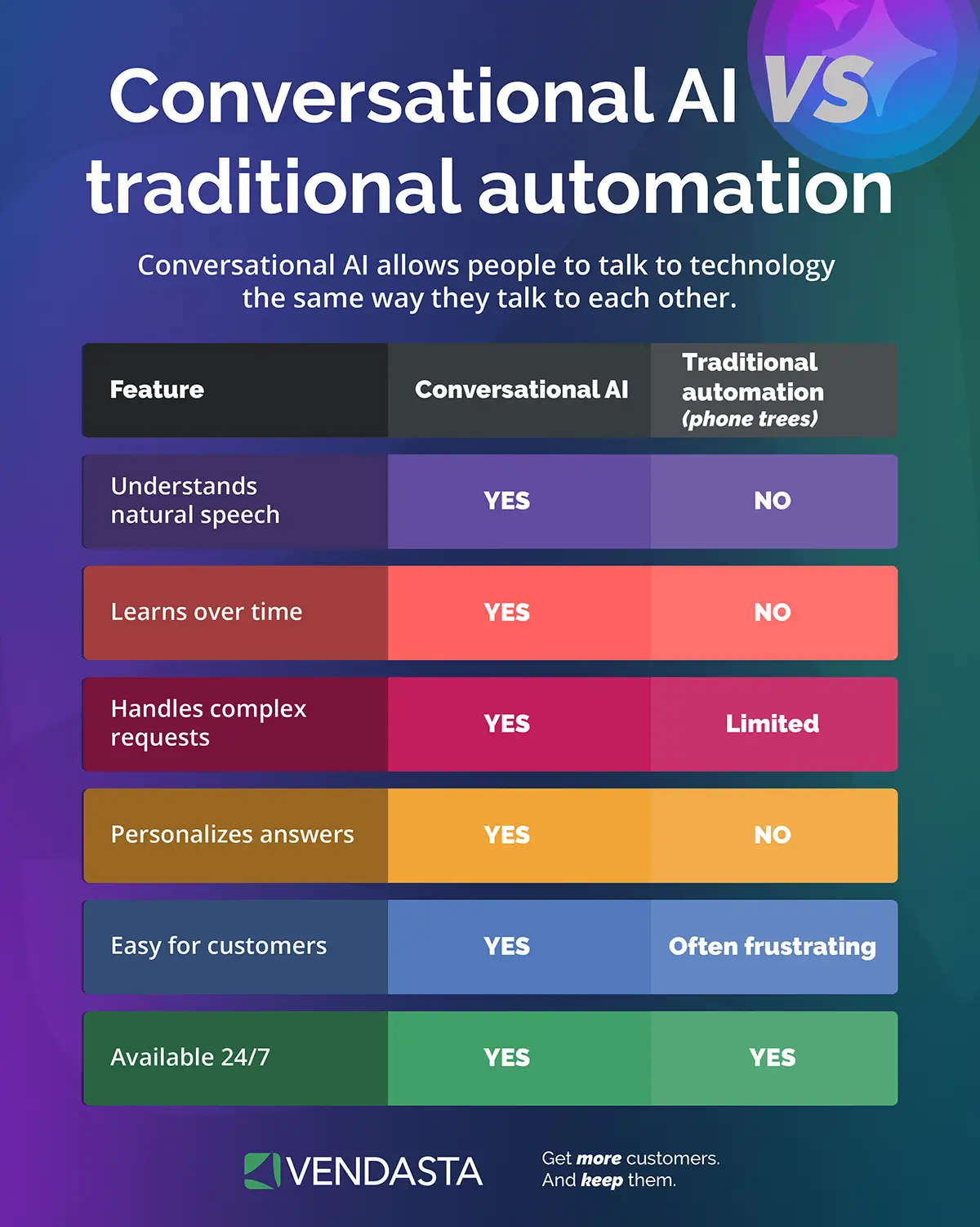
This type of adaptive communication mirrors how conversational AI works, responding dynamically based on intent, sentiment, and language rather than using static scripts.
Address Negative Reviews with Care and Clarity
Negative reviews are unavoidable, but poor responses can amplify damage.
Strong responses to negative feedback:
- Acknowledge the concern without defensiveness
- Take responsibility where appropriate
- Offer a next step or resolution path offline
- Avoid arguing facts publicly
Handled well, negative reviews can actually strengthen credibility. They show accountability and give AI-driven systems a richer context when summarizing customer sentiment and brand reliability.
Reinforce Brand Values without Selling
A good response reflects how the business operates without turning into a pitch.
Effective responses:
- Reinforce values such as reliability, quality, or customer care
- Thank the customer genuinely
- Avoid promotional language or calls to action
Stay Consistent at Scale
Consistency is one of the biggest challenges in 2026, especially for businesses managing multiple locations or clients.
Effective review response systems:
- Use clear guidelines for tone and structure
- Maintain consistency across Google and other platforms
- Ensure every review receives a response, not just positive ones
This is where AI-assisted workflows become essential. Google review management software like Vendasta’s Reputation AI applies the same principles found in leading AI tools for customer engagement, enabling fast, on-brand responses while still giving teams control through rules, approvals, and customizable prompts.
The Bottom Line
An effective Google review response in 2026 is timely, specific, and aligned with the brand. It protects trust, strengthens visibility, and contributes to a reputation system that works continuously, not occasionally.
Businesses that treat review responses as a strategic part of customer engagement, rather than an afterthought, are the ones that stand out in search results and AI-driven recommendations.
Using AI to Improve Google and Facebook Review Responses
As review volume grows and expectations for fast responses rise, AI has become essential for managing Google and Facebook reviews effectively in 2026.
When used correctly, AI improves response quality while giving teams more control.
Why Manual Review Responses Fall Short In 2026
Manual responses struggle to keep up with modern review environments, especially across multiple locations or clients.
Common challenges include:
- Slow response times that weaken trust and visibility
- Inconsistent tone across staff or locations
- Missed reviews on secondary platforms like Facebook
- Limited insight into sentiment trends or recurring issues
These gaps create a poor experience for customers and reduce the value reviews provide to search engines and AI systems.
What AI-Generated Review Responses Do Differently
AI-generated review responses use context, sentiment, and brand guidance to deliver replies that feel relevant and consistent.
Effective AI-powered responses:
- Adapt tone based on whether feedback is positive, neutral, or negative
- Reference details from the review instead of generic phrases
- Match brand voice using predefined prompts and rules
- Respond in the same language as the review when needed
This allows businesses to respond quickly without sacrificing quality or authenticity.
Managing Google and Facebook Reviews Together
Google and Facebook both influence trust, visibility, and AI-driven recommendations. Managing them separately often leads to uneven response quality and missed opportunities.
Using AI across both platforms makes it possible to:
- Handle AI Google review responses and AI Facebook review responses from a single workflow
- Apply the same tone and quality standards everywhere
- Avoid platform blind spots where reviews go unanswered
Unified management helps build a coherent reputation that buyers and AI systems can trust.
How Vendasta’s Reputation AI Supports Smarter Review Responses
Vendasta’s Reputation AI includes an AI Reputation Specialist that helps businesses and partners respond at scale without losing control.
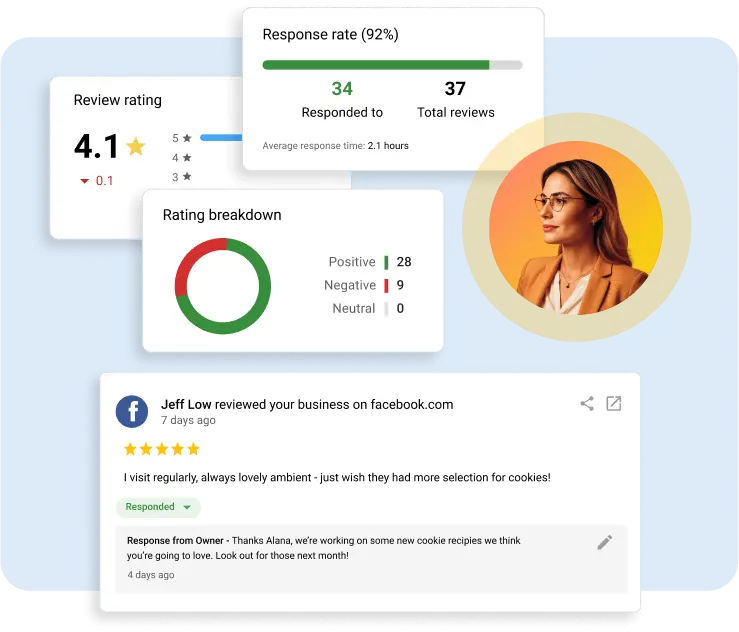
With AI-powered review responses, teams can:
- Automatically generate on-brand AI Google review responses and AI Facebook review responses
- Customize prompts, tone guidelines, and response rules
- Set star-rating thresholds, response delays, and approval workflows
- Respond in multiple languages to match the reviewer
Positive reviews receive thoughtful, reputation-building responses. Negative feedback is handled carefully to protect credibility and guide the conversation offline when appropriate.
AI that Delivers Insight, not Just Replies
Beyond responses, AI adds value by helping teams understand what reviews are really saying.
With conversational analysis, businesses can:
- Identify sentiment trends across Google and Facebook
- Spot recurring issues before they escalate
- Understand what customers consistently praise
- Track improvements over time
This turns reviews from reactive tasks into proactive signals for improving service, messaging, and customer experience.
The Right Balance of Automation and Control
The best scenario is when AI supports humans.
In 2026, effective review response strategies for Google Business Profile optimization:
- Use AI to handle speed and scale
- Keep humans in control of rules, tone, and exceptions
- Apply automation consistently while preserving judgment
When paired with the right system, AI helps businesses respond faster, sound more consistent, and build trust across every review channel without adding complexity.
Benchmarks: What “Good” Looks Like for Google Reviews
In 2026, “good” Google reviews are not defined by a single number. Performance comes from a combination of speed, consistency, volume, and sentiment.
For example, according to studies, successful reviews consist of these factors:
- 53% of consumers feel positive when the written review describes a positive experience.
- 51% say a high star rating makes them feel confident.
- 46% percent feel more positive when the business owner has responded to the review.
- 47% percent value reviews posted within the last month.
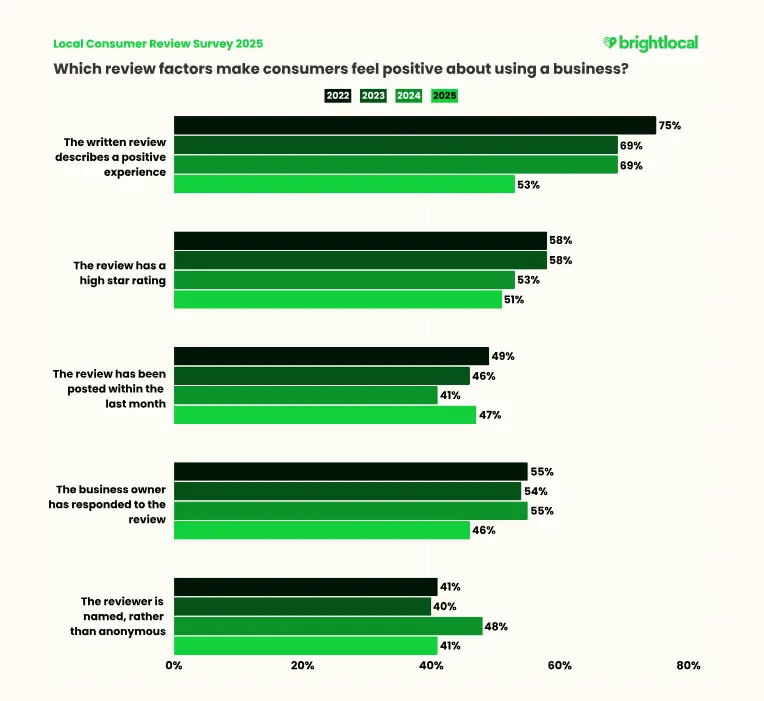
Benchmarks give your business and your clients clear targets to aim for, and they make reputation performance easier to measure and improve over time.
Use the benchmarks below as practical guidelines, not rigid rules.
Average Google Review Response Time Benchmarks
Response time is one of the most visible signals of engagement. Faster responses build trust with buyers and send positive activity signals to Google.
General response time benchmarks:
- Under 24 hours: Strong performance and a competitive advantage.
- 24 to 48 hours: Acceptable, but room for improvement.
- Over 48 hours: Missed opportunity and potential trust erosion.
High-performing local businesses and multi-location brands increasingly aim for same-day responses, especially for negative or neutral reviews. Automation makes this achievable without increasing staff workload.
Star Rating Thresholds that Impact Conversions
Star ratings influence whether a prospect clicks, calls, or keeps scrolling.
Common conversion thresholds:
- Below 4.0 stars: Noticeable drop in trust and engagement.
- 4.0 to 4.4 stars: Competitive, but not standout.
- 4.5 stars and above: Strong trust signal and higher conversion rates.
Businesses with ratings above 4.5 earn significantly more clicks and calls than those below that threshold. However, perfect five-star profiles with low volume can raise skepticism. Balanced, authentic ratings perform best.
How Partners Should Use Benchmarks with Clients
Benchmarks are powerful when used as proof points, not as pressure tactics. For agencies and consultants, these metrics serve as a bridge between abstract “reputation” and the tangible local SEO ranking factors that drive real business growth.
Partners can:
- Set clear expectations during onboarding
- Track progress in monthly or quarterly reviews
- Show how improvements in response time or review velocity correlate with visibility and leads
- Compare performance across locations or time periods, not just against competitors
When paired with tools like Vendasta’s Reputation AI, benchmarks become easier to hit and easier to explain. Automated review requests, AI Google review responses, AI Facebook review responses, and centralized client reporting help partners demonstrate measurable improvement without adding operational complexity.
The takeaway for 2026 is simple. “Good” Google reviews are consistent, timely, and trustworthy. Businesses that track the right benchmarks and act on them—optimizing for the Local SEO ranking factors that Google’s AI values— build stronger visibility and stronger client relationships over time.
Is It Legal to Incentivize Google Reviews?
In the race to improve Google reviews, many businesses are tempted to offer a “bribe”—a free coffee, a 10% discount, or a chance to win a gift card in exchange for a 5-star rating. While this might seem like a harmless growth hack, in 2026, failing to follow review solicitation laws is a fast track to getting your business profile suspended.
Google’s Prohibited Content Policy
Google’s algorithm is smarter than ever at detecting “unnatural” review patterns. Their Prohibited Content Policy is crystal clear on the matter of incentives.
BOLD WARNING: Google strictly prohibits offering money, discounts, free gifts, or any other form of compensation in exchange for reviews. This includes “review gating”—the practice of only sending review links to customers you know are happy while filtering out those who are not.
If Google’s AI systems detect a sudden spike in reviews correlated with an incentive program, they won’t just delete those reviews; they may permanently flag your Business Profile as untrustworthy, stripping you of your “Local Pack” rankings and effectively making you invisible in search results.
Furthermore, the FTC (Federal Trade Commission) has increased its scrutiny of “fake indicators of social proof,” and breaking review solicitation laws can lead to significant legal fines for your business.
The Ethical Alternative (Incentivize the “Ask,” Not the “Review”)
You can still use incentives to drive your reputation strategy—you just have to point them at your team, not your customers. This is known as “Incentivizing the Ask,” and it is 100% compliant with Google’s Terms of Service.
It’s a proactive strategy that keeps your profile clean, whereas a messy, incentivized approach often ends with you spending more time removing fake Google reviews than earning real ones.
Instead of paying a customer for a review, reward your staff for their commitment to the process.
How to implement a compliant incentive program:
- Employee Recognition: Create a “Reputation Champion” program where the employee who earns the most legitimate, uncoerced mentions in reviews each month gets a bonus or an extra day off.
- Process-Based Rewards: Reward staff based on the volume of review requests sent (the activity) rather than the rating received (the outcome).
- The “Mention” Metric: When a customer writes, “Mike provided excellent service,” Mike gets a point. This encourages your team to provide a “review-worthy” experience every single time.
By shifting the reward from the customer to the employee, you transform your reputation management from a risky legal gamble into a high-performance team culture.
This focus on authenticity ensures you spend your time growing your business rather than fighting an uphill battle removing fake Google reviews that were flagged for being incentivized.
5 Proactive “Review Booster” Scripts for 2026
To get the best results , remember the 2026 Golden Rule: SMS for speed, Email for detail. Use these templates to turn a successful transaction into a permanent trust signal.
1. The “Immediate Post-Service” SMS
Best for: Home services, retail, or any quick transaction.
“Success! [Staff Name] just finished up your [Service Name]. On a scale of 1 to 5 stars, how did we do? If we earned a 5, let the world know here: [Link]. Thanks for choosing [Business Name]!”
2. The “Clever & Witty” Follow-up (Email)
Best for: Creative agencies, modern restaurants, or trendy boutiques.
Subject: We’re blushing (from your feedback) 😊
“Word on the street is you just had a run-in with [Business Name]. We hope it was the best part of your Tuesday. Since Google won’t take our word for how awesome we are, could you tell them for us? It takes 10 seconds, but the street cred lasts forever: [Link]”
3. The “Helpful Expert” Outreach (Email)
Best for: Professional services, B2B, or high-ticket consulting.
Subject: Quick question regarding your [Project/Service]
“Hi [Customer Name], our goal is to empower your business with the best [Service] possible. Feedback is the fuel that helps us get there. If you found our team helpful, would you mind sharing a quick highlight on Google? Your insight helps other businesses like yours find the right support. Tap here to review: [Link].”
4. The “Milestone Celebration” SMS
Best for: Onboarding completions, anniversaries, or successful project launches.
“Boom! Project complete. 🚀 It’s been a pleasure working on [Project Name] with you. If you’re feeling as confident as we are about the results, mind giving us a shout-out on Google? [Link] – Team [Business Name]”
5. The “Service Recovery” Re-Engagement (Email)
Best for: Turning a resolved issue into a positive public review.
Subject: We’re glad we could make things right!
“Hi [Customer Name], it was a priority for us to resolve the [Issue] you mentioned. We’re glad we could get everything back on track! If you feel we handled the situation well, would you consider sharing your experience with our support team on Google? It helps others see how much we care about getting the details right. [Link]”
Conclusion
In 2026, improving Google reviews is no longer about chasing ratings or reacting to feedback when time allows. Reviews now influence local rankings, AI-generated recommendations, and buyer trust long before a prospect ever reaches a website.
Businesses that win treat reviews as a managed system. They ask at the right moments, respond quickly and consistently, and use feedback to improve visibility and conversions over time. Automation and AI make this possible without adding complexity, especially when you are supporting multiple clients, locations, or SMBs.
Vendasta’s Reputation AI helps your business do exactly that. From automated review requests and AI-powered Google and Facebook responses to centralized insights and reporting, it gives you the tools to improve Google reviews at scale while staying in control.
If you are ready to turn reviews into a repeatable growth advantage, book a free Vendasta demo and see how Reputation AI fits into your customer acquisition and engagement strategy.
Improve Google Reviews FAQs
1. How can I improve Google reviews for my business in 2026?
To improve Google reviews in 2026, focus on consistent review requests, fast responses, and recent feedback. Automating requests after real customer interactions helps maintain steady review velocity. Google review management software like Vendasta supports this by triggering review requests and managing responses in one place.
2. What is the fastest way to improve Google reviews?
The fastest way to improve Google reviews is to ask customers immediately after a positive experience, such as a completed job or resolved issue. SMS and email outperform passive links. Automation ensures every customer gets asked without relying on staff to remember.
3. Do Google review responses actually help rankings?
Yes, responding to Google reviews helps improve visibility and trust. Google considers engagement signals like response rate and timeliness. Thoughtful replies also influence buyers when comparing options. Using AI-assisted tools makes it easier to respond consistently as review volume grows.
4. How often should a business ask for Google reviews?
Most businesses should ask for Google reviews after every meaningful customer milestone, such as a purchase, payment, or completed service. This creates steady review velocity without overwhelming customers. Automated workflows help keep timing consistent and compliant with platform guidelines.
5. What star rating do I need to improve conversions from Google reviews?
Ratings of 4.0 stars or higher significantly improve conversions, with 4.5 stars delivering the strongest trust signals. Perfect ratings are not required. Consistent reviews, recent feedback, and visible responses matter more than chasing five-star perfection.
6. Can AI help improve Google review responses?
Yes, AI can help improve Google review responses by reducing response time and improving consistency. AI-generated replies adapt to sentiment and brand tone. Vendasta’s Reputation AI allows businesses to automate responses while keeping control through rules, prompts, and approvals.
7. How do I improve Google reviews across multiple locations?
Improving Google reviews across multiple locations requires standardized workflows and centralized visibility. Automation ensures each location requests reviews and responds consistently. Vendasta helps partners and multi-location brands manage reviews from one dashboard without adding manual effort.
8. Are Google and Facebook reviews both important to improve?
Yes, Google and Facebook reviews both influence trust and discovery. Buyers often check multiple platforms before deciding. Managing both together helps maintain consistent messaging. Vendasta’s Reputation AI supports unified review management and responses across Google and Facebook.
9. How long does it take to improve Google reviews?
Most businesses see measurable improvement in Google reviews within 30 to 90 days when using consistent requests and fast responses. Results depend on customer volume and timing. Automation helps maintain momentum, so review growth does not stall over time.
10. What tools help agencies improve Google reviews for clients?
Agencies need tools that automate review requests, manage responses, and surface insights. Vendasta provides an all-in-one platform with Reputation AI, helping agencies improve Google reviews at scale while proving value through clear reporting and measurable progress.