About Us
 Careers
 Leadership
 Board
Board Newsroom
AI marketing assistant adoption is now near-universal: the Content Marketing Institute’s 2026 B2B research found that 95% of business-to-business (B2B) marketers say their organizations already use AI-powered applications.
An AI marketing assistant completes marketing work using a business’s own data. With adoption near-universal, the advantage now comes from implementation depth and whether the tool executes whole workflows or waits for prompts.
This guide explains how AI marketing assistants work and how to choose one, then compares five tools for different operations.
Turn hours of work into minutes with AI-powered workflows
TL;DR
-
AI marketing assistant spending is rising: Grand View Research sizes AI in marketing at $26.99 billion in 2025, growing 25% annually to $82.23 billion by 2030.
-
Measured time savings: An MIT-led experiment measured a 40% reduction in writing-task time. For an agency, those hours are fulfillment margin.
-
Product depth drives retention: Vendasta’s study of 200,000 client relationships found two-year retention rises from 30% with one product to 80% with four. An AI marketing assistant that covers more of the journey keeps clients longer.
How AI Employees Automate the Customer Journey
Purpose-built AI Employees answer calls, respond to reviews, publish content, and follow up with leads. The platform logs every action. An AI workforce handles the work your team currently does by hand.
What Is an AI Marketing Assistant?
An AI marketing assistant is software that uses machine learning and language models to complete marketing tasks with minimal supervision. It learns from a business’s website, profile, records, and uploaded knowledge, then produces work specific to that business rather than generic output.
Traditional automation fires fixed rules: send this email when a customer fills a form. Marketing teams configure an assistant to generate content and execute the next defined step using approved responses. Some vendors call this a marketing agent; Vendasta calls its purpose-built roles AI Employees, because they hold defined jobs rather than answering isolated prompts.

Core Capabilities
Most AI marketing assistants cover some combination of five job functions:
-
Content creation and publishing: Drafting and publishing brand-aligned content across blog and social channels. The same workflow also handles email.
-
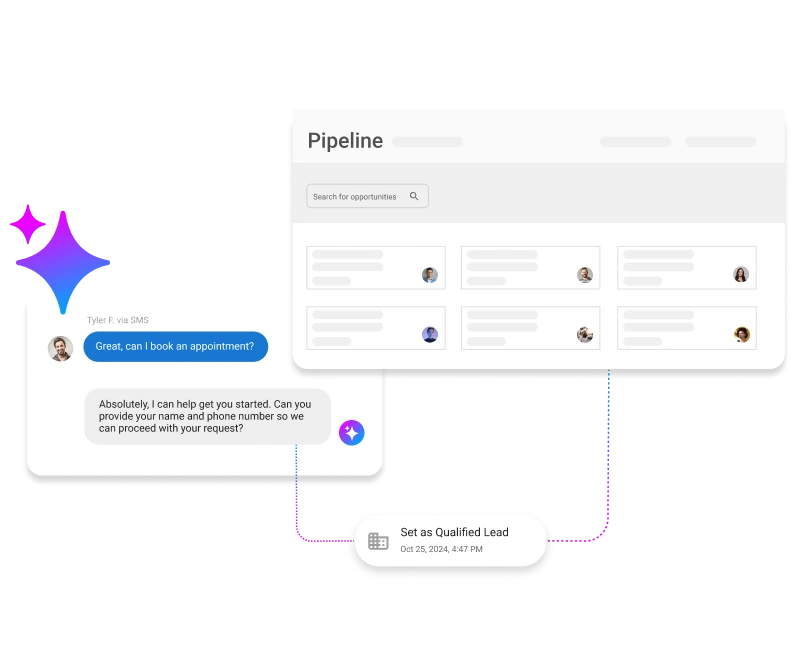
Lead capture and follow-up: Handling inquiries through qualification and appointment booking, which makes lead generation always-on instead of business-hours only.
-
Conversation handling: Managing phone, chat, SMS, and social messages through conversational AI. The platform logs every exchange.
-
Reputation management: Monitoring review sources, responding in the reviewer’s language, and requesting reviews after real transactions.
-
Reporting and CRM upkeep: Updating records from sales activity and answering plain-language questions about performance.
Why Your Business Needs an AI Marketing Assistant
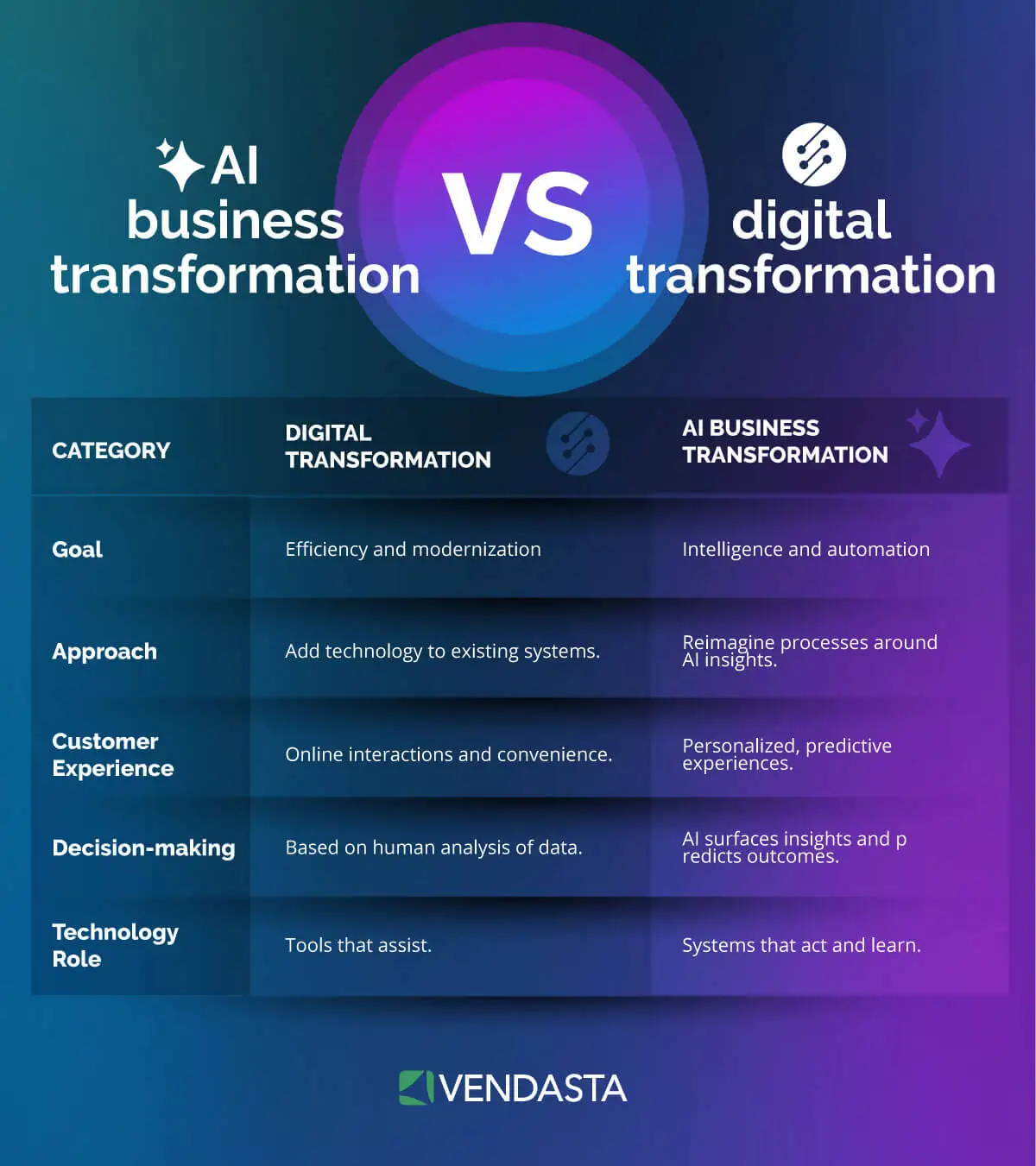
The case rests on measured operating gains, the same math behind broader AI business transformation.
Save Time and Reduce Manual Workload
An MIT Science experiment with 453 professionals found AI cut writing-task time 40% while improving quality 18%. Gartner’s 2025 CMO Spend Survey found 49% of CMOs reporting improved time efficiency from generative AI and 40% reporting cost efficiency. Those hours are the difference between adding a service line and adding a salary.
Improve Performance With Predictive Analytics
BCG’s marketing research found AI-marketing leaders reported 60% greater revenue growth than peers and adapted to consumer trends twice as fast. Marketing teams use predictive models to decide which leads to call first and which send times convert. They also identify which clients need retention outreach before they leave.
Scale Multi-Client and Multi-Location Delivery
Historically, every new client required new labor, so revenue climbed while margin stayed flat. AI marketing assistants break that link when teams deploy them across many accounts, each in the right brand context.
Vendasta’s client Neighborly achieved a 372% year-over-year increase in lead-to-revenue performance, with 35,700 conversations producing 3,400 conversions. Before the deployment, no one had contacted roughly 30% of those leads.
Deliver Personalized Engagement at Scale
McKinsey’s personalization analysis found hyperpersonalized messages could improve conversion rates by up to 40%. The mechanism is client communication that references the customer’s actual history and location. It also reflects intent instead of relying on a mail-merge first name.
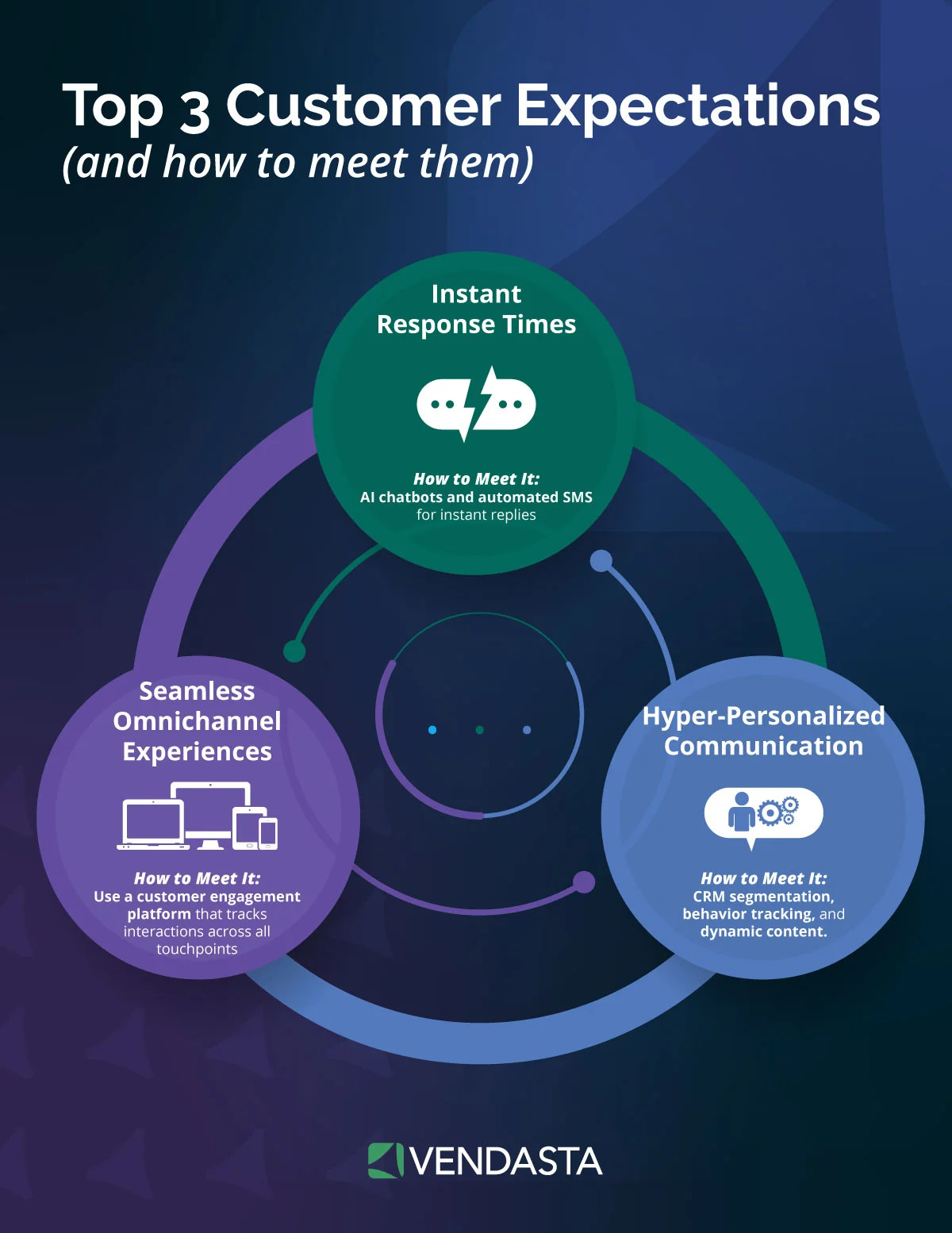
In Gartner’s survey on personalization, 53% of customers reported a negative experience with personalized marketing. Configure the assistant to answer the question and guide the buyer through qualification to a booked appointment rather than push another offer.
How to Choose the Best AI Marketing Assistant
Five steps keep the evaluation grounded in your operation rather than the vendor’s demo.
Step 1: Define Your Goals
Decide what the assistant must produce: booked appointments, published content, review volume, or reclaimed hours. If you measure a tool on words generated, it will look good in a trial and fail in a margin review.
Step 2: Evaluate Key Features
Compare AI marketing tools on brand-voice training, the channels they cover, whether they act autonomously or only draft, and whether the platform logs every action. Logging matters most for agencies, because it becomes client-facing proof of performance.
Step 3: Check Integrations and Ecosystem Fit
An assistant that can’t read your systems produces generic output. Check native connections to AI-powered CRMs and operational systems, including ad platforms and field-service tools. Read the fine print on data. Jasper’s Terms of Service permit using inputs to improve its models, which sits against the no-training claim on its security page, and Copy.ai’s terms grant a similarly broad license. Request a data processing agreement before deploying with client data.
Step 4: Validate Scalability for Your Business
An agency needs multi-tenant deployment and white-label branding. It also needs per-client billing, or the tool becomes a second job at 30 clients.
Step 5: Test, Train, Optimize
Gartner predicted that organizations would abandon at least 30% of generative AI projects after proof of concept because of poor data quality, inadequate risk controls, escalating costs, or unclear business value. Run a scoped pilot with one workflow and one success metric before rolling out.
Best AI Marketing Assistant Tools in 2026
The table compares five tools on intended user, primary strength, meaningful limitation, and starting price:
|
Tool |
Best For |
Strength |
Limitation |
Starting Price |
|---|---|---|---|---|
|
Vendasta |
Partners and agencies serving local businesses |
Multi-tenant AI Employees, white-label, logged proof of performance |
Scoped to the local-business channel rather than enterprise content operations |
Spend-offset subscriptions; Starter $99/mo |
|
Jasper |
Marketing teams producing brand-governed content |
Brand Voice and 100+ marketing agents |
Repetition in long-form; API on Business plan only |
$59/seat/mo annual |
|
HubSpot AI |
Teams already on HubSpot hubs |
Breeze agents native to CRM, ads, and content |
Credit-based AI costs are hard to predict at scale |
Professional bundle $1,300/mo annual, plus credits |
|
Copy.ai |
Go-to-market teams producing short-form copy and outreach |
Natural-language workflow builder, model-agnostic |
Pricing model has changed repeatedly; interface complaints |
Chat $29/mo; Growth $1,000/mo annual only |
|
Writesonic |
Teams tracking AI search visibility and publishing SEO content |
AI-search visibility tracking plus article generation |
Reviewers note redundancy and topic drift |
$79/mo annual |
1. Vendasta – Best AI Marketing Assistant for SMB-Focused Partners
Vendasta is a customer acquisition and engagement platform whose AI Employees complete end-to-end work. AI Receptionist answers and books 24/7, while AI Reputation Specialist manages reviews. AI Social Media Manager publishes in the client’s voice. Partners deploy them across entire portfolios under their own brand, clients work from a white-label Business App, and wholesale discounts reach up to 80% off retail.
The evidence is first-party but specific: Vendasta reported a 39.2% lead conversion rate among early AI Workforce adopters, and Vendasta earned 72 badges in the G2 Fall 2026 reports, including Leader status in 12 categories. An enterprise brand running its own content studio sits outside the intended fit. For agencies reselling marketing services to local businesses, it is the strongest match in this list.
2. Jasper – Best for Automated Content Generation
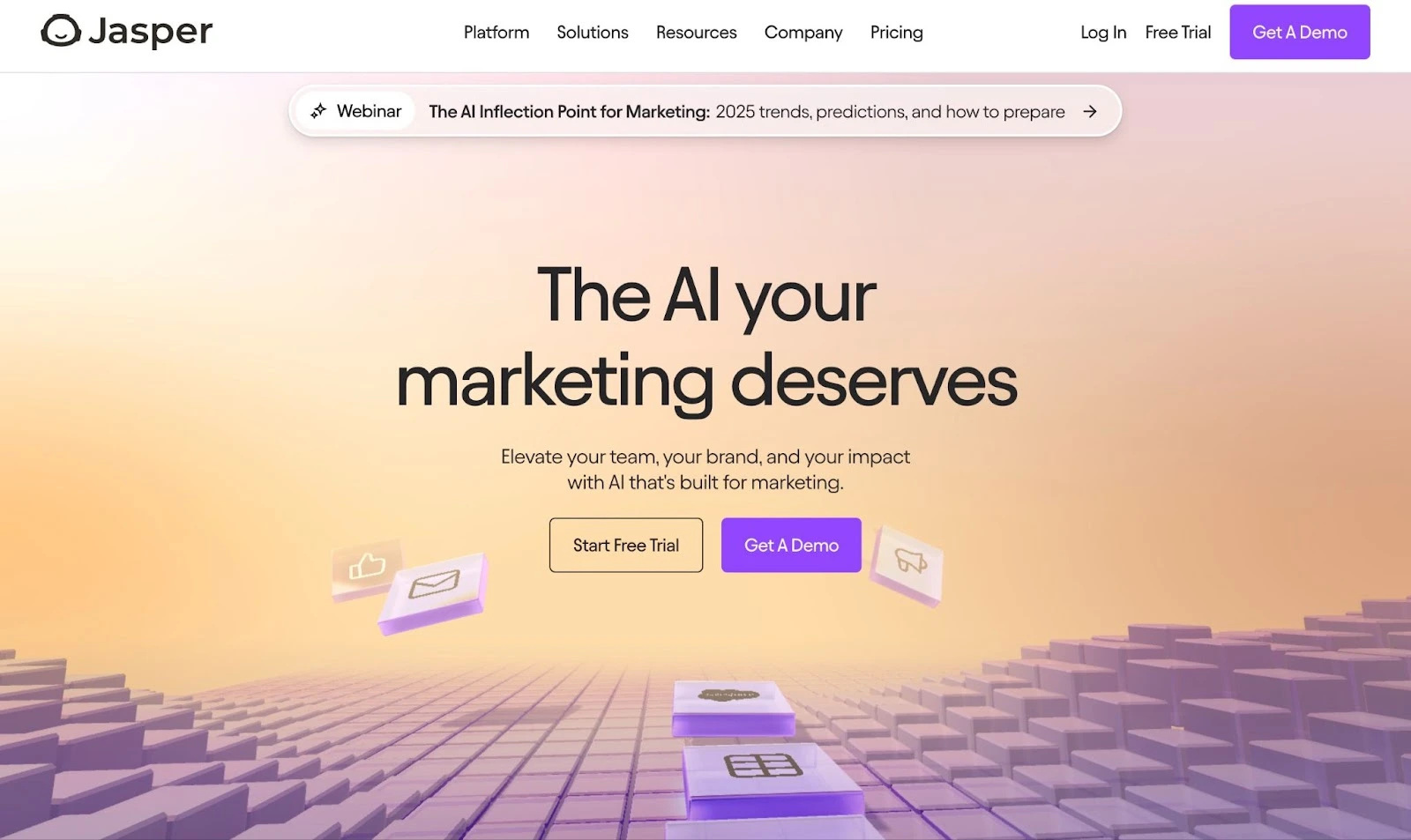
Jasper rebranded in June 2025 as an agentic marketing platform, pairing Brand Voice and Jasper IQ with more than 100 specialized marketing agents. A six-month independent review rated it 8.5/10 and praised Brand Voice consistency. Pro runs $59/seat/month annually. Content teams that need volume with brand governance get the most out of it; Jasper built the platform for internal content teams rather than client-facing service delivery.
3. HubSpot AI – Best for Integrated Inbound Workflows
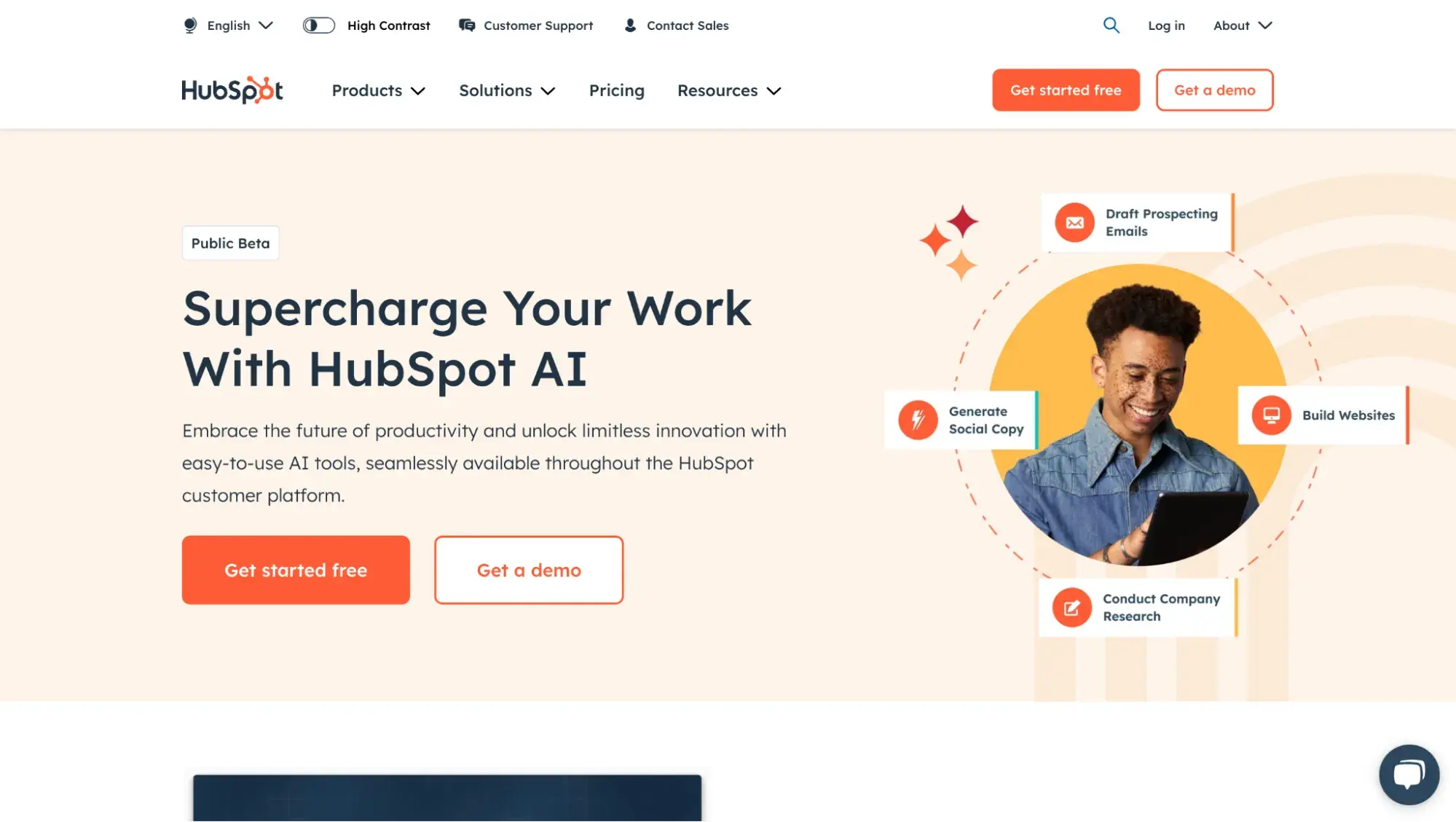
HubSpot packages its Breeze agents under Agent Hub and includes it with Starter through Enterprise plans, with native connections to Google ad accounts and social ad accounts from Meta and LinkedIn. Agents consume HubSpot Credits, a resolved Customer Agent conversation costs 50 credits, and credits reset monthly without rollover. Teams standardized on HubSpot hubs get the deepest native CRM and ad connections; agencies billing dozens of clients face unpredictable credit costs.
4. Copy.ai – Best for Short-Form Content
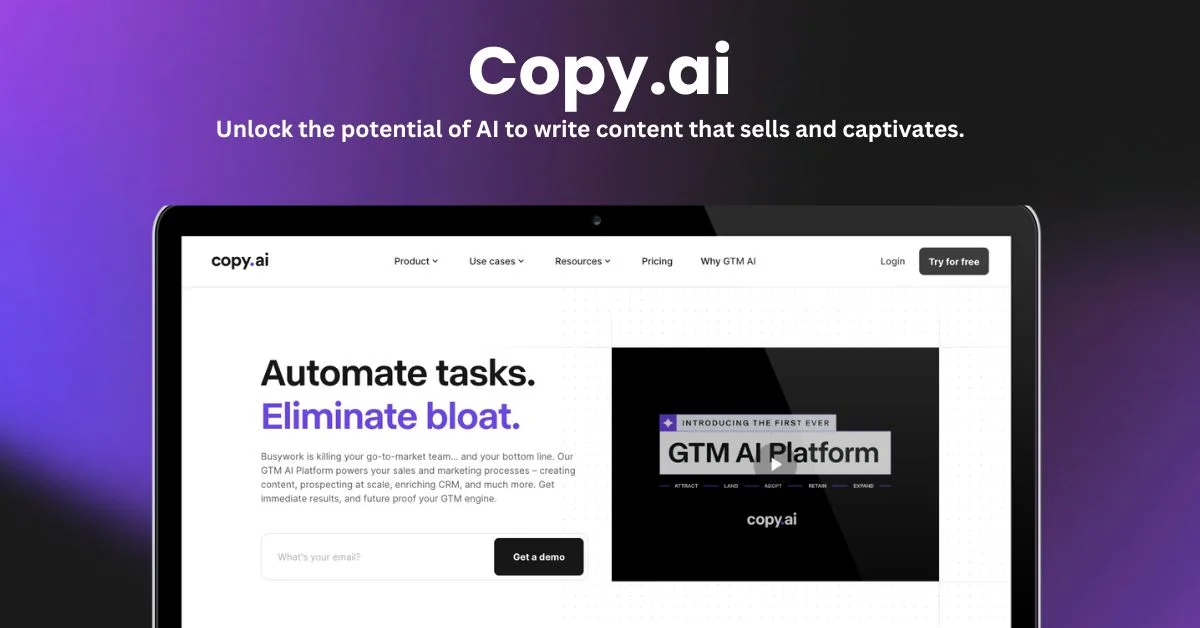
Copy.ai positions itself as a go-to-market platform with workflows and Agentic Actions. It supports OpenAI and Anthropic models. It also supports Gemini. A 2025 independent review rated it 4.1/5 but found the interface glitchy on long-form tasks. Sales-adjacent teams automating outreach and short copy are the natural buyers.
5. Writesonic – Best for AI Search Visibility and SEO Content
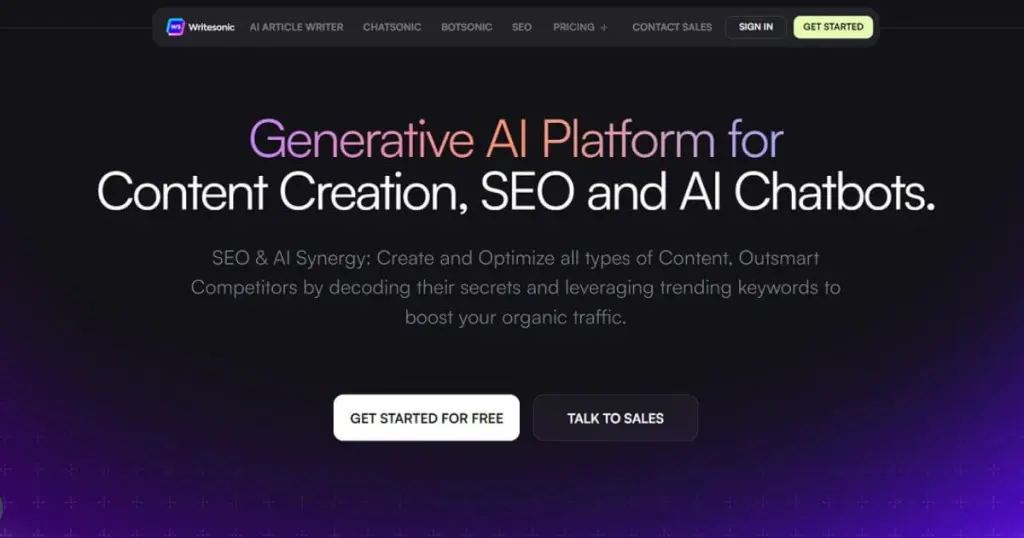
Writesonic has repositioned as an AI search visibility platform, combining Article Writer 6 with Chatsonic. Its visibility tool tracks brand mentions across AI surfaces such as Google AI Overviews and Perplexity. A 30-day independent review rated it 8/10; the same 30-day review found roughly 80% of Brand Voice output ready to publish after light edits. It suits teams publishing SEO content into channels where AI search visibility matters.
How to Implement an AI Marketing Assistant Successfully
Teams that clean their data and define controls get returns; teams that do not often abandon pilots.
Step 1: Audit and Clean Your Data
A Gartner survey found 63% of organizations either lack or are unsure of the data-management practices AI requires. Run an AI readiness check first: prepare the assistant’s data by consolidating contact records and correcting business profiles before uploading the knowledge it will draw on.
Step 2: Configure Automated Workflows
Start with one high-frequency workflow, such as inbound call answering or review response. Define the trigger and action first. Then specify when the assistant must escalate to a human. Teams can deploy most Vendasta AI Employees in under 30 minutes after they connect the business’s data.
Step 3: Train Your Team
The CMI 2025 B2B survey found 61% of organizations lacked generative AI usage guidelines despite widespread use. Write guidelines for autonomous handling and human review. Assign an owner for escalations.
Step 4: Measure and Optimize Performance
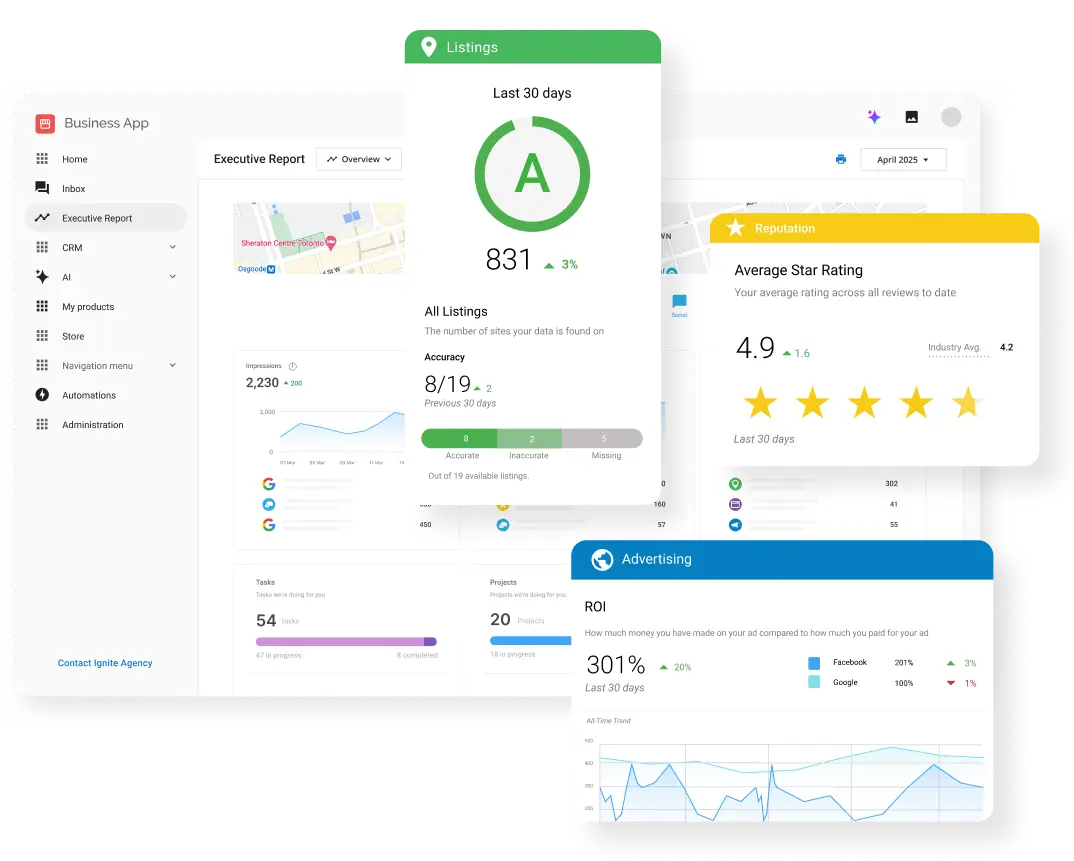
Report how many calls the assistant answered, reviews it responded to, appointments it booked, and leads it followed up with. Vendasta’s retention research found regular proof-of-performance reporting improves retention by 38%, which is why partners send clients an Executive Report showing every logged action and its outcome.
Step 5: Scale Across Clients or Locations
Once one workflow performs, replicate it with account templates rather than rebuilding per client. Blackfeather Digital ran this playbook on Vendasta and generated $1 million in revenue in its first year with a three-person team while retaining 100% of clients.
Choose an AI Marketing Assistant That Completes the Work
Jasper suits brand-governed content teams, while HubSpot AI fits organizations already using HubSpot hubs. Copy.ai focuses on go-to-market outreach and short copy. Writesonic fits teams prioritizing AI search visibility and SEO content. Vendasta is a channel-native Customer Acquisition and Engagement Platform built for agencies carrying dozens of clients under one brand.
Within Vendasta’s retention research, 62% of clients churn within two years when partners do not upsell them within three months. Partners keep clients longer when they meet more of their needs through one provider. If you want to see how AI Employees would run under your agency’s brand across your whole client portfolio, book a demo.
AI Marketing Assistant FAQs
1. What is an AI marketing assistant and how does it work?
An AI marketing assistant is software that completes marketing tasks using machine learning and a business’s own data. It learns from the business’s records and website, along with uploaded knowledge. It can then publish content, respond to reviews, follow up on leads, and log each action.
2. How does an AI marketing assistant save time for my business?
It absorbs repetitive production work. An MIT-led experiment measured a 40% reduction in writing-task time, and 49% of CMOs in Gartner’s 2025 survey reported improved time efficiency from generative AI. Most of the recovery shows up in drafting and first-response work, where a human still reviews output before it ships.
3. What can an AI marketing assistant do that traditional marketing tools can’t?
Traditional tools execute rules you set in advance, while an AI marketing assistant makes decisions inside the workflow. It adapts wording to each business and completes the next approved action using that company’s records. When a request falls outside its scope, it hands the conversation to a human.
4. Is an AI assistant for marketing worth it for agencies or multi-client teams?
Yes, when the platform supports multi-tenant deployment. Agencies use AI assistants as a fulfillment layer that adds service lines without headcount. Blackfeather Digital generated $1 million in first-year revenue on Vendasta with a three-person team, retaining 100% of clients. Vendasta’s research puts two-year retention at 80% for four-product clients.
5. Which features matter most in an AI marketing assistant?
Prioritize autonomous execution across your actual channels, grounded in brand-voice training on the business’s own data. Activity logging provides proof of performance, while integrations connect the assistant to your CRM and operational tools. Agencies should also require white-label branding and portfolio-wide deployment.
6. How does an AI marketing assistant help with lead generation?
It moves incoming leads through qualification to booked appointments against real calendars. Neighborly’s Vendasta deployment converted 3,400 leads from 35,700 conversations, and no one had previously contacted roughly 30% of those leads. Around-the-clock coverage helps teams respond outside business hours and route qualified leads into the next sales step.
7. Does an AI marketing assistant improve customer engagement?
It responds across phone, chat, SMS, email, and social channels, so prospects spend less time waiting. McKinsey’s research links hyperpersonalized messaging to conversion improvements of up to 40%, though Gartner found personalization backfires when it pressures rather than supports the buying decision.
8. What’s the difference between an AI marketing assistant and AI marketing automation?
Marketing automation runs predefined sequences, such as sending a set email after a form submission. An AI marketing assistant creates content and makes decisions inside the workflow. Vendasta’s AI Employees go further by owning complete roles, such as reception or reputation management, while using the business’s own data.
9. How much does an AI marketing assistant typically cost?
Point tools start under $100 a month: Copy.ai’s Chat plan costs $29, Writesonic starts at $79 per month on annual billing, and Jasper costs $59 per seat on annual billing. HubSpot’s Professional bundle is $1,300 per month plus AI credits, while Vendasta’s partner plans start at $99 per month on a spend-offset model, with wholesale product pricing up to 80% off retail for resale to clients.
10. What should I look for when choosing AI marketing tools?
Check how the vendor handles your data, since some terms of service permit training on user content despite claims to the contrary. Verify integrations with your CRM and ad platforms. Then pilot one logged workflow with a defined success metric before expanding deployment.
This article was originally published in November 2025 and was updated in September 2026 to include the latest information and insights.