About Us
 Careers
 Leadership
 Board
Board Newsroom
Client engagement is where most agencies lose momentum.
You close the deal, deliver what you promised, and then things go quiet. No check-ins. No added value. No relationship. And just like that, your client leaves.
Not because you did something wrong. But because they didn’t feel connected.
Here’s the reality: according to Emarsys, existing clients spend 67% more than new ones
That’s a lot of missed revenue if you’re not actively driving client engagement every step of the way.
In this blog, we’ll break down exactly how to fix that. You’ll learn how to build real connections, keep conversations flowing, and turn every account into a long-term growth machine.
It’s not about pushing more emails or surveys. It’s about showing up in the right moments and making every one of them count. It’s exactly the kind of value Vendasta’s partner program helps agencies deliver at scale.
Give your clients everything they need to succeed—all under your brand
TL;DR
- Engaged clients spend 67% more than new ones — making retention your highest-ROI growth lever.
- The #1 reason clients leave isn’t poor results — it’s feeling disconnected, unseen, and underserved between deliverables.
- Fix it with three moves: centralize communication, automate touchpoints, and tie every report back to client goals.
What Is Meant by Client Engagement?
Client engagement is the ongoing back-and-forth between your agency and your clients. It’s not a one-time check-in. It’s you being present, asking the right questions, sharing insights, and helping them hit their goals.
It’s different from customer satisfaction or customer experience. Those come after the work is done. Client engagement is what happens while you’re working together.
It’s how you stay connected. And when you keep clients engaged, everything improves – renewals, upsells, referrals, and trust.
Client Engagement vs. Customer Experience vs. Customer Satisfaction
These three terms are often used interchangeably — but they mean very different things, and confusing them leads to strategy gaps.
| Term | What it means | When it happens | Agency example |
|---|---|---|---|
| Client engagement | The ongoing, two-way relationship between your agency and your client — built through consistent touchpoints, communication, and shared goals. | Throughout the entire relationship | Monthly check-in call, proactive campaign insight, shared strategy session |
| Customer experience (CX) | The sum of all interactions a client has with your agency — from first contact to offboarding. | Across every touchpoint | How easy is it to onboard? How intuitive is your client portal? |
| Customer satisfaction (CSAT) | A point-in-time measure of how happy a client is with a specific deliverable or interaction. | After a specific event or milestone | Post-campaign survey: “How satisfied were you with this month’s results?” |
| Net Promoter Score (NPS) | A loyalty metric that measures how likely a client is to refer your agency to others. | Periodically, often quarterly | “On a scale of 0–10, how likely are you to recommend us?” |
The takeaway: Customer satisfaction tells you how you did. Customer experience tells you how it felt. Client engagement is what drives both — and it’s the only one you can actively build, automate, and scale.
A Gallup study found that fully engaged B2B clients bring in 23 percent more revenue and profitability. That’s a direct win for your business.
Do you know something? Your agency can’t afford to fly blind when it comes to building relationships.
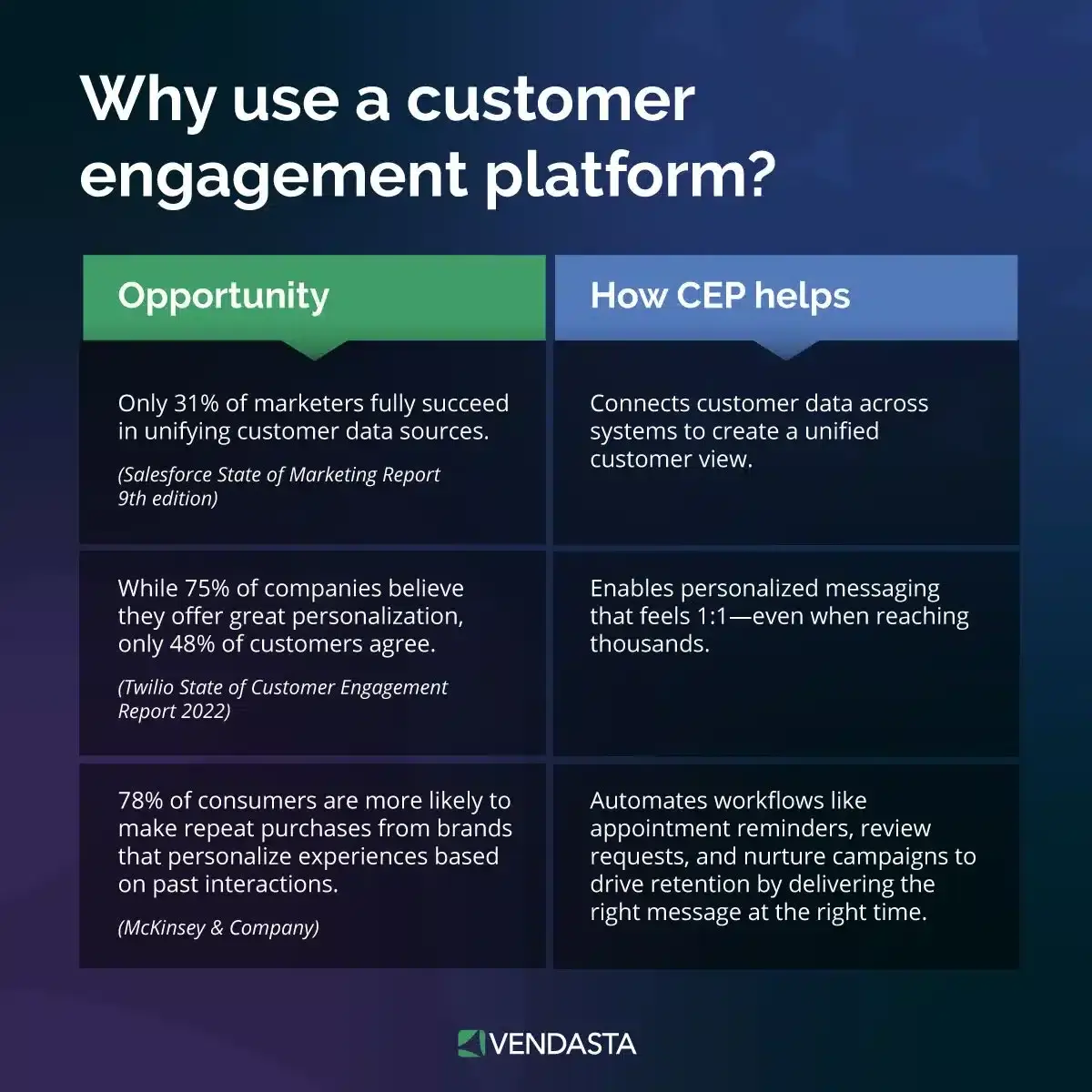
According to Salesforce, only 31% of marketers actually succeed in unifying their customer data sources.
That’s where a customer engagement platform makes all the difference.
Here’s how powerful the shift can be when you move from siloed data to smart, connected engagement:
What Are the 4 P’s of Customer Engagement?
The 4 P’s of customer engagement are a framework for building meaningful, lasting client relationships:
- Proactive: Don’t wait for clients to reach out. Anticipate their needs, flag issues early, and share insights before they ask. Proactive engagement builds trust and positions your agency as a strategic partner rather than a reactive vendor.
- Personalized: Treat every client as an individual. Use their data, goals, and preferences to tailor your communication, reporting, and recommendations — not a generic template sent to everyone on your list.
- Purposeful: Every touchpoint should have a reason. Whether it’s a check-in call, a performance report, or a milestone email, make sure each interaction delivers value and connects back to the client’s business goals.
- Persistent: Engagement isn’t a one-time effort. It requires consistent follow-through across the entire client lifecycle — from onboarding through renewal and beyond.
For agencies, applying the 4 P’s means building systems that make proactive, personalized, purposeful, and persistent engagement scalable — not dependent on individual effort.
What Are the 3 C’s of Customer Engagement?
The 3 C’s of customer engagement are the three core pillars that drive how clients connect with your agency:
- Communication: Clear, consistent, and timely communication is the foundation of any engaged client relationship. This includes everything from onboarding emails and monthly reports to proactive alerts when performance shifts. Clients who feel informed stay engaged.
- Consistency: Trust is built through repetition. Showing up reliably — same cadence, same quality, same point of contact — signals to clients that they can depend on you. Inconsistency, even when results are good, creates doubt.
- Collaboration: The most engaged clients feel like partners, not buyers. Involving them in strategy, asking for their input, and co-creating goals turns a transactional relationship into a long-term partnership.
When all three are working together, client engagement becomes self-reinforcing — clients communicate more openly, trust builds faster, and the relationship becomes significantly harder to walk away from.
What Are the 4 Types of Engagement?
In a client relationship context, engagement typically falls into four categories:
- Emotional engagement: The client feels valued, heard, and connected to your agency beyond the transactional level. This is what drives loyalty, referrals, and long-term retention. Milestone celebrations, personalized check-ins, and responsive communication all build emotional engagement.
- Rational engagement: The client understands the value you’re delivering and can clearly see the ROI of working with you. Strong reporting, transparent communication, and goal-aligned deliverables drive rational engagement.
- Behavioral engagement: The client is actively participating — logging into their portal, responding to surveys, attending reviews, and acting on recommendations. High behavioral engagement is a strong signal of overall health in the relationship.
- Social engagement: The client is publicly associated with your agency — sharing results, leaving reviews, referring others, or participating in case studies and spotlights. Social engagement is the highest form and typically only happens when the other three are strong.
For agencies, the goal is to move every client up through all four types. Start with rational engagement by proving value early, build emotional engagement through consistent communication, encourage behavioral engagement through accessible tools and clear calls to action, and social engagement will follow naturally.
Why Is Client Engagement Important?
Engaged Clients Stay Longer and Spend More
You’ve seen it. The clients who stay connected don’t just stick with you. They spend more. They trust your advice. They try new services.
That’s what customer engagement creates—customer retention that’s not forced. It’s earned.
And when you give your clients one place to track results and updates, it’s even easier to stay top of mind. Tools like white-label client portals let them log in anytime and stay close to the value you’re delivering.
Engagement Drives Word-of-Mouth and Feedback Loops
If your clients feel involved, they’ll speak up. They’ll tell you what’s working, what’s not, and what they wish you offered.
You can use NPS surveys, email check-ins, or your client reporting dashboard to ask for feedback at the right time.

The more engaged your clients feel, the more likely they are to refer others. That means lower acquisition costs and better leads.
Here’s how you encourage it:
- Ask for feedback after every big milestone
- Make it easy to respond (simple yes/no or emoji rating)
- Open the door for referrals when you know they’re happy
That’s a real customer engagement strategy. One that helps you grow by listening.
Deeper Engagement Leads to Tailored, More Impactful Service
The more you interact with your clients, the more you understand them. You stop guessing what they want. You know what they care about.
You learn what results matter. What problems keep them up at night. And how your agency can solve them better.
That makes your work sharper. It improves your delivery. It builds stronger customer support and real brand loyalty.
Use AI-powered customer engagement to keep the conversation going automatically. Your team gets the insights. Your client feels seen.
The Client Engagement Framework: 4 Stages Every Agency Needs
Strong client engagement doesn’t happen by accident. It follows a repeatable structure — one that keeps clients connected at every stage of the relationship.
Here’s the framework top-performing agencies use:
Stage 1: Onboard — Set the Foundation
Define expectations, introduce your process, and make the client feel at home. A strong onboarding experience reduces early churn by establishing trust before a single deliverable is due.
Key actions: Welcome kit, kickoff call, branded client portal setup, documented communication cadence.
Stage 2: Activate — Build Visible Momentum
Get clients actively engaged with your work. This means regular check-ins, easy-to-read performance reports, and fast early wins that prove your value.
Key actions: First performance report, milestone celebration, monthly review cadence, portal login encouragement.
Stage 3: Retain — Deepen the Relationship
Shift from vendor to strategic partner. Share insights proactively. Involve clients in strategy. Run quarterly business reviews. Make them feel invested in outcomes — not just invoiced for them.
Key actions: QBRs, NPS surveys, proactive recommendations, collaborative strategy sessions.
Stage 4: Grow — Expand and Advocate
Engaged clients become your best salespeople. Introduce new services when the timing is right, celebrate shared wins, and create conditions where referrals happen naturally.
Key actions: Upsell recommendations tied to goals, referral asks post-milestone, loyalty perks, client spotlights.
Most agencies lose clients in Stage 2 — they deliver, but they don’t activate. Use this framework as a checklist to find your gaps.
Key Components of Effective Client Engagement
Personalized Communication
Your clients don’t want generic. They want to feel like you know them—because you should.
Tailor your messages to what they care about. Use their data, not templates. That applies to everything from performance reports to check-in emails.
For example:
- “Saw traffic dipped last week—let’s jump on a quick call.”
- “Your ad CTR is up 22%. Want to double down?”
That’s how you create real customer engagement—not just transactions.
Proactive Service Delivery
Don’t wait for your clients to tell you something’s broken. Be the first to spot it—and fix it.
That starts with regular check-ins. Quick updates. Fast follow-through.
Set a recurring review schedule to go over performance, bottlenecks, and next steps.
The result? Less firefighting. More trust.
Feedback and Continuous Improvement
Ask for feedback—and show you actually do something with it.
It could be as simple as:
- A quick NPS survey after a project
- An automated prompt when a goal is hit
- A “You asked, we delivered” email to highlight updates
This tells your clients they’re heard. It also improves your customer experience over time. Use Vendasta’s NPS tools to automate that loop.
How to Build a Client Engagement Plan (With a Template)
A client engagement strategy only works when it’s documented. Without a plan, engagement is reactive — you check in when something breaks instead of building consistent momentum.
Here’s a simple, repeatable template you can adapt for every client:
Client Engagement Plan Template
1. Client Overview
- Business name, industry, and size
- Primary contact and decision-maker
- Services contracted and contract term
- Top 3 business goals for the year
2. Communication Cadence
- Weekly: Automated performance alerts (triggered by platform data)
- Monthly: Executive Report delivery + brief email summary
- Quarterly: 30-minute strategy review call
- Annually: In-depth business review + renewal conversation
3. Key Engagement Touchpoints
- Onboarding welcome email + portal walkthrough (Day 1)
- First win notification (within 30 days)
- NPS survey (Day 60, then quarterly)
- Milestone celebration (first 100 reviews, first 1,000 leads, etc.)
- Proactive insight email when performance dips or spikes
4. Escalation Triggers
- No portal login in 14+ days → send a check-in nudge
- NPS score drops below 7 → account manager personal outreach within 24 hours
- Performance drops 20%+ month-over-month → proactive call scheduled
5. Growth and Upsell Signals
- Client hits a primary goal → introduce next-stage service
- Client refers another business → activate loyalty reward
- Client asks “can you help with X?” → document and follow up within 48 hours
6. Measurement
- Retention rate (monthly)
- NPS score (quarterly)
- Portal login frequency (monthly)
- Upsell revenue per account (quarterly)
You don’t need a perfect plan on Day 1. Start with the communication cadence and escalation triggers — those two alone will prevent most client churn.
15 Client Engagement Best Practices
1. Set Clear Expectations From Day One
If you don’t define the relationship from the start, you’re setting yourself up for confusion, missed deadlines, and awkward conversations.
Outline deliverables. Talk about timelines. Be clear about how and when you’ll communicate. Ask about their preferences and document it all.
Share a welcome kit, a checklist, or even a short onboarding video that introduces your process.
This isn’t just about getting started. It’s about building trust from the first day.
How to Take Action:
- Host a video kickoff call with a standardized checklist.
- Share a digital welcome kit with timelines, deliverables, and point-of-contact info.
- Document expectations in your CRM and client portal.
- Use Loom to record a walkthrough of your process for easy reuse.
2. Create a Centralized Client Hub
No one wants to dig through 20 emails to find one report. And your clients shouldn’t have to.
The reality? Most marketers are still struggling with siloed systems that slow everything down. In fact, only 31% of marketers fully unify their customer data sources, according to Salesforce’s State of Marketing report.
That fragmentation creates unnecessary delays, confusion, and extra work for both your team and your clients.
With Vendasta’s Business App, you can give your clients one portal where they can track performance, approve deliverables, and access reports—whenever they want, without asking.
It’s fully white-labeled. Their experience feels custom. Your brand stays front and center.
This builds transparency, keeps your communication streamlined, and reduces friction that eats into your team’s time.
How to Take Action:
- Set up a client portal using Vendasta’s Business App.
- Customize branding, colors, and navigation for a premium experience.
- Include links to recent reports, onboarding docs, and key contacts.
- Add short video intros to increase adoption and ease.
3. Create a Feedback-Action Loop
Saying “we welcome feedback” doesn’t mean much unless you show that you’re acting on it.
Build a system where your clients can submit feedback easily—via form, survey, or even email—and make it a habit to close the loop. Let them know what you changed and why.
Example: One agency received repeated feedback about unclear monthly reports. Clients weren’t seeing the value. The agency revamped their reporting process using Vendasta’s white-label reporting and added a short summary section with key wins.
Retention improved immediately. And clients stopped asking, “What are we paying for again?”
That’s how feedback drives loyalty.
How to Take Action:
- Use forms or Vendasta workflows to collect feedback monthly.
- Close the loop publicly: “You asked, we did.”
- Highlight changes made based on feedback in your next client call or report.
- Track feedback trends across clients to spot bigger process gaps.
4. Provide Ongoing Training and Coaching
Your clients might not tell you they’re confused—but they feel it. If they don’t understand the tools or strategies you’re using, they’ll slowly disengage.
Offer monthly walkthroughs. Build a mini resource library. Share one video explainer with every report.
The more educated your clients are, the more empowered they feel—and the more likely they are to renew and expand services.
How to Take Action:
- Include 1–2 minute video explainers with monthly reports.
- Host quarterly “Ask Me Anything” office hours.
- Build a mini content library: short guides, tool tips, or success stories.
- Add tooltips or “What this means” callouts in your reports to educate as they go.
5. Automate Routine Touchpoints
You don’t need to manually check in every time a milestone happens.
Use Vendasta’s workflow automation to send smart reminders, monthly recaps, and check-in emails based on client activity.

For example, when a client’s ad campaign crosses 10,000 impressions, send a triggered message congratulating them.
It keeps the momentum going without putting more load on your team.
How to Take Action:
- Set up triggers in Vendasta: e.g., “campaign hits 10K impressions → send kudos message.”
- Automate report delivery and follow-ups with smart scheduling.
- Use behavioral triggers (e.g., inactivity for 14 days → send a nudge).
- Maintain a personal tone in automation using dynamic merge fields and casual language.
6. Offer Exclusive Perks and Incentives
This goes beyond discounts. Think VIP treatment.
Offer loyal clients early access to new offerings, free audits, or priority support. This makes them feel valued—and more likely to stick around.
You could even build a small loyalty program, rewarding clients who stay with you for 6 months, 12 months, and beyond.
It’s a small investment that can drive long-term retention.
How to Take Action:
- Launch a simple loyalty program (6 months = bonus audit, 12 months = early beta access).
- Send quarterly surprise perks (gift card, handwritten note, spotlight).
- Offer exclusive content or access to your internal agency playbook.
- Create a “Client Success Wall” to showcase milestones and wins.
7. Deliver Tailored Performance Reports
Generic reports are easy to ignore. Your clients want to see what matters to them—and they want to understand it without a PhD in analytics.
With Vendasta’s Executive Report, you can generate easy-to-read summaries with visuals, commentary, and insight.
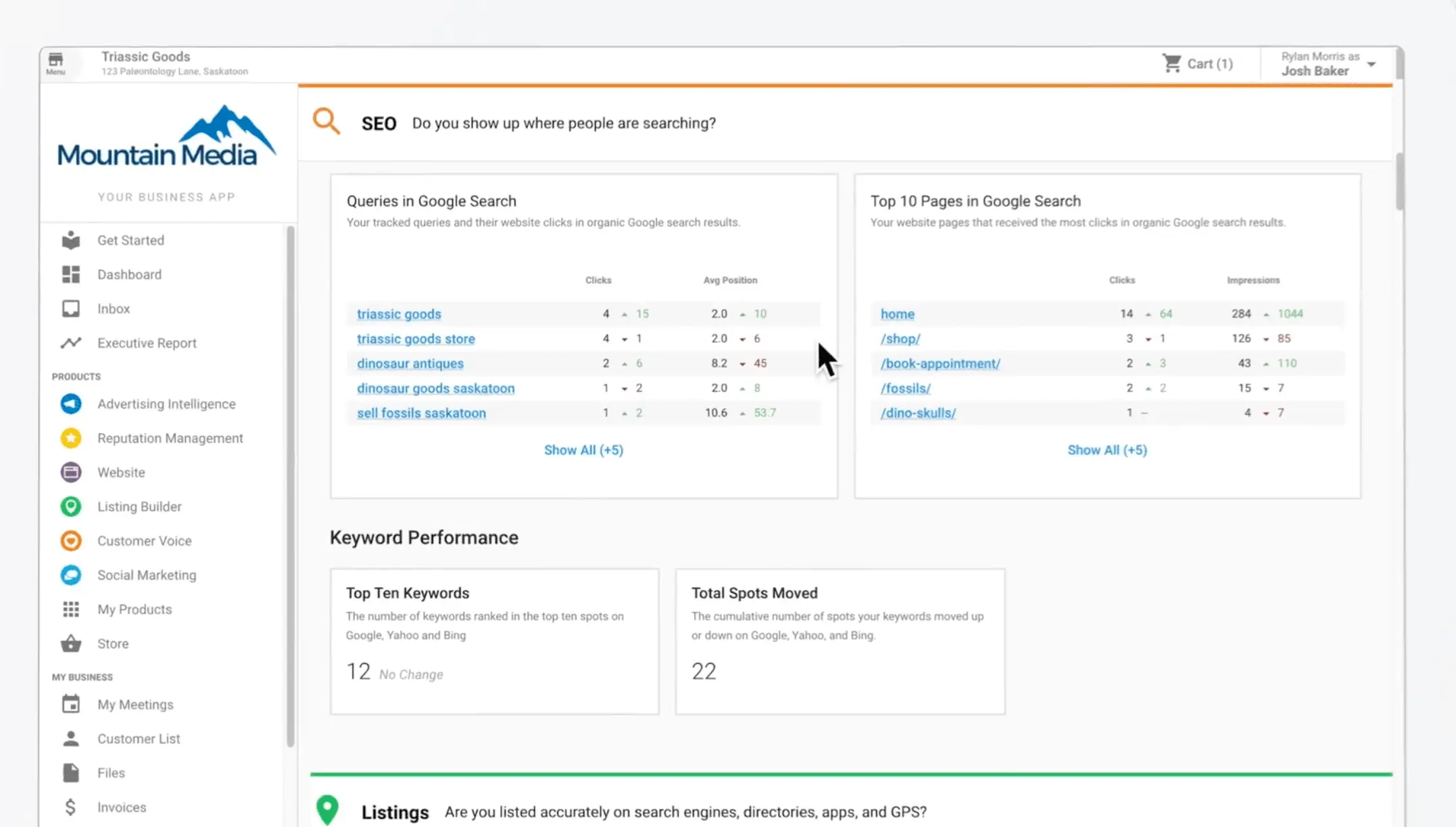
Customize them to highlight ROI, leads, ad clicks, SEO movement—whatever your client cares about most.
Use this time to frame the narrative. Guide the conversation. Show your value.
A well-crafted client dashboard doesn’t just show performance—it becomes a proactive tool for client engagement, strategy alignment, and decision-making.
To maximize engagement and ROI from your reporting, follow these eight key steps:
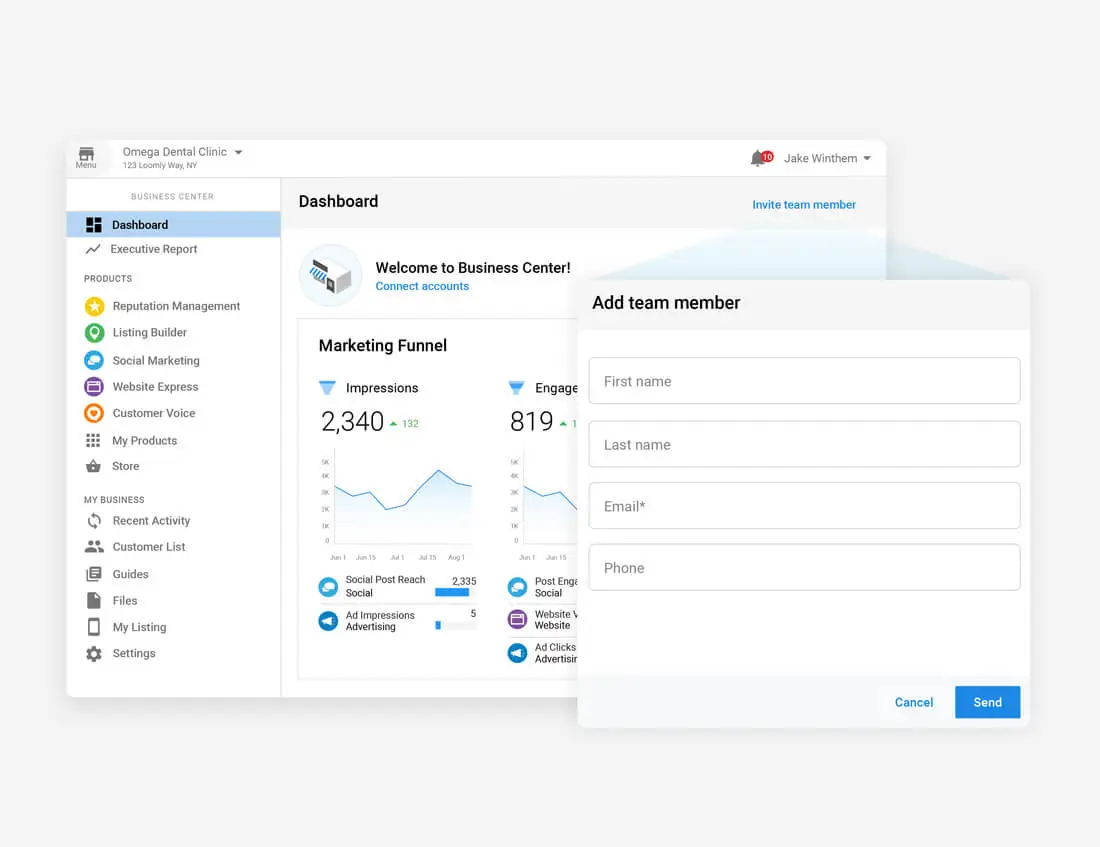
Each of these elements—goal alignment, branding, automation, and insights—contributes to a more intuitive, transparent, and results-driven client experience.
Make the numbers make sense. And make the dashboard work for your clients, not just for your team.
How to Take Action:
- Customize Vendasta’s Executive Report by highlighting what matters most to each client.
- Add a “Here’s What Happened” and “Next Steps” section to every report.
- Use visuals to simplify complex metrics.
- Include a short voice note or video that walks them through the highlights.
8. Host Monthly or Quarterly Business Reviews
Don’t let your review meetings be a slide dump.
Turn them into real strategy sessions. Discuss what’s working, where they’re seeing growth, and where things can improve.
Bring real recommendations. Suggest campaigns. Ask about their goals for the next quarter.
Make this meeting the most valuable 30 minutes on their calendar—not just another agency check-in.
How to Take Action:
- Share a one-slide summary: wins, roadblocks, next steps.
- Ask clients to list their top three business goals before the meeting.
- Use call time to present strategic ideas, not just report performance.
- End every review with a next-quarter plan co-signed by both sides.
9. Provide Self-Service Educational Resources
Clients don’t want to feel lost. Give them content that helps them make sense of your work.
Drop explainer videos, blog links, and tutorials into your Vendasta Business App portal.
Create a resource hub. Add an FAQ page. Even short “What this means” tooltips in your reports can make a difference.
A smarter client is a more satisfied client.
How to Take Action:
- Build a simple resource hub inside your client portal.
- Add videos, glossaries, tool explainers, and onboarding PDFs.
- Include a “What This Means” pop-up next to confusing KPIs.
- Use AI to generate short summaries for each tool or tactic.
10. Assign a Dedicated Account Manager
Consistency builds trust. Period.
Make sure your client knows who their go-to person is. This reduces miscommunication and keeps your service personal—especially for high-value clients.
If you’re a small team, you don’t need to hire extra staff. Just make roles clear and ensure every client has a primary contact they can count on.
How to Take Action:
- Assign a named account owner (not just a shared inbox).
- Use personalized email signatures with contact info and a photo.
- Set expectations for response time and regular check-ins.
- Add the AM’s contact info in the client portal for visibility.
11. Segment Clients for Targeted Engagement
Not every client wants weekly calls. Not every client needs detailed reports.
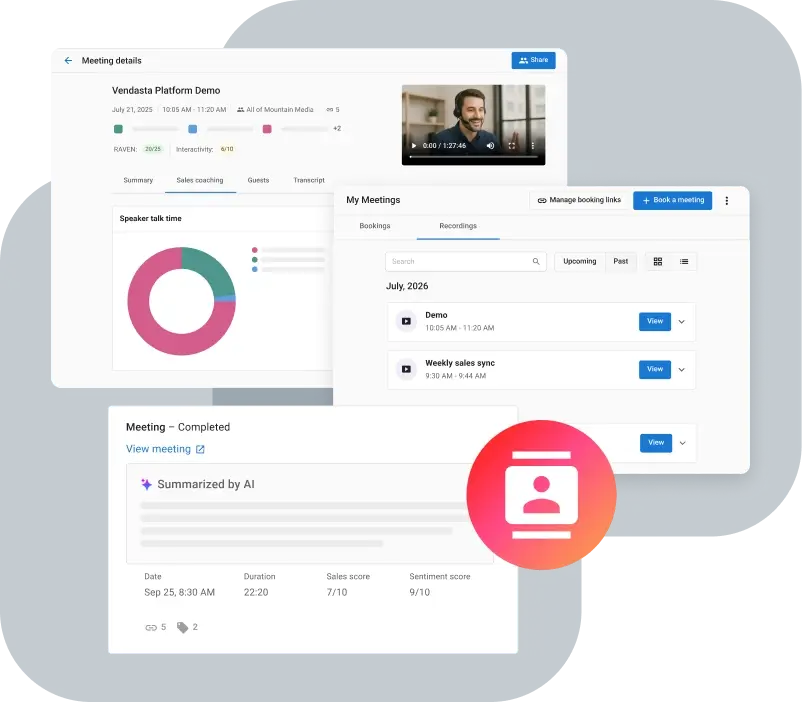
Use Vendasta’s CRM to group clients by size, goals, or service tier. This lets you send more relevant updates—and spend your time where it matters most.
How to Take Action:
- Use Vendasta’s CRM to build segments: VIP, SMB, eComm, high-touch, etc.
- Adjust frequency of calls, report depth, and communication style accordingly.
- Send segment-specific newsletters or campaign ideas.
- Create onboarding tracks by client type.
12. Use Feedback Loops to Improve Continuously
Gather feedback at key points—not just when things go wrong.
Send NPS surveys after a campaign. Ask how onboarding felt. Use Vendasta’s tools to collect and organize it all—and then respond.
Clients are more likely to speak up when they know it’s safe, easy, and leads to action.
How to Take Action:
- Send NPS surveys after onboarding, major campaigns, or quarterly reviews.
- Use Vendasta’s built-in feedback tools to collect and track sentiment.
- Reach out personally to anyone who scores a six or below.
- Monitor trends across service lines and act fast on warning signs.
13. Involve Clients in the Strategy Process
Stop presenting final plans like it’s a school project.
Instead, bring your clients into the room. Run a brainstorm. Ask, “What are you seeing in your market right now?”
Collaborate on the idea before the execution.
This builds buy-in and helps them feel ownership over the results.
True client collaboration strengthens your relationship and improves outcomes. Here’s a look at what you gain when you actively involve clients in strategic work:
From increasing satisfaction and loyalty to improving creativity and final outcomes, collaborative partnerships create real value—for both sides.
How to Take Action:
- Share draft strategies instead of final presentations.
- Ask “What are you seeing in your market right now?”
- Use live documents or Miro boards to plan together in real-time.
- Validate your ideas by tying them back to their business goals.
14. Stay Proactive With Insight-Based Recommendations
Don’t wait for your client to ask.
If their traffic drops, recommend SEO help. If engagement is falling, suggest fresh content. Customer engagement improves when you stay ahead of the curve.
Vendasta’s insights make it easier to act on the signals.
Example: One agency noticed a dip in local search traffic in their report. Instead of waiting for the client to ask, they reached out and suggested activating reputation management to improve Google review scores.
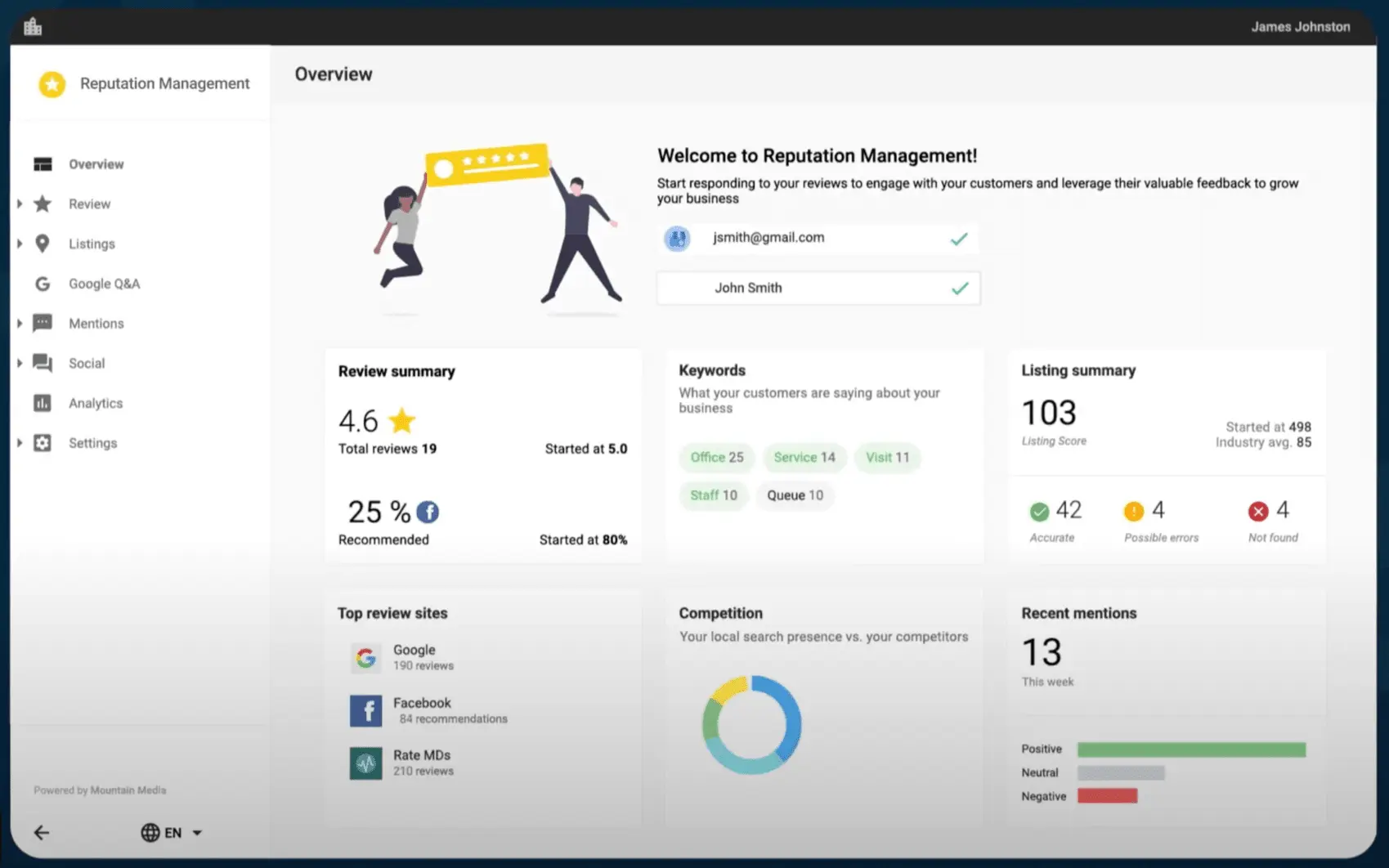
The campaign recovered traffic by 28% in 45 days—and the client added two more services.
That’s how proactive insights drive results.
How to Take Action:
- Check client performance dashboards weekly for dips or trends.
- Use Vendasta insights to identify areas for improvement.
- Reach out with “I noticed X. Here’s what I recommend…” messages.
- Track outcomes tied to your proactive suggestions to use in future proposals.
15. Celebrate Client Milestones
Clients don’t always pause to recognize their own wins—so you should.
Celebrate their first 100 reviews. Their biggest month for leads. Their anniversary with your agency. Send a small gift. Feature them in your email newsletter. Give them a digital badge.
It shows you care about more than just performance—it shows you’re invested in their journey.
How to Take Action:
- Track and highlight key milestones: leads generated, reviews collected, anniversaries.
- Send physical or digital gifts to mark big wins.
- Shout them out in your newsletter or social posts.
- Create branded “achievement” badges clients can display on their sites or email footers.
Client Engagement for Digital Agencies, ISVs, and Franchisors
Client engagement isn’t one-size-fits-all. The right strategy depends on who your clients are, how they buy, and what they need from a long-term partner. Here’s how the approach differs across three of the most common partner types in Vendasta’s ecosystem.
Digital Agencies
The challenge: Agencies manage many clients simultaneously with lean teams. Engagement often falls through the cracks during busy delivery cycles — and clients who feel ignored don’t renew.
What works best:
- Automated reporting keeps clients informed without adding team workload
- White-label client portals give every client a branded home base for updates and approvals
- Segmented communication — high-touch for enterprise accounts, automated for SMB clients
- Quarterly business reviews to reframe the relationship from “vendor” to “growth partner”
Key metric to watch: Portal login frequency. If a client isn’t logging in, they’re not seeing the value — and they’re at churn risk.
ISVs (Independent Software Vendors)
The challenge: ISVs often engage with clients through a product interface rather than a human relationship. When usage drops, there’s no account manager to catch it — churn happens silently.
What works best:
- In-product engagement triggers — onboarding tooltips, feature adoption nudges, milestone alerts
- Usage-based outreach: if a client hasn’t used a key feature in 30 days, send a targeted email or offer a walkthrough
- Success metrics dashboards built into the product so clients can self-serve proof of value
- Regular product update communications that highlight improvements driven by customer feedback
Key metric to watch: Feature adoption rate. Clients who use more of your product are significantly less likely to churn.
Franchisors
The challenge: Franchisors serve two audiences at once — the corporate brand and individual franchisees. Engagement strategies must work at scale across dozens or hundreds of locations while still feeling locally relevant.
What works best:
- Centralized performance dashboards that roll up individual location data for corporate visibility
- Location-level reporting so each franchisee sees their own results — not just system-wide averages
- Standardized engagement templates that can be customized per market (review responses, local campaigns)
- Franchisee-specific onboarding tracks to get new locations running without corporate involvement every time
Key metric to watch: Consistency of engagement across locations. A few highly engaged franchisees masking widespread disengagement is a common blind spot.
No matter which category you fall into, the underlying principle is the same: clients engage when they feel seen, informed, and valued. The tactics just look different depending on your model.
Common Client Engagement Mistakes (and How to Fix Them)
Most agencies don’t lose clients because of bad work. They lose them because of preventable engagement failures. Here are the most common mistakes — and what to do instead.
Mistake 1: Only Reaching Out When Something Goes Wrong
If the only time clients hear from you is when there’s a problem, they start associating your agency with bad news.
Fix it: Build a proactive communication cadence. Share wins, flag trends early, and check in at regular intervals — not just crisis moments.
Mistake 2: Sending Reports Clients Don’t Understand
A dashboard full of numbers with no context is not a report — it’s noise. Clients who don’t understand what they’re looking at will question the value of your work.
Fix it: Add a “Here’s what this means” summary to every report. Highlight the 2–3 metrics that connect directly to their business goals.
Mistake 3: Treating All Clients the Same
A 10-person local business and a 200-location franchise have very different communication needs. Sending the same cadence to both is a missed opportunity — and often an annoyance.
Fix it: Segment your clients by size, service tier, or goal. Adjust communication frequency, report depth, and meeting cadence accordingly.
Mistake 4: Asking for Feedback but Never Acting on It
Sending an NPS survey and never following up is worse than not sending it at all. It signals that feedback is performative, not genuine.
Fix it: Close the loop every time. When a client scores low, call them within 24 hours. When feedback leads to a change, send a “You asked, we did” update.
Mistake 5: Relying on a Shared Inbox Instead of a Dedicated Point of Contact
When clients don’t know who their person is, they feel like a ticket — not a partner. Inconsistent responses erode trust fast.
Fix it: Assign a named account manager to every client. Make that person’s contact info visible in the client portal and in every email signature.
Mistake 6: Going Silent After the Sale
The post-sale silence is one of the most common — and most damaging — engagement failures. Clients go from feeling pursued to feeling forgotten almost overnight.
Fix it: Build a structured 30-60-90 day onboarding engagement track. The first three months set the tone for the entire relationship.
Client Engagement Email Examples You Can Use Today
The right message at the right moment can transform a disengaged client into a loyal one. Here are six ready-to-adapt email templates for the most important client touchpoints.
Example 1: Proactive Performance Insight
When to send: When you spot a notable metric change (positive or negative)
Subject: We noticed something in your data — here’s what it means
Hi [Client name],
I was reviewing your account this week and noticed your local search traffic dipped about 18% compared to last month. Before you see it in the report, I wanted to flag it and share what we recommend.
The likely cause is a drop in your Google review recency — your last review is from six weeks ago, and fresh reviews are a key ranking signal.
We’d suggest activating a review request campaign this week to get 5–10 new reviews in the next 30 days. Based on similar clients, this typically recovers traffic within 4–6 weeks.
Want us to set that up? I can have it running by [day].
[Your name]
Example 2: Milestone Celebration
When to send: When a client hits a meaningful goal (reviews, leads, anniversaries)
Subject: You just hit 100 reviews — here’s why that matters
Hi [Client name],
Big milestone alert — you just crossed 100 Google reviews, and your average rating is sitting at 4.7 stars. That puts you in the top tier for your category in [city].
This kind of social proof directly impacts your local search ranking and the number of people who choose you over a competitor. The next goal: 150 reviews by [date].
Keep it up — you’re building something real here.
[Your name]
Example 3: Monthly Report Delivery
When to send: Alongside your monthly Executive Report
Subject: Your [Month] results + what we’re focusing on next
Hi [Client name],
Your [Month] performance report is attached. Here’s the short version:
- Win: Organic traffic up 14% — SEO changes from last month are taking hold.
- Watch: Ad click-through rate dropped slightly. We’re testing two new creatives this week.
- Next focus: We’re prioritizing [goal] in [Month+1] based on your Q3 targets.
Full report is in your dashboard. Let me know if you want to jump on a quick call — otherwise, see you at our monthly review on [date].
[Your name]
Example 4: Re-Engagement Nudge (Inactive Client)
When to send: Client hasn’t logged into the portal or responded in 14+ days
Subject: Quick check-in — are we still aligned on your goals?
Hi [Client name],
It’s been a couple of weeks since we’ve connected, and I wanted to check in — not with a report, just a quick hello.
Are your priorities still the same, or has anything shifted on your end? We want to make sure what we’re working on is still the most valuable thing for your business right now.
Fifteen minutes this week? Happy to work around your schedule.
[Your name]
Example 5: NPS Follow-Up (Low Score)
When to send: Within 24 hours of receiving an NPS score of 6 or below
Subject: Thank you for your honest feedback
Hi [Client name],
Thank you for completing our recent survey — and for being direct. We take every response seriously, and a score like yours tells me we need to do better.
I’d like to set up a short call this week so I can hear directly from you what’s not working. No pitch, no agenda — just listening.
Would [day/time] work? Or feel free to suggest a time that suits you.
[Your name]
Example 6: Upsell Introduction (Tied to a Result)
When to send: After a client hits a primary goal or asks about expanding
Subject: You’ve outgrown your current setup — here’s what’s next
Hi [Client name],
Your SEO results over the last quarter have been strong — traffic is up 31% and you’re ranking on page one for six of your target keywords. That’s a real win.
Here’s the opportunity: clients at your stage typically see the biggest growth when they add a paid search layer to complement organic. It captures demand you’re already generating but not yet converting.
I’d love to walk you through what that would look like for your business specifically. Even 20 minutes would be enough to know if it’s the right fit.
Interested?
[Your name]
How to Measure Client Engagement Success
You can’t improve what you’re not measuring. If you want your agency’s client engagement to be more than just a gut feeling, it starts with tracking the right metrics.
Key Performance Indicators (KPIs)
Here’s what you should be watching closely:
Client Retention Rate
This is your north star. High retention tells you that clients are engaged, satisfied, and see ongoing value. A drop? That’s a red flag.
Net Promoter Score (NPS)
Ask your clients how likely they are to refer you. That simple question offers deep insight into loyalty, trust, and long-term satisfaction. Use Vendasta’s NPS tools to collect and automate this process without lifting a finger.
Engagement Metrics
Are your emails being opened? Are clients logging into your portal?
Tracking things like:
- Email open and click-through rates
- Portal logins and session duration
- Participation in reviews or training
tells you how connected your clients are to your agency day-to-day.
Customer Support Interactions
If ticket volume is rising but satisfaction is falling, your engagement strategy might be too reactive. Look for patterns.
When you combine these signals, you get a crystal-clear picture of how your clients feel—not just what they say.
Regular Review and Strategy Adjustment
Engagement isn’t a “set it and forget it” task. You need to review these metrics regularly.
Schedule a monthly or quarterly internal review. Look at your client engagement trends, identify what’s working, and flag accounts that might be slipping.
Ask questions like:
- Are we hearing from this client less than before?
- Have they stopped logging into their portal?
- Did their NPS score drop?
Then adapt your strategy:
- Ramp up communication for quieter clients
- Offer additional training for those struggling with tools
- Segment your outreach based on lifecycle or service tier
Vendasta gives you a central view of these engagement signals—so you can act before a client even realizes they’re starting to drift.
Ready to turn client data into action?
If you’re serious about boosting AI customer engagement without burning out your team, this is your playbook.
Follow this step-by-step guide to plug AI into your engagement strategy—so you can deliver faster, smarter, and more personalized experiences across the board.
Boost Client Engagement with Vendasta
You’re managing multiple clients, campaigns, and conversations every day. Staying on top of every interaction, every report, and every request isn’t easy. That’s where Vendasta gives your agency the edge—helping you engage smarter, scale faster, and build stronger client relationships.
Automate Performance Reporting and Visibility
Your clients want proof. Proof that things are working. Proof that their investment is paying off.
But manual reports? They eat up your time. And generic summaries don’t show the full picture.
With Vendasta’s Executive Report, you can automate client reporting and keep the conversation going—without lifting a finger. These reports are:
- White-labeled with your branding
- Auto-delivered on schedule
- Packed with performance metrics across SEO, advertising, reputation, listings, and more
Clients get clear updates. You reinforce trust. And they always know the value your agency delivers—week after week, month after month.
That’s what consistent client engagement looks like.
Centralize Client Access and Communication
Scattered logins. Missed emails. Forgotten approvals. It all adds up to a frustrating client experience.
That’s why agencies using Vendasta’s Business App give their clients one branded portal to:
- View reports and campaign performance
- Approve tasks and requests
- Access educational resources and support
- Stay engaged with real-time visibility
No more email back-and-forth. No more wondering what’s happening behind the scenes.
Just one login, one experience, fully under your brand.
The result? Stronger customer engagement, better customer satisfaction, and deeper long-term trust.
Scale Services and Engagement
You want to offer more. More services. More touchpoints. More results.
But you don’t want to burn out your team—or add 10 new hires.
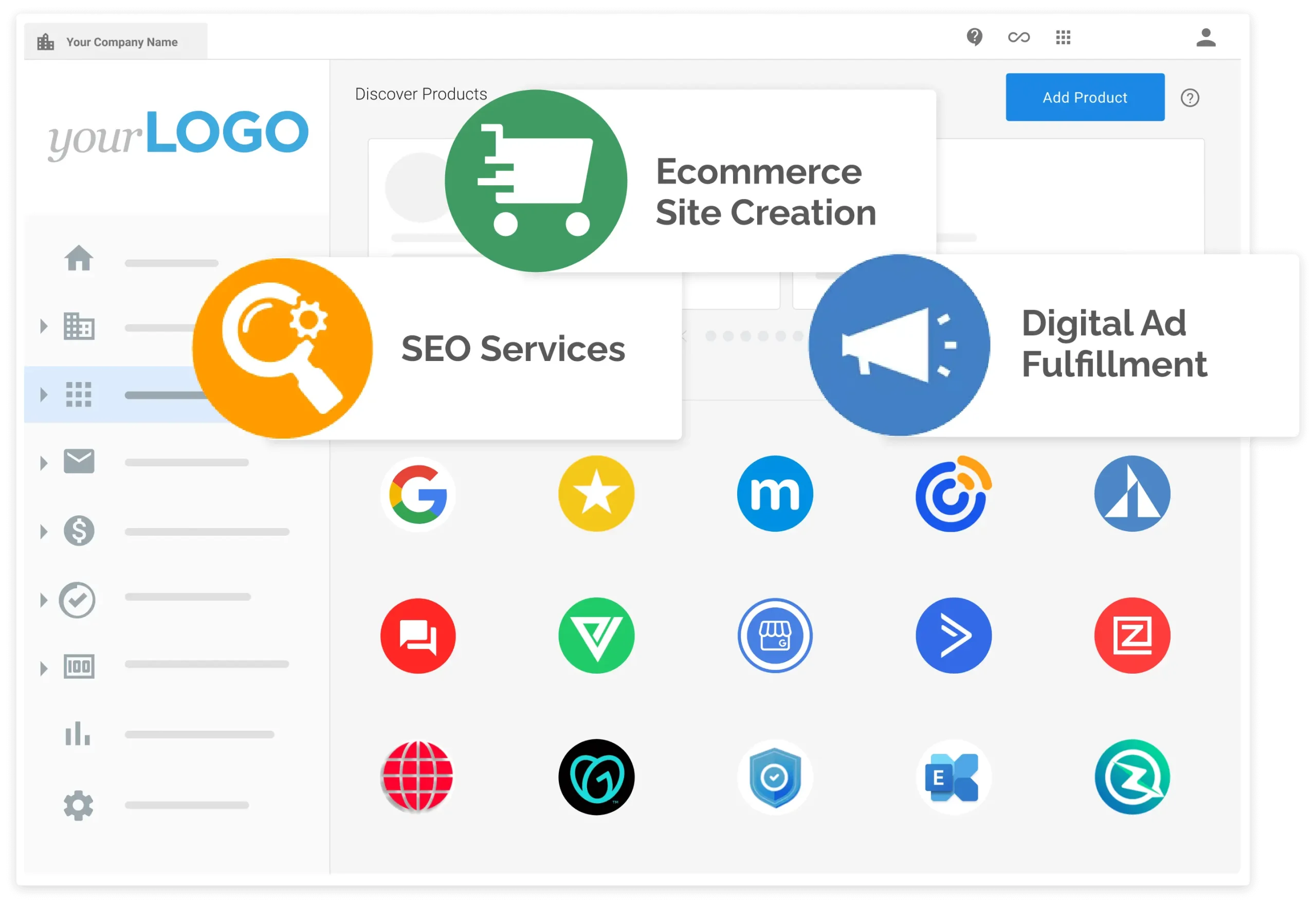
With Vendasta’s Marketplace, you can scale your service stack with pre-vetted digital solutions. Resell under your agency’s brand. Fulfill faster. And keep clients engaged with more of what they need—all in one place.
Real agencies, real results!
Rich Burner, CEO and Co-Founder of First Gen Marketing, knows how overwhelming things can get when you’re just starting out. But with Vendasta, he found the clarity and support to confidently scale.
Need to expand into email marketing, content marketing, or social media? Just activate the solution.
Want to stay proactive during the customer journey without manual lift? Let automation do the work.
You get more upsell opportunities. Your clients get stronger results. Everyone wins.
Real-World Win: Turning Client Frustration Into $244K Growth
You know the feeling.
Juggling too many client campaigns. No real visibility. Constant follow-up emails like:
“Hey, any update on our SEO progress?”
That’s where First Gen Marketing was stuck.
Unreliable fulfillment. Confused clients. No clear system. But once they partnered with Vendasta, everything changed.
What Was the Problem?
- Clients had no dashboard or insight into performance
- Communication breakdowns led to distrust
- Growth stalled because they couldn’t scale fulfillment
Rich Burner, their CEO, saw it firsthand.
“Too many times, prospects had horror stories about agencies that ghosted them. We knew we had to be different.”
What Changed with Vendasta?
- They rolled out Vendasta’s Business App so clients could see live campaign updates in one branded dashboard.
- They outsourced fulfillment to Vendasta’s Marketing Services, reclaiming time and consistency.
- They used Vendasta’s Marketplace to package customized services—fast, white-labeled, and scalable.
The Outcome?
- 100% client retention
- $244,000 in annual recurring revenue
- And a bulletproof system for client engagement that actually works
No more excuses. No more friction. Just real client engagement that delivers real business growth.
If First Gen Marketing can turn it around, so can your agency.
Want the full story? Check how First Gen Marketing scaled retention and revenue with Vendasta.
Elevate Your Agency’s Client Engagement Strategy
Your clients don’t just want deliverables. They want a relationship they can rely on. One that’s built through trust, communication, and consistent results.
Strong client engagement is the secret to higher retention, easier upselling, and more referrals. If your agency stays connected, listens closely, and delivers real value, your clients will never look elsewhere.
Vendasta helps you make that happen. With tools designed to automate touchpoints, personalize every interaction, and centralize communication, you can scale your services while building stronger client relationships.
This is your moment to assess how you engage with your clients. Are you giving them enough visibility? Are your reports telling the full story? Are you building loyalty or just ticking boxes?
If you’re ready to level up, we’ve got you covered.
Schedule your free demo and see how you can power better engagement, stronger results, and long-term growth for your agency.
Client Engagement FAQs
1. How can agencies improve client engagement quickly?
Start with small actions that show big results.
- Tighten your onboarding process to set clear expectations from the start
- Automate your check-ins to stay visible without overwhelming your team
- Send consistent performance reports to keep clients in the loop
Vendasta helps you automate all of this—from onboarding workflows to white-labeled Executive Reports—so your clients see value early and often.
2. What’s the difference between client engagement and customer service?
Customer service is reactive. It solves problems when clients reach out. Client engagement is proactive. It builds relationships through regular touchpoints and added value.
For example, responding to a complaint is customer service. Sharing monthly insights with improvement suggestions is client engagement. You need both—but engagement keeps clients longer.
3. Which tools help agencies boost client engagement?
You don’t need a dozen different platforms. Look for tools that include:
- Client portals for visibility and transparency
- CRMs to track history, preferences, and next steps
- Automation platforms to schedule consistent communications
- NPS and feedback tools to measure satisfaction
- Analytics dashboards to show what’s working
Vendasta gives you all of these in one place—under your brand, at your pace.
4. How do you measure client engagement success?
Track key metrics like:
- Client retention rate
- Net Promoter Score (NPS)
- Portal login frequency
- Email open and response rates
- Revenue from upsells or service renewals
Vendasta’s Executive Report and Business App dashboards give you real-time insight so you can act fast and stay ahead.
5. What are examples of strong client engagement tactics?
Here’s what top-performing agencies are doing:
- Hosting quarterly business reviews with tailored insights
- Celebrating milestones like 1-year anniversaries or campaign wins
- Sharing trend updates with actionable ideas based on the client’s goals
These aren’t just touchpoints. They’re value drivers that keep your clients loyal and invested.
6. How often should agencies communicate with clients?
There’s no one-size-fits-all rule, but here’s a good place to start:
- High-touch clients: Weekly check-ins
- Standard accounts: Monthly performance updates
- Low-touch or stable projects: As-needed, with automation filling gaps
Consistency matters more than frequency. With Vendasta, even small teams can stay consistent using smart automation.
7. What’s the best way to personalize the client experience at scale?
Use CRM data to drive smart segmentation.
Tag clients by industry, goals, or lifecycle stage. Then automate messaging, reporting, and outreach based on what they care about.
Vendasta’s CRM and marketing automation tools make this possible—without adding pressure to your internal team.
8. Why do some agencies struggle with client engagement?
Most don’t lack intention—they lack systems.
Common blockers include:
- Scattered communication tools
- No time for regular updates
- Ignored client feedback
When engagement isn’t baked into your process, it falls through the cracks. Vendasta centralizes everything you need to streamline, automate, and scale your client engagement approach.