
You and your clients can’t afford to waste time on leads that won’t convert. That’s where lead scoring comes in—a time-tested strategy that ranks prospects based on their likelihood of becoming paying customers.
Traditionally, this process relied on manual input and gut feeling, with marketing and sales teams assigning scores based on demographics, firmographics, and limited behavioral data.
But the game has changed.
Artificial intelligence (AI) has revolutionized lead scoring, transforming it into a dynamic, data-driven system that continuously learns and improves. Instead of relying on subjective rules, AI lead scoring uses machine learning models to analyze vast datasets—web activity, email engagement, CRM updates, and more—to predict which leads are most likely to convert.
For marketing agency owners, this shift means sharper targeting, more qualified leads for clients, and, ultimately, a stronger ROI. With AI lead scoring, your sales process becomes more efficient, your campaigns more effective, and your team empowered to focus on what matters most: closing high-value deals.
Streamline your team’s pipeline, align tasks, and close deals faster
Quick Answer: AI lead scoring uses machine learning algorithms to automatically evaluate and rank leads by their likelihood to convert. It analyzes behavioral, firmographic, and demographic data in real time—replacing static, rule-based systems with dynamic predictive models that continuously improve as more data flows in.
TL;DR:
- The Core Shift: Traditional lead scoring relies on manual, static rules and “gut feelings” to rank prospects. AI lead scoring uses machine learning algorithms to analyze vast datasets (web activity, email clicks, CRM updates) to automatically predict which leads are most likely to buy in real time.
- The “Power Couple”: Effective sales stacks combine Predictive AI (the strategic analyst that mathematically forecasts who is ready to buy) with Generative AI (the creative collaborator that automatically drafts what personalized message to send them).
- Negative Scoring: AI is nuance-driven rather than blunt. It uses negative signals to automatically penalize or disqualify dead-end leads—such as spotting competitor “spies,” filtering out job seekers spending time on career pages, tracking engagement decay, and detecting bot activity.
- Key Benefits:
- Improved Accuracy: Processes complex data patterns (and soon unstructured data like call transcripts and sentiment analysis) to pinpoint high-quality leads.
- Sales Efficiency & Scalability: Reps stop wasting time on cold outreach, shortening the sales cycle while easily managing large lead pipelines.
- Dynamic Adaptation: Automatically adjusts criteria on the fly as buyer behaviors and market trends shift.
- Smart Action: Low or negative-scoring leads aren’t just deleted; they are automatically rerouted to nurture sequences or long-term awareness buckets, keeping the main sales pipeline pristine.
What Is AI Lead Scoring?
AI lead scoring is the use of machine learning algorithms to automatically evaluate and prioritize leads based on their likelihood to convert into paying customers. Unlike traditional lead scoring—which relies on static rules and manual inputs—AI lead scoring adapts in real time, delivering smarter, more accurate predictions.
At its core, the process works like this:
- Data collection: The system gathers demographic details, firmographic insights, online behaviors, email engagement, and CRM activity.
- Pattern recognition: Machine learning algorithms identify correlations that a human analyst would likely miss.
- Predictive scoring: The model generates dynamic lead scores that are continuously refined and tailored to each business’s ideal customer profile (ICP).
For marketing agency owners, this translates to better-qualified leads, shorter sales cycles, and campaigns that actually convert—for you and your clients.
AI Lead Scoring vs. Traditional Lead Scoring
Understanding where traditional scoring breaks down makes the value of AI immediately clear.
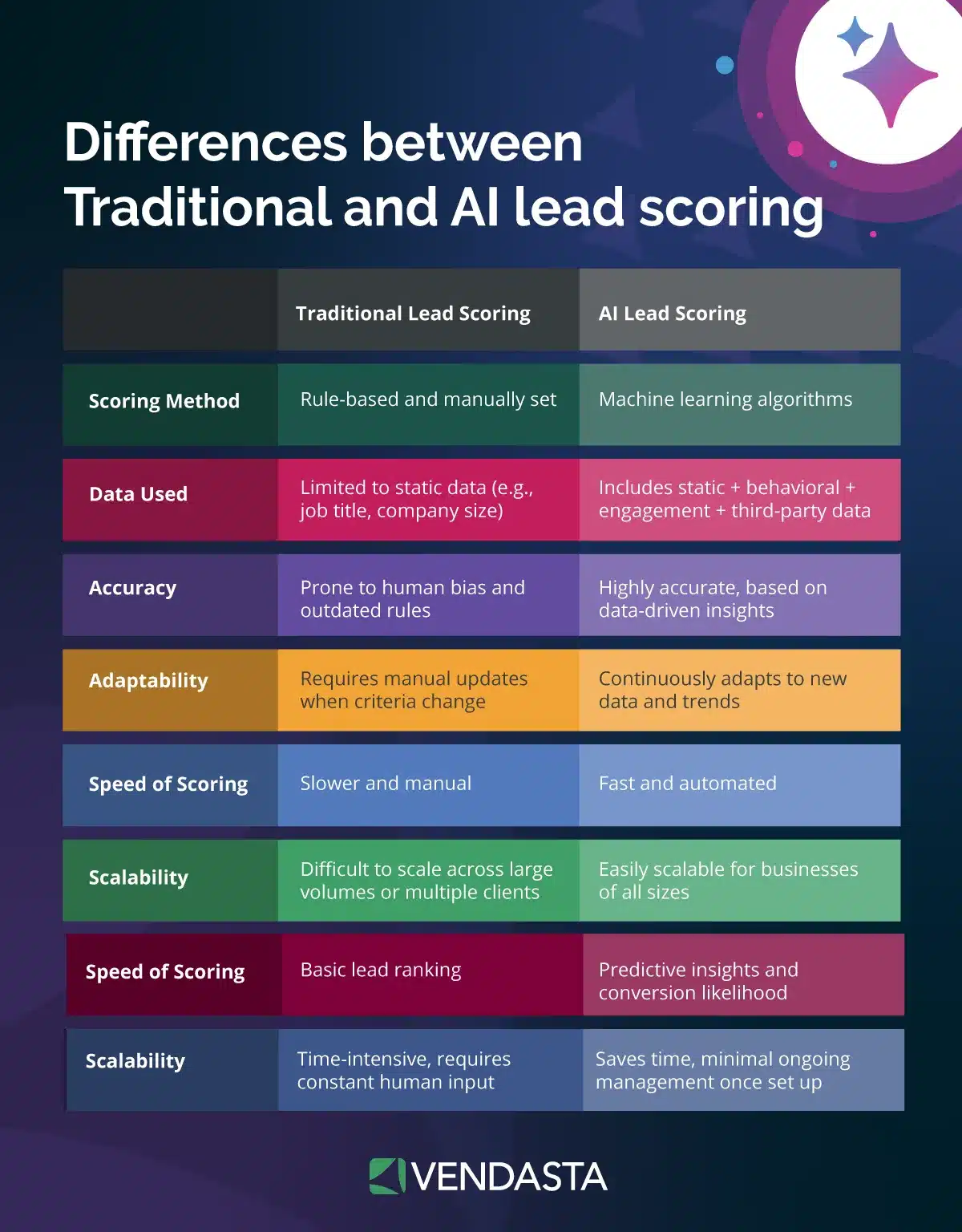
Traditional Lead Scoring
Traditional lead scoring is a rule-based system where points are assigned to leads based on predetermined criteria—job title, company size, email opens, page visits. The rules are set manually by marketing or sales teams and updated (if ever) on a quarterly or annual basis.
While this approach works in simple sales environments, it has significant limitations:
- Static rules don’t account for changing buyer behavior or market shifts
- Relies heavily on manual input, which introduces inconsistency and human error
- Limited to the data points a human decides to track
- Difficult to scale effectively as lead volume grows
- Does not learn from outcomes (e.g., which leads actually closed)
For example, assigning 5 points for “job title” and 10 points for “form submission” is a simplistic method that ignores the complex relationships between factors and how they evolve over time.
AI Lead Scoring
AI lead scoring uses advanced algorithms and machine learning to dynamically assess leads based on a much broader range of data points and more complex patterns.
Instead of fixed rules, AI models continuously learn from historical data and real-time behavior—adapting to shifts in buyer patterns and market conditions. The result is a far more fluid, accurate, and scalable system.
| Dimension | Traditional Lead Scoring | AI Lead Scoring |
|---|---|---|
| Scoring method | Rule-based, manual | Machine learning, automated |
| Data inputs | Fixed attributes (title, company size) | Multi-signal: behavioral, firmographic, intent, CRM |
| Adaptability | Static; requires manual updates | Continuously learns from new data |
| Accuracy | Limited by human assumptions | Improves over time with real outcomes |
| Scalability | Struggles at high lead volume | Scales to any volume |
| Transparency | Fully transparent (human-defined rules) | Requires Explainable AI (XAI) for visibility |
| Best for | Small teams, simple sales processes | Agencies, SaaS, data-driven sales teams |
Manual vs. AI Lead Scoring: Advantages and Disadvantages
Beyond the rule-based comparison, it’s worth understanding the tradeoffs when human sales reps manually score leads versus delegating that job entirely to an AI model.
Advantages of Manual Lead Scoring
- Sales reps can apply qualitative judgment—industry context, tone of a conversation, organizational dynamics—that raw data can’t capture
- Easier to handle outliers and edge cases that an algorithm might incorrectly disqualify
- Greater contextual understanding to inform follow-up strategy
- Full control and customization of the scoring process
Disadvantages of Manual Lead Scoring
- Time-consuming and difficult to scale as inbound volume grows
- Subject to fatigue, bias, and inconsistency across reps
- Slows down speed-to-lead, directly harming conversion rates
- High opportunity cost: reps scoring leads are not prospecting or closing
Advantages of AI Lead Scoring
- Dramatically faster: leads can be enriched, scored, qualified, and routed within minutes
- Applies a consistent scoring model to every lead—eliminating human error and bias
- Scales to virtually unlimited lead volume without adding headcount
- Predictive models that are retrained regularly incorporate changing customer data and remain dynamic
Disadvantages of AI Lead Scoring
- Can miss important qualitative signals—nuanced market trends, relationship context—that only human intuition catches
- Errors and biases baked into the training data are applied consistently across the entire funnel
- Predictive models risk confirmation bias: scoring only for leads who match your existing customers, limiting expansion into new segments
- Struggles with outliers unless explicit rules are built into the model for handling edge cases
The takeaway for agencies: AI lead scoring is most powerful when it handles the high-volume, repeatable qualification work—freeing your human reps to focus on the nuanced decisions, relationship-building, and edge cases where their judgment creates real value.
Predictive vs. Generative AI in Lead Scoring
While these terms are often used interchangeably, they serve two distinct roles in the modern AI lead scoring ecosystem. To win at lead generation, you need to understand where the “Analysis” ends and the “Creation” begins.
1. Predictive AI: The Strategic Analyst
Predictive AI is the “brain” that looks at historical data to forecast future outcomes. In the context of lead scoring, it answers the question: “Who is most likely to buy?”
- How it Works: It uses machine learning models—such as Logistic Regression or Random Forests—to find patterns in thousands of data points. This includes how many times a lead visited your pricing page or if they have recently changed roles at their company.
- The Output: A numerical score (e.g., $92/100$) or a categorical classification (e.g., “High-Intent Lead”).
- The Benefit for Agencies: It removes the guesswork. Instead of your clients’ sales teams chasing every lead, they focus only on the top tier that the AI has mathematically proven are ready to convert.
2. Generative AI: The Creative Collaborator
Generative AI is the “voice” that creates new content based on those predictions. It doesn’t decide who to talk to; it decides what to say to them.
- How it Works: Large Language Models (LLMs) take the context provided by the predictive score and draft a personalized response.
- The Output: A bespoke email, a LinkedIn message, or a tailored product recommendation.
- The Benefit for Agencies: It solves the scaling problem. You can now send a 1-to-1 personalized email to 500 “Hot Leads” in the time it used to take to write five manual messages.
The Workflow: How They Work Together
To maximize ROI, you must integrate these two into a single, seamless workflow:
- Predictive AI analyzes your CRM data and identifies a “Hot Lead” who just visited your “Enterprise Pricing” page.
- Predictive AI triggers an alert and assigns a score of 95.
- Generative AI takes that signal and automatically drafts an email that mentions the specific enterprise features that lead was browsing.
- The Result: A perfectly timed, hyper-relevant outreach that feels human but is powered by machine-speed logic.
5 AI Lead Scoring Models You Should Know
1. Logistic Regression: The Reliable Baseline
This is the most fundamental model used in AI lead scoring. It is a binary classifier, meaning it is designed to predict one of two outcomes: Will the lead convert? Yes or no.
- How it works: It looks at a set of independent variables (like email clicks and job titles) and calculates the probability of a “1” (conversion) versus a “0” (no conversion).
- When to use it: Ideal for agencies with smaller datasets or those who prioritize high “explainability” over extreme complexity.
2. Random Forests: The Complexity Handler
If your data is messy or contains many different types of information (firmographics, social media hits, and ad clicks), a single decision tree isn’t enough. A Random Forest creates hundreds of individual decision trees and “votes” on the final score.
- How it works: By creating multiple trees on different subsets of data, it prevents “overfitting”—a common problem where the AI gets too stuck on historical patterns and fails to predict new, unique leads.
- When to use it: Perfect for multi-channel agencies handling complex buyer journeys.
3. Gradient Boosting Machines (XGBoost)
Currently, the “gold standard” in predictive analytics, Gradient Boosting builds trees one at a time, where each new tree helps to correct the errors made by the previous ones.
- How it works: It focuses on the “residual errors.” If the first model missed a segment of high-intent users, the second model focuses specifically on capturing them.
- When to use it: When you need the absolute highest precision possible and have a high volume of lead data to feed the model.
4. Neural Networks (Deep Learning)
Inspired by the human brain, these models are composed of layers of interconnected “neurons.” Neural networks excel at finding non-linear relationships that traditional models might miss.
- How it works: It can identify that a lead who downloads a whitepaper on a Sunday and visits the pricing page on a Tuesday is 5x more likely to buy than someone who does those same things on different days.
- When to use it: Best for enterprise-level agencies with massive datasets where buyer behavior is highly unpredictable.
5. K-Means Clustering: The Unsupervised Explorer
Unlike the other models, K-Means Clustering doesn’t necessarily look at “converted” vs. “not converted.” Instead, it groups leads together based on similarities.
- How it works: It plots leads on a multi-dimensional map and finds “clusters.” You might discover a group of “Silent Researchers” who never open emails but spend hours on your blog—a segment you might have otherwise ignored.
- When to use it: Use this for lead segmentation and discovering new “Ideal Customer Profiles” you didn’t know existed.
Negative Lead Scoring with AI: The Art of Intelligent Disqualification
In 2026, the most valuable thing you can give your sales team is not more leads—it is more time. Traditional lead scoring often fails because it only looks for “green flags,” allowing low-quality prospects to inflate the pipeline. Negative lead scoring uses AI to identify “red flags” and “dead ends,” automatically downranking or disqualifying leads that are unlikely to convert.
Why AI Outperforms Manual Rules
Static systems use blunt rules like “-50 points for a Gmail address.” AI is more nuanced. It understands context. For example, a “Gmail” user who has visited your documentation page ten times might actually be a high-intent stealth-mode startup founder, while a “Corporate Email” user visiting your Careers Page is likely just a job seeker.
Critical AI-Driven Negative Signals
- Competitor Detection: AI scans email domains and IP addresses against a global database of competitors. If a lead from a rival firm is “researching” your pricing, the AI flags them as a low-value “Spy” and drops their score to zero.
- Career-Seeker Filtering: By analyzing navigation patterns, AI can distinguish a buyer from a job hunter. If a lead spends 80% of their time on your “Team” and “Careers” pages, the AI automatically applies a heavy penalty.
- Engagement Decay (The “Cold Lead” Formula): Buying intent has a shelf life. AI calculates Lead Decay—the rate at which a score should drop based on inactivity.
- Bot and Spam Detection: AI analyzes “Time on Page” and “Click Velocity.” If a lead “reads” a 2,000-word whitepaper in three seconds, the AI identifies it as a bot, disqualifies the lead, and prevents it from ever reaching your CRM.
Smart Re-routing: Don’t Just Delete, Redirect
A “negative” score doesn’t always mean a lead is worthless; it just means they aren’t ready for a sales call. An advanced AI lead scoring generator will:
- High Score: Route to an SDR for immediate 5-minute follow-up.
- Medium Score: Move to an automated Generative AI nurture sequence.
- Negative/Low Score: Re-route to a “Long-Term Awareness” bucket or a “Partnership” funnel, keeping your sales pipeline pristine.
Benefits of AI Lead Scoring
As marketing agency owners, you’re always looking for ways to help your clients grow faster, smarter, and more efficiently. AI lead scoring is one of the most powerful tools available to do just that. By automating and optimizing the way leads are prioritized, AI lead scoring delivers a range of benefits that directly impact sales performance and marketing ROI.
Improved Accuracy
Traditional lead scoring systems rely on static rules and limited data inputs, which often leads to inconsistent and outdated results. In contrast, AI lead scoring leverages machine learning to process large volumes of data—including web behavior, CRM interactions, and third-party signals—to pinpoint high-quality leads with unmatched precision.
By integrating AI lead scoring with a smart CRM platform, you can centralize lead data and allow AI to surface insights that were previously buried. These insights can also support broader AI-driven lead generation strategies, such as AI customer engagement, ensuring your sales teams are focused on the right prospects from the start.
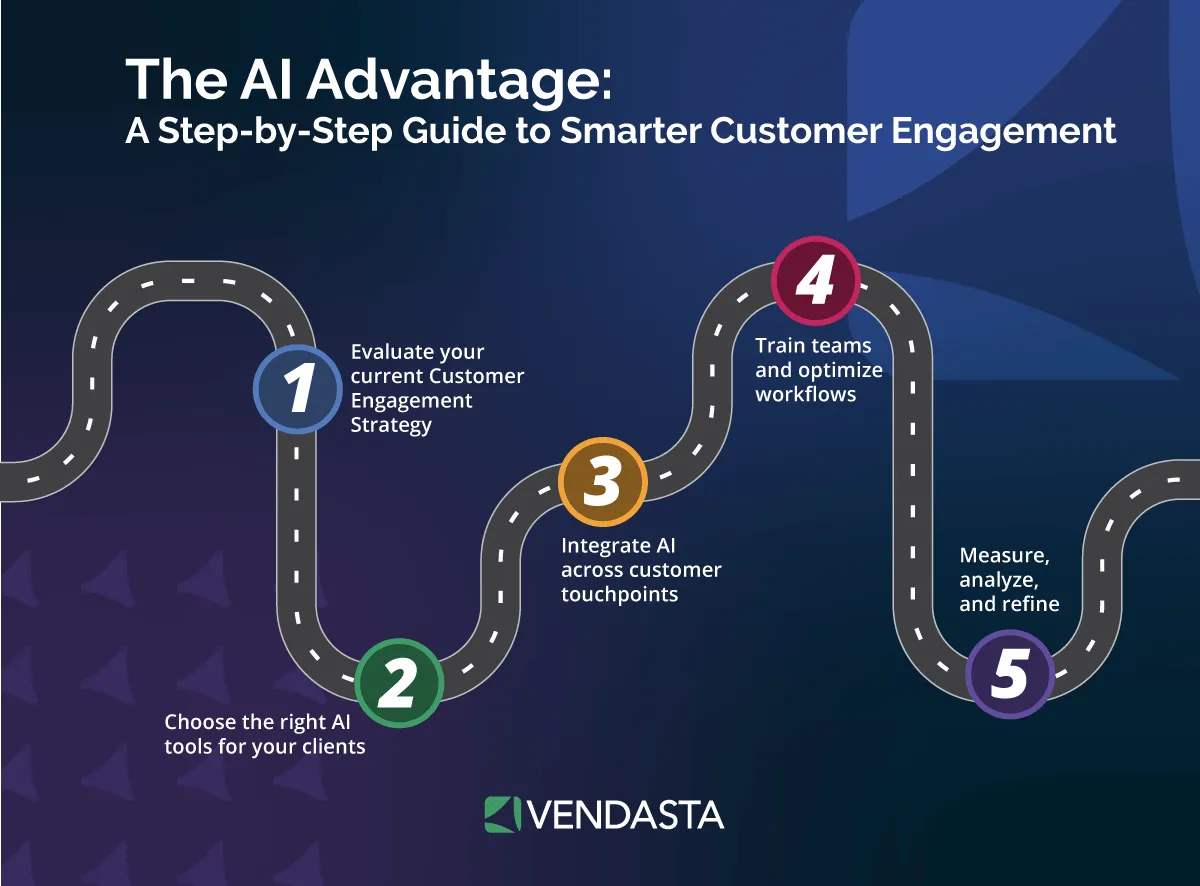
Improved Forecasting Accuracy
Lead scores don’t just prioritize outreach—they correlate with business metrics like ARR, MRR, and deal size to predict pipeline health 6–12 months into the future. For agencies managing clients with longer enterprise sales cycles, this forecasting capability is especially valuable.
Enhanced Sales Efficiency
Wasting time on unqualified leads is a common pain point for sales teams. With AI lead scoring, reps can instantly identify and prioritize leads with the highest conversion potential—cutting down on cold outreach and focusing efforts where they matter most.
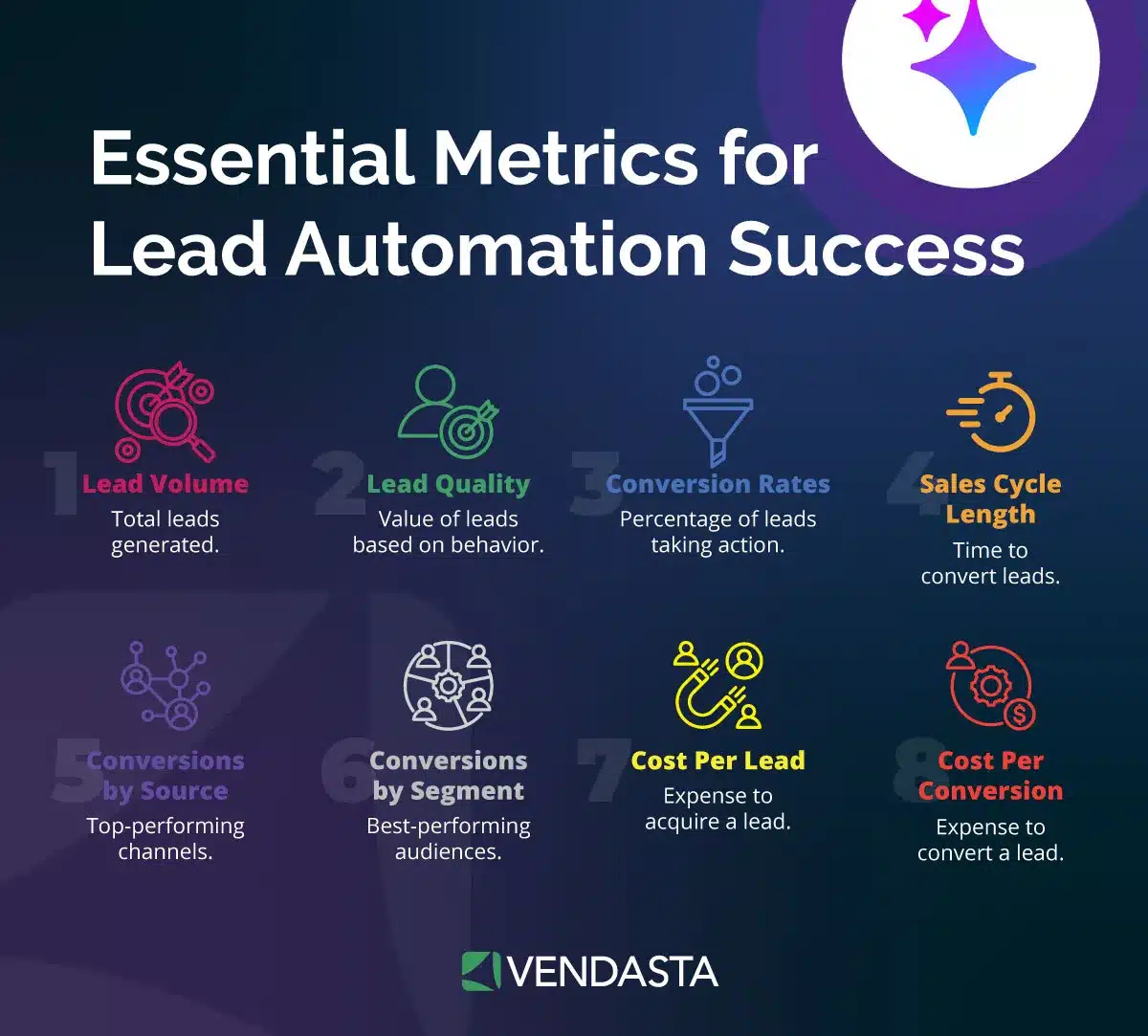
This level of lead automation doesn’t just improve speed; it significantly boosts conversion rates and shortens the sales cycle. When it comes to measuring lead automation success, there are several key metrics to track:
Pairing AI lead scoring with AI CRM tools helps automate follow-ups, personalize outreach, and track engagement—turning once-manual tasks into a streamlined, scalable process.
Dynamic Adaptation
Buyer behaviors change all the time. What worked last quarter may not resonate today. That’s why dynamic adaptation is one of AI’s biggest strengths. As new data comes in, AI models adjust scoring criteria in real-time—ensuring your lead scoring system is always aligned with the current market.
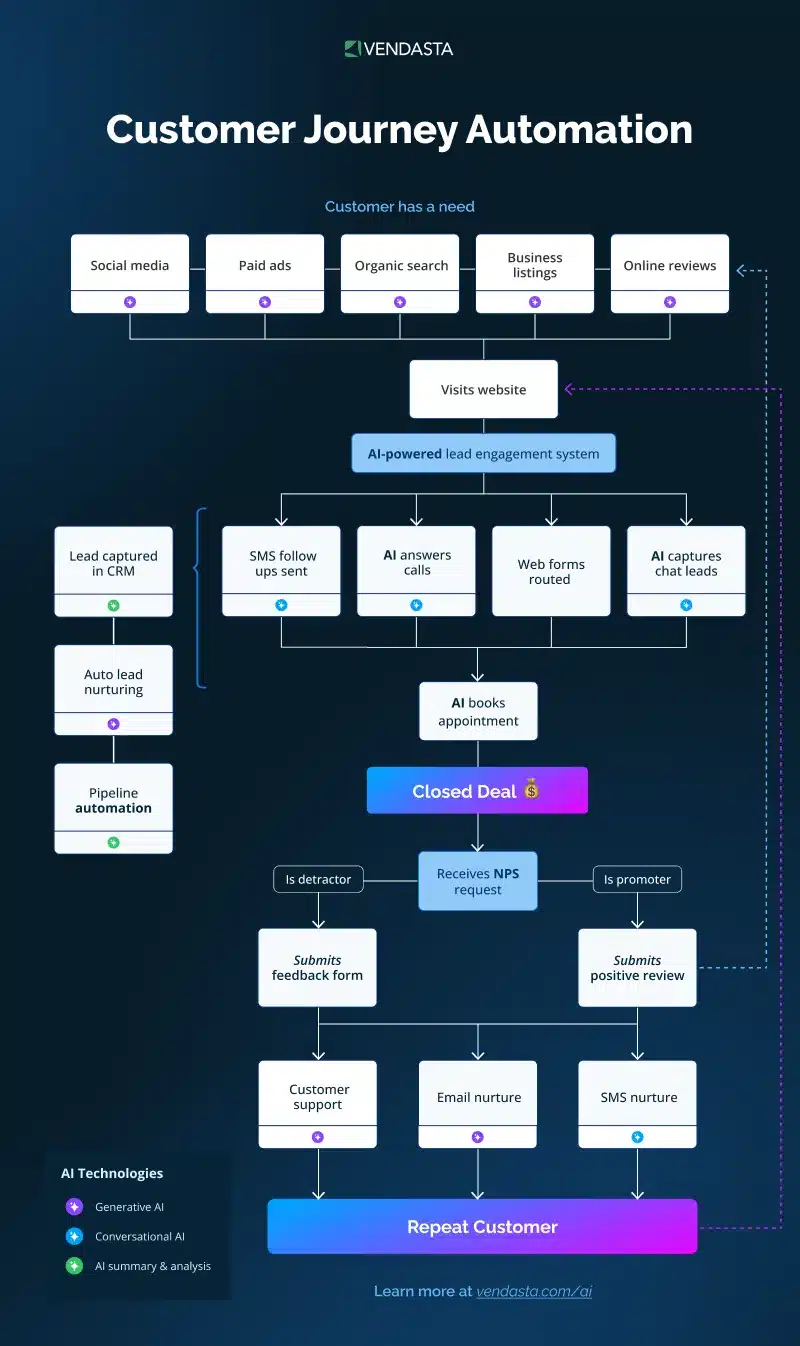
This adaptability also supports advanced customer journey automation, allowing you to deliver the right message to the right lead at the right time.
Scalability
Whether your clients are small local businesses or scaling enterprises, AI lead scoring can grow with them. AI systems handle high volumes of data and leads without breaking a sweat. This makes them perfect if you manage multiple client accounts or fast-growing pipelines.
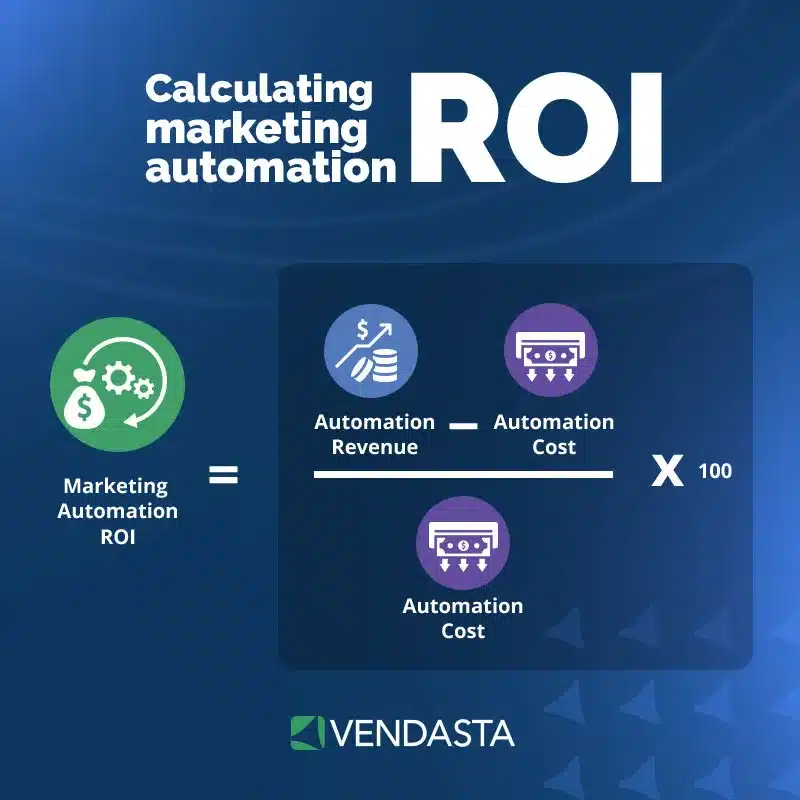
When paired with comprehensive AI marketing automation, AI lead scoring becomes part of a larger strategy that supports AI-powered customer acquisition and retention at scale. Here is a formula to keep tabs on your marketing automation ROI:
How AI Lead Scoring Works (Step-by-Step)
AI lead scoring follows a systematic process that turns raw data into actionable sales intelligence. Here is a breakdown of each phase.
Phase 1: Data Collection and Integration
The process begins with consolidating data from multiple sources: CRM systems, marketing automation platforms, website analytics, social media, chatbots, and third-party intent data providers. This includes:
- Demographic data: Age, job title, company size, location
- Firmographic data: Industry, revenue, employee count, technology stack (technographics)
- Behavioral data: Website visits, content downloads, email engagement, social media interactions
- Engagement data: Webinar attendance, demo requests, pricing page visits, time on key pages
- Intent data: Third-party signals indicating a lead is actively researching solutions in your category
The more data sources you integrate, the more accurate and valuable the predictions become. A robust CRM platform acts as the central hub where all of this information converges.
Phase 2: Data Cleaning and Feature Engineering
Raw data alone doesn’t tell the full story. Before training a model, the data goes through two critical processes:
- Data cleaning removes duplicates, inconsistencies, incomplete records, and outliers that could distort the model’s learning.
- Feature engineering transforms raw data into meaningful indicators that the model can actually learn from. For example:
- Raw data: “time spent on website” → Feature: “lead engagement score”
- Raw data: “number of emails opened” → Feature: “email engagement rate over 30 days”
- Raw data: “visited pricing page” → Feature: “high-intent page visit flag”
This step ensures the model interprets data in a way that aligns with your actual sales goals and buyer journey.
Phase 3: Model Training
With clean, engineered data, it’s time to train the machine learning model. This involves feeding the algorithm historical data—specifically, which leads converted, how long it took, and what behaviors they exhibited before converting.
The model learns to recognize the patterns and correlations most predictive of conversion. Common algorithms used here include Logistic Regression, Random Forests, Gradient Boosting (XGBoost), and Neural Networks (covered in detail below).
Phase 4: Lead Scoring and Prioritization
Once trained, the model analyzes incoming leads and assigns each a score—typically between 0 and 100—representing their likelihood to convert. This score updates in real time as new behavioral data comes in.
High-scoring leads are fast-tracked to sales for immediate outreach. Lower-scoring leads enter nurture sequences. Leads that trigger negative signals (see Negative Lead Scoring below) are automatically downranked or flagged for re-routing.
Phase 5: Continuous Learning and Optimization
AI lead scoring models are not static. As more leads enter the system and their outcomes are tracked (converted or not, and at what deal value), the model continuously adjusts its predictions—becoming more accurate over time.
This is the fundamental advantage over rule-based systems: the AI learns from reality, not from assumptions.
The “Black Box” Problem: Why Your Sales Team Needs Explainable AI (XAI)
Traditional AI models are often criticized for being a “black box”—you feed in data, and a score comes out, but the logic remains hidden. For a sales rep, a high score without context is just a number. Explainable AI (XAI) changes this by providing a “window” into the algorithm’s decision-making process.
Understanding “Reason Codes” and Influencing Factors
XAI doesn’t just deliver a score; it delivers Reason Codes. These are the specific behavioral and demographic “why” signals that influenced the lead’s current ranking.
Instead of seeing a lead with a score of 88, your sales team sees:
- Score: 88
- Top Positive Factor: Visited “Enterprise Pricing” page 3 times in 48 hours.
- Top Positive Factor: Job title matches “VP of Marketing” (Ideal Customer Profile).
- Top Negative Factor: Company size is below 50 employees (-10 points).
The Strategic Benefits of XAI for Agencies
For a marketing agency, transparency is a competitive advantage. When you can explain the “how” behind the leads you deliver, you build deeper trust with your clients.
- Trust and Adoption: When reps see the logic (e.g., “This lead is hot because they downloaded the ROI calculator”), they are 40% more likely to prioritize that lead immediately.
- Better Sales Conversations: Knowing the influencing factors allows a rep to personalize their opening line. “I saw you were looking at our ROI calculator” is a much stronger start than a generic “Just checking in.”
- Bias Detection: XAI allows you to audit your model. If the AI is accidentally over-weighting a specific industry that actually has a low $LTV$ (Lifetime Value), XAI makes that pattern visible so you can adjust the model.
- Human-in-the-Loop Validation: By surfacing the “Reason Codes,” you allow your team to validate the AI. If the AI scores a lead high based on an accidental click-loop, a human can quickly spot the anomaly and override it.
Step-by-Step AI Lead Scoring Implementation Guide
AI lead scoring is an essential part of AI lead generation.
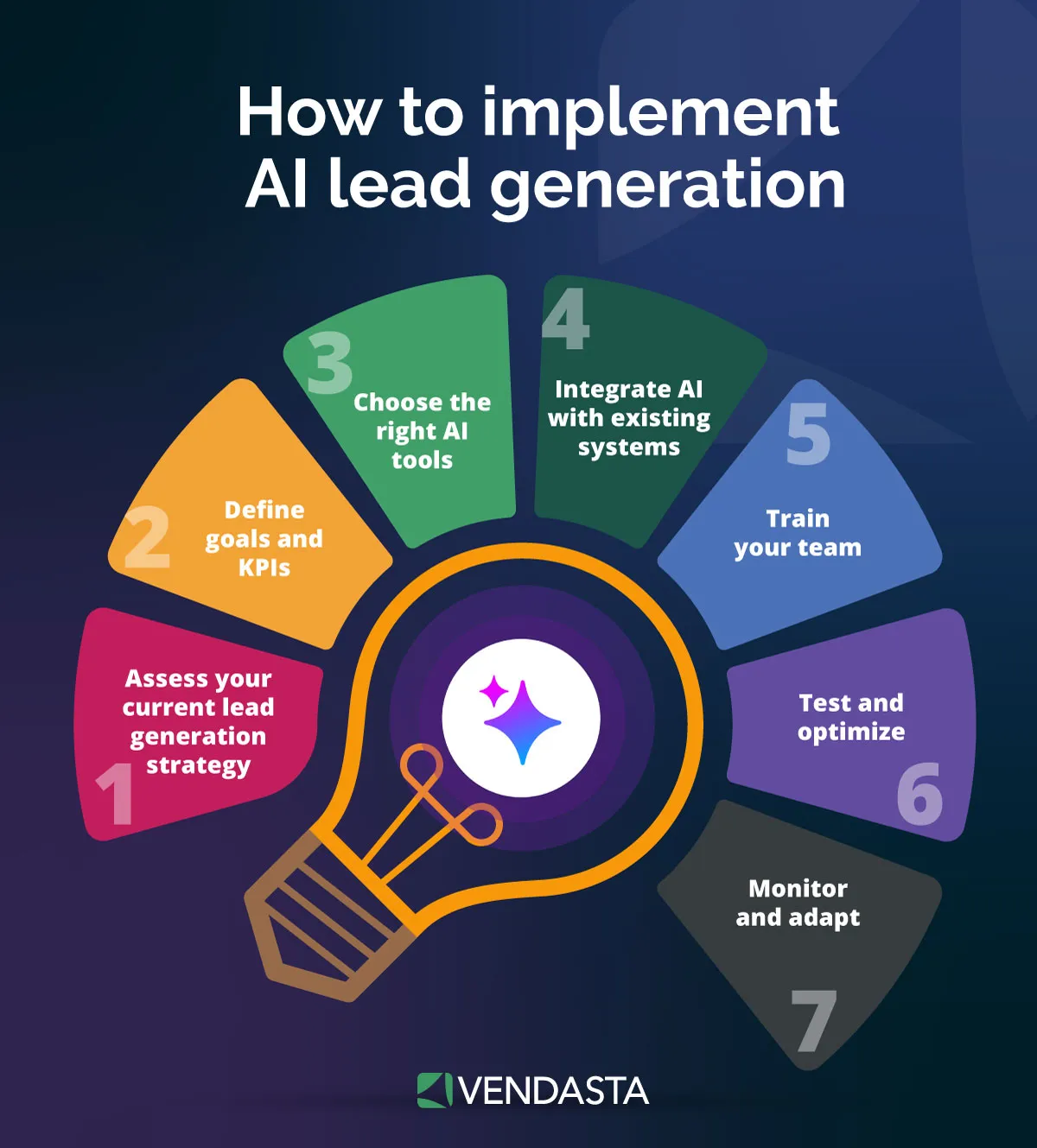
Implementing AI lead scoring can transform how your agency helps clients qualify, prioritize, and convert leads. But to get it right, you need a clear, structured approach that aligns with your tech stack, data readiness, and sales goals.
Here’s a step-by-step breakdown to guide your implementation—from assessing readiness to continuous optimization.
1. Assess Readiness
Before diving into AI lead scoring, start with a full audit of your existing setup:
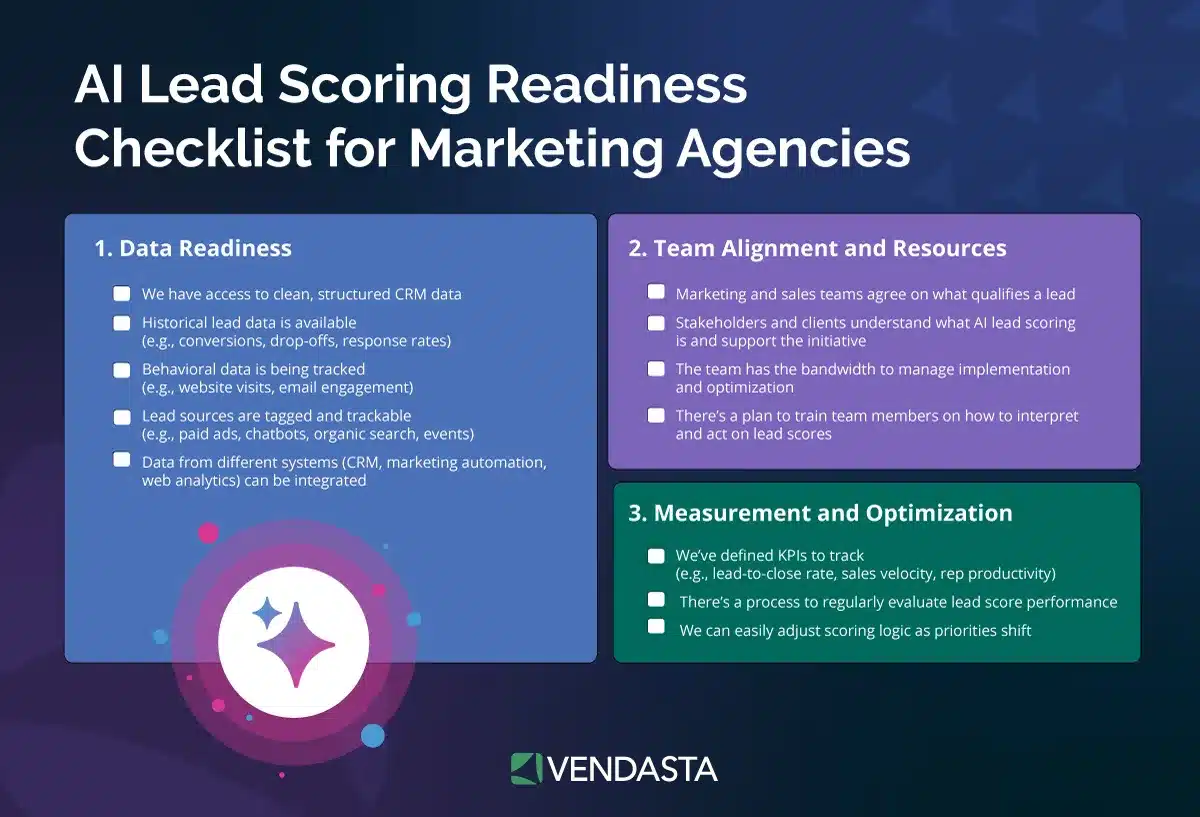
With the right foundation, AI marketing tools, and process, AI lead scoring can be a high-impact upgrade to your agency’s sales strategy—making lead qualification faster, smarter, and more scalable.
2. Choose the Right Tool
Not all AI lead scoring tools are created equal. Choose one that:
- Has seamless integrations
- Offers pre-built scoring capabilities
- Allows customization based on your client’s unique buyer journey
Here are three standout options to consider:
Vendasta
Best For: Marketing agencies serving local businesses and SMB clients.
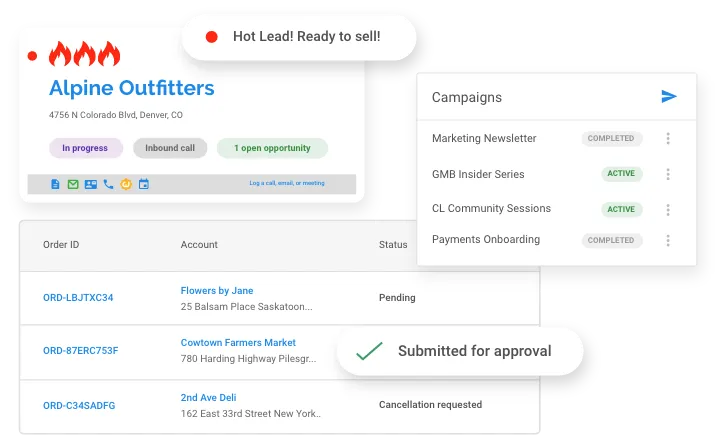
Key Features:
- Fully integrated CRM platform with built-in AI lead scoring
- White-label ready, so agencies can offer lead scoring as part of their own branded solution
- Customizable scoring logic based on buyer profile, engagement signals, and intent
- No coding or AI expertise required—adjust scores through a guided interface
- Syncs seamlessly with marketing automation, Smart Lists, and sales workflows
Why It Works:
Vendasta is purpose-built for marketing agencies managing multiple SMB clients. It enables you to deliver enterprise-grade AI lead scoring as a white-label service—without the need for custom development or additional staff. If you’re looking to scale your agency’s value proposition and help clients close more deals, Vendasta is a smart, scalable choice.
Salesforce Einstein
Best For: Medium to large enterprises using Salesforce as their CRM.
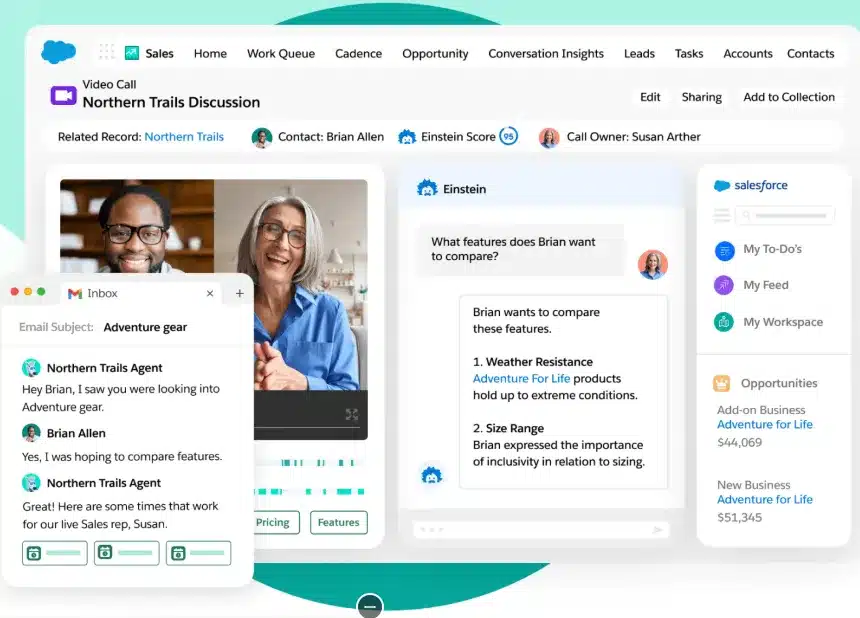
Key Features:
- Natively integrated into Salesforce Sales Cloud, making adoption seamless for existing users
- Uses machine learning to automatically analyze past deals and surface the characteristics of high-converting leads
- Delivers predictive lead scores directly inside lead and contact records
- Supports advanced reporting and dashboards for sales operations teams
Why It Works:
Salesforce Einstein is ideal for organizations with deep data histories and complex sales pipelines. Its powerful AI capabilities help enterprise sales teams prioritize leads at scale and personalize outreach based on real-time insights.
Forwrd.AI
Best For: Startups and fast-scaling enterprises looking for plug-and-play AI.
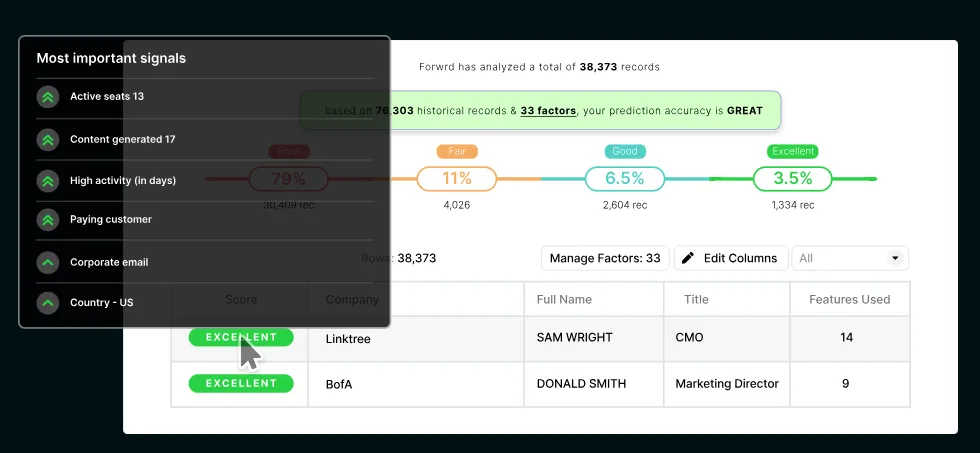
Key Features:
- No-code setup, designed for non-technical teams
- Prebuilt predictive models tailored to specific industries
- Integrates with popular CRMs like HubSpot, Salesforce, and Pipedrive
- Offers intent-based scoring, taking into account behavioral signals from across the funnel
Why It Works:
Forwrd.AI is a great choice for lean teams that need enterprise-grade AI without the heavy lift. It’s particularly valuable for B2B startups that want to scale fast and intelligently prioritize early leads without hiring a data science team.
3. Prepare and Organize Your Data
Use this checklist to ensure your data is clean, complete, and ready for AI-powered lead scoring:
- Identify key data sources
- Remove duplicate contacts and company records
- Standardize formatting (e.g., phone numbers, capitalization, date formats)
- Fill in missing essential fields (e.g., name, email, industry, lead source)
- Archive or delete inactive or outdated leads
- Automate syncing between CRM, marketing tools, and analytics platforms
- Schedule regular data cleansing to maintain accuracy over time
4. Train and Customize the AI Model
Now it’s time to tailor the model to fit your client’s ideal customer profile (ICP):
- Customize scoring logic around key buyer intent signals
- Use historical data to train machine learning models—especially if the platform supports it
5. Activate Scoring and Prioritize
Once the model is set, activate it within your CRM or automation tools:
- Use lead scores to build Smart Lists
- Trigger automated email cadences for different score ranges
- Assign tasks and prioritize high-score leads for fast follow-up
6. Monitor, Test, and Optimize
Don’t “set it and forget it.” Monitor how well the AI lead scoring model is performing.
Here’s a list of essential questions every marketing agency should ask to assess and optimize their AI lead scoring strategy:
Are we tracking the right engagement signals (e.g., page visits, email opens, ad clicks)?
The more relevant the signals, the more accurate the scoring.
Are leads from all sources (ads, forms, referrals, events) being captured and scored?
Consistency across all lead channels ensures no valuable leads slip through the cracks.
Is the lead scoring model correctly identifying buyer intent based on behavior?
Look for patterns like repeated site visits, content downloads, or time spent on key pages.
What percentage of leads in each score tier (hot, warm, cold) are converting?
Use this to validate your score thresholds and segmentation.
Are high-scoring leads converting at higher rates than low-scoring ones?
This is the ultimate test of your model’s accuracy. If not, it may be time to revisit your scoring logic or retrain your model.
As market conditions and client goals evolve, continue adjusting the model. Regular performance reviews will keep your AI lead scoring strategy sharp.
Challenges and Considerations
First things first, following client acquisition best practices is essential for success.
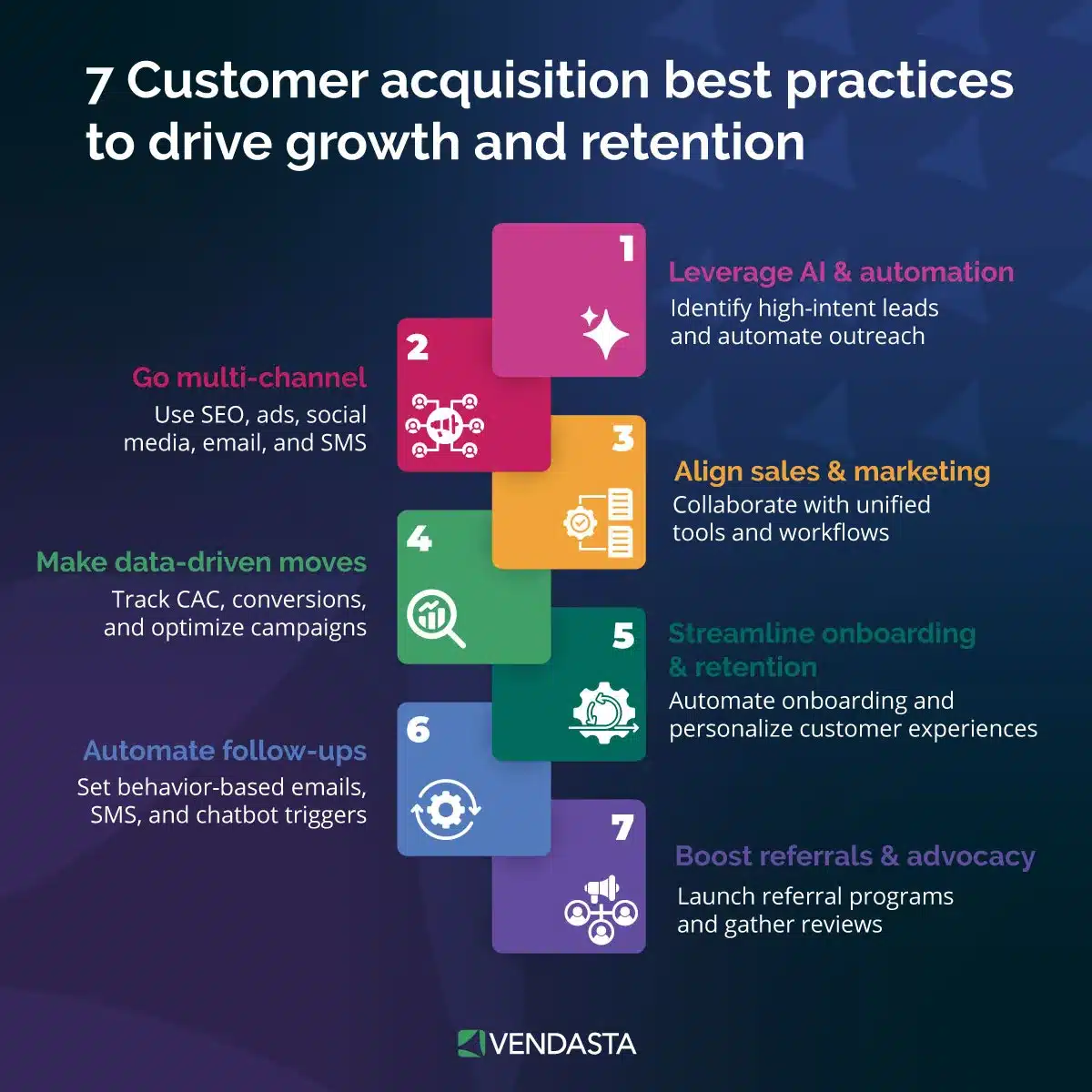
Next, it’s worth keeping the following challenges in mind.
Data Privacy and Compliance
AI lead scoring relies on collecting and analyzing a wide range of data—demographic, behavioral, and sometimes third-party intent signals. This makes data privacy and compliance a top priority.
- Regulatory requirements like GDPR, CCPA, and Canada’s PIPEDA govern how personal data is collected, stored, and used.
- Ensure that lead data is obtained with proper consent and that storage practices are secure and transparent.
- Review your clients’ privacy policies and ensure any AI-powered platforms you use are compliant with current regulations.
Interpretability
One of the most common concerns with AI lead scoring is its “black box” nature—decisions are made by the algorithm, but it’s not always clear why.
For agencies working with SMB clients, this lack of transparency can lead to confusion or distrust, especially if a high-potential lead receives a low score (or vice versa).
To address this:
- Choose tools that offer explainable AI features—such as highlighting the top attributes that influenced each lead score.
- Align scoring models with clearly defined buyer signals (e.g., email opens, pricing page visits) so they’re easier to explain to clients.
- Create a scoring logic summary or visual map to help sales teams understand how scores are calculated.
Vendasta’s CRM, for example, allows you to set and adjust scoring criteria directly—giving your agency full visibility into what drives each score.
Change Management
Adopting AI lead scoring often requires a cultural shift—especially if your client’s team is used to manual lead qualification or gut-based selling.
To ensure a smooth transition:
- Train sales and marketing teams on how to use and trust the lead scoring system.
- Share early wins—like faster conversions or higher engagement from high-scoring leads—to build confidence.
- Address concerns head-on, especially from reps who may feel AI is replacing their judgment rather than supporting it.
- Implement the system in phases, starting with a pilot group or campaign to test and learn before scaling.
Yes, AI lead scoring requires upfront effort, thoughtful integration, and buy-in from multiple stakeholders. But with better data governance, transparent decision-making, and strong change management, your agency can unlock the full potential of AI-driven sales enablement—for every client you serve.
AI Lead Scoring with Vendasta
Here are top 5 reasons why Vendasta is the top choice CRM for agencies:
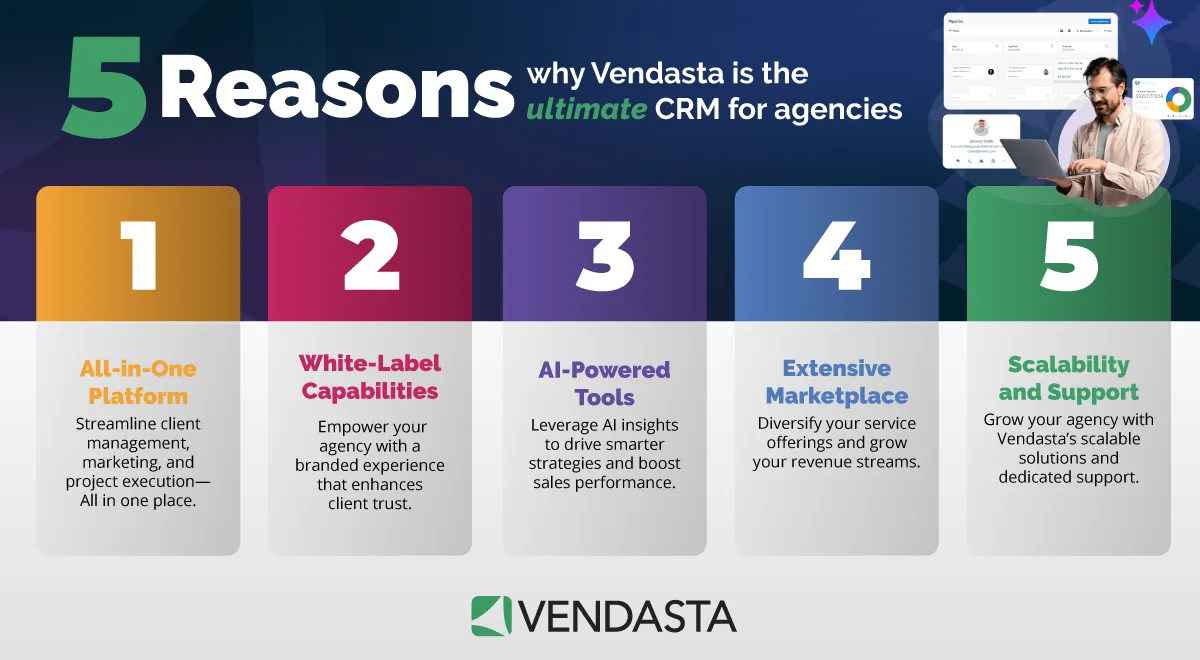
Let’s take a deeper dive into how Vendasta’s CRM empowers AI lead scoring.
Built for Sales Efficiency
Vendasta’s AI lead scoring is purpose-built to help sales reps focus where it counts: on leads that are most likely to convert.
By analyzing both buyer profile fit and engagement behavior, the platform surfaces high-potential prospects at the top of your pipeline—empowering reps to:
- Prioritize outreach based on conversion likelihood
- Increase productivity by spending less time chasing cold leads
- Shorten the sales cycle with better timing and targeting
It’s a powerful way to streamline lead management and improve close rates across client accounts.
Customizable Scoring Criteria
Every client is different—and Vendasta gives agencies the flexibility to customize scoring logic for both contacts and companies.
You can define your own positive and negative scoring rules based on:
- Buyer profile fit: business size, industry, location, role
- Buyer intent signals: website visits, email engagement, content interactions
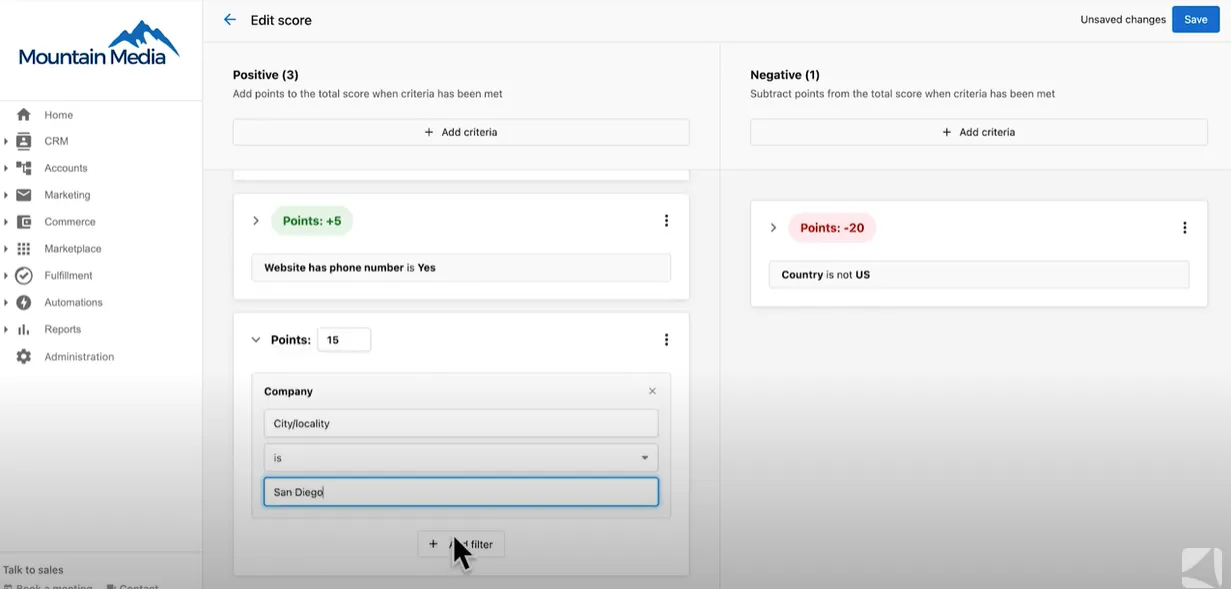
This allows you to tailor scoring models around each client’s unique Ideal Customer Profile (ICP), ensuring the most relevant leads rise to the top.
Pro Tip: Watch this video that explains how Vendasta’s AI lead scoring works:
Guided Setup and Real-Time Visibility
No data science team? No problem. Vendasta’s lead scoring tool is designed for ease of use. There’s no need to train complex AI models or write custom code—Vendasta’s AI lead scoring is easy to set up through a guided interface in the Partner Center.
Once configured, lead scores update in real-time and appear instantly within the CRM, giving your sales team immediate access to actionable insights.
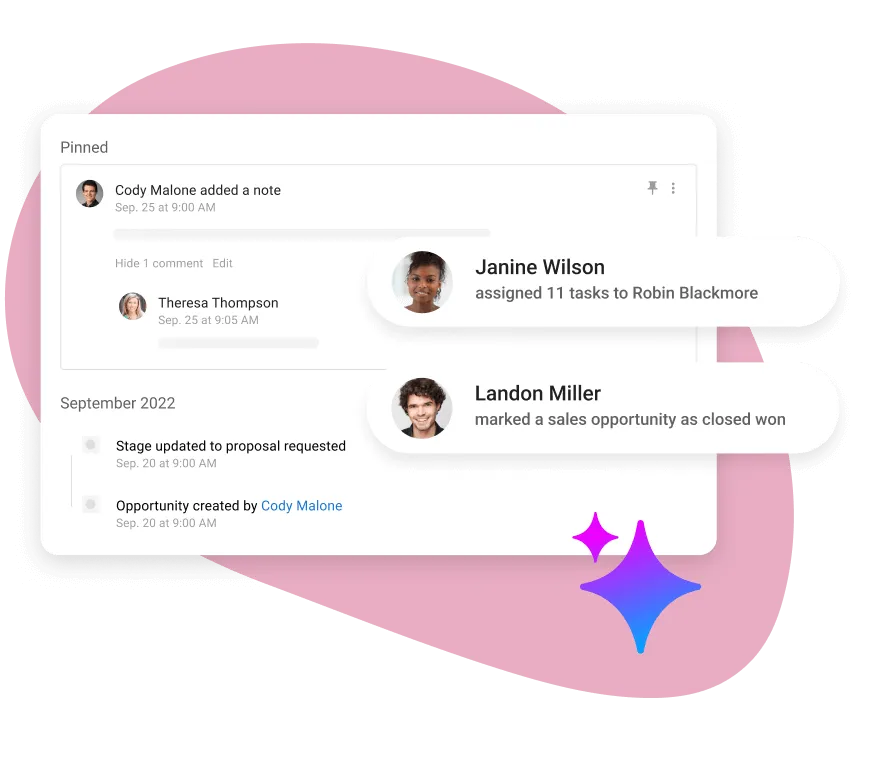
You can launch lead scoring for a client in minutes—and continue to refine it over time.
Integrates with AI Workforce and Automation
Vendasta’s AI lead scoring works hand-in-hand with automation tools to make targeted outreach effortless and effective. By assigning real-time scores based on buyer intent and profile fit, the system helps you instantly identify which leads are ready to convert—and which need nurturing.
With Smart Lists, you can automatically group contacts based on their lead score and behavior. These lists dynamically update as new data comes in, so if a lead engages with an email, visits a key webpage, or reaches a scoring threshold, they’ll be added to the right list without manual effort.
Once your Smart Lists are set, simply connect them to SMS or email campaigns. Whether you’re sending promotions, onboarding sequences, or re-engagement messages, you can ensure the right content goes to the right people at the right time.
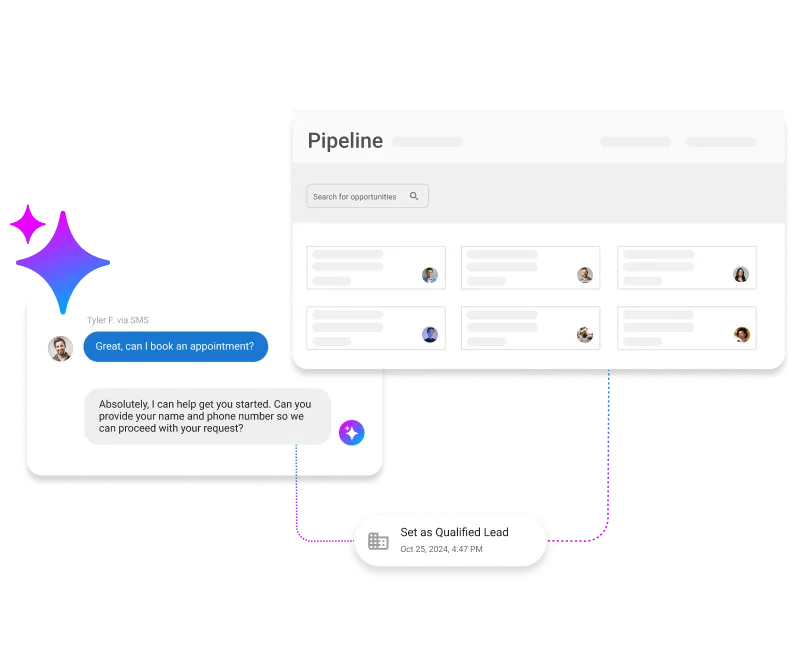
Best of all, every interaction—opens, clicks, replies—is tracked in the CRM, giving your team full visibility into what’s working and where to optimize.
Future Trends in AI Lead Scoring
As AI technology continues to evolve, so does the potential of AI lead scoring to drive smarter, faster, and more personalized sales strategies.
Here’s what’s next in the world of AI-powered lead prioritization.
Advancements in Machine Learning Algorithms
The backbone of AI lead scoring is machine learning—and it’s getting smarter. New algorithms are improving the accuracy and predictive power of lead scoring models by factoring in more complex data patterns and adjusting in real-time.
These models can now incorporate unstructured data like call transcripts, social media interactions, and even sentiment analysis, delivering a more holistic view of lead intent.
As algorithms evolve, AI lead scoring will become even more precise—helping agencies deliver higher-converting leads to their clients and optimize their marketing strategies with greater confidence.
Integration with Other AI-Powered Sales Tools
AI lead scoring is no longer a standalone tool. It’s increasingly being integrated with a broader ecosystem of AI-powered sales solutions, such as:
- AI chatbots that qualify leads in real-time.
- Predictive analytics that forecast revenue.
- AI-powered CRM that triggers personalized outreach the moment a lead reaches a scoring threshold.
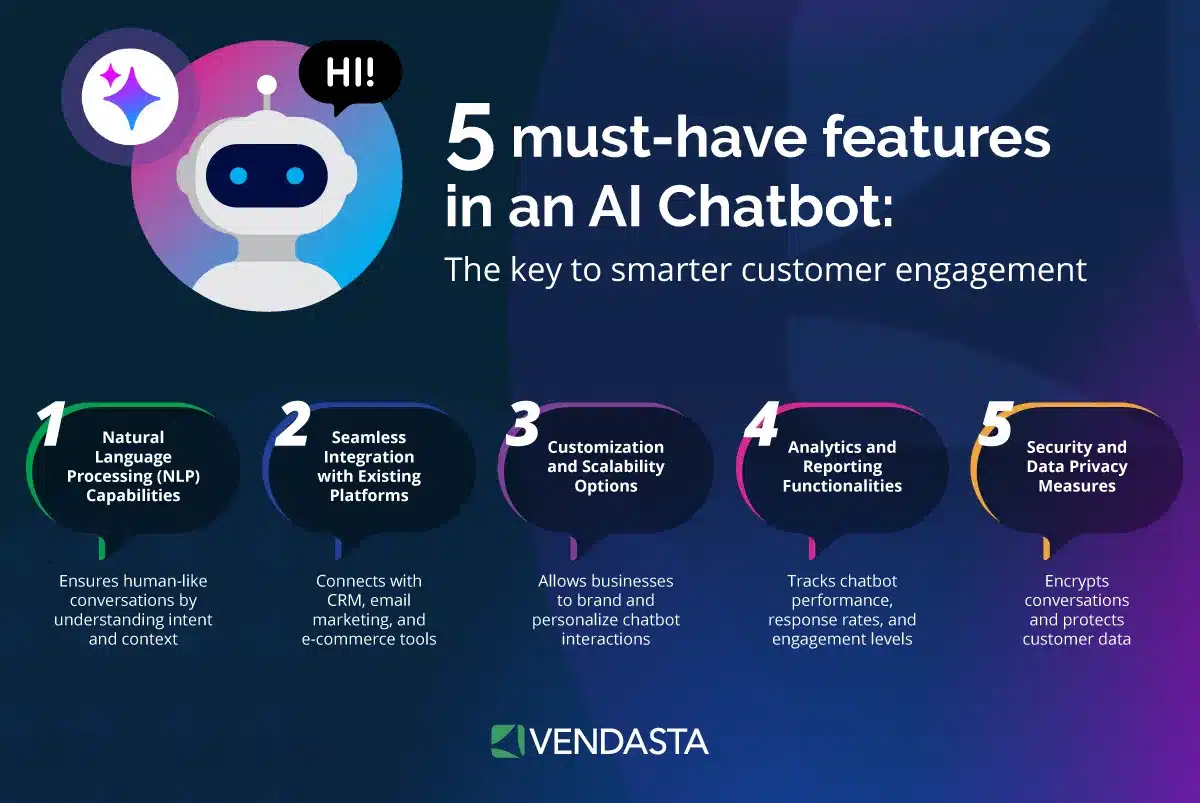
This creates an end-to-end sales system where data flows between tools, automations are triggered instantly, and no opportunity is missed. For agencies managing multiple clients, this level of integration means faster workflows and smarter, more consistent outcomes.
Personalization and Customer Experience
Today’s buyers expect personalized, timely communication. AI lead scoring plays a major role in delivering it.
By identifying exactly where a lead is in the customer journey and how engaged they are, scoring models enable agencies to tailor outreach, messaging, and offers to each individual’s needs.
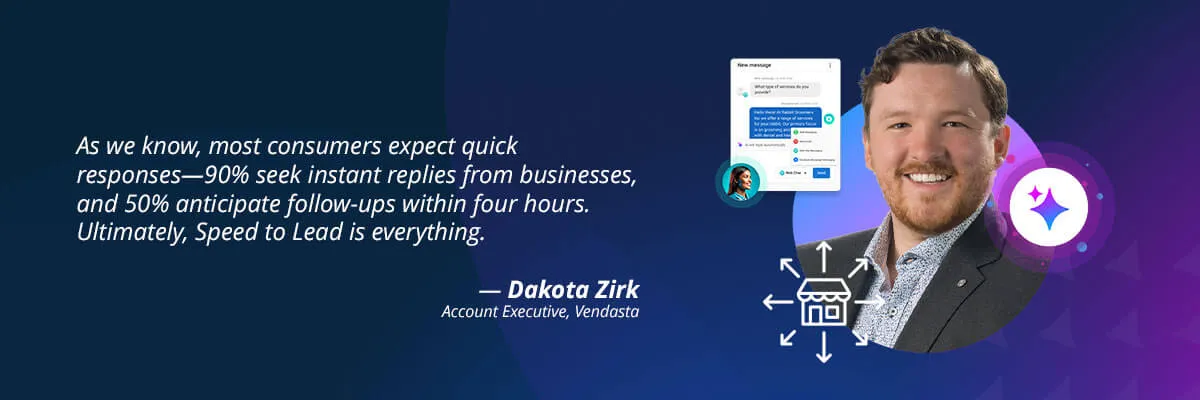
For example, a lead showing strong buying signals can be fast-tracked to a sales rep, while a lower-scoring contact can enter a nurture sequence filled with relevant educational content.
This intent-driven personalization not only boosts engagement but also enhances the overall customer experience—making your agency a more strategic partner in your clients’ growth.
Unlock Smarter Selling with AI Lead Scoring
In a world where every lead counts, AI lead scoring gives you and your clients a powerful edge. By using real-time data and predictive modeling, AI lead scoring automatically ranks leads based on their likelihood to convert—so sales teams can focus on the prospects that matter most. It’s not just about working faster; it’s about working smarter.
Implementing AI lead scoring doesn’t have to be complicated. It starts with assessing data readiness—making sure your CRM is clean, and your lead engagement data is trackable.
From there, selecting the right tool is key. Platforms like Vendasta make it easy to customize scoring logic without any coding, using the guided setup to define rules around profile fit and buyer intent.
Once activated, lead scores populate instantly within the CRM, allowing sales teams to build Smart Lists, prioritize outreach, and trigger automations based on score thresholds. And with ongoing optimization, your scoring model continues to learn and improve over time—ensuring your sales strategy stays aligned with evolving customer behavior.
Vendasta takes AI lead scoring to the next level by offering a white-label-ready solution built specifically for agencies. With customizable scoring, real-time visibility, and seamless automation, it empowers you to deliver smarter, scalable sales solutions for every client. Request a demo today!
AI Lead Scoring FAQs
1. What types of data are most important for AI lead scoring?
AI lead scoring models rely on three primary types of data:
- Demographic data (e.g., job title, email address type, contact info)
- Firmographic data (e.g., company size, industry, location)
- Behavioral data (e.g., email engagement, website visits, content downloads)
The more relevant and accurate your data, the more precise your lead scoring model will be. Behavioral data is especially powerful, as it provides real-time insight into buyer intent.
2. How long does it take to see results from AI lead scoring implementation?
Most agencies begin seeing improvements in lead prioritization and conversion rates within 30 to 90 days of implementing AI lead scoring. The timeline depends on factors like data quality, CRM integration, and how quickly the sales team adopts the insights into their workflows.
3. What are the costs associated with implementing AI lead scoring?
Costs can vary based on the platform, but typically include:
- Software subscription or platform fees
- Initial setup and training
- Ongoing monitoring and optimization
Fortunately, tools like Vendasta’s CRM include built-in AI lead scoring, reducing the need for expensive third-party solutions or complex development. And the investment often pays for itself through increased sales efficiency and higher conversion rates.
4. How does AI lead scoring handle new or unseen lead profiles?
AI models use machine learning to generalize patterns from historical data. So even if a new lead doesn’t match previous profiles exactly, the model can assess similar behaviors and attributes to predict conversion likelihood. As more data is collected, the model becomes better at handling these edge cases.
5. How is AI lead scoring different from rule-based lead scoring?
Traditional rule-based lead scoring uses static criteria set by humans—like “+10 points for job title” or “+5 for webinar attendance.” AI lead scoring, on the other hand, is dynamic, predictive, and data-driven. It continuously learns from real outcomes (like who actually converted) and adjusts scores based on patterns, not guesses.
6. What makes a lead scoring model “accurate”?
Accuracy is measured using performance metrics like:
- Precision (how many high-score leads actually converted)
- Recall (how many converting leads were correctly identified)
- Conversion uplift (how much better scoring performs vs. a control group)
Here’s a formula to assess conversion uplift:
Conversion Uplift (%) = [(Conversion rate of AI-prioritized leads – Conversion rate of baseline leads) / Conversion rate of baseline leads] × 100
Let’s say, your sales team closes 10% of all leads when they don’t use lead scoring.
After implementing AI lead scoring, your reps focus only on the top 30% of leads—and convert 25% of them.
That’s a 150% uplift in conversion rate, thanks to AI helping reps focus on the most promising leads.
7. Can AI lead scoring integrate with my existing CRM and sales tools?
Yes—many platforms, including Vendasta’s CRM, are designed to integrate seamlessly with existing sales and marketing tools. Vendasta’s built-in AI lead scoring is already embedded in the CRM, so you can start scoring leads right away without needing separate software or complicated APIs.
8. How do you know when your AI lead scoring model needs to be updated?
Watch for these signs:
- Declining lead-to-close conversion rates
- Sales teams ignoring or mistrusting scores
- Changes in your Ideal Customer Profile (ICP) or market conditions
Regular audits, feedback from reps, and performance reviews should be part of your ongoing optimization process. Updating your model every quarter—or whenever major changes occur—helps maintain relevance and accuracy.
9. What makes a lead scoring model accurate?
Accuracy is measured using performance metrics including precision (how many high-score leads actually converted), recall (how many converting leads were correctly identified), and conversion uplift (how much better AI-scored leads perform vs. a non-scored baseline).
Conversion Uplift (%) = [(Conversion rate of AI-prioritized leads − Baseline conversion rate) / Baseline conversion rate] × 100
10. What is negative lead scoring in AI?
Negative lead scoring is the practice of using AI to identify signals that indicate a lead is unlikely to convert—and automatically applying score penalties or disqualifications. Examples include competitor domain visits, career-page browsing behavior, bot-like engagement patterns, and extended periods of inactivity. It keeps the sales pipeline clean and prevents reps from wasting time on dead-end leads.