 About Us
 Careers
 Leadership
 Board
Board Newsroom
The power of reviews is tough to deny. Almost 95 percent of customers say they read reviews before buying (Globe Newswire). Many say they’ll read up to 10 reviews before deciding whether to buy. Forty-three percent want to see 100 or more reviews before they believe a product is trustworthy (Search Engine Journal).
It’s clear that reviews matter, and it’s little wonder that people are tempted to buy fake Google reviews.
You and your agency team may even have thought about it at times. Even though reviews are such a powerful tool, but getting customers to leave reviews can be tough. Yet, buying reviews is one of the worst steps you can take.
Why do reviews matter so much that people are willing to take the risks that come with fake online reviews? What consequences will you and your clients face if you buy or post fake reviews? Finally, how can you remove a fake Google review before it can become a problem?
This comprehensive guide has all the answers you’re looking for. Plus, it offers some ideas about what you can do instead.
Boost customer acquisition with AI-powered review management
Can Google Detect Fake Reviews?
Yes, Google uses advanced AI-driven systems to detect fake reviews more efficiently. These automated systems analyze behavioral patterns and other signals to identify and remove reviews that violate Google’s policies.
As AI technology improves, Google has become even faster at detecting and removing fake online reviews.
How Google Detects Fake Reviews
Google’s AI systems are constantly evolving to identify and filter out fake reviews. These systems look for patterns such as similar wording, multiple reviews posted in quick succession, or overly positive language.
Google’s algorithms flag suspicious reviews for further investigation, using real-time AI models to identify fake content and remove it quickly. One article released by Google revealed some insights that really put things into perspective (Google):
- Google blocked 170 million fake reviews in 2023.
- Their new algorithm detects fake reviews with 45% higher accuracy than before.
Why Do Real Reviews Matter for Your Clients?
To understand why some people feel they need to buy fake Google reviews, you only need to look at review statistics. We already noted most people look at several reviews before making a buying decision.
It’s no secret that reviews can and do boost sales. They also improve customer confidence and trust in your clients’ brands.
Quantity and quality of reviews both matter to customers. Positive reviews convince people to buy. Negative reviews make them less likely to buy. Most customers also expressed that there was a threshold where a business became more trustworthy. Average rating and number of reviews both play into customer trust levels.
Customers are also picky about how fresh reviews are. In one study, forty percent of customers said reviews older than a few weeks weren’t relevant anymore (Search Engine Land).
The long and short of all this is your clients need quite a few reviews. They also need to be getting positive reviews on a regular basis. Vendasta’s Customer Voice can help with that. More reviews equal more traffic through the doors. With Customer Voice, your clients can gather authentic reviews via email or text on the sites that matter most, to grow customer loyalty and boost sales.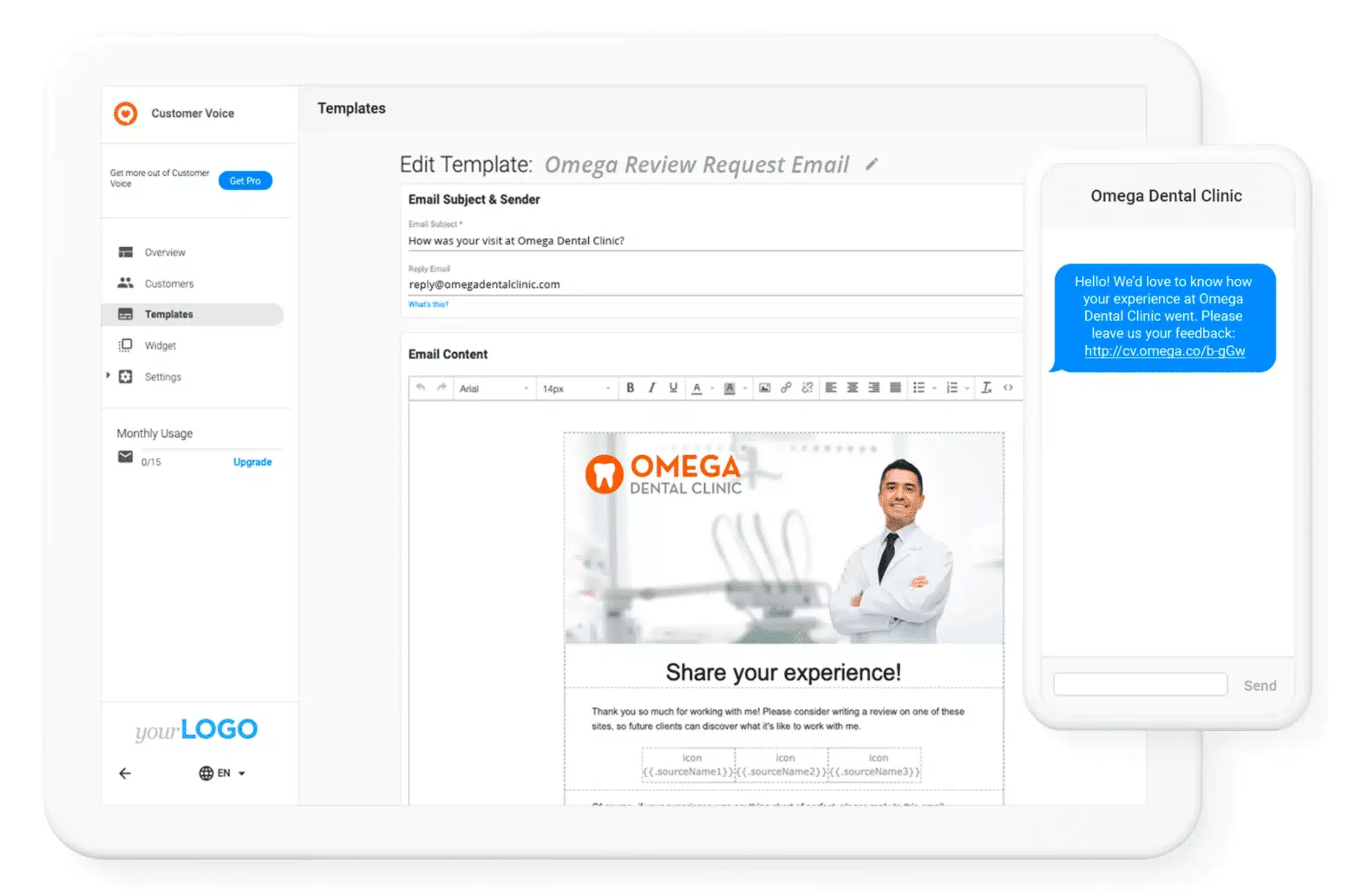
Real Reviews Also Boost SEO
Reviews also help SEO efforts. If you’re implementing SEO for your clients, then reviews are important to you in this way as well.
SEO results take into account social proof, which includes:
- Number of reviews you have
- Average star rating
- Age of reviews
These are all weighed as part of your overall reputation and visibility in search results. The more positive reviews your client has, the bigger the boost to their SEO results. Reviews and ratings can also impact visibility on Google Maps, in the local 3-pack, and more.
Why Would Businesses Buy Fake Google Reviews?
It’s not hard to see that reviews can make a difference to local businesses. This is especially true if they’re just starting out. Business owners need a steady stream of positive reviews to increase visibility and build a solid reputation.
If they don’t have enough reviews online, it might be tough to win over new clients. Fake reviews can seem like a quick fix.
Consequences of Fake Google Reviews
Google takes the issue of false reviews very seriously, and recent regulations, including the FTC’s 2024 Final Rule on Consumer Reviews and Testimonials, have further raised the stakes for businesses that engage in deceptive review practices.
If you or your clients are found using fake reviews, the consequences could be severe, including:
- Removal of the fake Google reviews
- Suspension of the Google Business Profile
- Potential fines and even legal action
How Fake Reviews Are Removed
Google can remove fake reviews in two main ways. The first is through its advanced spam detection filters, which are designed to flag overly positive or suspicious reviews. Other platforms, like Amazon, have similar systems—Amazon alone removed over 200 million fake reviews just in 2022 (CBC).
The second method involves user reporting. Customers can flag reviews they believe are fake, and Google will investigate and decide if removal is necessary.
Over 30% of online reviews are estimated to be completely fake (PR Newswire), with some reports suggesting up to 50% of reviews are at least manipulated in some way or form (WiserNotify).
With nearly 1 in 2 reviews suspected of being fake or manipulated, customers are becoming more skeptical of what they read online. This skepticism can damage a business’s credibility, as potential customers may question the authenticity of even genuine reviews.
Understanding the Current Legal Landscape
With the FTC’s new regulations set to take effect in October 2024, companies face even stricter penalties for manipulating reviews. Under the Final Rule, businesses can be fined thousands. The rule also prohibits practices like buying positive or negative reviews, suppressing honest negative feedback, and posting reviews without disclosing insider relationships.
These consequences highlight the importance of maintaining transparency and authenticity in your client’s online presence. Faking reviews might provide a short-term boost, but the long-term damage to a business’s reputation and legal standing can far outweigh any initial gains.
What Happens If the Client’s Google Business Profile Is Suspended?
Google says they will suspend profiles that violate their guidelines about how to represent the business. Specifically, the Google guidelines ban fraudulent and illegal activities (Google).
To have a profile reinstated, you must submit a reinstatement form (Google). Before you do that, you’ll need to ensure the profile follows the guidelines. If Google suspends your client’s profile over fake reviews, removing them is the first step to getting the profile reinstated.
What happens if Google denies the reinstatement request? Google will allow you to appeal their decision. However, before you do that, make sure you’ve brought the profile back in line with the guidelines entirely to avoid further headache.
Are Fake Google Reviews Illegal?
Google says they will suspend profiles over “fraudulent and illegal activity.” Since profiles can also be suspended over false reviews, you might ask, “Are fake Google reviews illegal?”
The short answer is yes. In the US, fake reviews are against the Federal Trade Commission’s advertising policies. The FTC considers this a form of misleading customers. In the commission’s eyes, fake reviews violate its “truth in advertising” policies.
The FTC has successfully pursued legal action against businesses using fake reviews. In 2022, the FTC reached a multimillion-dollar settlement with a fashion brand. The FTC alleged the company had been falsifying star ratings of its products on its website (FTC).
Earlier, in 2019, the FTC brought a suit against a weight-loss supplement company. They alleged that the company paid for fake reviews on Amazon. The case was later settled out of court (Ars Technica).
How to Detect Fake Google Reviews
Fake reviews can be difficult to spot, but once you know what to look for, it becomes much easier. Aside from the basic tips, like checking the reviewer’s profile and paying attention to poor grammar and punctuation, there are a few more advanced techniques you can use to help identify these pesky fakers:
1. Look for Extreme Language
Overly positive or overly negative reviews are often a giveaway that something isn’t right. Fake reviews tend to exaggerate both the good and the bad, using extreme language such as “best ever” or “worst experience.” Genuine reviews usually fall somewhere in between, balancing the pros and cons.
2. Watch for Patterns in Timing
If you notice a sudden influx of reviews within a short period, this is a big red flag. Often, businesses that engage in unethical practices will purchase a batch of fake reviews at once, leading to a flood of new, suspiciously similar posts. Compare the timeline of the reviews to the actual customer activity during that period.
3. Check the Reviewer’s History
Fake reviewers often create accounts solely to leave one or two reviews. If you notice a profile that has left similar reviews for different businesses or products, it’s likely that the account is involved in a fake review scheme. Similarly, profiles with no activity outside of a single review should raise suspicion.
4. Analyze the Review Content
Fake reviews often use generic or vague phrases without offering specific details. Look for reviews that are light on details or that lack the personal experience you’d expect from a genuine customer interaction. Authentic reviews tend to mention specifics such as staff names, particular services, or detailed experiences with a product.
5. Watch for Suspicious Content
Another common trait of fake reviews is the inclusion of irrelevant information or the mention of a competitor’s product. These reviews are typically written to manipulate a business’s ratings or to sabotage a competitor. If you see reviews that link to external websites or promote other businesses, they’re likely part of a fake review campaign.
6. Check for Bulk Reviews
If a business suddenly gets a large number of reviews within a short timeframe, especially with similar content or tone, it could indicate an attempt to manipulate ratings by purchasing reviews. A genuine review timeline tends to be more spread out.
In most cases, Google will remove fake reviews or users will flag them. You shouldn’t need to do much cleanup for your clients, unless the campaign was a very recent one.
How to Report Fake Google Reviews
Since reviews are powerful tools, businesses sometimes buy fake negative reviews. Instead of bumping up their own star rating, they drag competitors down by spamming them with bad reviews.
You can use the same indicators to spot fake negative reviews. If a competitor is trying to damage your client’s rating, you’ll likely see the same sorts of issues:
- A flurry of reviews in a short window of time.
- Short, poorly written reviews that are light on details.
- Reviewers who copy-and-paste their reviews or have only posted one review.
The good news is you can get fake reviews, both negative and positive, removed. Go through and flag the reviews you suspect are false. Google will review them and, if they agree, remove them pretty quickly.
How to Remove Fake Google Reviews
Removing false Google reviews is always a good idea. Simply flag the review and have Google check it.
Here’s how to flag a review in Google Search:
- On your computer, go to Google.
- Search for your client’s Google Business Profile.
- Click Read Reviews.
- Find the review you’d like to report.
- Click the Info icon.
- Select the type of violation you want to report.
You can also flag a review in the account you manage:
- On your computer, sign in to manage your client’s Business Profile.
- Choose the review you would like to report.
- Open the profile you’d like to manage.
- On the left, in the menu column, click Reviews.
- On the review, click the More icon and select Flag as inappropriate.
Important: Before you ask to remove a review you suspect as being fake, make sure to read Google’s reviews policy.
This article was originally published in January 2023 and updated in September 2024 to include the latest information and insights.
