About Us
 Careers
 Leadership
 Board
Board Newsroom
Customer discovery and buying journeys are changing faster than most businesses can adapt. Traditional search engine optimization was built around a simple model: rank well, earn the click, then convert the visitor on your website. That model is breaking down.
Today, customers increasingly expect immediate, conversational answers. They want to ask a question and get a clear response without navigating multiple pages, filling out forms, or waiting for a callback. Search results alone are no longer enough to win attention or conversions when speed, relevance, and context matter more than ever.
Google’s introduction of Business Agents makes one thing clear: AI is actively participating in the buying journey. AI agents are becoming the new front line of customer engagement, acting as always-on representatives that answer questions, guide decisions, and move customers forward.
This article breaks down what Google Business Agents are, how branded AI agents are changing customer discovery inside search, and what this shift means for businesses that want to stay visible and competitive.
Automate every step of the customer journey with AI employees
TL;DR
- Google Business Agent brings branded, conversational AI directly into Google Search, answering product questions at high-intent moments before a website visit happens.
- Branded AI agents are becoming the first customer touchpoint, raising the stakes for speed, accuracy, and consistency in responses.
- Action to take: Businesses should evaluate whether search-only AI is enough or if a broader AI workforce like Vendasta’s is needed to support engagement across every channel.
What Are Google Business Agents?
AI agents are becoming the new front line of customer engagement, acting as always-on representatives that answer questions, guide decisions, and move customers forward — exactly the role Vendasta’s AI Employees are built to play across every channel, not just search.
A Google Business Agent, launched on January 12, 2026, is a conversational AI experience built directly into Google Search that allows shoppers to chat with a brand in real time.
Instead of clicking through multiple pages, customers can ask questions and receive immediate, conversational answers without leaving the search experience.
At its core, a Google Business Agent acts like a virtual sales associate. It responds in a brand’s voice and uses data from Google Merchant Center along with information from the business’s website to answer common product-related questions. This includes details such as materials, sizing, availability, and usage, helping shoppers move to a purchase decision faster.
As a branded AI agent, the experience can be customized with brand colors, welcome messages, and suggested conversation starters. This helps retailers maintain brand consistency while meeting customers where they already are: inside Google Search.
For businesses, this represents a shift from passive search visibility to active, AI-driven engagement at the moment of intent.
Where Business Agents Appear in the Customer Journey
Google Business Agents are designed to surface during high-intent discovery moments, when shoppers are actively researching a brand or product and moving through an increasingly AI-driven customer journey.
They appear in several key places within the customer journey:
- Shown on merchant brand profiles in Google Search
- Activated when users click the “Chat” option while searching for a brand
- Positioned to answer shopping-related questions during decision-making moments
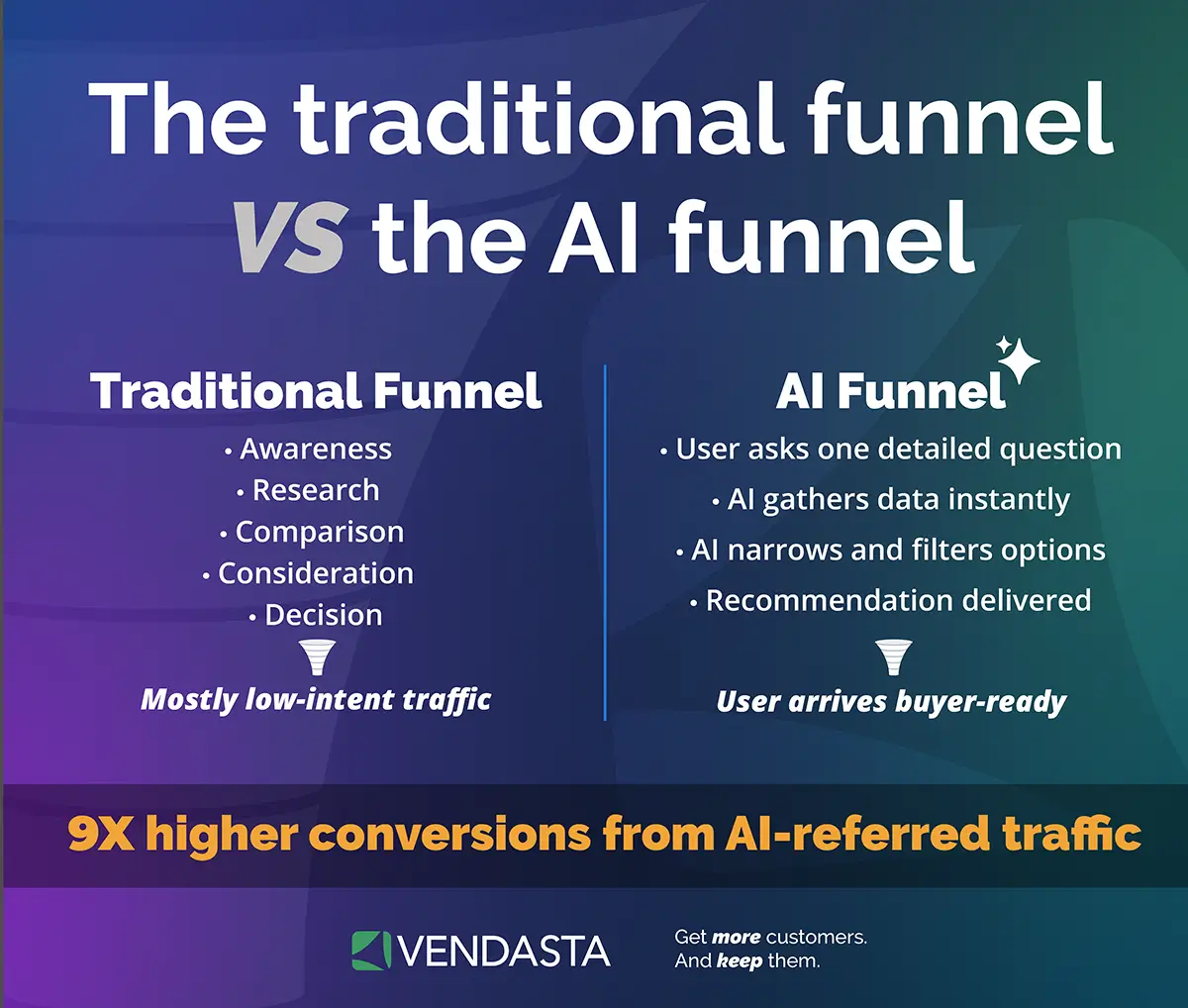
This placement is intentional. Rather than replacing a website visit, a Google business agent often becomes the first interaction a customer has with a brand, shaping early perceptions within the broader AI funnel of discovery, consideration, and conversion.
For example, a shopper might search for a retailer, open the brand profile, and ask a question such as whether a product fits true to size or how many units are needed for a specific project.
Because these interactions happen before a click, branded AI agents are now influencing customer decisions earlier than traditional landing pages or forms ever could. Businesses that provide accurate, timely, and helpful responses through these agents strengthen AI customer engagement and are more likely to move shoppers toward conversion.
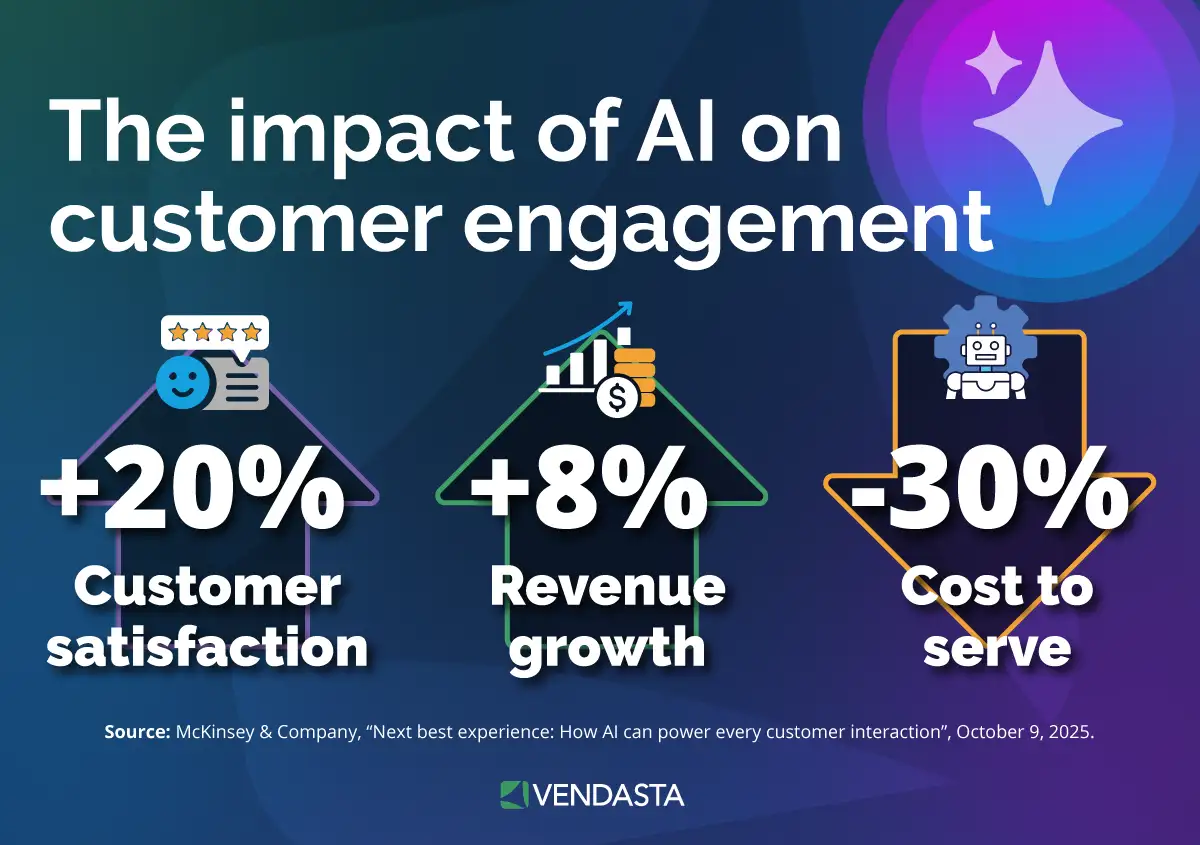
This new reality raises the stakes. If a business is slow to respond, lacks sufficient data, or cannot extend the experience beyond Search, the opportunity can end just as quickly as it begins.
This is why many businesses are looking beyond search-based agents alone and toward more comprehensive approaches to customer journey optimization that support engagement across every touchpoint.
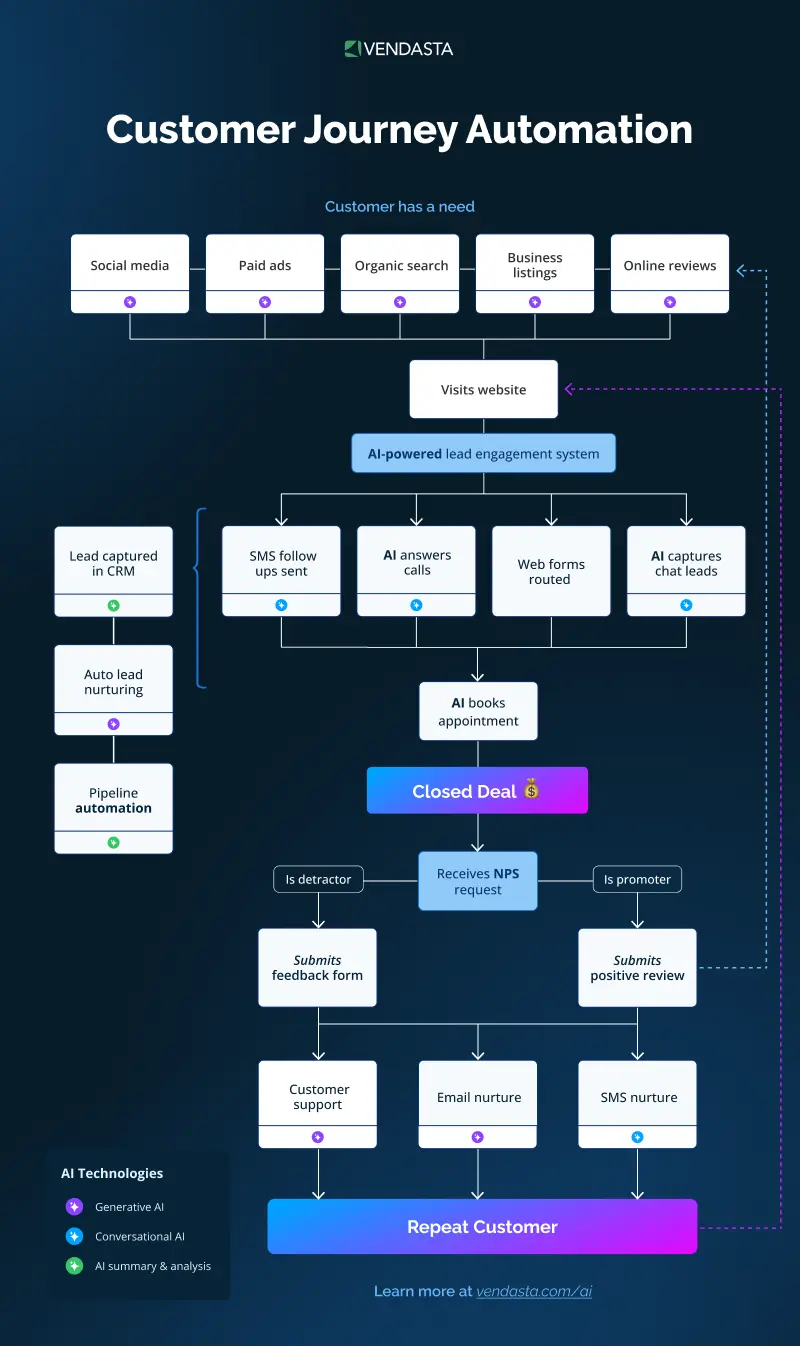
Key Capabilities of Google Business Agents
Google Business Agents are designed to bring conversational, branded experiences directly into Google Search. While the functionality is still evolving, the current and announced capabilities show how Google is positioning branded AI agents as part of the shopping and discovery experience.
Custom Branding and Experience
One of the defining features of a Google Business Agent is the ability to reflect a brand’s identity inside the chat experience. Businesses can tailor how the agent looks and sounds to better align with their brand.
Key customization options include:
- Brand colors and visual styling that match the business’s existing identity
- Custom welcome messages that set expectations and guide customers on how to interact
- Predefined conversation starters that prompt common questions and reduce friction at the start of the chat
These elements help create a more consistent branded AI agent experience, especially during early discovery moments when customers may be interacting with a business for the first time. For retailers, this can improve trust and clarity while keeping users engaged inside the search experience.
Data Sources Powering Responses
The usefulness of a Google Business Agent depends heavily on the data it can access. Today, Google Business Agents rely on a limited but focused set of data sources to generate answers.
These include:
- Google Merchant Center product data, such as pricing, availability, materials, and variants
- Information pulled directly from the brand’s website, which helps answer broader product and policy questions
- Gemini models, which analyze available data and generate conversational responses in natural language
This setup allows branded AI agents to answer common shopping questions accurately, as long as the underlying product and website data are well-maintained.
Features Google Says Are Coming Soon
Google has indicated that Business Agents will expand beyond their current capabilities, with several notable features planned for future releases.
Upcoming enhancements include:
- Training the agent with additional business data, such as brand guidelines, services, and sizing information, to improve accuracy and depth of responses
- Performance insights that help businesses understand how customers interact with the agent and which conversations influence outcomes
- Agentic checkout inside the chat experience, allowing customers to move from questions to purchase without leaving the conversation
These additions point toward a more advanced role for Google Business Agents within the buying journey. As these features roll out, branded AI agents will likely play a larger role in guiding decisions and reducing friction during high-intent moments, especially for ecommerce-focused businesses.
Limitations Businesses Should Understand
While Google Business Agents represent a meaningful step forward in search-based AI engagement, they are not a universal solution. Businesses that consider adding a branded AI agent to their AI marketing strategy should understand where these tools are limited and which use cases they do not fully support.
Strict Eligibility Requirements
Not every business can deploy a Google Business Agent. Access is restricted to retailers that meet specific criteria, which immediately limits AI adoption for many SMBs and partners.
Current requirements include:
- Available only in the US at launch
- A verified Google Merchant Center account
- A minimum of 50 approved product offers
- A claimed and verified brand profile in Google Search
For businesses that do not sell physical products at scale, or for partners supporting diverse client types, these requirements can be a significant barrier. Service businesses, local providers, and B2B organizations often fall outside of this eligibility altogether.
Designed Primarily for Retail and E-commerce
Google Business Agents are purpose-built for retail use cases. Their core functionality centers on answering shopping-related questions tied to products listed in Merchant Center.
This design focus means they work best for:
- Product details such as sizing, materials, and specifications
- Availability, variants, and inventory-related questions
- Purchase-oriented discovery moments
However, they are not built to support service-based or appointment-driven businesses. Industries that rely on consultations, bookings, or ongoing customer relationships gain limited value from a branded AI agent that cannot manage scheduling, follow-ups, or post-purchase engagement.
This also limits the usefulness for franchises, local service providers, and B2B businesses that need consistent experiences across locations or complex sales cycles.
Confined to the Google Search Ecosystem
Another key limitation is where and how Google Business Agents operate.
They are:
- Only available when users actively search for your brand on Google
- Restricted to Google-owned touchpoints, with no presence on websites, phone calls, or messaging channels
- Reactive by design, responding only when a customer initiates a conversation in Search
This means businesses have little control over extending the experience beyond Search or following up once the interaction ends. If a customer leaves the chat without converting, there is no built-in mechanism to re-engage, nurture, or continue the conversation elsewhere.
For businesses focused on long-term growth, this highlights an important gap. Search-based branded AI agents can support discovery, but they do not replace the need for a broader AI strategy that supports proactive engagement across the full customer journey.
How Vendasta’s AI Workforce Goes Beyond Business Agents
Google Business Agents show how conversational AI can support discovery inside search. Vendasta’s AI workforce is designed for a much broader role: managing and improving customer engagement across the entire lifecycle, not just a single interaction.
AI Employees Operate Across the Full Customer Journey
Vendasta’s AI Employees are built to support customers wherever conversations actually happen, not only when someone searches for a brand. This approach reflects how modern customer journeys unfold across multiple channels and touchpoints.
Vendasta’s AI workforce supports customers across:
- Website chat and messaging, capturing and qualifying leads in real time
- Voice and phone calls, ensuring businesses never miss an opportunity after hours or during peak demand
- Email and SMS follow-ups, maintaining momentum when customers are not ready to convert immediately
- AI review responses and reputation management, helping businesses engage publicly and consistently
- AI appointment booking and lead qualification, reducing manual work while improving response speed
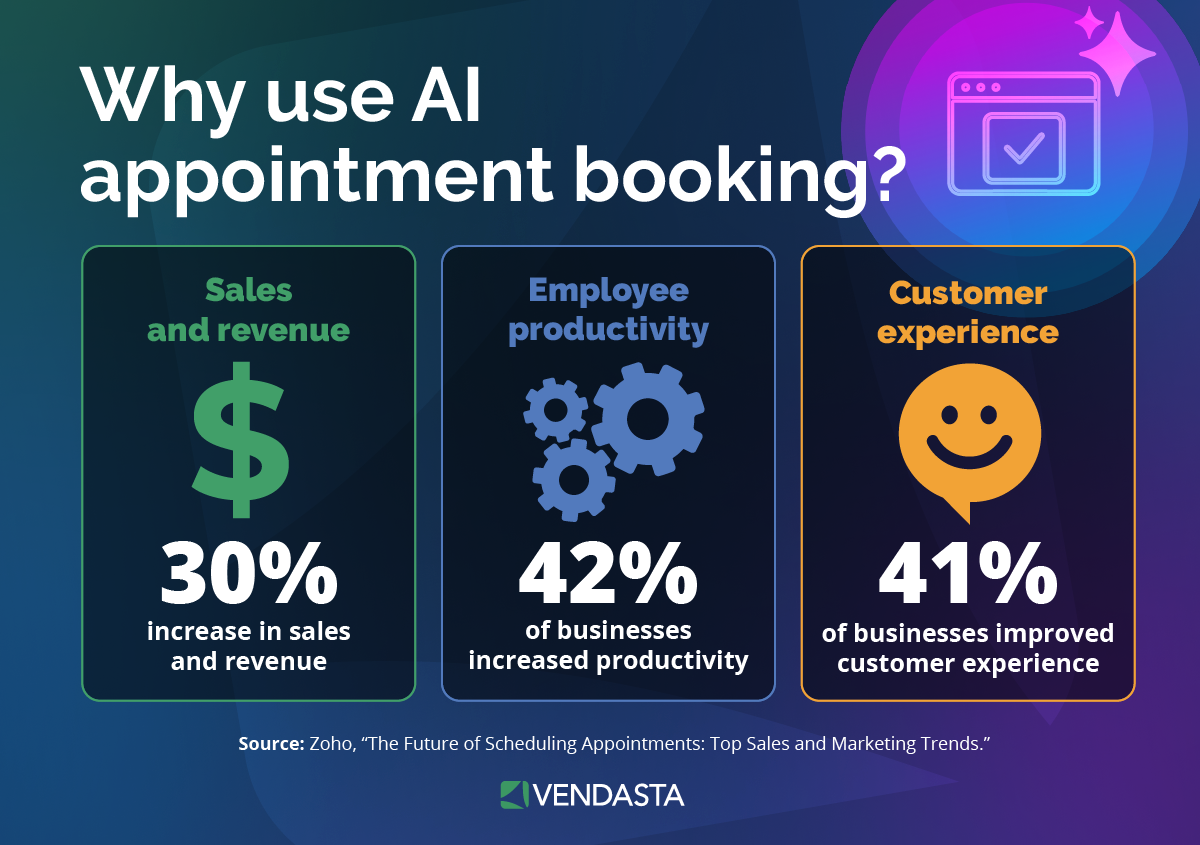
This creates a consistent experience no matter where or how customers engage. Instead of fragmented conversations across disconnected tools, Vendasta brings every interaction into a single, coordinated system.
Proactive Engagement, not Just Answers
One of the biggest differences between a search-based agent and Vendasta’s AI workforce is intent. Google Business Agents are reactive, responding only when a shopper initiates a chat. Vendasta’s AI Employees are designed to act proactively.
Vendasta AI Employees can:
- Follow up on missed calls automatically, so leads are not lost when staff are unavailable
- Nurture leads that do not convert right away with timely, relevant messaging
- Request reviews after completed interactions to strengthen online reputation and trust
- Trigger actions based on customer behavior and outcomes, such as sending reminders or surfacing high-intent opportunities
By taking action without waiting for a prompt, AI Employees help businesses stay responsive while reducing the burden on human teams.
Powered by First-Party Business Data
Vendasta’s AI workforce is powered by first-party data that goes far beyond product feeds or website content. This data foundation enables deeper personalization and more accurate engagement.
Vendasta AI uses:
- CRM data and customer history to understand context and intent
- Reviews, NPS, and sentiment data to tailor responses and identify trends
- Campaign and engagement performance to optimize messaging over time
Because Vendasta’s AI Employees draw from a richer data set, they can deliver more relevant, consistent, and personalized experiences than search-only agents. This allows businesses and their partners to move from simply answering questions to actively managing relationships that drive long-term growth.
Built for More Than Retail
While Google Business Agents are optimized for e-commerce and product-driven interactions, many businesses win customers through conversations, consultations, and ongoing relationships.
Vendasta’s AI workforce is built to support these realities, making it a better fit for a much wider range of industries and business models.
Supports Service Businesses and Local SMBs
Vendasta is designed for businesses that rely on conversations, not carts. For service-based organizations, customer engagement is often about answering questions, qualifying needs, scheduling appointments, and building trust over time rather than completing a single transaction.
Vendasta’s AI workforce supports industries such as:
- Home services, including contractors, HVAC providers, and repair professionals
- Healthcare and professional services, where timely responses and accurate information matter
- Local and regional SMBs that depend on reputation, responsiveness, and repeat business
In these environments, AI Employees help ensure no inquiry goes unanswered. Whether a customer reaches out after hours, requests more information, or needs to book an appointment, Vendasta’s AI can respond instantly and consistently, improving both customer experience and conversion rates.
Scales Across Multi-Location Brands and Franchises
For franchises and multi-location brands, consistency and scale are ongoing challenges. Vendasta’s AI workforce is built to support a centralized strategy while enabling localized execution.
Key capabilities include:
- Centralized control over AI workflows, messaging standards, and engagement rules
- Localized execution that reflects each location’s hours, services, and contact information
- Shared client dashboards that give partners and clients visibility into performance, conversations, and outcomes
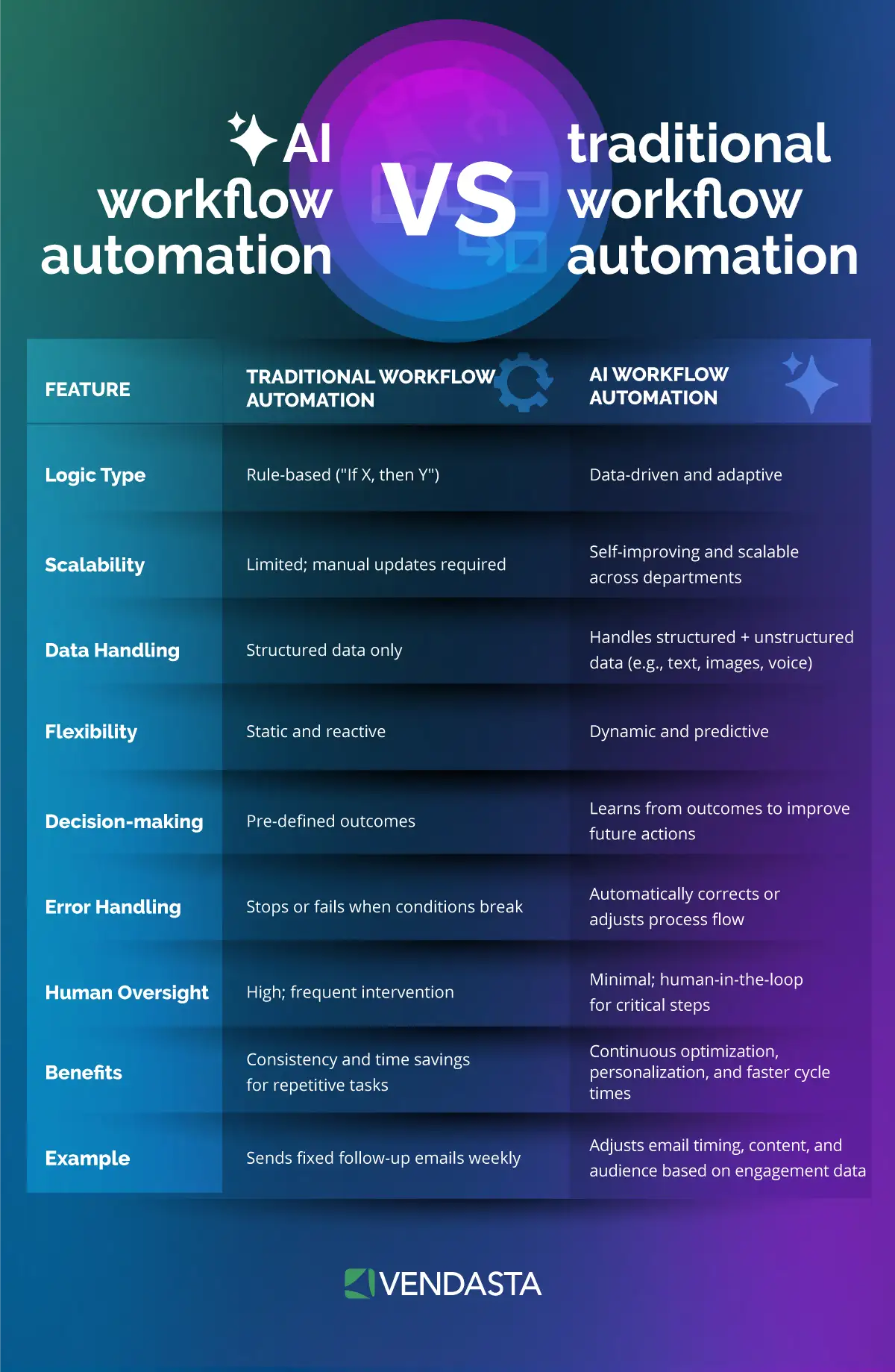
This structure allows franchisors, agencies, and technology companies to manage AI engagement across dozens or hundreds of locations without losing control or flexibility. Each location delivers a consistent AI customer experience, while leadership maintains oversight and optimization at scale.
By supporting service-based businesses and multi-location organizations, Vendasta extends the value of AI far beyond retail, helping businesses manage real customer relationships wherever they operate.
Why This Matters for Agencies, Technology Companies, and Partners
As AI becomes a core part of customer engagement, the question for agencies, technology companies, and channel partners is not whether to offer AI, but how to connect it with existing acquisition channels, such as B2B Google Ads agency services, in a way that is scalable, profitable, and trusted by clients.
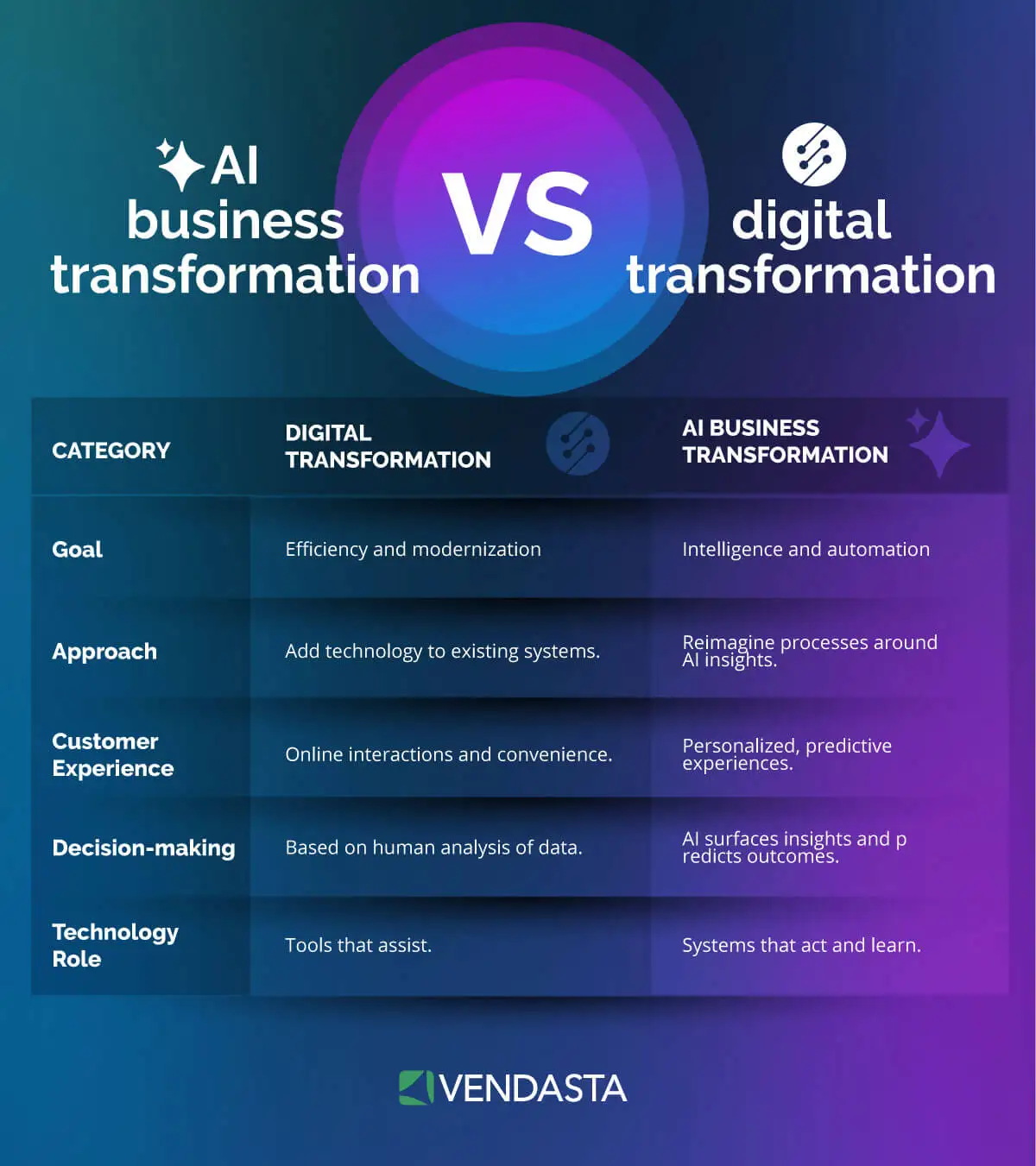
Vendasta’s AI workforce is built with partners in mind, giving them ownership and flexibility throughout their AI business transformation journey.
Ownership and Flexibility
Vendasta gives partners full control over how AI is deployed, managed, and scaled across their customer base. Unlike search-based solutions that live entirely within a third-party platform, Vendasta’s AI workforce is designed to work alongside your existing services and client relationships.
Key advantages include:
- No dependency on a single platform like Search to power customer engagement
- Control over AI workflows, messaging, and customer experiences
- The ability to position AI as part of your broader service offering, not a standalone feature
With Vendasta, AI becomes a service you deliver, not a feature you rent. This allows partners to differentiate their offerings while adapting AI strategies to the specific needs of each client.
Monetization and Trust
Vendasta’s approach to AI enables partners to build revenue while strengthening client trust. Rather than replacing human teams, AI Employees are designed to augment them, handling routine engagement while freeing people to focus on higher-value work.
Partners can:
- Implement and manage AI on behalf of SMBs without adding operational complexity
- Offer always-on engagement without increasing headcount
- Build recurring revenue through AI-powered services that deliver measurable outcomes
Because Vendasta positions AI as an extension of the business, not a black box, partners remain the trusted advisor. Clients benefit from better responsiveness and consistency, while partners gain a clear, sustainable path to growth.
Pro Tip: Reading an in-depth article on AI leadership can help you build an AI workforce strategy that drives long-term adoption, trust, and revenue.
Google Business Agents and Vendasta AI Workforce Comparison
| Category | Google Business Agents | Vendasta AI Workforce |
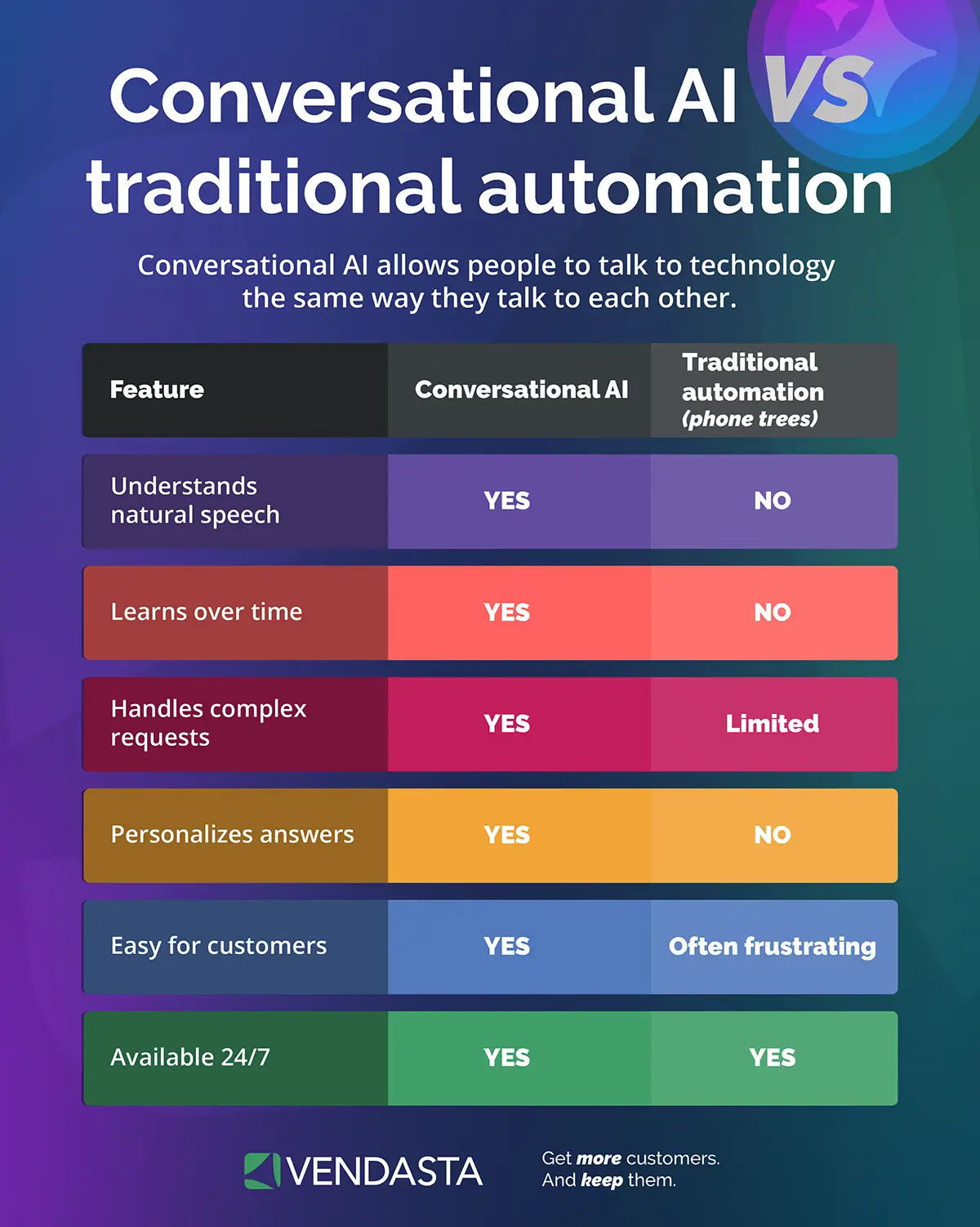
| Primary use case | Answering product and shopping questions inside Google Search during high-intent moments | Managing customer engagement, conversion, and retention across the full customer lifecycle |
| Supported industries | Retail and e-commerce businesses with product catalogs in Google Merchant Center | Service businesses, local SMBs, franchises, multi-location brands, and ecommerce |
| Data sources | Google Merchant Center product data and limited website content | CRM and customer history, reviews and sentiment data, campaign performance, and 17+ years of proprietary local business data |
| Proactive vs reactive engagement | Reactive. Responds only when a user initiates a chat in Google Search | Proactive. Follows up on missed calls, nurtures leads, requests reviews, and triggers actions based on behavior |
| Supported channels | Google Search brand profiles only | Website chat, voice and phone calls, email, SMS, reviews, and appointment booking |
| Partner monetization | Limited. Controlled by Google with minimal opportunity for partners to package or resell services | Built for partners to deploy, manage, and monetize AI-powered services at scale |
| Customization depth | Basic branding, welcome messages, and conversation starters. | Deep workflow, messaging, and automation customization by industry and client |
| Scalability across SMBs | Restricted by eligibility requirements and platform limitations | Designed to scale across thousands of SMBs with centralized management and localized execution |
Conclusion
Google Business Agents highlight an important shift in how customers discover and interact with brands. AI is no longer working quietly in the background. It is becoming the first point of contact, shaping decisions before a website visit or a human conversation ever happens.
For many businesses, search-based AI is a helpful starting point. But long-term success requires more than answering questions on one platform. It requires consistent, proactive engagement across every channel where customers show interest, ask questions, and make decisions.
Vendasta’s AI workforce is built for that reality. By combining AI Employees, first-party business data, and automation across chat, voice, reviews, and follow-ups, Vendasta helps businesses and their partners turn AI into a growth engine rather than a standalone feature.
If you want to see how an AI workforce can support customer engagement, conversion, and retention across your entire business, book a free demo of Vendasta today and explore what’s possible when AI works for you, not just for search.
Google Business Agent FAQs
1. What is a Google Business Agent?
A Google Business Agent is a conversational AI feature in Google Search that lets shoppers chat directly with a brand. It answers product-related questions using Merchant Center data and website content, helping customers make decisions without leaving the search experience.
2. How does a Google Business Agent work in search?
When someone searches for your brand, they can click a chat option on your brand profile. The Google Business Agent uses Gemini models to analyze product data and website information, then delivers conversational answers during high-intent discovery moments.
3. Who can use Google Business Agents?
Google Business Agents are currently available to eligible US retailers with a verified Google Merchant Center account, at least 50 approved offers, and a claimed brand profile. Many service-based businesses and B2B companies do not meet these eligibility requirements.
4. What is the difference between a branded AI agent and a chatbot?
A branded AI agent is designed to reflect a company’s voice, data, and customer experience, while basic chatbots often rely on scripted responses. Platforms like Vendasta take this further by powering AI Employees with real customer data across multiple channels.
5. Are Google Business Agents enough for small businesses?
For e-commerce brands, a Google Business Agent can support early discovery. However, most SMBs need engagement beyond search. Vendasta’s AI workforce supports conversations across chat, phone, email, and reviews, helping businesses convert and retain customers everywhere they interact.
6. How do Google Business Agents compare to Vendasta AI Employees?
Google Business Agents focus on answering product questions in Search. Vendasta AI Employees manage the full customer journey, including lead follow-up, appointment booking, review responses, and proactive engagement, making them better suited for service businesses and long-term growth.
7. Do branded AI agents replace human customer support?
No. Branded AI agents are designed to handle routine questions and first-touch engagement. Vendasta positions AI as an extension of the team, allowing human staff to focus on complex conversations, relationship building, and higher-value work.
8. Can agencies and partners monetize Google Business Agents?
Monetization opportunities are limited because Google controls the experience. In contrast, Vendasta allows agencies, franchises, and technology partners to deploy, manage, and monetize AI Employees as part of their service offerings for SMB clients.
9. What data powers Vendasta’s AI workforce?
Vendasta AI Employees use CRM data, customer history, reviews, sentiment, campaign performance, and 17+ years of proprietary local business data. This enables deeper personalization and more proactive engagement than search-only AI agents.
10. Should businesses use both Google Business Agents and Vendasta?
In many cases, yes. Google Business Agents can support discovery in Search, while Vendasta’s AI workforce manages engagement beyond that moment. Together, they help businesses stay visible early and consistent across every customer touchpoint that drives growth.