About Us
 Careers
 Leadership
 Board
Board Newsroom
Did you know that, according to Business Today, businesses lost an estimated up to $2 billion in potential revenue in 2024 by not appearing in AI-generated search results?
That’s not a typo. Your content could be missing from platforms like ChatGPT, Google’s SGE, Bing Copilot, and Perplexity—not because it lacks quality, but because it isn’t optimized for how AI interprets and presents information.
This is where the shift from traditional SEO to GEO becomes impossible to ignore.
You’ve likely mastered search engine optimization. You’ve ranked blogs. Driven clicks. Tracked every keyword.
But now, the rules are changing.
Generative Engine Optimization (GEO) isn’t just another acronym. It’s how your content gets quoted, summarized, or cited by AI tools that never send users to a website at all.
If your business isn’t adapting, your clients’ visibility could vanish in the age of AI-generated search results.
In this blog, we break down the critical difference between SEO vs GEO. You’ll learn exactly how to win with both. And you’ll walk away with practical strategies to keep both you and your clients ahead.
Let’s get into it.
Acquire and serve 10x more clients with AI-powered software
TL;DR
- SEO ranks your content on Google and Bing — GEO gets your content cited inside AI tools like ChatGPT, Google SGE, and Bing Copilot.
- Businesses lost an estimated up to $2 billion in potential revenue in 2024 by not appearing in AI-generated search results (Business Today).
- A hybrid strategy wins: combine keyword optimization, structured data, FAQ blocks, and conversational content to dominate both search types.
What is SEO (Search Engine Optimization)?
You’ve built landing pages. Optimized title tags. Hunted for backlinks. That’s SEO—and you’ve probably done it well.
Search engine optimization is all about helping your website rank higher on traditional platforms like Google and Bing.
When someone types a search, your job is to show up on page one. That means optimizing your content for search behavior, crawlability, and click-through performance.
A typical SEO dashboard tracks keyword performance, page rank, and click-through trends.
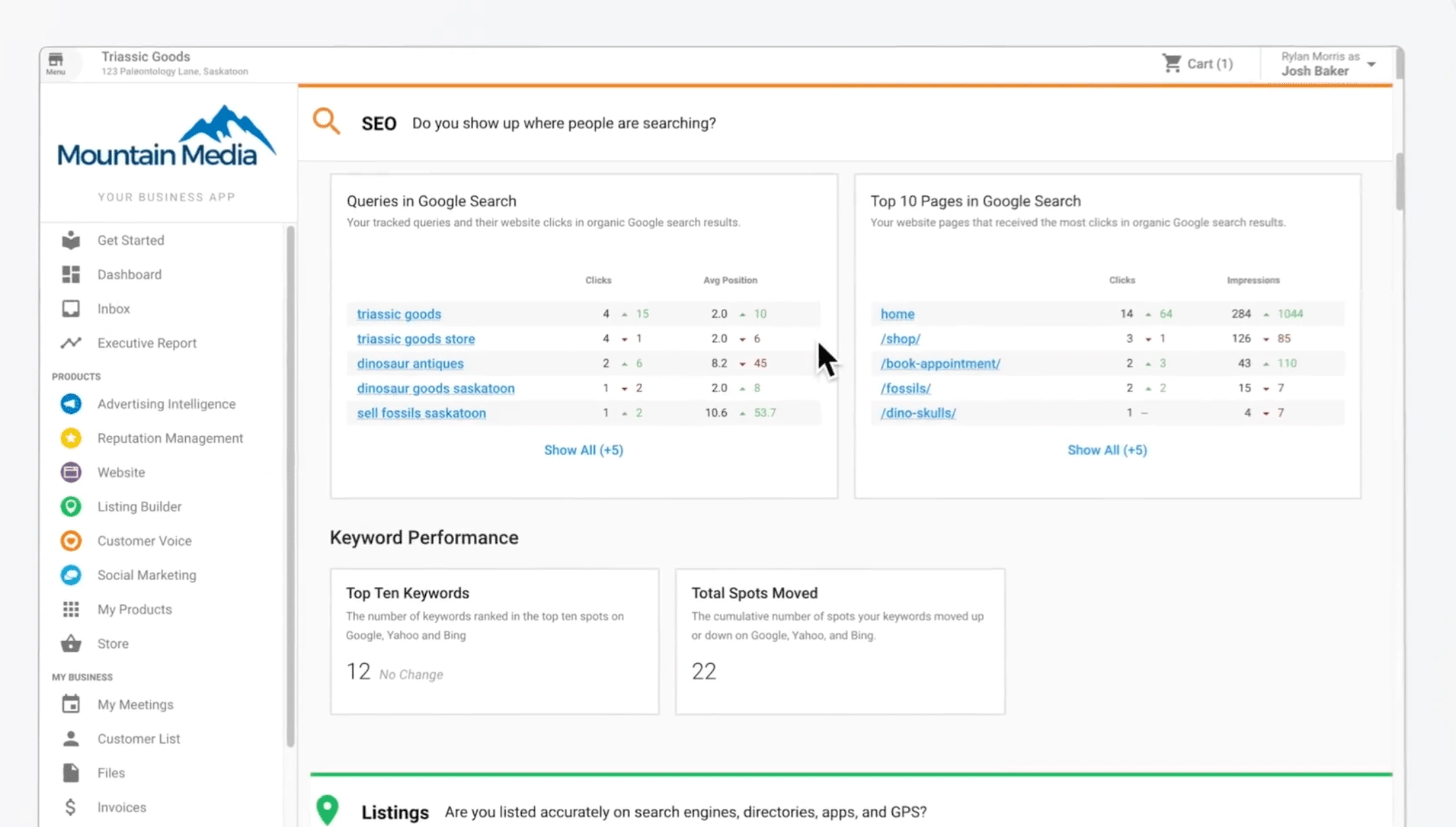
The core of SEO includes:
- Keyword research and integration
- On-page elements like meta tags, headers, and image alt text
- Internal linking and structured navigation
- Backlink building from high-authority domains
- Technical SEO: site speed, mobile-responsiveness, secure architecture
What does success look like?
You track metrics like:
- Organic traffic
- Click-through rate (CTR)
- Bounce rate
- Conversion rate
SEO is still essential. You can’t ignore it. But it’s no longer the full picture. Businesses still rely on proven optimization strategies and tools like SEO by highsoftware99.com to strengthen rankings, visibility, and long-term search performance. But it’s no longer the full picture.
Let’s talk about what happens when your audience never clicks search results at all.
How AI Decides What to Cite
Understanding generative engine optimization starts with understanding how AI tools actually select content. AI language models like ChatGPT, Google Gemini, and Perplexity don’t crawl the web in real time the way search engines do. They were trained on large datasets — and they favor content that is structured, factual, and consistently authoritative.
Here are the five primary signals AI uses to decide which content gets cited in a generated response:
1. Factual Accuracy and Source Trust
AI models prioritize content that cites credible, verifiable sources. Pages that reference statistics, studies, or named experts are significantly more likely to be pulled into AI-generated responses.
2. Structured, Scannable Formatting
Lists, tables, FAQs, and short paragraph blocks are easier for AI to parse and extract. Dense walls of text are frequently skipped. Clear schema markup reinforces structure for crawlers and AI systems alike.
3. Entity Consistency and Brand Repetition
AI systems build knowledge around named entities — brands, products, people, and places. Consistently mentioning your brand name alongside your area of expertise across multiple pages reinforces entity association in AI memory.
4. Conversational Language and Question Matching
AI answers natural language queries. Content that mirrors how people actually ask questions — using question-based headings and direct answers — aligns closely with how AI retrieves and composes responses.
5. Content Freshness and Crawl Frequency
Platforms like Perplexity and Bing Copilot use live web data. Regularly updated content with current statistics and recent examples signals relevance and increases the probability of being surfaced in real-time AI responses.
The bottom line: GEO is not about tricking AI. It’s about writing content so clearly, accurately, and authoritatively that AI has no choice but to cite you. Pair this with strong SEO fundamentals and your content becomes visible across both traditional search and AI-generated discovery.
What is GEO (Generative Engine Optimization)?
Now, imagine your client’s business being quoted by ChatGPT. Or summarized by Google’s SGE before anyone even sees the SERP.
That’s the power of generative engine optimization.
GEO is about optimizing content to appear in AI-generated responses, not just traditional search rankings.
AI systems like ChatGPT, Bing Copilot, and Perplexity now answer questions directly. If your business isn’t preparing content that these tools pull from, your clients won’t be part of the conversation.
To show up in AI answers, your content must be structured differently. Here’s how to get GEO-ready.
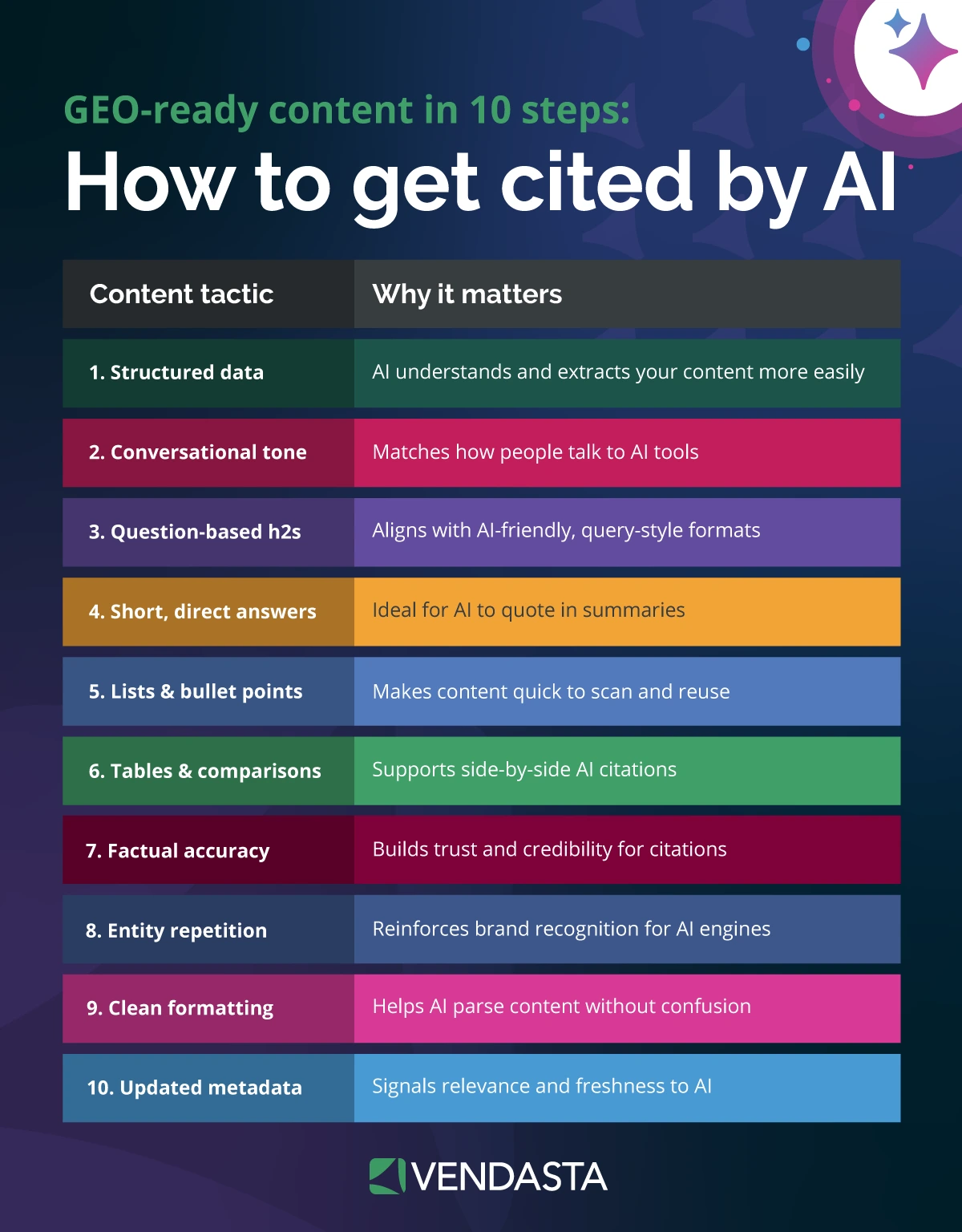
What goes into GEO?
- Structured data and schema markup
- Factual, citation-worthy content with trusted sources
- Conversational tone using question-based headings
- Lists, tables, and concise summaries for zero-click visibility
- Repeating brand/product mentions for AI memory retention
GEO isn’t about ranking. It’s about being the source.
GEO success is measured by:
- Citations in AI-generated responses
- Visibility in tools like ChatGPT, SGE, and Bing
- AI-driven engagement and zero-click impressions
- Brand mentions in AI summaries, not just web pages
Your business doesn’t just need to help clients rank. You need to help them get quoted.
Still confused? This video breaks it down even further:
SEO vs GEO: Key Differences
You’ve optimized for search. Now it’s time to optimize for AI-generated visibility. Here’s how SEO vs GEO compares across the key dimensions your business needs to understand:
| Aspect | SEO | GEO |
| Primary Goal | Rank in traditional search engine results (SERPs) | Be cited in AI-generated responses (ChatGPT, SGE, Bing Copilot) |
| Optimization Focus | Keywords, backlinks, on-page SEO, user experience | Structured data, factual accuracy, conversational tone |
| Content Structure | Long-form, keyword-rich content | Concise, scannable answers, lists, tables, Q&As |
| Search Behavior Focus | Click-throughs, page ranking, user dwell time | Zero-click answers, voice search, assistant-based queries |
| Content Format | Blogs, pillar pages, landing pages | Definitions, FAQs, industry stats, glossary entries |
| Ranking Signal | EEAT, backlinks, mobile-first indexing, page load speed | Trust, citation-readiness, schema markup, AI training frequency |
| Measurement Metrics | Organic traffic, CTR, bounce rate, keyword rankings | AI citation frequency, brand mentions in AI results, zero-click views |
| Tools Used | Google Analytics, SEMrush, Ahrefs, Screaming Frog | Schema markup tools, ChatGPT, Perplexity, Google’s Rich Results Test |
| User Intent Captured | Navigational, transactional, informational | Informational, assistant-style, natural language search |
| End Result for Business | Higher visibility in Google/Bing SERPs | Appear directly in AI answers and smart summaries |
| Example CTA Format | “Read more about our services” | “What is white-label SEO? Answered in 60 words” |
| Content Discovery Path | Search engine → click → website | AI chatbot → direct answer → brand mention or citation |
| Internal Linking Role | Improves crawlability and on-site SEO performance | Supports entity association and topic authority for AI |
| Schema Markup Usage | Optional enhancement | Mandatory for context, structure, and visibility in AI engines |
| Brand Voice Style | Informative, keyword-optimized | Conversational, citation-worthy, authoritative |
SEO and GEO Work Together
SEO still matters.
It drives clicks. It improves domain strength and gets your business on the first page of Google.
But GEO?
It’s about being the answer, not just a search result.
GEO doesn’t replace SEO. It complements it.
- SEO brings users to your site.
- GEO brings your insights to where the users already are—inside the AI answer box.
They solve different problems. Your business needs both to stay visible in both types of search behavior.
Pro Tip: Read about how to rank on ChatGPT to stay on top of GEO.
Why GEO Matters in the Age of AI
Changing User Behavior
People aren’t just searching the old way anymore.
They’re asking AI tools like ChatGPT, Google SGE, and Bing Chat for direct answers.
And those AI tools?
They don’t always show a list of clickable results. They generate answers based on the content they trust.
That changes everything.
If your business is only optimized for search engine optimization, you’re missing the chance to be seen where the next generation of users actually spends time.
This is where generative engine optimization becomes essential.
Zero-Click Searches
A zero-click search happens when the answer is shown directly—no clicks, no website visit.
That’s the default behavior in:
- ChatGPT summaries
- Bing Copilot answers
- Google SGE generated responses
Think users visit your site to see your content? Not anymore. This is how AI decides what to show—before anyone ever clicks.
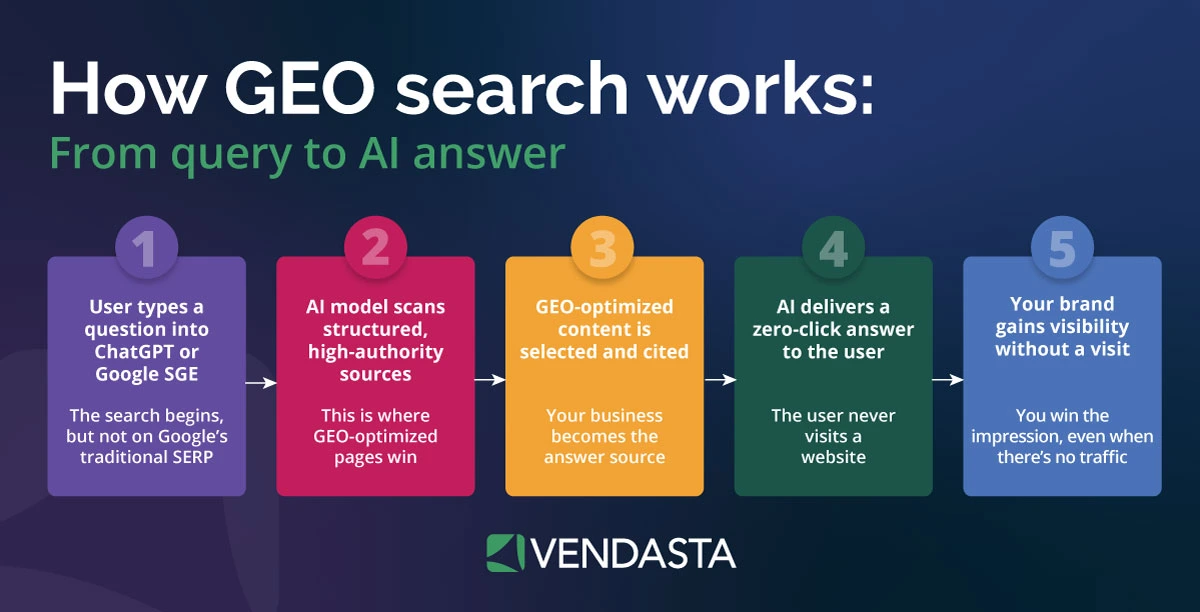
If your business isn’t part of those answers, you’re invisible in the AI search world.
GEO fixes that by making your content:
- Short
- Scannable
- Direct
- Structured
Use schema markup. Use bulleted lists. Use concise answers under each heading. That’s how you win in zero-click search behavior.
Competitive Advantage
Right now, GEO is still new.
Which means your business has a chance to lead. Early adopters can dominate AI-generated responses just like early SEO winners dominated page one in Google.
Here’s how you stay ahead:
- Publish fact-based content with authoritative sources
- Add FAQs and Q&A blocks to every core page
- Use structured data: article, FAQ, and How-To schema
- Keep answers under 60 words for easy AI quoting
Whether you’re a marketing agency, franchisor, managed services provider, or SMB, mastering SEO vs GEO now gives you a clear edge.
And if your business uses Vendasta’s platform?
You already have the tools to do both.
- Prebuilt content widgets
- White-label SEO software
- Tools to track AI mentions and visibility
Take a look at Vendasta’s SEO Integration or our White-Label SEO Dashboard to see how you can build for both worlds—without doubling your work.
GEO Readiness Checklist: Is Your Content AI-Ready?
Run your existing blog posts and service pages through this checklist. Every item checked is one more reason an AI engine will cite your content over a competitor’s.
Content Structure
- Each section opens with a direct answer under 60 words
- At least one FAQ block is present with question-based H2s or H3s
- Content includes bulleted lists, numbered steps, or comparison tables
- A TL;DR or key takeaways summary is present at or near the top
Technical Signals
- FAQ schema markup (JSON-LD) is applied to FAQ sections
- Article schema is applied with author name, publish date, and organization
- Page loads in under 3 seconds on mobile (Google Core Web Vitals pass)
- Internal links connect this page to related topic clusters
Authority and Trust Signals
- At least one cited statistic with a named, reputable source
- Brand name and topic keywords are mentioned consistently throughout the page
- Content is written by or attributed to a named author with credentials
- Page has been tested in ChatGPT and Perplexity to verify AI citation
Pro tip: Aim for 10 out of 12 checks before publishing. Content that scores below 7 is unlikely to be cited by generative AI tools — regardless of how well it ranks in traditional search.
Integrating SEO and GEO: A Hybrid Approach
Your business doesn’t have to choose between SEO vs GEO. You need both.
Use this framework to see how SEO and GEO work together to drive visibility across both traditional and AI-generated search.
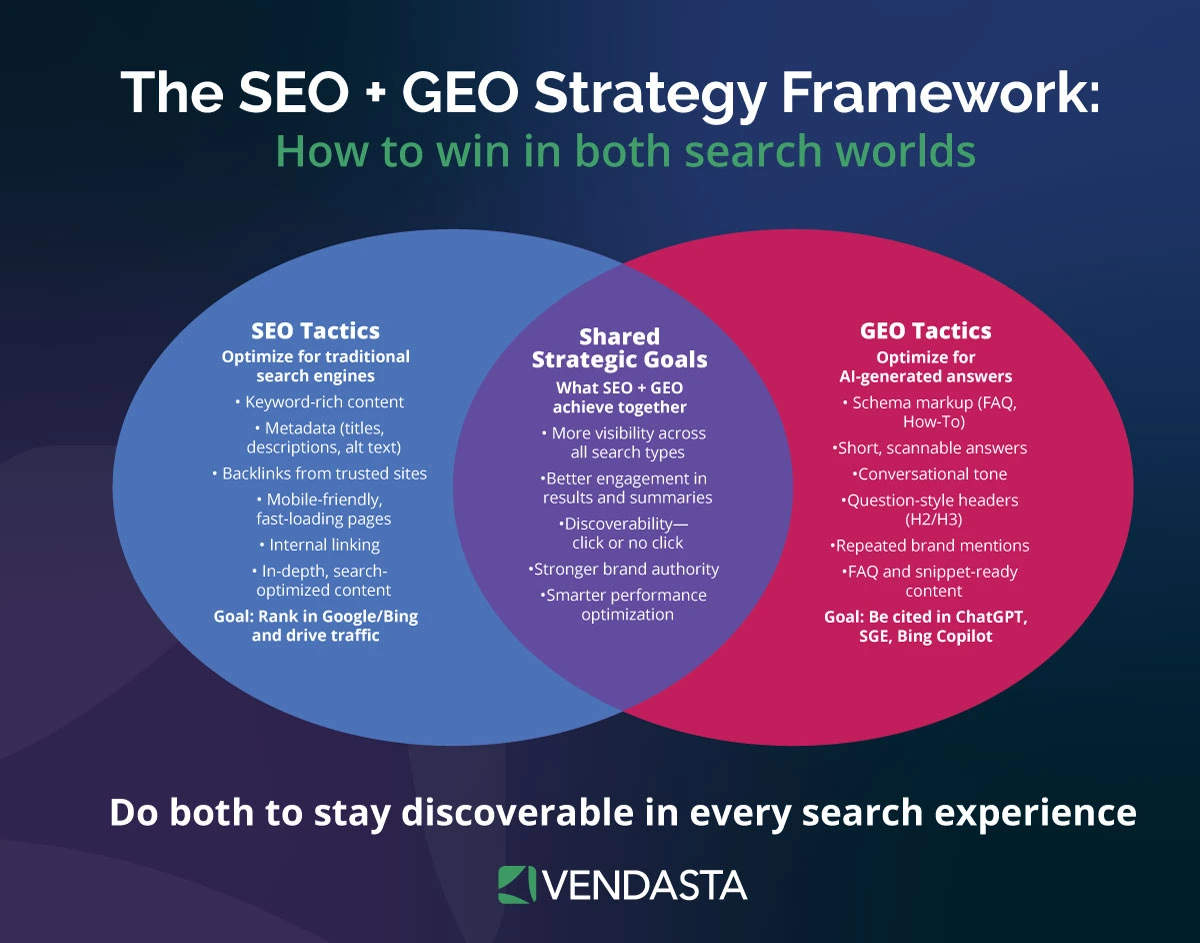
Here’s how to merge them into one unified strategy—without doubling your workload.
Content Creation
Start with how you write.
Your writers should:
- Use traditional search engine optimization tactics like keyword targeting and meta formatting
- Write in a conversational tone that sounds like an AI answering a question
- Prioritize clarity over cleverness
- Include question-based H2s/H3s that reflect how people query tools like ChatGPT
- e.g., “What is content optimization?” or “Why use schema markup?”
Every section should:
- Begin with a short, direct answer (50–60 words)
- Follow up with a list, table, or FAQ block
- Link to supporting internal pages using clean anchor text
These elements help your content rank in search and get cited by AI.
Want a shortcut?
Vendasta’s AI Employee can generate optimized blog content that’s tailored for both SEO and GEO, right inside your client dashboard.

Technical Optimization
The backend matters as much as the writing.
To win in both SEO vs GEO, your site must:
- Use schema markup for FAQs, articles, how-tos, and reviews
- Load fast and be mobile-responsive
- Have a clean internal linking structure so AI crawlers and search engines can understand relationships between topics
Add structured data on every core page. This tells generative engines exactly what your content is about.
Vendasta partners can use schema-ready layouts and integrate SEO tools from the Marketplace to audit and improve technical health.

Monitoring and Adaptation
You can’t improve what you don’t track.
Your business should:
- Use Google Analytics and GSC to track traditional traffic
- Use Perplexity, Poe, or Bing Chat to search your own brand and see how it’s being cited by AI tools
- Keep tabs on tools like Google SGE, OpenAI usage trends, and Bing Copilot rollouts
Not sure where to begin?
Vendasta’s Executive Report gives you a centralized dashboard to monitor:
- Keyword rankings
- Local SEO performance
- Engagement trends—including traffic from zero-click and AI surfaces
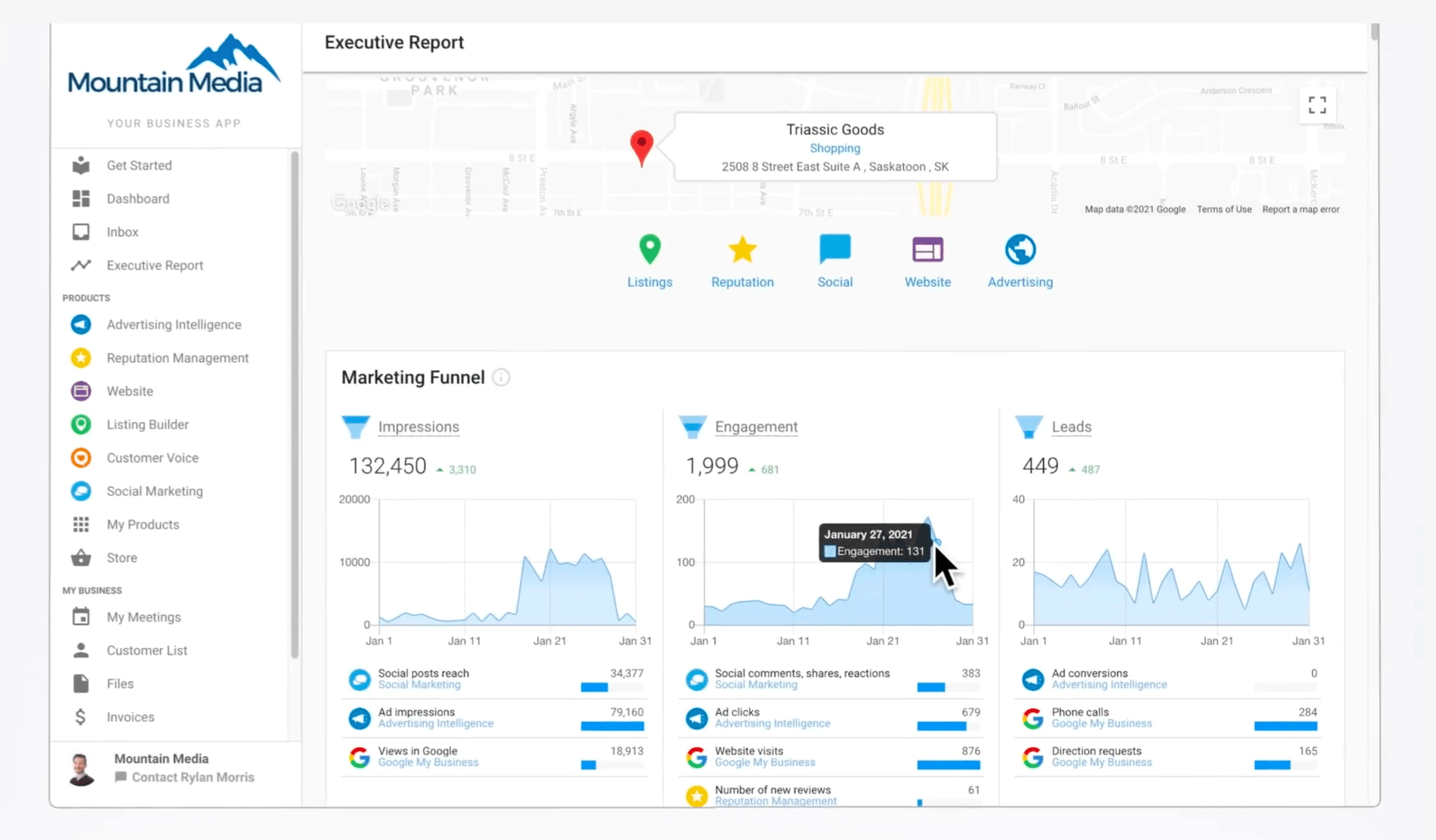
You’ll know exactly what’s working—and what to tweak—for both search and generative visibility.
How Vendasta Supports SEO and GEO Strategies
Intelligent AI Employees
Vendasta’s AI tools are built for this moment. With AI employees like the AI Content Generator, your business can create:
- Keyword-rich blog posts
- Structured product descriptions
- Answer-based service pages tailored for generative engine optimization
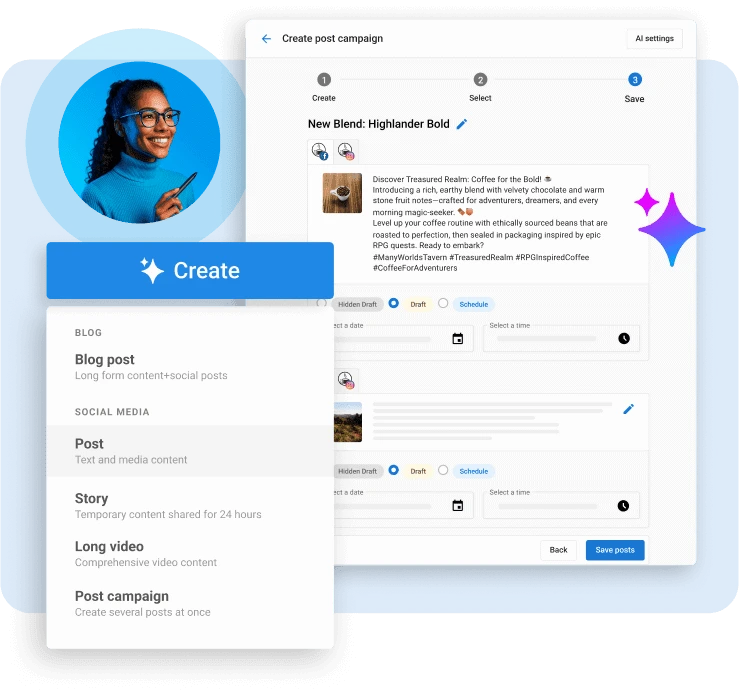
These tools are always evolving, staying ahead of search and AI trends. You don’t need to hire a specialist or build a tech team. You just need the right platform.
And Vendasta gives you that.
Local SEO and Listing Management
GEO doesn’t stop at blog content. Local-intent searches like “best accountant near me” or “plumber in Calgary” are rising.
Vendasta’s Listing Builder improves local SEO by:
- Syncing your business listings across top directories
- Ensuring consistent name, address, phone number (NAP) details
- Boosting visibility in both traditional search and AI-generated search results
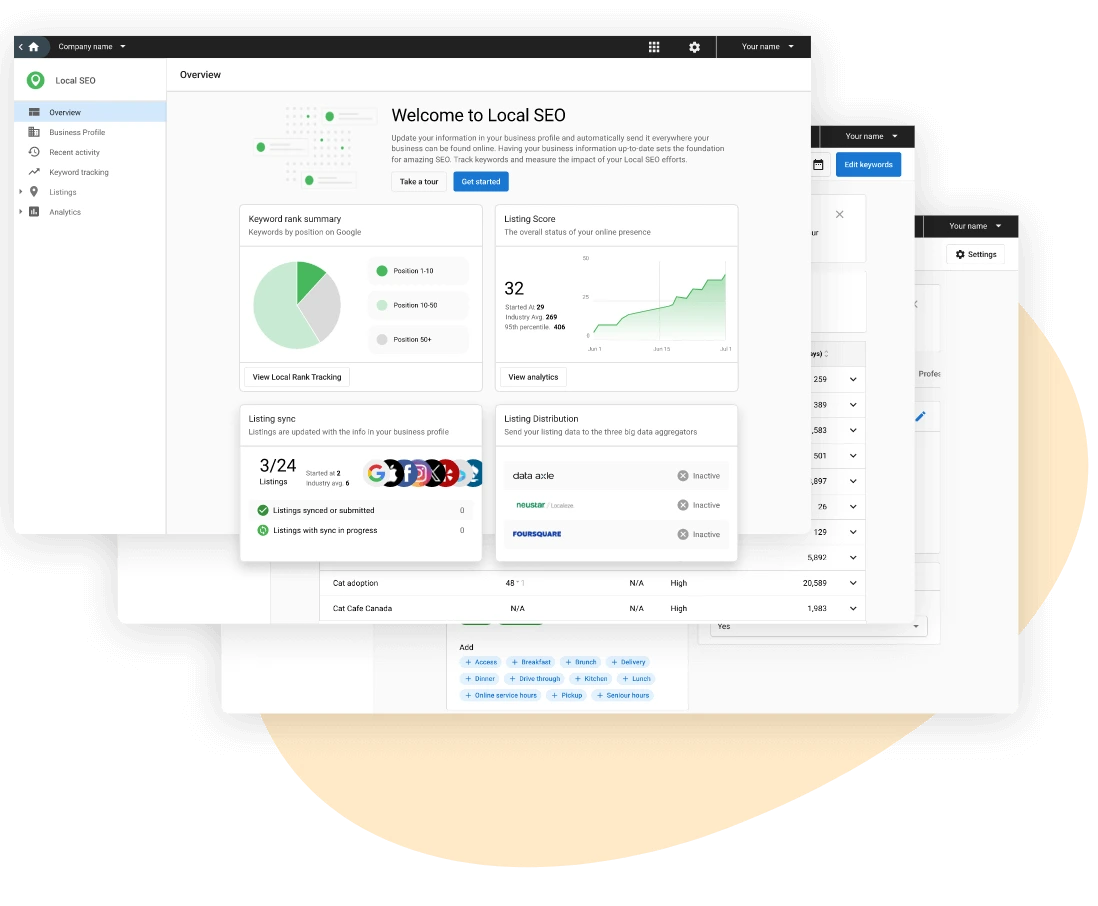
Clean, accurate listing data increases the likelihood of your business being referenced in voice search and AI chat results.
You can also leverage tools for:
- Keyword tracking
- On-page audits
- Review management
All available in Vendasta’s white-label SEO software.
Analytics and Reporting
You can’t manage what you don’t measure. And when you’re navigating both seo vs geo, the right data is everything.
Vendasta’s Executive Report provides your business with a single source of truth, combining key insights from traditional search and AI-generated exposure.
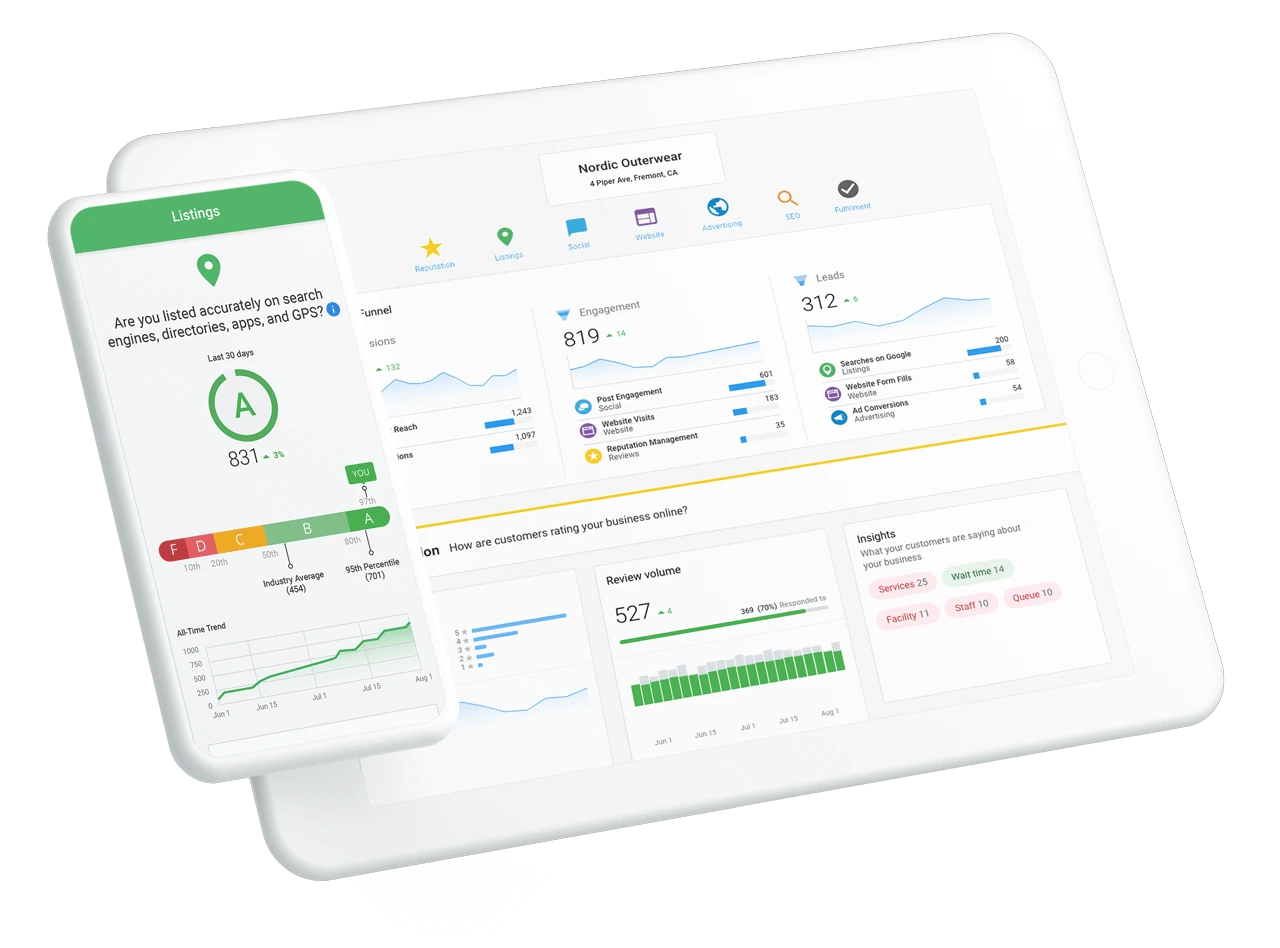
What you can track:
SEO performance
- Organic traffic from Google and Bing
- Keyword positions and page rankings
- Conversion metrics tied to search behavior
Reputation performance
- Review volume and average rating
- Response time and sentiment
- Trends across platforms like Google Business Profile and Facebook
Engagement signals
- Traffic sources from AI platforms (as integrations expand)
- Zero-click exposure (pages shown in summaries but not clicked)
- Page-level behavior and content stickiness
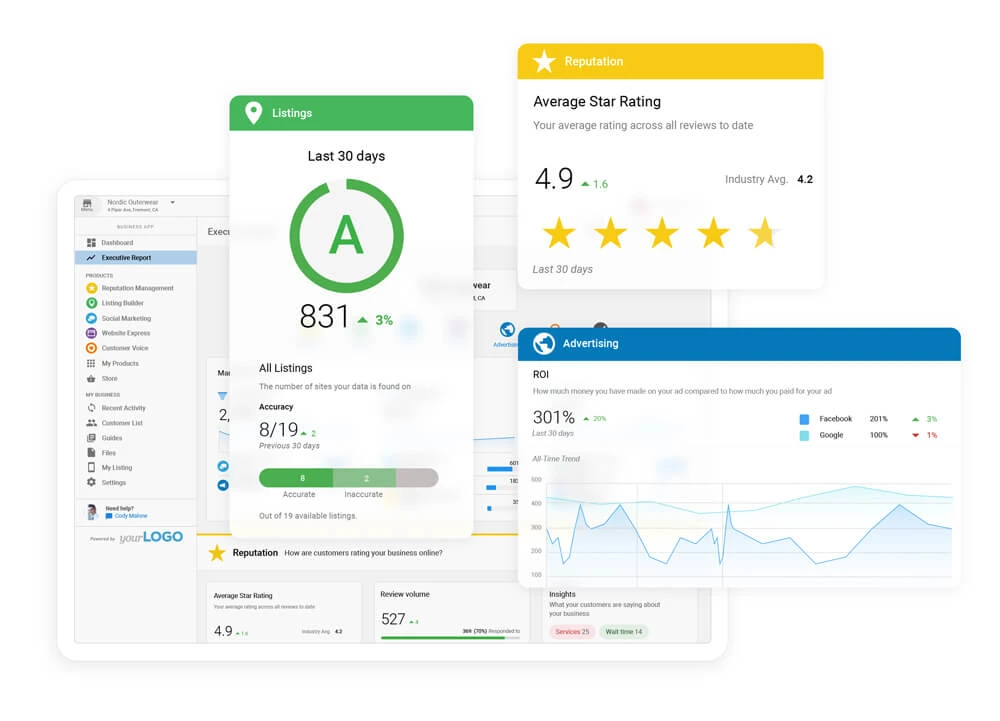
This isn’t just about visibility. It’s about knowing where your business is getting noticed—and where it’s being overlooked.
Conclusion: Why Integrating SEO vs GEO Matters for Modern Marketing
SEO vs GEO isn’t a debate. It’s a strategy shift your business can’t afford to ignore.
Both play critical roles:
- SEO helps your business rank in traditional search engines like Google and Bing.
- GEO makes sure your content gets picked up by AI tools like ChatGPT, SGE, and Bing Copilot.
One drives traffic. The other drives visibility—even when no one clicks.
You need both.
By combining search engine optimization with generative engine optimization, your business stays present wherever discovery happens—whether it’s in search results or smart summaries.
Now is the time to think ahead. The way people search has changed. The tools surfacing your content have changed. And your approach needs to change with them.
Vendasta is built for this moment.
- AI-powered content creation tools
- White-label local SEO solutions
- Built-in schema support and structured listings
- Real-time reporting to track what’s ranking, what’s being cited, and what’s driving results
Whether you’re helping local businesses grow or scaling your own brand visibility, Vendasta gives you the platform to do it all—across both SEO and GEO.
Ready to lead in both search and AI discovery? Explore Vendasta’s platform or get in touch to start optimizing your strategy today. Request a demo here.
SEO vs GEO FAQs
1. Is GEO replacing SEO?
No. GEO complements SEO. While SEO helps your content rank in traditional search engines like Google and Bing, GEO ensures your content is visible in AI-generated search results, such as those from ChatGPT, Google SGE, and Bing Copilot.
2. How can I optimize content for GEO?
Start by writing in a conversational tone.
Use structured data, keep answers short, and focus on factual accuracy.
Incorporate FAQ blocks, lists, and how-to formats with proper schema markup.
3. What tools help with GEO optimization?
Use:
- Schema markup generators (like Merkle, RankMath)
- AI-readability analyzers
- Platforms like ChatGPT and Perplexity to test how content is cited
- Vendasta’s AI tools for content optimization and reporting
4. Does Vendasta provide GEO optimization support?
Yes. Vendasta offers tools that support both search engine optimization and generative engine optimization:
- AI content generation
- Listing management
- Review responses
- Schema-ready content templates
- Real-time visibility tracking through the Executive Report
5. What’s the main difference between SEO and GEO?
SEO targets search engines like Google by focusing on keywords, backlinks, and CTR.
GEO targets AI platforms by focusing on structured data, clear summaries, and trustworthy content.
6. Why is structured content important for GEO?
AI tools prefer clean, skimmable formats. Using lists, tables, FAQs, and short-answer sections helps your content get cited in AI-generated search results.
7. How does GEO impact local businesses?
Local businesses can appear in AI responses like “best dentist in Seattle” when:
- Listings are consistent
- Reviews are up to date
- Content includes local keywords and structured formats
Vendasta’s Listing Builder supports this directly.
8. How do I track if my content is being cited by AI tools?
Try:
- Running branded queries in ChatGPT, Bing Chat, or Perplexity
- Monitoring referral traffic spikes
- Using tools that detect AI content mentions (early-stage, but growing fast)
- Watching for zero-click impressions in your analytics reports
9. What type of content performs best for GEO?
- FAQ pages
- Listicles
- How-to guides
- Short definitions and comparison posts
This content aligns with conversational search queries, enabling AI to summarize effectively.
10. Can I use the same content strategy for both SEO and GEO?
Yes. A hybrid strategy works best.
Structure your content to rank in search engines while also formatting it for AI readability. That means combining:
- Keyword research with question-based headings
- Long-form depth with concise answers
- Traditional optimization with generative engine optimization principles