About Us
 Careers
 Leadership
 Board
 Newsroom
Choosing the best digital marketing platforms for small businesses is harder than it sounds: there are now more than 15,000 marketing technology tools to choose from.
The best digital marketing platforms for local businesses in 2026 include Vendasta, HubSpot, ActiveCampaign, Zoho, Constant Contact, Podium, Birdeye, Mailchimp, and Wix. These are platforms a local service business owner can buy and run directly to handle email, customer engagement, and an online presence from one place.
The right pick comes down to the outcomes that help you get more customers: answered calls, booked jobs, more five-star reviews, and one login instead of a stack of disconnected apps.
Read on for a breakdown of what a digital marketing platform actually is, how to choose one for your business, what each option costs, and a full look at the top 2026 picks.
Automate every step of the customer journey with AI employees
TL;DR
- Vendasta covers the entire customer journey: CRM, unified inbox, reviews, listings, campaigns, and reporting share one login, from first inquiry through repeat booking.
- Other picks fit narrower needs: Mailchimp and Constant Contact for email-first marketing, Podium for text messaging, Birdeye for review-heavy multi-location brands, Wix for getting a site online, and HubSpot or Zoho for businesses running a sales pipeline.
- Vendasta’s AI Receptionist turns missed calls into leads: For one local business, it handled 1,017 calls and qualified 778 leads over four months, a 76% conversion rate.
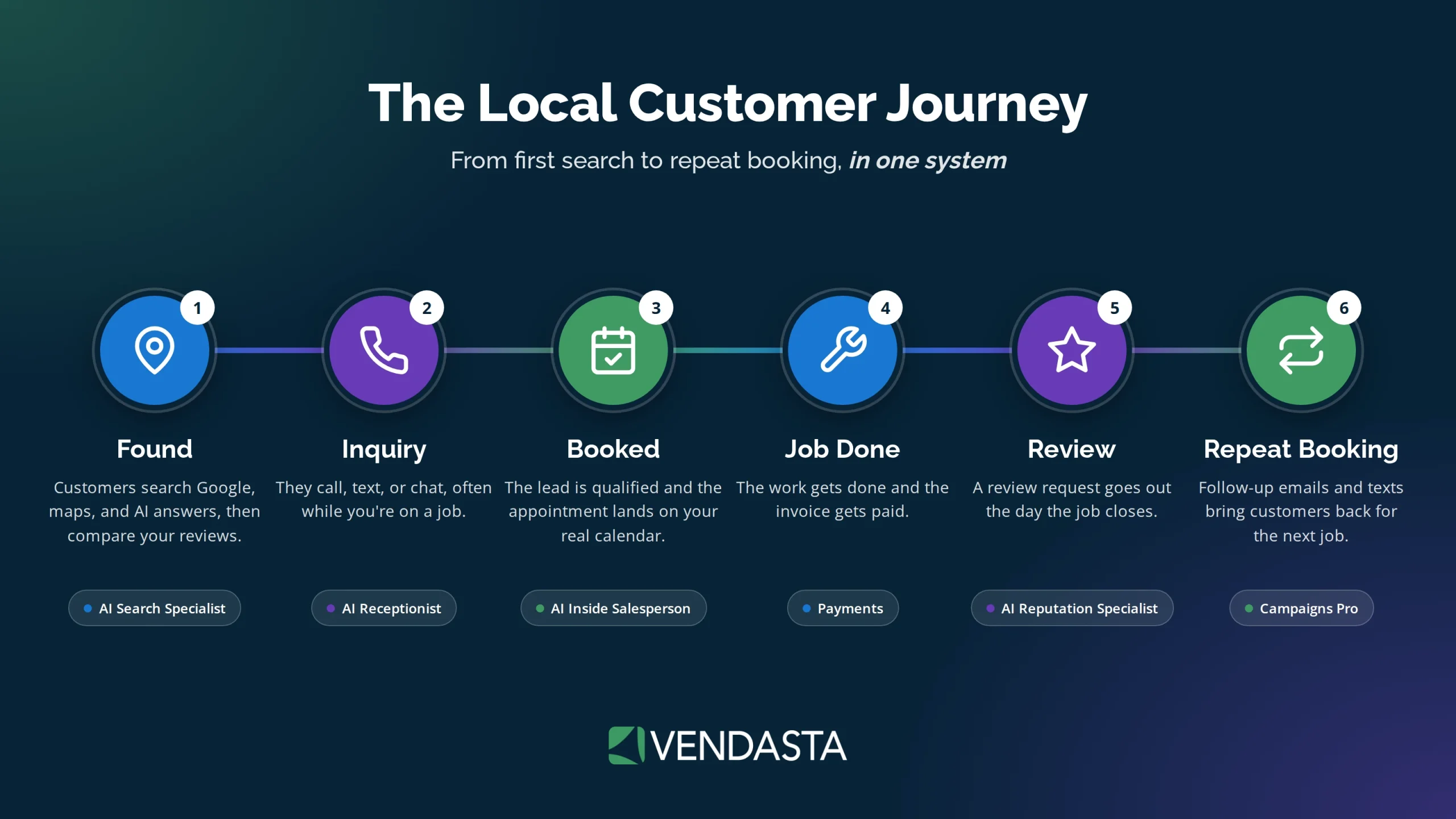
Automate the Entire Customer Journey From First Touch to Repeat Business
Disconnected tools drop leads. The ad platform captured the click, the scheduling app holds the calendar, and the lead who called while you were on a ladder went to voicemail, then to a competitor.
A digital marketing platform closes those gaps by managing the entire customer journey in one system, from first inquiry through the review request. It then supports repeat booking.
As customer journey automation and marketing automation for local businesses have matured, buyers have shifted from deciding whether to consolidate to choosing which platform should replace their disconnected apps. Published pricing establishes cost, while independent review data reveals recurring implementation and support trade-offs.
What Is a Digital Marketing Platform for Local Businesses?
For a local business, this is a single system that combines the tools normally spread across separate subscriptions: a CRM, email and short message service (SMS) campaigns, social scheduling, review and listings management, reporting, and often billing. Instead of exporting contacts from one app to import into another, every customer record and message lives in one database. Campaign results live there too.
That distinction separates a platform from a point tool. An email tool sends email; a platform connects the recipient’s email record with last Tuesday’s call. It also displays the four-star review and any unpaid invoice. That context is what makes marketing for local businesses work at small-team scale.
Why Do Local Businesses Need a Digital Marketing Platform?
Chief Martec’s marketing technology landscape cataloged 15,384 martech solutions, up 9% from 2024, and a local business owner has to choose from that pile with no procurement team.
Is Digital Marketing Still Worth It in 2026?
Yes, but the return now depends on whether spend is tracked and followed up inside one system rather than scattered across disconnected tools. Intuit’s advertising trends research found that 92% of SMB advertisers plan to maintain or increase advertising spend into Q1 2026, which means the budget commitment is already made for most small businesses.
That makes the platform decision less about whether to spend and more about whether each paid click gets answered, logged, and measured in one place. A business that captures a lead from a paid ad but loses it across three separate tools has paid for attention it never converted. Going into 2026, the stack has to prove what the spend produced.
Save Time and Money
Gartner’s Marketing Technology Survey found martech utilization sits at 49% while martech consumes roughly 22% of total marketing spend. Roughly half of what a stack can do goes unused.
Time is the other cost. Every extra app adds another inbox to check, another login to remember, and another export to reconcile before anyone can answer a simple question about last week’s leads.
Centralize Marketing, Sales, and Customer Records
MarTech’s State of Your Stack survey found 86.4% of marketers use a CRM and 76.9% use marketing automation, yet 65.7% name data integration as one of their biggest stack-management challenges. When contact records live in three disconnected tools, customer relationships fragment along with the data.
A platform gives every conversation and invoice a single home. Campaign results live there as well. One dashboard replaces the morning ritual of logging into five apps to reconstruct what happened yesterday.
Automate Customer Engagement and Reporting
The data quality problem is worse than most owners assume: an Adweek-reported Adverity survey of 200 chief marketing officers (CMOs) found 45% of marketing data is incomplete, inaccurate, or out of date. Teams that build reports from exports and spreadsheets carry every one of those errors into the final report.
Platforms that automate customer engagement handle follow-up the moment a lead arrives, and marketing automation workflows keep review requests and re-booking nudges running without anyone remembering to send them.
AI reporting then pulls proof of performance from live data rather than a stitched-together spreadsheet.

Scale Operations Without Adding Staff
BrightLocal’s 2025 SMB Marketing Report found 54% of small business owners manage marketing entirely on their own, and LocaliQ’s trends report found 31% of businesses with 10 or fewer employees have no full-time marketing staff at all. The platform has to do the work a hire would otherwise do.
How to Choose the Best Digital Marketing Platform (Step-by-Step Guide)
Five checks separate a platform you will still use in a year from shelfware.
1. Identify Your Business Goals
Write down the outcome before you look at a feature list: more booked jobs or more Google reviews. If repeat business matters most, record that separately. Lead generation and nurturing topped the Content Marketing Institute’s benchmark list of missing stack capabilities, cited by 47% of marketers surveyed. If lead capture is your gap, a platform with strong email templates but weak call and chat handling solves the wrong problem.
You’ll see the 3-3-3 rule described a few ways, and no single study defines it. A common version says a message has about three seconds to earn attention, three minutes to hold someone who clicks, and three days before an unanswered lead goes cold. The first two depend on your creative and site speed, but the third is a systems question. Check whether the platform can trigger a follow-up by call, text, or email automatically, because no tool that relies on someone remembering to send that message will win the three-day window consistently.
2. Consider Your Budget
Sticker price understates what you will pay. MarTech’s Replacement Survey found 61% of buyers cited cost as an important factor in choosing a replacement, up from 37% in 2023. Onboarding fees and usage-based charges, including contact bands and send overages, raise total cost; modeling marketing automation ROI (return on investment) before you sign beats discovering the loaded cost on your third invoice.

Three starting stacks show what each budget buys:
- $0 a month: A verified Google Business Profile, Canva’s free tier, Google Search Console for search data, and HubSpot’s free plan or Zoho Campaigns’ free tier for email.
- About $42 a month: Zoho Marketing Plus at $25 for email, social, and automation, plus a Wix Light site at $17. Constant Contact Lite at $12 is the cheaper swap if you only need email.
- Consolidated: Once calls, reviews, listings, and campaigns all need attention, an all-in-one marketing platform replaces the stack. Small business software like Vendasta runs campaigns, reviews, social, SEO, lead generation, reporting, and billing in one system.
Whatever band fits your situation, budget to the loaded number rather than the sticker price. MarTech’s consolidation analysis puts the real cost of a martech stack at roughly 2.5 times the license fee once onboarding fees, contact-band overages, and admin time are counted, so a $100-per-month license is closer to a $250-per-month commitment in practice.
3. Prioritize Features That Matter Most
Ease of use ranks first: SMB Group’s Priorities Survey surveyed 744 SMB decision-makers and found 57% rate it “very important,” ahead of every other selection criterion. G2’s Buyer Behavior Report found integrations are the top buyer priority for marketing solutions, which matters if you already run Jobber or Housecall Pro. QuickBooks compatibility may matter too.
Email still earns its keep. Constant Contact’s Small Business Now report, a vendor survey of 2,500 SMB decision-makers, found 44% call email their most effective channel, nearly double the prior year. And when something breaks, SMB Group’s buying journey research shows 51% of SMBs prefer live phone support, so check what each tier includes.
4. Check Scalability
Contact-based pricing can rise sharply: ActiveCampaign’s Starter plan runs $15/month at 1,000 contacts but $149/month at 10,000, while Zoho Marketing Plus starts with 1,000 contacts and charges for additional contact bands. User-based pricing works differently, and Zoho CRM scales per user. HubSpot bills contacts in bands and does not allow downgrading a contact tier until contract renewal. Project your contact count 18 months out and price that number, not today’s.
Migrating contacts sounds straightforward until you start: contact records and email addresses export as CSV almost everywhere, so the names move cleanly. What rarely travels is everything built around them — automation sequences, email templates, historical open and engagement rates, call and message threads, and reporting history all have to be rebuilt from scratch in the new platform.
Before you sign, confirm the platform offers a full data export and API access rather than screen-scraping, and verify that call recordings and review records leave with you on request. Keep whichever system holds the canonical customer record as your source of truth, because a channel swap that forces a full CRM rebuild costs far more than the software savings.
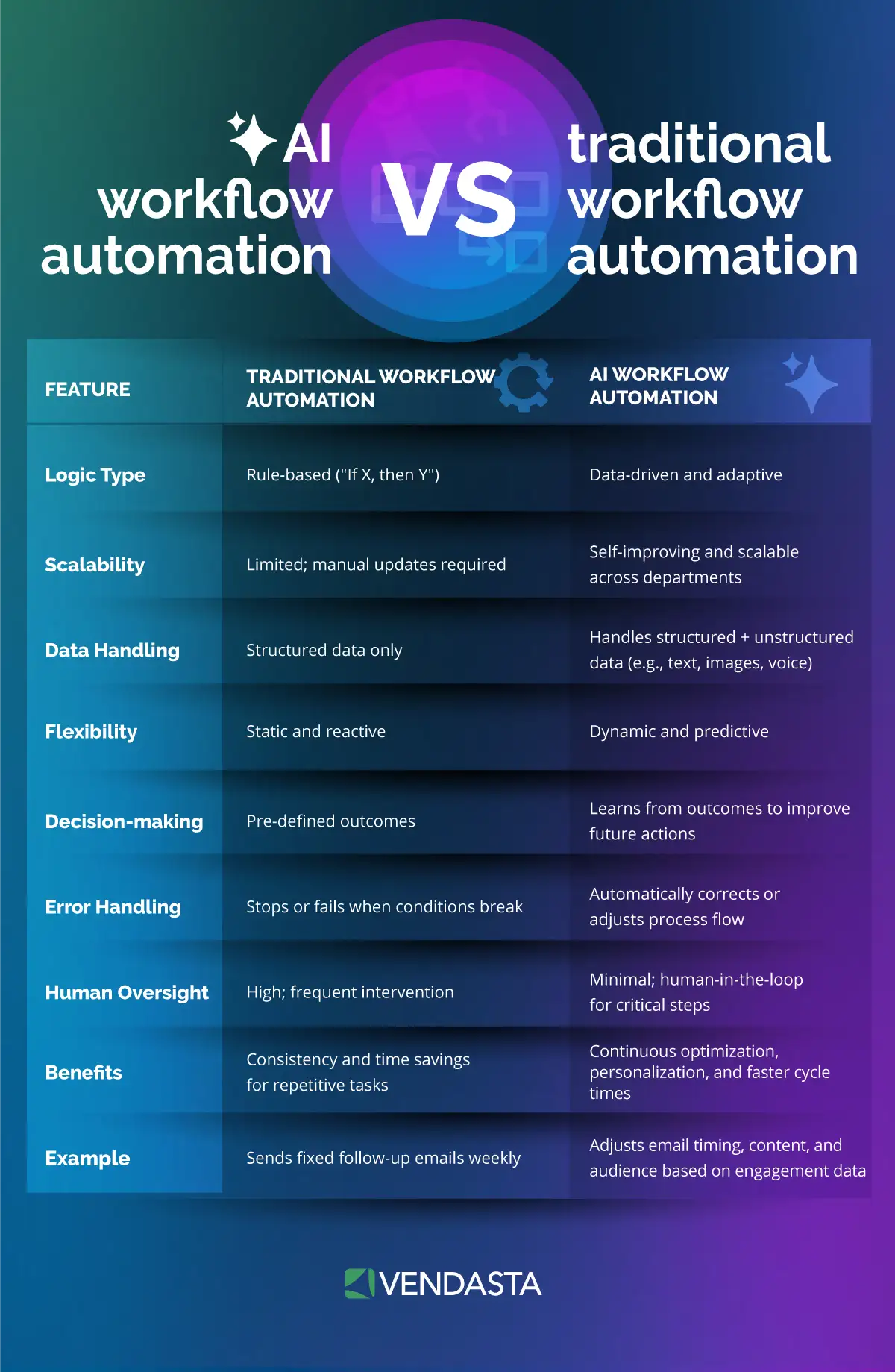
5. Ask: Does It Offer AI and Automation?
AI has moved from novelty to selection criterion: G2’s Buyer Behavior Report found 56.2% of buyers consider AI a must-have differentiator. Yet SBE Council’s survey found only 25% of SMBs use AI for marketing automation. That gap is the opening: businesses that adopt these workflows now capture leads competitors still miss.
Evaluate what the AI does. Many AI marketing tools draft copy on request, while predictive AI forecasts which leads convert. Basic chatbots answer scripted questions; the bigger operational payoff comes from AI for small businesses that completes whole workflows. It can answer the call and qualify the lead before booking the job.
What Are the Best Digital Marketing Platforms for Local Businesses in 2026?
We ranked the platforms using official pricing pages, G2, Capterra, PCMag, TrustRadius, and analyst reports current to August 2026.
1. Vendasta: Best All-in-One AI Platform for Local Businesses
Vendasta is an AI customer acquisition and engagement platform that puts CRM, unified inbox, email and SMS campaigns, reputation and listings management, AI Employees, and billing in one system. Vendasta trains the system on each business’s own data rather than generic scripts. The AI Workforce does the actual sales and marketing work on behalf of the local business: answering calls, responding to reviews, publishing content, following up with leads, and booking appointments.
For local service business owners, that means calls answered around the clock, reviews responded to and requested automatically, and leads followed up without lifting a finger — all from one login instead of juggling five separate apps. Vendasta holds 72 G2 badges and Leader status in 12 categories as of G2’s Fall 2026 report, and the platform has served 8.2 million local businesses.
You can try Vendasta free for 14 days with no credit card, or book a demo to get pricing for your specific business.
2. HubSpot: Best for Scalable Marketing and Sales Alignment
HubSpot’s starter plan runs $20/month per Core Seat at the catalog rate, while the public page shows a $7 promotional figure. HubSpot charges $800/month for Professional with annual billing plus a mandatory $3,000 one-time onboarding fee; Enterprise is $3,600/month with $7,000 onboarding.
Gartner named HubSpot a Leader in the Magic Quadrant for B2B Marketing Automation Platforms for the fifth consecutive year, and it topped G2’s Summer 2026 marketing automation grid. G2’s own October 2025 analysis adds the caveat: “Value compounds only when your team centralizes data within HubSpot’s ecosystem; otherwise, you’ll pay for unused automation.”
3. ActiveCampaign: Best for Affordable Marketing Automation
ActiveCampaign starts at $15/month for 1,000 contacts on annual billing. The Plus tier starts at $49/month and includes unlimited automation actions. Users rate it 4.5/5 across 14,789 G2 reviews, and it placed second on G2’s Summer 2026 marketing automation grid.
Costs climb with your list. TechRadar’s review scores value 3/5: “Competitive at low contact counts; expensive as lists grow.” Since November 2025, ActiveCampaign bills every contact in the database, including unsubscribed and bounced addresses, and charges $0.005 per email beyond the monthly send limit. ActiveCampaign sells CRM features such as pipelines and lead scoring as separate add-ons.
4. Zoho: Best for Businesses Wanting Scalability
Zoho Marketing Plus bundles email, social, automation, surveys, webinars, and unified analytics for $25/month with annual billing at 1,000 contacts. Zoho One extends that to 50+ business apps at $37/user/month on all-employee pricing. As of November 2025, it serves over 75,000 customers who use an average of 22 applications each.
Forrester’s ZohoDay 2026 analysis notes that Zoho uses a freemium model to convert users and then upsell, and predicts it “will continue to undercut other vendors’ costs” by owning its full infrastructure stack. The trade-offs start with full Zia AI access. TechRadar reports that Zoho restricts it to Enterprise and Ultimate CRM tiers. Reviewers on TechRadar and GetApp describe inconsistent support quality. Capterra UK reviewers report roughly a month to implement Marketing Plus.
5. Constant Contact: Best for Email Marketing Beginners
Constant Contact prices Lite at $12 and Standard at $35 per month. Premium costs $80 per month. Lite and Standard send allowances multiply your contact count by 10 and 12, respectively. Premium multiplies it by 24. Overage sends cost $0.002 each, and Constant Contact offers an SMS add-on from $10/month.
Hand-holding is the differentiator. Every plan includes live 1:1 onboarding plus phone and chat support, and PCMag notes free “Ask a Trainer” drop-in sessions run on weekdays. PCMag’s July 2026 review scores it 3.5/5, “easy to use and well-integrated,” though “relatively expensive if you have thousands of contacts.” SoftwareAdvice’s 2026 aggregate sits at 4.3/5 across 2,903 reviews, with rising list costs the most common complaint.
6. Podium: Best for Text-First Customer Messaging
Podium is a texting-first inbox and review tool that helps local businesses reply to customers by text and collect reviews. Pricing is quote-based, commonly around $289 per month.
It does not include listings management, social publishing, email campaigns, or a full CRM with pipelines. That makes it a fit for a business whose main gap is text replies and review collection. See the Vendasta vs. Podium comparison for a side-by-side breakdown.
7. Birdeye: Best for Review-Heavy Multi-Location Brands
Birdeye is a customer experience suite centered on reviews, messaging, and surveys. It is commonly quoted around $299 per month per location with strict contracts, so costs rise with each added location.
Birdeye’s AI agents handle reviews, listings, social, and messaging, but leads are routed to an outside CRM such as Salesforce or Zoho rather than worked in a native sales pipeline, so a business without a CRM needs a second tool. It fits multi-location brands where reviews are the main priority and the contract terms are acceptable. See the Vendasta vs. Birdeye comparison for a side-by-side breakdown.
8. Mailchimp: Best for Email-First Marketing
Mailchimp tied for first on Capterra’s 2026 Email Marketing Shortlist with a score of 93, and holds a 4.55/5 rating across 17,680 Capterra reviews plus 4.3/5 across 12,989 G2 reviews. TrustRadius names it in its 2026 small business buyer guide. IDC also included it in its July 2025 MarketScape on AI-enabled marketing platforms for small businesses.
The Intuit connection matters if you run QuickBooks. A Forrester Total Economic Impact study of the combined QuickBooks and Mailchimp solution found a 227% ROI with payback under six months, though Intuit commissioned that study and it models a composite firm, so treat the figure as directional.
Note: Mailchimp is email-first. It doesn’t answer calls, manage reviews, or sync listings, so a local business that needs those adds separate tools.
9. Wix: Best for Small Businesses Transitioning Online
Wix site plans run $17 to $159 per month from Light through Business Elite, with payment processing at 2.9% + $0.30 per transaction. PCMag’s August 2026 review awards 4.5/5 and an Editors’ Choice badge for its “remarkably intuitive interface,” and its SEO toolkit includes a Semrush keyword research integration and built-in SEO Assistant. In August 2026, Wix launched Symphony, a standalone multi-agent system for local businesses. A central agent called Maestro manages it.
Wix sells email marketing separately from site plans (free tier: 200 sends/month), and PCMag flags that switching templates means rebuilding the site from scratch.
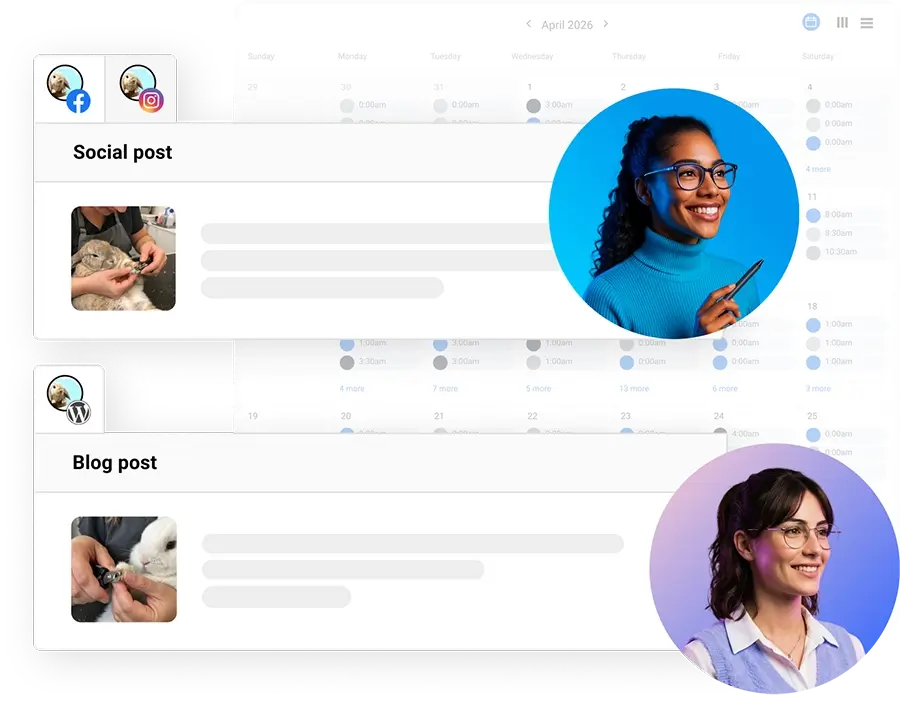
Social Media Management and Scheduling
Dedicated schedulers split along team size and complexity. Hootsuite and Sprout Social are built for bigger operations, offering approval workflows and cross-network analytics for owners managing multiple people or accounts. Buffer is the low-cost option for an owner who simply needs posts to go out on time without the overhead of a more complex dashboard.
Before buying any tool, verify which networks it actually publishes to natively. TikTok now sits alongside Facebook, Instagram, and LinkedIn in most local content calendars, and native publishing support varies more than vendor marketing pages suggest.
Several platforms already bundle scheduling. HubSpot Professional connects up to 50 social accounts with 10,000 posts a month; Zoho Marketing Plus bundles social with email, automation, and unified analytics; and Wix sells social media marketing separately from its site plans at 10, 50, or 250 posts a month by tier, with scheduling requiring an upgraded plan.
If scheduling is the only gap, a standalone tool is cheaper. The tradeoff is a second login, with brand voice, comments, and lead replies living outside the customer record. That is why Vendasta’s AI Social Media Manager runs publishing inside the same system that holds the contact and the conversation, keeping engagement data where it can actually inform follow-up.
Point Tools Worth Keeping Alongside a Platform
A consolidated platform replaces overlapping subscriptions while specialist tools can remain alongside it. Semrush still does keyword research at a depth no built-in SEO panel matches, which is why Wix licenses it for the keyword tool cited above. Canva for design work and Buffer for social scheduling both sit comfortably next to a platform. Google Analytics can remain the free measurement layer rather than becoming part of the platform.
Free and Low-Cost Tools for a Zero-Budget Start
A complete and verified Google Business Profile is the highest-return free asset available to a local business. It feeds map results, review prompts, and direct calls before any paid channel enters the picture, and it costs nothing beyond the time to fill every field accurately.
Canva’s free tier handles design work without a subscription, and a general AI assistant such as ChatGPT can draft first-pass copy for ads, emails, or social posts. Both outputs need a human edit against the business’s actual service list and pricing before they go live.
HARO-style journalist-query services, which connect reporters with expert sources, earn press coverage and inbound links for the cost of writing a well-targeted reply. The free platform tiers already covered in this guide extend the runway further: HubSpot’s free plan supports 2,000 email sends a month across 1,000 contacts, Zoho Campaigns’ forever-free tier covers 2,000 contacts and 6,000 monthly sends, and Wix Email Marketing includes 200 free sends a month.
Free tools work until the volume of leads, reviews, and messages exceeds what one person can track by hand. That threshold, not an arbitrary calendar date, is the practical signal to consolidate onto a paid platform.
Which Platform Fits Your Type of Business
The right pick depends on how your business makes money:
- Local service businesses (home services, health and wellness, professional services, auto): Vendasta, because calls, reviews, listings, and booked jobs drive revenue, and the AI Receptionist and AI Reputation Specialist handle them in one login.
- Ecommerce stores: An email and SMS tool built around store data, such as Klaviyo or Omnisend, which trigger campaigns from carts and purchases.
- Solo creators and newsletter-first businesses: An email-first tool with a free tier, such as Mailchimp or Brevo.
- Business-to-business service firms with a sales pipeline: A CRM-led platform such as HubSpot, Zoho, or Keap.
- Agencies serving local businesses: Vendasta’s partner platform, which lets agencies deliver AI Employees to their clients under their own brand.
Vendasta: The Leading Digital Marketing Platform for Local Businesses
Multi-channel suites like HubSpot and Zoho One cover many channels but still leave the phone, the reviews, and the invoice in separate places, while single-layer tools cover only reporting or the website. Vendasta is the only platform in this guide that combines review management and listings with a CRM, campaigns, and AI Employees in one login.
Intelligent AI Employees That Work Like Virtual Staff
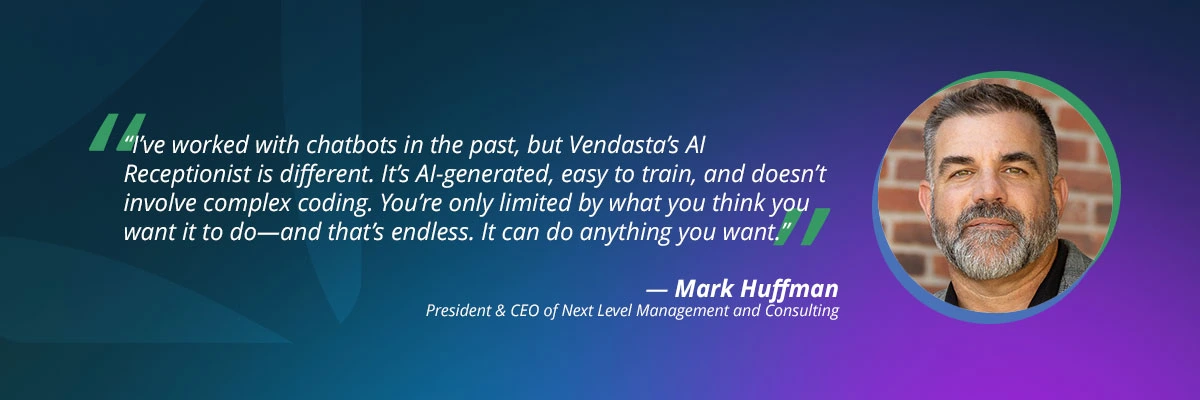
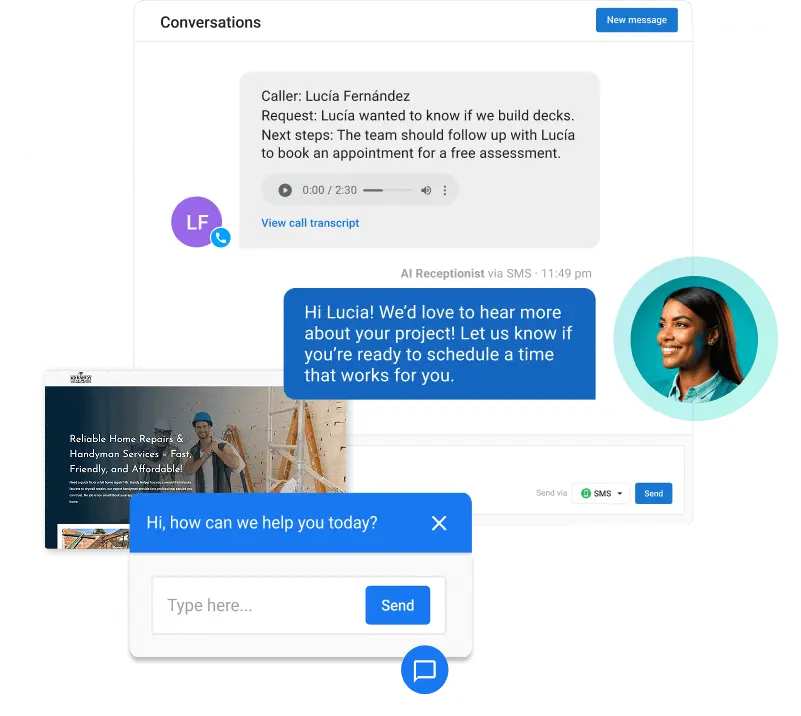
Vendasta’s AI Workforce is a set of AI Employees that complete end-to-end work using the business’s own data. The AI Receptionist works 24/7 in the context of that business’s own brand and data, fielding inbound inquiries and qualifying leads. The AI Reputation Specialist responds to reviews and sends review requests. The AI Search Specialist reports how the business appears in ChatGPT, Gemini, and Perplexity answers, where more customers now start their search.
For a contractor who loses leads every time the phone rings on a job site, AI receptionists for small business convert ad spend that voicemail was wasting. Conversations AI carries the back-and-forth with those inquiries. The AI and human division of labor stays clean: AI handles capture and qualification; you handle the billable work.
One Login for Inbox, Reviews, and Reporting
Vendasta Business App is the central portal where a local business runs its CRM, unified inbox, campaigns, and AI Employees — all from one place. No juggling separate tools or logging into multiple dashboards. Franchise and multi-location owners run every site from the multi-location portal, with roll-up reporting across locations.
The built-in Executive Report sends automated proof-of-performance summaries so the owner can see exactly what work was completed and what it produced, without building a spreadsheet.
AI-Powered Tools Built for Your Business
A Snapshot Report scans 70+ directories and 30+ review sites to show exactly where missing or inconsistent listings are costing the business calls. Reputation tooling then handles the fix. It automates review requests and handles Net Promoter Score (NPS) management so there’s always a steady flow of fresh reviews working in the background.
Billing consolidates in the same place. Vendasta Payments processes payments at 2.9% + $0.30 per transaction, so invoicing lives in the same system as the campaigns that earned the revenue.
Proof From Local Businesses Already Running It
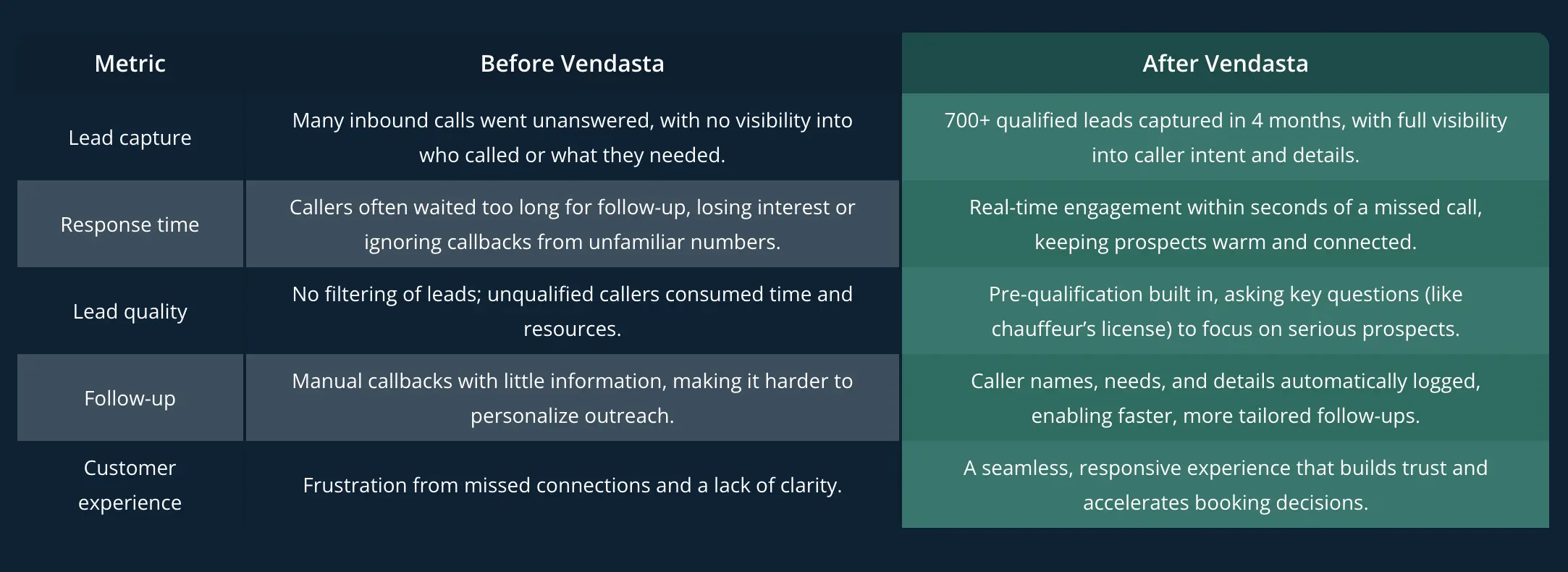
A luxury car rental company was losing inbound calls it never knew it was missing, until Elite Web Professionals deployed the AI Receptionist to answer them. Over four months, the tool handled 1,017 calls and qualified 778 leads, producing a 76% conversion rate.
An auction house working with Blue River Digital generated 21 five-star reviews in 30 days with the AI Reputation Specialist.
The same auction house’s AI Receptionist matched an 11 p.m. website visitor with a property, and that lead produced a $20,000–$30,000 commission.
Neighborly’s franchise network cut unanswered leads from roughly 30% to nearly zero and increased leads converted to revenue by 372% year over year.
Final Thoughts: Choosing the Right Platform for Local Business Growth
Start from the problem that costs you the most this month. Missed calls and unanswered reviews call for answering and review automation, and five apps that don’t share data call for consolidation. If you only need email or a basic website, a point tool like Mailchimp or Wix can cover it, but every gap after that adds another login.
For a local service business owner, consolidation means the call gets answered, the review gets a reply, and the follow-up goes out — all from one login, while you’re still on the job. You’re not losing leads because a notification sat in the wrong app or a review went unanswered for a week. Everything that matters to your reputation and your pipeline runs from a single place, so nothing slips through the cracks between disconnected tools.
Vendasta is also available through partners who serve local businesses, for owners who would rather have someone else run it for them.
If leads are falling through the gaps between the tools you’re already paying for, the fastest way to see what a consolidated stack looks like in practice is to book a Vendasta demo and walk through it with your own business in mind.
Best Digital Marketing Platforms for Small Businesses FAQs
1. What is the best digital marketing platform for small businesses?
Vendasta is the strongest choice for consolidating campaigns, customer engagement, reporting, and billing in one system. It has served 8.2 million local businesses and holds Leader status in 12 G2 categories as of G2’s Fall 2026 report. If you only need email, Mailchimp or Constant Contact costs less. For enterprise-grade automation, HubSpot goes higher — at a steep price.
2. Which digital marketing platform integrates AI and automation the best?
Vendasta’s AI Employees complete full workflows by fielding inbound inquiries and qualifying leads. They also respond to reviews using the business’s own data. HubSpot’s Breeze agents are capable, but HubSpot prices them by outcome: MarTech reports its Customer Agent costs $0.50 per resolved conversation as of April 14, 2026.
3. What is the best all-in-one platform for SEO, social media, and email marketing?
Zoho Marketing Plus bundles email, social, webinars, and analytics from $25/month. Vendasta covers the same channels plus listings and reputation management in one login. Vendasta Social AI publishes social posts, Campaigns Pro runs email and SMS, and Local SEO handles listings, so no separate tools are required.
4. Which digital marketing platform is best for local businesses transitioning online?
Wix, for the site itself: PCMag’s Editors’ Choice rating reflects how fast a non-technical owner can publish. Budget for email marketing separately, since Wix does not bundle it with site plans.
5. What’s the best platform for small businesses focused on growth and scaling?
Check how pricing scales against your growth axis. Zoho CRM scales per user, suiting small teams with big lists, while Zoho Marketing Plus charges for contact bands above 1,000. ActiveCampaign and HubSpot scale per contact, which gets expensive as lists grow. Vendasta prices by the business rather than per contact, so a growing customer list doesn’t raise the bill.
6. Do small businesses need a digital marketing platform?
Owners juggling several disconnected apps gain the most from consolidating, especially once leads, reviews, and messages arrive faster than one person can track by hand. A business with a few hundred contacts and one channel can start with a free tier and upgrade when the juggling starts costing leads.
7. Which digital marketing platforms show ROI most clearly for small businesses?
The ones that tie every activity to an outcome in a recurring report. Vendasta’s Executive Report automates that proof-of-performance loop, and its activity log shows every action the AI took. Independent, non-vendor ROI studies on consolidation remain scarce, so demand your own numbers from any trial.
8. What platform is best for automating repetitive marketing tasks?
Vendasta, because its AI Employees do the repetitive work rather than waiting for you to build it: answering calls, replying to reviews, sending review requests, and following up with leads. ActiveCampaign suits businesses that want to build their own email automation sequences. CMI’s 2025 research found 44% of marketers say their current stack cannot automate repetitive tasks.
9. Which digital marketing platforms integrate best with other business tools?
G2’s buyer research puts integrations at the top of marketing-software purchase criteria, so this question deserves weight. Zoho One keeps 50+ apps native to one vendor, while Vendasta connects to the field-service and accounting tools local businesses already use, including Jobber, Housecall Pro, ServiceTitan, and QuickBooks, so leads and invoices stay in one record.
10. What digital marketing platform works best for specific industries like home services or pet care?
Vendasta fits both because the AI Reputation Specialist sends review requests and replies to reviews under the business’s own brand. Reputation AI integrates with PetExec, Jobber, and QuickBooks Online to send review requests from real transactions, and Social Ordeals’ nine-location veterinary group attributed $47,698 in monthly revenue to AI intake. The multi-location portal handles owners running more than one site. A review request that fires the day the job closes beats a generic monthly blast, especially where local search rankings depend on fresh reviews.