
Most businesses understand that online reviews influence trust, local rankings, and buying decisions. The challenge is execution. Collecting reviews and responding to them consistently across Google, Facebook, and other platforms takes time that most teams simply do not have.
The cost of falling behind is not always obvious at first. Unanswered reviews quietly erode credibility and local visibility, especially in high-intent searches where buyers are comparing options side by side. Slow responses make businesses look inattentive. Generic replies weaken trust. Over time, competitors who respond quickly and thoughtfully appear more active, more reliable, and more deserving of customer attention.
This is where AI review response changes the equation. Instead of choosing between speed and quality, businesses can use AI to respond faster while staying on brand and context-aware.
This guide is built for agencies, franchisors, ISVs, and any business that supports SMB growth. You will learn how AI review response works and how automation helps your business manage reviews at scale without losing authenticity or control.
Replace busy work with AI employees that take action
TL;DR:
- AI review response helps businesses reply to customer reviews quickly, consistently, and on brand, even across multiple clients or locations.
- Timely review responses improve trust and local visibility, especially in Google searches with local intent.
- Vendasta’s AI Reputation Specialist combines automated responses, review requests, and sentiment insights to turn reviews into a scalable growth channel.
What Is an AI Review Response?
An AI review response is a system that uses generative AI to draft or publish replies to customer reviews based on context, sentiment, and predefined brand rules.
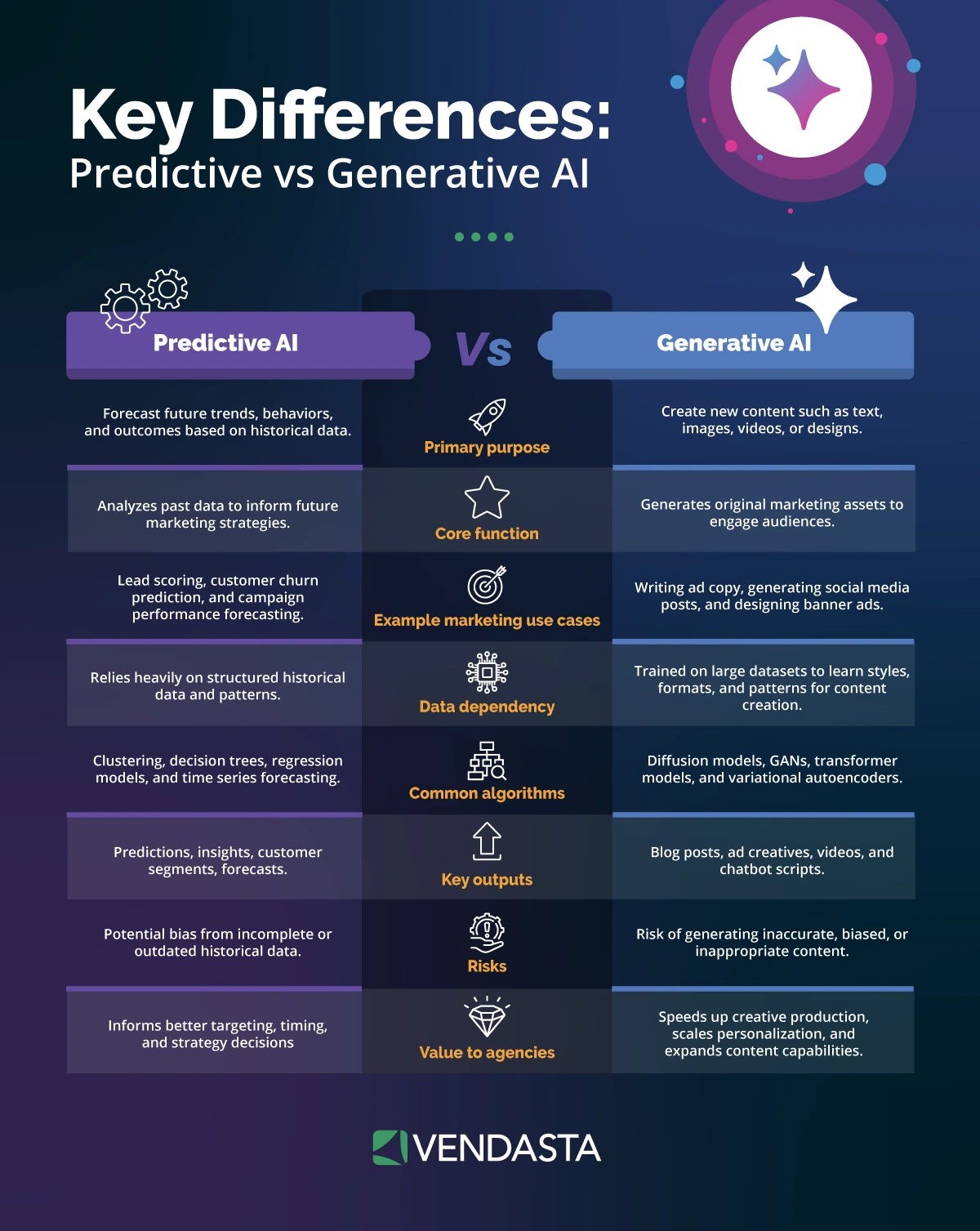
Instead of relying on static templates or manual replies, AI-generated review responses adapt to what the customer actually said, where they said it, and how they feel.
In practical terms, this means businesses can respond to reviews faster and more consistently across platforms like Google and Facebook, without sacrificing tone or accuracy.
An AI-generated review response is designed to acknowledge the customer, reinforce trust, and reflect the brand’s voice, even when review volume is high.
AI review response tools are most commonly used for:
- AI Google review response workflows that support local visibility and map rankings.
- AI Facebook review response workflows that help businesses stay engaged on social platforms.
- Multi-location or multi-client review management where manual responses do not scale.
How AI Review Responses Work in Practice
Most AI review response systems follow a similar process:
- A customer leaves a review on Google or Facebook.
- The AI analyzes sentiment, star rating, keywords, and language.
- A response is generated using brand tone guidelines and business context.
- Rules determine whether the response is posted automatically or queued for review.
Advanced systems also detect the language of the review and respond accordingly. This allows businesses to reply in German, French, Spanish, or other languages without switching tools or teams.
AI Review Response vs Templates
Traditional review templates save time, but they often sound repetitive and generic. AI review responses go further by adapting each reply to the content of the review itself.
Key differences include:
- Templates reuse the same phrasing across reviews, which customers notice over time.
- AI-generated review responses vary in language and structure based on sentiment and intent.
- AI can adjust tone for positive, neutral, or negative reviews automatically.
This flexibility is especially important for AI Google review response strategies, where authenticity and relevance influence how customers perceive a business in local search results.
AI-Generated Replies vs. Traditional Methods
| Metric | Static Templates | Manual Responses | AI-Generated Replies |
| Personalization | Low: Usually generic “thank you” scripts that ignore specific customer comments. | High: Fully tailored to the individual, but prone to human fatigue/typos. | High: Context-aware; uses NLP to address specific topics mentioned in the review. |
| Speed (TAT) | Medium: Faster than typing, but still requires a human to copy/paste. | Low: Requires significant time to read, draft, and post each reply. | Instant: Generates a draft in seconds; can be set to auto-post for 5-star reviews. |
| Scalability | High: Easy to replicate, but looks “robotic” and repetitive at scale. | Very Low: Scaling requires hiring more staff as review volume grows. | Infinite: Handles 10 or 10,000 reviews with the same level of consistency. |
| Accuracy | High: Predictable, but often feels irrelevant to the customer’s actual issue. | Variable: Dependent on the staff member’s mood, training, and attention to detail. | High: Guided by brand voice guidelines and sentiment analysis for precision. |
| Local SEO Impact | Neutral: Provides a response, but lacks the keyword variety Google favors. | High: If the staff member remembers to include keywords naturally. | Very High: Can be optimized to naturally weave in relevant services and local keywords. |
Sentiment Analysis and Topic Modeling: How the AI “Reads” Reviews
To the untrained eye, an AI review response looks like magic. In reality, it is the result of two sophisticated branches of Natural Language Processing (NLP) working in tandem: Sentiment Analysis and Topic Modeling. Understanding these allows you to trust the automation and better tune your brand voice.
Sentiment Analysis: Detecting the “Vibe”
Sentiment analysis (or opinion mining) is the process of identifying the emotional tone behind a customer’s words. Modern AI doesn’t just look for “good” or “bad” words; it analyzes the context and intensity of the language.
- Polarity Scoring: The AI assigns a numerical value to the review (e.g., -1.0 for very negative to +1.0 for very positive).
- Emotion Detection: Advanced models can now distinguish between different types of negative sentiment, such as frustration (which needs an apology) versus urgency (which needs a solution).
- Sarcasm Detection: Through deep learning, the AI recognizes when a customer says “Great job on the 2-hour wait!” and correctly flags it as negative despite the positive word choice.
Topic Modeling: Finding the “Why”
While sentiment analysis tells you how a customer feels, topic modeling tells you what they are talking about. It uses a technique called Latent Dirichlet Allocation (LDA) to cluster words and identify hidden themes across thousands of reviews.
How the AI Extracts Meaning:
- Tokenization: The AI breaks the review into individual words or “tokens.”
- Noun/Verb Extraction: It ignores “fluff” words (like the, and, or) and focuses on high-impact nouns (e.g., “parking,” “waitress,” “software”) and verbs (e.g., “crashed,” “helped,” “charged”).
- Clustering: It groups these into topics. If 20 reviews mention “slow,” “wait,” and “minutes,” the AI identifies “Speed of Service” as a key topic.
- Response Mapping: The AI review response generator then uses these topics to ensure the reply is specific. Instead of saying “Thanks for the review,” it says “We’re glad you found our check-in process so efficient!”
Why This Matters for Your Reputation
By combining these two technologies, the AI creates a “Sentiment Map” of your business. This allows you to see, at a glance, that your “Product Quality” is high-sentiment, but your “Shipping Speed” is a trending negative topic. Responding with AI isn’t just about saving time; it’s about using these insights to improve your actual business operations.
The Risks of Unmonitored AI: Why “Set it and Forget it” is a Trap
AI is a powerful engine, but it needs a driver. Moving to full automation without oversight can lead to three critical risks that could tank your reputation.
1. The Danger of “Hallucinations”
AI models are designed to predict the next likely word, not verify facts. A “hallucination” occurs when an AI confidently invents details that don’t exist.
- The Pool Fail: An AI might thank a customer for mentioning the “refreshing pool” at a hotel that doesn’t actually have one.
- The Policy Gap: AI might accidentally promise a “lifetime warranty” or a “full refund” in a response, which can become legally binding in certain jurisdictions.
2. Violating Platform Terms of Service (TOS)
Google and Facebook have tightened their 2026 guidelines to combat “spammy” automation.
- Google Business Profile (GBP) Rules: Google prioritizes authentic, helpful content. If an AI generates 100 responses that all use the exact same keywords or “gibberish” structure, your profile risks being flagged for low-quality or irrelevant content.
- Privacy Violations: Unmonitored AI might inadvertently repeat a customer’s private information (like an invoice number or full name) if it was mentioned in the review, violating privacy standards.
3. The “Human-in-the-Loop” (HITL) Solution
To mitigate these risks, it is essential to champion the HITL model. This is a workflow where:
- The AI generates a draft instantly.
- The system flags any response with a “low confidence” score or negative sentiment.
- A human reviews and approves the draft before it goes live. This ensures you get 10x the speed without the risk of a PR nightmare.
Why AI Review Response Matters for Visibility, Trust, and Revenue
AI review response directly influences how businesses are discovered, evaluated, and chosen, especially in competitive local markets where buyers compare options quickly. Reviews shape first impressions, and how a business responds often matters just as much as the rating itself.
For partners supporting SMBs, this creates a clear opportunity. When reviews are managed consistently and thoughtfully, they become a lever for stronger visibility, higher trust, and measurable revenue impact.
Reviews as a Local Ranking and Credibility Signal
Nearly 46 percent of Google searches have local intent, meaning almost half of searchers are actively looking for nearby products or services. Reviews play a central role in those discovery moments.
Search engines look for signals that a business is active and engaged (this is especially true with Google’s “Have AI Check Prices” changing the game). Customers do the same. Regular, timely review responses signal that the business is paying attention and values feedback.
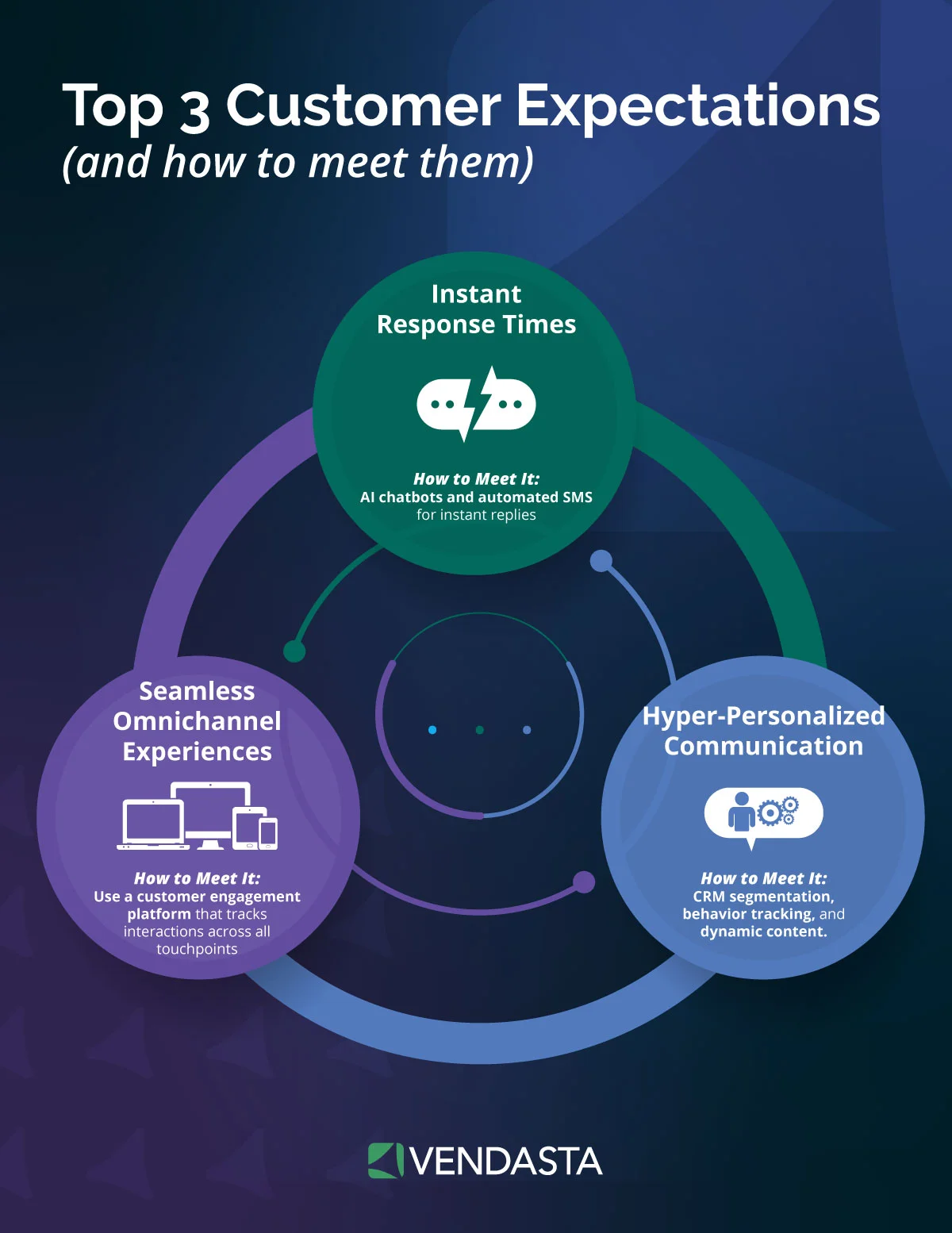
Over time, this engagement supports stronger local visibility and helps listings stand out in search results.
Consistent responses also influence perception when customers compare similar options. Two businesses may have comparable star ratings, but the one that responds clearly and professionally often feels more trustworthy.
This is where an AI-powered approach can support a stronger AI customer experience by ensuring no review is ignored, even as volume increases.
Customer Expectations are Higher than Ever
Customer behavior has shifted. Reviews are no longer passive feedback. They are part of an ongoing conversation.
About 88 percent of consumers say they are more likely to trust a business that responds to reviews, showing that engagement directly affects credibility.
At the same time, around 70 percent of consumers will leave a review only when asked, which highlights how proactive outreach and follow-up matter just as much as response quality.
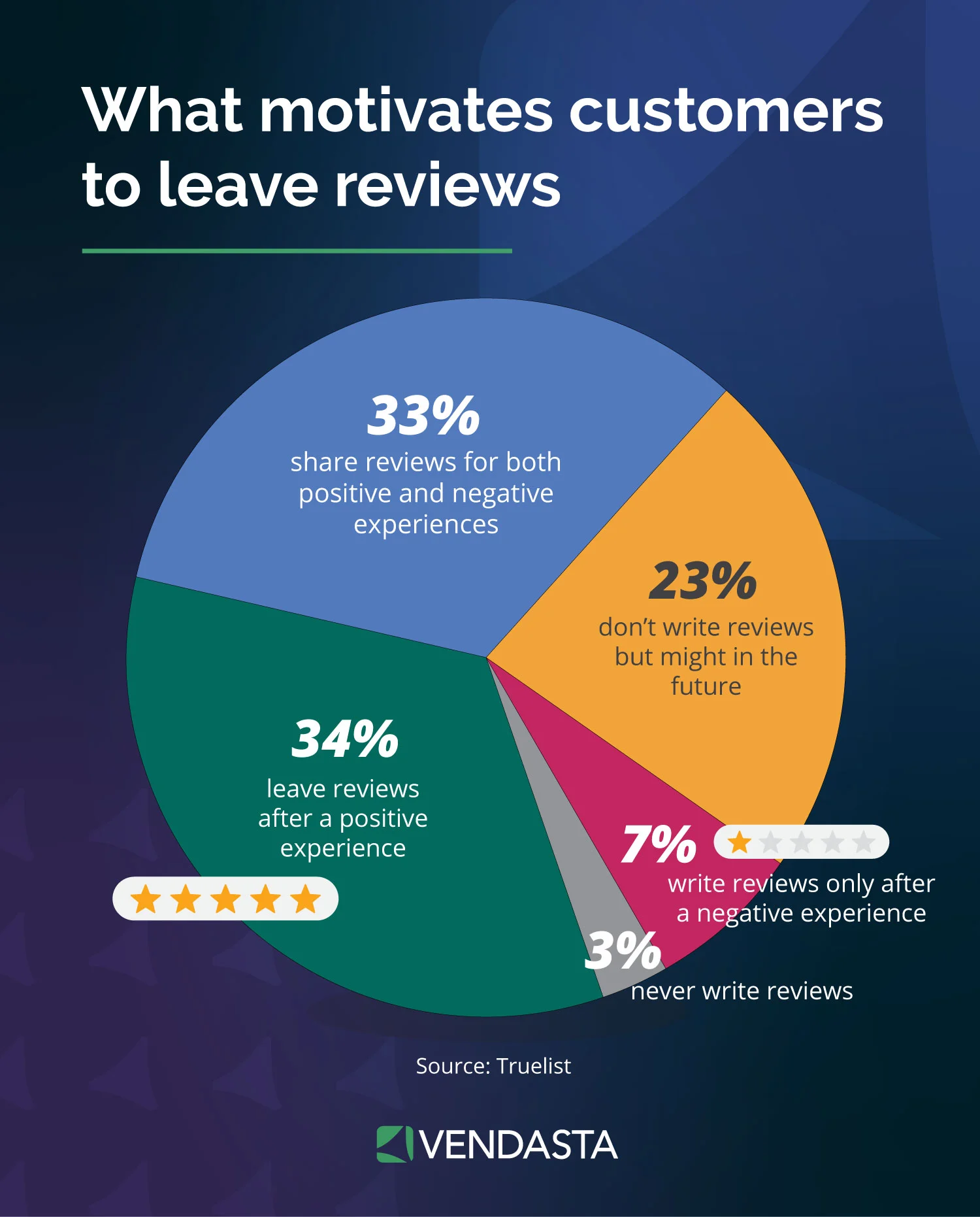
Speed and tone are critical in this environment. Slow responses feel dismissive. Generic replies feel automated in the wrong way.
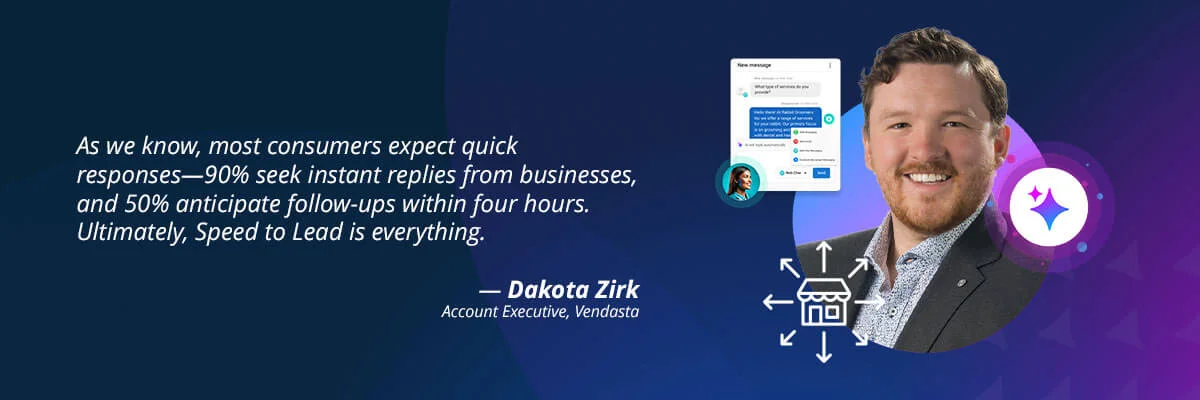
Customers expect acknowledgements that are timely, relevant, and human. Star ratings may capture attention, but responses often determine whether trust is built or lost.
This is where AI review responses create leverage. By combining automation with clear tone guidelines and approval rules, businesses can meet modern expectations without adding operational strain.
When review requests and responses are handled through AI marketing automation, businesses can win locally by staying responsive, consistent, and credible.
Handled well, AI review responses turn reputation management into a repeatable advantage rather than a reactive chore.
How AI Review Responses Work Step by Step
An AI review response workflow is simple on the surface: a review comes in, and the system helps generate a reply.
What makes it effective is what happens in between. Good tools do not rely on copy-and-paste templates. They look at the review’s content, sentiment, and language, then produce an AI-generated review response that fits the situation and matches the brand.
1. A customer leaves a review on Google or Facebook
This is the starting point for any AI Google review response or AI Facebook review response workflow. A new review is posted publicly, and the platform records details such as the star rating, the written comment (if included), and the date.
2. The AI evaluates sentiment, star rating, and language
Next, the AI scans the review to understand what the customer is saying and how they feel. It typically looks for:
- Sentiment (positive, neutral, negative).
- Star rating thresholds (for example, 4–5 stars can be handled automatically, while 1–2 stars may require approval).
- Review language (English, French, Spanish, German, and more).
This step helps the system respond appropriately, especially when the tone of a three-star review is mixed or when a short one-star review includes a serious complaint.
3. A personalized, context-aware response is generated using business knowledge and tone guidelines
Now the system drafts an AI-generated review response using the rules and context you provide, such as:
- Business name and location details.
- Products or services offered.
- Brand voice guidelines, like friendly, professional, or concise.
- Approved phrases for common situations, such as appointment delays or billing questions.
The goal is a response that feels specific and human. For example, a five-star review might get a warm thank-you that reinforces the business’s values, while a negative review might focus on empathy, accountability, and a next step.
4. Rules determine whether the response is auto-posted or delayed for review
This is where control matters. Most businesses use rules so automation stays safe. For example:
- Auto-post replies only for 4–5 star reviews.
- Delay posting so a team member can review first.
- Require manual approval for reviews mentioning safety, refunds, or legal issues.
- Apply a time delay so responses do not appear instantly automated.
These guardrails in automated review responses help the business stay responsive while protecting credibility, especially in high-stakes categories.
5. Review data feeds into sentiment analysis and reporting for ongoing improvement
Once responses are posted, the review content and engagement data become part of a larger feedback loop. Over time, this helps businesses:
- Spot sentiment shifts early, such as a spike in complaints about wait times.
- Identify recurring themes in reviews and use them to improve operations.
- Track progress across locations, teams, or time periods.
- Understand how review volume and ratings change when review requests and responses become consistent.
In other words, an AI review response helps turn reviews into usable insights.
What This Means In Real Life
When you support multiple SMB clients or locations, manual review management breaks down quickly. A structured workflow, on the other hand, makes it possible to respond consistently across Google and Facebook without burning out staff.
With the right rules and tone guidance, AI-generated review responses can feel thoughtful and brand-aligned, while still saving significant time.
AI Review Response vs Manual Responses vs Templates
Not all automated review responses deliver the same results. Speed, consistency, and trust all depend on how responses are created and managed. To choose the right model, it helps to compare manual workflows, templates, and different levels of AI review response side by side.
The table below breaks down the most common approaches businesses use today.
| Approach | Response Speed | Scalability | Personalization | Risk Level | Best Use Cases |
| Fully manual responses | Slow. Depends entirely on staff availability. | Low. Becomes unmanageable as review volume grows. | High when time allows. | Low, but inconsistent over time. | Single-location businesses with low review volume. |
| Static response templates | Moderate. Faster than manual, but still requires effort. | Medium. Works until volume or locations increase. | Low. Customers notice repeated phrasing. | Medium. Can feel generic or dismissive. | Businesses needing basic coverage without full automation. |
| AI-assisted responses | Fast. Drafted instantly with human control. | High. Scales across many locations or clients. | High. Adapts tone and context per review. | Low when rules and approvals are in place. | Agencies, franchisors, and SMBs managing reviews at scale. |
| Fully automated AI responses | Very fast. Responses are published automatically. | Very high. Handles large volumes effortlessly. | Medium to high, depending on configuration. | Higher if guardrails are not defined. | High-volume use cases with strict rules and monitoring. |
Why Most Businesses Choose AI-Assisted Review Response
While full automation may sound appealing, most businesses benefit more from an AI and human approach. This model combines the speed and scale of AI with the judgment and oversight of a human team.
AI-assisted review response works well because it:
- Drafts responses instantly, reducing delays.
- Uses business knowledge and tone guidelines to stay on brand.
- Applies rules so sensitive or negative reviews get a human review.
- Scales easily as review volume grows across platforms like Google and Facebook.
For partners supporting multiple SMBs, this balance matters. It keeps responses timely and consistent without sacrificing credibility. Instead of choosing between efficiency and trust, AI-assisted review response allows businesses to achieve both.
When Should Your Business Use AI Review Response?
AI review response is not an all-or-nothing decision. It is a practical tool that makes sense in specific situations where speed, consistency, and scale matter.
If your team is struggling to keep up with reviews or noticing gaps in response quality, this section can help you decide whether AI review responses are the right fit.
Common Use Cases Where AI Review Response Makes Sense
AI review responses are especially valuable when your business supports growth across multiple clients, locations, or platforms.
Managing Reviews for Multiple SMB Clients at Once
Agencies, ISVs, and service providers often manage reviews for dozens of SMBs at the same time. Manual responses do not scale, and templates quickly feel repetitive. AI review response helps ensure every client receives timely, on-brand replies without creating bottlenecks.
Supporting Multi-Location or Franchise Businesses
Franchises and regional brands face a unique challenge. Each location needs fast responses, but messaging must stay consistent and compliant. AI review response allows centralized control over tone and rules while still responding to reviews at the local level on Google and Facebook.
High-Volume Review Industries
Industries like home services, healthcare, hospitality, and retail tend to generate reviews frequently, often in spikes. During busy seasons, reviews can pile up quickly. AI review response keeps response times short even when volume surges, which helps protect ratings and customer trust.
Faster Responses without Adding Headcount
Hiring more staff to manage reviews is rarely cost-effective. AI review response allows teams to improve speed and consistency using automation, while keeping people focused on higher-value work like customer follow-ups and service improvements.
Best Practices for AI Review Response That Still Feels Human
AI review responses work best when they support human intent rather than replace it. When guided by strong AI leadership, the goal is to respond quickly and thoughtfully in a way that reinforces trust while keeping people in control of strategy, tone, and accountability.
Set Clear Tone and Language Guidelines First
Before enabling automation, define how the business should sound in public responses. This includes:
- Preferred tone, such as friendly, professional, or empathetic.
- Phrases to encourage, avoid, or reserve for specific situations.
- How to acknowledge praise, feedback, or concerns without overpromising.
Clear guidelines give AI the context it needs to respond consistently, even when review volume increases.
Use AI for First Drafts, not Blind Publishing
AI review responses are most effective when they assist rather than act alone. Many teams use AI to generate responses quickly, then apply rules that determine when a response can be posted automatically and when human review is required.
A common approach is:
- Auto-post replies to positive reviews.
- Queue neutral or mixed reviews for quick approval.
- Escalate negative reviews to a human before publishing.
This balance preserves speed while protecting credibility.
Personalize Responses with Real Details
Small details make a big difference. Encourage AI review responses to reference:
- The type of service or product mentioned.
- Timing cues, such as “recent visit” or “last appointment.”
- Location-specific language for multi-location businesses.
These touches make responses feel specific and intentional rather than generic.
Handle Negative Reviews with Extra Care
Negative reviews require a different approach. Even when AI is involved, responses should focus on:
- Acknowledging the issue without defensiveness.
- Showing empathy and accountability.
- Offering a next step or private follow-up.
Using star-rating thresholds and approval rules ensures sensitive reviews are handled thoughtfully and consistently.
Monitor Patterns, not Just Individual Reviews
The real value of AI review responses goes beyond replying. Over time, review data reveals trends that teams can act on. Regularly review:
- Common complaints or recurring praise.
- Shifts in sentiment across locations or time periods.
- Changes in review volume after adjusting response speed or tone.
This helps businesses improve operations, not just optics.
Keep Humans in Control
AI should make review management easier, not riskier. The most effective setups allow businesses to:
- Adjust rules as needs change.
- Pause automation when necessary.
- Step in quickly when a situation requires nuance.
When an AI review response is guided by clear rules and human oversight, it becomes a reliable way to stay responsive at scale while still sounding authentic and human.
Real-World Comparisons: Generic AI vs. Optimized AI Responses
To understand the power of Intelligent AI Employees, you have to see the difference between a “word predictor” and a “context-aware” partner. A generic AI often falls into the trap of being overly polite without saying anything of substance. An Optimized AI, powered by your business’s unique data, creates a response that reinforces your brand and drives SEO value.
Here are four side-by-side examples of how these two approaches compare in the wild.
Example 1: The 5-Star Service Review
Scenario: A customer leaves a 5-star review for a plumbing company, specifically mentioning a technician named Mike and a “leaky faucet.”
| The Generic AI Approach | The Optimized AI (Vendasta Style) |
| “Thank you for the 5-star review! We are so glad you had a great experience with our business. We hope to see you again soon.” | “Thanks for the shout-out! We’re thrilled Mike was able to get that leaky faucet sorted out for you. We’ll be sure to pass your kind words along to him. Thanks for choosing [Business Name] for your home plumbing repairs!” |
| The Verdict: Safe, but forgettable. It misses the chance to confirm the specific service provided. | The Verdict: Bold and helpful. It uses semantic keywords (plumbing repairs) and personalizes the experience by naming the technician. |
Example 2: The Detailed 1-Star Complaint
Scenario: A diner leaves a 1-star review for a restaurant, complaining about “cold tacos” and a “20-minute wait” despite having a reservation.
| The Generic AI Approach | The Optimized AI (Vendasta Style) |
| “We are sorry you were unhappy with your visit. We strive for excellence and will look into this. Please contact us to discuss.” | “That’s not the experience we want for you. A 20-minute wait with a reservation is unacceptable, and we’re disappointed our tacos didn’t hit the table hot. We’d like to make this right. Please reach out to our manager at [Phone Number] so we can invite you back for a much better meal.” |
| The Verdict: Dismissive and defensive. It uses a “one-size-fits-all” apology that lacks empathy. | The Verdict: Approachable and authoritative. It acknowledges the specific pain points (wait time, cold food) and provides a clear, professional next step. |
Example 3: The “No-Text” 5-Star Rating
Scenario: A customer leaves a 5-star rating on Google Business Profile but doesn’t write a single word.
| The Generic AI Approach | The Optimized AI (Vendasta Style) |
| [No response provided, or a basic “Thank you!”] | “We love seeing those five stars! Thanks for the support. If there’s a specific service you loved—like our winter tire swap or oil change—we’d love to hear about it next time you stop by!” |
| The Verdict: A wasted opportunity for engagement and SEO. | The Verdict: Clever and proactive. It uses the response to softly market other services, encouraging the customer to leave more details in the future. |
Example 4: The Mixed 3-Star Feedback
Scenario: A customer likes the product but found the “checkout process” on the website confusing.
| The Generic AI Approach | The Optimized AI (Vendasta Style) |
| “Thanks for the feedback. We are glad you liked the product. We will work on our website.” | “We’re glad you’re enjoying your new [Product Name]! We hear you loud and clear on the checkout process—simplicity is a core goal for us, and we’re already working on an update to make it smoother. Thanks for helping us improve!” |
| The Verdict: Vague and non-committal. | The Verdict: Sincere and empowering. It validates the customer’s frustration and demonstrates active improvement, turning a neutral review into a trust-building moment. |
Essential Features of an AI Review Response Tool
Not all AI is created equal. In 2026, a simple “reply generator” isn’t enough to move the needle for a growing business. To ensure your reputation management is both scalable and safe, look for these five non-negotiable features:
1. Deep Sentiment & Emotional Granularity
Basic AI can tell if a review is “good” or “bad.” Intelligent AI Employees go further by detecting emotional cues like frustration, confusion, or delight and leveraging this knowledge in their automated review responses.
-
Why it matters: A “3-star” review can mean anything from “I loved the product, but it arrived late” to “I hate the product, but the service was okay.” Your tool must distinguish between these nuances to draft a relevant reply.
2. Contextual Data Integration (Proprietary Knowledge)
The best tools don’t just “guess”—they know. A top-tier tool should pull from your business’s unique data, such as:
- Service Menus: Correcting a customer about a specific dish or service.
- Staff Names: Automatically thanking “Mike” or “Sarah” if they were mentioned in the review.
- Business Hours & Policies: Weaving in facts about your holiday hours or return window.
3. Multi-Platform Centralization
Managing reviews in five different tabs is a recipe for burnout. Your tool must offer a centralized dashboard that syncs Google Business Profiles, Facebook Pages, Trustpilot, and industry-specific sites (like Yelp or TripAdvisor) into a single feed.
4. “Human-in-the-Loop” (HITL) Workflow Controls
Automation should be a choice, not a mandate. Look for tools that allow you to set logic gates:
- Auto-approve: 4 and 5-star reviews with no sensitive keywords.
- Manual Review: Any review below 3 stars or those containing “red flag” words like “lawyer,” “refund,” or “unsafe.”
5. Dynamic Multilingual Support
In a global (or even just diverse local) market, your AI must detect the language of the incoming review and respond in kind.
-
The Standard: It should move beyond simple “Google Translate” styles and use LLM-native translation to ensure the tone is culturally appropriate and grammatically perfect in languages like Spanish, French, German, and more.
What to Look for in an AI Review Response Generator
Not all AI tools are created equal. In 2026, simply “generating text” is no longer enough. To truly scale your reputation management without losing the human touch, your AI review response tool must be a sophisticated extension of your brand.
When evaluating a generator, ensure it ticks these four critical boxes:
1. Advanced Natural Language Processing (NLP) & Sentiment Analysis
A basic bot sees keywords; a professional AI review response agent understands context.
-
The Requirement: Look for a tool that utilizes Natural Language Processing (NLP) to detect the nuance of a review. It should be able to distinguish between “The service was fast” (Positive) and “The service was fast, but the food was cold” (Mixed/Negative) and adjust its tone accordingly.
2. Custom Brand Voice & Tone Guidelines
Your AI should sound like your best customer service rep, not a robotic script.
-
The Requirement: The generator should allow you to input brand voice guidelines. Whether your brand is professional and clinical or bold and witty, the AI must mirror that personality. Look for tools that let you set “Rules of Engagement”—such as always thanking the customer by name or mentioning specific values like “sustainability.”
3. “Human-in-the-Loop” (HITL) Workflow
Fully automated “set it and forget it” models are risky. One “hallucination” (where the AI makes up a fact) can lead to a PR headache.
-
The Requirement: The best systems offer a tiered approval process. You should be able to set a rule: “Auto-post for 5-star reviews with no text, but queue 1-star reviews for human approval.” This keeps your team in control of sensitive brand interactions while automating the low-stakes “thank yous.”
4. Multi-Platform Centralization
Managing Google reviews in one tab and Facebook reviews in another is the opposite of efficiency.
-
The Requirement: An effective AI review response generator should centralize all feedback into a single dashboard. Whether the review comes from Google, Facebook, or a niche industry site, the AI should be ready to respond from one unified inbox.
Top 5 AI Review Response Tools: Pros & Cons for 2026
Choosing the right tool depends on whether you are a single-location SMB, a global eCommerce brand, or an agency managing hundreds of clients. Here is the breakdown of the top players in the market today.
1. Vendasta (AI Reputation Specialist)
Best for: Agencies, franchisors, and multi-location businesses looking for white-label scalability and “human-in-the-loop” precision.
Pros:
- Agency-First Design: Built specifically to be re-branded and resold by partners to their SMB clients.
- Intelligent AI Employees: Goes beyond simple replies by analyzing NPS data and suggesting operational improvements.
- Proprietary Data Usage: Learns from a business’s unique service lists and history to ensure high factual accuracy.
- Human-in-the-Loop (HITL): Sophisticated approval workflows that keep humans in control of sensitive brand interactions.
Cons:
- Learning Curve: The platform is a “Swiss Army Knife” with many moving parts, which can be overwhelming for beginners.
- Complexity: Setup requires more strategic thought than “plug-and-play” simple apps.
2. RightResponse AI
Best for: Small businesses and local service providers (like Pest Control or HVAC) who need fact-powered, authentic responses without a huge platform.
Pros:
- Fact-Based Logic: Specifically designed to “infuse” your business knowledge into every response, reducing the risk of hallucinations.
- Affordability: Transparent, per-location pricing with no long-term contracts—perfect for businesses testing the waters.
- Map Rank Tracking: Includes built-in tools to see how your reviews are specifically impacting your Google Maps visibility.
Cons:
- Limited Ecosystem: Unlike Vendasta, it doesn’t offer full CRM or billing integrations, meaning you’ll need other tools for those functions.
- Manual Heavy: While it saves time, it is less focused on “fully automated” workflows for massive location counts.
3. Magical (Text Expander & AI)
Best for: Solopreneurs and support agents who want to speed up review replies directly within their browser without a dedicated dashboard.
Pros:
- Works Anywhere: As a Chrome extension, it “sits” on top of Google, Yelp, or Facebook, allowing you to generate replies without switching tabs.
- One-Click Personalization: Automatically pulls customer names or details from the screen to fill out response templates instantly.
- Low Barrier to Entry: Very affordable (with a generous free version) and requires zero technical setup.
Cons:
- Lack of Analytics: Since it’s a browser tool, it doesn’t provide long-term sentiment reporting or competitive benchmarking.
- No Centralization: You still have to manually navigate to each review platform to see your notifications.
4. Yotpo
Best for: High-volume eCommerce brands on Shopify, BigCommerce, or Adobe Commerce.
Pros:
- Conversion Focus: AI features are designed specifically to turn reviews into “Add to Cart” actions via on-site widgets.
- Visual UGC: Exceptional at collecting and displaying customer photos and videos alongside AI-generated summaries.
- Loyalty Integration: Automatically rewards customers with points for leaving reviews, creating a closed-loop retention cycle.
Cons:
- eCommerce Silo: Not a great fit for “brick-and-mortar” service businesses or agencies managing diverse niches.
- Segmented Products: To get the full benefit, you often have to pay for multiple separate products (Reviews, Loyalty, SMS).
5. Marqii
Best for: Restaurants and hospitality groups that need to manage menus alongside their reputation.
Pros:
- Industry Specific: Built for the unique needs of the food and beverage world, like escalating food safety complaints immediately.
- Menu-Review Sync: Ensures AI responses mention specific dishes or drinks that are currently active on your digital menus.
- Managed Services: Offers an “Approved by You” model where their team assists with the final polish of AI drafts.
Cons:
- Niche Focus: Limited utility for businesses outside of hospitality or healthcare.
- Price Point: Can be expensive for a single-location diner compared to basic AI generators.
How Vendasta’s AI Reputation Specialist Supports Review Response at Scale
Managing reviews at scale requires more than fast replies. It requires consistency, control, and insight.
Vendasta’s AI Reputation Specialist is designed to help businesses and their partners manage review responses across Google and Facebook in a way that is efficient, thoughtful, and aligned with each brand’s standards.
This AI Employee works as part of Vendasta’s broader AI Workforce and is available through Reputation AI Premium.
Its role is to augment human effort by handling routine review tasks while keeping people in control of tone, rules, and oversight.
Automated Review Responses with Clear Guardrails
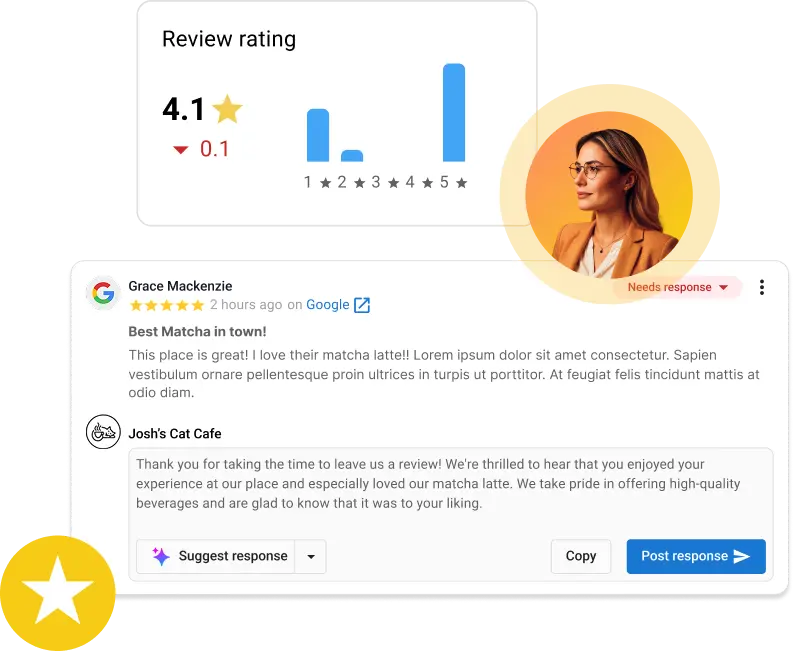
The AI Reputation Specialist can automatically respond to new Google and Facebook reviews based on configurable rules you define. These rules allow businesses to decide:
- Which star ratings can be auto-responded to?
- When responses should be delayed for review.
- Which types of reviews require human approval?
This approach ensures fast response times without sacrificing judgment or brand safety.
Multilingual Responses That Match the Customer
Reviews do not always arrive in one language. The AI Reputation Specialist detects the language of each review and responds accordingly, regardless of whether it is written in English, French, Spanish, German, or another supported language.
Responding in the customer’s language through automated review responses helps businesses appear more attentive and accessible, especially in diverse or international markets.
Tone Guidelines and Timing Controls
Every business has its own voice. Vendasta allows partners and SMBs to define tone guidelines that shape how responses are written, such as professional, friendly, or empathetic.
Response delays can also be applied so replies do not appear instantly automated. These controls help maintain authenticity while still benefiting from automation.
Conversational Insights From Reviews and NPS Data
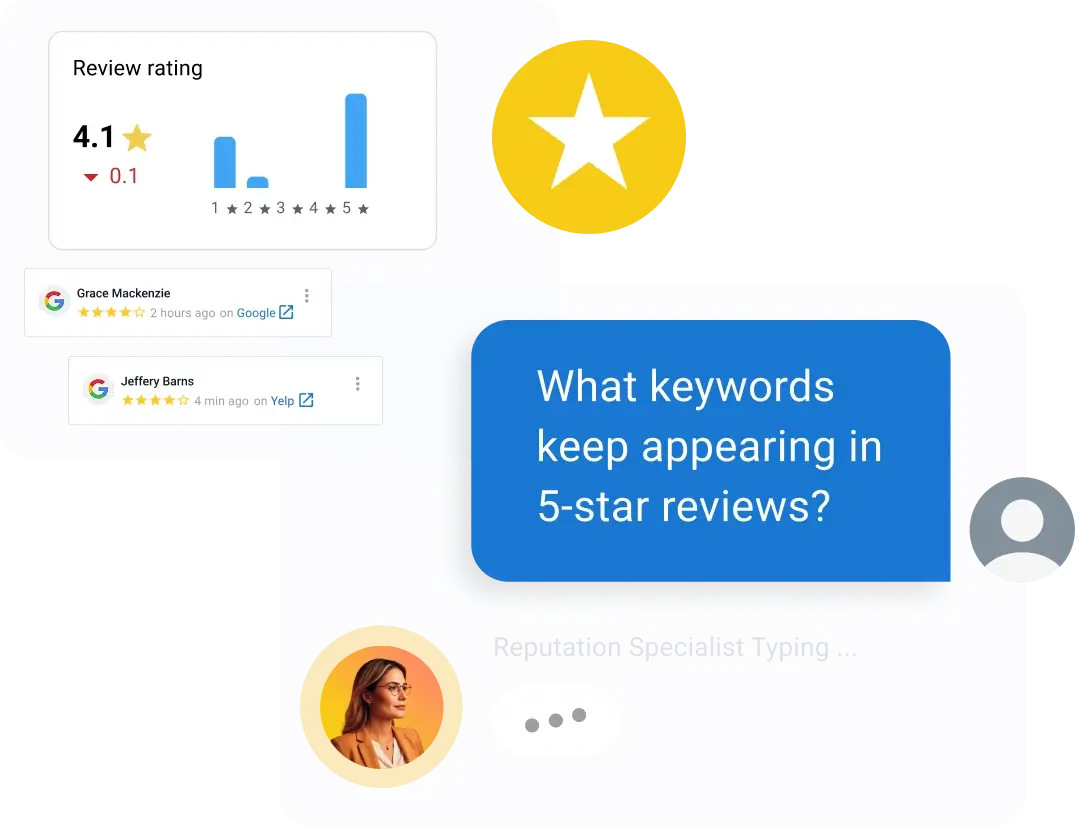
Beyond responses, the AI Reputation Specialist acts as an analyst. Instead of digging through dashboards or reports, users can ask questions directly, such as:
- What themes are showing up in recent reviews?
- Are negative reviews increasing in any location?
- What do customers mention most in five-star reviews?
The AI analyzes review and NPS data to surface sentiment trends, highlight risks early, and suggest next steps. This turns review management into an ongoing feedback loop that supports smarter decisions.
Automated Review Requests That Drive Volume
A strong review response strategy starts with having reviews to respond to. Vendasta supports automated review requests sent via email and SMS, triggered by real customer milestones such as:
- Completed jobs
- Purchases or payments
- Appointments or service follow-ups
These automated requests make it easier for customers to leave feedback and help increase review volume across platforms that influence local visibility.
Built to Support Humans at Scale
The AI Reputation Specialist is designed to handle repetitive review tasks 24/7 while giving businesses full control over how responses are delivered.
By combining automation, insight, and oversight in one system, Vendasta helps partners manage reputation at scale without adding complexity or losing the human touch that customers expect.
Turning Reviews Into Insights, Not Just Replies
Responding to reviews is important, but the real value comes from understanding what those reviews are saying at scale.
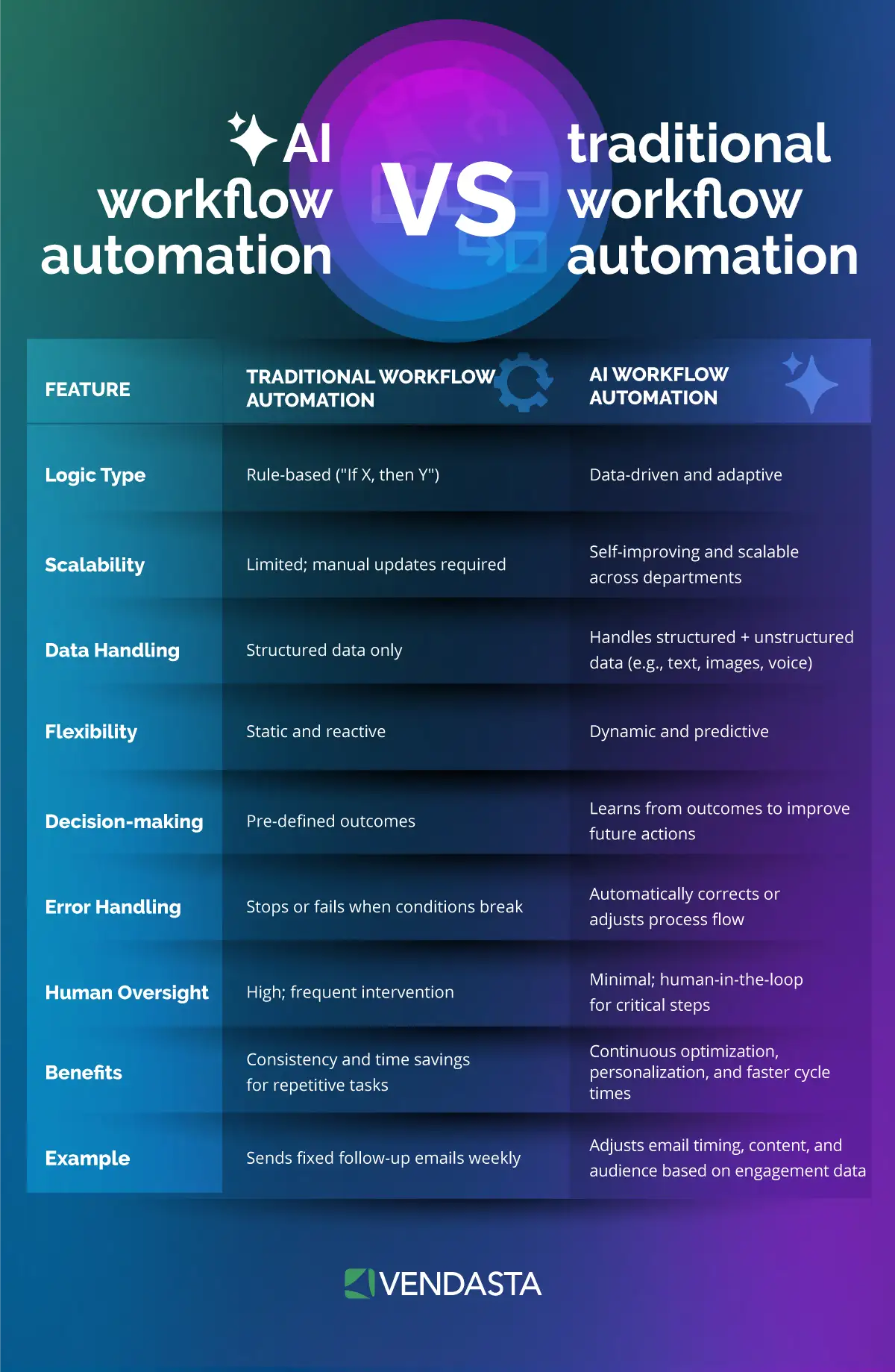
When review data is analyzed consistently, it becomes a strategic asset that informs marketing, operations, and customer experience decisions. This is where AI-powered analysis moves reputation management beyond basic automation to unlock the full benefits of AI workflow automation.
Using Conversational Analysis To Surface Trends
Instead of scanning individual reviews one by one, conversational analysis looks at review data collectively. By asking natural questions, teams can quickly uncover:
- Common themes appearing across reviews.
- Repeated mentions of specific services, locations, or staff.
- Shifts in sentiment over time.
This makes it easier to understand what is happening across all reviews without relying on manual reporting or spreadsheets.
Spotting Early Warning Signs before Issues Escalate
Review trends often reveal problems before they show up in churn, support tickets, or revenue metrics. A sudden increase in similar complaints or a gradual dip in sentiment can signal operational issues early.
By identifying these patterns quickly, businesses can address root causes while the impact is still manageable, rather than reacting after negative feedback spreads.
Using Positive Feedback to Improve Marketing and Operations
Reviews are not just a source of criticism. They highlight what customers value most. When patterns emerge in positive reviews, businesses can:
- Reinforce messaging that aligns with real customer praise.
- Highlight specific services or experiences in marketing campaigns.
- Share insights with frontline teams to replicate what is working.
This helps marketing and operations stay aligned with actual customer sentiment, not assumptions.
Measuring Reputation Progress over Time
Tracking review volume, ratings, and sentiment trends over time shows whether changes are working. Consistent analysis allows teams to:
- Measure the impact of faster response times.
- Understand how automated review requests affect volume.
- Compare performance across locations or time periods.
This long-term view helps businesses move from reactive reputation management to a proactive, data-informed strategy.
Why This Matters for Partners
For partners supporting SMBs, insight is as valuable as execution. Vendasta’s approach turns reviews into a continuous feedback loop, helping businesses make smarter decisions while maintaining strong, responsive review engagement.
This reinforces Vendasta’s role as a platform that connects automation, insight, and strategy in one place.
Conclusion
Online reviews are no longer a side task. They are a core part of how customers discover businesses, decide who to trust, and choose where to spend their money. When reviews go unanswered or feel inconsistent, credibility suffers quietly. When they are handled well, they become a powerful signal of trust and professionalism.
AI review response gives businesses a practical way to keep up without cutting corners. By combining speed, consistency, and clear guardrails, AI helps teams respond thoughtfully at scale while preserving brand voice and accountability. The real advantage comes when review response is paired with insight, turning everyday feedback into guidance for better marketing, operations, and customer experience.
Vendasta’s AI Reputation Specialist is built for this reality. As part of Vendasta’s AI Workforce, it helps partners support SMBs with automated review requests, on-brand responses, and conversational insights that surface what matters most. The result is not just faster replies, but a stronger, more resilient reputation that supports long-term growth.
Handled the right way, AI review response is not about replacing people. It is about helping your business achieve AI business transformation: work smarter, stay responsive, and deliver more value to every client and location you support.
Book a demo to explore how Vendasta’s AI Reputation Specialist helps your business manage reviews at scale while staying on brand and in control.
AI Review Response FAQs
1. What is an AI review response?
An AI review response uses artificial intelligence to generate replies to customer reviews based on sentiment, star rating, and context. It helps businesses respond faster and more consistently across platforms like Google and Facebook, reducing manual effort while maintaining a professional, on-brand presence.
2. How does AI review responses work for Google reviews?
AI Google review response tools analyze new Google reviews, assess sentiment and rating, and generate a relevant reply. Platforms like Vendasta apply configurable rules so responses can be published automatically or reviewed first, depending on star rating, language, or sensitivity.
3. Can AI review responses be used for Facebook reviews?
Yes. AI Facebook review response works in much the same way as Google review response. Vendasta’s AI Reputation Specialist supports both platforms, allowing businesses to manage responses centrally while keeping tone, timing, and messaging consistent across channels.
4. Do AI-generated review responses hurt authenticity?
They can if automation is unmanaged. The best results come from AI-assisted workflows with tone guidelines, approval rules, and escalation paths. Vendasta’s approach is designed to augment human effort, ensuring AI-generated review responses feel thoughtful, relevant, and brand-aligned.
5. When should a business start using AI for review responses?
AI review response becomes valuable when review volume increases, response times slip, or multiple locations are involved. Agencies, franchisors, and SMBs often adopt it to stay responsive across Google and Facebook without adding headcount or increasing manual workload.
6. How does AI review response help with local SEO?
Consistent review responses signal engagement to customers and search engines. While reviews alone do not guarantee rankings, active response patterns support local visibility. Vendasta helps businesses maintain this consistency at scale, which is critical in competitive local search results.
7. Can AI review responses handle negative reviews safely?
Yes, with the right controls. Many businesses use AI to draft responses while requiring human approval for low-star or sensitive reviews. Vendasta supports star-rating thresholds, response delays, and approval rules so negative feedback is handled carefully and professionally.
8. Does AI review response support multiple languages?
Advanced AI review response tools can detect the language of a review and respond accordingly. Vendasta’s AI Reputation Specialist supports multilingual responses, allowing businesses to reply in the customer’s language and improve accessibility and trust in diverse markets.
9. How does Vendasta go beyond basic AI review response?
Vendasta combines AI-generated review responses with automated review requests, sentiment analysis, and NPS insights. This turns reviews into an ongoing feedback loop, helping businesses improve customer experience, marketing, and operations rather than just replying to comments.
10. Do I still need humans if I use an AI review response tool?
Yes. AI review response tools work best with human oversight. Vendasta is designed to automate routine tasks while keeping people in control of tone, approvals, and strategy, ensuring responses remain authentic while scaling efficiently.
11. Can artificial intelligence respond to reviews?
Yes, and in 2026, it has become the gold standard for high-growth businesses. Using an AI Employee to handle review responses is no longer just about “automating a task”—it is about ensuring your business stays responsive, relevant, and visible 24/7 without burning out your human staff.