About Us
 Careers
 Leadership
 Board
 Newsroom

In October 2026, Goldman Sachs published the number that defines the opportunity for every AI agent agency. Across 2,473 owners in its 10,000 Small Businesses program, 86% said they now use AI, up from 56% in 2024. Only 15% said agentic AI is fully built into their core operations.
Read those two numbers next to each other. Most small businesses have AI. Almost none of them have AI doing the work.
That gap is your business. Your clients already pay for a chat subscription they open twice a week. What they do not have is a system that wakes up at 6 a.m., pulls the records out of one platform, builds the report, and drops it in front of them before they finish their coffee. Somebody has to build that. Goldman just put $500 million behind closing the gap, which tells you roughly how big they think it is.
That is exactly why we sat down with Nick Vasilescu, co-founder of Orgo, a Y Combinator company that gives AI agents their own cloud computer to work on. Nick started selling agents out of an electrical room under the stairs of a Berkeley hacker house with no audience, no website, and one month of runway. He closed his first client within a week. He now charges $5,000 a month, flat, and he would rather sell to a two-million-dollar insurance agency than to a funded startup.
In this guide, Nick shows you how to price an agent offer, find your first client with no audience, stand up a working agent inside a business in 24 hours, and turn that agent into a revenue stream your client cannot afford to cancel. He also explains the one mistake that cost him his only churned account.
Automate every step of the customer journey with AI employees
TL;DR
- The agent gap is the offer. 86% of small businesses use AI, but only 15% have it integrated into operations, according to Goldman Sachs. Selling the integration, not the tool, is what supports a $5,000 monthly retainer.
- Simple pricing closes deals. Nick charges one flat rate with unlimited agents and unlimited usage, because every line item you add gives the buyer a new reason to hesitate. Four clients at that rate is $20,000 a month. Twenty clients is $1.2 million a year.
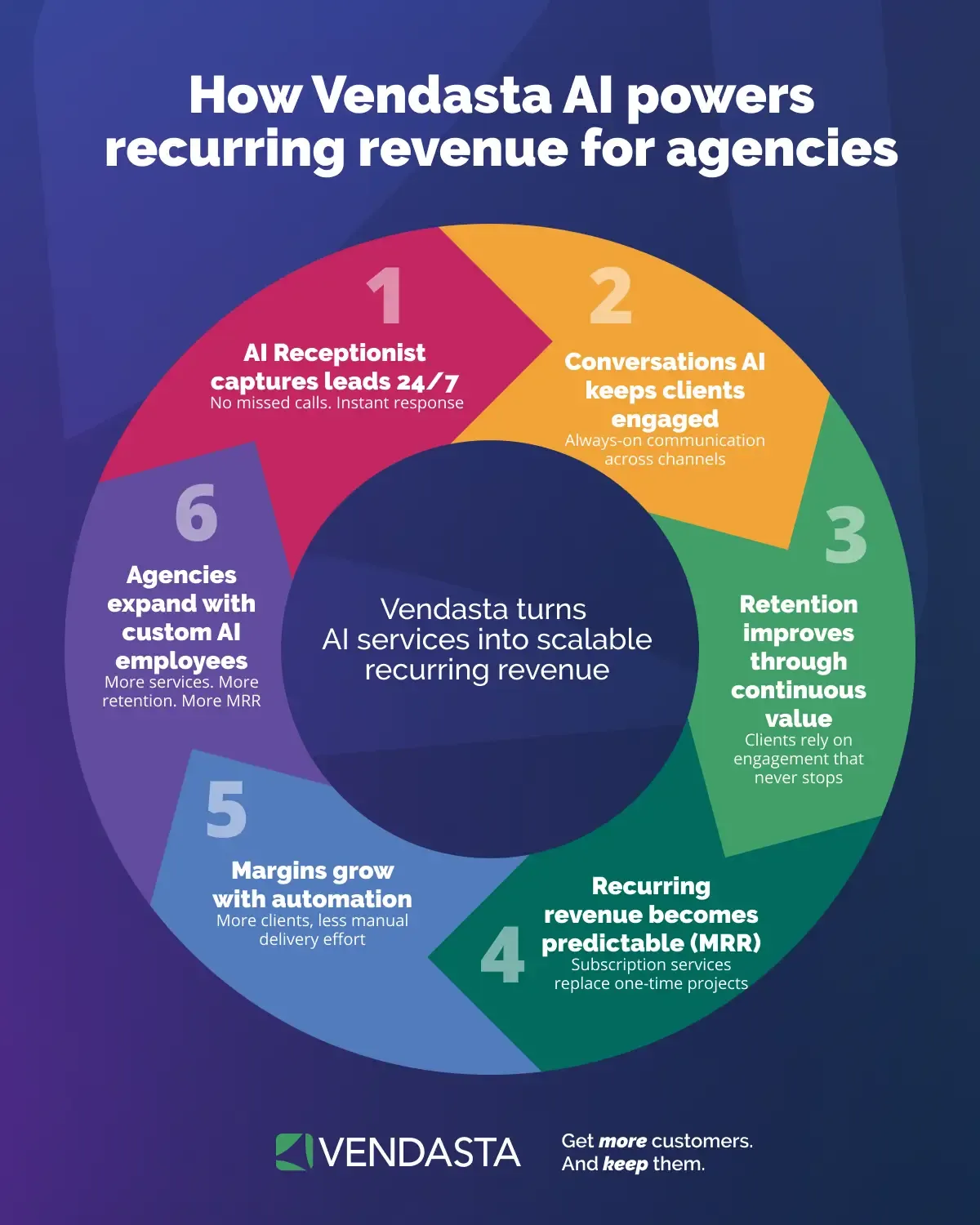
- Stickiness comes from revenue, not contracts. The agents that never churn are the ones a client has already resold to their own customers. Vendasta gives you the AI Employees and the white-label infrastructure to do exactly that without building the plumbing yourself.
What Is an AI Agent Agency?
An AI agent agency builds, installs, and manages AI agents that run real workflows inside a client’s business, and charges a recurring fee for the outcome. Instead of selling software seats or ad management, you sell a working digital employee that handles the repetitive tasks a human currently does by hand.
The model has four parts:
- You find a workflow the business repeats and resents.
- You build an agent that executes it end to end.
- You host, monitor, and improve that agent on your infrastructure.
- You bill monthly for the capability, not the hours.
The word “agent” is doing heavy lifting there, so start with what it actually means. Most agency owners picture a website chat widget and a few automation recipes wired together. Nick draws the line somewhere else.
“Essentially, an agent is a layer of abstraction beyond a chatbot, because it has access to tools. It has access to memory. It has access to an email, a computer, and a credit card. When you give AI access to all of these different tools, essentially, it becomes more and more like an employee.”
That is the difference your prospect will feel immediately. A chatbot answers a question and stops. An agent has somewhere to work, something to remember, and a way to act. It opens the browser, logs into the system, pulls the records, and sends the email. Anyone who has watched one do a job they used to do by hand understands the pricing conversation about ten seconds later.
It is also why this is a services business and not a software business. The model is available to everyone. The workflow is not. As Nick puts it:
“Our job is not to build. Building is commoditized. That’s not the skill set.”
The $5,000 Flat Rate, and Why Nick Refuses to Itemize It
Most people selling AI break the invoice into pieces. Setup fee here, usage there, a line for tokens, a line for monitoring. Nick charges one number.
“What we do is we just charge a flat rate. We charge $5K a month, and that’s USD. And that means you get unlimited agents, unlimited tokens, unlimited security management, like we just cover it all and it’s a flat rate and you don’t have to think about it.”
The reasoning is commercial, not technical. Every line item you add hands the buyer a new place to hesitate. A usage meter makes a client ration the thing you want them using constantly. If an agent burns through tokens, that is an engineering problem on your side of the wall, and inference costs keep falling anyway. So you absorb it and sell the outcome.
This is the same logic behind strong recurring revenue for agencies in any category. Predictable price, predictable delivery, no invoice surprises.
“Who Pays Five Grand a Month for That?”
When Vendasta ran an episode like this before, the comments filled with exactly that objection. The underlying model is free. The harness is open source. You can download the whole thing tonight. So what is the client paying for?
Nick does not dodge it.
“The same way a business owner can go make a website for free, but they’ll still pay somebody $20,000 to make it really beautiful. I think that same principle applies.”
The tools are free. Knowing which workflow to automate, how to scope it, how to keep it from breaking at 2 a.m., and how to make it fit a specific industry is not free. That is the skill, and it is the part a client cannot download.
It also helps that the before-and-after math is usually brutal in your favor. More on that in a moment.
Three Pricing Models From the Episode
Nick walked through two of his own and one from an operator he knows. All three work. They just build different companies.
| Model | Price | What you deliver | Who it suits |
|---|---|---|---|
| Deep retainer | $5,000 per month | A new workflow or capability built every week, unlimited agents and usage | Operators who want fewer clients, deeper vertical knowledge, higher margin per account |
| Install and retain | $3,000 up front, a few hundred per month | One general agent installed into the business, light monthly contact | Operators who want volume, low maintenance, and a simple repeatable offer |
| Assistant layer | Around $500 per month | Calendar, inbox, drafting, scheduling, the executive assistant tasks every industry shares | Agencies selling one standardized offer across many accounts |
The Belgian operator Nick described is running the middle model. He posts educational content about Claude and ChatGPT on social media. Businesses reach out, he installs an agent for a flat fee, and then he stays in touch for a few hundred a month. Very little ongoing delivery. Scale comes from account count.
Nick runs the first model. Fewer clients, a new build every week, deeper integration, a higher price. Neither is more correct. As he puts it, it is still an open question how to charge for AI, because it does not behave like software.
Pick the one that matches the business you actually want to run. If you want help pressure-testing the numbers, our breakdown of AI agency pricing strategy walks through how revenue-linked offers price against task-based ones.
Sell to Boring Businesses, Not to Startups
Here is where Nick breaks from almost everyone else in his orbit. He is a venture-backed founder in a Y Combinator batch. His peers all sell to developers. He thinks that is a mistake.
“Over here in Silicon Valley, you’re trying to sell to startups, developers, and it’s a living hell. The startups are broke. You can go sell to a real business who’s already doing a couple million dollars a year, and they’re way more willing to pay.”
Orgo learned this the hard way. The company started by targeting developers and found them to be the fastest audience to leave. The minute something is slightly wrong, they churn. The minute a competitor appears, they push to commoditize you down to nothing.
Then Nick looked at who was actually making money on his platform. Not the funded startups in his batch. Agencies. In Idaho. In Belgium. Anywhere.
“He has four customers, $5K a month each, so he’s making $20K a month, and he’s in a small town in Idaho. He just needs twenty customers to hit a million dollars a year.”
Twenty clients. That is the whole plan. No venture round, no engineering team, no sales floor. For an agency already serving 30 or 50 local businesses, twenty is not an ambitious number. It is a subset of your existing book.
And the people writing those checks are the least glamorous accounts on your list. A two-million-dollar insurance agency. A promotional products distributor. A regional law firm. They have revenue, they have repetitive work, and nobody in their market is offering to take it off their plate.
Nick’s framing for the whole wave:
“Let Anthropic, let OpenAI, let them build the general agent platforms. No big company is ever going to have access to the specific niche workflows of the business you’re building for.”
That is the moat. Not the model, not the infrastructure. The fact that you know what happens between step four and step five in a plumbing dispatcher’s Tuesday, and no frontier lab ever will.
How to Land Your First Client With No Audience
Nick has an audience now. He did not have one in November 2025, living in a hacker house with fifteen other people, working out of an electrical room under the stairs, one month from having to move back to his parents’ house in Kansas.
Here is exactly what he did.
1. Work the List Already in Your Phone
He went through his contacts and pulled out everyone who either owned a business or knew someone who did. He reached out to fifty of them. By the next day, he had seven booked calls. By the end of that week, he had closed his first client at roughly $3,500, building an agent for a promotional products distributor who was manually scraping product catalogs and creating invoices.
“Your phone has a whole list of leads that you’re just waiting to reach out to.”
Fifty messages. Seven calls. One client in seven days. The method is simple. Most people just will not do the work.
2. Never Sell to a Cold Audience
This is Nick’s rule, and it shapes everything after it.
“I have this belief that you should never sell to a cold audience. You always want your prospects to at least know who you are, what you do, and what you’re selling before you even talk to them.”
He compares it to dating. Meeting someone through a friend is easy. Walking up to a stranger is not. Same mechanics, same odds.
That leaves two honest paths, and you pick based on your timeline. Publish educational content and build a warm audience over months, which is the long game. Or run manual outbound, which is the one that pays this week. If you are rebuilding your pipeline from scratch, our guide on how to find clients for digital marketing covers the longer play in more depth.
3. Run the LinkedIn Connection Play by Hand
This is the outbound method Nick’s accelerator teaches, and the instruction is almost aggressively unfashionable.
Send your full weekly allowance of connection requests, roughly 200, to people who match your target. Send them blank, with no note attached. When someone accepts, message them and write the message yourself.
No AI. No automation. No sequencer.
The message is simple: you noticed what they do, here is what you do, you would like a conversation. The reason it works is that nobody else is doing it manually anymore, so a real sentence stands out in an inbox full of generated ones.
4. Ask for the Itch, Not the Pain Points
Most discovery calls die on the same question. You ask a business owner what their pain points are and they tell you everything is fine.
Nick asks something smaller.
“I always like to ask this question: ‘What’s your itch?'”
Every owner has one: the task they know, deep down, is eating hours of their week for no reason. They may not call it a pain point, but they will absolutely name the itch. Then you probe around it until you understand the workflow underneath.
The better version of that opener comes with the problem already identified. Nick’s example, aimed at the industry he had just worked in:
“Hey, I noticed you’re in the promotional products industry. I know it takes like 20 hours a week for you to put together quotes for your customers because of all the time that it takes to put together these products into a presentation. If I could save you 20 hours a week, is that worth your time?”
That is a diagnosis, and it gets an emotional response because it is accurate.
5. Record the Work Instead of Shadowing It
The obvious objection: to build an agent that does someone’s job, you need to know how they do their job, and that is normally weeks of shadowing.
Nick does it in one call. He asks the owner to share their screen and walk through the process step by step while he records, or he asks them to send a screen recording of themselves doing it and talking it through. A meeting recorder captures everything else. That recording becomes the specification.
Then he goes one level further: he asks for everything.
“I literally tell them to just context-dump, like all of your assets, past examples of materials, anything you’ve created for clients, give me it all.”
Past work is training data. The more of it you have, the closer the first build lands to something the client recognizes as their own.
The 24-Hour Agent Stack
When a client pays an agency, what usually happens next is nothing. A kickoff call in two weeks. A discovery doc. A form to fill in. Nick’s agents live in the client’s workspace the next day.
Not the full solution. The agent. The specific workflow follows inside the first week, once he has the screen recording. But the thing exists, it is running, and the client can talk to it within 24 hours, which is the moment the relationship stops being theoretical.
Here is the architecture he installs, layer by layer.
| Layer | What it does | Why it matters |
|---|---|---|
| Computer | A cloud machine the agent lives inside, always running, never the client’s laptop | An agent without a computer cannot act. This is the layer Orgo provides. |
| Harness | The software that lets the model operate the machine, click, type, and run tools | Determines how reliably the agent completes a multi-step task |
| Short-term memory | A lightweight memory service for facts the agent should recall instantly | Stops the agent re-searching a database for something it was told last week |
| Knowledge base | The durable long-term layer, a structured set of documents the agent can read | Where the client’s process, brand, pricing, and past work live |
| The agent’s own inbox, separate from the client’s | Lets it send, receive, and sign up for things as itself, with a clean audit trail | |
| Communication channel | The chat tool the client already uses all day | The client learns no new interface. The agent shows up where they already are. |
That last row carries more weight than it looks. Nick is firm about it.
“The beauty about agents is they don’t require the end user to learn a new interface. They can meet you where you’re already at.”
Every agency owner has shipped a beautiful dashboard that a client logged into twice. An agent that messages you in the thread you already have open does not have that problem.
The Part Where Agents Build the Agents
Once the stack exists, Nick stops doing setup by hand. He has a personal agent, named Dewey, that builds client agents for him.
He finishes a sales call. The call recording and transcript already exist. He tells Dewey to read the transcript and build that client’s agent. Dewey spins up a fresh cloud computer, installs the harness, wires in the tools the use case needs, and the environment is ready.
“If you can just build the agent for yourself first, that agent can now build other agents for other businesses,” Nick says. “It’s done for you.”
That is the real unlock in fulfillment. The thing most agencies treat as a cost center becomes the thing that scales. It is also the exact bottleneck agency automation is meant to solve, whether the work is agent builds or campaign launches.
And when it is working, it looks like this:
“I’ll go on a walk, and I have customers texting in a group chat, and I see their problems being solved by my agents in the group chat. It’s crazy.”
If you would rather not assemble six layers yourself, that is a reasonable position. Vendasta’s AI Employees ship with the memory, the business data, and the channels already connected, which means the AI Receptionist, like most AI Employees, can be live for a client in under 30 minutes rather than configured from parts.

Stop Selling Savings. Sell a New Revenue Stream.
The default agency pitch for AI is efficiency. This saves you time. This saves you a hire. Nick thinks that pitch leaves most of the money on the table.
“Yes, this can save you time, this can save you money,” he says, “but you know what’s even better? It can add money. It can be a new revenue stream.”
It is a shift from savings to enablement, and it changes what the client is buying.
The Data Migration That Used to Cost $10,000
Start with the savings case, because it is still worth showing.
One of Orgo’s clients is a software company that builds agency management software for insurance agencies. When a new customer switched over from a competing platform, all of their policy and insured data had to come across. A human sat there for weeks, pulling records from one system and typing them into another. The company charged around $10,000 for that migration.
Nick’s team built an agent that clicks into every field, compiles the data, and writes it into the platform’s database. It runs overnight. It costs under $20.
That is the before-and-after to show a prospect. Weeks of manual work and a $10,000 line item, replaced by an overnight job that costs less than lunch. You do not need to argue about a $5,000 retainer after that.
A second example runs the same way. A brand design agency was building trip brochures by hand, one at a time, a very repetitive process. Their agents now produce every brochure in the agency’s own style. The team just adds the images.
Then Package It and Sell It Downstream
Here is the move most agencies miss.
That insurance software company found its internal agent so useful that Nick suggested the obvious next step: package it and sell it to their customers. The savings became a product line.
He did the same thing with Brandlord, a brand design agency and an Orgo customer who agreed to be named. Nick’s team built an agent and a dashboard for Brandlord’s own client, Four Corners. That dashboard is now a new revenue stream for Brandlord.
“It’s B2B2B. So you’re selling to a business who’s also selling to other businesses.”
Read that as an agency owner and the logic is immediate. You are not installing a cost-saving tool for a client. You are giving your client a product to sell. That is the same economics behind white-label AI agents and reseller models generally, and it is the reason those accounts behave differently.
Why That Client Never Leaves
Every agency believes it is sticky until a client finds someone cheaper.
But a client who has resold your agent to their own customers cannot leave cleanly. Canceling you means canceling a product their customers are already paying for and using.
“When your customers depend on you as a revenue stream, they’ll never churn.”
Nick does not use that as a lock-in threat. He tells clients openly they can cancel at any time. He just walks them through what canceling actually means. You cover your own tokens. You build your own automations. You manage the agent. When it breaks, you fix it. When the infrastructure fails, you handle it. If there is a security leak, that is yours too.
Nobody wants that job. Retention follows from being genuinely harder to replace, not from a contract clause.
The One Client Who Canceled, and What It Taught Him
Ask most founders about churn, and you get a dodge. Nick answered with a specific account.
It was a law firm, an early customer. The team had built legal-specific workflows into the agent, and the agent was good at them. Then Claude shipped a clean desktop app, and the owner realized he could do a lot of that himself in a simple interface.
The diagnosis is the useful part. Nick had built a coworker. He should have built an assistant.
Coworker Versus Proactive Assistant
A coworker sits beside you while you work. You open it, you ask, it answers. That is a genuinely great product, and the frontier labs are pouring billions into making it better every month. You will not win that race.
A proactive assistant does something while you sleep and hands it to you in the morning.
“Don’t try to compete with what Claude and Codex are doing, which is just like a really good coworker,” Nick says. “Try and compete with building a true proactive assistant and solve specific problems in the business.”
The distinction decides whether your retainer survives the next model release. If your value is answering questions, a $20 subscription eventually replaces you. If your value is a report that appeared at 6 a.m. without anyone asking, nothing on the shelf does that.
The Overnight Deliverable Hack
This is the most immediately usable tactic in the episode.
When you stand up the agent in those first 24 hours, give it one job to complete overnight. A report. An asset. A draft. Something the client did not ask for and will recognize as real work.
They wake up, open their chat, and it is sitting there. Here is how Nick describes it:
“When they wake up in the morning, they’re like, ‘Oh, wow, that’s a value-add that was just proactively done for me.’ If you can do that, I think that’s how you prevent churn.”
Day one creates the aha moment. Everything after that is just maintaining a feeling the client already had.
Scope the Thing Properly, Too
One more failure mode worth naming, because it is funny and it is common.
“I’ve had customers say, oh, I want four hundred agents and really they just need like three.”
Clients overestimate the number of agents and underestimate the depth of each one. Three agents that genuinely own three workflows beat four hundred that do nothing. Your job on the first call is to narrow, not to expand.
Nick also has a useful way of thinking about how much freedom to give an agent. A rigid workflow, in his words, is “putting an agent in a box and giving them walls.” Sometimes that is exactly right, because the task is compliance-shaped and you want zero creativity. Sometimes you want the opposite. Decide deliberately rather than by accident.
Custom Work Used to Be a Trap. Agents Changed the Math.
Anyone who has run a service business knows the failure pattern. You sell three engagements, all three are different, and now you are working three jobs instead of running a company.
Nick’s answer splits the problem in two.
Underneath every client, regardless of industry, sits the same layer. Calendar. Email. Inbox triage. Drafting replies. The executive assistant work that looks identical whether the client is a dental practice or a roofing contractor. You can productize that alone, charge around $500 a month, and go wide.
Above it sits the vertical layer. The policy migration. The brochure system. The quoting process that eats twenty hours a week. That part needs real development, and that is the part that supports $5,000 a month.
| Productized layer | Vertical layer | |
|---|---|---|
| What it does | Calendar, inbox, drafting, scheduling | One specific workflow inside one industry |
| Build effort | Build once, deploy repeatedly | Custom development per client |
| Price point | Around $500 per month | $5,000 per month and up |
| Scaling lever | Client volume | Depth and vertical reputation |
| Risk | Commoditizes fastest | Operationally heavy if you overscope |
Most agencies should run both. Lead with the productized layer to get accounts in the door and prove the agent works. Upsell the vertical layer when you have found the itch.
Why Services Just Became Scalable
There is a broader shift underneath all of this, and Nick names it directly. Venture firms have spent the past year arguing that services are the new software. For decades, services could not scale, because delivering more of them meant hiring more people. Agents break that constraint.
“Service-based businesses that do require custom work, well, all of a sudden they’re infinitely more scalable than they were in the past,” he says.
The market data points in the same direction. The AI agents market was valued at $7.6 billion in 2025 and is projected to reach $182.9 billion by 2033, according to Grand View Research. More specifically, for anyone choosing a lane, vertical AI agents are forecast to grow faster than any other segment, at a 62.7% compound annual rate through 2030, per MarketsandMarkets.
General agents are a race between a handful of well-funded labs. Vertical agents are a market being built one plumbing company at a time, and that is the one you can actually enter this quarter.
Nick’s own answer, if he were starting over today:
“If I were spinning up an agency today, I would just be making a very vertical-specific agent in a very specific niche.”
If that sounds familiar, it should. It is the old specialization argument, except now the depth compounds into something you can genuinely scale. Our framework on how to sell AI agents covers the packaging and offer side in more detail.
Running an AI Agent Agency at Scale With Vendasta
Nick’s playbook is sound. The gap most agencies hit is the one between the first agent and the twentieth. Assembling six layers by hand is a good way to learn. It is a rough way to serve fifty local businesses while also doing the work you already sell them.
Vendasta is an AI customer acquisition and engagement platform built for local businesses and the partners who serve them. It combines a business’s unique data with AI and automation so you can run acquisition, engagement, and retention from one rebrandable platform instead of stitching together a stack per client.
Here is how the pieces map to what Nick described.
Most AI Employees Go Live in Under 30 Minutes
Nick’s whole point about speed is that value has to be visible fast. Vendasta’s AI Employees arrive configured. An AI Receptionist can be answering a client’s calls, chats, and texts in under 30 minutes rather than after a build cycle, because the memory, the business data, and the channels are already wired together.
AI Employees run across thousands of accounts at once, each in the right brand context, so you are not standing up infrastructure per client. You are turning on an employee.
Proactive Work, Not Another Chat Window
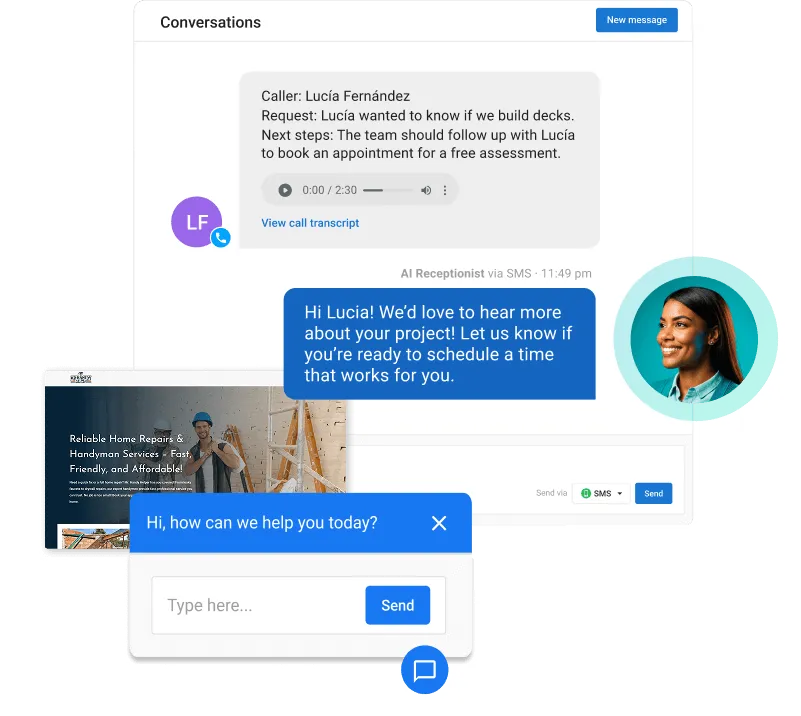
This is Nick’s churn lesson in product form. The AI Receptionist captures and qualifies leads around the clock and books appointments against real calendars, without anyone opening an app. The AI Sales Assistant updates CRM records automatically from meetings and sales activity.
They don’t wait for prompts. They complete end-to-end workflows using the business’s own data, and every action is logged so you can show the client what the AI did. Neighborly saw a 372% year-over-year increase in leads converted to revenue after deploying Vendasta Conversations AI.
AI Employees Powered by the Client’s Own Data
Nick’s context dump is the right instinct. An agent built on generic knowledge produces generic work.
Vendasta’s AI runs on a business’s own data, including customer interactions, services, and performance history, which is what makes responses sound like the business rather than like software. Behind that sits more than a decade of local business data. When a client’s workflow is genuinely unusual, Custom AI Employees handle the bespoke case without you rebuilding the foundation.
Package It, Brand It, and Let Your Client Resell It
The B2B2B move Nick described needs infrastructure underneath it, and this is the part agencies usually cannot build alone.
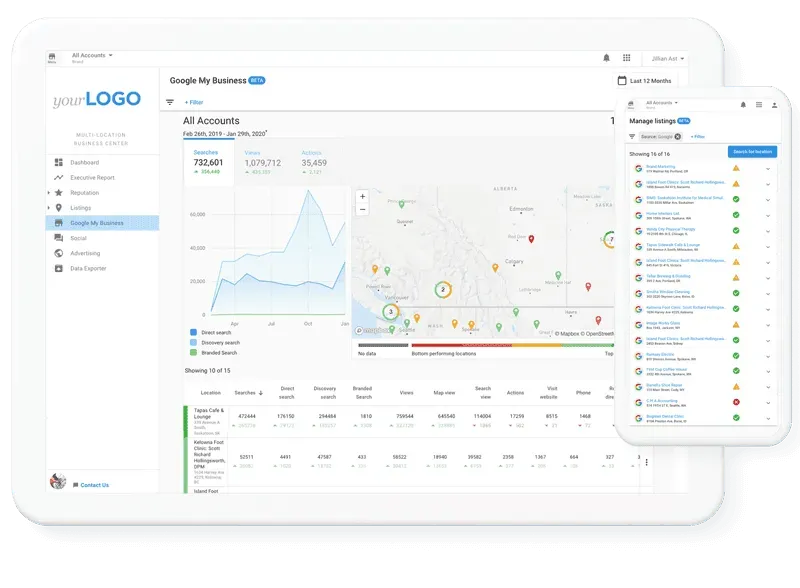
Partner Center lets you package AI Employees under your own brand, set your own retail pricing, and bill on a recurring basis. Your client logs into Business App, a client-facing portal with your logo on it, while executive reporting compiles the proof automatically, which is how you defend a $5,000 retainer in month seven instead of hoping the client still remembers month one.
The partner ecosystem is the point. You implement the AI, you are the trusted expert in your market, and you monetize that expertise. Vendasta builds and maintains the layer underneath so you can spend your time on the thing Nick says is actually valuable, which is knowing the workflow.
Conclusion: The Window Is Open, and It Is Not Subtle
86% of small businesses have AI. 15% have it doing anything that matters. That is an implementation gap, and implementation has always been what agencies sell.
Nick’s version of this is not complicated, and it does not require funding. Pick businesses that already make money. Find the itch. Record the workflow. Stand the agent up fast enough that the client feels it. Give them something they did not ask for by the next morning. Then package what you built so they can sell it to their own customers, which is the point where canceling you stops making sense.
Twenty clients at $5,000 a month is $1.2 million a year. Math has never been the hard part.
The hard part is deciding to stop waiting for AI to settle down. It will not. The agencies winning right now are not the ones with the best model access. They are the ones who learned one industry’s workflows deeply enough that no general platform can touch them.
As Nick put it, now is the greatest time in history to be building a company, because you can finally feel enabled by digital employees that just do work for you.
If you would rather deploy that workforce than assemble it, book a demo with Vendasta today and see how partners are running AI Employees across their entire client base.
AI Agent Agency FAQs
1. What is an AI agent agency?
An AI agent agency builds, deploys, and manages AI agents that run real workflows inside client businesses, and charges a recurring fee for the result. Unlike a chatbot, an agent has a computer, memory, a knowledge base, and its own email, so it can act rather than just answer. The agency owns the setup, hosting, monitoring, and ongoing improvements.
2. How do you start an AI agency with no clients and no audience?
Start with the contacts already in your phone. Nick Vasilescu reached out to 50 people he knew, booked seven calls the next day, and closed his first client within a week for about $3,500. If your network is thin, send connection requests to roughly 200 targeted people each week on LinkedIn and write every follow-up message by hand.
3. How much should an AI agent agency charge per month?
Most AI agent agencies charge between $500 and $5,000 a month, depending on the offer. Around $500 a month covers a productized assistant layer for calendar, inbox, and drafting. About $3,000 up front plus a few hundred a month covers a single installed agent with light maintenance. And $5,000 a month covers deep vertical workflow builds with unlimited agents and usage included.
4. Why charge a flat rate instead of billing for usage?
Every line item on an invoice gives the buyer a reason to hesitate, and a usage meter makes clients ration the exact thing you want them using daily. A flat rate covering agents, tokens, and security management removes that friction. Rising usage is an engineering problem on your side, and inference costs keep falling.
5. What should go into an AI agent stack?
Six layers: a cloud computer the agent runs inside, a harness that lets it operate that machine, a short-term memory service, a durable knowledge base, its own email inbox, and a communication channel the client already uses daily. That full stack can be live inside 24 hours, with the specific workflow following in week one.
6. How do you stop AI agent clients from churning?
Build a proactive assistant, not a coworker. A coworker answers questions, which general tools already do well and cheaply. An assistant delivers finished work unprompted. Give the agent one job to complete overnight during setup so the client wakes to something real. Stickiness compounds further when the client resells your agent to their own customers.
7. Should an AI agency niche down to one vertical?
Yes. Large AI platforms will never have access to the specific niche workflows inside the businesses you serve, which makes vertical knowledge the only defensible moat. Vertical AI agents are also the fastest-growing segment of the agent market. Depth in one industry lets you reuse builds, shorten sales cycles, and justify higher retainers.
8. How does Vendasta help agencies sell AI agents?
Vendasta gives partners out-of-the-box AI Employees, including the AI Receptionist, which, like most AI Employees, is ready for a business in under 30 minutes rather than built from parts. Agencies deploy across dozens of clients without standing up infrastructure each time, then package and sell those AI Employees under their own brand from Partner Center, with their own pricing and recurring billing.
9. Are Vendasta’s AI Employees different from generic chatbots?
Yes. Vendasta’s AI Employees run on a business’s own data, including customer interactions, services, and performance history, so responses stay accurate and on brand. They complete end-to-end workflows without waiting for prompts, and every action is logged. Over a decade of local business data, combined with each business’s own records, powers their work.
10. Can an agency sell Vendasta’s AI Employees under its own brand?
Yes. Vendasta is a single rebrandable platform covering acquisition, engagement, and retention. Agencies bundle AI Employees and services under their own brand, set their own margins, and give clients a branded portal and automated reporting. That turns an AI build into a recurring product line the client sells on, rather than a one-off project.