About Us
 Careers
 Leadership
 Board
Board Newsroom
A home service franchise marketing strategy that works at one location should work at all of them. In 2026, building a scalable home service franchise marketing strategy is no longer optional. It is the foundation for consistent growth across every location. That is the standard every franchisor is chasing in 2026, and most are still falling short.
Here is the reality: your franchisees are generating leads every day. But a staggering number of those leads are slipping through the cracks, not because the marketing failed, but because the follow-up did.
Calls go unanswered after hours. Web inquiries sit unreplied for hours. Booked appointments never convert into paying jobs.
According to the Harvard Business Review, companies that respond to leads within an hour are 7 times more likely to qualify the lead than those who wait even 60 minutes. Most home service franchisees are waiting much longer than that.
Corporate marketing teams are building great awareness. The problem is what happens after the click. This is a common gap in many franchise marketing strategies, where generating demand is prioritized over converting it into revenue at the local level.
This guide covers how to fix lead standardization across your entire network, the exact marketing strategies that top-performing home service franchises are using in 2026, how AI is replacing the manual workflows that are killing your conversion rates, and how to give every location the same competitive edge without managing each one individually.
Streamline operations and ensure brand consistency for franchise success
TL;DR
- Lead leakage is the real problem: Most franchise networks are not short on leads. They are short on consistent follow-up. Up to 30% of captured leads never receive a timely response, draining marketing ROI network-wide.
- AI solves the consistency gap: Platforms like Vendasta deploy AI Employees that handle lead capture, follow-up, booking, and reputation management at every location simultaneously, without corporate managing each one.
- Standardization is the strategy: Franchisors who set the playbook once and automate its execution everywhere see measurable improvements in lead-to-booking rates, franchisee satisfaction, and overall network performance.
Why Most Home Service Franchise Marketing Strategies Break Down
You can run the best paid search campaign in the country. You can own the top spot in local map packs across 50 markets. But if a homeowner calls your franchisee at 7:45 PM on a Friday and nobody picks up, that lead is gone.
This is not a hypothetical. It is a direct result of a misaligned home service franchise marketing strategy that fails to account for real-world response behavior. Also, it is the single most common failure mode in home service franchise networks today.
The Leaky Bucket Problem No One Talks About
Most corporate marketing teams focus relentlessly on lead generation: more impressions, lower cost-per-click, better landing pages. And that work matters. But there is a second bucket that is draining just as fast. Most teams never address this gap when designing a home service franchise marketing strategy.
According to Salesforce research, sales teams spend only 28% of their week actually selling. The rest is administrative work, manual follow-up, and chasing down information that should already be in a system. For a franchisee running a three-truck HVAC operation, that math is even worse.
The leads they are losing are not just after-hours calls. They are:
- Mid-funnel web leads who filled out a form but never got a callback
- SMS inquiries that went to an unmonitored number
- Repeat customers who needed a reminder and never got one
- Review requests that never went out, so the reputation never grew
- Booked jobs that had no automated confirmation, leading to no-shows
This is the real marketing problem in home service franchising. And a traditional marketing strategy for home service franchisees does not address any of it.
Why Corporate Cannot Fix It Location by Location
The frustrating part for franchise CMOs and VPs of Marketing is visibility. You can see aggregate performance in your reporting dashboards. You can tell that the network average lead-to-booking rate is lower than it should be.
But you cannot tell which of your 47 locations is the problem, or whether the issue is the ad creative, the landing page, the speed of follow-up, or something else entirely.
And even when you identify the underperforming location, you cannot sit inside their office and answer every call. You need a system that enforces standards everywhere without requiring constant oversight. That level of consistency is only possible with a scalable home service franchise marketing strategy.
This is exactly where franchise marketing software becomes critical, enabling franchisors to standardize execution, automate workflows, and maintain visibility across every location from a single platform. That is where the real shift is happening in 2026. The most effective home service franchise marketing strategy frameworks are built on the pillars outlined below.
The 8 Pillars of an Effective Marketing Strategy for Home Service Franchises
1. AI-Powered Lead Capture and 24/7 Response
The first pillar of any effective marketing strategy for home service franchises in 2026 is ensuring that no lead goes unanswered, regardless of the time of day or day of the week. This capability sits at the core of a high-performing home service franchise marketing strategy.
Homeowners do not book home services on a 9-to-5 schedule. According to BrightLocal’s Local Consumer Review Survey, 76% of consumers search for local businesses in the evenings or on weekends. If your franchisees are only staffed during business hours, you are structurally losing the majority of your highest-intent inquiries.
Vendasta’s AI Receptionist solves this at the network level. It is an AI Employee that answers calls, responds to web chat inquiries, handles SMS conversations, and can book appointments 24 hours a day. Corporate sets it up once. Every franchisee gets the same quality of response, on brand, on message, and within seconds.
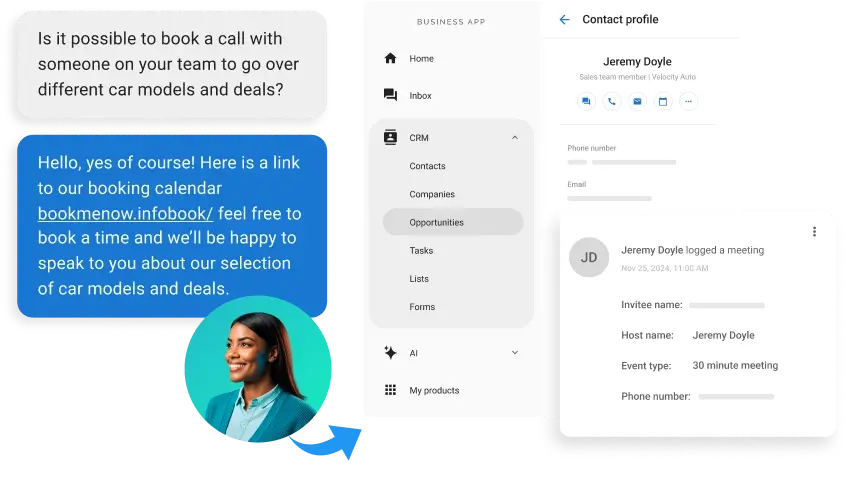
The results are not incremental. Vendasta’s platform has documented a 372% increase in lead-to-revenue conversion when an AI-driven response is deployed at the point of first contact.
What this looks like in practice:
- A homeowner searches “emergency HVAC repair” at 10 PM
- They find your franchisee’s Google Business Profile
- They click to call or initiate a chat
- The AI Receptionist answers instantly, gathers their information, confirms availability, and books the job
- The franchisee wakes up with a confirmed appointment in their calendar
No missed call. No lost lead. No corporate intervention required.
2. Standardized Follow-Up Sequences Across the Network
Capturing a lead is the beginning, not the end. Follow-up execution is where most home service franchise marketing strategy efforts succeed or fail. The single biggest conversion gap in home service franchise networks is what happens in the 24 hours after a lead submits their information.
Industry data from InsideSales shows that 50% of buyers choose the vendor that responds first. For home services, that window is even shorter. A homeowner with a burst pipe or a broken furnace is not waiting for a callback tomorrow. They are calling the next company on the list.
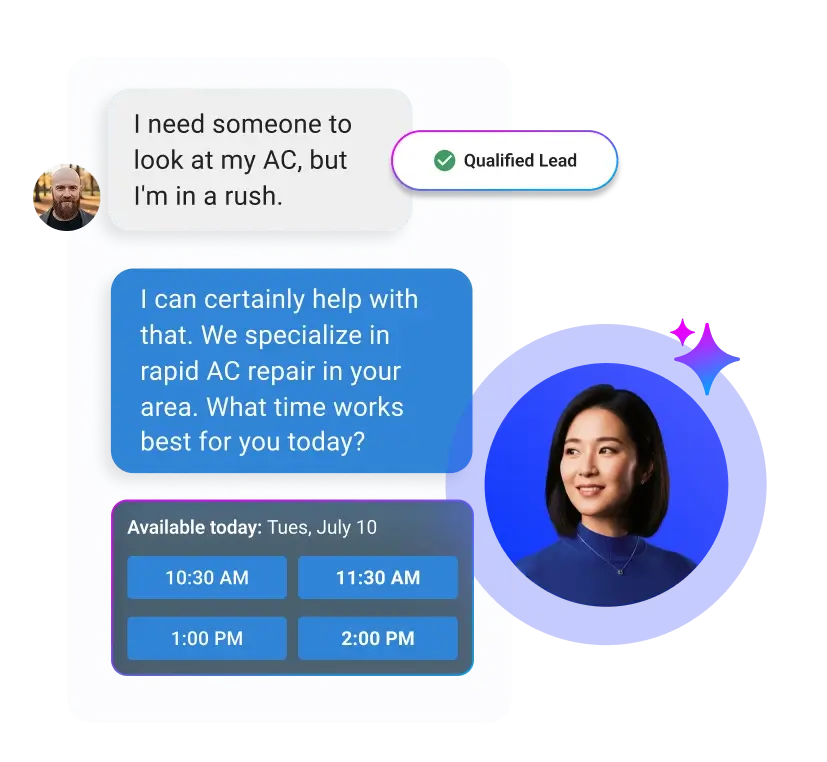
Vendasta’s Conversations AI powers an AI Inside Salesperson that goes beyond answering the first call. This AI Employee manages the entire follow-up sequence: sending confirmation SMS messages, following up on unbooked inquiries, re-engaging leads who went quiet, and nurturing mid-funnel prospects who are not ready to book immediately.
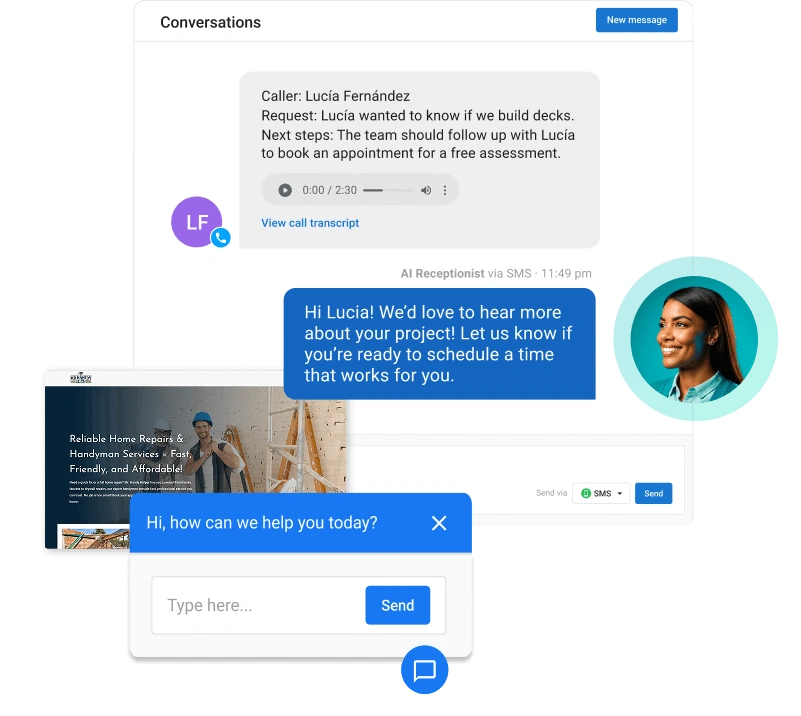
For franchisors, the value is in the consistency. Instead of hoping each franchisee has their own follow-up process, you deploy one standardized sequence across all locations. The franchisee with three trucks in Phoenix follows the same playbook as the franchisee with 12 trucks in Atlanta.
A standardized follow-up sequence should include:
- Immediate acknowledgment within 60 seconds of the inquiry
- Personalized SMS or email response that references the specific service requested
- Automated booking link or call-back scheduling within the first follow-up
- A second touchpoint within 2 hours if no response to the first
- A nurture sequence for unbooked leads over the following 3-7 days
This is not aspirational. With the right platform, this is deployable across your entire network in a single setup.
3. Local SEO That Scales Across Every Location
Local SEO is the backbone of organic customer acquisition for home service franchises. It is also a foundational element of any home service franchise marketing strategy. When a homeowner types “lawn care near me” or “house painters [city name],” the franchisee that appears in the Google Local Pack wins the majority of the click-through traffic.
According to Google, 76% of people who search for something nearby on their smartphone visit a business within a day. For home services, that intent translates directly to inbound calls and job bookings.
The challenge for franchisors is scale. Manually managing Google Business Profiles, NAP (Name, Address, Phone) consistency, and local citation accuracy across 50, 100, or 500 locations is not a viable strategy. One outdated phone number or wrong address in a major directory can cost a franchisee real bookings.
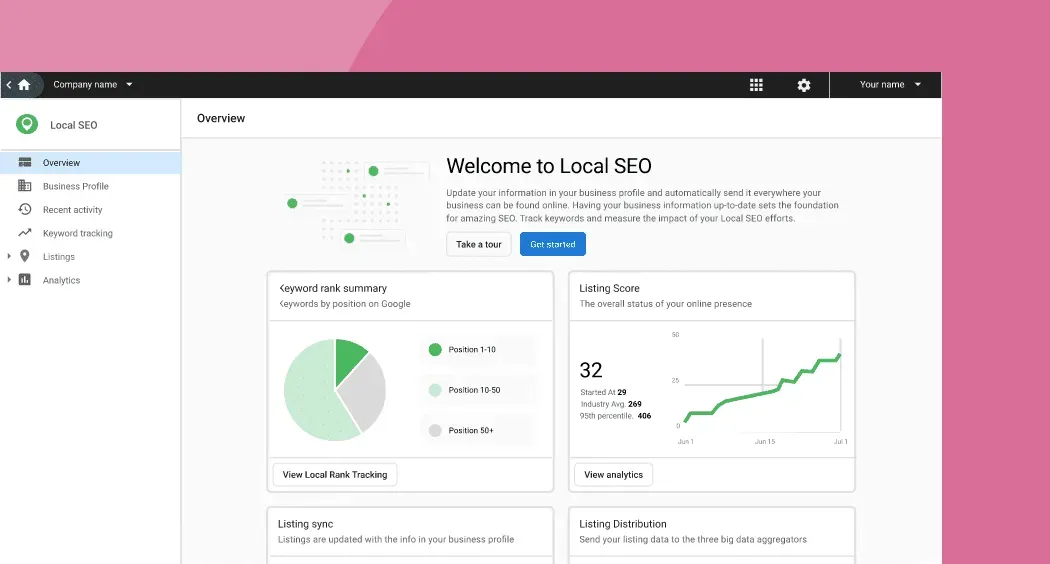
Vendasta’s Local SEO platform includes Listing Sync, which automatically pushes accurate business information to Google Business Profile, Facebook, Bing, X, and hundreds of other directories simultaneously. When a franchisee changes their hours or opens a new service area, the update propagates everywhere in real time.
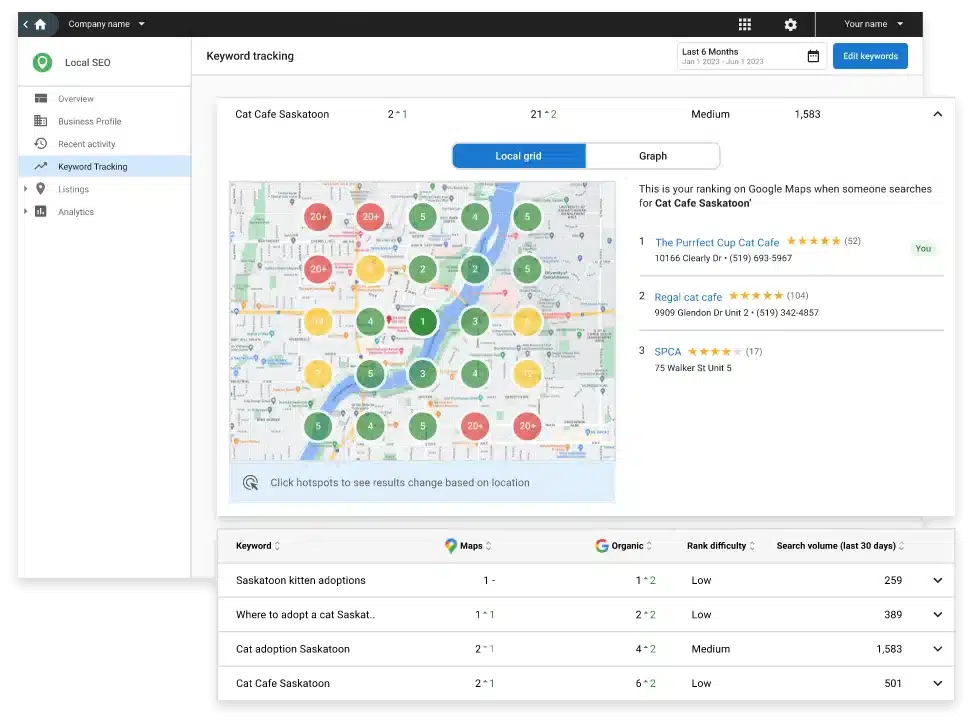
Paired with keyword tracking and local ranking analytics, this gives corporate marketing teams full visibility into how each location is performing in local search, and where to focus optimization efforts.
Local SEO priorities for home service franchises:
- Consistent NAP data across all major directories
- Optimized Google Business Profile with service categories, photos, and Q&A populated
- Location-specific landing pages for each franchisee with unique, relevant content
- Regular review acquisition to boost local ranking signals
- Local backlink building through community sponsorships and partnerships
4. Reputation Management as a Revenue Driver
In home services, reputation is the product. This makes it a critical component of a strong home service franchise marketing strategy. A homeowner choosing between two HVAC companies with similar pricing and availability will choose the one with more reviews, higher ratings, and recent activity. Every time.
According to BrightLocal, 98% of consumers read online reviews for local businesses before making a purchase decision. More importantly, businesses with a rating below 4.0 stars lose the majority of their potential customers before they even make first contact.
For franchisors, inconsistent reputation management across the network creates a two-tiered system: high-performing locations with strong review profiles capturing the bulk of local demand, while underperforming locations struggle to even get seen.
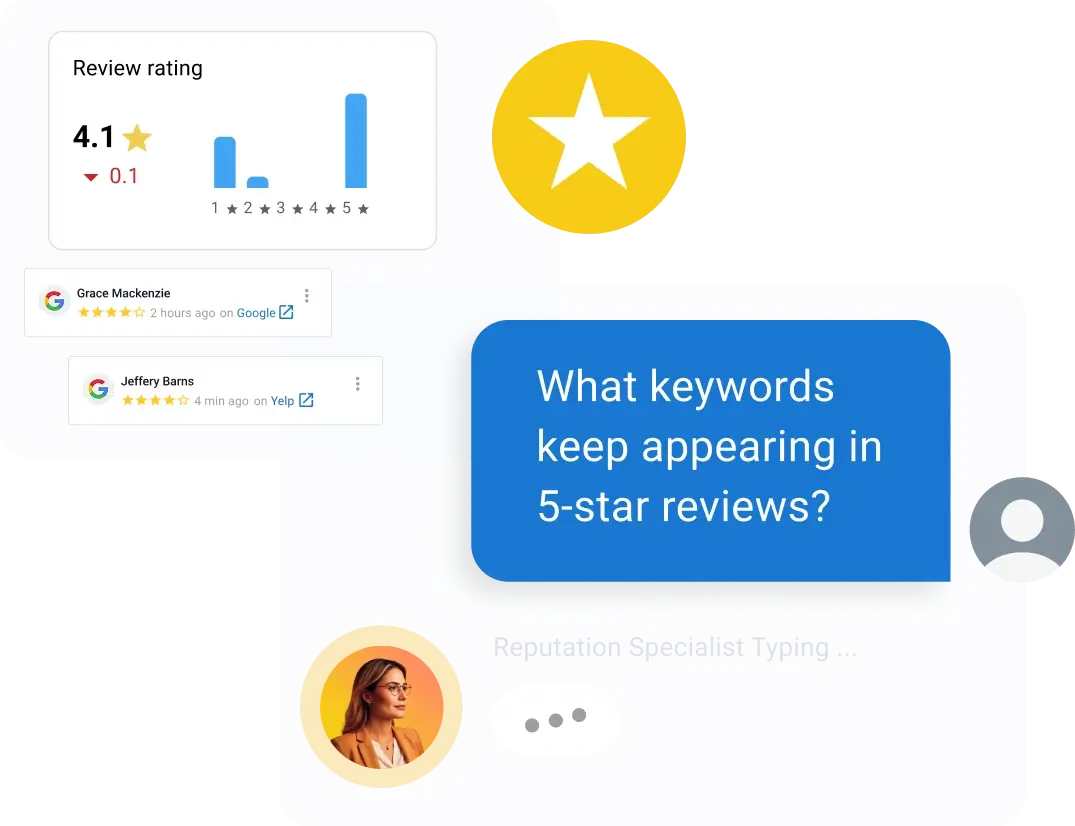
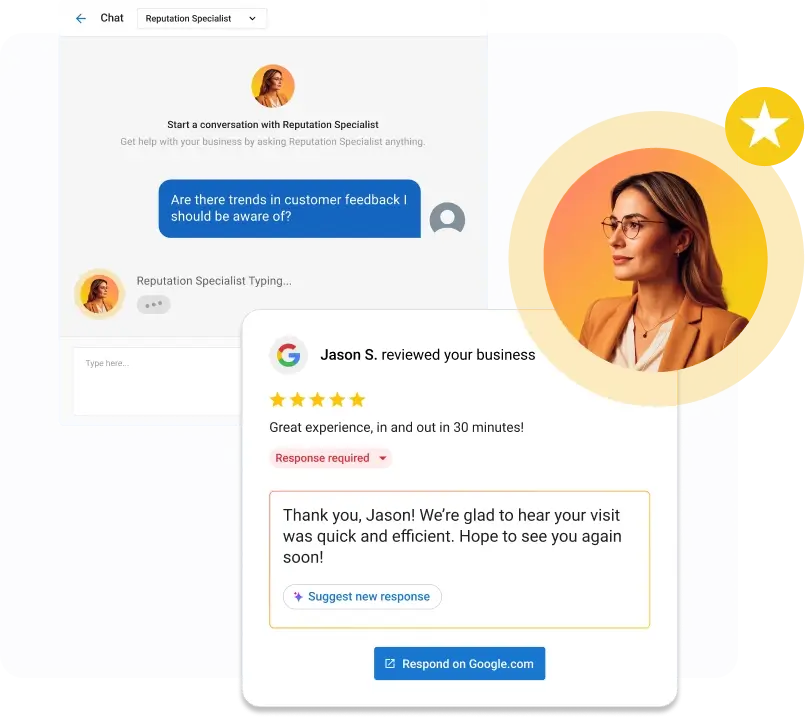
Vendasta’s Reputation AI deploys an AI Reputation Specialist at each location. This AI Employee automatically sends review requests after each completed job, responds to incoming reviews with personalized, on-brand replies, monitors review activity across platforms, and flags negative feedback for human follow-up.
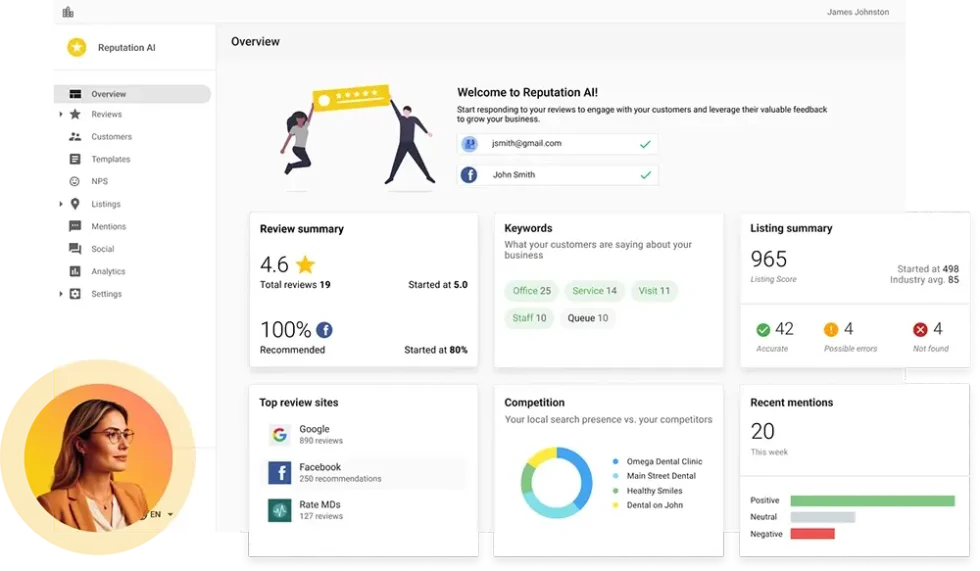
The impact compounds over time. A location that receives 20 new reviews per month will build a dramatically stronger local presence than one that receives two. Vendasta’s automation makes the 20-per-month pace achievable without franchisees lifting a finger.
Key reputation management actions for every franchise location:
- Automated post-service review request via SMS and email
- AI-generated review responses published within 24 hours
- Negative review escalation protocols for corporate awareness
- Monthly reputation score reporting at the location and network level
- Proactive review acquisition campaigns tied to seasonal service pushes
5. Paid Search Strategy: Google LSA and PPC for Home Services
Organic and reputation-driven leads are the foundation. Paid search is the accelerant. Together, they create a balanced home service franchise marketing strategy that drives both volume and intent.
Google Local Services Ads (LSAs) are the single highest-converting paid channel for home service businesses. Unlike traditional PPC, LSAs appear above organic results and paid search ads, display your business name, rating, and the Google Guaranteed badge, and charge per lead rather than per click. For franchisees in competitive markets, LSAs can generate qualified calls at a fraction of the cost-per-acquisition of traditional paid search.
The key for franchisors is building a consistent LSA management playbook across locations:
- Budget allocation by market competitiveness: Higher CPC markets require higher daily budgets to maintain visibility
- Service category optimization: Only run ads for services with strong close rates and healthy margins
- Lead dispute management: LSAs allow franchisees to dispute low-quality leads. Training franchisees to use this feature improves ROI materially
- Review integration: LSA ranking is directly tied to your Google review count and rating, reinforcing why reputation management is not optional
For mid-funnel and retargeting purposes, traditional Google Ads and Meta campaigns remain valuable. A homeowner who visited your franchisee’s website but did not book is an ideal retargeting candidate. A homeowner who searched for HVAC services three weeks ago but did not convert is worth a follow-up impression when the season turns.
6. Social Media Marketing at Scale Without Losing Local Relevance
Social media for home service franchises serves two distinct functions: brand awareness at the network level and community connection at the local level. Both matter, and they require different approaches. Integrating both effectively strengthens your overall home service franchise marketing strategy.
Managing both effectively requires a scalable approach to social media management that balances centralized brand control with localized content execution.
At the network level, corporate-produced content reinforces brand credibility, highlights customer success stories, and builds the category authority that makes individual franchisee pages more trustworthy by association.
At the local level, franchisees need the ability to post content that speaks to their specific community. Before-and-after photos from a local job. A post celebrating a local charity sponsorship. A seasonal reminder about gutter cleaning or HVAC tune-ups that references local weather patterns.
Vendasta’s Social AI platform allows corporate teams to manage social publishing across thousands of franchise locations simultaneously. Pre-approved content libraries give franchisees the ability to post on-brand content without waiting for corporate approval cycles.
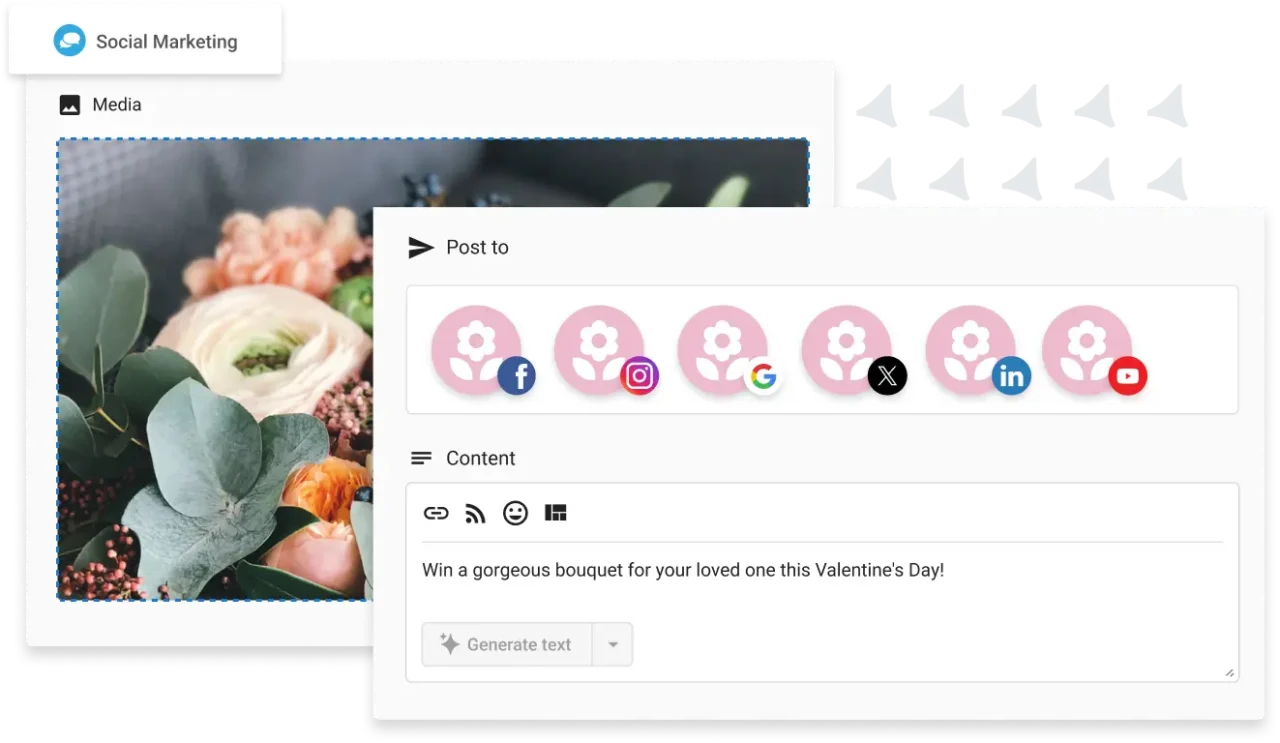
AI Employees can generate and schedule location-specific posts automatically, maintaining a consistent publishing cadence even for franchisees who have no bandwidth for social media management.
Social media content that performs for home service franchises:
- Before-and-after project photos with location-specific captions
- Seasonal service reminders with clear CTAs to book
- Employee spotlights that humanize the local franchise
- Community involvement and local event participation
- Customer testimonial videos and review highlights
7. CRM and Pipeline Visibility for Every Location
A lead captured is not a lead converted. Conversion visibility is essential to optimizing any home service franchise marketing strategy. The gap between inquiry and booked job is where most franchise networks are hemorrhaging revenue, and it is almost entirely invisible to franchises without the right data infrastructure.
Vendasta’s CRM AI is a self-updating sales system that captures every conversation, automatically updates contact records, surfaces open opportunities, and alerts franchisees to leads that need attention.
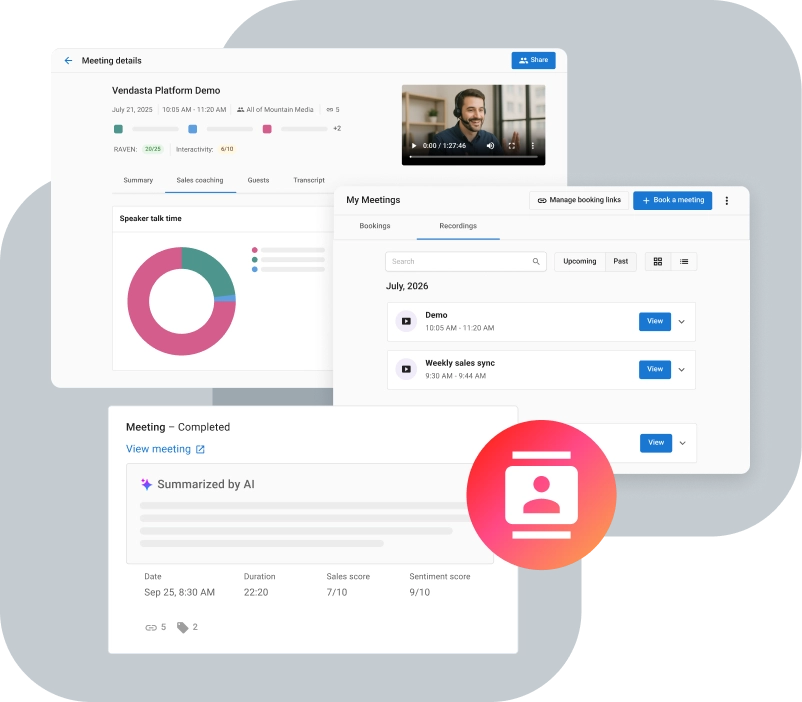
The AI Sales Assistant embedded in the CRM extracts key details from sales conversations, updates pipeline stages without manual data entry, and ensures that no lead falls through the cracks because someone forgot to log a call.
For corporate marketing teams, the network-level reporting view is what makes this transformative. Instead of receiving anecdotal feedback from franchisees about lead quality, you have data.
You can see which locations have the longest lead response times, which have the lowest lead-to-booking conversion rates, and which have the strongest pipeline velocity. You can identify underperforming locations early and intervene with coaching, resources, or operational support before they become a franchisee satisfaction problem.
CRM capabilities every franchise location needs:
- Automatic lead logging from all incoming channels (call, chat, SMS, web form)
- Pipeline stage tracking from first contact to completed job
- Automated follow-up task assignment with due dates
- Network-level reporting accessible to corporate marketing
- Integration with scheduling and dispatch systems
8. Data-Driven Performance Benchmarking Across the Network
The final pillar is the one that ties everything together: visibility. Without it, a home service franchise marketing strategy cannot improve over time.
An effective marketing strategy for home service franchises is not a set-it-and-forget-it document. It is a living system that improves based on performance data.
Franchisors who benchmark lead quality, response time, booking rates, and customer satisfaction scores across locations can identify best practices from top performers and deploy them network-wide.
According to Forrester Research, companies that adopt data-driven marketing are six times more likely to be profitable year-over-year than those that do not.
For franchise networks, this means building a reporting infrastructure that connects the dots between marketing inputs (ad spend, SEO rankings, social reach) and business outcomes (leads, bookings, revenue per location).
Vendasta’s platform delivers this through centralized dashboards that give corporate marketing teams a real-time view of performance across every location in the network.
Franchisors can drill down by location, region, service category, or time period. AI-powered insights surface anomalies and opportunities automatically, flagging locations that need support before they fall significantly behind.
How AI Employees Are Replacing Fragmented Vendor Stacks
One of the defining shifts in marketing strategy for home service franchises heading into 2026 is the consolidation of the vendor stack. This shift is redefining how a home service franchise marketing strategy is executed at scale.
Most franchise networks are running 6 to 10 separate tools for marketing, sales, and operations: a separate tool for reputation management, another for listings, another for social publishing, another for lead tracking, another for CRM, another for SMS follow-up.
Every additional vendor is a gap. A login nobody checks. A data feed that does not sync. An invoice that nobody can attribute to revenue. And it is the franchisee who suffers most, because they are the ones expected to manage all of it.

Vendasta’s AI Workforce for franchises consolidates this entirely. Instead of a fragmented stack, every location gets a single platform with AI Employees that cover every function:
| Function | AI Employee | What It Does |
| Lead Capture & Response | AI Receptionist | Answers calls, chat, and SMS 24/7 |
| Lead Nurturing | AI Inside Salesperson | Follows up, re-engages, and books appointments |
| Reputation | AI Reputation Specialist | Sends review requests, responds to reviews |
| Sales Tracking | AI Sales Assistant | Updates CRM, surfaces pipeline opportunities |
| Content & Social | AI-Powered Social AI | Publishes content across locations automatically |
| Local Visibility | Local SEO + Listing Sync | Keeps all listings accurate and optimized |
The result is not just operational efficiency. It is strategic consistency. Every franchisee executes the same marketing playbook because the platform enforces it. Corporate sets the standard once and the AI Employees deploy it everywhere.
For franchisors tired of chasing individual locations to update their Google Business Profile or respond to negative reviews, this is the shift that changes everything.
Building a Franchise Marketing Playbook That Scales
So what does a deployable, scalable home service franchise marketing playbook actually look like in practice? It is the operational backbone of a successful home service franchise marketing strategy. Here is the framework that top-performing franchise networks are building in 2026.
Step 1: Audit the Current Lead Journey
Before deploying any new strategy, map the existing lead journey at 3 to 5 representative franchise locations. Answer these questions:
- How long does it take to respond to a web form inquiry?
- What percentage of after-hours calls are answered or called back same-day?
- How many mid-funnel leads (inquired but did not book) receive a follow-up within 48 hours?
- What is the average number of Google reviews per location, and what is the monthly acquisition rate?
This audit creates the baseline. You cannot improve what you cannot measure.
Step 2: Standardize the Response Layer
The single highest-leverage action in any franchise marketing improvement project is standardizing the first-response layer. This means deploying AI-powered response capabilities that guarantee every lead, regardless of channel or time of day, receives an acknowledgment within 60 seconds.
Vendasta’s AI Receptionist handles this across phone, chat, and SMS simultaneously. For franchisors, the deployment is centralized. You configure the AI once with your brand voice, service menu, and booking flow, and it activates across every location.
Step 3: Deploy a Network-Wide Follow-Up Sequence
Once the response layer is standardized, build the follow-up sequence. Define:
- Message cadence for unbooked inquiries (60-minute, 24-hour, 72-hour touchpoints)
- Channel mix (SMS first, then email, then a call attempt)
- Re-engagement messaging for leads older than 7 days
- Seasonal reactivation campaigns for past customers
Vendasta’s AI Inside Salesperson executes this automatically, updating the CRM as it goes and escalating hot leads to human sales staff for closing.
Step 4: Build the Reputation Engine
Set up automated post-service review requests at every location. Define the message template, the send timing (typically 2 to 4 hours after job completion), and the channel preference by customer demographic.
Configure the AI Reputation Specialist to respond to all incoming reviews within 24 hours, using templates that reflect your brand voice while personalizing each response to the review content.
Track net review acquisition per location monthly. Set a network-wide target (for example, each location adds a minimum of 10 new reviews per month) and use performance dashboards to identify locations falling behind.
Step 5: Activate Local SEO and Listing Management
Ensure every franchise location has a fully optimized Google Business Profile with accurate hours, service areas, photos, and service categories. Use Vendasta’s Local SEO to push consistent data to all major directories simultaneously.
Establish a quarterly review cycle for local SEO performance by location. Identify locations with declining local ranking and triage the root cause: citation inconsistency, review velocity, content quality, or competitor activity.
Step 6: Establish Network-Level Performance Benchmarks
Define the KPIs that matter for your franchise network. At minimum:
- Lead response time (target under 5 minutes during business hours, under 60 seconds AI-assisted 24/7)
- Lead-to-booking conversion rate by location and by channel
- Average review rating and monthly review acquisition rate
- Cost per acquired customer by market and service category
- Franchisee satisfaction score (because franchisees who generate revenue are franchisees who renew)
Review these benchmarks quarterly at the network level and monthly for underperforming locations. Use the data to coach, support, and resource franchisees systematically rather than reactively.
The Franchisee Satisfaction Connection
There is a business case for standardizing lead quality that goes beyond marketing ROI. It is about franchisee retention. A well-executed home service franchise marketing strategy directly impacts franchisee satisfaction and retention.
The number one driver of franchisee dissatisfaction is not the royalty rate, the marketing fund, or the operations manual. It is the feeling that the franchisor is not delivering on the promise of the brand. And for most franchisees, that feeling is triggered by one thing: they invested in the system, they are generating traffic, and the leads are not converting into revenue.
When franchisees struggle to generate revenue, the brand team pays a compounding price. Franchisee churn is expensive. Recruiting and onboarding a replacement franchisee costs significantly more than retaining a productive one. And underperforming locations drag down the aggregate metrics that matter for attracting new franchisee prospects.
An AI-powered marketing platform that standardizes lead quality across every location is not just a marketing investment. It is a franchise system health investment.
Choosing the Right Platform for Your Franchise Network
When evaluating marketing technology for a franchise network with 20 or more locations, the vendor selection criteria are different from a point solution evaluation for a single business. Here is what to prioritize.
1. Vendasta
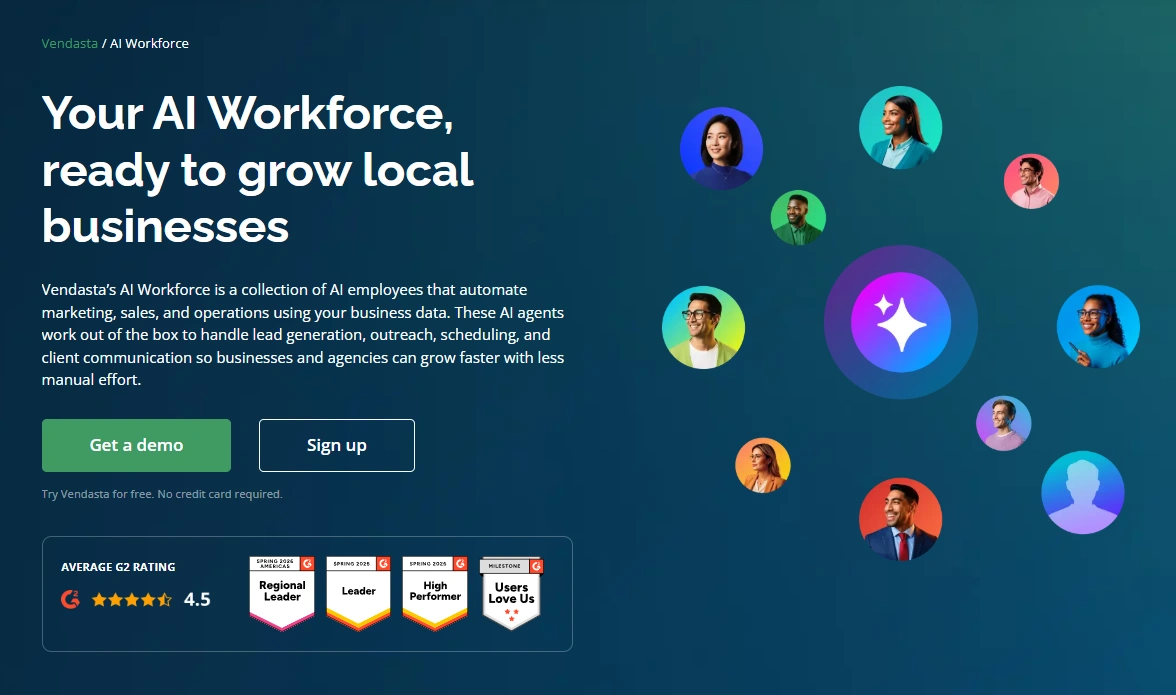
Vendasta is purpose-built for the centralized franchisor model. It combines AI Employees (Receptionist, Inside Salesperson, Reputation Specialist, Sales Assistant), Local SEO with Listing Sync, Reputation AI, Social AI, and CRM AI into a single, unified platform.
Franchisors configure the system once, defining brand voice, workflows, and performance standards. From there, AI executes consistently across every location. This eliminates the variability that typically exists between high-performing and underperforming franchisees.
What makes Vendasta stand out is its ability to manage the entire lead lifecycle: from first inquiry to booking, follow-up, reputation building, and repeat business. It is not just a marketing tool. It is a revenue system for the entire network.
2. Broadly
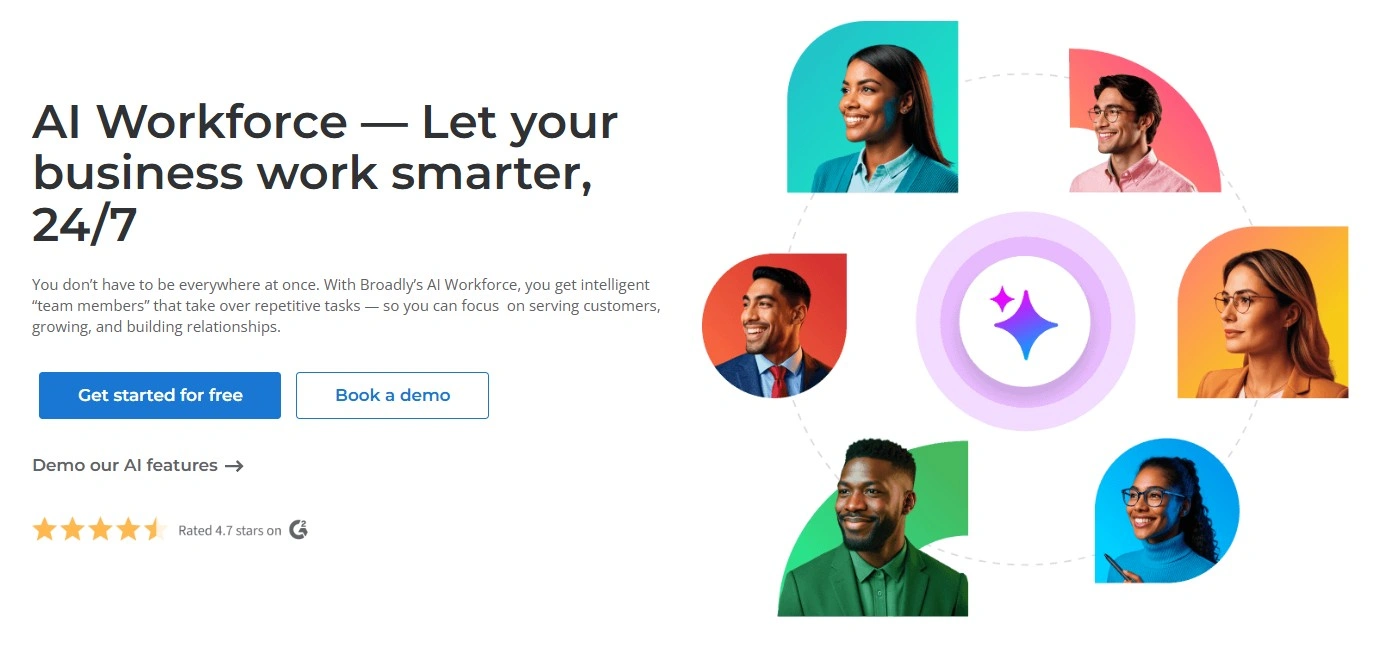
Broadly is a strong option for franchise networks that want to improve customer communication and streamline review generation at the local level. It helps franchisees stay responsive to inquiries, automate review requests, and maintain consistent engagement with customers.
For growing franchise systems, Broadly can be especially useful in strengthening the communication layer between businesses and their customers. However, as networks expand, franchisors may require more advanced capabilities such as AI-driven lead handling, deeper automation, and centralized performance visibility to fully standardize marketing execution across all locations.
3. ServiceTitan
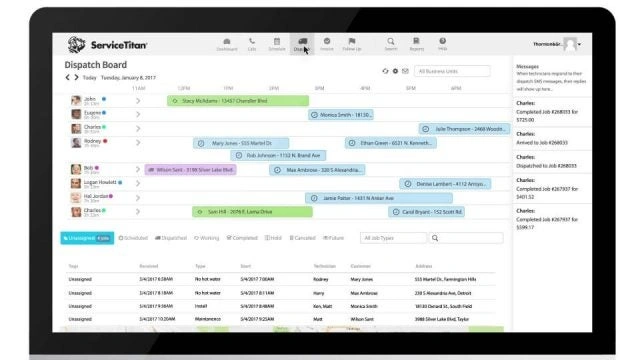
ServiceTitan is a strong operational platform designed for home service businesses. It excels in dispatch management, technician scheduling, and job tracking.
However, its capabilities on the marketing side are more limited. Franchisors using ServiceTitan often need to integrate additional tools for lead generation, follow-up automation, and reputation management, which can reintroduce the fragmentation problem at scale.
4. Birdeye
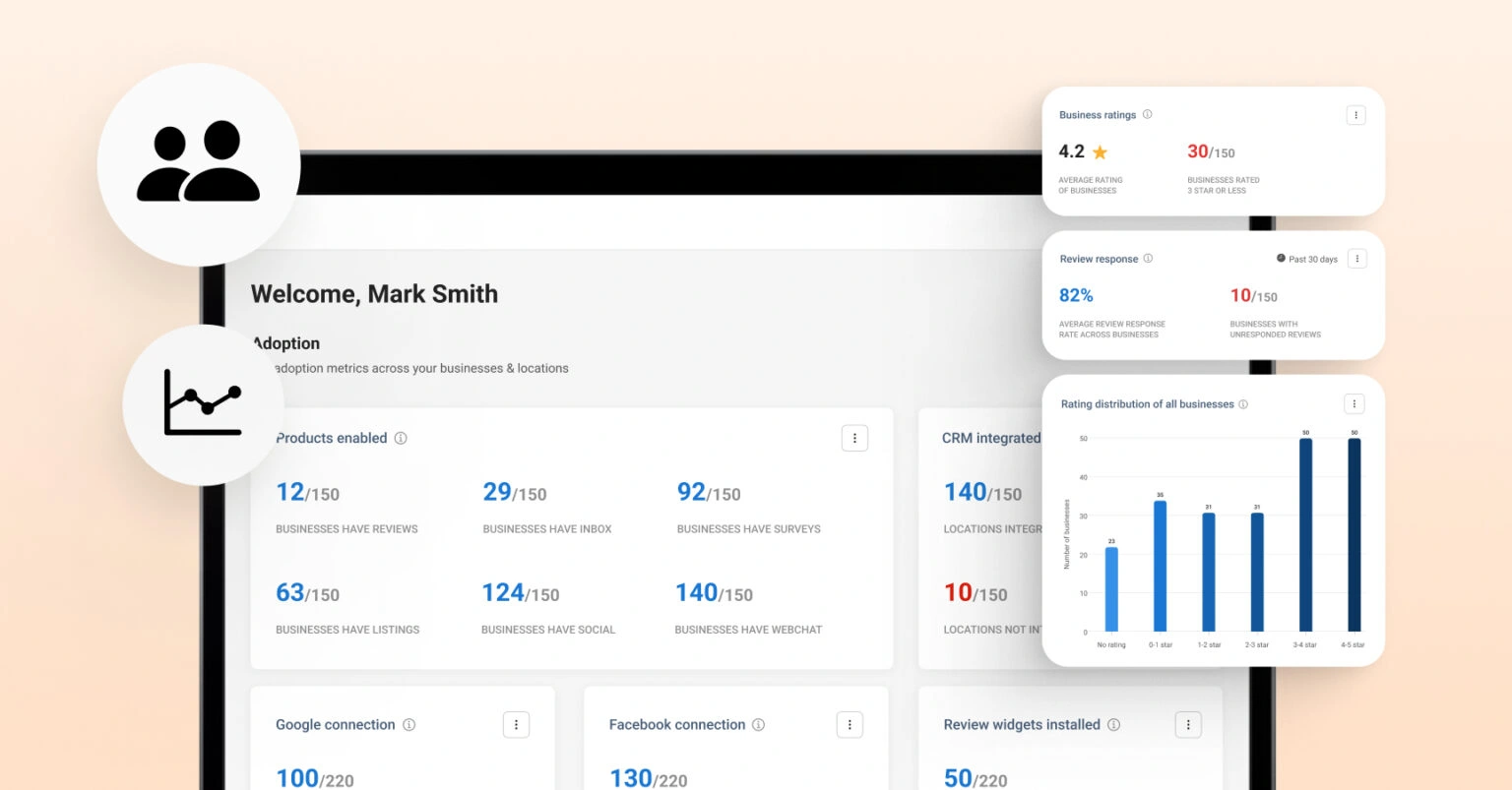
Birdeye is well known for reputation management and customer experience. It offers strong review generation and monitoring capabilities, helping franchise locations build credibility in local markets.
That said, it focuses primarily on the post-service experience. It does not fully address upstream challenges like lead capture, response speed, and conversion optimization across multiple channels.
5. Podium
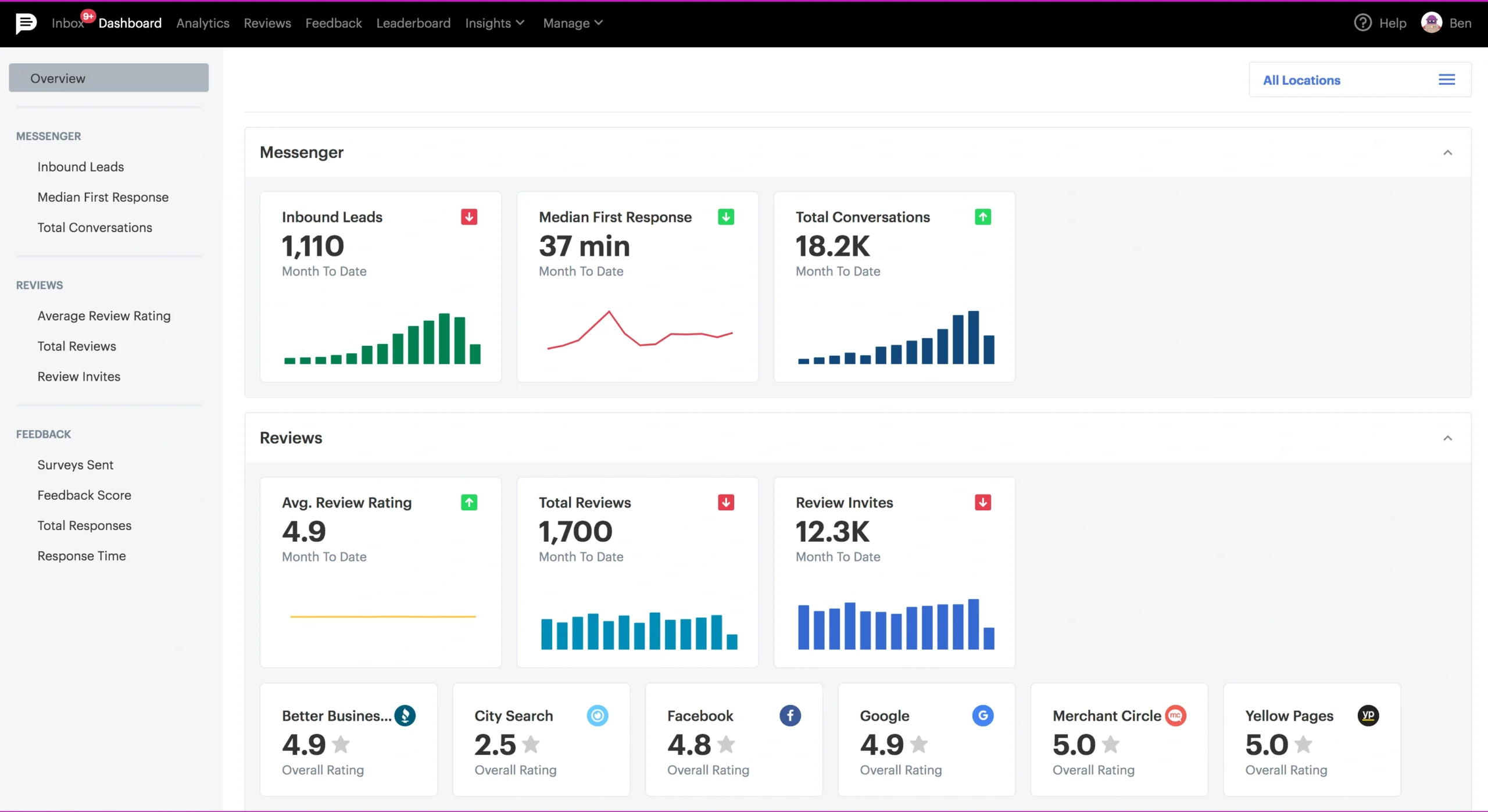
Podium is a strong player in SMS-based communication and customer interaction. It is particularly effective for businesses that rely heavily on messaging to engage and convert leads.
However, like many point solutions, it focuses on a specific part of the customer journey. It does not offer the centralized deployment model or the full-stack AI capabilities required to manage marketing, sales, and customer experience holistically across a franchise network.
Conclusion: Set the Standard Once. Deploy It Everywhere.
The franchisors who will win in 2026 are not the ones with the biggest ad budgets. They are the ones who build the most consistent, responsive, and intelligent lead conversion systems across their entire network.
A home service franchise marketing strategy is not just about generating more leads. It is about making sure every lead that enters the system gets the follow-up it deserves, the response speed it requires, and the brand experience that builds long-term loyalty.
The technology to do this exists today. Vendasta’s AI Workforce handles lead capture, response, nurturing, reputation management, and local SEO at every franchise location simultaneously. Corporate deploys it once. Every franchisee benefits immediately.
If your franchise network is ready to stop losing leads and start standardizing performance across every location, it is time to see what this looks like in practice. Schedule a demo with Vendasta and discover how leading home service franchise brands are building the marketing infrastructure that makes consistency the default, not the exception.
Home Service Franchise Marketing Strategy FAQs
1. What is a home service franchise marketing strategy?
A home service franchise marketing strategy is a system that covers lead generation, capture, follow-up, and conversion across all franchise locations. It includes local SEO, paid search, reputation management, AI-powered lead response, and centralized performance reporting. The goal is consistent lead quality and booking rates across every location in the network.
2. How do I standardize marketing across all my franchise locations?
Standardization starts with deploying a centralized platform that all locations use. Tools like Vendasta let franchisors configure AI-powered lead response, follow-up sequences, and reputation management once at the corporate level. The platform then executes that playbook at every location automatically, eliminating the need for individual location management.
3. Why are home service franchisees missing so many leads?
Most missed leads happen outside business hours, when franchisees are not staffed to answer calls or respond to web inquiries. A significant portion also comes from slow follow-up on mid-funnel leads who inquired but never booked. AI-powered response tools like Vendasta’s AI Receptionist solve both problems by providing instant, 24/7 lead responses across every channel.
4. What is the best marketing channel for home service franchises?
There is no single best channel; the strongest results come from a combination of local SEO, Google Local Services Ads, and AI-powered lead response. Local SEO and LSAs drive high-intent inbound traffic, while platforms like Vendasta ensure every inbound lead is captured, responded to, and nurtured toward a booking automatically.
5. How does AI improve lead conversion for home service franchises?
AI improves lead conversion by eliminating response delays and automating follow-up sequences that most franchisees lack the bandwidth to execute manually. Vendasta’s AI Employees respond to leads within seconds, send multi-touchpoint follow-up sequences, and re-engage dormant leads automatically. This drives a documented 372% increase in lead-to-revenue conversion rates.
6. How important are online reviews for home service franchise marketing?
Online reviews are critical. Research shows 98% of consumers read reviews before choosing a local service provider, and businesses below a 4.0-star rating lose the majority of potential customers before first contact. Vendasta’s AI Reputation Specialist automates post-service review requests and responds to incoming reviews, helping every franchise location build a strong review profile consistently.
7. What role does local SEO play in a franchise marketing strategy?
Local SEO drives the organic, high-intent traffic that converts into booked jobs without paid media spend. For home service franchises, appearing in the Google Local Pack for searches like “HVAC repair near me” is directly tied to call volume and revenue. Vendasta’s Local SEO platform and Listing Sync ensure every location maintains accurate, optimized directory listings across the entire web.
8. How can franchisors track marketing performance across all locations?
Centralized dashboards that aggregate lead volume, response time, conversion rates, and reputation scores by location are the most effective approach. Vendasta’s platform gives corporate marketing teams a real-time network-wide view of performance, with AI-powered insights that surface underperforming locations and highlight best practices worth scaling.
9. How do I reduce vendor clutter in my franchise marketing stack?
The most effective path is consolidating to a single platform that covers the full marketing and customer acquisition lifecycle. Vendasta replaces separate tools for reputation management, local SEO, social media, CRM, and AI-powered communication with one integrated platform. This reduces cost, eliminates data silos, and simplifies franchisee adoption significantly.
10. What should a home service franchise look for in a marketing platform?
Prioritize platforms with centralized deployment (corporate configures, all locations benefit), AI-powered lead response and follow-up, local SEO and listing management, reputation automation, and network-level reporting. Vendasta’s franchise marketing software covers all of these in a single platform and is purpose-built for multi-location home service brands with 20 or more locations.