About Us
 Careers
 Leadership
 Board
Board Newsroom
AI agents for marketing are software that take a goal, plan the steps, call connected tools such as a customer relationship management (CRM) platform, Google Analytics 4 (GA4), or an ad account, and log every action for review. They act instead of answering, and unlike rule-based automation, they pick their own path when the input is messy.
For an agency, that means fulfillment capacity without a new hire: SHRM’s report puts average nonexecutive cost-per-hire at $5,475. Forrester’s study found that half of U.S. agencies already use agentic AI for marketing execution, while nine in 10 use generative AI.
Vendasta builds these agents as AI Employees that agencies deliver to clients under their own brand. This guide compares the best AI agents for marketing, explains how they differ from chatbots, walks through real agency deployments, and covers what they cost and whether to use or resell them.
Automate every step of the customer journey with AI employees
TL;DR
- AI agents act on goals: They plan steps, use your tools, and log every action. Vendasta calls its version AI Employees and lets agencies resell them under their own brand.
- Real deployments show the payoff: Elite Web Professionals’ AI Receptionist handled 1,017 calls for a car rental client and qualified 778 leads in four months, and Blackfeather Digital built $1 million in first-year revenue with a team of three.
- Margins and retention compound: Vendasta’s Starter plan requires a $99 monthly minimum product spend with no contract, partners buy at wholesale and set their own retail prices, and clients on four products retain at 80% after two years versus 30% on one.
The Best AI Agents for Marketing at a Glance
The right agent depends on the stack you already run and whether you need it for your own team or for client delivery:
| Platform | Best for | How it’s priced | Watch out for |
|---|---|---|---|
| Vendasta AI Employees | Agencies delivering AI across local business clients under their own brand | Spend-offset subscription; $99/month Starter minimum, no contract; wholesale pricing with partner-set retail | A full platform, more than a single-tool buyer needs |
| GoHighLevel | Agencies that want to build their own funnels and automations | Monthly plans plus usage-based charges for email, SMS, and AI | You build and maintain the AI workflows yourself |
| Salesforce Agentforce | Teams already running Salesforce | Usage-based, on top of Salesforce licenses | Requires the Salesforce stack |
| HubSpot Breeze | Teams already running HubSpot | Included with paid HubSpot tiers, with credits for heavier use | Value tied to HubSpot seats and tiers |
| Relevance AI | Building custom agents without code | Usage-based plans metered by actions and credits | You design and maintain every workflow |
| Lindy AI | Internal assistants for inbox, scheduling, and outreach | Per-seat plans with pooled credits | Built for team productivity more than client delivery |
| Jasper AI | Brand-consistent marketing content | Per-seat subscription | Focused on writing, with limited action beyond it |
| Copy.ai | Go-to-market content and sales workflows | Subscription with workflow credits | Workflow setup takes time |
| Zapier and n8n | Connecting apps with agent steps | Task-based, with agents metered separately (Zapier); cloud or self-hosted plans (n8n) | n8n’s license restricts hosting it as a service for clients |
| Blueshift Launchpad and BrazeAI Operator | Enterprise lifecycle and cross-channel campaigns | Enterprise contracts | Priced and built for enterprise marketing teams |
Vendasta is built for the agency case: deliver AI Employees across client accounts under your brand, with billing and activity logs in one place. GoHighLevel suits hands-on funnel builders who want to assemble the automation themselves. The others are strongest when your team is the only user or when you’re already committed to their ecosystem.
What Is an AI Agent for Marketing?
An AI agent for marketing is a language model that directs its own steps and tool calls toward a goal. OpenAI’s guide draws the line at whether the model manages workflow execution and makes decisions.
Autonomy runs on a scale from one narrow task to hours of work under light supervision. Most marketing deployments sit in between: the agent owns a defined job, a person approves anything irreversible.
There are two ways an agency uses an agent. One that lives in a single login is a productivity tool. One you can deploy across client accounts, with billing and logs in one place, is a service line. Vendasta builds for the second case and calls its purpose-built agents AI Employees: each owns a role and logs what it does, which is what lets you bill it as a line item.
AI Agents vs Chatbots vs Marketing Automation
Vendors apply all three labels to products that behave differently.
What Is the Difference Between AI Agents and Traditional Chatbots?
A traditional chatbot answers one question and stops. An AI agent takes a goal, decides which tools to call, acts, checks the result, and continues until the job is done or a person approves the next step; it calls your CRM or ad account and logs what it did. Anthropic’s engineering guide describes agents as “LLMs using tools based on environmental feedback in a loop.”
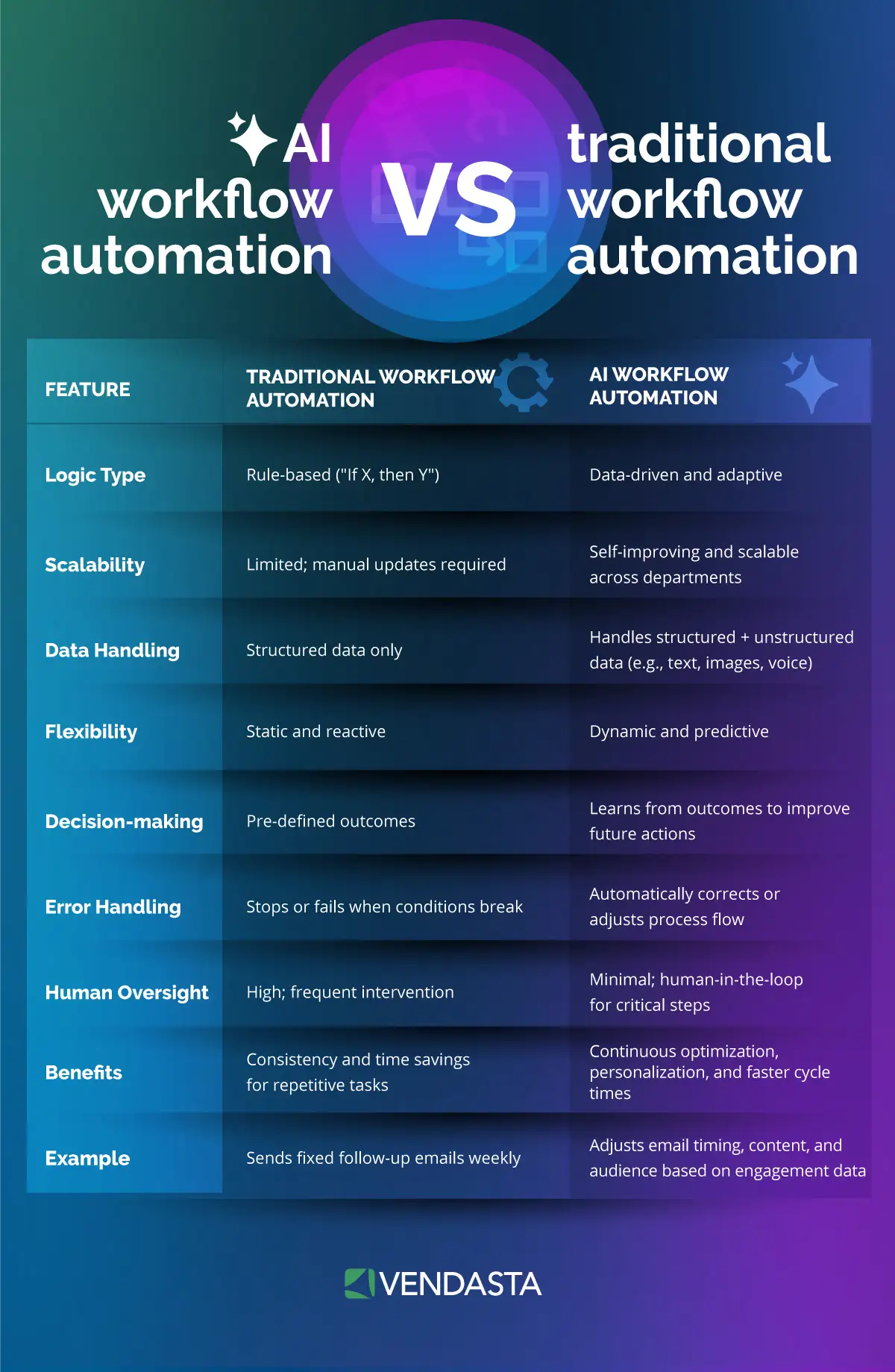
Rule-based marketing automation acts, but only along paths someone mapped in advance. Gartner’s report separates AI assistants, which depend on human input, from agents that perform end-to-end tasks, and calls the confusion agentwashing. Ask any vendor which column its product occupies:
| Attribute | Chatbot | Rule-based automation | Generative AI tool | AI agent |
|---|---|---|---|---|
| Reasoning | Matches intent to a scripted reply | None; follows if-then rules | Generates text from one prompt | Plans multi-step actions toward a goal |
| Tool use | None, or a fixed lookup | Fixed API calls set in advance | None | Selects tools at run time |
| Autonomy | Reactive, one turn | Runs unattended on the mapped path only | Waits for each prompt | Operates for minutes or hours with approval checkpoints |
| Trigger | A user message | A predefined event | A human prompt | A goal, schedule, or event |
A two-star review lands on a client’s Google profile at 11 p.m. A chatbot does nothing unless someone messages it, and rule-based automation fires the same templated apology it fires for every low rating. Vendasta’s AI Reputation Specialist reads the complaint, applies the client’s response rules, drafts a reply in the reviewer’s language, posts it or queues it for approval, and logs the action so you can show the client on Monday.
How AI Agents Work
An AI agent runs a repeating loop: take in data, reason, act through a tool, observe the result, and go again. It stops at the goal, a step limit, or a rule that requires human approval. Fixed AI workflows run the same path every time.
Most agents ground their answers in your own data through retrieval-augmented generation (RAG): they pull the relevant documents or records before they respond. Vendasta’s AI Employees learn from the business’s website, business profile, and uploaded knowledge such as price lists and procedures, so setup takes under 30 minutes for most roles and output reflects one client’s services, hours, and tone.
A Campaign Reporter in Action
AI Data Analyst, available as a Custom AI Employee, turns CRM and social data, including reviews, into a Monday briefing that ends in a recommended next step.
- Connect read-only analytics: Vendasta integrates with Google Analytics, and Custom Capabilities, Vendasta’s no-code application programming interface (API) connections, let a Custom AI Employee reach outside systems. Scope analytics access to read-only so the agent can run reports but never change property settings. Google’s Analytics Model Context Protocol (MCP) documentation describes the same read-only pattern for AI models.
- Pull pipeline data: It reads leads, deal stages, and sources from your Vendasta CRM AI records and compares pipeline movement against the campaigns that generated it.
- Reason and draft: It compares this week to last, flags the campaign whose cost per lead moved most, and drafts a briefing ending with one recommended action.
- Route for approval: The briefing lands in the account manager’s inbox. The agent recommends the budget shift; a person makes it, and the agent’s record of every query and draft becomes the client’s monthly proof of what it read and proposed.
Multi-Agent Orchestration
For work that splits into parallel parts, an orchestrator can outperform a single general agent, though it uses more tokens. In Anthropic’s multi-agent research, a lead agent delegated subtasks and synthesized results; its system used about 15 times the tokens of chat. Single-tool comparisons can mislead because agency work often spans a CRM, ad account, and publishing platform.
Vendasta’s AI Blogger researches a customer question, publishes an article built for search engine optimization (SEO) to WordPress, then hands it to AI Social Media Manager for platform-adapted posts. Custom AI Employees reach outside systems through APIs.
What AI Agents Can Do Autonomously (And What Needs a Human)
Agents earn autonomy on repeatable, reversible, high-volume tasks; people keep the irreversible and the strategic. OpenAI’s guide recommends human oversight for sensitive, irreversible, or high-stakes actions such as making payments and authorizing large refunds, and ad budgets follow the same logic.
After your team sets the rules, agents can run five jobs without supervision:
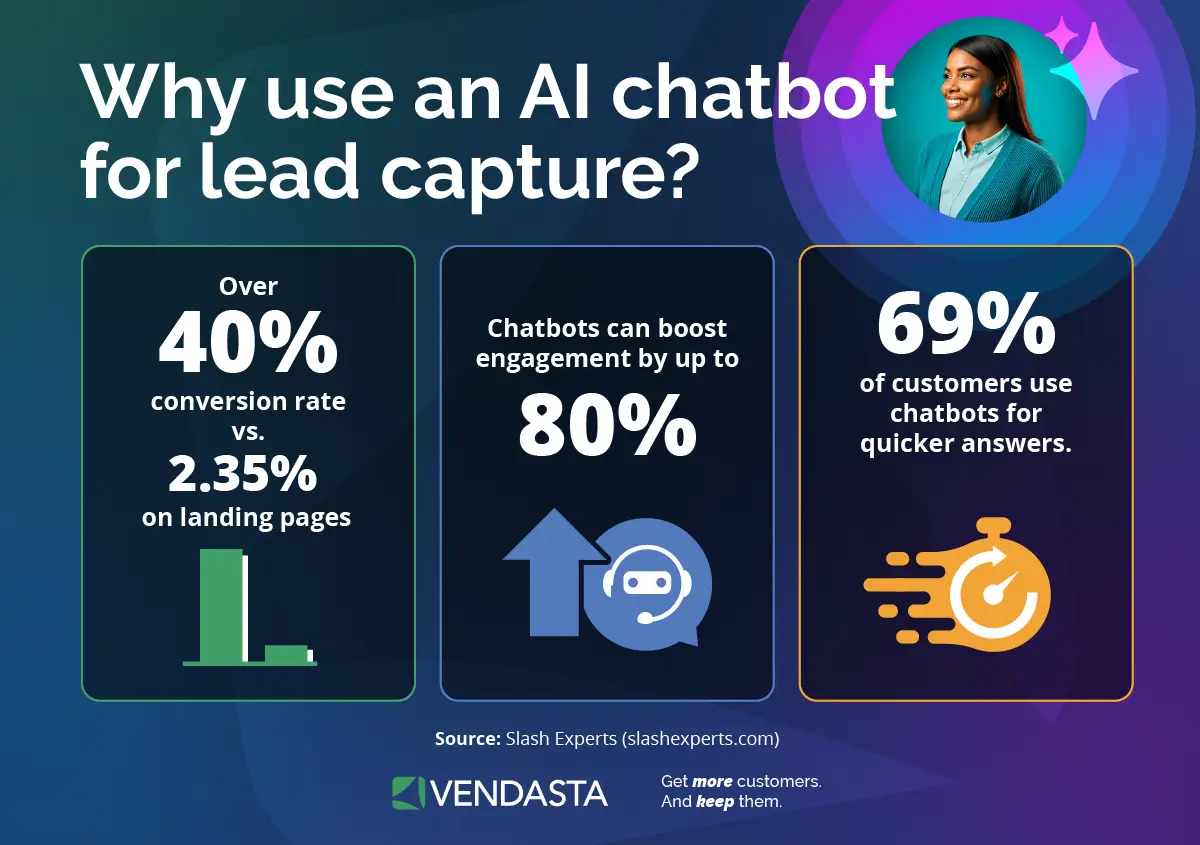
- Lead qualification and appointment booking across calls, chat, and text
- Review responses within star-rating and language rules
- Scheduled social publishing in a learned brand voice
- Weekly performance briefings with a recommended next step
- Ad copy and keyword variants for a specialist to launch
Four decisions stay with your team:
- Budget changes and refunds, after the reporter flags the campaign whose cost per lead moved
- Strategy, positioning, and channel testing
- Publishing regulated or sensitive creative
- Deciding how to recover when a campaign goes wrong
Marketing Jobs to Hand an Agent First
Rank candidate jobs by how much revenue they touch and how little judgment they require.
- Lead qualifier: An AI Receptionist answers calls, web chat, texts, and messages around the clock, qualifies each lead, and logs it to the CRM. It can also schedule appointments against a real calendar, where the revenue shows up. A home services client of Blackfeather Digital was missing roughly 30% of inbound leads; after unanswered calls rolled to the AI Receptionist, the AI became the team’s top booker.
- Campaign reporter: AI Data Analyst assembles the weekly briefing above, and Advertising Intelligence consolidates ad performance into one white-label dashboard. Vendasta’s retention research found regular proof-of-performance reporting improves retention by 38%. Insight from call data pays off too: The Xcite Group used AI call analysis and sales coaching to lift a construction client’s close rate from 15% to 50%.
- Review responder: Reputation AI sends review requests and covers 100+ review sources; AI Reputation Specialist replies to Google and Facebook reviews within your rules and suggests replies for reviews on other sites. Blue River Digital’s auction-house client earned 21 five-star reviews in 30 days.
- Content producer: AI Blogger publishes one SEO-optimized FAQ-style article per week, and AI Social Media Manager adapts it across supported networks in the client’s voice. LeadWorks built Penn, a Custom AI Employee trained on each client’s knowledge base, and cut content production from 90–120 minutes per piece to 5–10.
- Ad variant builder: Vendasta Ads generates a campaign plan with keywords, ad copy, and budget options in under one minute; Vendasta’s specialists then build, launch, and manage the campaign. Pairing ads with AI intake compounds the result: iMedia Audiences’ ad and AI receptionist funnel books a luxury appliance showroom about 80 appointments a month, each worth $2,500.
How to Choose or Build an AI Agent
Score every option against six criteria before price.
- Integrations: The agent should read and write natively to your CRM, customer data platform (CDP), GA4, Slack, and Google Ads. Vendasta connects to HubSpot, Google products, Microsoft Teams, Zapier, Jobber, and ServiceTitan, plus developer APIs and MCP.
- Brand voice: It has to learn each client’s tone and hold it across accounts.
- Workflow complexity: One role should hand off to another instead of sitting on its own island.
- Data foundation: First-party data needs a home the agent can log back to.
- Autonomy controls: Approval thresholds should be settable per client and per action type.
- Cost model: Fees may depend on seats or usage and sometimes outcomes; read the overage trigger before you sign.
Build versus buy comes down to who owns the integration work. Code-first frameworks such as CrewAI and AutoGen give full control but ship without native CRM or ad connectors.
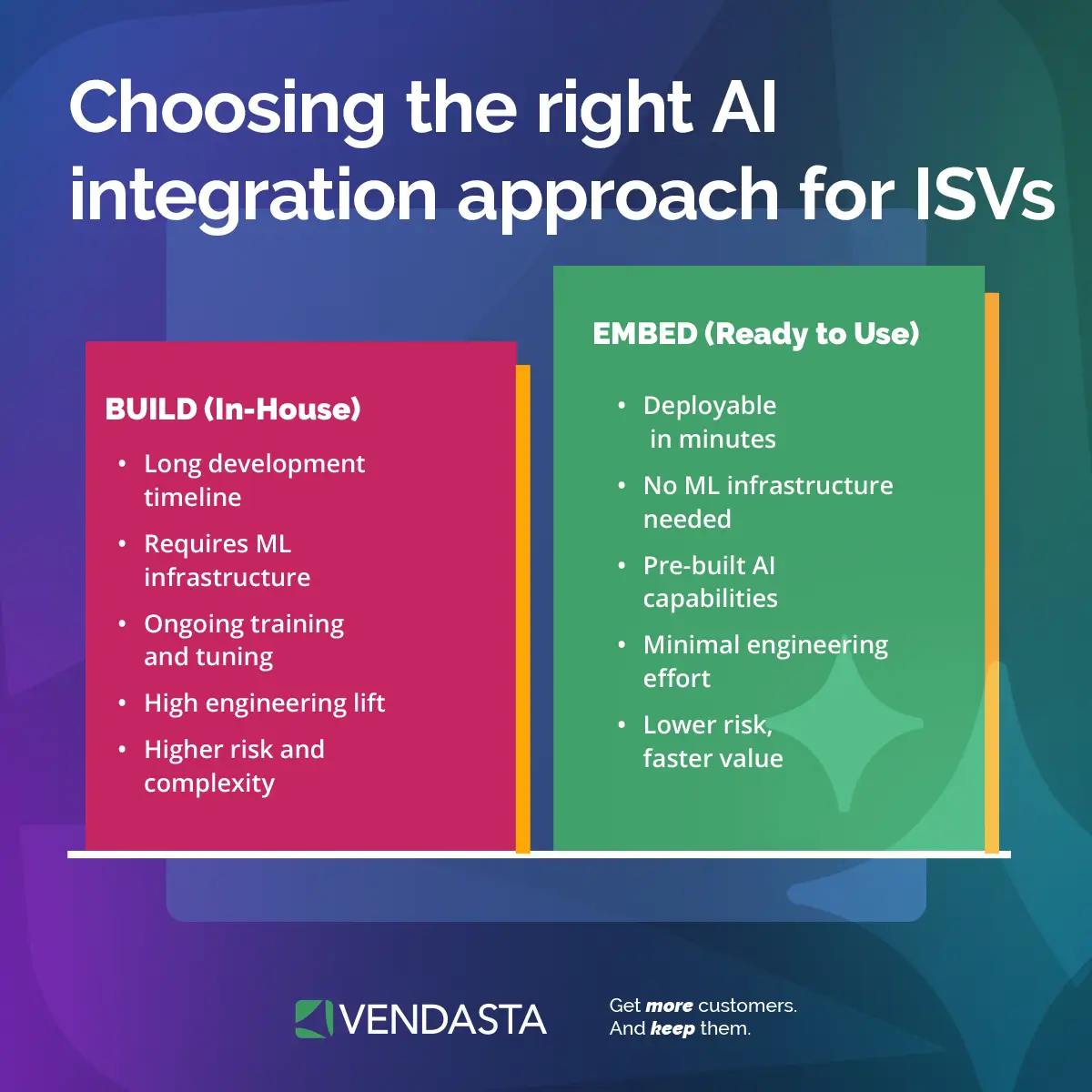
No-code builders such as Relevance AI, Lindy, Zapier, and n8n assemble faster than code, but n8n’s Sustainable Use License restricts hosting the software as a service for clients.
Ecosystem-native agents such as Salesforce Agentforce, HubSpot Breeze, and Vendasta’s AI Employees arrive with CRM, inbox, and reporting attached, and Vendasta’s are built for agencies to deliver under their own brand, with billing included.
What AI Agents Cost
Agent pricing uses flat or per-seat subscriptions, plus metered usage billed in credits, tokens, actions, or resolved conversations. Budgets slip on metered plans when platforms expire unused credits monthly, sell overage top-ups after a pool runs dry, and pass the token multiple from multi-agent runs to your invoice.
For agencies, Vendasta uses a spend-offset subscription: each dollar of qualifying product spend counts as a dollar of subscription credit, and the Starter plan requires a $99 monthly minimum with no contract. Partners buy AI Employees at wholesale and set their own retail prices. Vendasta CRM AI is priced per organization with unlimited seats, so another account manager adds no license fee.
Keeping Agents on Brand and Compliant
Guardrails make an agent resellable rather than a liability under your brand.
- Personally identifiable information (PII) handling: Collect only the fields the task needs, and mask PII before an agent sends data to a model or connected tool. General Data Protection Regulation (GDPR) data minimization applies to agents.
- Role-based access: Give each agent the narrowest credentials for its job. A reporter gets read-only analytics, never edit rights.
- Approval thresholds: Require sign-off before spend changes, refunds, or replies on regulated topics.
- Activity-log tracing: Vendasta logs and reports every AI Employee action. When a campaign goes wrong, pause the spend and read the log.
- Automated-decision review: Bird & Bird’s analysis notes agentic AI typically triggers a GDPR Article 35 impact assessment. Article 22 limits solely automated decisions with significant effects, and meaningful human review keeps a workflow outside that scope.
- Disclosure rules: No federal rule requires labeling all AI-generated ads, but the Federal Trade Commission (FTC) rule bans AI-generated fake reviews, and the FTC’s guidance names advertising agencies and reputation management companies among those who can be liable. Courts can impose civil penalties up to $53,088 per knowing violation. In the EU, AI Act Article 50 has required disclosing AI interaction since August 2, 2026.
AI Agents in the Real World
Results from Vendasta’s case study library and AI Employee success stories show what agents produce for clients, and what they do for the agency delivering them.

778 Qualified Leads at a 76% Conversion Rate
Elite Web Professionals put Vendasta’s AI Receptionist on inbound calls for Choice Signature Luxury Car Rental. It answered around the clock and asked qualifying questions before logging each lead to the CRM. Over four months it handled 1,017 calls and qualified 778 leads, a 76% conversion rate, and the agency can show that call log line by line in a client review.
A 372% Increase in Leads Converted to Revenue
Roughly 30% of Neighborly’s leads had previously gone uncontacted. With AI Employees answering inbound conversations, 35,700 conversations produced 3,400 conversions, and leads converted to revenue rose 372% year over year.
Content Production Time Cut by 90%
LeadWorks built Penn, a Custom AI Employee trained on each client’s knowledge base, to write the blog, email, and social post for each piece in one pass. Content production time fell by 90%, and clients rarely request edits.
What It Does for the Agency
The client wins add up on the agency’s books, too:
- Blackfeather Digital generated $1 million in first-year revenue with a team of three and retained 100% of clients.
- The Xcite Group reached $745,000 in gross market revenue, retained 100% of its AI clients, and lifted lead-to-appointment conversion from 50% to 70%.
- Next Level Management and Consulting doubled revenue in four months with a 99% account retention rate.
Should Your Agency Use or Resell AI Agents?
Use them first, then resell them. Running one AI Employee on your own reporting or lead intake teaches your team where approval thresholds belong before a client’s budget is on the line. The Xcite Group did exactly that: its AI Receptionist, Sophia, qualified a plumbing company on a Sunday afternoon and booked a meeting while the team was off.
Vendasta’s retention research found two-year retention climbs from 30% with one product to 80% with four, and 62% of clients not upsold within three months churn within two years. Bundled AI Employees raise revenue per client and the odds that the client is still with you two years from now.
Wholesale pricing means a new service line costs a subscription rather than a specialist’s salary and onboarding. Because Vendasta logs every AI Employee action, you can show each client the completed work under your own brand during a quarterly business review.
Building your own agents makes sense only if you employ engineers to maintain connectors and licenses. Book a demo with Vendasta today to see AI Employees deploy across your client portfolio under your brand.
AI Agents for Marketing FAQs
1. Can AI agents run marketing on their own?
Agents run defined jobs, not the whole function. OpenAI’s guide recommends human oversight for sensitive, irreversible, or high-stakes actions, which covers most budget and strategy calls. Agents handle lead qualification, review responses, social publishing, and reporting within set rules; people approve budgets and set strategy.
2. What is the best AI agent if my agency runs on HubSpot or Salesforce?
Choose an agent that writes back to your current records. HubSpot and Salesforce both offer native agents, Breeze and Agentforce, that work inside their own CRM. Vendasta integrates directly with HubSpot, supports developer APIs, Zapier, and Model Context Protocol, and lets you deliver AI Employees to clients under your brand. Salesforce agencies should verify the connector and write-back path for lead and appointment data before deployment.
3. Which three AI agents should a marketer start with?
Start with a lead qualifier, a review responder, and a campaign reporter. Lead qualification recovers missed calls, review responses run on defined rules, and reporting is the job that breaks first as a portfolio grows. Each produces a logged result within the first month.
4. What are the seven kinds of AI agents for marketing?
Commonly cited lists name seven agent types: simple reflex, model-based reflex, goal-based, utility-based, learning, hierarchical, and multi-agent systems. In marketing, it’s more useful to sort agents by the job they own. Vendasta ships these roles: AI Receptionist for calls and chat, AI Reputation Specialist for reviews, AI Social Media Manager, AI Blogger for SEO content, AI Sales Assistant for CRM updates, AI Search Specialist for listings, rankings, and AI search visibility, and AI Data Analyst for reporting, available as a Custom AI Employee.
5. How much do AI agents for marketing cost per month with token fees?
Metered platforms bill per credit, action, or resolved conversation, and unused credits often expire monthly, so the real figure depends on volume. Vendasta’s Starter plan requires a $99 monthly minimum product spend with no contract, credited against the platform fee; partners buy AI Employees at wholesale and set their own client pricing.
6. Which AI agent is best for marketing agencies?
The best AI agent for a marketing agency is one you can deploy across client accounts under your own brand. Vendasta’s AI Employees are built for that: agencies buy at wholesale, set their own retail price, and show clients a log of every action. GoHighLevel fits agencies that want to build their own automations, Salesforce Agentforce and HubSpot Breeze fit teams locked into those CRMs, and Relevance AI and Lindy suit internal use.
7. Can agencies white-label and resell AI agents?
Yes, if the platform’s license allows resale. Vendasta lets agencies brand AI Employees as their own service, buy them at wholesale, and set their own client pricing, with clients logging into a portal under the agency’s brand. Check the terms on other tools before reselling: n8n’s Sustainable Use License, for example, restricts hosting it as a service for clients.
8. Will AI agents replace marketing agency staff?
No. AI agents take over repeatable fulfillment, such as call answering, review replies, and reporting, so staff can focus on strategy and client relationships. That lets an agency add clients without adding the same number of hires. Blackfeather Digital generated $1 million in first-year revenue with a team of three, using Vendasta as its core platform.
9. How do I measure the ROI of an AI marketing agent?
Measure return on investment (ROI) by comparing what the agent completed against what it cost. Record a baseline of missed calls, response times, and hours spent, then compare 30 days of the agent’s logged activity. Elite Web Professionals’ AI Receptionist handled 1,017 calls and qualified 778 leads in four months, and Vendasta’s research found regular proof-of-performance reporting improves client retention by 38%.
10. What is the difference between an AI agent and an AI Employee?
An AI Employee is Vendasta’s name for an AI agent built to own a specific business role. Each one, such as AI Receptionist or AI Reputation Specialist, works from the business’s own data, completes end-to-end workflows instead of waiting for prompts, and logs every action. That role-based design is what lets an agency bill each AI Employee as a line item for clients.