
AI adoption is no longer a question of if, but how. Yet many organizations are stuck. They’ve bought tools, experimented with pilots, and attended webinars, but nothing in day-to-day operations feels meaningfully different.
That hesitation is costly. While some leaders wait for clarity, others are quietly building systems that compound speed, efficiency, and customer experience advantages every quarter.
In a recent Conquer Local podcast episode, we spoke with Brett Schklar, AI adoption strategist and author of AI Without the BS, about what successful AI adoption actually looks like inside real organizations.
Schklar’s work with agencies, SaaS companies, and service businesses reveals a consistent pattern: companies don’t lose to better AI models. They lose to competitors who operationalize AI sooner.
This article breaks down Schklar’s real-world approach to AI adoption strategy, using his exact frameworks, examples, and lessons learned from the field, with practical guidance for agencies, franchisors, ISVs, and the SMBs they serve.
Replace busy work with AI employees that take action
TL;DR
- AI adoption succeeds when leaders treat AI as infrastructure, not experimentation, starting with culture, workflows, and governance.
- The fastest wins come from “AI-ifying the pain”, automating the most repetitive and resented tasks first.
- Measuring Return on AI, not vague ROI, turns pilots into scalable systems that leaders can defend and expand.
What Is an AI Adoption Strategy?
An AI adoption strategy is a structured approach to embedding AI into everyday workflows, customer experiences, and decision-making to deliver consistent, measurable value.
Instead of isolated tools or short-lived pilots, a strategy answers practical questions leaders face:
- Where should AI be used first?
- How do teams learn safely?
- What guardrails prevent risk?
- How do we measure success?
- How do roles evolve once work changes?
Schklar puts it plainly: “If AI stays a side project, it stays optional. The companies that win make it part of how work gets done.”
The Quiet Lie Leaders Tell Themselves About AI
Many leaders repeat a familiar refrain:
- “We’ll move once things are clearer.”
- “We’ll wait for the tools to mature.”
- “We’ll follow once others prove it out.”
According to Schklar, this mindset misunderstands the moment. “The tools you see today are the slowest and least capable they’ll ever be,” he explains. “Waiting doesn’t reduce risk. It funds your competitor’s advantage.”
The real divide isn’t between companies with better vision decks. It’s between those who ask:
“How do we turn this into a daily, repeatable advantage inside our workflows?”
That question drives action. Everything else delays it.
Culture, Not Technology, Is the First Real Barrier
When Schklar works with leadership teams, his first question often surprises them:
“Have you had an open, honest conversation about AI with your employees?”
Most haven’t.
How Silence Creates Shadow AI
In organizations without clear guidance:
- Employees use AI quietly and hide it from managers
- High performers save hours but never admit it
- Curious team members hesitate, unsure what’s allowed
Schklar sees this lead to shadow AI, where people paste sensitive data into whatever tool is closest. “The biggest risk isn’t bad AI,” he notes. “It’s no rules at all.”
Setting the Tone at the Top
AI adoption accelerates when leaders clearly state:
- AI use is encouraged
- Learning in public is safe
- Sharing wins is rewarded
Once that tone is set, behavior changes quickly. Conversations replace whispers. Teams ask where to experiment safely. Culture moves, and adoption follows.
Start Where The Work Hurts Most
One of the most common mistakes leaders make is starting AI adoption with abstract strategy questions.
Schklar recommends a different approach he calls “AI-ifying the pain.”
How AI-Iying The Pain Works
He asks teams to:
- List 3–10 tasks they genuinely hate
- Focus on repetitive, unavoidable work
- Rank tasks by resentment, not importance
- Ask how AI could automate, shorten, or simplify them
“When people see a task they hate get easier,” Schklar says, “fear disappears. AI stops feeling like a threat and starts feeling like relief.”
A Real Example: Email And RFPs
Schklar shared how he uses an AI tool connected to multiple inboxes to categorize messages and draft replies. He reviews and edits every response, but the system learns his tone over time.
The result?
- 30–45 minutes saved per day
- Faster responses to prospects
- Higher close rates driven by speed
He’s seen similar gains with RFP automation. One sales team went from responding to two or three RFPs per month to 30–40 per week after shifting to an AI-first approach.
These aren’t flashy wins. They’re practical, repeatable, and measurable.
Why Every AI Strategy Needs a Safe Sandbox
Jumping straight from experimentation to live customer interactions is risky.
“You want to make mistakes,” Schklar explains, “just not where they’re expensive.”
What A Safe Sandbox Looks Like
A strong AI adoption strategy separates environments:
- Production: live systems, real customers, real data
- Sandbox: isolated tools used for learning and testing
In the sandbox, teams can:
- Test incomplete prompts
- Push edge cases
- Observe failures and hallucinations
- Define guardrails and refusals
The goal isn’t perfection. It’s controlled learning.
Platforms like Vendasta make this approach practical for partners by allowing AI employees to be configured, tested, and refined before they’re deployed across customer-facing touchpoints like chat, voice, or messaging.
Customer Experience Is the New AI Front Line
AI adoption doesn’t stop at internal workflows. For agencies, SaaS companies, and local businesses, customer experience is where AI becomes visible.
Schklar returns to a simple principle: “Good businesses go where their customers already are.”
How AI Creates Better Front Doors
Well-designed AI systems can:
- Answer website questions instantly
- Pick up phones when staff are busy
- Guide customers to action without friction
The objective isn’t replacing humans. It’s clearing away repetitive questions so teams can focus on moments that require empathy, judgment, and expertise.
Vendasta’s AI chat and voice receptionists are built around this idea. They help partners deploy customer-facing AI quickly, using a business’s own data to deliver accurate, on-brand responses without the complexity of stitching together multiple tools.
Conversation Design, Not Prompt Engineering
Schklar encourages leaders to rethink how they talk about working with AI.
“Prompt engineering sounds technical,” he says. “Conversation design sounds human.”
How High-Performing Teams Work With AI
Effective users:
- Provide context
- Share constraints
- Give examples
- Ask follow-up questions
- Refine over time
Schklar often uses voice AI while walking his dog, talking through ideas as they form. “I’m not prompting,” he explains. “I’m thinking out loud with a system that doesn’t get tired.”
When leaders model this behavior, adoption spreads. AI feels accessible, not intimidating.
Measuring What Matters: Return On AI
Eventually, every AI initiative faces the same question:
What are we actually getting from this?
Schklar recommends measuring Return on AI across six lenses:
- Time saved
- Costs eliminated
- Revenue lift and speed
- Productivity per person
- Accuracy improvements
- Client retention
Most organizations already track these metrics. The difference is labeling improvements as AI-supported and tying them directly to workflows.
This clarity helps leaders kill weak pilots quickly and scale the ones that work.
Reinventing Roles Before People Disengage
When AI removes 20–40% of the most painful work from a role, leaders face a decision.
Without direction, people either fill time with low-value tasks or worry about job security.
Strong AI adoption strategies treat freed-up capacity as a strategic asset. Leaders ask:
- What higher-value work should this role now own?
- How can relationships deepen?
- Where can judgment and creativity expand?
AI changes what work should be, not just how it gets done.
How Vendasta Helps Turn an AI Adoption Strategy Into Scalable Infrastructure
Brett Schklar’s core message is simple: AI adoption only works when it stops living in pilots and starts functioning like infrastructure. Many organizations understand the strategy, but struggle to operationalize it across teams, clients, and customer touchpoints without adding risk or complexity.
Vendasta is built to bridge that gap.
As an AI customer acquisition and engagement platform designed for partners and the SMBs they serve, Vendasta gives agencies, franchisors, ISVs, and service providers a practical way to turn an AI adoption strategy into something repeatable, governable, and scalable.
AI Employees That Operationalize Strategy, Not Just Experiments
Early AI wins often break down at scale. What works for one team or one client becomes inconsistent when rolled out broadly.
Vendasta addresses this with an AI Workforce designed to handle real business workflows, not one-off tasks. Partners can quickly deploy AI chat and voice receptionists, automated follow-ups, and customer engagement workflows across multiple clients, without rebuilding from scratch each time.
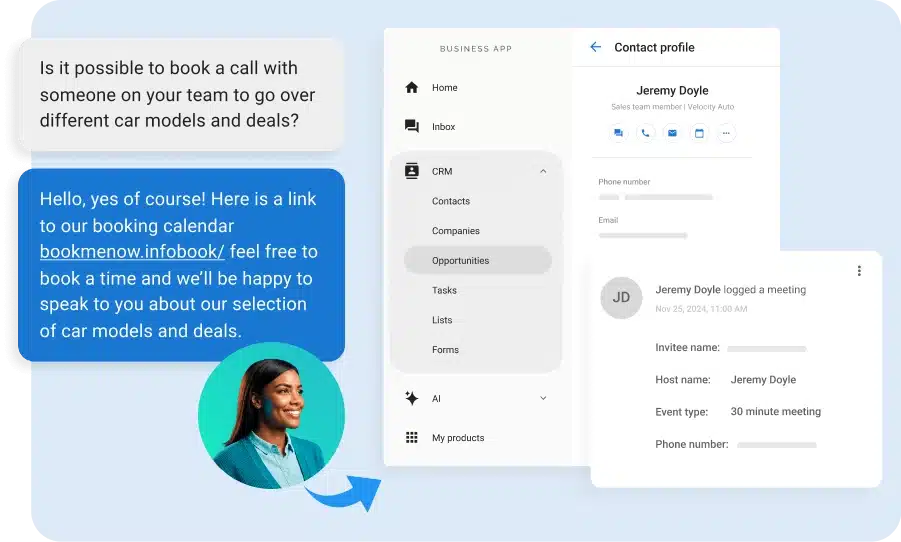
These AI employees remove repetitive work while keeping humans focused on higher-value activities like strategy, relationships, and growth. This directly supports Schklar’s point that successful AI adoption makes work more manageable and more meaningful, not more chaotic.
AI Powered by a Business’s Own Data for Accuracy and Trust
A common failure point in AI adoption is relevance. Generic tools lack context, which leads to inconsistent or off-brand customer experiences.
Vendasta’s AI is powered by a business’s own data, including customer interactions, services, and performance history. This allows AI Employees to deliver more accurate, on-brand responses and recommendations across the customer journey.
By grounding AI in real business data, partners can deploy customer-facing AI with confidence, reinforcing trust internally and externally while avoiding the risks that come with disconnected tools.
Built for Safe, Scalable Partner-Led AI Adoption
Operationalizing AI across dozens or hundreds of SMBs requires structure. Vendasta provides smart automations, centralized management, and shared dashboards that help partners apply AI consistently while maintaining oversight. 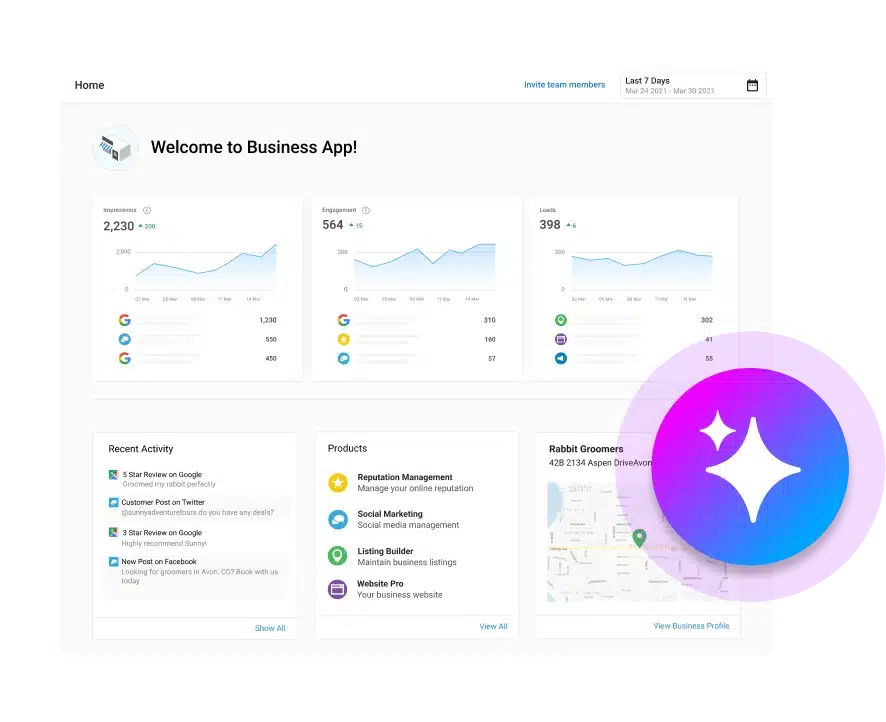 This makes it easier to tie AI activity directly to measurable outcomes like time saved, faster response times, improved conversions, and stronger retention, all core components of Return on AI.
Most importantly, Vendasta is built for partner-led growth. It allows agencies and other partners to move beyond experimentation and deliver AI as a managed, scalable capability for their clients, turning AI adoption into a durable operating advantage instead of a fragile side project.
Conclusion: AI Adoption Is A Leadership Discipline
The companies pulling ahead with AI aren’t louder about it. They’re quieter, faster, and more systematic.
They don’t chase every tool. They invest in culture, focus on real pain points, create safe environments to learn, and measure outcomes that matter to the business.
AI adoption strategy isn’t about hype or heroics. It’s about building systems that compound advantage over time. Leaders who act now won’t just keep up. They’ll define the pace.
If you’re ready to turn AI adoption strategy into real, scalable infrastructure, book a demo to see how Vendasta helps partners operationalize AI across the full customer journey.
AI Adoption Strategy FAQs
1. How does an AI adoption strategy differ from AI experimentation?
AI experimentation focuses on testing tools in isolation, while an AI adoption strategy embeds AI into daily operations with governance, metrics, and ownership. Vendasta supports this shift by providing AI Employees, automation, and shared dashboards that make AI part of how teams and partners work every day.
2. Why do AI initiatives fail in real businesses?
Most AI initiatives fail because they lack clear leadership direction, cultural alignment, and ownership. Teams experiment with tools but never integrate them into workflows. Platforms like Vendasta help prevent this by turning AI into managed infrastructure that supports real customer acquisition, engagement, and retention goals.
3. How should leaders start building an AI adoption strategy?
Leaders should start with culture and clarity, not tools. Set expectations that AI use is encouraged, then focus on automating the most repetitive and painful tasks first. This approach builds trust quickly and creates early wins that make broader AI adoption easier to scale.
4. What are the biggest barriers to AI adoption in businesses?
The biggest barriers are cultural resistance, unclear policies, and lack of safe environments to experiment. Without guidance, teams often resort to shadow AI. Vendasta helps reduce this risk by giving partners a secure, unified platform to deploy and manage AI responsibly.
5. What is return on AI and how do you measure it?
Return on AI measures impact across time savings, cost reduction, revenue growth, productivity, accuracy, and retention. Many businesses already track these metrics. Vendasta makes it easier to connect AI-driven outcomes to real workflows, helping leaders justify investment and scale what works.
6. How long does it take to see results from an AI adoption strategy?
Early results often appear within weeks when AI is applied to high-friction workflows like inbox management, reporting, or customer inquiries. Broader impact compounds over months as systems mature. Tools like Vendasta accelerate this by enabling fast deployment without complex integrations.
7. Do agencies need to be AI experts to guide clients?
No. Agencies don’t need deep technical expertise to lead AI adoption. They need practical experience and proven workflows. By using platforms like Vendasta internally, agencies can translate real wins into clear guidance for SMB clients and position themselves as trusted AI advisors.
8. How does AI adoption improve customer experience?
AI improves customer experience by delivering faster responses, 24/7 availability, and smoother paths to action. Vendasta’s AI chat and voice receptionists help businesses meet customers where they are while freeing staff to focus on high-value, human interactions.
9. Is AI adoption about replacing human workers?
Effective AI adoption focuses on removing repetitive work, not replacing people. By automating routine tasks, teams gain time for strategy, creativity, and relationship-building. Vendasta’s AI Employees are designed to empower humans, not replace them, across the customer journey.
10. How does Vendasta support a scalable AI adoption strategy?
Vendasta supports AI adoption by combining AI Employees, automation, and proprietary business data in one unified platform. Partners can deploy AI quickly, manage it safely, and scale customer acquisition and engagement across multiple clients without relying on fragmented systems.