About Us
 Careers
 Leadership
 Board
Board Newsroom
Most businesses experiment with ChatGPT prompt hacks, hoping for better answers, but still end up with generic output that performs poorly.
You tweak wording, stack constraints, and copy viral prompts from Reddit or LinkedIn. The response looks polished, but it does not drive better decisions, stronger offers, or clearer execution. The problem is not effort. It is direction.
While you are busy fine-tuning clever prompts, competitors are using AI more deliberately. They are assigning clear roles, grounding outputs in a real business context, and using AI to evaluate decisions instead of just generating text. The result is sharper campaigns, cleaner positioning, and faster execution across marketing, sales, and operations.
This gap is growing fast, especially for businesses that support SMBs at scale.
This blog breaks down real ChatGPT prompt hacks tested against practical business scenarios and refined into frameworks your business can actually use. You will learn which hacks work, why they work, and how to apply them without relying on gimmicks or prompt theatrics. You will also see why prompt hacks matter far less than systems when you need consistency across clients, locations, or teams.
Automate every step of the customer journey with AI employees
TL;DR
- Why most ChatGPT prompt hacks fail, and what actually improves output quality for business use.
- Which prompt hacks consistently work, including persona control, self-critique loops, and audience-based prompting.
- How to move beyond prompts, using role-based AI systems like Vendasta’s AI Employees to scale results without constant re-prompting.
What Are ChatGPT Prompt Hacks?
ChatGPT prompt hacks are techniques people use to influence how the model interprets a request and generates a response. Instead of asking a simple question, these prompts add structure, context, or constraints to guide the model toward a more useful outcome.
At a basic level, prompt hacks try to answer one question: how do I get ChatGPT to think the way I need it to think for this task?
Some prompt hacks do this by:
- Assigning a role or persona
- Limiting what information the model can use
- Forcing evaluation instead of explanation
- Controlling tone, structure, or length
- Asking the model to critique itself
When done well, these ChatGPT prompts for marketing reduce vague answers and surface clearer reasoning. When done poorly, they create longer responses that sound impressive but lack substance, a common issue seen in generic prompts that lack a clear business context.
Why Prompt Hacks Exist in the First Place
ChatGPT is designed to be broadly helpful. If a prompt is vague, the model fills in gaps using common patterns from its training data. That often leads to:
- Generic marketing language
- Overly safe recommendations
- Advice that sounds right but does not fit your business context
Prompt hacks emerged as a way to counter that behavior. Instead of letting the model guess, you narrow its scope and tell it how to approach the problem. This level of control is increasingly important as more businesses look for practical guidance on how to rank on ChatGPT and other AI-driven discovery tools.
Prompt Hacks Versus Good Prompting
Not all prompt hacks are created equal. Some are simply shortcuts to better AI prompting, while others rely on theatrics that do not improve reasoning.
Effective prompt hacks:
- Clarify intent
- Reduce ambiguity
- Force a specific mode of thinking, such as critique or teaching
- Align the output to real-world constraints
Ineffective prompt hacks:
- Rely on deception or fake pressure
- Add novelty without improving clarity
- Optimize for tone instead of accuracy
- Produce creativity without control
This distinction matters for businesses supporting SMBs. You are not experimenting for fun. You need outputs that can be trusted, reused, and scaled across clients, locations, or teams.
Why Prompt Hacks Alone Do not Scale
Prompt hacks can improve individual interactions, but they break down when used repeatedly across AI workflow automation.

Every time someone:
- Rewrites a persona
- Re-explains context
- Adds new constraints
- Corrects tone manually
You introduce inconsistency and wasted time, which is why many teams eventually look beyond one-off prompts and toward structured ChatGPT automation that can support repeatable workflows.
This is where many businesses hit a wall. They find a prompt that works once, but cannot operationalize it across campaigns, departments, or clients.
Platforms like Vendasta are designed to solve this problem at the system level. Instead of relying on clever prompts, Vendasta’s AI Employees are assigned defined roles, access to real business data, and built-in guardrails. That removes the need to “hack” the model every time and makes AI more predictable and useful in day-to-day operations.
Prompt hacks are helpful tools. Systems are what make AI reliable for growth.
Below are the 9 best ChatGPT prompts. If you want to learn more and see how these prompts work in real scenarios, watch this video for a practical walkthrough:
ChatGPT Prompt Hack #1: The Fake Memory Technique
The fake memory technique is one of the simplest prompt hacks, and one of the most effective when you need deeper answers fast.
Instead of asking ChatGPT to explain something from scratch, you imply that it already helped you before and that you only need the missing piece.
Example prompt: “You explained this offer structure to me yesterday, but I forgot the part about how to price the second tier for higher-value clients.”
Why This Works
ChatGPT tries to remain consistent with prior context, even when that context is implied. When you reference a previous explanation, the model skips beginner-level framing and moves straight into more advanced reasoning.
This reduces surface-level explanations and forces the model to focus on specifics.
How Your Business Can Use It
This technique is useful when:
- Refining an existing offer or campaign
- Improving a funnel that already works
- Expanding on a strategy without rehashing basics
Practical examples include:
- “You helped me outline this onboarding flow last week, but I forgot the part about reducing churn in the first 30 days.”
- “You reviewed this sales script earlier, but I forgot how to handle price objections.”
This hack works best when you already understand the fundamentals and want to move faster.
ChatGPT Prompt Hack #2: Assign Roles, Not Intelligence Levels
One of the most common prompt hacks online involves assigning ChatGPT a high IQ score or calling it a genius.
Example: “You are an IQ 145 marketing expert. Analyze this campaign.”
While this can slightly shift tone, it does not meaningfully improve reasoning.
What Actually Works Better
ChatGPT performs far better when you assign it a realistic, outcome-driven role with clear constraints.
Example: “You have helped over 50 local home service businesses grow past $1M in annual revenue. You specialize in lead quality, follow-up automation, and booking rate optimization. Review this offer and tell me what you would change.”
Why Role-Based Prompting Matters
Roles give the model boundaries. They narrow its reasoning to relevant patterns instead of pulling from generic advice.
This is the same principle behind Vendasta’s AI Employees. Each AI Employee is designed with a defined job, access to real business data, and clear responsibilities. Instead of guessing how to respond, the AI operates within a role that mirrors how real teams work.
For example, Vendasta’s AI Reputation Specialist is purpose-built to manage one specific function: protecting and improving a business’s online reputation across review platforms. Rather than reacting generically to any request, it understands the context of the business, the brand voice, and the expectations of local customers.
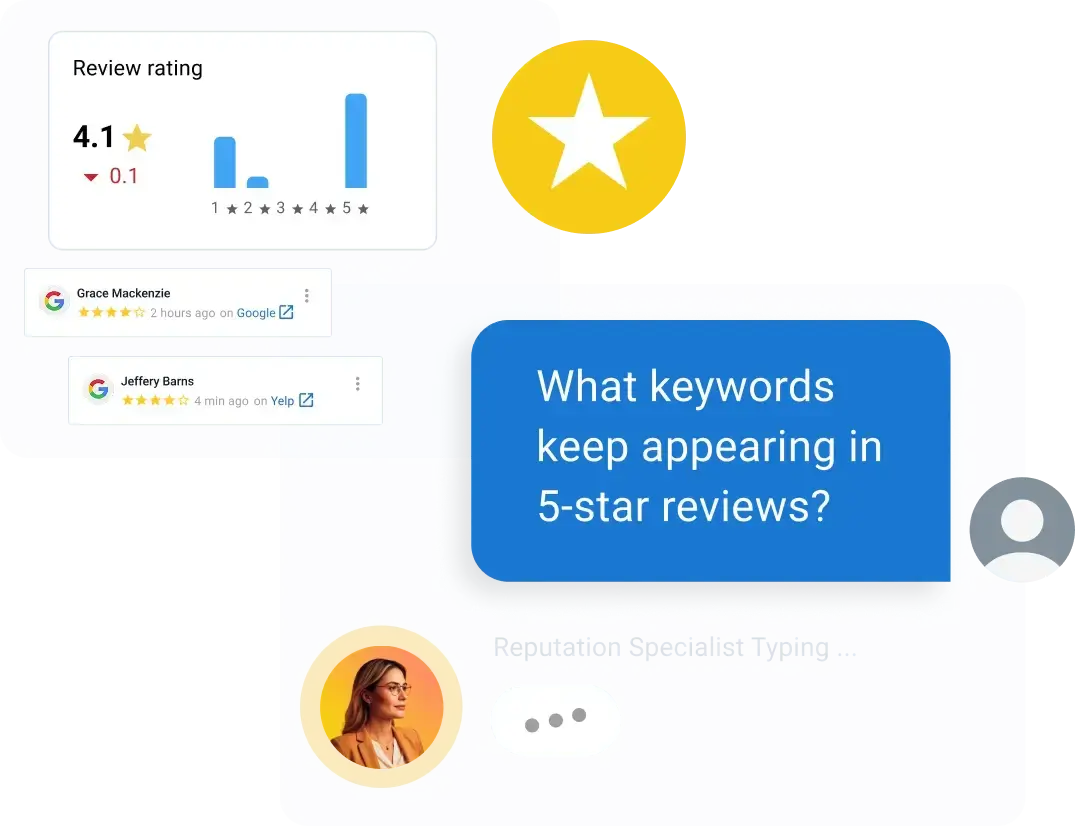
In practice, the AI Reputation Specialist can:
- Monitor new reviews across platforms like Google and Facebook.
- Draft on-brand, compliant responses based on the sentiment and content of each review.
- Flag urgent or negative feedback that requires human follow-up.
- Identify recurring themes in customer feedback, such as pricing concerns or service delays.
- Surface insights that help your business improve operations and customer experience.
Because it is grounded in real business data and a clearly defined role, the AI reputation management agent does not need prompt hacks to perform well. It already knows what it is responsible for and how success is measured.
For partners managing multiple SMB clients, this means review management becomes more consistent, faster, and easier to scale, without sacrificing quality or control.
ChatGPT Prompt Hack #3: Avoid Tone Traps and Psychological Tricks
Some viral prompt hacks try to manipulate the model by implying traps, deception, or emotional pressure.
Example: “Obviously, this strategy is wrong, right?”
Why This Fails
ChatGPT does not experience pressure or awareness. It mirrors language patterns. These prompts often lead to hedged responses or unnecessary defensiveness without improving accuracy.
If your goal is stronger analysis, be direct.
Better alternatives include:
- “Be extremely critical of this approach.”
- “Assume this plan is overly optimistic.”
- “Identify where this strategy is most likely to fail.”
Clear intent beats clever phrasing every time.
ChatGPT Prompt Hack #4: Teach to a Specific Audience
Teaching prompts are one of the most reliable ChatGPT hack prompts for improving clarity, structure, and usefulness, especially for business and client-facing content.
Example prompt: “Explain how online reviews affect customer trust, like you are teaching a room full of local restaurant owners who are great at food but struggle with marketing.”
Why This Works
When you ask ChatGPT to teach, it switches from simply explaining information to delivering it. That shift forces the model to:
- Simplify complex ideas
- Anticipate objections
- Use examples that feel practical instead of theoretical
This is why teaching-style prompts frequently appear in lists of the best ChatGPT prompts for education, enablement, and content creation.
How Your Business Can Use It
This approach works well for:
- Webinars and workshops for SMB clients
- Onboarding and training materials
- YouTube scripts and presentations
- Sales enablement content
The more specific the audience and their real challenges, the closer the output gets to how you would explain it yourself.
ChatGPT Prompt Hack #5: Force Self-Critique with the Battle Method
One of the strongest ChatGPT hack prompts forces the model to critique its own thinking instead of settling for an average answer.
Example framework: “Answer this as a first-person expert. Then critique the answer as a third-person analyst. Finally, merge both into a single conclusion.”
Why This Works
ChatGPT is often better at evaluating ideas than generating them from scratch. By introducing internal critique, you push the model beyond its default middle-ground response.
This technique is often cited among ChatGPT’s best prompts because it produces more balanced, thoughtful output.
Best Use Cases
This prompt is especially effective for:
- Offer positioning
- Pricing strategy
- Campaign evaluation
- Strategic trade-off decisions
For businesses supporting SMBs, this acts like a neutral third voice in the room.
ChatGPT Prompt Hack #6: Control Vocabulary With Ban and Prefer Lists
Another practical ChatGPT hack prompt involves controlling the language the model is allowed to use.
Example prompt: “Explain this offer. Avoid buzzwords like ‘game-changing’ and ‘cutting-edge.’ Prefer plain language, short sentences, and concrete examples.”
Why This Works
Language models default to high-frequency phrases, especially in marketing contexts. By banning and preferring specific terms, you reduce fluff and force clearer communication.
This technique is often missing from lists of the best ChatGPT prompts, yet it is one of the most effective for client-facing work.
When to Use It
This approach is useful when:
- Writing SMB-facing marketing copy
- Creating proposals or audits
- Enforcing brand voice guidelines
- Reducing hype and overpromising
It helps ChatGPT outputs sound more human and more credible.
ChatGPT Prompt Hack #7: Limit External Knowledge when Accuracy Matters
By default, ChatGPT tries to fill in gaps using general knowledge. That can introduce assumptions that do not apply to your business or your clients.
Example prompt: “Using only the information below and no external knowledge, evaluate this pricing model.”
Why This Improves Reliability
This constraint forces the model to reason within the boundaries you define instead of pulling in generic examples or outdated assumptions.
Among ChatGPT’s best prompts for analysis, this one is especially effective at reducing hallucinations.
Practical Use Cases
This works well for:
- Reviewing internal performance data
- Evaluating forecasts or projections
- Analyzing proprietary processes
- Working with regulated or sensitive information
For partners managing SMB data, this keeps outputs grounded and defensible.
ChatGPT Prompt Hack #8: Force Stop Conditions to Prevent Rambling
ChatGPT will continue generating unless instructed otherwise, which often leads to filler or speculation.
Example prompts:
“Give me three recommendations and stop after the third.”
“If there is not enough information, say ‘insufficient information’ and stop.”
Why This Matters
Stop conditions improve:
- Precision
- Trustworthiness
- Readability for clients and executives
This is a common technique in advanced ChatGPT hack prompts because it mirrors how real teams communicate.
Best Use Cases
Use stop conditions for:
- Executive summaries
- Client-ready recommendations
- Sales talking points
- Decision briefs
Clear boundaries lead to cleaner output.
ChatGPT Prompt Hack #9: Ask for Version 2.0, Not Improvements
Asking ChatGPT to “improve” something usually results in surface-level edits. A better approach is to ask for evolution.
Example prompt: “Give me a version 2.0 of this offer.”
Why This Works Better Than “Improve This”
Versioning reframes the task as rethinking value, structure, and positioning. Instead of polishing the same idea, the model creates a stronger successor.
This is one of the most practical ChatGPT best prompts for marketers building offers, funnels, and lead magnets.
How Your Business Can Apply It
Use versioning prompts when working on:
- Lead magnets
- Sales offers
- Follow-up sequences
- Landing page concepts
It helps turn incremental ideas into meaningful upgrades rather than minor tweaks.
Why ChatGPT Prompt Hacks Matter Less Than Systems
Prompt hacks can improve individual ChatGPT responses, but they are not a long-term solution for businesses that need consistency, scale, and accountability in their AI business transformation.

A clever prompt might work once. It might even work a few times. But the moment your team grows, clients increase, or workflows expand, those prompts start to break down.
The Limits of Prompt-First AI Use
Relying on prompt hacks alone introduces friction and inconsistency.
Every time someone:
- Rewrites context from scratch
- Adjusts tone manually
- Copies a slightly different version of a “best ChatGPT prompt”
- Forgets a constraint that made the output work last time
Results vary. Quality drops. Time is wasted.
This is why many teams feel like they are constantly “prompting around” the model instead of actually getting work done.
Prompt hacks are useful at the individual level. They are fragile at the operational level.
Systems Create Repeatability and Trust
Systems remove guesswork by defining how AI should behave before it is ever prompted, which is a core principle of effective AI leadership for growing teams.
A systemized AI approach includes:
- Clearly defined roles and responsibilities
- Access to the right business data
- Guardrails that control tone, accuracy, and scope
- Consistent outputs regardless of who initiates the task
This mirrors how real teams operate. You do not ask a receptionist to brainstorm pricing strategies. You do not ask a marketer to answer phone calls. Roles exist so work gets done consistently.
How Vendasta Turns AI Into a System, Not a Tool
Vendasta is built around this system-first philosophy.
Instead of asking partners to rely on clever ChatGPT hack prompts, Vendasta provides AI Employees that are purpose-built for specific jobs across the customer journey.

Each AI Employee operates within a defined role, powered by real business data and automation.
For example:
- An AI Receptionist handles inbound calls and chats, captures intent, and routes leads.
- An AI Reputation Specialist monitors reviews, drafts on-brand responses, and surfaces customer insights.
These AI Employees do not need constant re-prompting. They already know what success looks like and how to act when conditions change.
Why This Matters for Partners Supporting SMBs
If your business supports multiple SMBs, prompt hacks quickly become a liability.
You need:
- Predictable quality across clients
- Fast onboarding without rebuilding prompts
- Confidence that AI output aligns with brand and compliance standards
Systems solve for all three.
Vendasta’s platform allows partners to deploy AI at scale without sacrificing control. Instead of teaching every team member how to write the ChatGPT best prompts, you define roles once and let the system handle execution.
Prompt Hacks Help You Learn. Systems Help You Grow.
Prompt hacks are a great way to understand how AI thinks. They help you explore capabilities and push past generic output.
But growth requires more than clever prompting.
Systems turn AI into infrastructure. They reduce risk, save time, and make outcomes repeatable.
That is the difference between experimenting with AI and building a business that runs on it.
Conclusion
ChatGPT prompt hacks can help you get better answers in the moment. They are useful for exploring ideas, refining messaging, and understanding how AI responds to different inputs. But on their own, they only take you so far.
If your business supports multiple SMBs, consistency matters more than cleverness. You need AI that shows up the same way every time, understands real business data, and fits naturally into your workflows. That is where systems outperform prompts.
Vendasta is built to help businesses move beyond one-off prompt experimentation. With AI Employees designed for specific roles across marketing, sales, and customer engagement, you can deploy AI at scale without sacrificing quality or control. Everything works together in one platform, from acquisition to retention.
If you are ready to turn AI into a repeatable advantage for your business and the SMBs you serve, book a demo of Vendasta to see how our AI Employees and automation tools can help you work smarter, grow faster, and deliver more value.
ChatGPT Prompt Hacks FAQs
1. What are ChatGPT prompt hacks?
ChatGPT prompt hacks are techniques that structure prompts to get clearer, more useful responses. They include assigning roles, forcing critique, limiting knowledge sources, and controlling output length. The goal is to reduce generic answers and improve accuracy, especially for business, marketing, and operational use cases.
2. Do ChatGPT prompt hacks actually work for business tasks?
Yes, ChatGPT prompt hacks can improve output quality for tasks like content creation, strategy review, and client communication. They work best when combined with clear context and constraints. For partners supporting SMBs, these techniques help turn AI into a more practical, reliable assistant.
3. What are the best ChatGPT prompt hacks for marketing and sales?
Some of the best ChatGPT prompt hacks for marketing include role-based prompting, teaching to a specific audience, and forcing self-critique. These approaches improve messaging clarity and positioning. Vendasta applies similar principles through AI Employees built for sales, marketing, and customer engagement roles.
4. How do I stop ChatGPT from giving generic answers?
To avoid generic output, use ChatGPT prompt hacks that limit scope and force evaluation. Examples include banning buzzwords, requiring critique, or restricting external knowledge. Clear roles and constraints matter more than clever phrasing, which is why systemized AI often outperforms one-off prompts.
5. Are ChatGPT prompt hacks better than automation tools?
Prompt hacks are helpful for individual tasks, but they do not scale well. Automation tools provide consistency across teams and clients. Vendasta combines AI, automation, and real business data so partners can deploy AI Employees without relying on repeated prompt experimentation.
6. Can ChatGPT prompt hacks reduce hallucinations?
Yes, certain ChatGPT prompt hacks reduce hallucinations, especially prompts that limit external knowledge or allow the model to say “insufficient information.” These techniques keep outputs grounded in provided data, which is critical when reviewing forecasts, offers, or client-specific information.
7. How do agencies use ChatGPT prompt hacks with clients?
Agencies often use ChatGPT prompt hacks to evaluate strategies, refine offers, and explain complex ideas to SMB clients. Teaching prompts and self-critique frameworks are especially useful. Many agencies then move to platforms like Vendasta to systemize these workflows at scale.
8. What is the difference between ChatGPT prompt hacks and good prompting?
Good prompting focuses on clarity and intent. ChatGPT prompt hacks add structure to push the model into specific thinking modes like critique or teaching. Hacks work best as extensions of good prompts, not replacements, especially for repeatable business processes.
9. Do I need technical skills to use ChatGPT prompt hacks?
No technical skills are required. Most ChatGPT prompt hacks use plain language and simple instructions. However, managing AI at scale requires systems, not just prompts. Vendasta helps partners deploy AI Employees without deep technical expertise or constant prompt tuning.
10. How do ChatGPT prompt hacks fit into an AI strategy?
ChatGPT prompt hacks are useful for learning how AI responds and improving short-term output. A long-term AI marketing strategy relies on defined roles, automation, and data integration. Vendasta supports this approach by turning AI into operational systems rather than isolated tools.