
What if the biggest barrier to charging more isn’t your clients? It’s you.
What if you are not losing margin because clients are stingy, but because you pre-discount in your head, and end up quoting a smaller number to avoid an uncomfortable conversation?
When a package worth $12,000 becomes $10,000, you have inadvertently taxed yourself for fear. That’s the hidden psychology of pricing at work—our mindset caps profit before clients ever do.
That’s what pricing strategist Casey Brown has seen after spending the past 25 years studying the intersection of data, psychology, and business outcomes. She founded Boost Pricing, a firm that has helped more than a thousand companies unlock over $1 billion in additional profit through smarter pricing.
Last week, we had the privilege of hosting Casey Brown on our podcast, where she pulled back the curtain on the exact psychology that gets clients to say yes to higher prices, happily, without losing them.
In this blog, we’ll explore why pricing is the most powerful lever for profit, the psychology behind client objections, and the playbook to raise rates with confidence.
Attract, convert, and retain more customers with less manual work
Why Pricing Is the Highest-Leverage Lever You Own
Think about all the ways you try to grow profit in your agency.
- You can win more clients, but that means more sales effort.
- You can squeeze expenses, but only so far before service quality suffers.
- You can improve efficiency, but that often requires new tools, training, or staff changes.
Now compare all of that to the simplest lever you already control: price.
Casey shows that even a 1% increase in price can lift operating profit by about 8%. Because, unlike adding new clients or cutting expenses, raising prices doesn’t come with significant extra costs. Almost every extra dollar flows straight to the bottom line.
One Vendasta partner, Zoek, saw it firsthand: “Our rebilling rate has gone up 5%. That’s an extra $100K a month we’re retaining with Vendasta.”
The Pricing Dilemma
The most common reason agency owners get stuck at revenue plateaus is that they shave numbers to prevent uncomfortable conversations. However, the irony is that even if you set your prices to avoid losing customers, buyers will still end up complaining about price because it’s ingrained deep in their buyer psychology.
The psychology of pricing teaches us this: The flex isn’t getting every client to say yes. The flex is knowing your value, presenting it with confidence, and holding the line when clients resist.
Shocking news, A perfect win rate is a red flag!
A “yes” feels good at the moment. But too many of them should set off alarms:
- You’re likely underpricing. For anyone who needs to hear this: If you never lose a deal on price, you’re underpriced. If your renewal rate is perfect, you’re underpriced. And if your team fears a client’s pushback more than they fear paper-thin margins, you’re underpriced.
- You’re not pushing boundaries. Easy yeses mean you’re not asking clients to stretch budgets or explore the full potential of your services.
- You’re attracting price-sensitive clients. A constant yes-rate often signals you’re catering to those who buy on cost, not quality.
Enter Casey Brown’s 65% rule: This is where Casey draws the line. If your close rate sits comfortably above 65%, you are definitely underpricing. A mix of wins, pushbacks, and the occasional lost deal shows that your pricing is stretching the market in the right way.
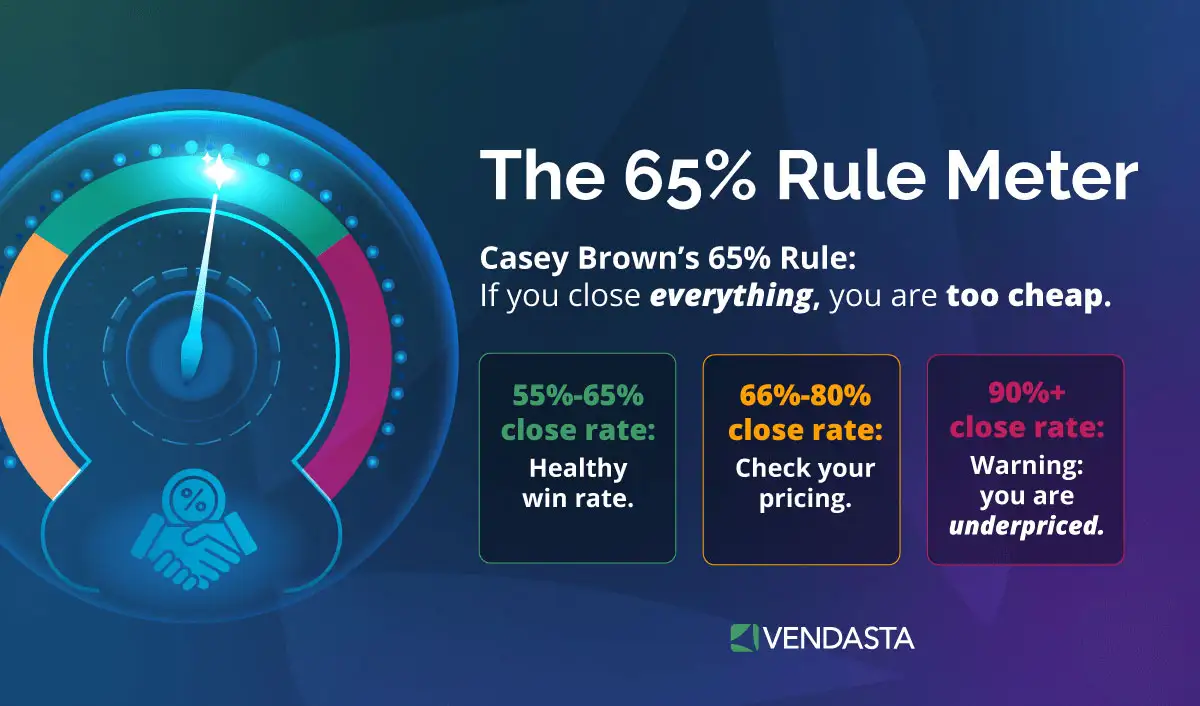
In other words, if you’re winning more than two-thirds of your deals, it’s not proof that you’re great at sales—it’s proof that you’re leaving money on the table, and it’s time to change the conversation around your pricing.
The Communication Blueprint, Before the Number
That single sentence reframes every pricing conversation. Price is never just a number. It’s the story and the context you create around it.
When a client pushes back, most agencies go straight into defense mode: justify, discount, or cave. That instinct almost always costs more than it saves. The smarter move is to pause, acknowledge, and ask questions that shift the conversation.
Lead the Pricing Conversations with the Right Questions
This is where the psychology of pricing intersects with behavioral psychology—questions disarm resistance and reframe value.
Behavioral psychologists call it instinctive elaboration: the brain is hijacked by a question and can’t think about anything else until it resolves it. Instead of digging in on price, your client’s focus shifts to answering, reflecting, and problem-solving. The very act of responding lowers resistance and builds trust.
Step 1: Test Fit
Start with a filter: “If budget weren’t an issue, would we be your choice?”
- If the answer is no, you’ve uncovered a fit problem, not a price problem.
- If the answer is yes, you can find a way to make the numbers work. According to Casey, when a buyer pushes for a discount, it’s actually a buying signal. If the competitor was both cheaper and better, they wouldn’t even bother negotiating.
Step 2: Probe What Matters Most
Instead of asking if they like your offer, ask which part of your service (speed, reporting, support) is most important to them. This instantly flips the script. As they articulate why you’re the right choice, they reinforce their own commitment.
Step 3: Separate Tactics from Constraints
Every budget objection falls into one of two categories: a real limitation or a negotiation tactic. Your job is to figure out which.
Try: “I hear you want to reduce fees. Is there truly a gap between your budget and what it will take to deliver at this level?”
If they admit it’s a real budget issue, ask how far off you are. That number tells you whether you’re dealing with a small gap you can bridge with scope or terms, or a canyon that requires a different approach. If they say no, you are in the midst of a negotiation theater, and that’s your cue to trade, not cave.
This is where the psychology of pricing shifts the conversation from cost to value.
Step 4: Trade, Don’t Cave
If they want a better price, ask for something in return:
- Reduced scope or features
- Faster payment terms
- A project start date that works best for you
- A referral or testimonial
Lowering your price without a trade-off sends the wrong signal. Trading, on the other hand, turns a discount request into a value conversation. Imagine:
- Seller: “Our chocolate cake is $10.”
- Buyer: “My budget is $8.”
- Seller: “I can do $8, but without the sprinkles and candles.”
Now the truth comes out. If the buyer suddenly finds the extra $2, you know they were just negotiating. If they take the pared-down version, you’ve kept profit intact while meeting their budget.
The win is threefold:
- The customer gets what they need.
- You protect your margin.
- Your pricing integrity remains intact.
How to Navigate Pricing Conversations with Confidence
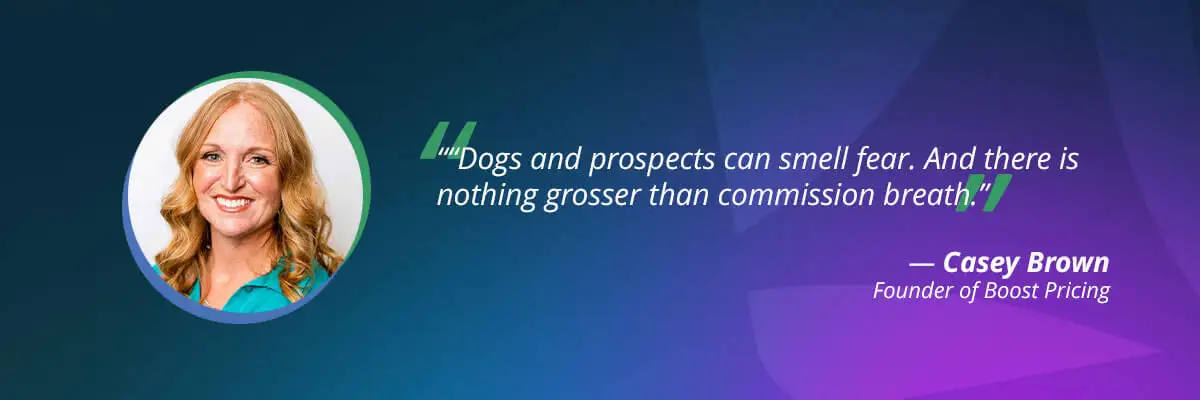
Pricing conversations don’t always go haywire because of numbers. Sometimes, they fall flat because your team freezes when a client throws an objection they weren’t ready for. The best defense is preparation.
Start by listing the ten objections you fear most. Write clear, confident replies. Then practice them out loud until your team can deliver them without adrenaline spikes or shaky voices. And yes, role-play it: to your team, to your dog, to anyone who will listen. The reps matter more than the script.
Don’t stop at practice. Draft a playbook so everyone on your team uses the same strong language. Consistency builds confidence, both internally and with clients.
Here are a few pages ripped straight from the pricing playbook:
When a client says, “Another firm will do it for less.” Don’t defend the number, highlight the risk.
“Some will, yes. But when teams optimize for price, we often see misses in [two specifics]. Here’s how we prevent those and what they cost when they happen.”
Or when they say, “This is not in our budget,” you can test fit and reframe as a choice.
“Understood. If the budget were equal, would you choose us? What would you cut if we reduced the price by 15%? Here are two options with clear trade-offs.”
Maybe they want to “revisit this the next year”, which is when you anchor now and defer later.
“We can align major changes with your planning cycle, but for now we’ll move to [interim rate] on [date]. Then we’ll review the full plan in Q4 with outcomes in hand.”
Applying the Psychology of Pricing: How to Raise Prices for Existing Clients, Without Drama
Agencies often avoid raising prices on long-term clients out of fear. The logic goes: better not rock the boat when the revenue is steady. But here’s the truth: your current clients are the ones most convinced of your value. They see your work every day. They already trust you. They’re far more likely to accept a price increase than a new prospect who has yet to experience your service.
That doesn’t mean they’ll cheer. Some will grumble. A few will threaten to shop around. But most will stay and pay. The noise is not the signal. The only signal that matters is whether the check clears.
Here’s Casey’s test: “When 96% of your customers stay after a price increase, it doesn’t matter how many complained. But if no one leaves after a price increase, you didn’t raise enough.”
The playbook is simple:
- Communicate with clarity. Keep it brief, personal, and unapologetic. Don’t over-explain or schedule unnecessary meetings. A direct email is often best.
- Show the proof. Back up the change with recent wins, improvements, or capabilities. Vendasta’s automated proof-of-performance reports make this seamless.
- Expect the noise. Complaints are free. Treat them as background static. What matters is renewal or churn.
Here’s how you can put Casey’s advice into practice with a client-ready email:
Hi [Name],
Over the past [timeframe], we’ve improved [specific outcomes] and added [specific capabilities]. To continue delivering at this level, we’re updating your rate from [old] to [new] on [date]. If you joined today, your rate would be [rack rate]. Out of respect for our relationship, we’re moving to [new] now. Most importantly, you’ll continue to receive [highlight the outcomes they care about most, like leads delivered, calls answered, or reviews generated].
I’m here if you have any questions.
Thanks,
[You]
The risk of upsetting the status quo is real. But the bigger risk is clinging to it and leaving unclaimed margin on the table. Your existing clients represent your greatest unexercised pricing power. Use it.
How Vendasta Helps You Operationalize Fearless Pricing
Most agencies operate with net profit margins between 15–20%, and delivery margins around 50–70%. The best 3 percent of agencies track at 43% net profit by focusing on specialization, efficiency, and data-driven decisions.
Vendasta’s layers help you move from average margins to top-tier performance:
Turn Your Services Into Clear Tiers Clients Understand
One of the fastest ways agencies lose money is by selling services as a checklist of tasks. Line-item pricing invites clients to nitpick, strip things out, and compare you piece by piece against the cheapest competitor. That’s how you end up in a race to the bottom.
Vendasta’s Marketplace solves this by letting you bundle services into clear, outcome-driven packages (good, better, best) with one strong recommendation in the middle. Instead of arguing about tasks, you’re framing a choice around results.
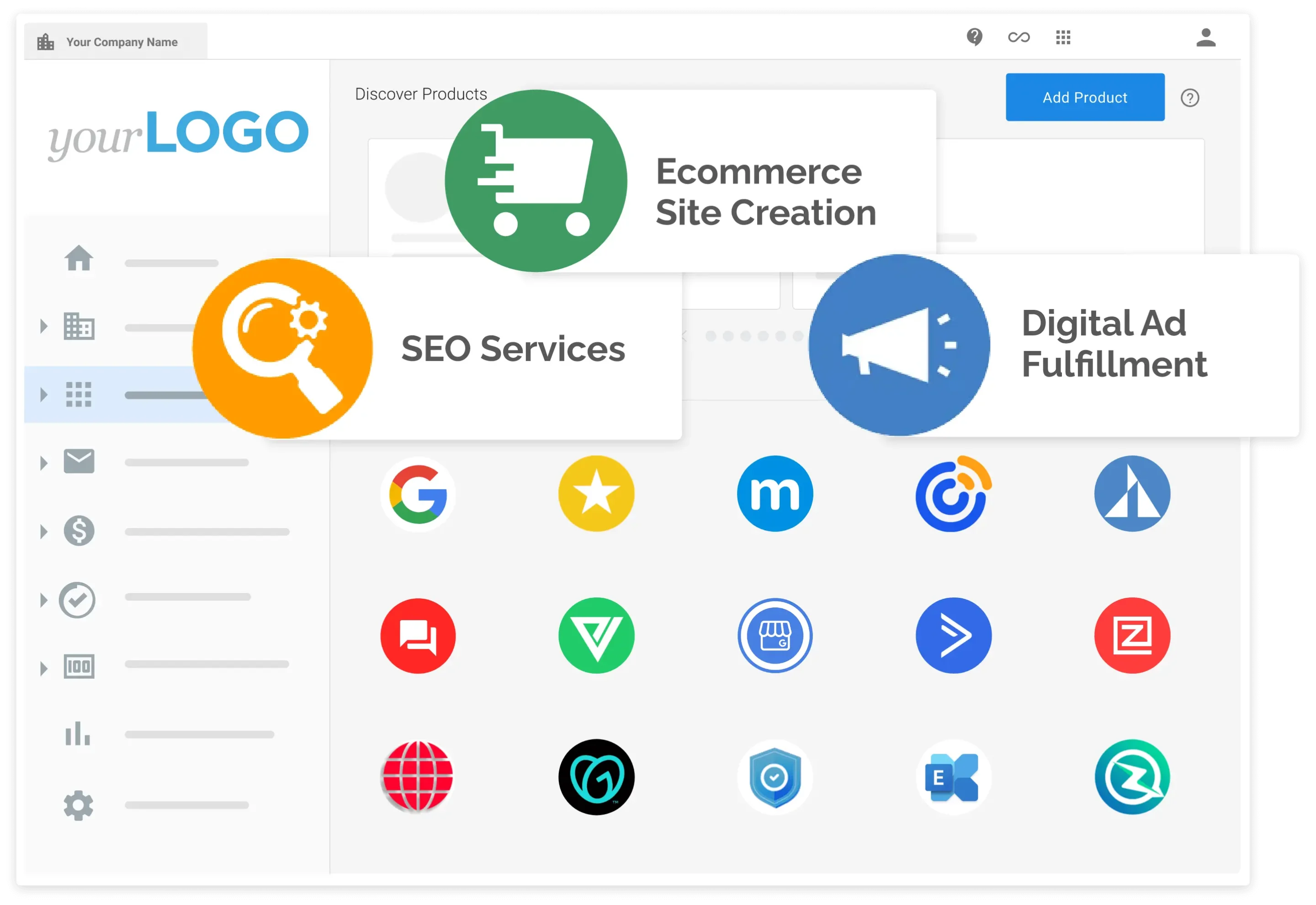
Here’s what happens when you package this way:
- Clients stop fixating on price. A prospect who once asked why social posts cost X now chooses between a growth plan that delivers reach, engagement, and reporting, or a premium plan that adds strategy and reputation management. The conversation shifts from cost to outcomes.
- You protect margins. Each package has its own price floor and target margin baked in. Your team isn’t improvising discounts on the fly, because the Marketplace makes the economics visible and consistent.
- You create space to scale. As clients grow, they can move up tiers instead of negotiating down your base package. You’ve set the ladder in advance, and Marketplace makes the upgrade path obvious.
“Our MSP partners have been blown away by the unified platform of Vendasta. Being able to customize the content and utilize the campaigns all in one place, they’re able to see results faster, their emails are touching the end user faster, and they’re able to track their metrics all in one place.” – Kaseya
The beauty of this system is in the clarity. Clients see their options, understand the trade-offs, and make a confident choice. You see stable margins, predictable revenue, and cleaner delivery. Instead of competing on the cheapest checklist, you’re guiding clients toward the plan that fits their goals, and being paid fairly for it.
That’s exactly how the psychology of pricing works: when you present clarity and confidence, clients naturally align with higher-value options.
AI Workforce Makes You Look Worth More and Lets You Price Like It
Casey Brown teaches that most agencies underprice because they’re afraid. What breaks that cycle? Delivering and demonstrating value so consistently that confidence replaces fear.
That’s where Vendasta’s AI Workforce changes the game.
- Responsiveness as a premium signal: Clients use price as a proxy for quality. An unanswered call or a late response makes you look cheap, even if your strategy is world-class. Vendasta’s AI receptionists and chat tools make your agency look instantly bigger and sharper, answering every inquiry in real time. That reliability alone lifts perceived value and defends premium positioning.
- Freeing humans for high-value conversations: AI handles the repetitive grind, which means your people show up where it matters, with insights, strategy, and questions that flip negotiations from price to value. Casey reminds us that questions are your strongest weapon. AI clears the noise so your team can focus on those high-leverage conversations.
- Turning scale into confidence: Fear creeps in when you’re stretched thin. When delivery is fragile, every price conversation feels risky. The AI Workforce removes that fragility. With AI handling volume, you know you can raise prices without breaking service promises.
“We grew 72% last year, year over year. And that’s directly related to Vendasta and the ability to offer a service that we just couldn’t fathom trying to implement last year. With Vendasta’s AI chat receptionist, we generated 39 new leads for one of our clients in their very first month.” – Light Switch Media
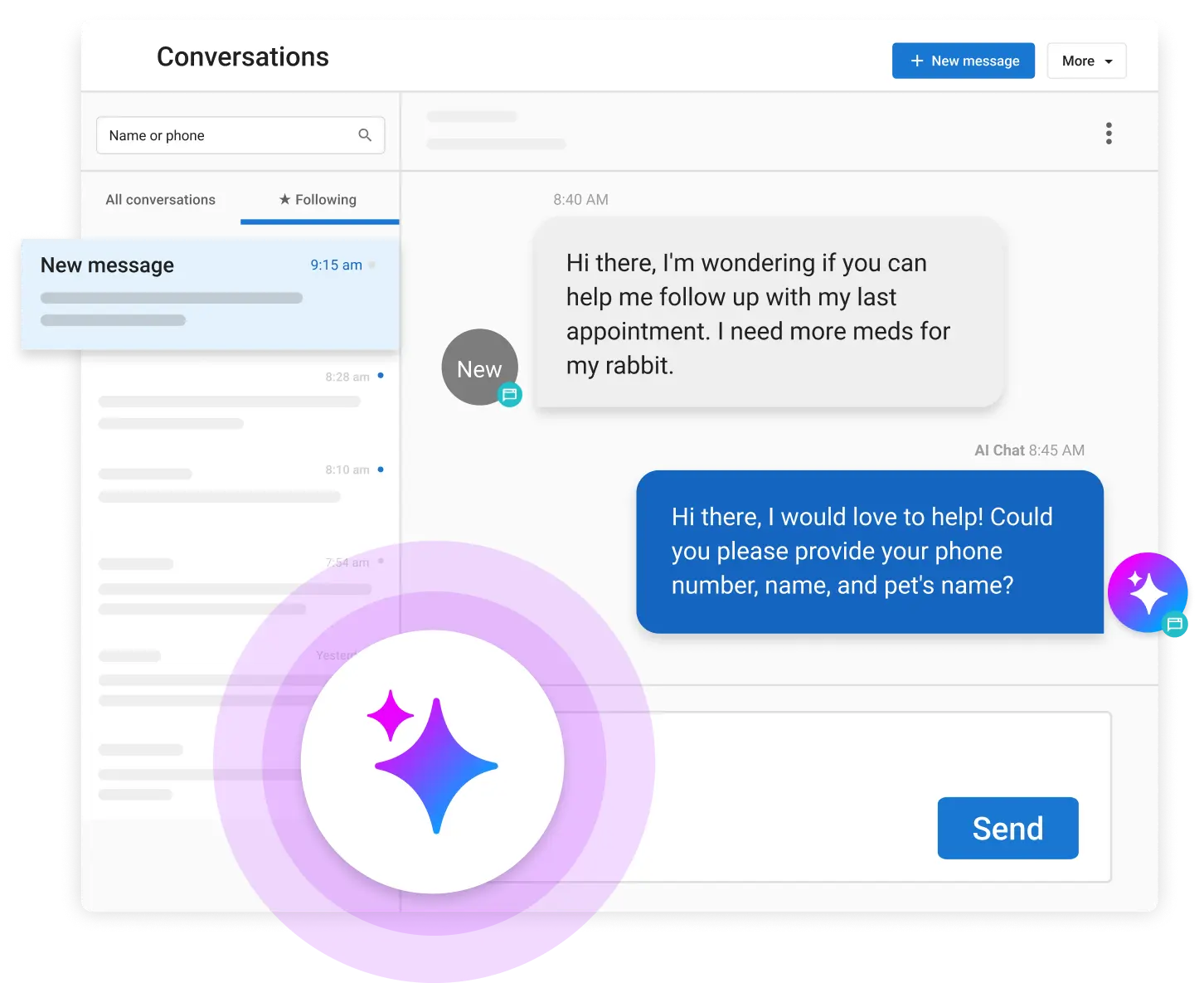
The bottom line? Vendasta’s AI Workforce makes your agency look bigger, more reliable, and more strategic, so clients think you’re worth more.
Proof of Performance: Let Results Talk Before Price
Proof matters. But in a crowded market, how you present that proof can be the difference between a price conversation that stalls and one that sticks. Clients don’t always have the time or the patience to wade through a dense proposal. Decision-makers are bombarded with information. A well-designed visual cuts through the noise.
Research backs this up.
- Dual-Coding Theory shows that the brain processes verbal and visual input separately, which makes visuals easier to store and recall.
- The Pictorial Superiority Effect proves that people remember more when information is shown, not just told. Dr. John Medina’s work suggests recall rates soar when visuals are part of the story.
This is where visuals give you an edge. Instead of explaining why your services justify higher prices, you’re showing outcomes in a format that clients immediately understand and remember.
This is exactly the role Vendasta’s Executive Reports and live dashboards play. They turn results into visuals, think SEO gains, reviews collected, calls answered, leads delivered, so that clients can grasp in seconds. More importantly, they give your internal champions the tools to fight for your value inside their own organizations.
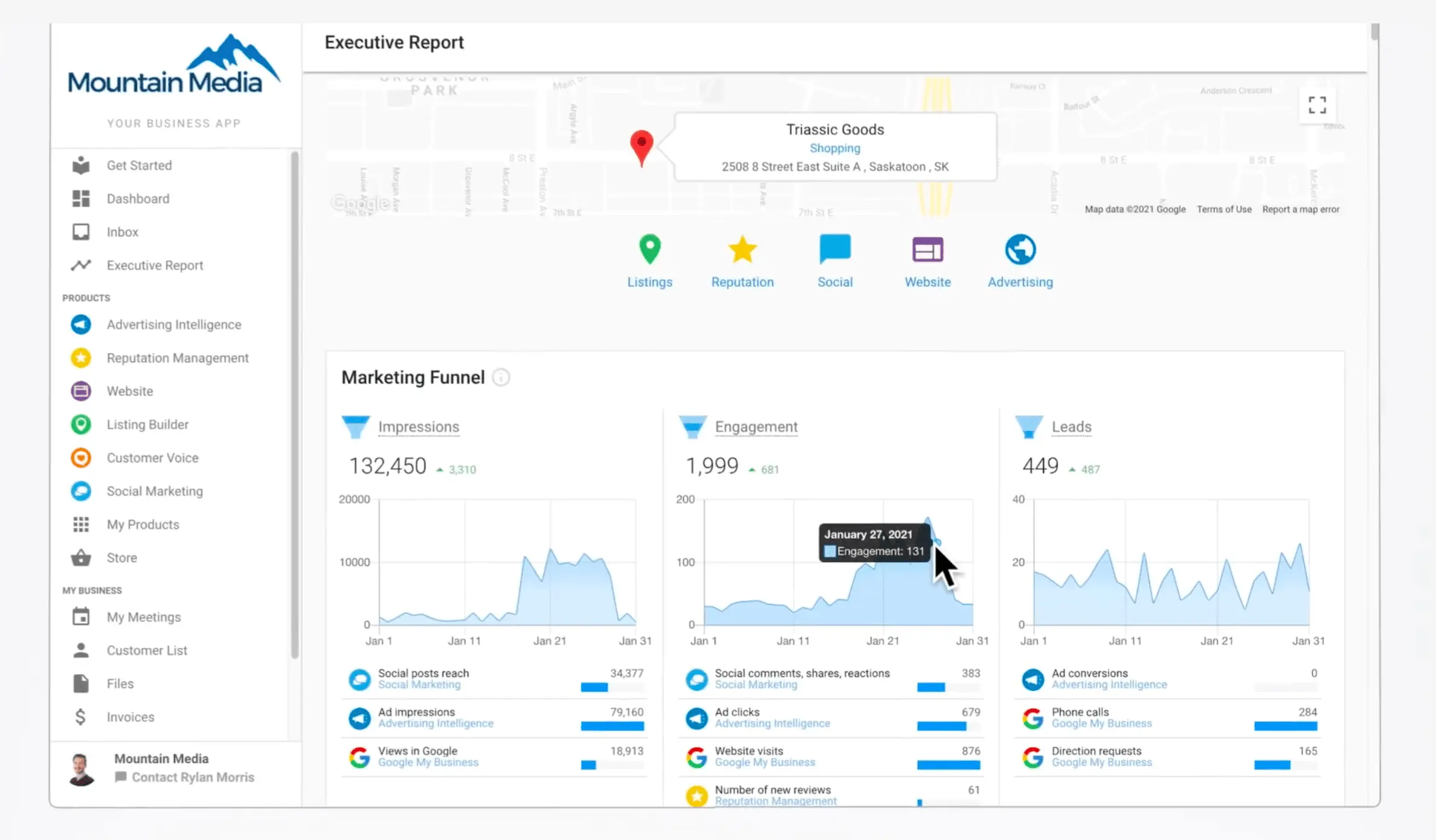
“It’s a simple story to tell when you have the Executive Report in hand. I can show a client, ‘You had 500 visitors but only 10 new sales—let’s try the chatbot.’ Then I can track the lift as inquiries jump, connect it to Campaigns Pro, and send targeted offers on the spot. Lead generation goes up, clients see the proof, and it works across the board: reliable, affordable, and effective.” – Next Level Management
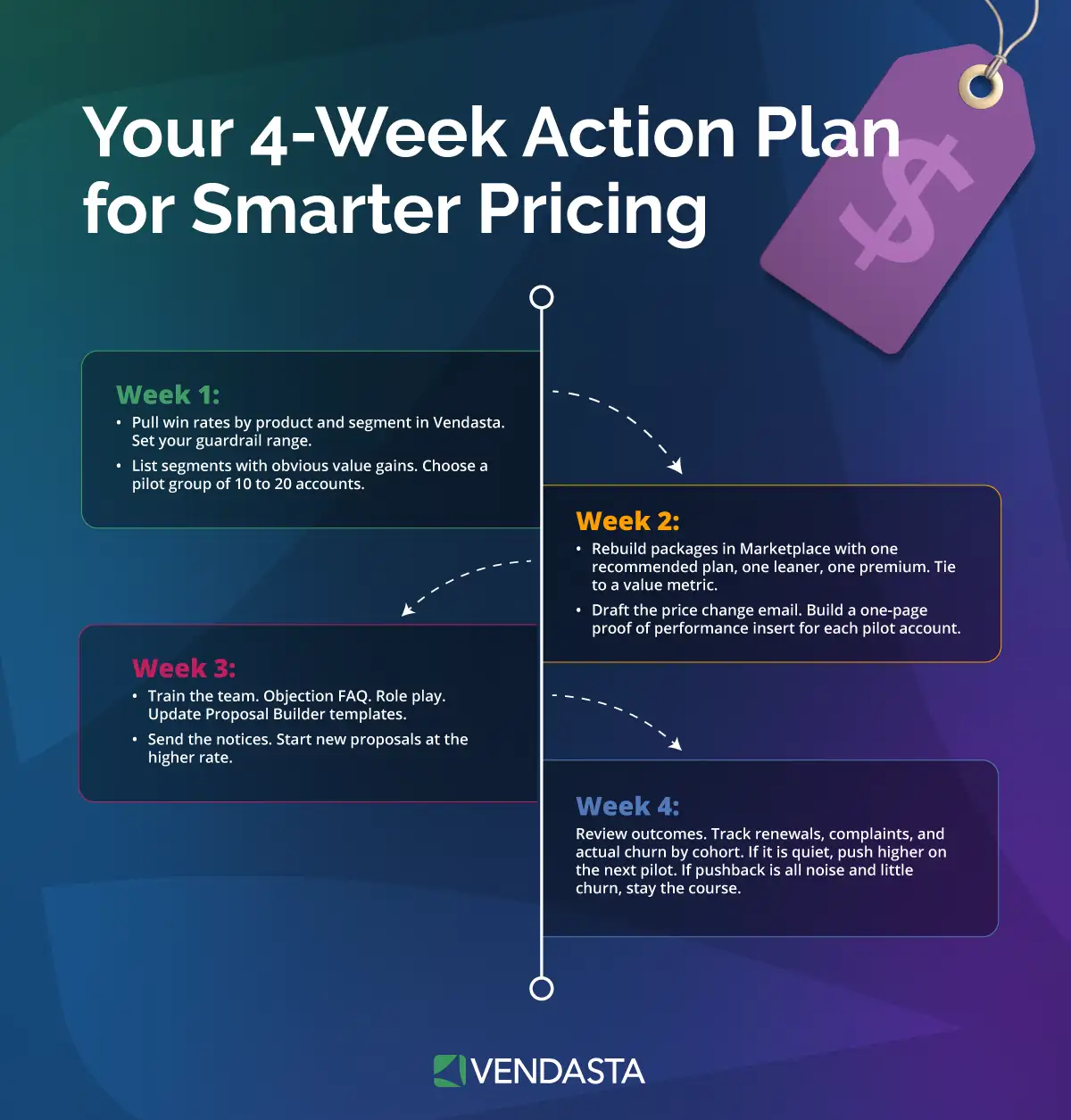
Visual proof earns attention. The next step is turning that attention into a structured pricing strategy. This four-week action plan shows you how.
Bottom Line for Agency Owners
Raise your prices with a plan. Ask better questions. Use options and trade-offs. Treat win rate as a signal. Pilot, learn, and scale. Use Vendasta to package, prove, and track so your team can defend the number without flinching.
The psychology of pricing isn’t about manipulation—it’s about confidence. Fear is expensive. Confidence is a system. Build the system, then say the number.
Ready to raise your rates with confidence? Book a Vendasta demo today and see how our platform helps you package, prove, and protect your value.
Psychology of Pricing FAQs
1. What is the psychology of pricing?
The psychology of pricing is the study of how buyer behavior and perception influence willingness to pay. It shows that pricing isn’t just about numbers; it’s about framing, confidence, and communication that make clients see value over cost.
2. How does the psychology of pricing help agencies charge more?
By applying the psychology of pricing, agencies shift conversations from cost to outcomes. This reduces discounting, builds client confidence, and increases margins without adding extra work. It’s one of the fastest ways for agencies to grow profit.
3. Why do clients push back on price?
Price resistance is a normal part of buyer psychology. The psychology of pricing shows pushback often signals interest, not rejection. With the right framing and questions, agencies can turn objections into opportunities to reinforce value.
4. Can the psychology of pricing reduce client churn?
Yes. When agencies communicate value consistently, clients are more willing to renew, even at higher rates. Vendasta helps agencies apply the psychology of pricing with automated proof-of-performance reports so clients see results that justify the investment.
5. What are examples of the psychology of pricing in action?
Common examples include tiered service packages, value framing, and trading features instead of discounting. Each tactic uses the psychology of pricing to shape perception and make clients feel confident in choosing higher-value options.
6. How do I raise prices without losing clients?
The psychology of pricing shows your current clients are most likely to accept increases because they already trust your value. Communicate changes clearly, back them with proof, and avoid over-explaining. Vendasta tools help agencies make this transition seamless.
7. Is discounting bad for agencies?
Constant discounting erodes margins and signals weakness. The psychology of pricing suggests trading by offering adjusted scope, terms, or added value instead of cutting rates. This approach protects profit while keeping negotiations positive.
8. How does Vendasta support the psychology of pricing?
Vendasta enables agencies to operationalize the psychology of pricing with tiered service packaging, automated reports, and AI-powered tools. These features help agencies present value with confidence, reduce discounting, and scale pricing strategies profitably.
9. Do I need a perfect win rate for my agency?
No. In fact, the psychology of pricing shows that a perfect close rate signals underpricing. Healthy pricing means a mix of wins, objections, and occasional losses. This proves that you’re stretching the market in the right way.
10. What’s the biggest mistake agencies make with pricing?
The most common mistake is underpricing out of fear. The psychology of pricing reveals that mindset, not clients, is often the barrier. Agencies that package services, prove outcomes, and hold firm in conversations capture higher profits and better clients.