About Us
 Careers
 Leadership
 Board
Board Newsroom
Two numbers from this year do not fit together.
The Federal Reserve’s April 2026 adoption dashboard put AI use at roughly 18% of US firms at the end of 2025. Then look at why the holdouts are holding out. When Statistics Canada asked businesses with no plans to adopt AI for their reason, 78.1% said the same thing: AI is not relevant to what we do. Not too expensive. Not too risky. Not relevant.
Meanwhile, the businesses that did buy went deep. The SBE Council’s 2026 tech survey found 82% of small business employers have invested in AI tools, and the median adopter now runs about five of them.
So the market is not split between believers and skeptics. It is split between owners who saw a problem of theirs get solved and owners who were shown a technology. That is a pitch problem, and it is the reason most agencies are struggling to sell AI teammates to their clients right now. They lead with the thing nobody asked for.
That is exactly why we sat down with Nick Prentice, VP of Growth and Development at Blue River Digital, an Indiana agency that has grown its digital marketing department roughly 1,500% in three years and now serves clients in more than 35 states at a 99% retention rate. Nick has closed a lot of AI business. He has also never sold AI.
In this guide, Nick shows you the one question he asks to find what to build, the three-step deployment he uses to get an AI Employee live in under five minutes, how he built an entire department of AI teammates whose members hand off work to each other, and what happened to his headcount when the efficiency showed up. There is also a client who called and asked him to turn the leads off.
Attract, convert, and retain more customers with less manual work
TL;DR
- Nobody is buying AI, and the data says so. Among businesses with no plans to adopt, 78.1% say AI is simply not relevant to them. Nick’s fix is to stop pitching the technology and start pitching the removal of a specific, hated task.
- One question drives the whole sale. “What makes you want to pull your hair out every day?” The answer names the AI teammate you build. Blue River turned that question into 1,500% growth in its digital marketing department over three years, while headcount moved from 10 people to 17.
- A chat employee on a paid landing page lifted conversions by more than 30%, and a single 11:00 PM conversation produced a commission worth $20,000 to $30,000 for one auction client. Vendasta partners run this play on the AI Workforce without building anything.
- AI teammates work as a department, not a chatbot. Blue River runs seven named AI teammates, from an AI Receptionist to a custom pricing assistant, that hand work to each other and write back to one customer relationship management (CRM) system.
What Are AI Teammates?
AI teammates are named, role-based AI Employees that work alongside a human team. An agency configures each one once, trains it on a client’s data, and deploys it to own a specific job: answering the phone after hours, qualifying web chat, chasing reviews, scoring inbound leads, or quoting a price. They are managed like staff rather than installed like software, which is why they are sold as outcomes instead of features. Some teams call them AI coworkers. On Vendasta, each one is an AI Employee with a named role, such as AI Receptionist or AI Reputation Specialist.
The distinction matters because it changes what you are selling:
- A chatbot answers questions. An AI teammate is given a role, a personality, a knowledge base, and a set of rules about what it must never do.
- A tool sits in a tab. An AI teammate sits in a workflow, hands off to other teammates, and writes back to the CRM.
- A license is a line item. A role is a result, and results survive budget reviews.
Nick frames it the same way when he is in front of a client.
“Instead of going at it like, I have an AI chat tool, how about instead, what if we can train an employee to do this project for you? And I really like framing it in that scope as being an employee, because really, out of the box, these tools that are available to us through Vendasta, you kind of want to train them a little bit. You get them out of the box, you let them go, and they do a great job. And you start to find things that, hey, I would like it to respond this way when I get a question like this. And you can start training it and teaching it just like you would an employee. But the really great thing is that these employees, they never sleep, they never need vacation time, they work on the holidays.”
— Nick Prentice, VP of Growth and Development, Blue River Digital
Why “How Do I Sell AI?” Is the Wrong Question
Every agency conference for the last three years has run the same session: here is why you need AI, here is what it can do. Nick’s read is that the education worked and the sales script did not.
“Everyone’s asking how to sell AI, but that’s the wrong question. Nobody wants to buy AI. They just want their problem to be gone.”
He has been this blunt about it internally, too. His own sales manager came to him asking for a deeper technical explanation of how the models work, and Nick pushed back. Most local business owners do not care about the mechanics. They care whether the thing on their desk stops being their problem.
“So we don’t sell AI. We’ve never sold AI. In fact, what we sell are the things that make you just want to pull your hair out.”
There is a second move inside this that most agencies skip. Before Nick decides what to automate, he asks the client what makes them different.
“I really like asking our clients, what makes you different than anybody else? What’s that unique positioning statement that you like to use that really qualifies you and makes you the expert in your field? And I want to focus on that only. So let’s use these tools to do everything else.”
That single sentence is the packaging. You are not proposing AI. You are proposing that the owner spends their whole week on the thing they are best at, and that everything else gets handled. The technology is the delivery mechanism, not the offer.
The Hair-Pull Question
This is the question Nick opens every discovery conversation with, and he says it is his favorite one to ask.
“I do ask them what makes them want to pull their hair out every day. What is just something that’s frustrating that they just hate doing that they wish they didn’t have to do?”
Notice what it is not. It is not “where do you see AI fitting into your business,” which invites a blank stare. It is not “what are your growth goals,” which invites a strategy deck nobody reads. It asks about resentment, and resentment is specific. People answer it immediately and in detail, because they have been complaining about the same thing for two years.
Nick’s team gives him grief for the phrase he uses next.
“A lot of times it’s answering emails or answering phone calls. Those are really easy, low-hanging fruit. I say that all the time. My guys make fun of me. But that’s it. A lot of times it’s really that easy, if you’re asking these questions.”
The answers cluster, which is what makes this repeatable. Here is how the most common hair-pull answers map to what you turn on.
| What the client says | What it actually is | What you deploy |
|---|---|---|
| “I just don’t have time to answer all the calls.” | After-hours and overflow lead loss | AI Receptionist on voice and text (SMS) |
| “We want to scale but we don’t want to hire more people.” | Capacity ceiling, not a demand problem | Voice receptionist plus web chat employee |
| “Nobody on my site ever fills out the form.” | High-intent traffic with no low-friction entry point | Web chat employee, a better lead generation chatbot |
| “I never get around to answering my Google reviews.” | Reputation decay | AI Reputation Specialist |
| “I’ve got two CRMs and I don’t even use one of them.” | Stack sprawl and data silos | Consolidation onto one platform with Vendasta CRM AI |
| “Quotes take me all night.” | Pricing knowledge trapped in the founder’s head | A custom AI Employee trained on the price list |
That last row is worth sitting with, because it is the one Nick built for himself.
The Three-Step Deployment: Ask, Activate, Feed
Nick’s process has three steps, and he is firm that there is no fourth. Once the knowledge base is loaded the first time properly, he almost never goes back in to retrain.
Step 1. Ask the Hair-Pull Question
Run it in discovery, before you scope anything. Write down the exact words the owner uses. Those words become the prompt later, and they become the before-and-after story you tell the client in month two.
Step 2. Turn It On Out of the Box, Same Day
This is the step agencies get wrong by over-engineering it. Nick activates the product first and tunes second.
“Then we turn on the AI product out of the box and just let it start working. I can go live in less than five minutes.”
On the episode, he proved it live. He opened an account that had no voice receptionist configured, activated the trigger, named her Misty, gave her a custom identity, pasted in a prompt describing how she should treat callers, and hit save. The knowledge base already carried the business profile and the company website, so she knew the business before he typed a word about it. Total build time was a few minutes on a podcast recording while someone watched over his shoulder.
He also had a live demo hit a snag mid-call, which is worth saying out loud because it is what actually happens. The point is not that it is flawless. The point is that a rebuild and retest is a two-minute loop, not a two-week ticket.
Step 3. Feed It Your Brand
This is where an out-of-the-box AI Employee becomes a specialist.
“Then we just feed it your brand. We upload PDFs and websites and really build up your knowledge base. An opportunity to really take information that’s in the brains of your entire team and feed it now into one single employee that just knows it all.”
PDFs, websites, spreadsheets, price lists, service descriptions, objection handling. The knowledge that currently lives in three people’s heads and walks out the door when they do. Nick’s summary of the result, from one of the sound bites recorded for this episode: “It went live in under five minutes and actually knew the business better than most of their staff.”
For agency owners who want a structured version of this process with certification attached, Vendasta runs a program to become AI certified that covers deployment, prompting, and packaging.
Connected Business Systems: Stop Selling Tools, Start Selling One Ecosystem
Nick has a term for what he is actually selling, and it is not AI. He calls it connected business systems.
The diagnosis came from watching clients describe their own operations. “I’ve got two CRMs; I don’t even use one. I’ve got three different tools that I use to schedule all my social media content. I use this other company to do all of my Google ads and my LinkedIn ads and run YouTube campaigns, and man, I just can’t keep up.”
That is what a local business tech stack looks like in 2026. The SBE Council number backs it up: the typical AI-using small business now runs about five AI tools on top of everything else it already pays for. Every one of those tools produces data that never meets the data from the other four.
Blue River’s answer is to collapse the stack onto one platform and then customize it hard. They renamed Vendasta’s client-facing portal (Business App) for their vertical, calling it the Auction Suite, and rebuilt the fields around how auction and real estate clients actually work.
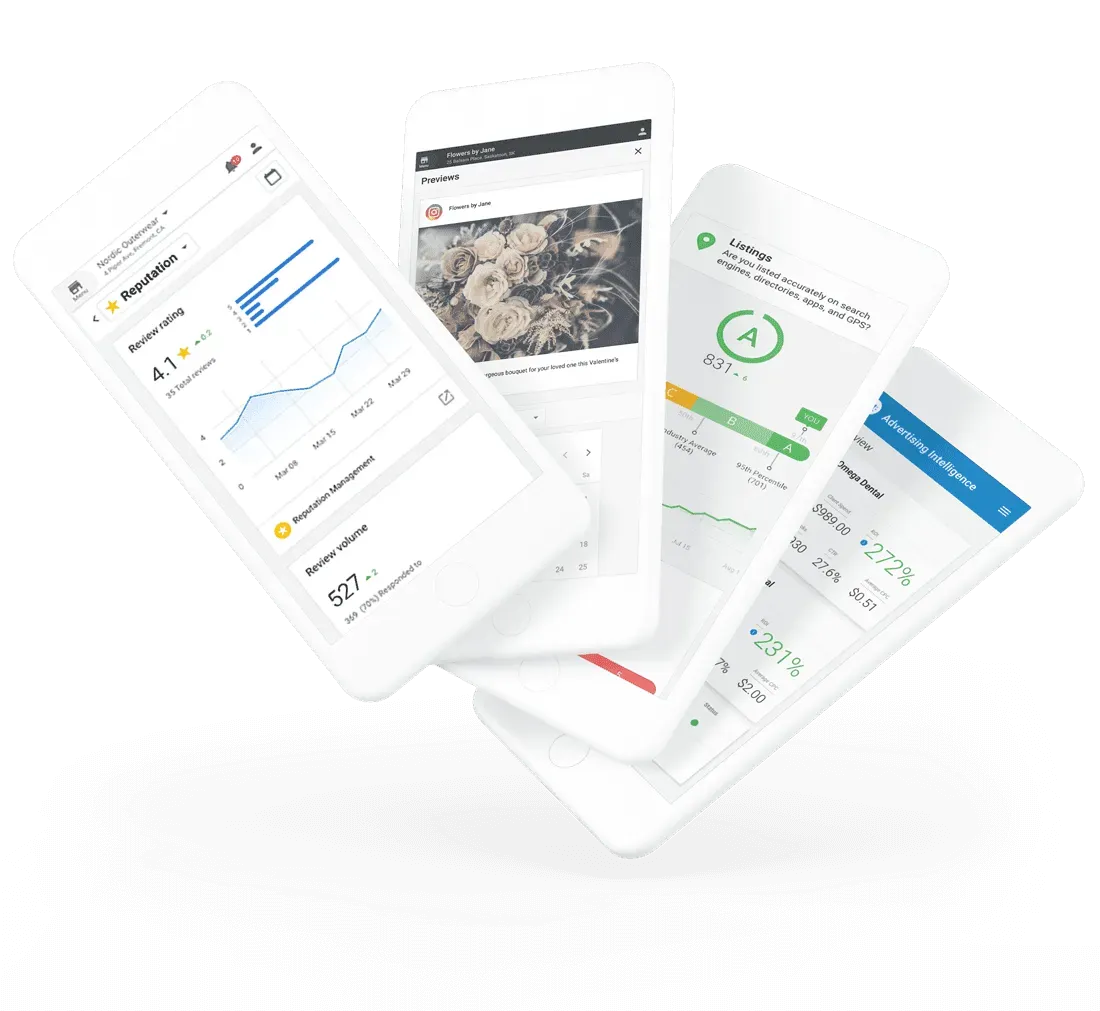
“We’ve taken that and kind of crafted it, made it something that is easily digestible by our auction customers and customized the fields, and made it a truly custom experience that connects all their systems.”
Two things happen when you do this. The client saves real money by canceling four subscriptions. And your AI Employees get access to every signal in the business instead of one slice of it, which is the difference between an AI Employee that answers frequently asked questions and one that can tell a caller which property has a pond.
Build the Org Chart, Not the Chatbot
Here is the part that separates Blue River from agencies who turned on a web chat widget and called it an AI offering.
“We didn’t build a chatbot. We built a whole department, and they actually hand work off to each other.”
Blue River is roughly seven or eight months into building its roster of AI teammates, and Nick says an idea for a new AI Employee surfaces every two or three weeks. This is what the roster looks like today.
| AI Employee | Role | What it removes | Vendasta equivalent |
|---|---|---|---|
| Misty | Voice receptionist | After-hours calls, project intake calls from a talkative client | AI Receptionist |
| Sandy | Web chat employee | Website questions, lead capture, routing to other AI Employees | Vendasta Conversations AI |
| Banks | Pricing and proposal assistant | Quoting across nine departments, proposal writing, follow-up email drafts | AI Sales Assistant and custom |
| Reid | Reputation specialist | Review responses, sales coaching input | AI Reputation Specialist |
| Delta | Lead scorer | Ideal customer profile (ICP) checks, pipeline entry, sales notifications | Vendasta CRM AI plus custom |
| Gerald | Website legal copy | Privacy policies and terms for every new site build | Custom AI Employee |
| Elroy | Website intake | Populating build forms from sales conversations | Custom AI Employee |
Each of these AI teammates owns one role and knows who to hand work to next. That is the difference between a department and a pile of tools. For more role-by-role examples, see these AI agent use cases.
How AI Teammates Hand Off Work
Delta watches inbound leads from Blue River’s visitor intelligence and intent tracking. She checks whether the lead fits the target industries and the ideal customer profile, scores it, notifies the sales team, and adds it to the pipeline. Banks is watching the CRM and the call transcripts from the other side, making recommendations to sales, answering questions about the customer base, and surfacing opportunities. Sandy passes work to both. Elroy takes what the sales team learned in a conversation and populates the intake form so the web team can start building.
“It’s a lot of different employees that are all talking to each other and bouncing ideas and problems off of each other and getting real solutions.”
Most AI tools cannot do this. AI Employees that can query each other turn a set of point solutions into something that behaves like an operations team, and it is the reason Nick can describe this as a department instead of a stack.
The Pricing Problem, Solved Once
Blue River runs nine departments and over a hundred products. Anything with a logo on it, as Nick puts it: print, signage, vehicle graphics, apparel, digital. Apparel costs move constantly. With 17 people all pulling their own numbers, quotes came out inconsistent, and design and setup fees got forgotten in the rush of a sales day.
Banks has access to the live pricing data. Anyone on the team asks him for a quote on fifty shirts and gets a consistent answer back, which can either be pasted into an email or pushed into a proposal generator the team built themselves in Vendasta Vibe.
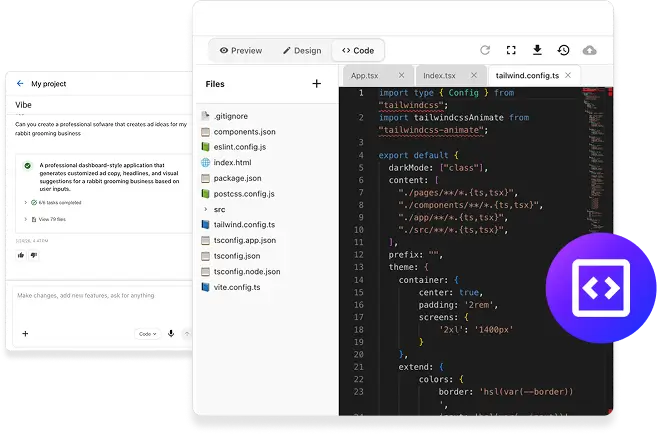
The published results on that build: proposals that used to take days now take under two minutes with 100% consistency, and Nick can finish six or more high-value proposals at the end of a day.
“Before AI, I was wasting so much time at the end of my days calculating pricing and writing follow-ups. By automating that workflow, I saved enough time to meet with two additional people every day; that’s 10 more intentional meetings every week.”
— Nick Prentice, VP of Growth and Development, Blue River Digital (full story)
On the episode, Nick put the number even higher, saying Banks recording his video calls and drafting his follow-ups gives him room for about four more meetings a day, or roughly twenty more meetings a week. Either way, the mechanism is the same. The pricing brain left the founder’s head and moved somewhere the whole team can reach it.
What This Does to the Numbers
Frameworks are easy to admire. Here is what changed at Blue River and at their clients.
More Than 30% More Conversions on the Same Ad Spend
Blue River runs paid campaigns for auction and real estate clients. Adding a chat employee to those landing pages did not change the traffic, the targeting, or the budget. It changed what happened when the traffic landed.
“We’re able to see conversions just increase naturally. You think about you and I, if we go on a website, we’re not as apt to go and fill out a form to ask questions. And even if they have a quote AI chat tool in the bottom corner, a lot of times you have to submit your question, we’ll get back to you, or the live person’s away. Our AI Employees are on. So just having that there lowers that point of entry for our traffic that we’re paying to send to this website anyways. And now all of a sudden we’ve got 30% more conversion on our already really solid performing ad campaigns just because we have this employee working 24/7.”
That is a media efficiency story, not an AI story, and it is the version a client with a budget actually wants to hear. It is also why Nick recommends the receptionist first in almost every engagement. It makes the leads card on the client dashboard go up, and a dashboard with a rising leads number is the hardest line item in a marketing budget to cut.
One 11:00 PM Conversation, One Commission Worth $20,000 to $30,000
This is the story Nick says turned his own team into believers.
An auction client had a chat employee trained on their property inventory. At 11:00 PM, with nobody at the office, someone came onto the site looking for a home with a pond. The employee searched the inventory, found a listing with a pond going to auction in about a week and a half, and presented it. The prospect said they had hoped for more land. The employee went back and found a second property, coming up about a month out, with the pond and the acreage. The prospect said that was the one. An appointment was booked for the next day, and the client sold the property before its auction date.
“That property probably made him somewhere between 20 and 30 grand. It absolutely works. When I shared that with my team, they finally understood it’s not just fluff. Once we could show our clients this is how it works, it paid for everything.”
The comparison Nick draws is simple. A buyer at 11:00 PM does not call the office and leave a voicemail. He goes to the next listing site.
21 Five-Star Reviews in 30 Days
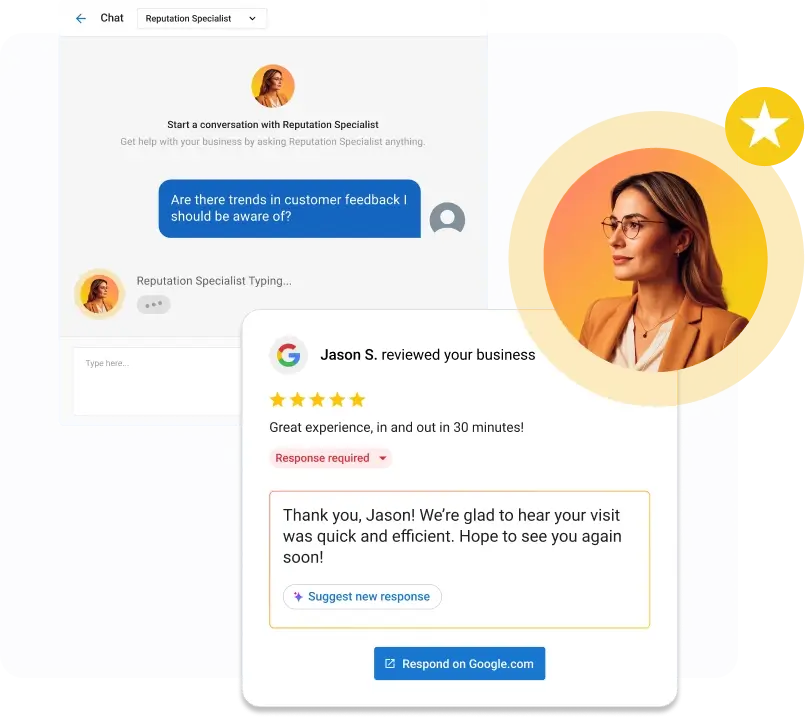
The same auction client turned on an AI Reputation Specialist inside their custom portal, with review requests triggered automatically after each auction. Nick’s published account of the result: “Since turning on the AI Reputation Specialist, our client saw 21 new five-star reviews in just one month. They love it because it just works.”
The Client Who Asked Him to Turn It Off
Not every outcome is a clean win, and this one is the most useful story in the episode.
“A client actually called me and said, turn it off. I’m getting too many leads.”
The client was a young wildlife removal business, essentially two brothers, less than two years old and in their second season. Blue River had built them a new website and turned on a chat employee. Five legitimate, ready-to-buy leads came in on day one. People with a raccoon in the attic do not browse. They buy.
The business had no process for turning inquiries into quotes fast, so volume became a threat instead of an opportunity. They asked for it to be switched off.
“They’re missing some huge opportunities. They’re just not ready for that type of growth. But it just shows that it is a whole process. We can do the work, but then they need to be honest with us and sharing where their pain points are so we can fix those things for them.”
The lesson for your agency is a sequencing lesson. Demand capture without fulfillment capacity creates a bad client experience and a churn risk. The hair-pull question should be asked again after the first win, because the new bottleneck is never the old one. In this case, the right next build was a fast quoting app, not more leads.
The Objection You Will Hear: “AI Teammates Will Replace My Team”
You will hear it from your clients and you will hear it from your own staff. Blue River started as a graphic design shop. Designers were not thrilled.
“About four or five years ago our office was pretty split, probably 50/50 on this new push for AI.”
What moved them was not a memo. It was watching hated work disappear.
“AI is not replacing people’s jobs. In fact, we’ve had to hire more people because we’re that much more efficient with our processes and our workflows.”
Here is the shape of the trade at Blue River.
| Before | Now | |
|---|---|---|
| Team size | 10 people | 17 people |
| Volume of work | Baseline | Roughly quadrupled |
| Digital marketing growth | Journey started in 2018 | About 1,500% over three years |
| Client footprint | Local Indiana roots | Clients in more than 35 states |
| Retention | Not stated | About 99% |
| Proposal turnaround | Hours to days | Under two minutes |
Nick expects the four-year figure to land near 2,400% by the end of this year, and Blue River had already passed its full prior-year digital marketing number by August.
The headline is not the growth rate. It is that a quadrupling of work was absorbed by a 70% increase in headcount instead of a 300% one, and that the people who stayed spend their time differently.
“We’re all people pleasers. We love talking with people and building those relationships. That’s why we’re business owners. Let’s do that stuff instead of all of the paperwork and data entry.”
This is the honest version of the AI pitch for your own team, and it is worth borrowing verbatim when you roll this out internally. Nobody lost a job. The job changed shape, and the calendar filled with the work people actually wanted.
How to Build Your Own AI Teammates with Vendasta
Nick’s playbook is a sales and operations discipline. The reason it runs at his scale is that he is not stitching AI tools together across six vendors. Everything above — the receptionist, the chat employee, the reputation specialist, the pricing assistant, the custom AI Employees, the client portal, the CRM they all write to — sits on one platform.
Vendasta is an AI customer acquisition and engagement platform built for local businesses and the partners who serve them. Here is how the pieces map to the playbook.
Turn the Hair-Pull Answer on the Same Day
Most of the answers you will hear map to an AI Employee that already exists. The AI Workforce ships chat and voice receptionists that most businesses can deploy in under 30 minutes, not a sprint. That out-of-the-box speed is what makes Nick’s step two possible, and it is what lets you deploy across a client base instead of one flagship account.
Feed It the Client’s Actual Data
A generic AI tool gives generic answers, which is why so many chatbots get switched off. Vendasta’s AI Employees are powered by a business’s own data: the website, the business profile, uploaded documents, service descriptions, customer history, and live conversations. More than a decade of local business data underneath means an employee can be spun up fast and still sound like the business it works for. That is what produced an AI Employee that could hold a specific conversation about acreage and ponds at 11:00 PM.
Build the Ones That Do Not Exist Yet
When the hair-pull answer is unique to the client, custom AI Employees cover the gap. Blue River’s pricing assistant, lead scorer, and privacy-policy writer are all custom builds trained on internal documentation.
When the answer needs an interface instead of a conversation, Vendasta Vibe lets your team build the app. Nick, who says he cannot write a line of code and started his career in radio, built a proposal generator this way.
Package It, Rebrand It, and Sell It as a Department
Once a build works for one client, Partner Center and the white-label Business App let you deploy it to the next forty clients under your own brand, the way Blue River turned a standard client portal into the Auction Suite. This is the difference between doing AI projects and running an AI product line. Vendasta’s other published AI Employee success stories are worth reading as packaging templates before you price your own.
Conclusion: Sell the Problem, Not the Product
The market data and Nick’s experience agree on the same uncomfortable point. When most business owners say no to AI, they are not saying the technology is bad. They are saying nobody has shown them a problem of theirs that it solves. Every agency currently leading with model names, agent architectures, and “AI-powered” in the subject line is talking past the person holding the budget.
The correction is not complicated, which is probably why it gets skipped. Ask what makes them want to pull their hair out. Turn something on the same day. Feed it everything your team knows. Then go back and ask the question again, because the bottleneck will have moved.
Nick’s closing advice was aimed squarely at the agency owner who has been reading about this for two years and has not shipped anything.
“You’ve got to try it. Out of the box, a lot of these products are super efficient already, and you can just activate them and start working with them and then find how it works best for you. Clear up enough space for one more meeting a week, and then one more meeting a day, and then four more meetings a day as I have, and you’ll truly start seeing the success come through.”
— Nick Prentice, VP of Growth and Development, Blue River Digital
Four more meetings a day is not an AI outcome. It is a business outcome that AI happened to cause, and it is the only kind of outcome your clients will ever pay you for.
Ready to build the department instead of the chatbot? Book a demo with Vendasta today and see how partners deploy AI teammates across their whole client base.
AI Teammates FAQs
1. What are AI teammates?
AI teammates are named, role-based AI Employees that work alongside a human team. An agency configures each one, trains it on a client’s data, and deploys it to own a specific job such as answering calls, qualifying web chat, requesting reviews, or scoring leads. Unlike a general chatbot, each one gets an identity, a knowledge base, and rules, so it behaves like a staff member rather than a tool sitting in a browser tab.
2. How do I sell AI to a local business that says it does not need AI?
Stop selling AI. Ask what makes them want to pull their hair out every day, then propose removing that specific task. Most non-adopters say AI is not relevant to their business, which is a framing problem rather than a product problem. Lead with the hated work, the missed calls, or the unanswered reviews, and let the technology stay in the background.
3. What is the hair-pull question and why does it work?
It is Nick Prentice’s discovery opener: what makes you want to pull your hair out every day? It works because it asks about resentment instead of strategy. Owners answer resentment questions immediately and in concrete detail, and the answer names the exact AI Employee you should build. Abstract questions about AI strategy produce vague answers and stalled deals.
4. How long does it take to deploy an AI Receptionist?
Out of the box, an AI Receptionist goes live fast: Nick Prentice built one in under five minutes on the episode, and most AI Employees deploy in under 30 minutes. You activate the trigger, name the employee, add a short prompt describing tone and behavior, and save. Vendasta’s AI Receptionist already carries the business profile and website in its knowledge base at activation, so it can answer real questions before any custom training is added.
5. What is the difference between an AI chatbot and an AI teammate?
A chatbot answers questions inside one channel. An AI teammate holds a defined role across voice, chat and SMS, works from a trained knowledge base, follows rules about what it will and will not do, writes results back to the CRM, and hands work to other AI teammates. Vendasta’s AI Employees are built on a business’s own data rather than generic scripts.
6. Can AI teammates hand work off to each other?
Yes, and this is what turns a set of tools into a department. At Blue River Digital, a web chat employee passes leads to a scoring employee, which checks the ideal customer profile and notifies sales, while a pricing employee reads the CRM and drafts the quote. Vendasta supports handoffs between AI Employees inside one platform rather than across disconnected vendors.
7. Will AI teammates reduce my agency’s headcount?
They did the opposite at Blue River Digital, which grew from 10 people to 17 while its volume of work quadrupled. AI teammates absorb repetitive work such as quoting, intake, and after-hours coverage, which frees staff for relationships, strategy, and judgment. Vendasta’s position is that AI Employees empower teams rather than replace them.
8. What should an agency deploy first?
Start with the AI Receptionist on voice and web chat. It produces the fastest visible result, lifting conversions on paid campaigns and capturing after-hours leads that would otherwise disappear. Because the leads number on the client dashboard rises immediately, it also makes your retainer harder to cut when budgets get reviewed.
9. How does Vendasta help agencies build and sell AI teammates?
Vendasta gives partners out-of-the-box chat and voice receptionists, reputation and sales employees, and custom AI Employees, all powered by a business’s own data and managed from one rebrandable platform. Partners configure once, deploy across many clients, and sell under their own brand from Partner Center instead of assembling tools from multiple vendors.
10. Why should an agency choose Vendasta to scale an AI offering?
Because the offering has to work across a whole client base, not one showcase account. Vendasta combines out-of-the-box AI Employees, more than a decade of local business data, custom employee builds, an app builder, a CRM, and a client-facing portal in a single unified platform. Partners get the tools to implement AI, be the trusted expert, and monetize that expertise.
11. Are AI teammates the same as AI coworkers or AI agents?
Mostly, yes. AI teammates and AI coworkers are two names for the same idea: AI that owns a role on a human team. AI agent is the broader industry term for software that takes actions on its own. Vendasta calls its version AI Employees: each one gets a defined job, a knowledge base, rules, and handoffs to the people and other AI Employees around it.