About Us
 Careers
 Leadership
 Board
Board Newsroom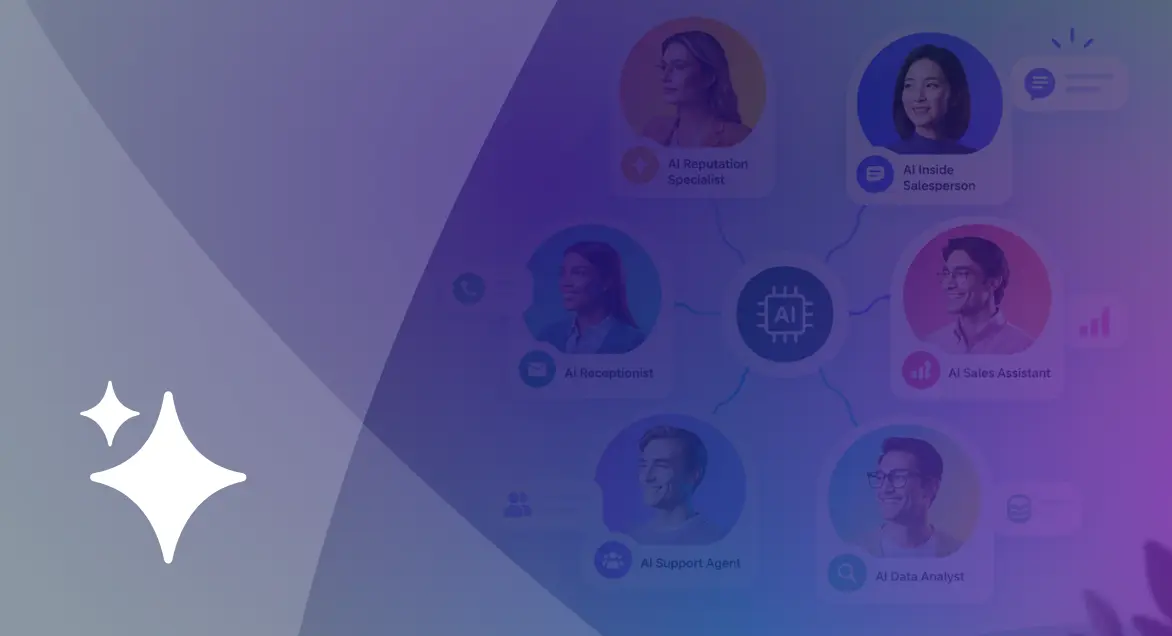
AI automations for digital marketing agencies are no longer an experimental side project, they’re becoming the operating layer agencies build around. One Vendasta partner used a custom AI employee to cut content production time by 90%, turning a 90-minute workflow into a 10-minute process, without adding a single writer to the team.
That result sits inside Vendasta’s broader library of AI employee success stories, which tracks measurable outcomes across lead capture, content, reputation, and sales.
The real story isn’t that AI generates content faster. It’s that AI automations for digital marketing agencies let teams redesign repetitive work entirely, so people spend less time moving information between tools and more time on strategy, client relationships, and growth.
Digital marketing agencies are being asked to manage more clients, more channels, more campaigns, more reporting, and more content, without a proportional increase in headcount. Manual workflows can’t keep pace.
Teams lose hours moving data between platforms, writing repetitive content, compiling reports by hand, chasing leads, and fielding routine client requests instead of doing the strategic work that actually grows accounts.
AI automations for digital marketing agencies solve this by connecting data, decisions, and actions so routine work happens without a person triggering every step. AI employees take this further. Rather than assisting with individual tasks, they perform complete jobs across marketing, sales, and operations, using an agency’s own business data as context.
In this guide, we’ll break down what AI automations for digital marketing agencies actually are, why agencies are adopting them, the highest-value workflows to automate first, how AI automation compares to a true AI employee, what to look for in an automation platform, and how to build a rollout strategy backed by real Vendasta results.
Nurture your leads and client relations with customizable triggers
TL;DR
- AI automations for digital marketing agencies handle repetitive marketing, sales, reporting, and client-service tasks so agencies can scale delivery without scaling headcount.
- AI employees go beyond single-task automations, combining business data, instructions, and actions to run complete workflows end to end.
- Real results matter: Vendasta customers have used AI employees to capture 778 qualified leads, cut content production time by 90%, and manage reviews across 43 locations.
What Are AI Automations for Digital Marketing Agencies?
AI automations for digital marketing agencies are systems that use AI to interpret information, make decisions, and carry out marketing tasks, rather than simply following a fixed set of rules. This is what separates true AI workflow automation for digital marketing agencies from basic “if X happens, do Y” triggers: it understands context before it acts.
How Is AI Automation Different From Traditional Marketing Automation?
Traditional marketing automation still has a place in every agency’s stack, but it operates within fixed boundaries. AI-powered digital marketing automation adds reasoning and adaptability on top of it.

Traditional automation isn’t obsolete. It’s still the right choice for simple, stable triggers. AI automation tools for marketing agencies extend that foundation with personalization, interpretation, and adaptive execution.
What Can AI Automate in a Digital Marketing Agency?
AI tools for digital marketing agencies now handle entire categories of work that used to require dedicated headcount:
- Lead capture and qualification
- Email marketing
- Content creation and repurposing
- SEO research and optimization
- Social media management
- Paid advertising workflows
- Client reporting
- Customer support
- Review management
- CRM updates
- Sales follow-up
- Data analysis
AI Automation vs. AI Employees
This distinction matters more than most agencies realize when they’re evaluating automated marketing workflows against a genuine AI workforce:
- Automation executes a task or a predefined sequence.
- An AI agent interprets information and performs actions.
- An AI employee is a broader digital worker built around a specific business role or workflow, not just a task.
Vendasta’s AI Employees are built on this last model. They use business-specific data and can take action across connected systems, rather than just producing an output and handing it back to a person.

That’s the core difference between a point-solution automation and AI employees for marketing agencies designed to own a role.
Why Are Digital Marketing Agencies Adopting AI Automation?
Agencies are adopting AI automations for digital marketing agencies to increase delivery capacity, cut repetitive work, respond to prospects faster, and scale client services without scaling manual labor at the same rate.
This shift isn’t isolated to a handful of early adopters. Forty-five percent of B2B marketers worldwide are prioritizing investment in AI-powered marketing tools for 2026, and the vast majority already use some form of AI in their workflow.
Scale More Client Accounts Without Scaling Administrative Work
Agencies are managing more clients, more channels, more reporting, and more repetitive execution with roughly the same team size. AI marketing automation for agencies is what makes that math work, by separating revenue growth from workload growth.
Instead of every new client adding a proportional amount of manual work, AI-powered digital marketing automation absorbs the repeatable parts of onboarding, reporting, and delivery.
Reduce Repetitive Marketing Work
The time savings show up in the day-to-day, not just the big case studies. HubSpot’s 2026 AI Trends survey found marketers save an average of 6.1 hours a week using AI, with senior strategists recovering 8 to 10 hours weekly as they shift from executing tasks by hand to directing AI-powered workflows. Inside an agency, that time typically comes back from:
- Copy variations
- Reporting
- Data entry
- Review responses
- Social scheduling
- Lead routing
- Meeting summaries
- Follow-ups
Improve Speed-to-Lead and Customer Engagement
Faster response times translate directly into revenue. Vendasta partner Elite Web Professionals used AI Receptionist to handle 1,017 calls and capture 778 qualified leads, with a reported 76% conversion rate.
That kind of outcome is why speed-to-lead has become one of the most cited reasons agencies invest in automated marketing workflows in the first place.

Deliver More Consistent Client Experiences
AI automations for digital marketing agencies also standardize what used to vary by team member or time of day: brand voice, response times, workflow consistency across multiple locations, and client-specific rules.
For agencies running dozens of client accounts, that consistency is often the difference between a service that scales cleanly and one that breaks down as headcount grows.
What Are the Best AI Automations for Digital Marketing Agencies?
The most valuable AI automations for digital marketing agencies are the ones tied to repetitive, high-volume workflows where faster execution directly affects revenue, retention, or delivery capacity.
Not every automatable task is worth automating first. The ones below are where agencies consistently see the fastest return.
| AI automation | What it does | Agency benefit | Example KPI |
| Lead capture | Responds to inbound prospects | More opportunities captured | Leads captured |
| Lead qualification | Scores and routes prospects | Less wasted sales time | Qualified leads |
| Content production | Creates and repurposes content | Higher output | Time per asset |
| SEO workflows | Researches and optimizes content | Faster optimization | Rankings and traffic |
| Social media | Creates, schedules, and responds | Consistent publishing | Posts per client |
| Reporting | Collects and summarizes data | Less reporting time | Hours saved |
| Review management | Requests and responds to reviews | Better reputation | Reviews and response time |
| Customer follow-up | Sends personalized responses | Better conversion | Response and conversion rate |
| CRM updates | Records interactions automatically | Cleaner pipeline | Data completeness |
| Data analysis | Finds trends and anomalies | Faster decisions | Time to insight |
10 AI Workflow Automations Every Digital Marketing Agency Should Consider
1. Automate Inbound Lead Capture and Qualification
AI automations for digital marketing agencies start paying off fastest at the top of the funnel. Coverage should span website visitors, forms, chat, phone calls, and SMS, with qualification questions built in before a lead ever reaches a human and CRM routing that happens automatically.
Vendasta partner Elite Web Professionals captured 778 qualified leads in four months using AI Receptionist, a result documented in Vendasta’s AI Receptionist success stories.
2. Automate Lead Follow-Up
The best lead follow-up workflow doesn’t wait for a human to remember to act. AI marketing automation for agencies can handle immediate responses, after-hours follow-up, personalized messages, appointment booking, and lead routing the moment a prospect raises their hand, not hours later when a rep finally gets to their inbox.

3. Automate Content Production and Repurposing
This is one of the highest-leverage automated marketing workflows an agency can build, covering blog outlines, social posts, email content, and repurposing long-form content into smaller assets, all while staying consistent with brand voice and client-specific knowledge. It’s the same category of workflow behind Vendasta’s 90% content-production time reduction story referenced earlier in this guide.
4. Automate SEO Research and Content Optimization
AI-powered digital marketing automation should reduce manual analysis and execution, not replace SEO strategy. That means automating keyword research, search intent analysis, content gap identification, competitor analysis, internal linking opportunities, refresh recommendations, and AI search or GEO optimization, while a strategist still owns the direction. The return on this category can be significant: one 250-agency survey found SEO audit agents generating an 11.4x return on investment, because they replace analytical work that strategists don’t enjoy and that clients still pay full rate for.
5. Automate Social Media Workflows
Marketing workflow automation here covers content ideation, caption creation, scheduling, engagement monitoring, repurposing, and client approval workflows, so a single social lead can manage output across dozens of client accounts without every post requiring manual scheduling.
6. Automate Paid Advertising Workflows
Marketing workflow automation extends naturally into paid media: audience analysis, creative variations, budget monitoring, bid optimization, performance alerts, and reporting.
Agencies running PPC and digital advertising campaigns for multiple clients benefit most here, since budget and bid adjustments that used to require manual daily checks can be monitored and flagged automatically.
This is also an area where AI automation tools for marketing agencies are catching up fast to how competitors position advertising optimization, making it a category agencies can’t afford to skip in their AI roadmap.
7. Automate Client Reporting
AI shouldn’t just tell clients what happened, it should help explain what changed, why it changed, and what to do next. That means pulling data from multiple platforms, identifying anomalies, summarizing performance, generating client-ready reports, and surfacing recommendations, all from one connected system rather than a patchwork of exports and spreadsheets.
Vendasta’s agency platform centralizes this kind of automated reporting alongside billing and fulfillment, so client-facing reports don’t live in a separate tool from the work that produced them.
8. Automate Review and Reputation Management
Review and reputation management is one of the clearest wins for AI automations for digital marketing agencies because response speed directly affects local search visibility and consumer trust.
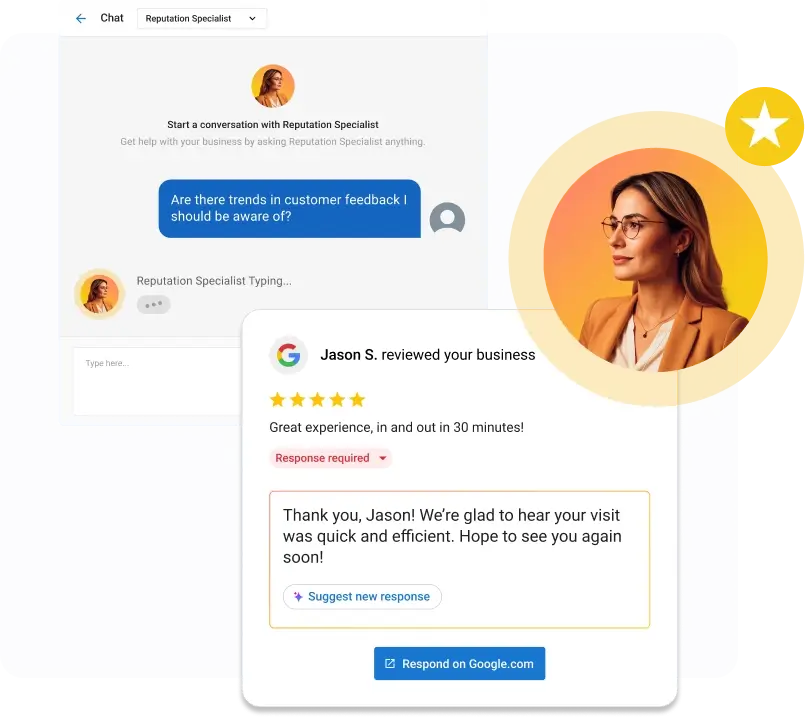
Coverage should include review requests, review monitoring, response drafting, sentiment analysis, and escalation of negative feedback to a human. Vendasta’s AI Reputation Specialist automatically replies to Google and Facebook reviews with brand-safe messaging, an approach that helped one auction house capture 21 five-star reviews in 30 days by triggering automated review requests right after successful events.
9. Automate CRM Administration
This is the “busywork after the meeting” category: meeting summaries, contact updates, opportunity creation, lead routing, follow-up reminders, and pipeline insights.
Vendasta’s AI-powered Sales CRM is built to prioritize prospects based on warmth and flag when they’re ready to buy, so reps spend less time updating records and more time on the calls that actually move a deal forward.
10. Automate Customer Support and Client Communication
Rounding out the list, AI-powered digital marketing automation can handle FAQs, first-line support, status updates, common requests, and escalation, with 24/7 coverage that doesn’t depend on someone being at a desk.
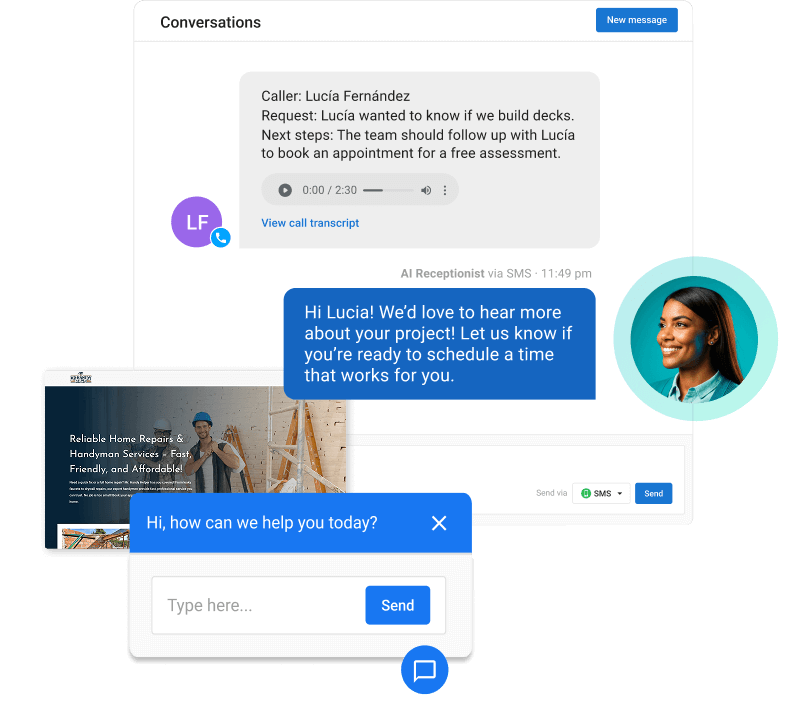
Vendasta’s Conversations AI connects this kind of messaging across phone, SMS, WhatsApp, and web chat, so client communication doesn’t fragment across separate tools depending on the channel a customer picks.
What Does an AI-Powered Marketing Workflow Look Like?
AI automations for digital marketing agencies work best when they’re mapped as a connected sequence rather than a set of disconnected tools. The core structure looks like this:
Customer signal → AI interprets intent → AI decides next action → AI executes → CRM/data updated → Human review when needed → Performance measured → Workflow improves
- Signal: A prospect or customer takes an action, a form fill, a call, a review, a message.
- Interpret: AI reads the intent behind that action rather than just logging it as an event.
- Decide: AI determines the right next step based on business rules and context, not a rigid script.
- Execute: AI carries out the action, whether that’s a reply, a booking, a follow-up, or a routing decision.
- Update: The CRM and reporting layer reflect the interaction automatically, with no manual data entry.
- Review: Judgment calls, high-value leads, or sensitive requests get routed to a human before anything final happens.
- Measure: Outcomes feed back into performance data.
- Improve: The workflow gets refined based on what the data shows.
Example: From Website Visitor to Qualified Sales Opportunity
A concrete version of this workflow looks like:
- A prospect visits the website.
- AI identifies intent based on their questions or behavior.
- AI answers questions in real time.
- AI captures contact information.
- AI qualifies the lead against defined criteria.
- AI creates or updates a CRM opportunity.
- AI routes the lead to the right person or team.
- Sales receives a conversation summary instead of a raw transcript.
- Follow-up happens automatically if the lead goes quiet.
- The outcome feeds back into reporting.
This is where the bigger shift shows up: agencies stop treating chatbots, CRMs, and reporting tools as separate purchases and start thinking about AI for marketing agencies as one connected system, where the entire sequence from first message to final report runs through a single platform instead of three disconnected ones.
AI Automation vs. AI Employees: Which Approach Is Better for Agencies?
This is one of the highest-value comparisons for agencies evaluating AI workflow automation for digital marketing agencies, because the two approaches solve different problems.
| AI automation | AI employee | |
| Primary purpose | Automate workflows | Perform a business role |
| Scope | Specific tasks or processes | End-to-end responsibilities |
| Data context | Usually workflow-specific | Business-specific |
| Actions | Triggered tasks | Multi-step actions |
| Best for | Repetitive processes | Recurring operational roles |
| Example | Automatically send a review request | Manage the entire reputation workflow |
When Should Your Business Use Simple Automation?
Simple automation is the right fit when a workflow is:
- Straightforward and rule-based
- Triggered by simple, predictable events
- Stable and unlikely to change often
- Limited in the amount of decision-making required
When Should Your Business Use an AI Employee?
An AI employee makes more sense once a workflow involves:
- Multiple steps
- Natural-language interactions
- High volume
- Business-specific knowledge
- Multiple connected systems
- Work that needs to happen continuously, not just on a trigger
Vendasta’s AI Workforce is built around this second model. It combines role-based AI employees, including AI Receptionist, AI Reputation Specialist, AI Sales Assistant, and Custom AI Employees, so agencies aren’t stitching together separate point solutions for each workflow.
This is the direction most agencies are already heading: less reliance on individual tools, more reliance on a full AI workforce that shares context and data across every role instead of resetting it each time a task changes hands.
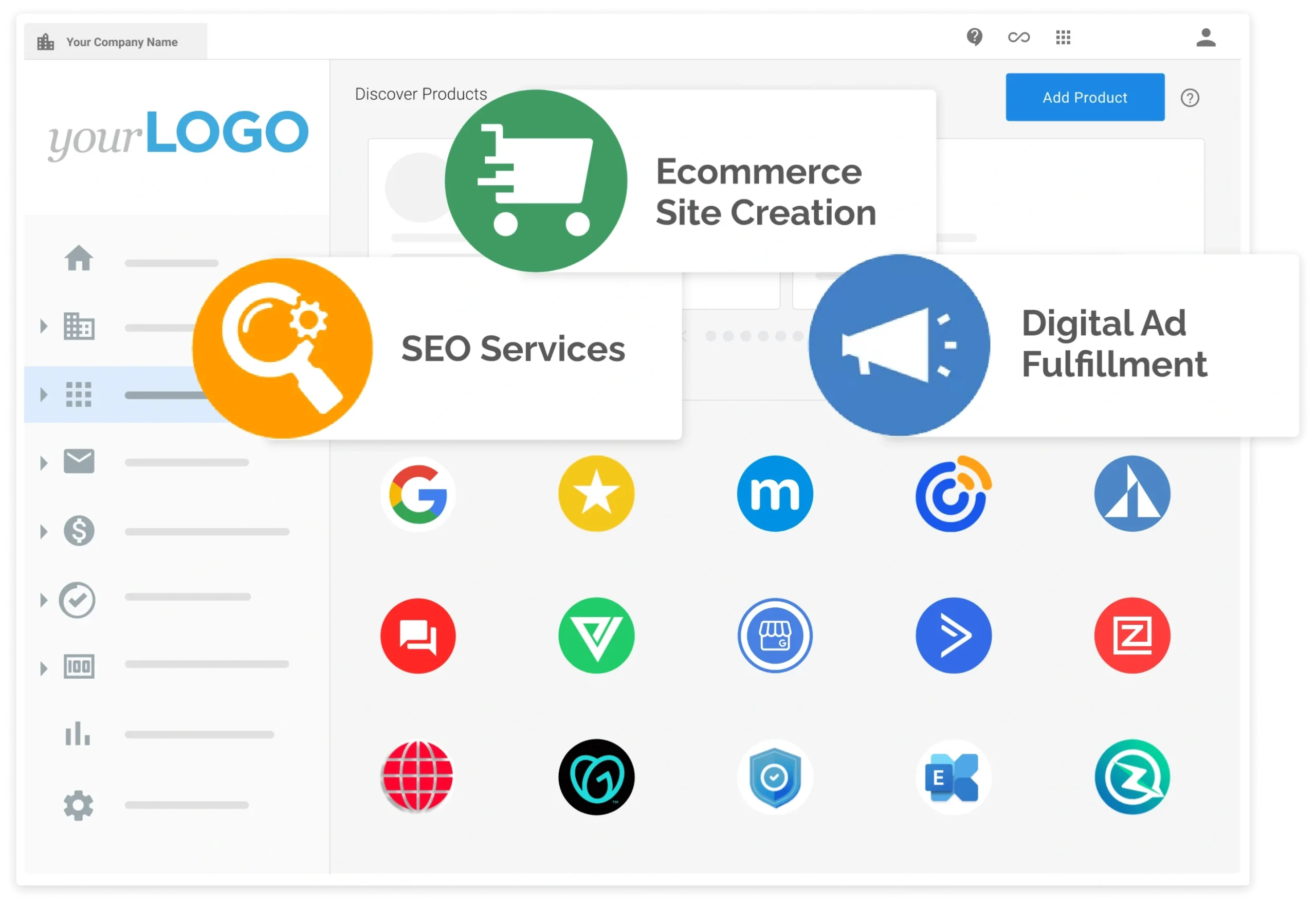
All of these roles, along with the rest of Vendasta’s resellable product lineup, are available through the Marketplace agencies already used to package services for clients.
What Are the Top AI-Powered Marketing Automation Platforms for Digital Agencies?
Most roundups of the top AI-powered marketing automation platforms for digital agencies default to a generic 30-tool list spanning automation, content, SEO, websites, and video. That format is already well covered elsewhere. A more useful way to evaluate the top AI-powered marketing automation platforms for digital agencies is by use case, since agencies rarely need “a tool,” they need the right category of tool for a specific workflow, and specific platform within that category.
| Platform/category | Examples | Best for | Agency use case | What to evaluate |
| Vendasta | AI Workforce (Receptionist, Reputation Specialist, Custom AI Employees) | Connected AI workforce | Lead capture, engagement, reputation, sales, operations | AI employees, business data, integrations, scalability |
| AI workflow automation platforms | Zapier, Make, n8n | Connecting apps | Multi-step workflows across tools | Integrations, triggers, AI capabilities |
| AI content platforms | Jasper, Copy.ai, Writesonic | Content production | Blogs, social, email | Brand voice, quality, SEO |
| SEO AI platforms | Semrush AI, Surfer SEO, Clearscope | Search optimization | Research and optimization | Data quality, recommendations |
| CRM AI platforms | Salesforce Einstein, HubSpot AI, Zoho CRM | Sales operations | Lead management and follow-up | CRM integration, automation |
| Advertising AI platforms | Google Ads Smart Bidding, Meta Advantage+, AdCritter | Paid media | Bidding and optimization | Channel support, controls |
| Social AI platforms | Hootsuite OwlyWriter, Sprout Social, Buffer | Social management | Publishing and engagement | Multi-account management |
Vendasta stands out among the top AI-powered marketing automation platforms for digital agencies is the connected model: instead of running Jasper for content, Salesforce for CRM, and Sprout Social for social separately, agencies can hand reputation, receptionist duties, and CRM to one AI workforce that shares the same business data.
That’s a meaningfully different proposition from stacking single-purpose platforms, and it’s worth evaluating on its own terms rather than against any one point solution.
Two categories on this list are worth calling out specifically for agencies weighing white-label options. On the reputation and receptionist side, a white-label AI receptionist lets an agency resell voice and chat automation under its own brand rather than a vendor’s.
On the social side, white-label social media management covers the same resellable model for scheduling, publishing, and engagement.
What Should Agencies Look for in an AI Automation Platform?
Whatever platform an agency chooses from the table above, the evaluation checklist should include:
- Multi-client support
- White-label capabilities where relevant
- Business-specific data
- Integrations with existing tools
- Human approval controls
- Reporting built in, not bolted on
- Scalability as client count grows
- Security and data handling standards
- Role-based AI employees rather than single-purpose bots
- Ability to take actions, not just generate text
- Clear ROI measurement
How to Build an AI Workflow Automation Strategy for Your Agency
Most agencies don’t fail at AI automations for digital marketing agencies because the technology doesn’t work. They fail because they never map the workflow before automating it. Here’s a practical six-step framework.
Step 1: Map Your Repetitive Workflows
Before automating anything, document what’s actually happening today. For each recurring task, record:
- Task
- Frequency
- Time required
- Person responsible
- Tools involved
- Inputs
- Outputs
- Decision points
This step alone often surfaces workflows nobody realized were eating this much time, especially reporting and follow-up tasks that get repeated across every client account.
Step 2: Find Your Highest-Value Automation Opportunities
Not every repetitive task deserves to be automated first. A simple scoring framework helps prioritize:
Automation opportunity score = frequency × time spent × business impact × repeatability
Agencies should prioritize workflows that are high-volume, repetitive, time-consuming, measurable, and low-risk to automate. A task that happens twice a year, even if it’s tedious, is a worse first target than one that happens fifty times a week with a clear, measurable outcome.
Step 3: Connect Your Data
AI workflow automation for digital marketing agencies only works as well as the data it can see. That means connecting:
- CRM
- Website
- Analytics
- Ad platforms
- Social platforms
- Customer data
- Knowledge bases
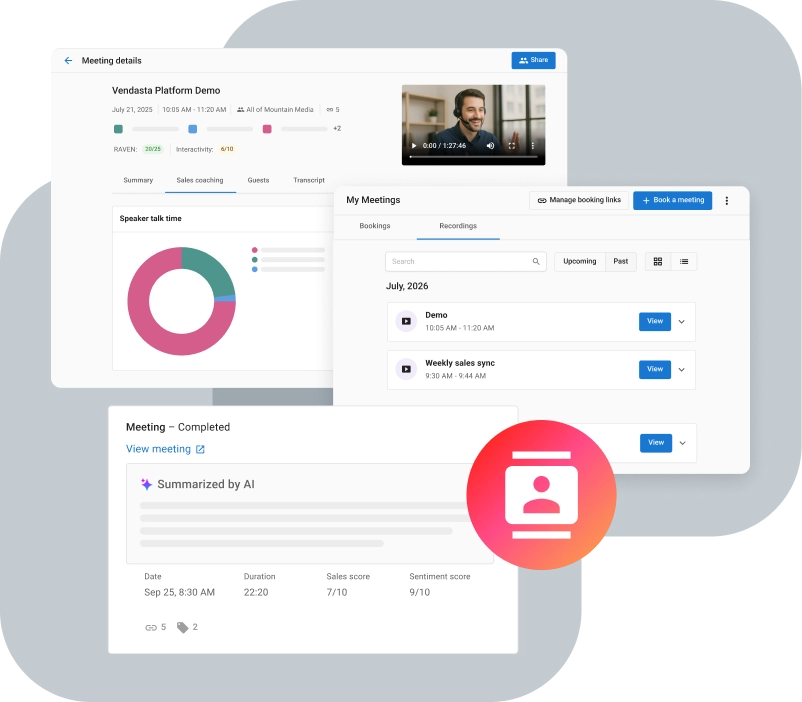
Agencies managing multiple locations or brands under one roof face a harder version of this problem, since data often lives in silos by location.
This is where multi-location brand management becomes less of a nice-to-have and more of a prerequisite, pulling reviews, listings, and performance data into one view before AI can act on any of it in a way that’s consistent across every account.
Step 4: Define Where Humans Stay in the Loop
This step matters as much for trust as it does for quality control. Not every decision should be automated end to end. Common examples of where a human should stay involved:
- Negative reviews
- High-value leads
- Sensitive customer requests
- Budget changes
- Strategic recommendations
- Compliance-sensitive actions
A useful real-world pattern here: one 43-location equipment dealer runs a hybrid model where AI automatically handles five-star reviews while anything below five stars routes to a human. That single rule keeps the volume of routine work off a person’s plate without ever letting AI respond to an unhappy customer unsupervised.
Step 5: Measure the Outcome
Automation without measurement is just guessing with extra steps. Track:
- Hours saved
- Leads captured
- Response time
- Conversion rate
- Cost per lead
- Client retention
- Revenue influenced
- Output per employee
- Tasks automated
Step 6: Expand What Works
The realistic progression looks like this: one workflow, proven on one client, becomes a repeatable playbook, which then rolls out across multiple clients, eventually forming a connected AI workforce rather than a pile of one-off automations. Agencies that try to automate everything at once tend to stall.
The ones that see results treat step six as the payoff for doing steps one through five properly first, not a shortcut around them.
What Are the Risks of AI Automation for Digital Marketing Agencies?
No honest look at AI automations for digital marketing agencies is complete without covering where it can go wrong. Ignoring the risks doesn’t make an agency look more confident, it just means finding out about them from a client instead of in advance.
Poor-Quality or Inaccurate AI Outputs
AI systems can hallucinate facts, pull outdated data, or produce content that drifts from brand voice if they aren’t given the right guardrails and business-specific context. This risk grows the more autonomy an automation is given, which is exactly why review steps matter more as a workflow scales, not less.
Over-Automation
Not every client interaction should be automated. A workflow can be technically capable of running end to end without a human and still be the wrong workflow to fully automate, particularly anything touching a client relationship where tone, judgment, or a personal touch is the actual product being sold.
Data Privacy and Security
AI automation tools for marketing agencies often touch sensitive customer data, so this deserves the same scrutiny agencies already apply to any vendor handling client information: permissions, access controls, data retention, and compliance with relevant regulations.
Agencies reselling AI tools under their own brand carry this responsibility even when the underlying technology belongs to a vendor.
Losing the Human Layer
The goal was never to automate every human interaction out of existence. It’s to automate the work that prevents people from doing the work only they can do: strategy, relationship-building, and judgment calls.
Agencies that lose sight of that distinction risk automating their way into a worse client experience, even while their internal metrics look more efficient.
How Much Can AI Automation Save a Digital Marketing Agency?
This is best treated as an illustrative exercise rather than an industry benchmark, since actual savings depend heavily on an agency’s current workflows, tools, and client mix.
| Workflow | Current hours/month | Automation potential | Hours saved |
| Client reporting | 20 | 70% | 14 |
| Social publishing | 15 | 60% | 9 |
| Lead follow-up | 20 | 50% | 10 |
| Review management | 10 | 80% | 8 |
| Content production | 40 | 70% | 28 |
Treat these numbers as a starting framework for estimating your own agency’s potential, not a promise of what any specific automation will deliver.
What isn’t illustrative is what’s already happened. Real Vendasta results from live AI employee deployments include:
- A 90% reduction in content production time for one agency, turning a 90-minute workflow into 10 minutes
- 778 qualified leads captured in four months through automated call and chat handling
- 43 locations managed through a single automated review workflow
- 21 five-star reviews generated in 30 days through automated review requests
- $30,000 in commission generated from a single after-hours AI-handled interaction
That gap between the illustrative table above and these actual figures is worth sitting with. The table shows what’s plausible on paper. The results above show what happens when AI automations for digital marketing agencies are actually implemented against a real workflow, with real business data behind them.
Real-World AI Automation Results From Vendasta’s AI Employees
AI automation is easier to evaluate when you can see what it actually changes. Rather than treating this as a supporting detail buried in another section, the results below deserve their own spotlight, because they’re the clearest evidence that AI automations for digital marketing agencies produce outcomes that hold up under scrutiny.
| Business challenge | AI employee | Result |
| Missed inbound calls | AI Receptionist | 778 qualified leads in 4 months |
| Manual content workflow | Custom AI Employee | 90% reduction in production time |
| Manual review management | AI Reputation Specialist | 21 five-star reviews in 30 days |
| 43-location review workload | AI Reputation Specialist | Hours saved weekly across locations |
| After-hours inventory inquiry | AI Receptionist | $30K commission secured at 11 PM |
| Sales pipeline coaching | Custom AI Employee | Close rate improved from 15% to 50% |

Every figure above comes from a documented deployment, not a projection. A broader set of these outcomes, organized by the role each AI employee played rather than the industry it served, lives in Vendasta’s AI agent use cases library, which names the partner agency, the end customer, and the measurable result behind each one.
What These AI Employee Stories Have in Common
Pulled apart, these results share a consistent pattern:
- A repetitive or missed workflow existed before AI was introduced.
- AI was given business-specific context, not a generic script.
- The AI performed actions, not just generated content or suggestions.
- The workflow produced a measurable business outcome, not just a productivity feeling.
- Humans stayed involved wherever judgment mattered.
That last point is easy to overlook, but it shows up clearly in how agencies are building their own AI employees today.
Custom AI assistants built for internal use, like a pricing tool trained on a specific catalog or a proposal generator trained on a specific service list, follow the same pattern: narrow scope, real business data, and a human still signing off on anything that matters.
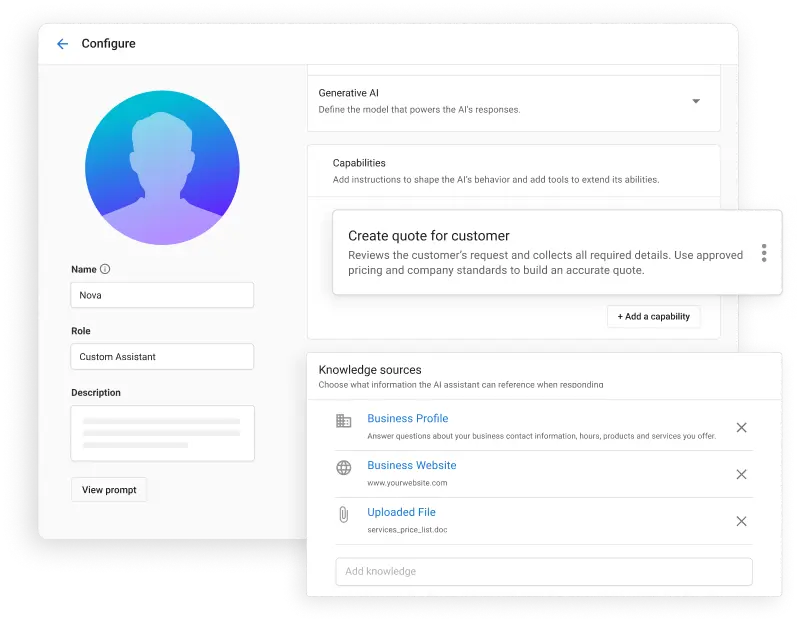
It’s the combination of business-specific context and measurable outcomes that separates a working AI employee from a chatbot that just answers questions.
What Is the Future of AI Workflow Automation for Digital Marketing Agencies?
The generic version of this section writes itself: AI is the future, adoption will keep growing, agencies should pay attention. None of that tells an agency anything useful. The more useful version looks at the specific shifts already underway.
From AI Tools to AI Workers
Tools help a person complete a task faster. An AI employee takes ownership of a recurring workflow and runs it without someone initiating every step. This is the shift already playing out inside Vendasta’s own product direction, where the underlying idea driving the roadmap is that an AI employee isn’t a smarter version of a tool, it’s a different category of digital worker entirely, one built around a role rather than a single function.
From Isolated Automations to Connected Workflows
The next competitive gap isn’t between agencies that use AI and agencies that don’t. It’s between agencies running ten disconnected automations and agencies running one connected sequence: lead, qualification, CRM, follow-up, appointment, sales, reporting, all sharing the same data instead of ten tools each holding a fragment of the picture.
From Content Generation to Business Execution
Every agency can generate AI content now. That stopped being a differentiator the moment it became table stakes. The next competitive advantage isn’t who produces the most AI-written blog posts or social captions.
It’s who builds the most effective AI-powered operating system for client growth, one where content is a single output of a larger system rather than the whole point of it.
From Dashboards to Action
Reporting dashboards tell you what happened after the fact. The direction AI automation is heading looks more like this sequence: detect an issue, explain it, recommend an action, execute the action, then measure the outcome.
A dashboard that flags a ranking drop is useful. An AI employee that flags the drop, explains the likely cause, and starts the fix is a different order of usefulness entirely.
Conclusion
AI automations for digital marketing agencies aren’t about replacing strategists or cutting headcount for its own sake.
The agencies pulling ahead are the ones connecting AI to the workflows that actually run their business, lead capture, content, reporting, reputation, and follow-up, rather than collecting more disconnected tools that each solve one small problem.
The proof isn’t hypothetical. Vendasta partners have used AI automations for digital marketing agencies to capture 778 qualified leads in four months, cut content production time by 90%, and manage reviews automatically across 43 locations, without adding proportional headcount to hit those numbers.
The starting point isn’t a full platform overhaul. It’s one workflow, measured properly, before expanding into a connected AI workforce that shares data and context across every role.
Agencies that treat this as a step-by-step build, rather than an all-at-once switch, are the ones seeing results that hold up months later, not just in the first excited week after rollout.
Ready to see what an AI workforce could automate for your agency? Request a personalized demo and walk through it with a Vendasta expert, no credit card, no commitment, just a look at where the highest-value automation opportunities sit inside your own workflows.
AI Automations for Digital Marketing Agencies FAQs
1. What are AI automations for digital marketing agencies?
AI automations for digital marketing agencies use AI to run repetitive marketing workflows automatically, unlike basic rule-based automation, which only triggers fixed actions from predefined conditions.
2. How does AI workflow automation help digital marketing agencies?
AI workflow automation for digital marketing agencies reduces repetitive work, speeds up lead response, and standardizes delivery by interpreting data and deciding actions, not just triggering fixed tasks.
3. What marketing tasks can agencies automate with AI?
Agencies automate lead capture, qualification, follow-up, content creation, SEO research, social media, paid ads, reporting, CRM updates, customer support, and review management.
4. What is the difference between AI automation and an AI employee?
Automation handles one defined workflow. An AI employee performs multiple related tasks using business-specific data, similar to Vendasta’s role-based AI Employees.
5. What are the best AI workflow automation tools for digital marketing agencies?
The best fit depends on agency needs. Evaluate integrations, multi-client support, business data use, human controls, and scalability, like Vendasta’s connected AI workforce.
6. Can AI automation help digital marketing agencies manage more clients?
Yes. One Vendasta partner used a custom AI employee to cut content production time by 90%, freeing capacity to support more clients.
7. How do I start using AI workflow automation in my digital marketing agency?
Start with one repetitive workflow, like reporting or lead follow-up. Measure current time and cost, automate it, then compare results against your baseline.
8. Is AI automation safe for client marketing data?
Safety depends on the platform, not the category. Evaluate security, permissions, privacy practices, and human approval controls before automating sensitive client workflows.
9. How much does AI workflow automation cost for a digital marketing agency?
Cost varies by platform, users, complexity, and integrations. Focus on ROI, comparing subscription cost against hours saved, leads captured, and revenue influenced.
10. Can Vendasta automate marketing workflows for digital marketing agencies?
Yes. Vendasta’s AI Employees, including the AI Receptionist and AI Reputation Specialist, automate work using business data, with proven results in Vendasta’s success stories.