About Us
 Careers
 Leadership
 Board
Board Newsroom
AI agency pricing strategy is the single biggest factor separating low-margin service providers from high-growth, high-retention AI agencies. Yet most agencies still price AI like traditional services—charging for hours, deliverables, or one-time builds.
That approach is breaking your margins.
While your team spends weeks building AI workflows and automation systems, competitors are packaging similar solutions into recurring offers and charging 2x to 10x more—not because their tech is better, but because their pricing strategy is.
The reality is simple: clients don’t buy AI. They buy outcomes—more leads, faster response times, and higher revenue.
A modern AI agency pricing strategy shifts your positioning from “service provider” to “growth operator.” Instead of selling tasks, your business sells measurable business impact.
In this guide, you’ll learn how to build an effective AI agency pricing strategy by pricing AI services based on revenue instead of effort, using low-risk icebreaker offers to close deals faster, and creating recurring retainers that scale to $3,500 per month and beyond.
Replace busy work with AI employees that take action
TL;DR
- AI agency pricing strategy works best when tied to revenue, not tasks
- Start with a low-risk offer to unlock high-value retainers
- Vendasta’s AI Workforce help agencies package, price, and scale recurring AI services more effectively
What Is an AI Agency Pricing Strategy? (And Why Traditional Pricing Fails)
An AI agency pricing strategy is the method your business uses to price AI services based on outcomes, automation ownership, and revenue impact—not just time or deliverables.
Traditional pricing models—hourly billing, fixed projects, or packaged services—were designed for predictable, manual work. But AI changes the equation entirely.
AI doesn’t just complete tasks faster. It replaces entire workflows, making pricing based on effort obsolete.
Traditional Pricing vs AI Pricing
- Traditional model: Pay for time, tasks, or outputs
- AI pricing model: Pay for outcomes, efficiency, and revenue growth
This shift is echoed across leading research. According to top AI monetization frameworks, pricing is evolving from:
- Cost-based → Value-based → Outcome-based pricing
The problem is that many agencies are stuck in the first stage.
Why Traditional Pricing Breaks in an AI World
When you apply outdated pricing to AI services, three things happen:
- Your services become commoditized
If you price based on tasks, clients compare you to cheaper alternatives - You cap your revenue potential
You’re still trading time for money—even if AI does the work faster - Clients don’t see the full value of AI
They view it as a tool, not a growth engine
The key insight: Pricing AI like a service reduces perceived value, while pricing it like a revenue driver increases what clients are willing to pay.
A strong AI agency pricing strategy reframes your offer entirely. You’re no longer selling automation—you’re selling business outcomes powered by AI.
And that shift is what unlocks premium pricing.
The 3 Core Pillars of a Winning AI Agency Pricing Strategy
A scalable AI agency pricing strategy is not built on guesswork. To execute this efficiently, many agencies use a marketplace to access ready-to-sell solutions instead of building every service from scratch.

It is built on three proven pillars that top-performing agencies use to increase deal size, improve retention, and grow recurring revenue.
At this point, you understand the fundamentals of a strong AI agency pricing strategy. If you want to see how these pillars come together in a real sales flow, this video walks through the exact process step by step.
This video expands on the core principles of an effective AI agency pricing strategy, showing how to structure offers, price based on value, and scale recurring revenue without increasing operational complexity.

If your current AI agency pricing strategy is not delivering consistent high-ticket clients, it is likely missing one or more of these fundamentals.
1. Revenue Proximity: Why High-Impact AI Commands Premium Pricing
The most important principle in any successful AI agency pricing strategy is revenue proximity.
Revenue proximity refers to how directly your AI solution impacts a client’s revenue. The closer your solution is to generating or influencing revenue, the higher you can price it.
This is where many agencies get it wrong. They focus on backend automation like workflow optimization or internal tools. While useful, these solutions are harder to justify at premium price points.
In contrast, revenue-facing AI solutions are significantly easier to sell at higher prices.
Examples include:
- AI receptionists that answer and convert inbound leads
- AI chat systems that book appointments
- AI sales assistants that follow up with prospects

These systems directly impact revenue, which changes how clients perceive value.
In many cases, agencies report that revenue-linked AI solutions can command up to 350 percent higher pricing compared to internal automation tools.
Why This Works
Clients do not evaluate AI based on complexity. They evaluate it based on outcomes.
For example:
- Saving a business 2,000 dollars per month in labor is valuable
- Generating 5,000 dollars in new revenue is significantly more compelling
A strong AI agency pricing strategy positions your service as a revenue driver, not a cost-saving tool.
Practical Positioning Shift
Instead of saying:
- “We build AI automation systems”
Position your offer as:
- “We help your business capture and convert more leads using AI”

This small shift can dramatically increase perceived value and pricing power.
2. Recurring Revenue: Why Subscription AI Pricing Wins
The second pillar of a strong AI agency pricing strategy is recurring revenue for agencies.
Most agencies still rely on one-time AI projects. While these can generate short-term cash, they limit long-term growth.
A better approach is to package AI services into monthly retainers.
For example:
- A one-time project might generate 5,000 dollars
- A 2,500 dollar monthly retainer generates 30,000 dollars annually
This is why leading AI pricing models prioritize subscription-based pricing.
Why Recurring Pricing Works for AI
AI systems are not static. They require:
- Continuous optimization
- Ongoing training and updates
- Monitoring and performance improvements
This is where marketing automation plays a critical role in maintaining performance, consistency, and scalability across client campaigns. This makes recurring pricing not just viable, but necessary.
The “Own the Workflow” Strategy

The most effective AI agency pricing strategy involves owning the full customer journey.
This includes:
- Lead capture
- Lead response
- Appointment booking
- Follow-up and nurturing
When your business controls the entire workflow, clients become dependent on your system. This increases retention and allows for premium pricing.
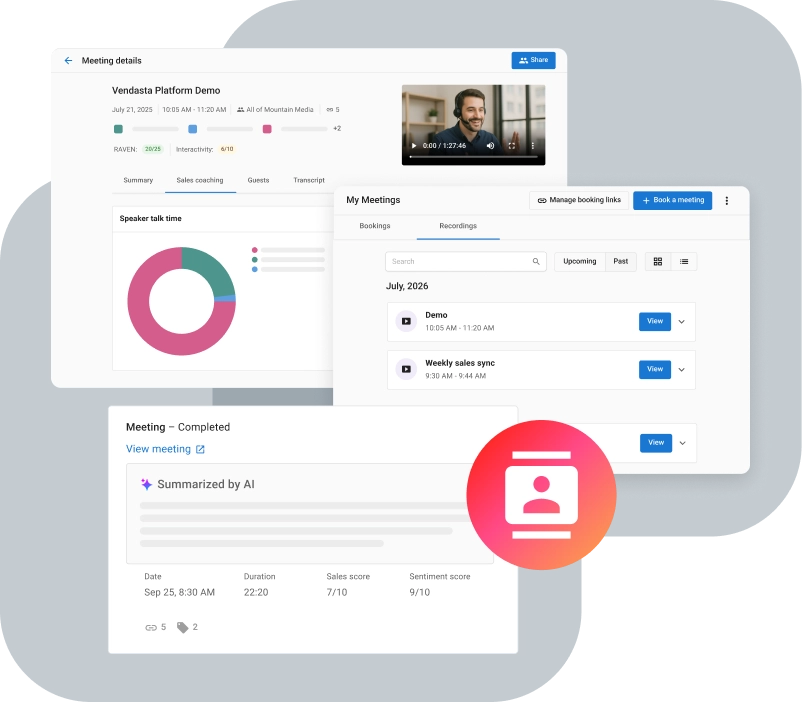
With CRM AI, agencies can automatically track conversations, update pipelines, and ensure no opportunity is missed without manual input.
Where Vendasta Fits In
Vendasta enables your business to implement this model through its AI employees, including:
- AI Receptionist for handling inbound leads
- AI Inside Salesperson for converting prospects
- AI Support Agent for customer engagement
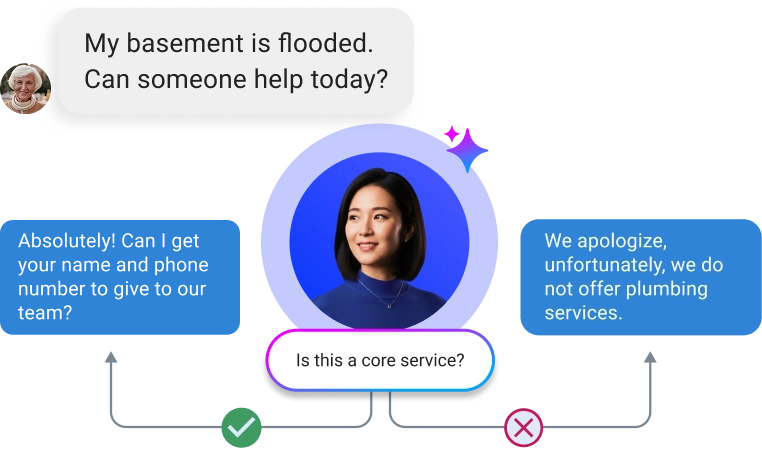
By combining these into a single system, your business can deliver a complete front-office AI solution and price it as a high-value recurring service.
This is what makes a modern AI agency pricing strategy scalable.
3. Icebreaker Offers: The Entry Point That Closes Bigger Deals
The third pillar of a high-performing AI agency pricing strategy is the use of icebreaker offers.
An icebreaker offer is a low-risk, entry-level product designed to reduce friction and get clients to say yes quickly.
Instead of trying to sell a 3,000 dollar monthly retainer upfront, you start with a smaller commitment.
Examples include:
- A 199 dollar AI audit
- A 299 dollar chatbot setup
- A 7-day AI receptionist trial
These offers are not meant to generate profit. They are designed to build trust and demonstrate value.
Why Icebreaker Offers Work
Most prospects are hesitant to invest in AI because:
- They do not fully understand how it works
- They are unsure about ROI
- They have been burned by agencies before
An icebreaker offer removes these objections.
Once clients experience results, it becomes much easier to upsell them into a larger package.
The Upsell Path
A typical upsell path within an effective AI agency pricing strategy looks like this:
- Entry Offer
Low-cost icebreaker that demonstrates quick wins
Example: AI lead response setup for 199 dollars - Core Offer
Monthly retainer focused on a single outcome
Example: AI receptionist + booking system for 1,500 to 2,500 dollars per month - Expansion Offer
Full AI system covering the entire customer journey
Example: Lead capture, follow-up, nurturing, and reactivation for 3,500 dollars or more per month
This structured approach allows your business to reduce friction at the start while maximizing lifetime value over time.
A well-designed AI agency pricing strategy uses icebreaker offers not as discounts, but as strategic entry points into long-term client relationships.
How to Build an AI Agency Pricing Strategy Step by Step
This section is designed to capture high-intent, conversational queries such as “How do I price AI services?” and “What is the best AI agency pricing strategy?”
Follow this framework to create a scalable and profitable model.
Step 1: Choose a Revenue-Focused Use Case
Start by selecting an AI solution that directly impacts revenue.
Strong options include:
- AI receptionist for inbound lead handling
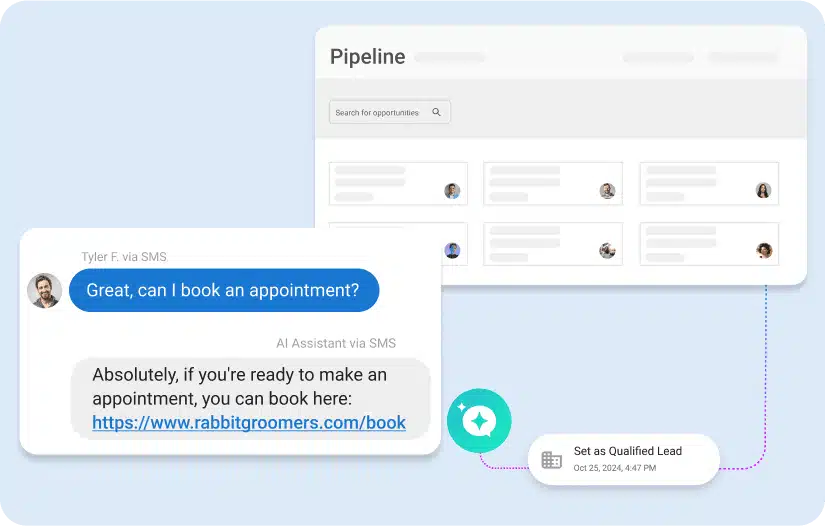
- AI chat for website conversion
- AI follow-up systems for missed leads
Avoid starting with internal automation unless you can clearly tie it to financial outcomes.
A strong AI agency pricing strategy always begins with a use case that clients can easily connect to revenue growth.
Step 2: Package the Outcome, Not the Technology
Clients do not care about the tools you use. They care about results.
Instead of selling:
- Chatbots
- Automation workflows
- Integrations
Sell:
- More booked appointments
- Faster lead response times
- Higher conversion rates
This is a critical shift in your AI agency pricing strategy.
Example Positioning
- Weak offer: “AI chatbot setup”
- Strong offer: “We help your business convert more website visitors into booked appointments using AI”

This change alone can significantly increase your pricing power.
Step 3: Set Pricing Based on Value, Not Effort
One of the biggest mistakes in any AI agency pricing strategy is pricing based on time or complexity.
Instead, anchor your pricing to value.
For example:
- If your AI system generates 50 new leads per month
- And each lead is worth 100 dollars
- That is 5,000 dollars in potential revenue
Charging 1,500 to 3,000 dollars per month becomes easy to justify.
This approach aligns with modern AI monetization models that prioritize outcome-based pricing.
Step 4: Introduce a Recurring Pricing Model
Once your offer is defined, package it into a monthly retainer.
Your pricing should include:
- Setup or onboarding fee
- Monthly service fee
- Optional performance-based upside
A strong AI agency pricing strategy ensures predictable recurring revenue while leaving room for expansion.
Step 5: Add an Icebreaker Offer to Reduce Friction
Before presenting your core offer, introduce a low-risk entry point.
This could be:
- A paid audit
- A short trial
- A limited-scope implementation
This step increases conversion rates and shortens your sales cycle.
It is one of the most overlooked elements of a successful AI agency pricing strategy.
Step 6: Expand Into a Full AI System
Once the client sees results, expand your offering.
Move from a single use case to a complete system that includes:
- Lead capture
- Lead response
- Appointment booking
- Follow-up and retention
With platforms like Vendasta, your business can deploy AI employees across each stage, making it easier to scale and justify higher pricing tiers.

This is where your AI agency pricing strategy evolves from a simple service into a long-term growth engine.
Let me know when you’re ready for the next sections:
- Pricing models comparison table
- Real-world examples and benchmarks
- FAQs and conclusion with CTA
AI Agency Pricing Models Compared: Which One Should You Use?
Choosing the right model is a critical part of your AI agency pricing strategy. Not all pricing structures perform equally, especially when selling AI-driven outcomes.
Below is a comparison of the most common AI pricing models used by agencies today.
AI Pricing Model Comparison Table
| Pricing Model | How It Works | Pros | Cons | Best For |
| Hourly Pricing | Charge based on time spent | Easy to start | Caps revenue, low scalability | Freelancers |
| Project-Based | Fixed fee per deliverable | Predictable pricing | No recurring revenue | One-off builds |
| Subscription | Monthly retainer for ongoing service | High lifetime value, predictable revenue | Requires ongoing delivery | Most AI agencies |
| Outcome-Based | Pricing tied to results (leads, revenue) | High perceived value, premium pricing | Harder to track attribution | Advanced agencies |
| Hybrid Model | Base fee + performance bonus | Balanced risk and reward | Slightly complex to structure | Scaling agencies |
Key Insight
A modern AI agency pricing strategy often combines:
- A monthly subscription base
- With performance-based upside
This hybrid approach aligns incentives and increases both client retention and revenue potential.
Real-World Benchmarks: What Top AI Agencies Are Charging
To build a competitive AI agency pricing strategy, you need to understand market benchmarks.
Based on industry data and agency case studies:
Typical Pricing Ranges
- Entry-level AI services: 500 to 1,000 dollars per month
- Mid-tier AI retainers: 1,500 to 3,500 dollars per month
- Advanced AI systems: 5,000 dollars per month and above
Performance Benchmarks
- AI-driven lead response can increase conversion rates by 30 to 80 percent
- Faster response times can improve lead qualification by up to 7x
- Recurring AI retainers generate 3x to 6x higher lifetime value compared to one-time projects
What This Means for Your Business
If your current AI agency pricing strategy is below these ranges, you are likely underpricing your services.
The opportunity is not just to charge more, but to position your offer differently.
Common Mistakes in AI Agency Pricing Strategy (And How to Avoid Them)
Even strong agencies struggle with pricing. Avoid these common pitfalls.
1. Pricing Based on Tools Instead of Outcomes
Clients do not care about the software stack. They care about results.
Fix:
- Focus your AI agency pricing strategy on measurable outcomes
2. Undervaluing Revenue-Driving AI
Many agencies price AI like a support function rather than a growth engine.
Fix:
- Prioritize high revenue proximity use cases
3. Skipping Recurring Revenue
One-time projects limit growth and stability.
Fix:
- Transition to subscription-based pricing models
4. No Clear Upsell Path
Without a structured journey, clients stay at low price points.
Fix:
- Use icebreaker offers and tiered packages
5. Overcomplicating Pricing
Too many options create confusion and slow down sales.
Fix:
- Keep your pricing simple and outcome-focused
A refined AI agency pricing strategy removes friction, increases clarity, and improves close rates.
Build an AI Agency Pricing Strategy That Scales
A winning AI agency pricing strategy is not about charging more. It is about aligning your pricing with the value you deliver.
When your business shifts from selling tasks to selling outcomes, everything changes:
- Your positioning becomes stronger
- Your clients stay longer
- Your revenue becomes predictable
The agencies that succeed in this next phase are not the ones with the best tools. They are the ones with the best pricing models.
By combining:
- Revenue proximity
- Recurring retainers
- Icebreaker offers
You create a system that attracts clients, proves value quickly, and scales over time. If your current AI agency pricing strategy is still based on deliverables, it is time to evolve.
See how your business can implement a high-performing AI agency pricing strategy using Vendasta’s AI employees. Book a demo and start building scalable, recurring AI revenue today.
AI Agency Pricing Strategy FAQs
1. What is an AI agency pricing strategy?
An AI agency pricing strategy is the structured approach agencies use to price AI-powered services such as automation, chatbots, and AI marketing tools. A strong AI agency pricing strategy focuses on value delivered rather than hours worked, helping agencies increase margins and build predictable recurring revenue.
2. How do you price AI services for clients?
To build an effective AI agency pricing strategy, agencies should shift from hourly billing to value-based or subscription pricing. The best AI agency pricing strategy aligns pricing with outcomes like leads generated, time saved, or revenue increased. This ensures clients clearly understand the ROI of your AI services.
3. What is the best AI pricing model for agencies?
The best AI agency pricing strategy typically combines:
- Subscription-based pricing for recurring revenue
- Outcome-based pricing for high-value clients
- Tiered packages for scalability
A hybrid AI agency pricing strategy allows agencies to serve different client segments while maximizing profitability.
4. Should AI services be subscription-based?
Yes, subscription pricing is a core part of a successful AI agency pricing strategy. A subscription-based AI agency pricing strategy creates predictable monthly revenue and positions your agency as an ongoing partner rather than a one-time vendor.
5. How much should an AI agency charge per month?
Pricing varies depending on complexity, but a solid AI agency pricing strategy often starts between $500 to $5,000 per month per client. A scalable AI agency pricing strategy increases pricing as more automation, integrations, and outcomes are delivered.
6. What is outcome-based pricing in AI?
Outcome-based pricing is a results-driven AI agency pricing strategy where clients pay based on performance metrics such as booked appointments or qualified leads. This AI agency pricing strategy works well for agencies confident in their ability to deliver measurable ROI.
7. How do AI agencies scale pricing?
Scaling an AI agency pricing strategy involves productizing services into repeatable packages. A scalable AI agency pricing strategy uses automation, templates, and AI tools to deliver consistent results without increasing labor costs.
8. What industries pay the most for AI services?
Industries that benefit most from a strong AI agency pricing strategy include:
- Healthcare
- Real estate
- Legal services
- Financial services
These industries value automation and efficiency, making them ideal for premium AI agency pricing strategy models.
9. What is an icebreaker offer in AI pricing?
An icebreaker offer is a low-risk entry point in your AI agency pricing strategy, such as a free audit or low-cost pilot. This AI agency pricing strategy tactic helps build trust and quickly convert prospects into long-term clients.
10. How can Vendasta help with AI pricing and delivery?
Vendasta supports your AI agency pricing strategy by enabling you to package, sell, and deliver AI-powered solutions at scale. With Vendasta’s AI tools and white-label platform, agencies can implement a repeatable AI agency pricing strategy that drives recurring revenue and simplifies fulfillment.