About Us
 Careers
 Leadership
 Board
Board Newsroom
Most businesses are still optimizing for Google, even though buyer behavior is shifting faster than most teams can keep up with. People now ask ChatGPT and other AI assistants what to buy, who to hire, and which businesses they should trust.
This shift matters. If your business is not appearing in these AI-driven conversations, you are losing visibility long before a buyer opens a browser tab.
The gap widens every day. Competitors who understand how the AI funnel works are already showing up as the “top picks” in natural-language recommendations. They are winning attention in the exact moments buyers are comparing options, checking reputational signals, and deciding who feels most trustworthy.
Meanwhile, businesses that rely only on traditional SEO are finding themselves pushed out of discovery entirely.
This blog breaks down what your business needs to know about ChatGPT Shopping Research, how it shapes modern buying behavior, and what you can do to become the recommended choice across AI-driven search experiences.
In this guide, you’ll learn how AI prioritizes trust indicators, reputation data, and structured information, and how customer acquisition platforms like Vendasta help you strengthen those signals at scale.
Automate the entire customer journey from first touch to repeat business
TL;DR
- ChatGPT Shopping Research influences buying decisions early, before users visit a website.
- ChatGPT relies on trust signals: recent reviews, accurate business data, and a consistent reputation.
- Optimizing for AI search means clear content, structured information, and fast follow-up, not just traditional SEO.
What Is ChatGPT Shopping Research?
As of November 24, 2025, ChatGPT Shopping Research is an example of conversational AI.
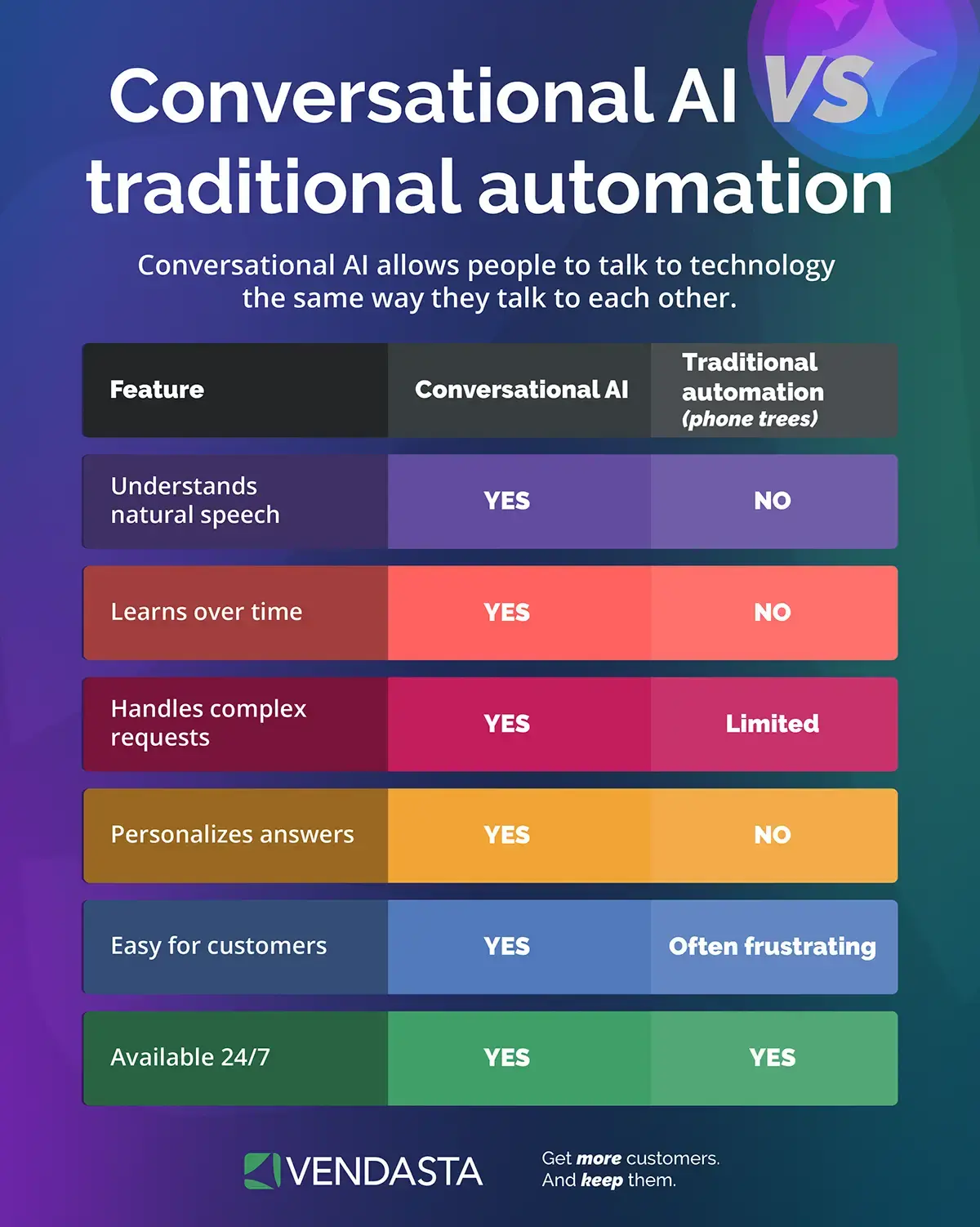
It is a conversational shopping experience introduced by OpenAI that helps people discover and compare products through AI-powered recommendations.
According to OpenAI, users can describe what they are looking for in natural language, such as specific features, styles, or use cases, and ChatGPT will generate curated product suggestions to match those preferences.
The experience includes product cards that display images, descriptions, and relevant details, making it easier for people to decide which items fit their needs. ChatGPT can refine results based on follow-up questions and help users explore alternatives, compare options, or find items that meet unique criteria.
AI agents are becoming the new front line of customer engagement, acting as always-on representatives that answer questions, guide decisions, and move customers forward — exactly the role Vendasta’s AI Employees are built to play across every channel, not just search.
Why ChatGPT Shopping Research Matters for Your Business
Buyer behavior is shifting in ways that directly impact how your business gets discovered.
Around 40 to 55% of consumers now use AI tools for product research, according to recent findings from McKinsey.
Instead of browsing multiple websites, people ask ChatGPT what to buy, which brands are trustworthy, and which businesses offer the best value.
This change reflects a broader trend: younger buyers increasingly prefer conversational search over scrolling through traditional results pages.
ChatGPT now plays a meaningful role in the early stages of the customer journey. It shapes awareness by surfacing a short list of options, helps buyers compare products or services, and influences decisions long before they land on a website or contact a sales team.
This is a major shift from traditional search behavior. Instead of scanning hundreds of results, AI surfaces only a few top picks. This is called the AI funnel.
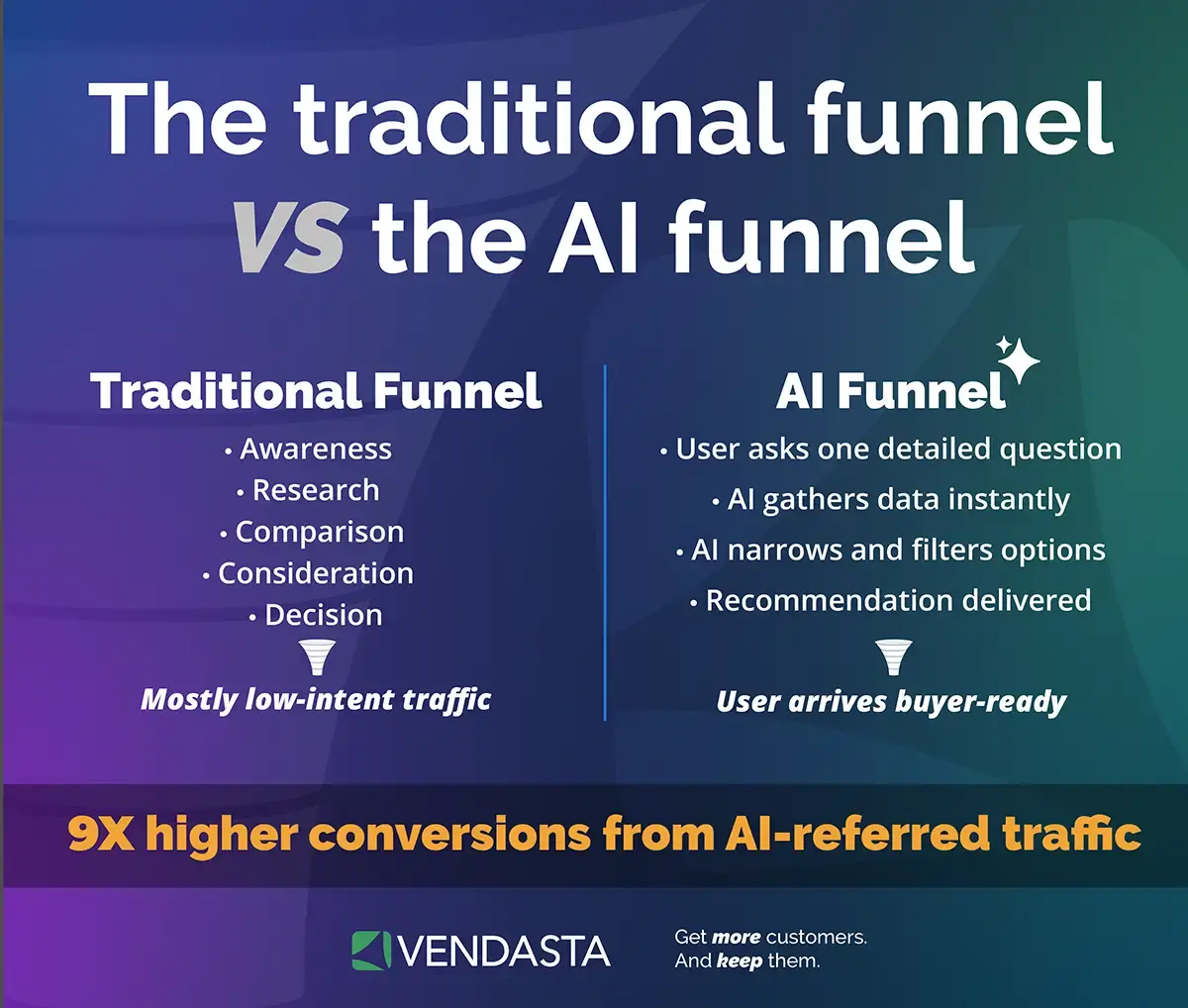
Visibility in these shortlists matters. A business that appears in the top three conversational recommendations stands to win disproportionate attention and conversions.
For your business, this raises an important question: What signals are you sending that help ChatGPT consider you a top pick?
Strong reviews, accurate listings data, consistent branding, clear service descriptions, and responsive communication all influence AI-driven recommendations.
How To Optimize Your Business for ChatGPT Shopping Research Results
Below is a framework you can follow to improve visibility, credibility, and discoverability inside AI-driven shopping and service recommendations.
1. Strengthen Your Reputation and Social Proof
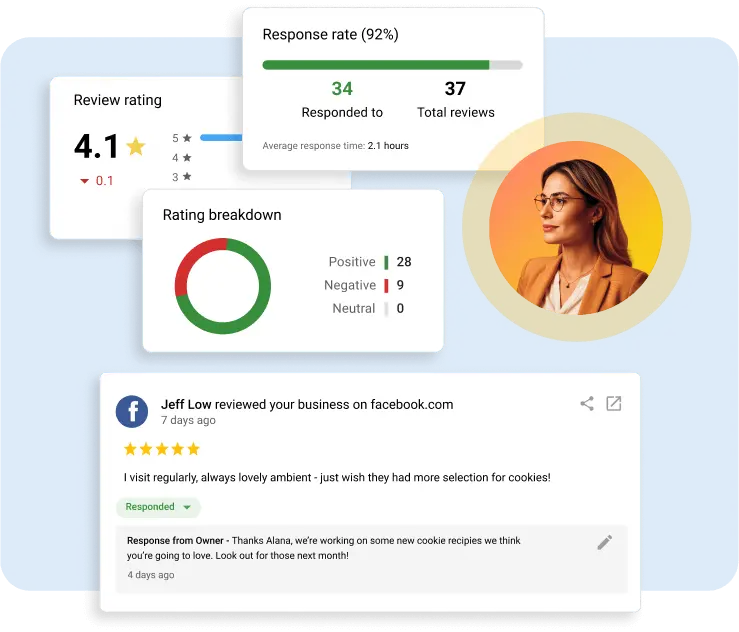
ChatGPT relies heavily on customer-generated content because it provides a real-world view of how your business performs. High ratings, recent reviews, and consistent positive feedback signal reliability. They also reduce the risk of recommending a business that might deliver a poor customer experience.
A strong reputation directly impacts your chances of being included in ChatGPT’s shortlists. When AI sees steady review volume, positive sentiment trends, and responsiveness, it treats your business as more trustworthy.
How Vendasta helps:
Vendasta’s AI Reputation Specialist makes it easy to collect more reviews, respond automatically, and highlight customer satisfaction. It improves the exact reputation signals AI systems lean on, which increases your likelihood of being recommended during product or service research.
2. Create Structured, Factual, Expert-Driven Content
AI models pull from content that is clear, structured, and easy to interpret. If your website or product pages provide straightforward information, ChatGPT can extract and summarize it more effectively. That increases your chances of appearing in conversational recommendations.
To make your content “AI-friendly,” include:
- Comparison tables.
- Product specs or service features.
- Transparent pricing ranges.
- Pros and cons.
- FAQ sections with direct answers.
Use conversational phrasing throughout, such as:
- “What is the best HVAC service for small homes?”
- “How does lawn care pricing work?”
- “Which marketing agency offers monthly social packages?”
This mirrors how buyers ask questions inside ChatGPT and helps the model align your content with those queries.
3. Improve Your Business’s Trust Signals
Trust signals influence how confidently ChatGPT can recommend your business. AI models prefer to surface businesses with clear indicators of legitimacy and reliability. Missing or inconsistent trust signals can lead to fewer recommendations or none at all.
Enhance your trust profile by highlighting:
- Awards and industry certifications.
- Membership badges and verified partnerships.
- Guarantees, warranties, and return policies.
- Transparent pricing and availability information.
- Case studies with measurable performance outcomes.
Trust signals help ChatGPT avoid recommending low-quality or risky options. The clearer and more credible your signals, the easier it is for AI to elevate your business in comparison queries.
4. Ensure Fast Response Times and Follow-Up for AI-Driven Leads
Once ChatGPT recommends your business, buyers expect quick responses. They often reach out through forms, chats, or calls while actively comparing options. Slow responses cause drop-off, while instant engagement creates momentum and trust.
Fast follow-up is a competitive advantage, especially for leads influenced by AI recommendations.
How Vendasta helps:
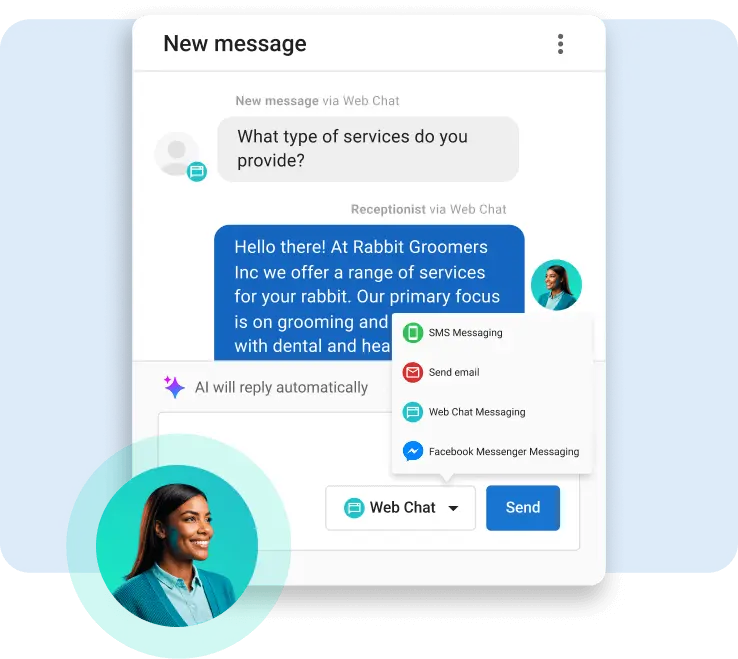
Vendasta’s AI Receptionist responds instantly to website chats, SMS, social messages, forms, email, or phone calls. The AI receptionist can handle FAQs, booking, lead qualification, and follow-up tasks, ensuring no opportunity is missed. This level of responsiveness boosts buyer confidence and increases conversion rates from AI-driven traffic.
5. Optimize Your Product and Service Data for Conversational Search
ChatGPT depends on clear, structured information to understand what your business offers. Descriptions written for keyword stuffing won’t help. Conversational clarity will.
Make your product and service data easy for AI to parse by:
- Using natural language explanations of what you offer.
- Adding structured specs and attributes where applicable.
- Including standardized terms such as “monthly subscription,” “one-time setup,” “two-year warranty,” or “same-day service.”
These cues help ChatGPT recognize your offerings, match them to buyer intent, and generate accurate recommendations.
Pro Tip: If you want to go deeper on how to improve visibility across AI search tools, check out our guide: How to Rank on ChatGPT in 2025. It breaks down the exact steps businesses can use to appear more often in conversational recommendations.
How to Track Whether ChatGPT Is Recommending Your Business
ChatGPT Shopping Research is still new, and there is no built-in analytics dashboard that shows which businesses are being recommended.
For now, the most reliable way to understand your visibility is to test prompts manually, monitor patterns over time, and track reputation signals that influence AI results.
This gives your business a clear picture of how often you appear, how you’re being described, and what improvements might help you rise into future recommendations.
Below are practical steps your business can take to evaluate ChatGPT visibility in a consistent, repeatable way.
Test Visibility Using Real User Prompts
Start by entering prompts that mirror how buyers naturally search. Since ChatGPT focuses on conversation-first queries, you’ll want to test phrases built around intent, comparison, and location.
Here are examples you can use for different industries:
General service queries:
- “Who are the best [service] providers near me?”
- “Which companies offer reliable [service] for small businesses?”
- “Compare the top options for [service] and tell me which one is most trustworthy.”
Local discovery prompts:
- “What are the highest-rated [business type] options in my area?”
- “Show me local businesses with strong reviews for [service].”
Competitive comparisons:
- “Compare [Your Business] with similar companies.”
Document your results in a spreadsheet to track trends over time, such as:
- Whether your business appears at all.
- Whether you appear on the first or second mention.
- How ChatGPT describes your strengths.
- Whether competitors are recommended instead.
These insights highlight performance gaps and opportunities for improvement.
Analyze How ChatGPT Describes Your Business
When ChatGPT does recommend you, review:
- What information does it highlight?
- What products or services does it associate you with?
- Whether the tone is positive, neutral, or unclear.
- Which trust signals (ratings, reviews, reputation) appear in its reasoning?
This helps you understand which data sources are influencing ChatGPT’s summaries.
If ChatGPT isn’t mentioning your recent reviews or updated descriptions, that may indicate your online listings or content need refinement.
Monitor Your Reputation Metrics to Predict AI Visibility
Since ChatGPT relies on public information, your reputation momentum impacts your chances of being recommended.
Track:
- Review volume over time
- Consistency of new reviews
- Sentiment trends
- Response rates to customer feedback
- Accuracy and freshness of your business listings
These are the signals ChatGPT uses to determine whether your business is reliable enough to suggest.
Where Vendasta helps:
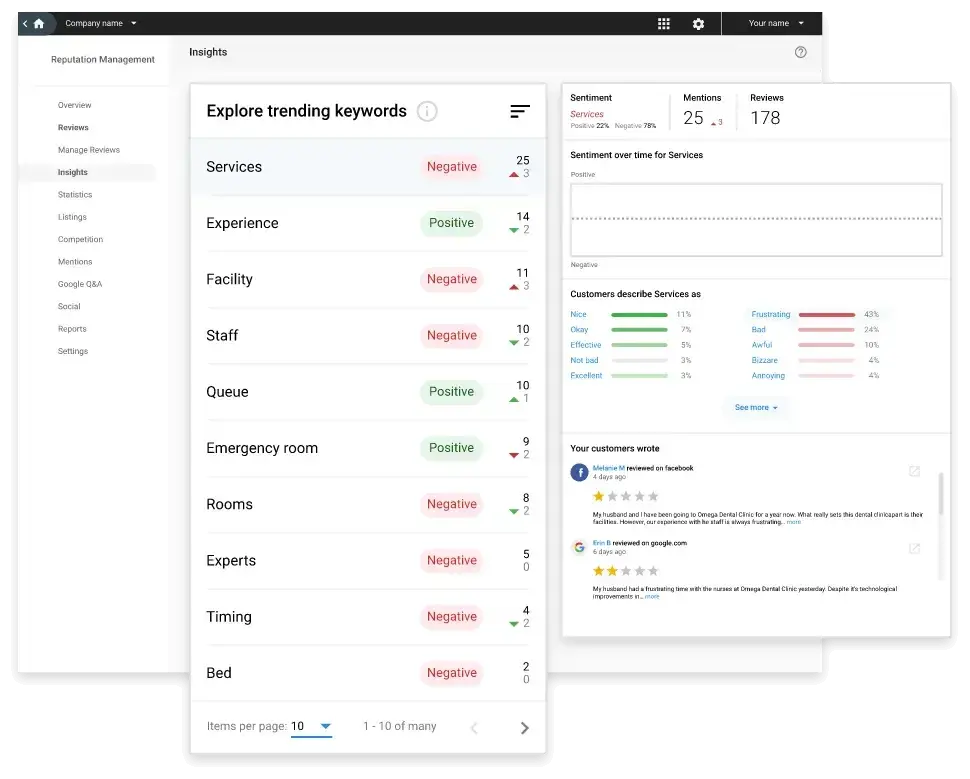
Vendasta’s platform makes this easy. You can track review velocity, sentiment insights, listing accuracy, and multi-location performance from a single dashboard. These insights show whether your trust signals are improving in ways that AI tools reward.
Use Lead Source Tracking to Identify AI-Influenced Inquiries
While ChatGPT doesn’t provide referral tracking, buyers often reveal how they found you. Include a short question in your forms, chats, or booking flows:
- “How did you hear about us?”
- “Did you find us through ChatGPT or another AI assistant?”
Vendasta’s CRM makes this easy by capturing all conversations and storing them in one place. Over time, these insights help you measure the real impact AI search has on awareness and conversion.
Turning AI Shopping Research Into Real Customer Growth
ChatGPT Shopping Research is reshaping how people discover products and services.
Buyers now depend on AI assistants to compare options, verify value, and identify trustworthy businesses before they ever land on a website. Visibility inside these AI-led moments is becoming just as important as visibility on traditional search results.
Businesses that understand how AI evaluates trust, reputation, responsiveness, and clarity will have a significant advantage as these tools become central to the buyer journey. The signals that matter most: recent reviews, consistent listings data, transparent information, and fast communication, are all factors you can influence.
With unified data, automated follow-up, and AI Employees that act on behalf of your business, Vendasta helps you strengthen the exact elements AI systems rely on. You can improve your presence across AI search experiences without adding more tools, complexity, or manual work.
If you want to become the business AI recommends, now is the time to act.
Book a free demo with Vendasta to see how our AI-powered platform helps you strengthen your reputation, engage leads instantly, and capture more customers across every channel, including AI search.
ChatGPT Shopping Research FAQs
1. What is ChatGPT Shopping Research?
ChatGPT Shopping Research is a conversational shopping experience where users ask natural-language questions to find products or services. ChatGPT generates recommendations based on available information and user preferences, helping people compare options without navigating multiple websites.
2. How does ChatGPT choose which businesses to recommend?
ChatGPT looks at publicly available information such as descriptions, reviews, ratings, and trust indicators. Businesses with clear, consistent, and high-quality signals are more likely to appear in recommendations. Improving your reputation and structured content increases visibility.
3. Why does ChatGPT Shopping Research matter for small and medium businesses?
Many buyers now start their research in AI tools rather than on search engines. Showing up in ChatGPT’s results means your business enters the conversation earlier in the buying journey, which can drive stronger leads and higher conversions.
4. How can my business improve its chances of being recommended by ChatGPT?
Strengthen your reputation, provide structured and factual content, and maintain accurate business data. ChatGPT favors businesses with clear trust signals, recent reviews, transparent pricing, and easy-to-understand service descriptions.
5. Do reviews influence ChatGPT Shopping Research results?
Yes. Reviews and ratings act as trust indicators that help ChatGPT evaluate whether a business is reliable. Vendasta’s Reputation Management software helps you collect more reviews and respond quickly, improving the credibility signals AI uses.
6. How does Vendasta help my business appear in AI shopping recommendations?
Vendasta improves the exact inputs AI tools rely on: strong reputation, consistent listings, structured content, and rapid responses. AI Employees also handle inquiries instantly, which is critical as ChatGPT prioritizes businesses that respond clearly and quickly.
7. Do I need technical skills to optimize for ChatGPT Shopping Research?
No. Most improvements involve reputation, content clarity, and trustworthy business information. Platforms like Vendasta automate much of this work, making AI optimization accessible to businesses without technical teams.
8. Can service-based businesses benefit from ChatGPT Shopping Research?
Yes. Buyers use ChatGPT to compare local services just as often as products. Clear descriptions, consistent reviews, service tiers, and transparent pricing help your business become a top recommendation in conversational search.
9. How do I know if ChatGPT is recommending my business?
Test real queries, document responses, and track patterns over time. Ask leads how they found you and monitor improvements in reputation and content clarity.
10. Is optimizing for ChatGPT Shopping Research different from traditional SEO?
Yes. SEO focuses on ranking webpages, while ChatGPT prioritizes trustworthy businesses and clear, structured information. Optimizing for AI search means improving reputation, data consistency, and concise, conversational answers that AI can easily interpret.