About Us
 Careers
 Leadership
 Board
 Newsroom

Brand reputation crisis management for a multi-location network is a sequenced playbook: named owners working within time boxes and thresholds that tell a location manager when a one-star pile-on becomes corporate’s problem.
This guide covers detection, triage, holding statements, escalation, channel pauses, and recovery metrics, and shows where multi-location reputation management software fits into each phase.
Boost customer acquisition with AI-powered review management
TL;DR
- Run brand reputation crisis management with the AI Workforce: AI Reputation Specialist is one of the AI Employees in the AI Workforce on Vendasta’s AI customer acquisition and engagement platform. For franchisors and other channel partners, the Starter plan requires $99 in monthly product spend, credited dollar-for-dollar against the platform subscription, which can drop to $0.
- Five phases run in a fixed order: You detect, triage, hold, escalate, then recover, with a named owner and time box for each.
- AI Reputation Specialist replies to reviews across locations: It responds to Google and Facebook reviews in the reviewer’s language under rules corporate configures, and suggests responses for 100+ other review sources. Full automation requires Vendasta Reputation AI Premium.
- Apartments.com shows centralized reputation management at scale: After consolidating on Vendasta, it grew review volume by 1112% and posted 404,000 review responses.
What Brand Reputation Crisis Management Is for a Multi-Location Network
Routine reputation work means daily review monitoring and replies, along with keeping listings current. Crisis communication releases information once a threat is live. Treat the same complaint across several locations as a crisis. Plan for:
- Product or service failure across stores
- Data breach exposing every location
- Franchisee or executive scandal hitting the brand
- Viral backlash spreading between stores
- Influencer risk from a paid creator
- Review pile-ons across several profiles
The Playbook in Short: First Hour, First 24 Hours, First 30 Days
Use this recommended sequence:
| Timeframe | Action | Owner |
|---|---|---|
| First 15 minutes | Get the alert and confirm facts on site. Notify the brand communications lead. | Location manager |
| First hour | Score severity and pause posts and paid media. Post a holding statement. | Brand communications lead |
| First 24 hours | Reply to every legitimate review and file the incident report. Brief franchisees. | Crisis team |
| First 72 hours | Publish corrective action and restitution, and resume paused channels. | Executive sponsor |
| First 30 days | Report key performance indicators (KPIs) against baseline and run the post-mortem. | Brand communications lead |
Each later section expands one row.
Detection: Signals to Watch and How Fast You Need to See Them
Watch four signals per location:
- Google and Facebook rating and review-velocity changes
- Social mention spikes
- Coverage in local media naming a store
- Branded searches pairing your name with “lawsuit”
Set real-time alerts for social spikes and review bursts so the location manager sees them within the first 15 minutes, and check rating drift daily. Brandwatch, Meltwater, Cision, Sprout Social and Google Alerts cover press and social monitoring or search alerts. Before buying any listening tool or reputation management software, confirm it can group mentions and reviews by location.
Reputation AI monitors reviews across 100+ sources, and Business App’s multi-location view rolls up your online reputation across locations. Before any incident, record each location’s rating and weekly volume of online reviews.

Triage: Score Severity Before You Respond
Score reach and accuracy before anyone replies, and assess legal exposure too. These four levels are recommended criteria:
| Level | Reach | Accuracy | Legal exposure |
|---|---|---|---|
| 1 | One store’s customers | Disputed | None |
| 2 | Three or more locations within 48 hours, or spreading beyond the store’s followers | Partly true | Low |
| 3 | Media coverage | True | Moderate |
| 4 | Any | Any | Safety or legal issue |
One angry customer is Level 1; a post reaching an audience on social media beyond the store’s followers counts as Level 2.
- Reply publicly to visible claims that are true or partly true.
- Reply privately to one customer’s fixable problem.
Skip off-topic posts such as unrelated political commentary, and report policy-violating spam.
The First Response: Holding Statement, Tone and Channel Order
Post a holding statement of roughly 100 words within the first hour. It should cover six things: an acknowledgment, verified facts, open questions, the action under way, the next update time, and a contact. Franchise networks should add an independent-ownership line. Here is an example for a home services franchise:
We’re aware that customers of our Westside location had service appointments missed this week. Here’s what we know: a scheduling error cancelled bookings without notice. We don’t yet know whether other locations were affected. Right now we are calling every affected customer to rebook at no charge. We’ll post an update by 5 p.m. today. Questions can go to our customer care team at the number on this page. Our Westside location is independently owned and operated by a franchisee.
State what you don’t know in a calm, specific tone. Before release, have the communications lead, legal counsel and the subject-matter lead closest to the issue approve the statement.
Post first where the story spread, using social media posts written for that platform. Then update affected Business Profiles and review replies, then the website incident page, then franchisee talking points. Hand-writing replies across dozens of locations leaves managers drafting statements between service calls, so route review replies through AI Reputation Specialist.

Vendasta’s expert setup service can configure its reply rules before an incident starts.
Escalation: Who Gets Pulled In and at What Threshold
- Location manager: The manager acknowledges within 15 minutes and replies at Level 1. At Level 2, the manager stops replying publicly and files an incident report within 24 hours.
- Regional lead: The lead checks nearby locations for the same complaint within 2 hours.
- Brand communications lead (spokesperson): The lead posts the holding statement within 60 minutes of Level 2 and sends franchisees approved talking points.
- Executive sponsor: The sponsor owns statements at Level 3 and above, with franchise counsel as legal liaison.
Franchisors can use Partner Center account templates to deploy the same AI Workforce configuration and communication tools to every location. Your crisis team can track each incident with custom objects in Vendasta CRM AI.
Pause and Protect: Ads, Scheduled Social, Email and Branded Search
Pause scheduled posts, paid campaigns, email and app pushes for affected locations in the first hour. Automated content is the risk here: in November 2022, KFC Germany apologized after a semi-automated app push, tied to a calendar of observances, urged customers to mark the Kristallnacht anniversary with cheesy chicken.
- An International Franchise Association article suggests franchisors consider creating each location’s social media account themselves and retaining that right in the franchise agreement, which lets corporate pause every account at once. Confirm the pause also covers any agency posting for your locations.
- Publish a factual incident update page and keep affected Business Profiles current for branded searches. In Google review management, report only policy violations; legitimate negative reviews are not eligible for removal. In an April 2026 announcement, Google explains that when it sees a sudden spike in spam reviews, it removes the fake content and temporarily pauses new reviews on the profile, which can limit a one-star burst.
De-Escalating Negative Reviews and Local Backlash
Use this four-step reply pattern:
- Name the problem.
- State the fix.
- Move the reviewer to a private channel.
- Post a public follow-up once resolved.
We’re sorry our technician missed your appointment at our Westside location. We’ve added a confirmation call before every visit. Please contact our customer care team so we can reschedule at no charge.
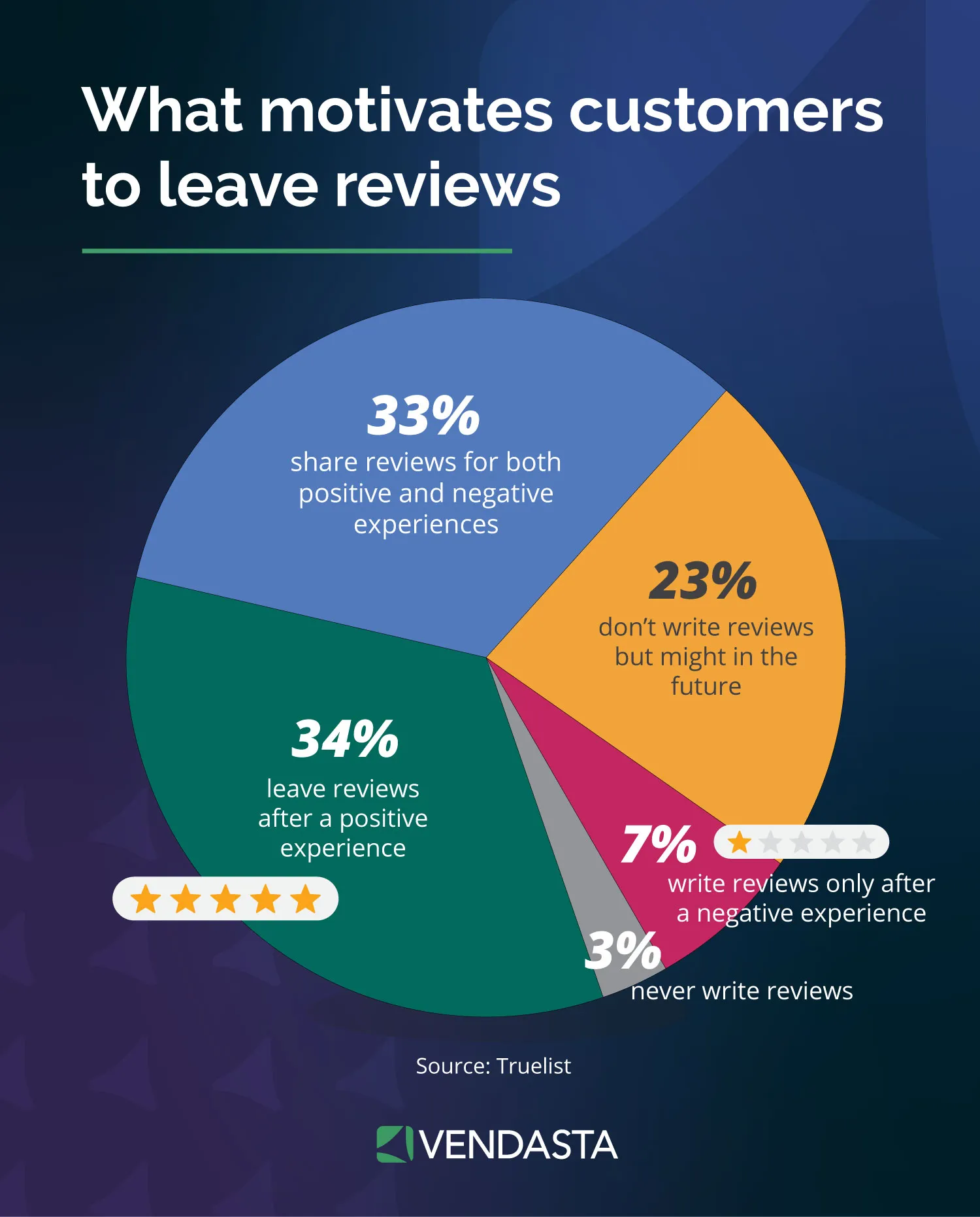
In SOCi’s 2026 Local Discovery Index survey, reported in Search Engine Land, 87% of consumers said they would consider revising a negative review to a positive one after a helpful reply.
Never buy reviews or offer incentives for them. The Federal Trade Commission’s (FTC) Consumer Reviews and Testimonials Rule lets courts impose civil penalties for knowing violations, and the current maximum is $53,088 per violation.
Don’t gate reviews either. Google’s policy bans selectively soliciting positive reviews, and Yelp asks businesses not to request reviews at all. On Google, ask every customer, not only those likely to leave positive reviews.
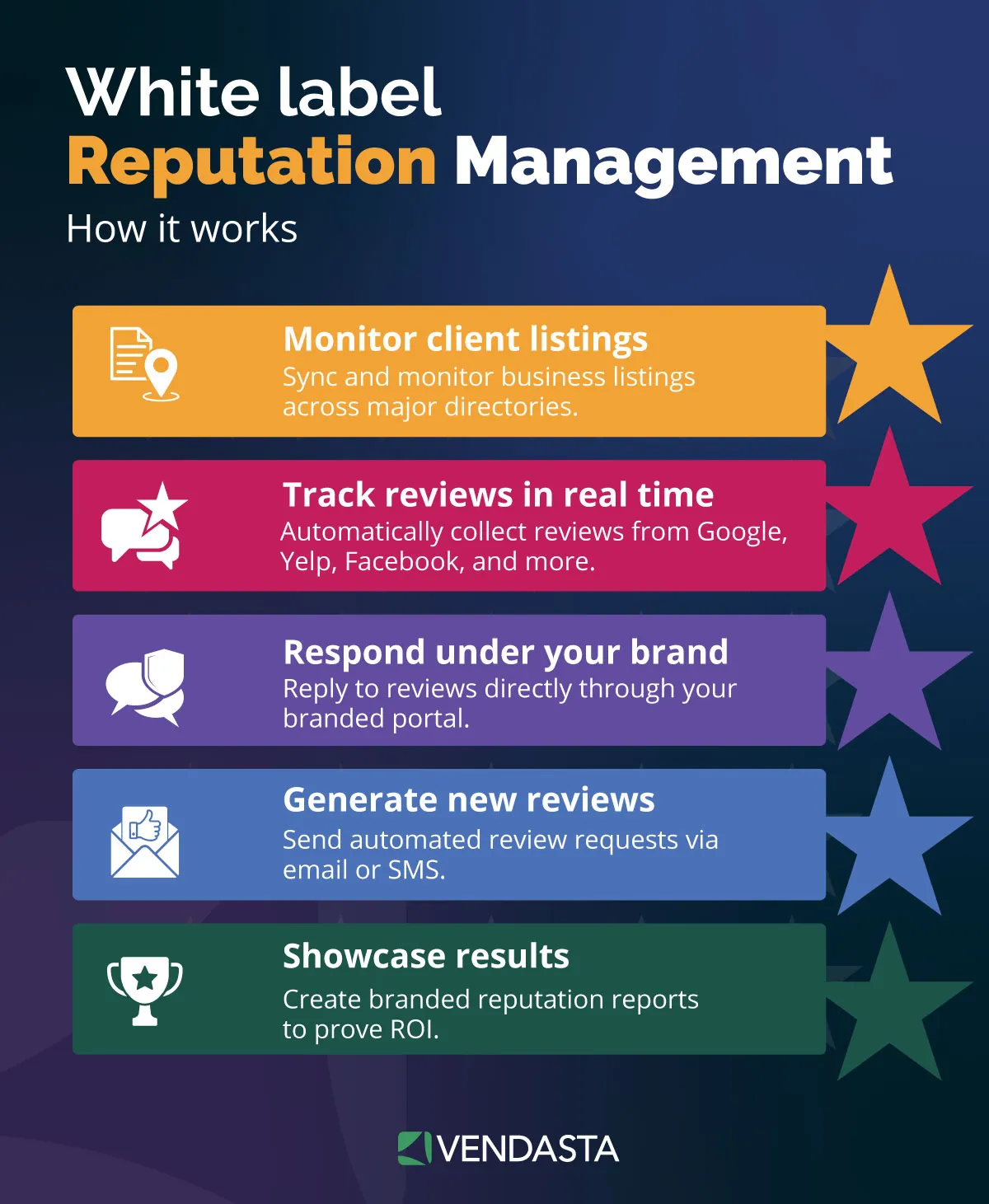
AI Reputation Specialist responds to Google and Facebook reviews in the reviewer’s language under configurable rules, such as rating thresholds, delays, and approval workflows. Full automation requires Reputation AI Premium, as do automated review requests and net promoter score (NPS) surveys.
Franchisors can roll out white-label reputation management to every store under one reply policy. Because Business App is white-label, the franchisor’s brand appears on every location’s dashboard.
Brand Reputation Crisis Examples (And What We Can Learn)
Real-world incidents offer valuable lessons on the importance of effective brand reputation crisis management. Let’s explore a few notable cases:
Example 1: United Airlines Passenger Incident
In April 2017, United Airlines faced intense backlash when a passenger, Dr. David Dao, was forcibly removed from an overbooked flight. The incident, captured on video, went viral, leading to widespread criticism of the airline’s handling of the situation. Initial responses from United’s CEO were perceived as inadequate, further exacerbating the public’s negative perception.
Key Takeaways:
- Respond promptly and empathetically.
- Acknowledge mistakes and take responsibility.
- Ensure internal communications align with public messaging.
Example 2: Samsung Galaxy Note 7 Recall
Samsung’s 2016 release of the Galaxy Note 7 was marred by reports of the device catching fire due to battery defects. After initial attempts to rectify the issue, the company ultimately issued a global recall and ceased production of the device. Samsung’s transparent communication and decisive actions were pivotal in managing the crisis and restoring consumer trust.
Key Takeaways:
- Prioritize customer safety above all.
- Communicate transparently and regularly.
- Take swift action to address product issues.
Example 3: Small Business Review Attack
A small, family-owned pizzeria became the target of a coordinated fake review campaign due to a political controversy unrelated to its operations. The sudden influx of negative reviews severely impacted the business’s reputation and customer trust.
Key Takeaways:
- Monitor online reviews consistently.
- Have protocols in place to address fake reviews.
- Engage with customers to rebuild trust.
As mentioned earlier, Delta Air Lines faced a high-stakes crisis in July 2024.
A critical systems failure led to mass cancellations, public backlash, and heavy media coverage—resulting in over 7,000 flights canceled and an estimated $550 million in losses within a week.
What began as a technical outage quickly turned into a full-scale brand reputation crisis.
Here’s what that looked like, day by day:

This timeline illustrates the escalation and resolution of Delta Air Lines’ operational crisis in July 2024, showing just how critical swift response and clear communication are in protecting brand reputation during unexpected disruptions.
If it can happen to Delta, it can happen to any business—unless you’re ready.
Real Results: How Apartments.com Centralized Reputation Management at Scale
It’s one thing to talk about strategy. It’s another to see it work at scale.
If you manage reputation for many locations or client properties, you know how quickly things can spiral when every service runs on a different tool. Reviews get missed. Responses get delayed. Negative sentiment spreads before anyone notices.
That’s the position Apartments.com was in. It used different vendors, tools, and logins for its services, and as it added vendors, operations became increasingly fragmented. For one client alone, American Landmark, Apartments.com manages more than 100 properties.

Apartments.com: Scaling Reputation Services With Vendasta
Apartments.com partnered with Vendasta to bring reputation, social, and local SEO tools under one login for its customers. Over a partnership of more than 10 years, it has:
- Increased review volume by 1112%
- Generated 1.7 million reviews
- Posted 404,000 review responses
- Grown review citations by 58% from 2021 to 2022
Erica Byrum, Assistant Vice President of Social Media at Apartments.com, described the goal of centralizing with Vendasta this way:
“One central source of truth, one login, one set of tools, and one team of experts.”

How?
- Single sign-on (SSO), so customers reach social and reputation tools from one login
- Vendasta’s reputation management, Social AI, and Local SEO tools in one place
- Sales automation that enrolls prospects in drip campaigns automatically
For crisis response, that centralization is the groundwork. When every location runs on the same small business software for reviews, social, and listings, corporate can spot a pile-on early and answer it at the same speed everywhere.
If it works for Apartments.com, imagine what it can do for your network.
Read the full Apartments.com case study.
Crisis Frameworks Readers Ask About: The 5 C’s and the 5 P’s
Neither framework has a single canonical list. The 5 P’s appear in the Philippine government’s Executive Order No. 82 (2012), and the common versions of both map to this playbook:
| Framework | Element | Playbook phase |
|---|---|---|
| 5 C’s | Concern | Holding statement acknowledgment |
| 5 C’s | Clarity | Verified facts |
| 5 C’s | Commitment | Next update time |
| 5 C’s | Competency | Corrective action |
| 5 C’s | Confidence | Spokesperson |
| 5 P’s | Predict, Prevent | Detection |
| 5 P’s | Prepare, Perform | Triage, holding statement, escalation |
| 5 P’s | Post-Action and Assessment | Post-mortem |
Use the 5 C’s as a checklist when drafting the holding statement.
Examples: What Johnson & Johnson and JetBlue Decided
- Johnson & Johnson (Tylenol): In 1982, the company recalled 31 million bottles of Tylenol capsules nationwide. Tylenol’s share of the analgesic market fell from 37% to 7%, then climbed back to 30% about a year later. Copy: pull the affected product or pause the affected location early, and fix the root cause in public.
- JetBlue: A Valentine’s Day 2007 ice storm left some planes stuck on runways for more than 10 hours. CEO David Neeleman apologized publicly, and within a week the airline announced a passenger bill of rights with set compensation, up to a full-ticket voucher for passengers stranded more than four hours. Copy: put the executive sponsor where the story runs and publish restitution with numbers.
Proving Recovery: Metrics, Reporting Cadence and the Post-Mortem
Report five metrics against the pre-crisis baseline:
- Share of voice against category mentions
- Net sentiment, calculated as (positive − negative) / (positive + negative)
- Branded impressions and clicks in Google Search Console
- Average review rating per location
- NPS
Analyze media coverage hourly for the first 48 hours. After that, report daily to day 30 and weekly until baseline returns.
End the post-mortem with a published policy change and a restitution amount. Recovery takes time: in a University of Kansas study, about half of companies did not recover to their previous reputation levels, and those that did took about two years on average.
After closure, ask every customer for Google reviews and track each location’s weekly review volume and local rank until both return to baseline. Locations see their numbers in the Executive Report, and you can collect NPS through NPS automation.
Run Your Brand Reputation Crisis Management Playbook With Confidence
Brand reputation crisis management rests on five ordered decisions. Settle who detects the signal, how severe it scores, what the holding statement says, whom you call, and which metrics you’ll use to demonstrate recovery to the board.
- Corporate sets thresholds and reply rules once, then names the escalation roster. Location staff keep local context in replies, and staff on site handle safety and private follow-up.
- Before the next incident, record baselines and load the holding-statement template. Name every owner.
On Vendasta’s AI Customer Acquisition and Engagement Platform, Reputation AI gives corporate the monitoring view, and AI Reputation Specialist handles location replies under your rules. Corporate can use Partner Center account templates to deploy one configuration to every store, so no location’s reviews go unanswered.
The Starter plan requires $99 in monthly product spend, and the Professional, Premium, and Custom Enterprise plans add seats and volume commitments for larger networks. You can discuss network pricing questions during the demo. To see how Vendasta can address this workflow in your business, book a Vendasta demo.
Brand Reputation Crisis Management FAQs
1. What are the 5 C’s of crisis communication?
No canonical list exists. The common version is Concern, Commitment, Competency, Clarity, and Confidence; variants add Care or Credibility. In a holding statement, Concern is the acknowledgment, Clarity the facts, Commitment the update time, Competency the fix, and Confidence the spokesperson.
2. What are the 5 P’s of crisis management?
The Philippine government’s Executive Order No. 82 (2012) lists Predict, Prevent, Prepare, Perform, and Post-Action and Assessment. Commercial variants swap in Practice or People. In this playbook, Predict and Prevent cover detection, Prepare and Perform cover the response, and Post-Action and Assessment is the post-mortem.
3. How does reputation management differ from crisis communication?
Reputation management means daily review monitoring and replies, along with keeping listings current. Crisis communication releases information once a live threat exists. Crisis management covers pre-crisis preparation and response, followed by post-crisis work. A bad review is routine; the same complaint across several locations is a rule-of-thumb crisis signal.
4. What goes in a holding statement?
A holding statement runs about 100 words and covers an acknowledgment, verified facts, open questions, the action under way, the next update time, and a contact, plus an independent-ownership line for franchise networks. Post it within the first hour, after communications, legal and the relevant subject-matter lead approve it.
5. Which tools monitor a brand reputation crisis across locations?
Brandwatch, Sprout Social, Meltwater, Cision, and Google Alerts cover press and social monitoring or search alerts; confirm any tool can group results by location. Vendasta Reputation AI monitors reviews across 100+ sources, and Business App’s multi-location view rolls up results across the network. Capture each location’s rating and weekly review volume before trouble starts.
6. Should corporate speak for a location or coach the franchisee?
Corporate should speak through one designated spokesperson while the location handles safety and private follow-up. Ask local staff to refer media questions to corporate, send franchisees approved talking points, and choose the spokesperson for command of the issue rather than rank.
7. How do you de-escalate negative reviews at one location?
Name the problem, state the fix, move the reviewer to a private channel, and post a public follow-up. Report only policy violations. Never pay for reviews; FTC civil penalties for knowing violations of its reviews rule can reach $53,088 per violation. On Google, ask all customers alike.
8. Which companies handled a brand reputation crisis well?
Johnson & Johnson recalled 31 million bottles of Tylenol capsules, and Tylenol’s market share recovered to 30% about a year later. JetBlue’s CEO apologized publicly, and the airline announced a passenger bill of rights with set compensation within a week. Networks should fix early, put the executive in front of the public, and publish restitution.
9. How long does brand reputation recovery take?
In a University of Kansas study, about half of companies did not recover to their previous reputation levels, and those that did took about two years on average. This guide recommends hourly media checks for 48 hours, then daily reporting to day 30 and weekly reporting until baseline returns.
10. How much does Vendasta cost for a network?
For channel partners such as franchisors, the Starter plan requires $99 in monthly product spend, credited dollar-for-dollar against the platform subscription, which can reach $0. Wholesale discounts scale with plan tier and volume. Network pricing also depends on product editions; request a quote through the demo request page.