About Us
 Careers
 Leadership
 Board
Board Newsroom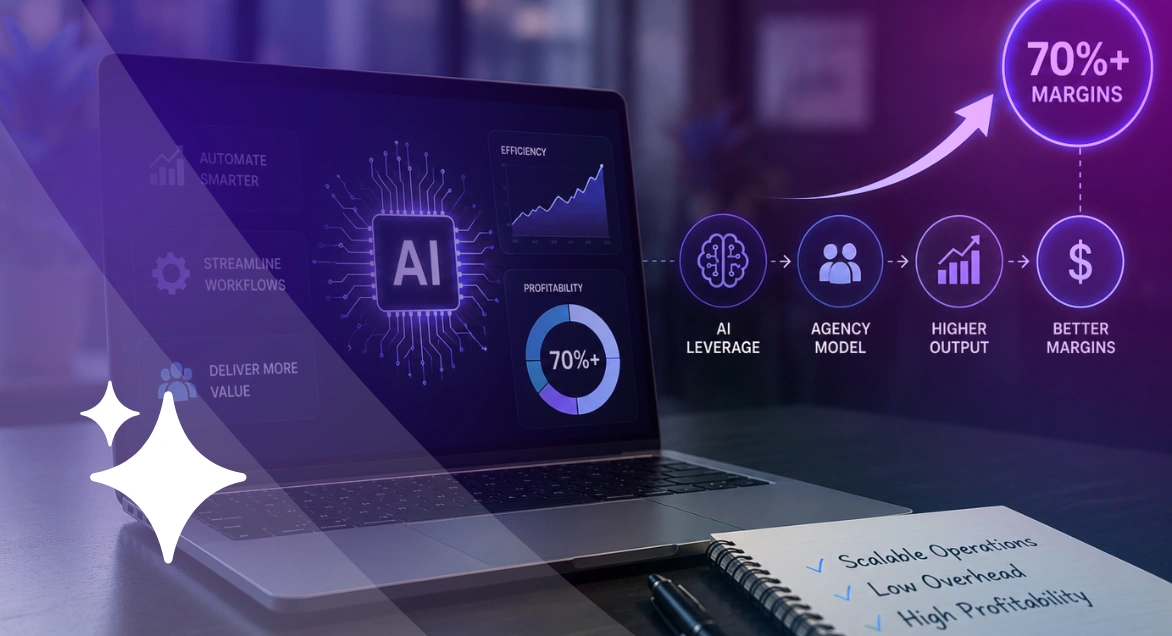
The AI agency business model is shifting fast, and most agencies are still stuck in the old version of it: low-margin, service-heavy work that scales headcount just as fast as revenue.
Owners bring on more clients, then bring on more people to service them, and the operational complexity grows right alongside the invoices. It feels like progress, but it rarely translates into a business that scales or sells.
Isabella Bedoya knows that trap firsthand. She built one of the first agencies in the world licensed to sell AI voice agents, growing it into a $1.2 million business after starting with $300 in her bank account and $50,000 in student debt.
But when she tried to sell it, the answer from M&A lawyers was consistent: the business was still human-dependent. Every new client meant more hires, and that made the agency far less appealing to buyers than the AI-powered image suggested.
That wake-up call points to a shift already underway across the industry. This blog breaks down the model behind 70 to 80% margins, and shows agencies exactly how to move from trading hours for dollars to building scalable, recurring AI revenue.
Automate every step of the customer journey with AI employees
TL;DR
- The AI agency business model is shifting away from custom services and toward productized AI employees.
- Agencies that adopt AI SaaS-style delivery can realistically target 70 to 80% margins, compared to the 15 to 30% margins typical of traditional service work.
- Vendasta’s AI Workforce gives agencies a plug-and-play way to productize this shift, with white-label AI employees like the AI Receptionist and AI Salesperson ready to deploy under an agency’s own brand.
What is an AI Agency Business Model
An AI agency business model is an agency structure built around delivering marketing, sales, or operational outcomes primarily through AI automation and AI agents rather than manual labor.
This is often referred to as an AI marketing agency, where service delivery shifts from manual execution to AI-powered systems that scale without increasing headcount.
Revenue typically comes from two layers: implementation (setting the AI up for a client) and ongoing recurring fees (keeping it running, supported, and improving). Instead of billing for hours of human execution, the agency is billing for a system that performs the work.

How it Differs From Traditional Agencies
A traditional agency is built around people. Growth means adding account managers, strategists, and specialists to keep pace with client volume. An AI agency model flips that relationship. Automation and agents absorb the repetitive work, so the team can stay small while client volume grows.
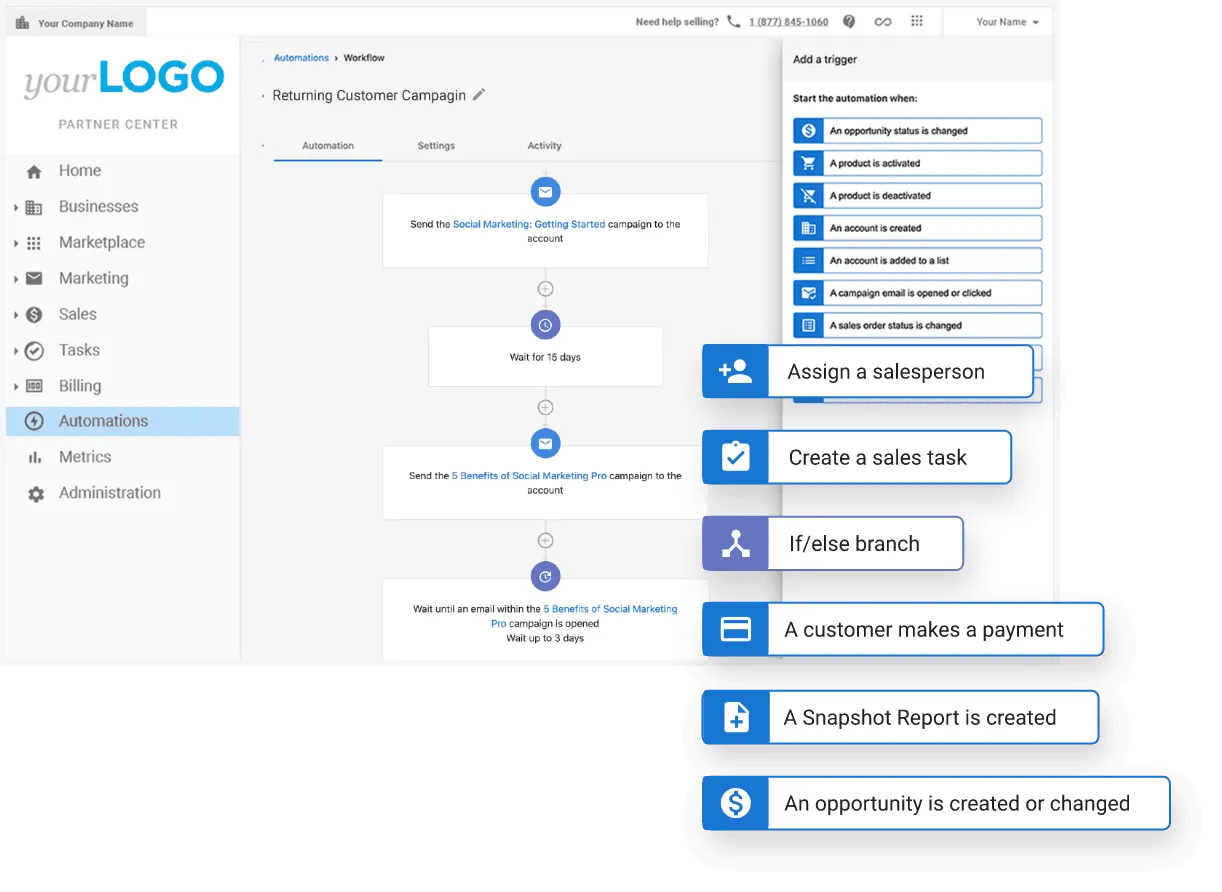
You’ll see this model described under a few different names depending on who’s talking about it, including the AI automation agency model, the AI-powered marketing agency, and the broader distinction between a service-based agency and a productized agency.
Core Components of a Modern AI Agency
Four building blocks tend to show up in every version of this model:
- AI tools and workflows that handle specific, repeatable tasks
- AI employees (agents) that take over full functions rather than single steps
- Data and integrations that let those agents act on real business information
- Recurring revenue systems that turn one-time setups into ongoing income
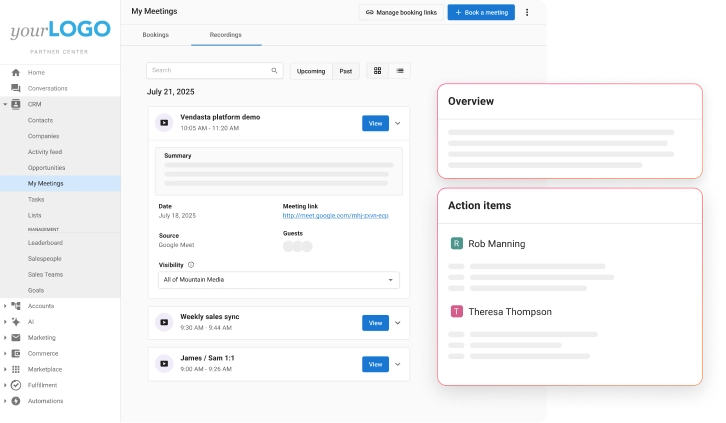
With CRM AI, agencies can ensure these agents operate on real-time customer data, enabling smarter conversations, better lead tracking, and improved conversion rates.
Why the traditional AI agency model breaks at scale
The “More Clients Equals More Humans” Problem
The core issue with a service-heavy AI agency is structural. Bedoya described exactly this pattern in her own business: the more clients she signed, the more people she needed to hire to deliver the work, even though the product itself was built on AI.
That relationship between client growth and headcount growth is what quietly erodes margin, no matter how advanced the underlying technology is.
Why Service-Based AI Agencies Get Low Multiples
This is also why buyers value the two models so differently. Bedoya pointed out that companies built by teams of five people or fewer were landing 10 to 20 times multiples, while agencies built on the traditional services model were closer to 2 times.
Investors and acquirers are pricing in predictability. A business that depends on a specific team to keep functioning is worth far less than one that runs on systems, because the systems don’t walk out the door and don’t need to scale headcount to scale revenue.
The Turning Point: Isabella Bedoya’s $1.2 Million Wake-Up Call
Bedoya’s own turning point came when she went looking for a valuation and found out her AI voice agent agency, despite being genuinely novel, was still fundamentally human-centric. That single conversation with M&A lawyers reframed how she thought about the business she’d spent a year building.
The lesson she took from it applies far beyond her own company: an agency that needs more people every time it adds a client has built a services business wearing an AI costume, not an AI SaaS company.
AI SaaS vs Agency: What’s the Real Difference
| Factor | AI agency | AI SaaS / productized model |
| Scalability | Limited by team capacity | High, systems absorb growth |
| Margins | 15 to 30% | 70 to 80% |
| Team size | Grows with client count | Stays small |
| Valuation | Lower multiple (around 2x) | Higher multiple (10 to 20x) |
| Revenue | Project-based | Recurring |
Why AI SaaS Models Win in 2026
Part of what’s driving this gap is the rise of what’s often called micro-SaaS: small teams solving one problem extremely well and monetizing it at scale.
Bedoya referenced an 18-year-old founder who built a calorie-tracking photo app to roughly $30 million in annual recurring revenue, and another tool that generated $80 million in six weeks by turning a photo into an AI selfie. Neither required a large team.
Both benefited from a flywheel effect where more users made the product better, the opposite of an agency model where onboarding a new client adds strain rather than value.
Can You Combine Both Models
Few agencies need to choose one model and abandon the other overnight. For those looking to start a digital marketing agency, this hybrid approach—combining services with productized AI—offers a faster path to profitability and scalability.
The more realistic path is a transition: start with services to fund the business and learn the market, layer in productized AI offers as they prove out, and eventually build toward a platform business that runs largely on its own.
Positioned this way, productization isn’t a pivot away from agency work, it’s the natural next stage of it.
The AI Agency Business Model That Scales: Productized AI Employees
What Are Productized AI Employees
Productized AI employees are AI agents packaged as standardized, repeatable solutions rather than custom builds for every client. Instead of scoping a unique automation project for each account, the agency sells a defined role, such as an AI receptionist, an AI sales assistant, or an AI support agent, and deploys a proven version of it with light customization per client.
Why AI Employees are the Highest-Leverage Offer
Bedoya’s framing here is the crux of the whole model: it’s far easier to sell a business on replacing a cost it already understands than to sell it on a new tool it has to learn to use. If you’re pitching AI training or a custom GPT, the client still has to do the work of applying it.
If you’re pitching an AI employee, you’re comparing your price directly against what they already pay a person to do that job, whether that’s $60,000, $80,000, or $100,000 a year. That comparison does most of the selling for you, provided the results back it up.
How Vendasta Enables This Model
This is exactly the gap Vendasta’s AI Workforce is built to close for agencies. Rather than building agents from scratch for every client, agencies can deploy plug-and-play AI employees, such as an AI Receptionist or AI Salesperson, white-labeled under their own brand, and manage all of it from one centralized dashboard.
That infrastructure is what turns “we can build you an AI agent” into a repeatable, sellable product line.

The 3 AI Agents Businesses are Paying the Most for in 2026
1. Speed-To-Lead AI Agent
When a lead opts in through a paid ad, the standard follow-up window is often 48 hours or longer. A speed-to-lead agent calls the moment someone opts in.
For any agency already running ads for clients, this is one of the simplest upsells available, since the value is immediate and easy to measure against conversion rates.
2. AI Receptionist
Receptionist agents route inbound calls and answer common questions. The advice Bedoya gave here matters for how agencies should scope the work: don’t try to automate every possible question on day one.

Start with the top three to five questions a business actually gets, prove that out, and expand from there rather than overbuilding a knowledge base upfront.
3. After-Hours AI Agent
Service businesses lose a meaningful share of inbound calls simply because no one is available on evenings, weekends, or holidays.
An after-hours agent captures those calls instead of letting them go to voicemail, which is often an easy, low-friction add-on for agencies that already manage a client’s phone or lead systems.
Watch: Isabella Bedoya breaks down these three AI agents live
Hear Bedoya explain why speed-to-lead, AI receptionists, and after-hours agents are the easiest sells in the AI agency business model right now, and how she scopes each one to avoid overbuilding on the first client.
Why These Agents Drive Immediate ROI
Each of these three agents ties directly to revenue rather than internal efficiency, which is why they sell more easily than general-purpose automation. A tool that saves a business a few hours of admin work is a nice-to-have.
An agent that recovers leads a business was actively losing is a line item the owner can quantify. Revenue-generating AI sells better than efficiency tools, and that distinction should guide which agents an agency leads with.
How to Productize AI Services Into Scalable Offers
Step 1: Start With a Niche
Bedoya’s team saw this play out directly when implementing AI voice agents for solar companies. The first client was the hardest, because the team was still figuring out the process.
By the second and third client in the same niche, it became close to copy-paste. Verticalizing isn’t just a marketing choice, it’s what makes the delivery side repeatable.
Step 2: Build a Minimum Viable AI Agent
Resist the urge to automate everything at once. Identify the three to five use cases that matter most to a given niche and build a tight, working version of the agent around those before layering in more capability.
Step 3: Package it as a Product, Not a Service
A productized AI service has a fixed scope, a defined deliverable, and a repeatable setup process, in contrast to open-ended custom work that gets re-scoped for every client. This is the shift that makes an offer sellable at volume instead of one relationship at a time.
Step 4: Add Recurring Revenue Layers
Once the core agent is live, layer in monthly retainers for maintenance, usage-based pricing where relevant, and ongoing optimization. This is also where a lot of agencies get caught out early.
Bedoya’s first AI employee was priced at $1,000 a month, and within two months she was fielding a steady stream of support requests she hadn’t priced in. The fix wasn’t lowering the workload, it was building support and maintenance into the offer from the start.
Pricing Strategy: Why Most AI Agencies Undercharge
The Biggest Pricing Mistake
Without a clear value story, most business owners default to treating an AI agent like a tool rather than a hire, which is why Bedoya has seen agents sold for as little as $100 to $500 on freelance marketplaces.
That price reflects what a chatbot looks like from the outside, not what it’s actually worth once it’s replacing a role.
Value-Based Pricing Framework
The fix is comparing apples to apples: what does it cost the business to handle this task today, whether through a hire, a missed-lead problem, or wasted ad spend, versus what an AI agent can recover or replace.
Bedoya described working with a company spending $20,000 a month on Google Ads with no CRM, tracking leads on paper, and converting at under 0.1%. Once that gap was quantified, the pricing conversation shifted from “what does a bot cost” to “what is this problem already costing you.”
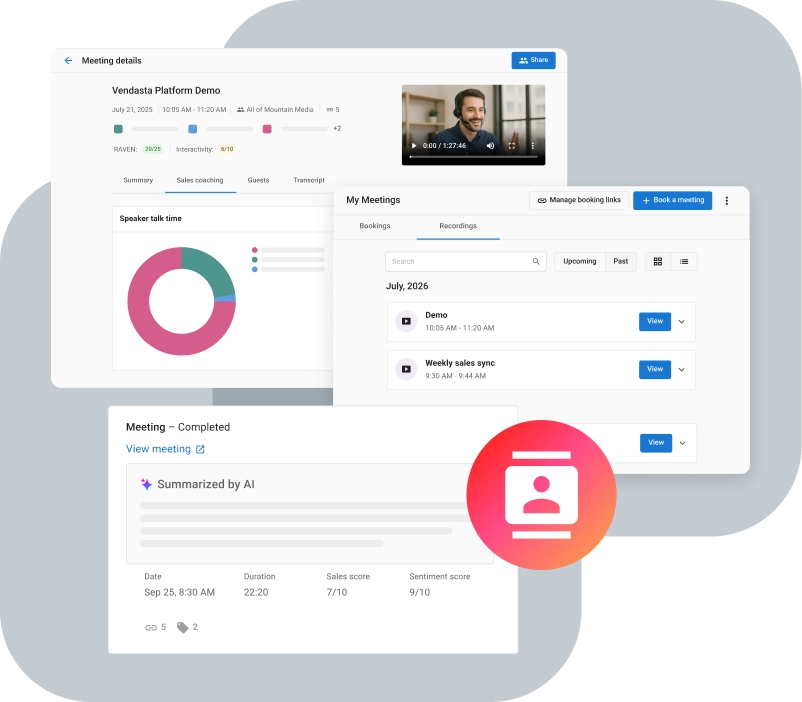
Real Pricing Benchmarks
The difference between an agency billing $3,000 a month and one billing $50,000 a month rarely comes down to audience size, effort, or which AI tools are in use. According to Bedoya, it comes down to how the offer is stacked and priced against value.
In practice, that spread has shown up as everything from marketplace listings around $500 to six-figure annual retainers for the same underlying agent type, sold with a stronger value story attached.
AI Agency Margins in 2026: Can You Really Hit 70 to 80%
Where the Margin Expansion Comes From
Margin expansion in this model comes from the same three levers as any SaaS business: automation reduces the labor required per client, productization reduces the customization required per client, and recurring revenue reduces the cost of re-selling every month.
Comparing Traditional vs AI Margins
Traditional service agencies typically run 15 to 30% margins because so much of the delivery cost is human time. Bedoya has pointed to 70 to 80% as a realistic target once an agency shifts to a productized, AI-employee-based model, margins that put these businesses in the same range as top SaaS companies rather than traditional agencies.
What You Need to Achieve High Margins
Three things tend to separate agencies that hit those margins from ones that don’t: a tight niche focus that makes delivery repeatable, real productization rather than case-by-case custom builds, and a recurring revenue layer that turns setup fees into ongoing income instead of one-time payouts.
How to Scale an AI Agency Without Hiring More People
Systems Over People
The agencies escaping the “more clients, more hires” cycle are the ones replacing manual workflows with systems before they need the next hire, not after.
Build Repeatable Delivery Engines
Standard operating procedures paired with AI-driven workflows are what let a small team support a growing client base without a proportional increase in headcount.
Use Platforms Like Vendasta to Scale Faster
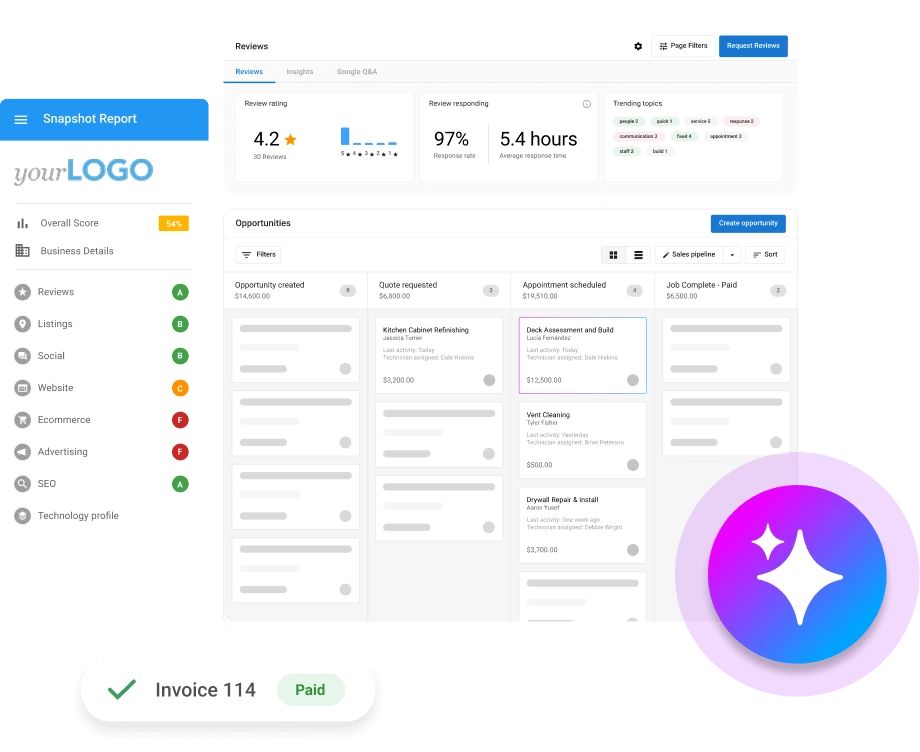
This is where a centralized platform earns its keep. Vendasta gives agencies white-label AI employees, automation, and a single dashboard to manage delivery across clients, which removes a large chunk of the infrastructure agencies would otherwise have to build themselves before they can scale.
AI Agency Exit Strategy: How to Build For a 10 to 20x Multiple
What Buyers Look For
Acquirers consistently price in two things: recurring revenue and low human dependency. An agency that needs a specific team to keep functioning is a bigger risk to a buyer than one that runs on documented, repeatable systems.
Why Productized Agencies Sell Better
Bedoya’s own experience is the clearest evidence here. Her agency was novel and technically impressive, but because it still required more hires for every new client, it didn’t command the valuation she expected.
Businesses built around productized delivery avoid that trap because the model doesn’t need to grow the team to grow revenue.
How to Position Your Agency for Acquisition
The clearest path runs through the same services-to-product-to-platform progression discussed earlier. Agencies that document their delivery process, build recurring revenue into every offer, and reduce their reliance on specific people are the ones positioned for the higher end of that multiple range if and when they decide to sell.
The Future of the AI Agency Business Model
The shift underway isn’t subtle. Agencies that keep operating as service businesses with AI features bolted on will keep competing on the same low-margin terms they always have.
The ones that behave like SaaS companies, built around niche focus, productized AI employees, and recurring revenue, are the ones positioned to capture the margin and valuation gap Bedoya’s story makes so clear.
If you’re ready to move from services to a scalable, AI-employee-driven model, explore Vendasta’s AI Workforce or schedule a demo to see how white-label AI employees can fit into your existing client base.
AI Agency Business Model FAQs
1. What is an AI agency business model?
An AI agency business model uses artificial intelligence to deliver marketing, sales, or operational services more efficiently than a traditional, labor-heavy agency. It combines automation, AI agents, and recurring revenue systems, and platforms like Vendasta help agencies scale it with white-label AI employees and centralized tools.
2. How is an AI agency different from a traditional agency?
Traditional agencies rely on manual work and headcount growth to serve more clients. AI agencies use automation and AI agents to deliver the same outcomes with a smaller team, which reduces costs and typically improves margins as client volume grows.
3. What are productized AI services?
Productized AI services are standardized, repeatable AI solutions packaged like products instead of scoped individually for each client. AI receptionists, speed-to-lead agents, and after-hours agents are common examples, and this structure is what makes recurring revenue realistic at scale.
4. How do AI agencies make money?
Most AI agencies combine a setup or implementation fee with an ongoing monthly retainer, and some layer in usage-based pricing on top. The most scalable version of this is a recurring revenue model, which platforms like Vendasta support through subscription-based AI products agencies can resell.
5. What are the best niches for an AI agency?
Industries with repetitive, high-volume workflows tend to work best, including home services, real estate, legal, healthcare, and solar. Starting within a single niche makes it far easier to build a repeatable delivery process before expanding into others.
6. What are AI employees in an agency model?
AI employees are agents that take over a defined role, such as answering inbound calls, qualifying leads, or booking appointments, rather than performing a single automated task. Vendasta’s AI Workforce includes roles like AI Receptionists and AI Salespeople that agencies can deploy under their own brand.
7. How can I scale an AI agency?
Scaling comes down to productizing offers instead of customizing every project, automating delivery workflows, and building recurring revenue into every client relationship rather than relying on one-time setup fees.
8. What are typical AI agency margins in 2026?
Agencies using a productized, AI-employee-based model can realistically target 70 to 80% margins, compared to the 15 to 30% margins typical of traditional service-based agencies. The gap comes primarily from reduced labor cost per client.
9. How do you price AI services correctly?
Price against the value the agent replaces rather than the effort it took to build. Comparing an AI employee’s cost to the salary, ad spend, or lost revenue it’s replacing supports premium pricing while still delivering a clear ROI story to the client.
10. Can an AI agency be sold or acquired?
Yes, but valuation depends heavily on the underlying model. Agencies with recurring revenue and low dependency on specific people tend to command significantly higher multiples than service-heavy agencies, which typically sell at lower valuations due to buyer risk around retention and delivery continuity.