 About Us
 Careers
 Leadership
 Board
 Newsroom

How to sell artificial intelligence (AI) voice agents starts with one risk: live AI phone conversations sit at the riskiest end of a local business owner’s trust ladder, so the most impressive voice demo is often the one that loses the deal.
Knowing how to sell AI voice agents comes down to selling the outcome: never missing a call and capturing after-hours leads, with the voice technology kept in the background. Vendasta built that approach from research on 7,000 local businesses, which combined owner surveys, observed onboarding sessions, lifecycle data, and sales call transcripts.
This guide is for agency owners who keep losing voice agent deals in the first conversation. It covers which industries to target, outcome-first pitch language, trust and price objections, recurring packaging, and how to expand accounts after the first sale.
Watch the full breakdown from Vendasta:
Replace busy work with AI employees that take action
TL;DR
- Outcome language wins far more interest: Pitched as an “AI receptionist,” voice agents drew 4% interest from local business owners, while outcome framing led 81% to call it an agency’s most valuable offer.
- Build trust before going fully hands-off: Start the voice agent on after-hours and overflow calls, log every conversation, and deliver a real win within 48 hours.
- Treat missed calls as the doorway: Businesses that expand beyond their first product have more than 6x the lifetime value. Vendasta’s AI Receptionist handles the first step, answering calls 24/7, capturing leads, and booking appointments.
Why Most Voice Agent Pitches Die in the First Five Minutes
Most voice agent pitches fail on the label. In Vendasta’s research, describing the offer as an “AI receptionist” drew interest from 4% of owners. Describing the same service by its outcome, getting more customers and never missing a call, led 81% to call it the most valuable thing an agency could offer.
The technology was identical in both cases. Owners were reacting to language that sounded technical, unfamiliar, and risky.
Sales transcripts explain why. Half of the owners in the analyzed calls named trust, rather than price, as their biggest barrier.
They have heard about chatbots giving customers wrong answers and automated voices making a family business sound cold. For many local businesses, that personal connection is why customers pick them, so an “AI receptionist” pitch can sound like a plan to replace the part of the business people trust.
Before You Pitch: Pick Industries Where a Missed Call Is a Missed Job
Target trades where one unanswered call costs a booked job, because a voice agent’s value is immediate and easy to prove there. Vendasta’s team ranks industries using its outreach and lifecycle data:
- Plumbing, electrical, and HVAC: These performed best for outreach, with plumbing and electrical leading and HVAC close behind.
- Health and medical: These businesses delivered the highest lifetime value.
- Education: Education clients stayed the longest.
- Hair salons, nail salons, and handyman services: These signed faster but left sooner.
Build your pipeline around who gets the clearest value and stays, rather than who says yes fastest. For more on choosing verticals, see this guide to the best niches for an AI automation agency.
How to Sell AI Voice Agents: The Five-Step System
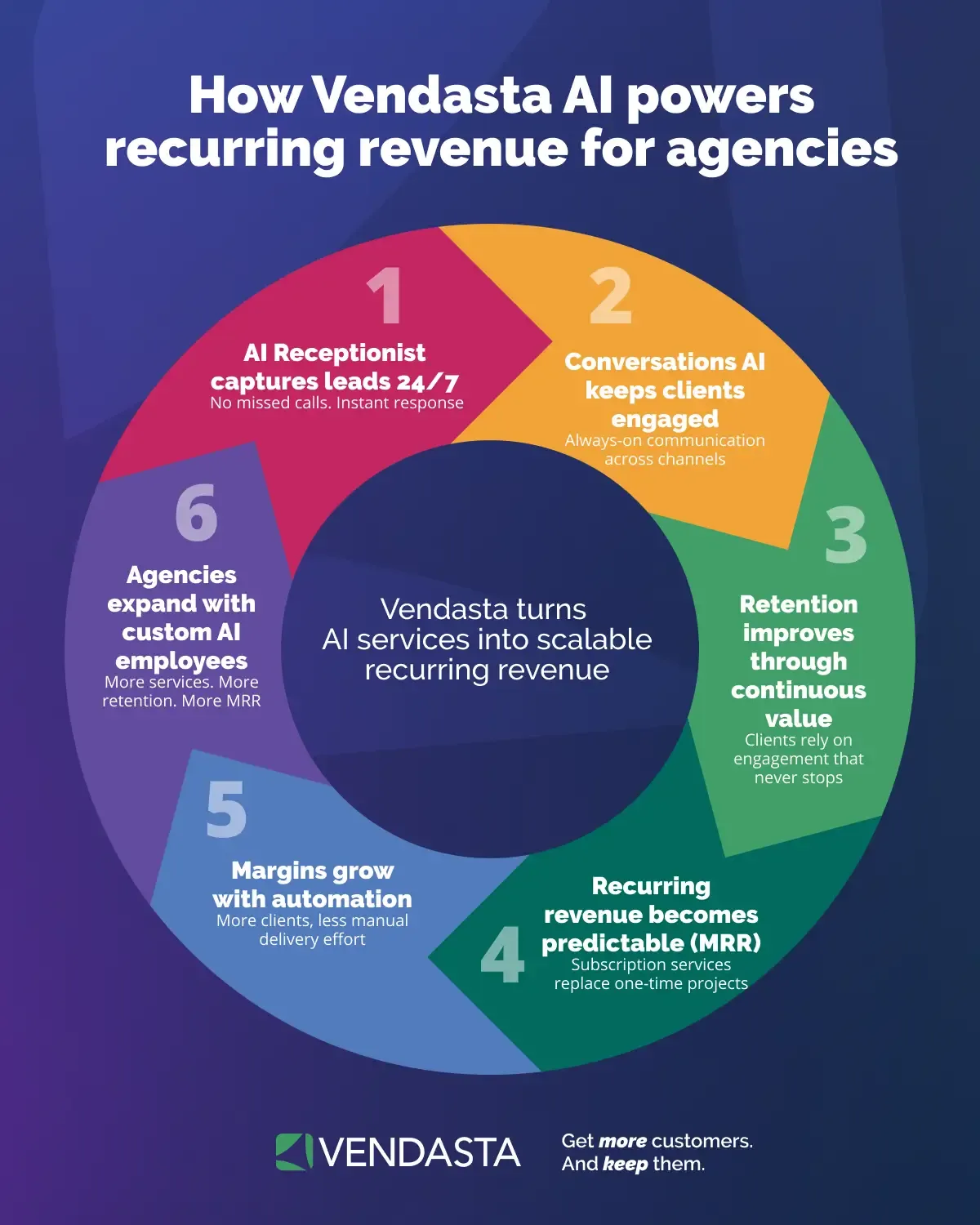
The five steps are to be the guide, sell relief, climb the trust ladder, create a win within 48 hours, and treat the first sale as a doorway to expansion. Vendasta calls its voice and chat agents AI Employees, and the system works for any of them, but voice agents need the most care because they sit at the high-risk end of owner trust.
The approach holds up at volume. One partner agency closed $745,000 in AI agent sales to local businesses; more than half became monthly recurring revenue, and the agency achieved 100% retention.
Step 1: Be the Guide, Not Another Software Vendor
Only 16% of owners want to be left alone with a self-serve product. The rest want guided setup or someone doing it with them from the start, while most software companies hand over a login and walk away.
In one observed onboarding session, an owner given a capable platform didn’t know where to begin within seconds. Your offer should feel done for them: you configure the voice agent, check in during the first weeks, answer questions fast, and promise they will never be left alone to figure it out.
Setup time is the gotcha. If every voice agent needs three weeks of custom configuration, done-for-you becomes a bottleneck that caps how many clients your team can carry, so pick a platform where you adjust a working agent instead of building from zero.
Step 2: Sell Relief, Not Voice Technology
Owners buy relief: fewer missed calls, faster follow-up, and less admin at 9 p.m. Whether you’re figuring out how to sell AI receptionist services or a full voice agent, a strong AI sales pitch begins by translating each technical term into a result the owner already wants:
| Instead of | Say |
|---|---|
| AI receptionist | 24/7 lead capture |
| AI platform | Never miss another customer |
| AI automation | Fewer repetitive tasks for your team |
Open with questions tied to the owner’s own numbers, such as “What would it be worth if you never missed another after-hours call?” Then let the owner do the math.
For a roofer, one recovered call can book a $9,000 job, which sits inside the $7,500 to $14,000 national replacement range in Fixr’s cost guide. Against that, a $500 monthly plan is an easy decision. Keep the language consistent after the sale, because a relief pitch followed by a dashboard full of AI jargon undoes the trust you built.
Step 3: Climb the Trust Ladder
Owners are most comfortable with AI that drafts work for their approval, like a review response or follow-up text. They are least comfortable with live AI phone conversations and cold calls, where a mistake happens in front of the customer. Structure the offer in three stages:
- Everything is drafted, and the owner approves it.
- Routine tasks run automatically while the owner stays informed.
- The work goes hands-off only when the owner is ready.
A live call can’t be pre-approved, so voice needs an adaptation. Start the voice agent on after-hours or overflow calls that would otherwise hit voicemail, log every conversation as proof of performance for the owner to review, and widen coverage once they trust what they read. For drafted work like follow-ups and review replies, you can still promise: “Nothing reaches your customer without your approval.”
Skip the autonomous demo in the first meeting. A human-sounding agent making live calls wows the agency and often intimidates the owner.
Step 4: Create a Win Within 48 Hours
Willingness to pay tracks belief more than business size. Vendasta found similar businesses in the same industry, size, and city willing to pay very different amounts, and more than 1 in 4 already spend $300 or more a month. The deciding factor was belief that the offer would work.
When an owner says “too expensive,” don’t discount. The objection usually means they doubt the result, and a discount gives up revenue without fixing that.
Prove value instead. Clients who experienced a real win in the first 48 hours stayed, and the win should be a result, such as a text reading “We just captured an after-hours lead you would have missed.” Put the 48-hour promise in the pitch before the price appears.
Step 5: Treat the First Sale as a Doorway to Expansion
Only 46% of local businesses expand beyond their first product, but those that do have more than 6x the lifetime value, and churn nearly disappears. Vendasta’s separate study of 200,000 client relationships shows the same pattern: two-year retention is 30% with one product, rises roughly 20 percentage points with a second, and reaches 80% with four.
Show the expansion roadmap in the first pitch so the next step feels planned:
- Missed calls, handled by the voice agent
- Lead follow-up
- Review responses
- Reconnecting with past customers
Start with missed calls because they cause the most immediate pain, then add each layer after the client trusts the last. The wider playbook for selling AI to local businesses covers this sequencing across services.
Troubleshooting: Common Owner Objections and What to Say
Most objections are trust questions phrased another way, so answer the concern underneath:
| Objection | What it means | What to say |
|---|---|---|
| “It will sound robotic.” | Customers will think we cut corners. | It starts on after-hours and overflow calls that go to voicemail today, and you can review every logged call. |
| “My customers hate bots.” | I’ll lose the personal touch. | Callers get a clear path to a person, and the agent only covers calls you’d otherwise miss. |
| “It’s too expensive.” | I don’t believe it will work. | Run the math on one recovered job, then promise proof within 48 hours. No discount. |
| “I already have a receptionist.” | Will this replace my staff? | Your receptionist takes one call at a time and goes home at night. This covers overflow, lunch, nights, and weekends. |
| “What if it makes us look bad?” | I can’t undo a mistake in front of a customer. | Start on calls you’d lose anyway, review every conversation, and expand only when you’re comfortable. |
Build the human path into every pitch. Gartner’s customer survey found 87% of customers say companies using generative AI for service must provide access to a human agent. For more on how voice agents handle calls, see this explainer on AI voice agents.
How Vendasta Helps Agencies Sell AI Voice Agents
Vendasta gives agencies a voice agent they can deploy quickly, brand as their own, and expand from. Each capability maps to a step above:
- Around-the-clock lead capture: Vendasta’s AI Receptionist answers calls, web chats, texts, and messages 24/7, answers questions from business knowledge, captures and qualifies leads, and books appointments on real calendars.
- A reviewable record: AI Receptionist is part of Conversations AI, which logs every interaction to the CRM so owners can review calls as described in Step 3.
- Done-for-you at scale: AI Employees deploy in minutes instead of weeks, which makes a done-for-you offer and a 48-hour win realistic across your client book.
- A relief-first experience: White-label branding lets your agency use its own brand, product names, language, and dashboard, so clients see outcomes instead of AI jargon. Vendasta’s framework for selling AI agents covers packaging.
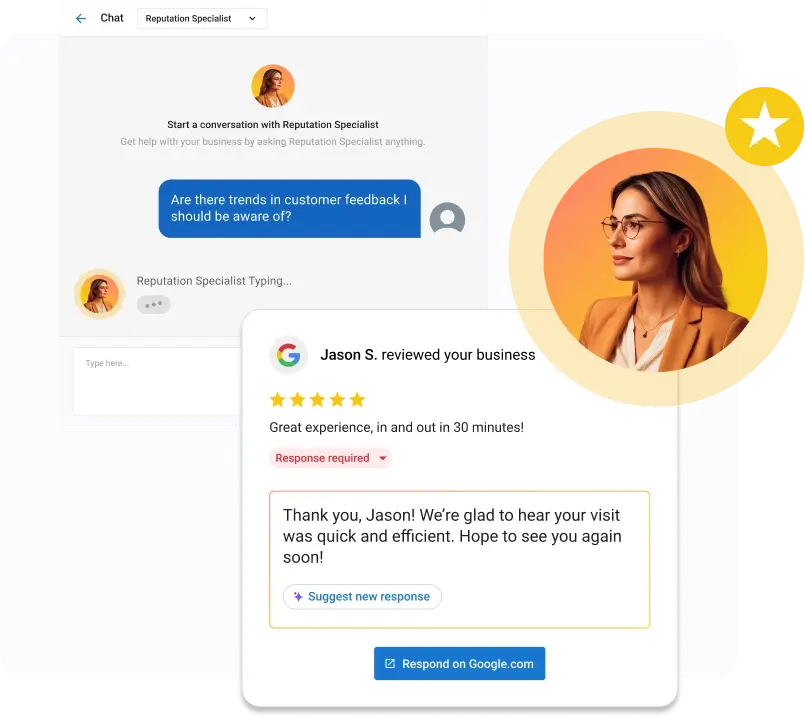
- The next rungs: The AI Reputation Specialist responds to reviews under rules you set, and the AI Social Media Manager publishes content, supporting expansion after the first sale.
Selling AI Voice Agents Starts With the Missed Call
Lead with missed calls and after-hours leads, keep the voice technology in the background, and let owners move from logged after-hours calls to wider coverage at their own pace. Package the offer as a recurring plan with the expansion roadmap visible from the first meeting, and prove value within 48 hours before price comes up.
Vendasta’s AI Receptionist covers the first rung, and the rest of the AI Workforce covers the next ones. To see how your agency can offer AI voice agents under its own brand, book a Vendasta demo.
How to Sell AI Voice Agents FAQs
1. Which local business industries are easiest to sell an AI voice agent to?
Plumbing, electrical, and HVAC businesses performed best for outreach in Vendasta’s research, because a missed call usually means a missed job and the value is easy to prove. Health and medical businesses delivered the highest lifetime value, and education clients stayed longest. Salons and handyman services signed quickly but left sooner.
2. How much should I charge a client for an AI voice agent?
Price it as a monthly plan anchored to the owner’s numbers, such as the value of one recovered job. Vendasta found similar businesses paid very different amounts, and more than 1 in 4 already spend $300 or more a month. Belief that the solution would work mattered more than size.
3. Should an AI receptionist be a monthly plan or an add-on?
Sell it as a recurring monthly plan and show the expansion roadmap in the same pitch: missed calls, then lead follow-up, review responses, and reconnecting with past customers. Only 46% of local businesses expand beyond their first product, but those that do have more than 6x the lifetime value.
4. What do I say when an owner worries the AI will sound robotic?
Treat it as a trust concern. Propose starting the voice agent on after-hours or overflow calls that currently reach voicemail, log every conversation for the owner to review, and give callers a clear path to a person. Widen coverage only once the owner likes what they hear.
5. What words should I avoid in an AI sales pitch?
Avoid labels that lead with technology. Say “24/7 lead capture” instead of “AI receptionist,” “never miss another customer” instead of “AI platform,” and “fewer repetitive tasks for your team” instead of “AI automation.” The receptionist label drew 4% interest, while the outcome framing reached 81%.
6. Can I white-label and resell a voice agent platform under my agency’s brand?
Yes. Vendasta’s white-label branding lets agencies sell AI Employees under their own brand, product names, language, and dashboard. Clients see outcomes like 24/7 lead capture from your agency instead of a vendor’s AI terminology, and your agency controls how the service is packaged and priced.
7. How do I prove ROI so clients keep paying?
Deliver a visible result within 48 hours, such as a text confirming an after-hours lead the business would have missed. Clients who experienced that kind of early win stayed. After that, report regularly from logged conversations and booked appointments so the owner sees ongoing proof.
8. Do I need a demo or free pilot to close the deal?
Lead with outcomes rather than a live autonomous demo, which can be the most intimidating version of the product for an owner. Walk through the missed-call math, explain the after-hours start and logged reviews, and promise proof within 48 hours. That early result does the convincing.
9. Are there legal rules for AI phone calls like call recording consent and TCPA?
Yes. The Federal Communications Commission treats AI-generated voices as artificial voices under the Telephone Consumer Protection Act, so outbound AI calls need prior express consent. States including California, Florida, and Pennsylvania require all-party consent to record calls. Have a lawyer review your disclosures and recording practices.
10. How do I sell AI automation services beyond voice?
Use the voice agent as the doorway. Once missed calls are handled and the owner trusts the logged results, add lead follow-up, review responses, and past-customer outreach. Learning how to sell AI services one proven problem at a time is how to sell AI automation that raises lifetime value.
