About Us
 Careers
 Leadership
 Board
 Newsroom
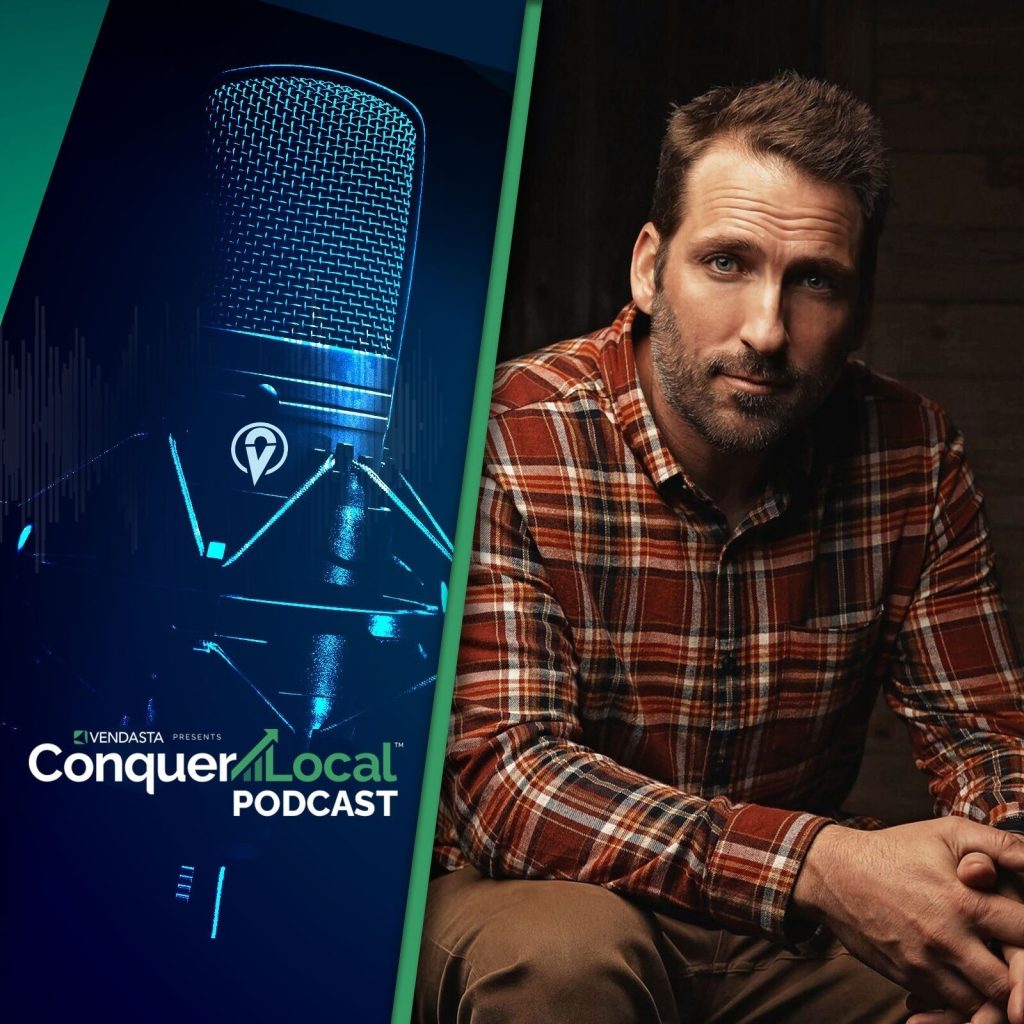
Join us for an exciting episode of the Conquer Local Podcast featuring Jason Swenk, renowned advisor and coach from Agency Mastery 360, specializing in accelerating the growth of marketing agencies.
Jason’s extensive knowledge and experience provide invaluable guidance to agencies seeking to scale. He authored the definitive book on building agencies from scratch to 8-figure powerhouses. And with his groundbreaking 8-system framework, Jason achieved remarkable success with his agency, collaborating with prestigious brands like AT&T, Hitachi, and Lotus Cars before selling it.
As the host of the acclaimed Smart Agency Master Class Podcast, Jason shares the strategies and stories from real agency owners, offering insights into what works in today’s agency landscape.
Don’t miss this exclusive opportunity to gain actionable insights and a roadmap to conquer the ever-evolving agency landscape. Tune in now to hear about Jason’s fascinating journey and discover the latest industry trends!
Register for the Agency Insights Report 2023: Early Access Event here, or copy and paste this URL in your browser: https://www.vendasta.com/content-library/webinars/agency-insights-report-event/
Transcript
Conquer Local. It’s really a breath of fresh air. Good times. I help leaders go from anxiety to authority under pressure. And then let’s go and get it. It’s an ecosystem. The hardest part here is going to be getting me to shut up on this one. Conquer Local with Vendasta, hosted by Jeff Tomlin. Welcome to the Conquer Local Podcast. Our show features successful sales leaders, marketers, thought leaders, and entrepreneurs who will inspire you with their success stories. Each episode is packed with practical strategies, as our guests share their secrets to achieving their dreams. Listen in to learn the highlights of their remarkable accomplishments and get the tips to revamp, rework, and reimagine your business.
Whether you’re a small business owner, a marketer, or aspiring entrepreneur, the Conquer Local Podcast is your ultimate guide to dominating your local market. Tune in now to take your business to the next level. I’m your new host, Jeff Tomlin. On this episode, we’re pleased to welcome Jason Swank. Jason is an agency advisor and coach that guides marketing agencies through a proven framework for growing their agency faster. He has written the book on growing an agency from nothing to eight figures. He is a sought-after advisor for agencies around the world by guiding them through an eight-system framework that worked for growing his agency and worked for brands like AT&T, Hitachi, and Lotus Cars.
And eventually, selling his agency. Jason currently hosts the Smart Agency Masterclass Podcast, the number one digital marketing agency owner podcast, for sharing the strategies and stories from real agency owners of what is working today in the agency world and how they got to where they are now. Get ready, Conkers, for Jason Swank coming up next on this week’s episode of the Conquer Local Podcast. Jason, it is a thrill to have you on the podcast. Thank you so much for carving out some of your valuable time to spend a few minutes with us here today. Yeah, thanks for having me on the show. Jason, you got started in this about the same time as I did, 1999.
Marketing back then, that was a different kettle of fish.
Yeah, it was a blast. I mean, it was kind of load up the internet on the AOL CDs and see what you can create. I remember the first search engines back then, Alta Vista, HotBot, Lycos. I built my very first website using Microsoft Publisher. It was, I was so happy at the time, but looking back on it now, I kept screenshots of it. It really looked bad.
Well, they were all blocky at the time, if you think about it, right? Like it was all like a giant box and maybe little images that look like for the old people like us, like the pole position, graphics, right? And it was exciting. Like what an accomplishment it felt like when you got something to move across the screen, you created a little animation and arms in the air and all of a sudden you’re driving traffic from all over the world. It was a different thing. And I remember it being so exciting though.
So you got started in the agency space. It was 1999. You built an eight figure agency at the time. You ended up selling it, and now you’re doing it all over again. And so go back then, what got you started at the time? Well, like most agency owners, it was by accident, right? Like I, you know, my first website I ever created was making fun of a friend of mine and us. I created a fake fan, fake website called in shit because one of my friends looked like Justin Timberlake. And it went viral actually before viral was even a thing. And then the next thing I knew, people were asking me to design websites for them because I was just, you know, messing around with this.
I was, I was, you know, I had a marketing degree and it was just exciting. I did a realtor website of, you know, I was telling you on the pre-show, I didn’t even know what an invoice was. When someone said, you know, hey, send me an invoice. I started charging out $500 websites. And it was that from maybe years later, we were selling a million dollar websites. So it was a pretty big wide swing of how we got started. The opportunity was so huge back then. It seemed like, you know, the world was our oyster. And it’s just, you know, it’s gone through different iterations over the years of, you know, different eras of opportunity. But I remember being so exciting back then, you know.
Yeah. I mean, I still think it’s even more exciting now. Like really kind of every couple of months there’s always kind of like these big new things, you know, when even after I sold the agency, I thought I understood everything about marketing. And then when I sold the agency, I realized, oh man, there’s this direct response marketing. And then I can kind of combine that with the user experience and all this other stuff that we did. I was like, my God, this is so exciting. And then, you know, nowadays with, you know, artificial intelligence and all the things that it’s allowing us to do faster and easier. I mean, even like streaming this, you know, it’s just, it’s pretty amazing.
You know, it’s interesting hearing you describe that. I was just at a conference last week and a good friend of mine was up on stage and the talk was about the, you know, the explosion in AI and sort of where we’re at right now and that and UVET was sort of similar to what you described. He introduced to me for the first time this idea of the Dunning-Kruger effect where you start doing something and you do it for a short period of time and your confidence goes way up and you feel like you’re on top of the world and you know everything. And then all of a sudden you hit this realization that you know very, very little and you go down into this depth of despair for a short period of time and then you go on this long journey over a longer period of time to increase confidence and competence in a certain area.
But it’s, you know, it’s an up and down thing, hey?
Oh yeah, I mean, I think in your early 20s you think you know everything and then you realize how dumb you are and then how much like in the 30s it’s more about building kind of that skill set. And then like when the 40s, it’s kind of like how do I capitalize on all that skill set and still realize that we don’t know everything. It’s like, how can we learn something new every day just to keep our minds going and then apply that because I remember just even in the agency space when I was running the first agency I remember getting into that complacent stage going, hey, we know everything we’re working with the biggest clients, all this. But then I was depressed.
I was like, you know, and we even got to a point where I was about to shut down the agency and go get a job, which was the, you know ultimate failure, you know, running the agency. And then I realized, you know there was a couple of things I could do to make sure that, you know, I learn every day and then it’s exciting and that’s really the bolt of us. I go through those waves all the time here and, you know, as a business grows through different stages, you have to learn completely new, you know, sets of skills in order to manage the scale that you’re trying to achieve. And it really is a never ending cycle.
So, you know, through your experience you developed like this an eight step framework for predictable profit and you’ve turned it into a program. So talk a little bit about that that you’ve, and the process that you’ve learned over the years. Yeah, I mean, if you go back to kind of my origin story and most people’s origin story, right we were accidently agency owners. So what happened was is we knew how to do something cool and then someone offered us money but then we never had any kind of real direction of who we wanted to work with where we actually wanted to go what we actually wanted to do. So really the first system is really thinking about clarity. Who do we wanna work with?
Where do we wanna take our business? How do we want to actually get there? And what this, and the system is probably the most boring out of all of them but it’s the most important because most business owners or agency owners they will struggle with their team never making a decision. They’re always coming to the owners and then the owners are like, man, just make a decision. Well, they can’t make a decision because they don’t know where the business is going. I always use the analogy of like let’s say you’re on a boat and you say, put your whole team on the boat and you drive it for about 10 hours and then you get probably a little bit tired and you’re like, I’m going to sleep.
Wake me up whenever the boat changes course. And if you’ve ever been on a boat that boat changes course every two seconds. So they keep waking you up but if you just told them where the boat was actually going now they’re gonna be able to make decisions and they’re gonna be able to make decisions what’s best for the agency rather than best for them. So really the first systems around clarity and then once you have clarity of who you’re going after and be specific now you can actually position your agency in a new way. You don’t, and you can appeal to them. And most people actually when they position their agency and if you go to their agency websites it’s all like this.
Talk about my people, my process and my portfolio. No one cares about any of those. They care about themselves. It’s kind of like I always use the example let’s say I’m at a conference and I go, hey, Jeff, my name is Jason. I’m the best agency coach in the world. Let me tell you all my accolades. You’re gonna be like, dude, who is this idiot? Like get me away from him. Versus I’m like, hey, Jeff why’d you come to the conference? Tell me a little bit about who you are where you’re trying to go like I’m changing the conversation to focus on you because you’re the favorite person in your story. And so it’s about positioning that way. Does it make sense before I go on with the other ones?
100% and that’s what I hear is you’re laying the foundation not only for your business and for your offering but also for your team to make decisions behind you. Exactly, yeah, because if the owner is so like what we want to do is get to a point where we own the agency. The agency doesn’t own us because I remember getting to a point where my team was coming to me for everything and I was the centerpiece rather than kind of realizing in kind of the later systems I’ll kind of give you guys a hint like in the last system is around leadership and in order for you to really scale your agency you got to kind of do these five roles. You got to set the vision like I just talked about but also communicate it to your team often.
You got to be the face of the organization and I know a lot of people don’t want to be the face of their organization because they’re like, oh everybody wants to work with me. Perfect example is Gary Vaynerchuk in VaynerMedia. I can promise you he doesn’t work on any projects or any engagements, right? He’s just a figurehead. The other is we need to coach and mentor our leadership team and we shouldn’t have over five direct reports or we’re gonna be going crazy. We should understand the KPIs of the key financial and then we should be building relationships. Those are the five roles when you transform from an owner to a CEO that allows you to scale. And so, I mean, that’s why it’s important to know where you’re actually going and have your team do that so then you can fall into those roles.
Does it make sense? Perfect sense and in my experience, Jason, you can’t over communicate those foundations enough because it’s really easy for an organization to go off the rails when those foundations are top of mind for everybody and ever present. Yeah, and there’s so many people out there that talk about growing and sailing in agency and they start with lead gen but you can’t do lead gen until you know who you are, who you’re going after, how your position, which leads me to kind of the third system is around offering. What are you gonna offer? And I always tell everybody, look, you can do everything for your clients but you may not do it very well and that’s okay in the very beginning.
It’s basically like a Vegas buffet, right? You try everything, I like these crab legs, I don’t like this, whatever it is but you wanna get to a point where if you were only gonna be paid on performance only, what service and who would you actually do it for and start there? So if you know, you can get someone to the top of the search engines and that is your superpower and you could do that almost every time while you should be doing SEL and then if you can do that for the real estate market or brokers or whoever it is, do it for that and that’s when it comes to your offering. Now, here’s the biggest mistake people do with when they position their offer or their services, they pitch marriage right off the bat.
If I went up to my wife 20 years ago and I go, will you marry me on our first date? She’d be like, you’re a creep, get away from me or she said, yes, that might have been a red flag and I should have run the other way but you need to kind of stagger your offer and I always like to say we need to create an offering ladder and we also need to make it an easy decision for someone and an SEO agency come to me a couple of years ago they were selling $5,000 a month retainers and they would basically sell it month to month because that was an easier decision, right? Less commitment from the prospect and they would basically hold on their deal for maybe six months, there’s a whole another which we’ll talk about later systems, right?
So they’re only making around 30,000 per client that they would convert. I said, let’s change your offering, let’s charge an hour of your time but let’s charge something very minuscule maybe like $2,500 foot in the door where you’re going to build something with that prospect and you’re gonna convert them to a paying client. What we’re gonna do is we’re gonna build, let’s say a blueprint, a rankings blueprint for this client and we’re gonna let them know, hey, there’s three possible outcomes. You’ll love the plan, you’ll go execute it yourself. Number two, which is the most common, you’ll love the plan, you want our help. Number three, you hate the plan, I give you your money back so there’s nothing for you to lose.
So that’s an easy decision to convert. So then what you’re doing in this paid blueprint, now you’re positioning the project and I asked him, I said, how long does it take you to start ranking your clients? He said about two months, perfect, we’re gonna do a three month engagement, we’ll do it at your typical 5,000 so it’s $15,000 engagement but when you start showing some success you’re gonna position a retainer at 9,000 a month for 12 months. So now rather than selling 30,000 engagements, they’re selling well over the six-figure mark. Amazing, and what I heard as you started describing, laying down the framework for your offering is also building the foundation for your brand promise and being able to layer in what you’re really gonna be good at and be able to deliver that consistent over and over.
Yeah, it’s all about building trust. I mean, that’s why people go with you and if you can show them the results, they can understand what you’re actually gonna be doing for them and walk them through. Like I can’t tell you how many deals we won, especially we were probably a hundred times more than everybody else, but we walked people through the process of how to do something and then they started comparing everyone else to us and that’s a huge competitive advantage. And you’ve built trust and it’s the number one thing to being able to close business. Most definitely, and then, so clarity positioning and offering is really the foundation for everything before you even start prospecting, right?
But now we can start prospecting and looking at how do we bring people in? How do we generate business? How do we generate leads? How do we really, what are the channels we need to create? And I look at, there’s kind of three channels that we need to do and most people only rely on one and or really half of one, right? Most agencies grow over referrals and let me break the bubble is referrals just aren’t scalable. So you need an outbound strategy. How are you gonna reach your prospects? Like physically pick up the phone, direct mail, stalk them at their office, whatever it is, right? Like how can we get their attention by physically going out? So an outbound strategy.
The next is an inbound strategy. How do we bring people in? This is a great example of podcasts. It’s also a great outbound strategy too because you can reach out to your perfect prospects, get their great information, build their relationship and come to you. And then the third is really through strategic partnerships. We always did that at the agency and we got clients like LegalZoom and Atachi from this. We became, well, we were like most agencies early on. We developed an e-commerce software, email marketing software, a CMS like in 2000, 2001. But my biggest mistake then was we kept putting our clients first and I didn’t separate the team. So what we realized was, well, we’re not a software company.
We don’t know how to do that, right? We’ll let people like you guys do that. But what we realized was we can go to these strategic partners that have content management systems, email marketing systems, e-commerce tools and then we can customize that to our audience. And then we showed those strategic partnerships or partners what we could actually do with them and then they started sending us all this business. So now we had three different channels that was sending us business and getting the attention of everybody which allowed us to really just take off. In your experience, did one of those channels stand out as more cost effective way to generate customers than the others?
Or did you sort of need to be hitting on all three of them? Well, they’ll always be, they’ll never be equal because there’s always different variables and different things. But if I had to pick one outbound because I totally control it, I don’t have to rely on anybody else. You’re picking your customers. So if I, I’m picking my customers, exactly right. Like strategic partners, I have to rely on them. Inbound, I have to wait a while. I have to be very patient. You know, I’ve been doing the smart agency masterclass for nine years. I can’t tell you how many people engage with us. I always have a survey when people jump into our mastery or our masterminds or buy the agency playbook.
I always ask them two questions. Why’d you buy? And what are you most interested in learning? And almost the most common thing of why they bought is they’ve been listening to the show for the past couple of years. Huge moat, right? So the inbound takes a little bit longer. A lot of people think, oh, I’m gonna put out all this content and I’m gonna get business right away. Like no, you have to be a little bit more patient than that. So that’s why I always liked outbound. Very much so. So now you’ve walked through the sort of the foundations of the framework and then go to market. And now you’ve got to the brass tacks of operating.
And so talk about sort of the next steps. Yeah, well, let me quickly tell you about sales and really kind of qualifying someone really quick. And then I’ll get into delivery operations and leadership. Think about that. I wanna give you guys two things under sales. We wanna qualify the prospect very quickly. So if you can remember NBAT, need budget authority and timing. So does their need match up with what you wanna do? That’s an easy question. Budget. Ask whenever I’m speaking on stage, I always ask the audience, how many people ask for the budget? About 50% of people ask for the budget. And then I ask out of the people that ask the budget, how many people get the budget?
About another 25%, right? So 75% of the people are going into a pitch, not knowing the budget, which is blows my mind, right? Like my ears are on fire. So I’m gonna tell you one easy way to get the budget every single time, or 99.7% of the time. Say, hey, I love working with people that don’t have a budget so we don’t have to worry about money, right? Cause that’s the typical question people get when you go, what’s your budget? I don’t know, you tell me, right? And so I always start with what I call the reverse auctioneer, start high. People are programmed to remember the first number they actually hear. So I’ll say, hey, so is your budget around a billion dollars, million dollars, 100,000, 10,000, 5,000, what’s the budget?
I need to know a range so we know if we’re the right fit. You’ll get a budget almost every single time. The 40 piece, you wanna ask, hey, you don’t wanna ask, I can’t tell you how many, like CMOs I’ve chatted with and big companies that had no buying power whatsoever. So I’d always ask this question, how does your vision for this website or this project align with the overall company objectives? Now, if the CMO knows this, they’re to the decision maker. If they go, oh, I don’t know, who knows? Cool, Bob knows. Can we get Bob on the call too? It’s real important for us to know. So that’s an easy way. And then last is timing. You don’t wanna work with someone that wants something yesterday.
That’d be a nightmare. And then the three other questions after you qualify them are the three eyes. What’s the biggest issue that you’re having? What’s the impact that it’s causing on your business to be fixed or not fixed? And how important is it to you? If you know these, this is a perfect followup strategy in your sales system that you actually have. So you’re calling them up. You’re not calling up saying, hey, I’m checking in on this proposal. Hey, I haven’t heard from you in a while for that million dollar lead generation problem. Is that still important to you? Yeah, I’m glad I called too. So that’s around sales. So then let’s move on to kind of delivery.
Jason, by the way, I gotta say, like I love the process that you just described because a lot of people don’t, they aren’t really good at measuring their pipeline and measuring the progress of deals through their pipeline. And what you described is a process where you have customer verifiable outcomes where you can absolutely say that this deal is in this stage of my pipeline. And all those things that you described, you can verify and you mark them down as you move the deal along. Well, you wanna talk to the right person. Like if there’s no greater frustration as an agency owner is to spend hours, days, weeks, sometimes months with a prospect and then they go, oh, I don’t wanna budge it.
And you’re like, all right, like, come on. Like I wanna talk to legitimate people really quick, qualify them or if they’re not right for me, I will pour them and give them useful information to go to someone else that I believe that can help them, get them to our level and then they’ll actually come back to us. Yeah, especially in the while, in any business, you can’t spend time on activities that aren’t driving revenue. And yeah, 100%, it’s so important to know if you’re talking to the right person and that they’re actually gonna be able to get a deal done. Yep. And then so like once we win the deals, right? Now we have to deliver. And one of the things that I always like to tell people is when someone buys from your agency, an hour later, they’re having buyers remorse.
So what are the things you can do to overcome that? Right? So start thinking about, hey, like one of the things that we always do when anybody buys from us, I send them a personalized video and say, hey, Jeff, I’m glad you bought the agency playbook. You made the right decision programming it in. Let me give you a couple of little hints. Hey, go for, really pay attention to the first three systems. These are the foundation, right? So I’m trying to give them, you know, things and a lot of times too people, and especially now with AI people are like, how’d you do that in AI? I’m like, it’s me dummy. Like I did it personally. So like what can you do to stand out, get over the buyers remorse?
The next you gotta make sure is how do I can control scope creep, right? Those clients that ask for a thousand things. Clients are trying to get away with things. This is the one thing I want people to know. They’re just ignorant or not aware of what it takes for what you need to do be successful, right? So they may ask for a thousand things. They think it’s in scope. You just need to educate them. Here’s an easy way to educate them and train them because you’re either training them or they’re training you. So if you remember this, do a $0 change order. So when a client comes to you for a small request out of scope, maybe under an hour, don’t be like, that’s out of scope. We’re not doing it.
Go, I’m happy to do this for you. It’s out of scope. I’m gonna send you a $0 change order for you to sign. Show them what it would have been and have them sign it. Once they do that a couple of times and they come to you for the big thing, now you can charge them. Now they’re trained to go, oh yeah, Jason did give me a bunch of stuff in the back because then you can control profitability. Because if your agency is not profitability, you’re not building cash flow. If you’re not building cash flow, you are dead in the water. Scope creep is the death of profitability, 100%. But by the way, your point on buyers are morse. They start having that before you even close a deal.
They have anticipated regret, anticipate having buyers remorse even before you close. That’s why using things like case studies and putting that type of material and reinforcement in front of them before you close a deal is so important to finally getting it done because they need to see themselves in the shoes of somebody that’s gone through the same journey as them sometimes.
And you’re exactly right. People are programmed. I mean, we wanna hear stories. That’s how we remember things. And so, and here’s a helpful hint going back to the sales team. Why owners are so much better at selling deals than salespeople? Well, before they realized this is because they have the stories that they can relate to make that prospect see those stories. So if you remember, when you bring on a sales team, if you can give them some success stories and show them how to tell those success stories where that prospect can see that person that you’re showing as them before conflict, overcome, result, they’re gonna be a lot more win and then you’re gonna overcome those, some of that buyer’s remorse.
100%, yeah, great tip, yeah. And we see that over and over. The people that are really good at telling stories, they’re always performing better on the sales floor. Yeah, exactly. The seventh system is around operations. And really it’s about making sure you, it goes back to what I hinted a little before is you don’t have over five direct reports. I see so many agency owners having everyone report to them, which is like you can’t coach and mentor them. It’s also about showing people the path of growth for their role. I like to, I haven’t been in the military. I wish I was, I wanted to be a fighter pilot, but they said I had to sit in the back and I was like, no, goose dies.
Cause I have bad eyes. I was like, no, I can’t do that. It’s a nice office, isn’t it? But, sitting in a fighter jet, it would be enviable.
Yeah, but they have two tracks right in the military. They have an officer track, which is more management, if we think about it in the business world. And then they also have the unenlisted, which is a skill track. So if you’re coaching someone, you want to find out which track do they want and let them switch it. So a lot of times what we did at the agency when we got smarter, we would say, and my job for my leadership team is like, look, where do you want to go? Like, do you want to be a manager? Like, or do you want to stay in the creative? Like the biggest mistake I see people making is they have this most amazing designer and they’re the best designer and then you turn them into a manager and they didn’t want to be a manager.
They wanted to be a crater. They wanted to, right? They wanted to just keep creating and innovating. And so it’s about figuring out what are those tracks? And then layering going, this is what you need to do in order to get to the next level. So this will also eliminate them coming to you for a raise because they know exactly what they need to do in order to move up, whichever track they want. So that’s what we would always do around operations of coaching. And then the last on leadership, I told you about the five roles, but it’s always two of knowing, I don’t know everything. Like I remember I was a really, really, really bad leader for many, many years.
And I got rid of a lot of good people because I was a bad leader. I didn’t realize and the one thing I needed to realize was I needed to delegate outcomes rather than tasks. And there’s a huge difference there. Like I used to think, I need to write down all the tasks that you need to do to be successful. Other than just saying, hey, my resource, like what we do at our company now is like, I wanted my whole North Star, our whole vision, everything is being a resource I wish I had when I was creating the first agency. So now my team can make a decision for that and everything aligns. That’s the outcome. Like I don’t care, like we’ll do anything that way. And they can also call me on my BS.
Like I remember the story I always tell is my team, I asked my team, I say, create us the top 10 conferences for agency owners to go to. And they came back with 10 and there’s two or three of them on there. I couldn’t stand these people. Like I really hated these people. And I said, take them off. And they go, well, why? I was like, I hate these people. And they go, well, is it good for agency owners? I said, yes. And then they were like, don’t we want to be a resource we wish we had? Yes, okay, keep it. And you went. So I lost that battle. We’ve all had those groups. We’ve all had those groups and those buckets.
Exactly. So like Jason that, so the framework is so helpful. And I, you know, again, the stage that I’m at in my career and the size of business we have, I really appreciate frameworks. And it seems like we’re forever building them now because you need a way and a process to think about it, but also to effectively scale. Process is also important. So, I mean, you coach like very high performing digital agency owners. Maybe spend a minute just talking about your, you know, the process that you have for coaching. Yeah, so I look at, I don’t even really look at us as doing coaching, right? Cause I look at, I’ve worked with coaches all throughout my career. And what most coaches do, right?
They’ll say, what’s the problem? What do you think are the options? And you should go do that, right? Like it is really, it’s not prescriptive. You know, I like creating a community or environment where the environment or the community is self-coaching, right? And we put in these frameworks and we give the opportunity for people to highlight different things that’s working and what’s not working and create those conversations. That’s what I get really excited about. Cause I find that when people start working with the one-on-one coach, you get that information. They try to do this fire hose in your face and it just, right? Like, and you retain maybe 5% of it.
And then you kind of look back and you’re like, really not there versus hearing stories from other people, seeing a framework that they can build. And a lot of times they can see the things you might not be able to see. Like for example, you mentioned, you guys are huge, right? And you create all these frameworks. Well, I remember back when I played tennis in college, I was highly ranked. I was huge on that part. Like in that world. And I felt like I should beat everyone, right? And so a lot of times you get complacent. And a lot of times when you get to that certain size, a lot of times you gotta go back to the basics cause we forgot what got us here.
And so that’s why I like putting communities together. So we can kind of see this together. And a lot of times too, when you have other agencies giving suggestions to other people, they’ll be like, oh shit, I’m not doing that either. I need to go back and do that. Have you ever given that advice to someone? And you’re like, oh, I’m not doing that. I should probably do that. And then it actually works again. 100%. 100%. And by the way, so you mentioned scale and growth. It’s challenging as you’re growing an organization to manage scale and growth. And it goes through different iterations. So scaling to one size takes one set of practical strategies, but you need another set of strategies to go from that size to another size.
And then it changes again.
You have some practical strategies to start managing that, how to achieve scale and growth over a period of time. Yeah, so if you look at, I look at there’s several stages that you go through. In each stage, you almost have to go through that framework again because everything resets. It really does. A lot of the times.
And it’s just, you think, oh, just because I’ve gone through this, I’m like, oh, I’m good. I’m like, no, no, no. You should constantly be going through and evaluating at least every year or really understanding going, well, what’s working? What’s not working? Are we still on track with our North Star of where we’re going? And realizing that the business sometimes will outgrow you. The business will outgrow some of the people that started with you. And that’s hard for people. I know one guy in particular I’m thinking about right now, he’s never fired anybody. And almost everyone in his agency has friends with him. And I’m like, we can’t do this. Like, and I’m like, the people that you will have to say goodbye to, it will be good for them because they’re struggling at their position right now.
And they’ll be happier because they’ll find a position that doesn’t have that much responsibility and they’re a lot happier. Oh, the team probably too, right? Oh, 100%. You know, you need to build a high performing team. Everyone wants to play with eight players. And unfortunately, none of us are perfect at hiring. It’s impossible to always pick an eight team right out of the bat. Some people you just might have to part with.
Well, and that goes back to the clarity, right? Like when you’re creating your vision, what are the things that you believe in? Right? Like, you know, our core values, my core, and my company’s core values over the years have always been mine, right? It’s been like the resourceful, do more with less, you know, share our wins, share our failures, be fun, don’t like have to work all the time, right? Like, and so I’m constantly evaluating people on those core values and ranking them every single quarter on ABCD and F scale. And I’m never having like, I think it’s Guy Kawasaki, I remember him, we were speaking at an event together. I remember him telling me this.
He’s like, never have anybody in a hiring position that is a C player, because what they will do is they don’t want anybody to outshine them so they’ll hire a D player. And then you have a bunch of bozo running around. Jason, leave us with one piece of advice. There’s a lot of takeaways from framework that you laid out and talked about your process and chat about scaling growth here, but if there was one thing that you could leave people with, what would it be? Focus, and focus stands for finish one commitment until success. So you wanna focus on the thing with the biggest impact in the long-term. Don’t do the little tasks that make you feel good. Understood. Do the biggest item first.
Stephen Covey, I think it’s Stephen Covey. If it’s not, someone correct me, I apologize. Oh, he’s like in credit, wouldn’t credit to do. He says like, let’s say we have two mugs the same size, right? If we do all the small items first, and we put like the sand, the pebbles, the rocks, and then the boulders in, it’s not gonna fit in the cup. But if we do the big item first and put the boulder in the cup, or like let’s say a tennis ball, tennis ball in the cup, and then the smaller rocks, and then the sand, it’s gonna fit perfect. So if you do, remember this, focus, finish one commitment until success. Don’t get distracted by everything else.
Your business will be so much further along and be patient. It’s not gonna happen overnight. I like that a lot. You focus on probably over a course of time, you’ll spend more time on important things and not done all the urgent things because the small urgent things and the things that always get done. I like that a lot. Jason, it’s been a pleasure having you I feel like we could keep talking about this for a long time.
How do people get a hold of you and learn more about you and your company and how to interact with you? Yeah, all you have to do is go to agencymasteret360.com so it’s agencymasteret360.com, check us out. And we have thousands of pieces of content all free for you guys. So go check it out and we can ever help you out. We’ll be happy to. Jason, it’s been an honor and a privilege. Thanks so much for taking some time out of your very busy schedule to spend with us in the Conquer Local Podcast. Thank you so much, my friend. Thanks for having me.
It was a pleasure speaking with Jason Swank from agencymasteret360. Here are a few takeaways from the chat that we had with him. Jason reminds us that it’s okay not to know everything because we learn something new every day. Building trust is crucial for success in agency work and to achieve this it is essential to focus on your strength and deliver results that demonstrate your expertise to clients. A direct response marketing approach combined with a great user experience can be particularly effective in achieving this goal. Jason’s eight step framework provides a useful guide for agency owners to establish clarity, position their agency and make effective decisions.
The framework includes coaching and mentoring, leadership, building relationships and developing an outbound and inbound strategies to get clients attention. And it’s also worth noting that you should regularly evaluate the agency’s progress and make adjustments to stay on track. Lastly, it’s important to prioritize focus and complete one commitment at a time to achieve success. If you’ve enjoyed Jason’s episode discussing eight steps to grow your business, keep the conversation going and revisit some of our older episodes from the archives. Episode 601, make your systemization look like a million bucks with David Jennings or episode 527, scaling your business with Jason Herman.
Until next time, I’m Jeff Tomlin. Get out there and be awesome. You’ve been listening to the Conquer Local Podcast presented by Vendasta. Tune in next week for a new episode. Guest Discovery and produced by Suleyman Adam, marketing by Rory Lawford, Nicole Lozon and Suleyman Adam. Executive producers, Brendan King, Jeff Tomlin and Suleyman Adam. Recorded at Vendasta headquarters on the Canadian Prairies.

 Apple Podcasts
 Spotify
 YouTube