About Us
 Careers
 Leadership
 Board
 Newsroom
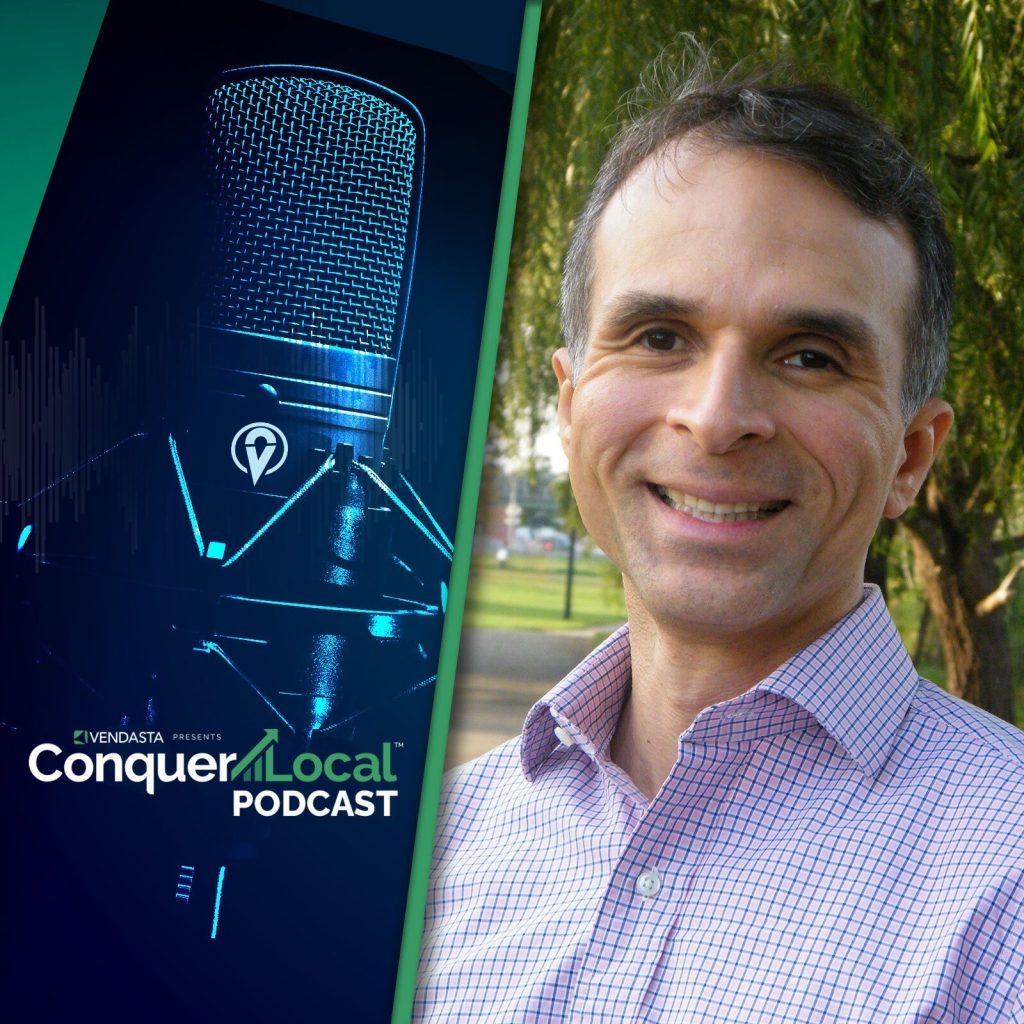
Jorge Alzate, the R&D Senior Manager at PepsiCo, is joining us on this week’s episode of the Conquer Local Podcast, where he will share his remarkable journey and insights.
Jorge has over 22 years of experience and a passion for guiding teams in their professional growth. With a chemistry and quality assurance background, he discovered a new calling in coaching and mentoring through Toastmasters and project management certification. During the pandemic, Jorge successfully led his team in implementing virtual and remote auditing techniques.
Moreover, Jorge’s commitment to personal development led him to the Coaching for Leaders Academy, where he learned to align his goals with daily actions. As a result, he achieved an internal job change and promotion to digital solutions team leader. And his career shift highlights the transferability of project management and team leadership skills, emphasizing the significant impact of consistent and focused effort in achieving goals.
Transcript
Conquer Local. It’s really a breath of fresh air. Good times. I help leaders go from anxiety to authority under pressure. And then let’s go and get it. It’s an ecosystem. The hardest part here is going to be getting me to shut up on this one. Conquer Local with Vendasta, hosted by Jeff Tomlin. Welcome to the Conquer Local Podcast. Our show features successful sales leaders, marketers, thought leaders, and entrepreneurs who will inspire you with their success stories. Each episode is packed with practical strategies as our guests share their secrets to achieving their dreams. Listen in to learn the highlights of their remarkable accomplishments and get tips to revamp, rework, and reimagine your business.
Whether you’re a small business owner, a marketer, or aspiring entrepreneur, the Conquer Local Podcast is your ultimate guide to dominating your local market. Tune in now to take your business to the next level. I’m your new host, Jeff Tomlin, and on this episode, we’re pleased to welcome Jorge Elzade. Jorge is their R&D senior manager at PepsiCo. He has over 22 years of experience and is passionate about coaching people in their career progression. With a background in chemistry and quality assurance roles, Jorge discovered a new calling towards working with others through Toastmasters, Project Management Certification, Mentoring, and Leading Teams.
During the pandemic, he led his team in the implementation of virtual and remote auditing techniques, and through coaching for Leaders Academy, he learned to map his goals to daily actions, which landed him an internal job change and promotion to Digital Solutions’ team leader. Or his mid-career change demonstrates the transferability of skills such as project management and team leadership. And the power of small but diligent daily effort applied relentlessly to realize one’s goals. Get ready, Conkers, for Jorge Elzade. Coming up next on this week’s episode of the Conker Local Podcast. Jorge, it is amazing to have you here in the Conker Local Podcast.
I want to start off by thanking you for taking some time out of your very valuable, precious time and carving off some time in your schedule to join us here today and have a quick chat. Thank you very much, Jeff. I’m very honored that I was asked to be a guest on the Conker Local Podcast. I’m very excited to be here. I can only imagine what it’s like to work for such an iconic brand like PepsiCo. And it sounds like you’ve had an amazing tour of duty there. You’ve been there for 20 years. So take the audience through a little bit of what it’s been like at PepsiCo for that period of time. And maybe some of the highlights from your time there over the years.
Yeah, I’ve got to go back into the history books. Definitely, I have an analytical chemistry background, master’s science and analytical chemistry. So I started working in the lab, in the flavor lab. That’s where I started my career. And what attracted me to stay there those years was the opportunity to work with global partners. It’s a truly global organization. It’s a multinational organization. So having partners in different countries like Pakistan, Uruguay, Mexico, and they can come visit us in our lab and having the opportunity to interact with people in different cultures of countries has always motivated me, given me great satisfaction, you know, prepping for those meetings.
I remember someone told me, Hey, you need to read this book Kiss, Bow and Shake Hands, and which teaches you how to greet people with different cultures and actually using that, you know, someone from Pakistan. If it’s a female, don’t offer your hand to shake it because that’s bad for the culture, bad for the interaction, bad for the introduction. I must be like so much to learn like, yeah, yeah, definitely. And I do have a background. My parents are from Colombia and South America, but there are certain countries that in that whole region of the world where it’s expected that you kiss someone of the opposite sex on the opposite cheek as a greeting every day and that’s part of the culture, but only certain countries.
So it’s it’s you got to keep track of all that. That’s a lot to keep track of. And so you’re a lifelong learner and one of the amazing things that people go through in their careers is is change and changes and shifts in the career learning new new roles and new aspects and you changed, you know, from a QA type role over into IT and and that path. Talk a little bit about what it was like transitioning some of the challenges. It was like transitioning inside of a, you know, a massive organization like PepsiCo. Yeah, I guess one of the drawbacks or emphasis when you’re working in a large organization is you see other people moving in their career getting promoted.
So that was a definitely motivation for me. So what do I need to get promoted or advance my career because I technically I was sound, but there were some soft skills that I needed and that’s something that I worked on is my management skills, networking skills as well, but always being aware of what are those transfer transferable skills that you can apply to any role as a as a QA professional. I well versed in lean a six Sigma. I took on project management certification. So having that in my toolbox allow me to look at different roles, but this this transformation that I did from QA over to IT. I’m very proud of because it’s relatively late in my career and I approached that with deliberate intention, deliberate intention using outside help.
I went. I joined something called the Leadership Academy that’s led by Dave Stahoviac. It’s a year long program and what they do is help you understand what it is you want out of your career. What is it you truly want? Where do you see yourself in three years? Write that down and then also align on what are you doing every day? What is your daily activity that you’re accountable for to get you to that goal following that plan is really what got me to be the primary candidate for this role that I’m on. It’s about liaison with IT and the R&D and scientists and engineers that have to work on building digital solutions. So that’s the transformation that I’m very happy about. I love the process.
You know, very early in my career, I got similar advice to write down your goals and where you want to be. And it seems like a simple act, but the act of writing them down turns them from an abstract idea, which is essentially just a hope or a wish into all of a sudden something concrete. It’s actually a plan as soon as they’re down on physical paper and you can refer to them. And I’m sure you found the same thing. Yeah, right. And then sharing them with others, which is a scary activity because now people are looking at, you know, you’re being judged in my own mind. So that really puts this forward in my self-accountability and that’s what helped me move forward.
I was just going to say that that probably improves your own accountability when you share it out. And then all of a sudden, it isn’t just something that you know about. You know that other people know about your plans too. Yeah, just that. So that’s a simple, but I think that sounds like a very powerful tool to help you realize the goals where you want to go. Give people a sense of the size and scope of the Pepsi co-organization. And truly, it’s a massive multinational enterprise. It is. It is. Well, we’re split out into beverages and stacks, foods, if you will, 300,000 employees, not only including R&D, but supply chain, the bottling operations, engineering procurement, almost in every country of the world.
We have a presence. We have certain R&D centers located in specific countries where that’s where I focus my career. My interaction is on the research and development centers. So those are in parts of the world. We have in North America. We have in Europe. We have in Amisa, in APAC as well. I couldn’t imagine the systems that have to be in place to communicate and align everybody in an organization of that size. It’s definitely a struggle to have a global reach and then to expect global outcomes when you’re working locally. So having that mindset of, yeah, we are a global company, but we need to act locally. And the roles that I’ve been in have been global roles.
So that’s always a struggle is how do you ensure that the local, the region needs are being heard, that they’re feeding what the initiative, the global initiatives are. So there’s a PepsiCo way. So talk a little bit about the principles that are in place to help keep alignment in the organization. Yeah, the PepsiCo way are a set of behaviors that help govern the culture. It defines the culture. And what that translates into activity is we’re all on the same page. There’s seven behaviors, things like act as owners, be consumer centric, voice your opinions fearlessly, raise the bar on talent and diversity, act with integrity, celebrate success, focus and get things done fast.
Couple of the ones that I’ve used in my career are voice opinions fearlessly and raise the bar on talent and diversity. For example, on raise the bar on talent and diversity, that’s about helping as a leader, helping others with critical experiences. So if you’re a data analyst and you’ve been working on the same work for 8, 10 years and now you wanna grow your career, well, you need experience doing something else. We all know that when you work in a different role, you brought in your knowledge. So ensuring that if I’m gonna have this person on my team that wants to work on a critical experience for three months, six months, that that’s okay with the senior leaders.
And they all point to, oh, we’re raising the bar on talent. So yeah, it’s okay. Definitely, it’s expected that this person is gonna leave the role for three to six months, work on something else to become better and restraint it on our bench that way. These types of foundational things are so important in building and maintaining a company’s brand to align behavior. And I’ve been in a lot of organizations, especially early in my career where we did the things to create sort of purpose, vision, mission, principles or core values to align an organization. But they ended up being things sort of stuck on a wall and we didn’t incorporate them into the actual operations of the business and incorporate them.
Can you point to outcomes that you’ve noticed by incorporating them into your leadership style and your practices? Oh, for sure. For me, it was voice opinions fearlessly and that sounds like, well, if you don’t agree, just raise your voice and say what is your different opinion, but it’s not that easy because you’ve got to do it in the right context and there is a framework that one can follow. Example is I came into a new role that was a remote role and I had a team working in a different country and I was reporting to a new manager who happened to be in that same country. And my team was saying, well, this new director, he’s coming to us telling us what we need to do, what our goals and objectives are and kind of bypassing me.
So I saw what the impact on my team was. It was causing disruption and it was not allowing me to take control of my team to be in charge of my team to fulfill my role. So I gathered all this evidence and impact and effects and I prepared myself to have a courageous conversation with my new boss to voice my opinions fearlessly. And I did that. I told him what he was doing, what it was causing for the team, what were the results that his actions were and what I expected. And I told him this is the hardest thing I’ve ever had to say. I’ve never spoken to anyone like this before, but I’m telling you because I care about the team and I care about the success that we’re looking to do.
And he was on board totally. He was on board totally. He was not, you know, offended or insulted which was one of my fears and he became a trusted advisor even now in my career. Way to the world must have lifted off your shoulders after forcing yourself to go outside of your comfort zone and have that conversation. For sure. Yeah. I can only imagine the number of different, while you’ve got 300,000 people at PepsiCo, just a lot of big numbers. There are a lot of personalities there and I can only imagine that getting alignment sometimes is a little bit tough.
You know, you indicated in previous conversation that you use humor in some situations to sort of break down barriers to groups a little bit. So talk a little bit about how you can, you know, break down walls and silos and inside of, you know, pretty complex organization. Yeah. I definitely use humor. I have an irreverence streak. So one thing that I’ve been just recently is we’re working around a difficult project where it’s two sides, two business units. One has separated out. And my team is tasked with taking their data out of our software systems. And it’s a very manual task that requires resources that we don’t have. So I was on a call with both teams and we were giving them the bad news that we’re not resource to do this, we can’t do it.
And I knew that they were going to say the same thing that they weren’t going to do it. They didn’t realize they were responsible for it. So I’ve got a bunch of faces on my Zoom call and they’re not looking, they’re not happy. They’re frowning. And it’s just about labeling the situation, you know, calling out the elephant in the room. And I said, well, it looks like we’re a standoff at the okay corral. And as soon as I said that, people started laughing, you know, and there was a little more, there was some levity because we’re just calling out the elephant in the room where we’re saying what we’re all feeling.
That’s a good situation. One that I’m really proud of that I did with a supplier. I had to approve suppliers back in the pandemic. We were doing virtual auditing, weren’t used to the technology. And I was on a call with a supplier. I had their QA guy on camera. I had the CEO, it’s a small company. I had the CEO and the finance person off they didn’t have their cameras on. Auditing a supplier can be contentious. It seems like it’s a fight. And I did 10 years of it. And what you’re trying to do is you’re asking for documentation. They don’t want to give it to you. It feels like that you’re coming in invading their territory. So it seems like a fight.
This happened to be the last audit that I was doing as I transitioned out to a new role. They didn’t know that, but I knew that. And I got on the call and I said, you have options here. You can give me this document or we can do a full audit. Nobody wants to do a full audit because we have to do a virtual. But if you give me the document right now, if you turn that over to me, I’ll take my gloves off and I’ll leave them in the center of the ring and I’ll walk away. As soon as I said that, the CEO’s camera went on. The finance person’s camera went on. You can see the big smile. They were laughing and it turned out to be a really good, smooth audit in the pandemic.
So yeah, this is one way to use humor. Another great example. It seems like simple, but especially at work when we all have so many things to do, sometimes it’s hard to break out of work mode and people are just work mode and then you can create… We have fixed resources in all of our organizations and that creates tension. And so there’s always natural tension and natural tension between competing groups that are trying to get different things done. It’s such a good tip. Just to incorporate some sense of humor to just break the tension and bring people back to, well, hey, what are we trying to achieve or what do we need to do? Funny story, I was in my yard doing some yard cleanup and I had more things to do that day than I wanted on my list.
And some guy pulled up in a van and got out of his van and started walking into it, you know, to my backyard. And because of the state that I was in, you know, I said, oh, what does this guy want? And he came to the gate and I said, hey, what can I do for you? And he goes, look, I got a truck here full of frozen meat and a bunch of bad jokes. Wanna come take a look? And instantly I said, yeah, I’m in, I’m in. And that was Sea Land Foods and they have, you know, a mobile sales force and they come by and instantly, you know, I went from grumpy pants to yeah, I’m in and then I spent way more money than I should have.
So you were on the receiving end of the manipulation. I was on the receiving end, but you know, I’m always one for a good joke and it’s always the way to get my attention and snap me out of something. Talk about some of the other, you know, important qualities that have made you a successful project manager and, you know, such a massive organization. Yeah, being a project manager in the QA space was tough because in R&D, in PepsiCo, we have certain segments of units that do use project management. You know, IT is one of them. Product development is one of them. But in QA, we don’t, we don’t, it’s operations mostly so we don’t use the project manager. So becoming a project manager at QA was swimming upstream for sure.
So be careful, if there’s a work initiative to be done and you see, okay, I know I can do a little project here. Being careful not to use jargon and throwing out terms like project charter, work breakdown structure, things like that. Avoid that because if you start using jargon and people don’t understand what the value is when you’re using these tools, they’re going to start rolling their eyes at you which has happened. So making sure that instead of using the processes, procedures and all that, ensure that the value is clear of why we’re doing it. What is going to get us if we commit the resource to doing that? I remember early in my career when I learned all the jargon and the lingo, I felt like I was competent, right?
And so I, doing exactly what you’re describing, I was throwing it out left, right and center, made me feel smart. And yeah. Something that has the opposite effect. It definitely does have the opposite effect, especially when you’re talking, when you’re trying to manage up and trying to influence without authority. But that can also happen when you do have authority and you happen to be in charge of a project. And that’s when you need to know the subtle difference between management and leadership. And I’m curious, I’m curious and maybe Solomon warned you that I like these podcasts to be conversations. But I’d like to ask you, Jeff, what, how would you, for you, what’s the difference between management and leadership?
Well, you know, it’s a good question. You know, I think, you know, managers take care of, you know, getting things done and taking and managing projects. Leaders to me, you can be a leader in any type of position in the company. Leadership is a choice in my, in my mind. Anyone can, can decide to be a leader. And you know, there’s different leadership qualities that I look to and people in my team. And probably the most important one is someone that makes people around them better. And you know, there’s different frameworks that we use and oftentimes I try to simplify things by picking out the one thing that matters the most to me. But that seems to matter the most to me in teams that I have this, you know, someone that makes people around them better.
I don’t know what your experience and your favorite definition of difference between leadership and management are. Yeah, that, that part you said about making people better around you is for sure what I try to model. And that is about knowing, knowing who, it’s not about knowing the right answer to every question or issue a problem that’s posed to you. Not becoming a subject matter expert. That, that leadership choice that you mentioned, Jeff, is knowing who has that right answer, building the right network in relationships and then bringing that person front and center so that they can provide that value and empower them and recognize them. So I’ve tried to model that and I’m okay at it but I haven’t reached the pinnacle of leadership yet.
Yeah, so that’s some great advice. You know, the other important thing is to know who you’re talking to and that’s whether you’re speaking outward in an organization or you’re talking inward, you know, to people inside of your organization and on your team. Maybe talk a little bit about, you know, the importance of knowing your audience because again, massive organization must be, you know, super important to understand, you know, who you’re talking to and sort of the nuances of, you know, what they care about, right? Yes, definitely there are, you, it’s all about what’s in it for them before you try to deliver a presentation or a proposal, understand what, what are the problems they’re facing?
What do they care about like you said and how do they like to be, you know, spoken to? What’s their preferred message style is also important. I’ll give you an example that I just found out. My new VP, my new VP is colorblind and I just found out out but I use, when I’m building an Excel or a project plan, I use colors everywhere because I want to differentiate what’s important, you know. And so I got to, I have to adjust my messaging to minimize the use of colors, maybe, you know, some different fonts or sizes because I’m assuming that everybody can see the colors the way I can. So that’s really about knowing who you’re, who you’re speaking to, what your audience is.
Nice nuance, nice nuance. What are some of the exciting things that you got going on at PepsiCo right now? It’s never about, well, this one, this one has been in the news, you know, and something that Vindasta has done as well is acquiring companies. As you know, PepsiCo had a partnership, has a partnership with Frito, Quaker. It’s made up of many different business units. So we’ve made, the company has made good success inroads in acquiring companies and making good use of their products and resources and reach. But just recently we had to divest one and that this was in the news. It’s the Tropicana juice portfolio. Right, right, right. That’s just part of the normal, that’s part of the normal business cycle.
But the way it impacts R&D is unique because when you acquire a company or you’re going to use their people, you’re going to use their resources, how do you integrate that into your, to your company and your portfolio? But now we’re doing the opposite and we weren’t built for that, especially in the digital space. Our software applications have been operating for over 20 years, one big happy, but now we’ve got to take the data out and hand it over. And that’s really been a challenge because there’s no clear plan. So that’s something that I’ve cut my teeth on as a project manager is when there’s ambiguity, when there’s uncertainty, you got to fall back on a plan. Yeah.
And if you don’t have a plan, you’re not going to succeed. You know, the leaders that were fortunate enough to have on the Conker Local Podcast, they share so much amazing information and nuance, you know, throughout the quick chats that we have. If there’s one takeaway that you wanted to leave people with, that’d be the one thing that you want to part in people’s minds as we cut away. The one takeaway is whatever segment you’re in, sales, marketing, R&D, you are a leader. If you’re not a leader of people, you are a leader of processes. If you’re not a leader of processes, you’re a leader of yourself. And to ensure that you are the best leader, it’s very important to reflect on things that may be holding you back, baggage that you’re carrying.
Because people that you haven’t forgiven, which is my example. And I had to do that. I had to really do that because it was affecting the way I was assessing risk, the way I was doing my job. And I didn’t know it. I didn’t know. I needed somebody to tell me that you’re not really a leader. And that was a difficult realization that I made. But it’s up to you. You can work on it yourself. And just recently, I listened to the HBR podcast. Astro Teller from X was on it, describing the Thrive program that they have, where they take high-potential leaders and they take them through a nine-month program, which is exactly that. It’s reflecting, it’s profiling, understanding what’s holding you back from unleashing your creativity, your ability to be objective.
So that’s something that I did on my own. It was a 10-year journey. And I’m always a work in progress. So I would offer to your listeners to think about that type of path if you’re looking to advance your career. Just ensure that you know who you are. You’re okay with it and you’re as positive as you can be with your past and your present and you’re ready to move forward for the future. What a great note to end on. Jorge, it’s been an absolute pleasure chatting with you for a few minutes here on the podcast, getting to know you a little bit. If people have some follow-up questions and wanted to reach out to you, how could they contact you? Pretty easy to contact.
I told someone I’m not selling anything. I’m just a senior manager for R&D, PepsiCo, R&D. I’m on LinkedIn. So reach out to me there. Connect with me. If this podcast helped you, you have any questions, I’d be glad to respond to you. Sounds good. It’s been a pleasure, sir. Thank you so much for sharing some of your very valuable time. That’s it. And another edition on the Conquer Local Podcast. Cheers. Thank you, Jeff. I can forward to hearing it. Developing transferable skills is crucial for career advancement. Jorge Alzade’s experience shows that soft skills like management, networking, and working skills are just as important as technical skills.
He highlighted the need to focus on developing transferable skills that can be applied in any role to help advance your career. For example, he took learnings from Lean and adopted them to transform from QA to IT. He also took the Leadership Academy by Dave Stovak to align on what he wanted out of his career and followed that plan to progress. For instance, Jorge’s work with global partners in different countries like Mexico and Pakistan has taught him the importance of understanding and celebrating cultural differences. While it might be challenging to have a global reach and expect global outcomes when you’re working locally, it’s essential to ensure that the needs of each region are heard.
As a leader, he focuses on raising the bar on talent. He encourages his team members to voice opinions fearlessly and celebrates their successes often. If you’ve enjoyed Jorge’s episode discussing the PepsiCoA lifelong learning and leadership, keep the conversation going and revisit some of the older episodes from the archives. Episode 533, Emotional Intelligence with Colleen Stanley or episode 446, The Five Levels of Leadership and the Universal Aspire Model to Coaching with John Hoskins. Until next time, I’m Jeff Tomlin. Get out there and be awesome, everyone. You’ve been listening to the Conquer Local Podcast presented by Vandasta. Tune in next week for a new episode.
Guest Discovery and produced by Suleyman Adam. Marketing by Rory Lawford, Nicole Lozon and Suleyman Adam. Executive Producers Brendan King, Jeff Tomlin and Suleyman Adam. Recorded at Vandasta headquarters on the Canadian prairies.

 Apple Podcasts
 Spotify
 YouTube