About Us
 Careers
 Leadership
 Board
 Newsroom
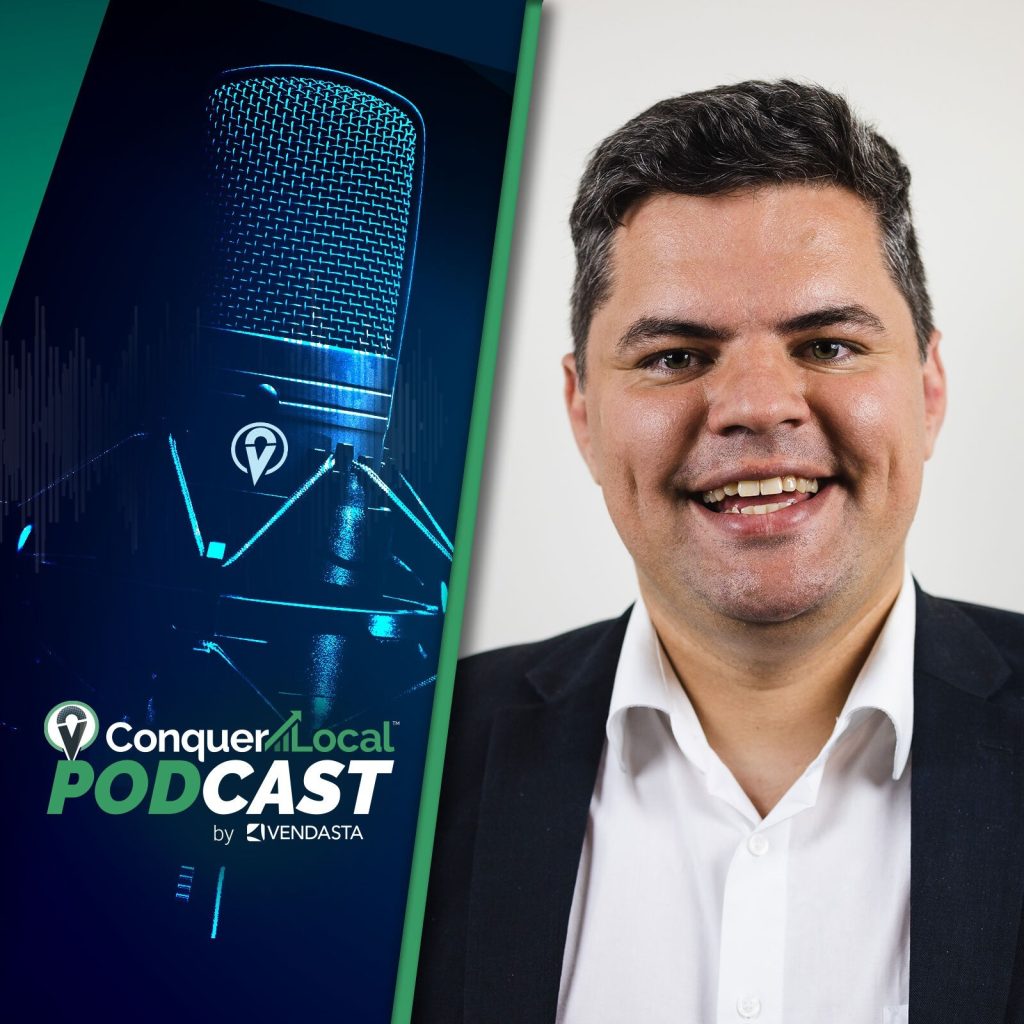
Tune in and join us in welcoming Frank Sondors, the Co-Founder & CEO at Salesforge, an innovative AI-driven cold email sequencing platform. With over a decade of experience in B2B Sales, Frank has made significant contributions to renowned companies such as Google, SimilarWeb, Black Crow, and Whatagraph. Throughout his career, he has excelled both as an individual contributor and a leader, successfully managing and leading large sales teams.
Currently, Frank is devoted to building Salesforge.ai, a groundbreaking solution that empowers every sales organization to execute personalized cold email outreach at an unprecedented scale. By facilitating the connection of unlimited sender accounts and harnessing the power of AI with seller and buyer data, Salesforge.ai enables businesses to craft unique emails and expand their pipeline coverage up to 10 times.
Transcript
Conquer Local. It’s really a breath of fresh air. Good times. I help leaders go from anxiety to authority under pressure. And then let’s go and get it. It’s an ecosystem. The hardest part here is going to be getting me to shut up on this one. Conquer Local with Vendasta, hosted by Jeff Tomlin. Welcome to the Conquer Local Podcast. Our show features successful sales leaders, marketers, thought leaders, and entrepreneurs who will inspire you with their success stories. Each episode is packed with practical strategies as our guests share their secrets to achieving their dreams. Listen in and learn the highlights of their remarkable accomplishments and get the tips to revamp, rework, and reimagine your business.
Whether you’re a small business owner, marketer, or aspiring entrepreneur, the Conquer Local Podcast is your ultimate guide to dominating your local market. Tune in now and take your business to the next level. I’m Jeff Tomlin, and on this episode, we’re pleased to welcome Frank Saunders. Frank is the co-founder and CEO of SalesForge, an all-in-one sales execution platform. Frank has over a decade of experience in B2B sales, working for companies like Google, SimilarWeb, Black Crow, and Whatagraph, whether as an individual contributor or leading very large sales teams. Currently, he’s building salesforge.ai to give every sales organization the ability to do personalized, cold email outreach at scale to 10x their pipeline coverage by connecting unlimited sender accounts and leveraging AI using seller and buyer data to craft unique emails and to do it at scale.
Get ready, Conkers, for Frank Saunders. Coming up next on this week’s episode of the Conquer Local Podcast.
Well, it’s a pleasure to welcome Frank Saunders onto the show this week. Frank, how are you doing all the way around the world in Lithuania? Welcome to the show. Why don’t you tell us a little bit about yourself and your company? Hey, Jeff. Thanks for having me on the show. So, yeah, my name is Frank Saunders. I’ve been in sales for a while over decades. In my last gig at a company here locally, I led a team of 50 people, sales team, exited the gig and decided to start my own sales company, a sales tech company specifically focusing on cold email outreach at scale where we actually uniquely craft every single email to a specific individual driving humongous lift in a reply rate.
And so, your company’s name is salesforge.ai and cool name. You guys have been doing some, you’ve had some unconventional approaches to outbound. And so, why don’t you talk a little bit about some of the unconventional tactics that you’ve employed that have given you an edge over competition in this space? Yeah, I think I’ve been always in multiple companies. It doesn’t matter whether right now it’s salesforge or many other companies in the past. I’ve always been like in the red ocean. So that means there’s a ton of competition. You have to compete against sometimes other sort of 10, 20 vendors. And ultimately, you need to figure out where your potential customers congregate.
And in a lot of cases, they will congregate in specific communities that are owned essentially by your competitors. It could be as simple as a Facebook group. It could be anything where they congregate, but you don’t necessarily have an easy access to that particular community. So you really need to figure out, it could be just a group or a website review or directory of the clients really. So you need to figure out how you identify those groups and essentially has to be a large group so that either you go into that, you either, I don’t know, you would scrape that whole list or you would figure out how do you identify essentially the clients of your competition, right?
So and you would build that as a list. Sometimes people build that manually and you would essentially just add into Salesforce. So what about the CRM that you’re currently using? And then you wouldn’t actually then design specific sort of cold email exchange campaigns or LinkedIn campaigns specifically for that list. So in a lot of cases, you may have a significantly better product than your competition. Your price would be significantly cheaper. There’s other angles that you can play about, you know, specifically right now that we’re going through a downturn. Folks are willing to switch to other solutions. And we are seeing that in the market as well.
It doesn’t matter whether it’s with sales technology or anything else. But people want to become significantly more cost efficient. They also want to consolidate the tool stack. So that’s what we’re seeing as well in this space. So it’s not just on the sales side, but also marketing side. We’re seeing the same similar trends. There’s a lot of research out there by Salesforce as well on this sort of topic. And that’s ultimately what we’re looking to capitalize. But the way that, you know, you can aggressively really compete in the red ocean. You need to be able to figure out who are the clients of your competition and go after them, but in a strategic way, really, from a messaging standpoint, from a pricing standpoint, sort of, you know, contractually how you’re going to be buying over those contracts.
So, yeah, you know, outbound is one of the hardest things in sales and it’s, you know, it’s a challenge for any organization. And even organizations that have, you know, really effective inbound strategies, as they scale, if you want to scale and become a really large company, there’s no getting away from outbound. Because at some point, no matter how big you are, you have to go out there and start choosing your clients rather than just relying on them finding you. And, you know, definitely one of the things that we’ve realized here. So this is a muscle that you’ve got to flex and you’ve got to become good at. And, you know, one of the things we’ve also found is that, you know, there’s no one single bullet.
You have to optimize a lot of different aspects of, you know, the outbound approach in order to get the results that you want. One of those big, biggest things is personalization. And sometimes it’s challenging to be able to personalize something and get scale because the amount of scale that you can reach is, you know, a big determining factor of your ultimate success. And so maybe talk a little bit about that. You know, you guys have found a way to personalize messaging and be able to do that at scale. But talk a little bit about how you’re able to do that. Yeah. So it’s something that I observed, you know, back in my days with I was, you know, an accounting tech or as a head of sales.
I mean, you always saw the problem of, hey, you know, I can personalize, you know, these particular emails or LinkedIn messages, et cetera, but does take me a bit more time. Same with videos and stuff like that. So yes, your conversion rate does go up, but then you’re missing the volume piece. So really, you know, you still have a hard time to attain your target because you don’t have enough activity, essentially, even though you are personalizing. And when folks start to scale, generally speaking, with, let’s say, we call the email campaigns, they do resort to using templates and templates on the convert because users just generally have a sort of Etsy, they can, you know, when they look at the email, you can see it’s a template.
You can see that it hasn’t been personalized to you, to your maybe specific type, so it’s to your potential pain points, anything that they may be on LinkedIn or a Twitter handle, et cetera, or maybe the website, really. And you can see that. And that’s the reason why you sort of, you know, reporters gradually sort of, you know, go down over time. So the only answer today, especially because Google doesn’t like anybody doing cold email tree, so if you’re looking to send essentially more than 50 emails a day in response, you know, having a single inbox, a Gmail, then what ends up happening, you end up starting to landing more and more into spam.
That’s because, you know, people start to flag you, that this is spam email, they start to blacklist you, et cetera. And this happens when you have a lot of sort of volume there. So we thought to ourselves, you know, how can we solve this problem as in still provide the ability to scale cold email outreach, but also ensuring that every single email is personalized. So we came with the idea with a team that we will give the ability to connect essentially unlimited number of inboxes into your software. So instead of, you know, a usual sort of SDR having one single inbox, imagine them having 10 inboxes, 20, 50, 100 inboxes that they would operate on. And then that means, you know, you don’t have to worry about, you know, when Google or Microsoft, et cetera, when they penalize you for sending more than 50 emails a day.
So that allows you to scale through multiple inboxes essentially, and connect that to a single software and then to find across multiple inboxes as well in a single software. And doing that in a way that’s efficient for the sales organization. So because most of the software out there right now are charging for every single inbox that’s been connected, whereas we don’t do that. We charge simply for the consumption, meaning the more emails you send, the more we charge that particular user. Now, the second piece is that email copy, right? So as I mentioned, so folks use a lot of templates these days and we believe they will die over time. So you already seen with the rise of chat GBT and previously this technology allows you to personalize a scale.
So the problem is if you did try to do a lot of that stuff right now to a GPT, it does give you a really bad output, meaning from an email standpoint, you wouldn’t send anything like that. Because it does look like a multi-message. It looks like, you know, it doesn’t really look good. And the problem with that is, is what I would call prompting engineer. You really need to feed a lot of information for essentially for large language models to work. So what does that mean? So in our case, what we do is we do the marrying of seller data and the buyer data. So the seller data is essentially that that’s the example. So we would, as part of app onboarding, ask multiple questions about, hey, you know, listen, Jeff, which industry are you in?
What’s your ICP? What are some of the pains that you’re tackling? What’s the solution? What’s the cost of inaction? Who’s your competition in this space? And everybody would essentially create a profile in the backend about you that we then gonna use for every typical crafting, sort of every single email. So now we’re missing then the buyer data. And the buyer data comes from publicly available sources. So this is what usually the ARSDR does. They enter essentially the LinkedIn profile of the person, trying to find sort of a hook to personalize and kind of trigger that response back. They sometimes may go to Twitter, website, et cetera. So for now we’re doing LinkedIn.
So we essentially accessing in real time the profile of the person and we’re using all the contents that’s on their profile. So the about section usually the headline, what’s their title right now? What’s in their job description? What is it that they do right now? Because a lot of folks do mention some of the pains that they have in their current jobs. What is it that they do?
Some of the targets, so you know what historical performance and we also look at the last post that they’ve written as well in the same. So we didn’t say, hey, listen AI, you pick what you know, anything that we have here and then let’s marry that with the seller data and let’s find really unique personalized email to that particular person. So then imagine a single SDR can send thousands of personalized emails by email. For now, that’s our only channel. And then we’re looking in the future to do that also violence. So on the one hand, you’re solving for the deliverability of the emails with multiple inboxes. And on the other hand, you’re solving for the personalization with the messaging on that side.
And I guess at the end of the day, you get much better results. Exactly. Yeah, that’s, I mean, that’s very important because I think personalizing is good. It can increase the conversion rate, but you still need to increase the volume. So this is what we knew that it’s a big, big issue. So because some sales organizations either gonna go and go with the volume approach. The other ones, usually an enterprise sales will go with the personalization approach. But there’s a lot of companies out there that would love for somebody to actually bridge the gap between the need for volume and the need to personalize. That’s why the idea came to build Salesforce, to enable that. The technology is there.
It’s just nobody in space, especially the incumbents are not looking to do that. We do believe it will hurt their top-line revenue and the margins, which is the reason why they’re not looking to drive that drastic productivity increase. Whereas in our case, we’re really looking to figure out a way where we go to every PP sales or every CFO out there and say, hey listen, whatever the target is that you have in your bag, we’ll be able to attain that with the least number of reps. And I think that’s a very sexy value proposition out there. So folks, it’s a no-brainer, especially if the software is able to deliver that. Because if you look at a lot of organizations nowadays, they have to become significantly more cat-efficient.
Because it’s not any more profit on all costs. It’s back to profitability, back to profitable growth. And that’s what we’re looking to unlock for a lot of salesors out there. So that’s very cool. Obviously, as a CMO, I’m always looking for different technologies that we can plug into our sales and marketing stack to get an edge and improve our conversion rate optimization. And there are the reach and scale that we have, the powers of revenue growth.
Oftentimes, the tools that you use those, they’re only as good as the operator, just like a race car. You can have the fastest car on the track, but sometimes it comes down to the drivers behind the wheel more times than not. And so talk a little bit about your training and coaching strategies, because you’ve indicated that the coaching and training is critically important to the whole process. And there’s a lot of different elements that go into that process. So talk a little bit about your approach and those elements that have provided some of the success for you and your team. Yeah, so naturally there’s plenty of parts in sales that cannot be sort of automated or where it’s hard to use AI.
So one of the jobs I believe will never go away is the job of an account executive will never go away, because folks do wanna talk to a person on the other end and being able to deliver really a stellar experience for the buyers, you need to train your folks. From the moment, potentially, when they become an SDR, over to their promotion, over to VAE, but how do you do it in a way that you can align the whole sales organization? So apart from myself, there has to be sort of, it has to be this framework and everybody has their own framework. But in my case, I would look at things like performance, right? So in sales, performance is critical, but it’s not really the only thing.
And it carries everything, so I have four pillars in my mind and every pillar carries 25% weight. So performance, very straightforward. Are you able to attain your quota? What is it that you’re doing to try to attain your quota? What’s your game plan? Pillar number two is really the commitments. So are you committed to really getting better and better over time? Do I see that driving you? Do I see you helping the rest of the board to succeed? So it’s very important commitment, right? Because you can see in, it doesn’t matter whether it’s sales or other works, but down just driven, they just don’t want to be here. It’s not really committed. They just clock in and clock out essentially.
And that’s not the type of people really you want around because it impacts the business. Number three is really competence. So people currently enjoying companies with a set level of skills and competencies, but what I’m really looking for is like, hey, listen, we’re gonna have all this training for you, all this coaching and mentoring in the organization. But what is that you’re doing outside of that to become so much better at your job?
So do you go and attend different webinars? Do you speak to other peers and sales? Do you speak to marketing, to your own org and also outside? Do you try to improve your essentially competencies? And the last one is culture. So culture is super important, especially in sales. And as I say, one bad apple, you’re right, so it can ruin the whole lot. And that’s exactly what happens, not just in sales, but I believe also in other teams. And it is important that there are a lot of hard days, you get nine nos out of 10, and you need to be able to self-motivate and also motivate the rest of your team because there’s a lot of hard days that you have in your job, but you need to embrace Yeah, I mean, I’m not gonna talk about culture.
I think a lot of folks are pretty much not what I mean. So those four pillars are super important. So I give 25% weight to each one of them. And whenever I do sort of performance reviews back in the days, I would just use sort of simple sort of traffic light system to reach one of them. And I would expect every single rep to score sort of yellow or green across those four pillars. And if somebody scores red for a couple of quarters in a row, then we would need to have a sort of more serious conversation really.
But yeah, that’s how it would go about sort of performance management, sort of in a very simple way that everybody kind of gets it.
And yeah, trying to be transparent with everybody naturally, so. And yeah. You know, as you’re walking through those, I was thinking of, you know, a book that I had gone through called the sales acceleration formula by Mark Roberge, who’s a former CRO at HubSpot. And in his book, he talks about, you know, build, you know, first and foremost, very how you’re going to build and scale a sales team. And one of the things you have to figure out is what is, you know, the ideal profile for a sales person, you know, for your organization. But, you know, it strikes me that, you know, there are sort of some unmute, immutable attributes of an ideal sales person for a lot of technology companies, almost regardless of, you know, what you’re selling, whether you’re an agency or some sort of tech firm, you know, immutable attributes, like, you know, the coachability, regardless of that’s important, you know, curiosity, empathy, you know, for customers.
And so it strikes me as you go through, you know, your key elements and then the pillars that you have that, you know, sort of aligns with a lot of things that, you know, I think no matter what kind of organization you got to look at. Yeah, so everything that you mentioned usually fits under one or the other pillar. So even though I mentioned just four pillars, there’s, you know, subcategories there that we’re looking to. So yeah, being coachable essentially is one of them. And, you know, that’s something that we can discuss on a quarterly basis with every single rep and trying to understand where they are on that particular topic.
But yeah, coachability and multiple other aspects, just like in any other tech company, are really important to kind of, you know, kind of improve and get ahead really, so yeah. One of the things that I do is, you know, I work really closely with our sales enablement team and also our sales operations. And as we build our metrics here, when I think about metrics, I think of sort of a stair step model where the basic metrics you need, you need to know whether you’re just winning or losing. The light green, the light red, you’re winning or losing. And the sort of the next step in analytics is, you know, insights and how to optimize, you know, your approach.
The next step after that is where you can get predictive analytics that help understand, you know, what’s going to happen next. And it’s a different level. Now, you guys leverage predictive technologies in your approach, which can be extremely powerful. Can you talk a little bit about that and, you know, how it impacts, you know, success for you guys? Yeah, so what we touched upon is the alternative technology of large language models. There’s also the old school AI, which is machine learning models and predictive piece of tech. So a lot of kind of predictive kind of modeling and et cetera came really from advertising from sort of Google, Facebook, when they try and predict various, you know, things happening in the auction, et cetera.
So I used to work at Google as well back in the day. And so we used to apply, you know, various machine learning models, what it has to do with advertising, attribution modeling, et cetera, et cetera. And then I also used to work with this company called BlackCrow.ai based in New York. And we used to predict what they still do. Essentially, conversion intent in real time on every single page load by crunching over 400 non-personally identifiable signals about that particular user. And then we used to do a lot of interesting stuff by, you know, feeding that information into Google Analytics, Google Ads, Facebook. And then we used to do bidding against the real time, or the real conversion, the real time conversion intent of that particular user rather than using rules-based audiences, such as, you know, what the user has been on the checkout page or not.
And I felt to myself, hey, listen, nothing like that really exists in the world of sales. And one of the problems where, you know, no machine learning exists is because, hey, there’s just not enough data that usually companies have in sales. And the second problem is like, it’s not structured, it’s not labeled. So, like, machine learning really needs that. Yeah. And the other problem is like, even if companies would go to, say, a machine learning agency to try and build some predictive models, maybe look-alike opportunities and extract XYZ, et cetera, it costs a lot of money. It’s usually a seven-figure undertaking. And I thought, there has to be a better way.
So what we’re actually doing at Salesforce is behind the scenes, we’re actually labeling every single company and the ICP, so the ideal customer profile that they’re going after. And by being able to label that, what we’re doing is we’re essentially putting companies into a cluster where they exhibit similar traits. So imagine, I don’t know, fintech companies going after e-commerce in the U.S., that would be a cluster for us. And by clustering companies, you’re using a approach in machine learning called federated learning. And by using federated learning, you’re able to train from solid data sets, which allows it, which means you have enough data to do that approach.
And then you can start predicting stuff. So in our case, what we are really predicting in real time is when should, for example, we should send that email. So we send a lot of emails. Well, one of the biggest issues, like when should we send that email? Should be on a Monday, should be on Friday. What time should we send that email to have the highest open rate, to have the highest required rate? And for that, you need machine learning to do the decision yet. What should be the follow-up email in this sequence? Should be after four days, five days, six days. And a lot of folks just guessing. They read some reports online from some, look at some averages that you should be sending after five days, but nobody really knows.
So that’s just one example where you can apply machine learning in a very smart way to drive conversion rate even further by having this sort of cluster approach or training machine learning models based off that cluster. And then feeding back into this whole demography software that we have access to with our predictive capabilities. And then in real time, machine learning decides whether you’re on what time to send out email or which time of the day really. So yeah. Yeah, do you have a sense of what type of uplift that you get on conversion rates when you start thinking and using this type of approach?
Because I’d say the vast majority of companies are probably not using predictive technologies and their approach with their email. So do you have some sort of sense or any case study where you had a got a benchmark on the uplift on conversion rates? That’s a very good question. So join speaking, we would run a large scale AB test to figure out, hey, you know, what would be the lift in performance? The limit that exists or in outbound or cold email outage or also an advertising side of things is that you need to process a lot of volume generally and there’s a lot of variables that can impact the test. But if we just talk about, you know, let’s talk about maybe the AI part, right?
So if you do personalize emails, there we’re seeing about a 3x lift in reply rate. So that means, you know, if you have a reply rate right now it’s 3%, we’re probably looking at 9, 10% reply rate by using AI, by just, you know, simply personalizing every single wow. On the machine learning side, I would say, the reply rate by sending it the right time can increase by sort of 10, 15%. That’s what we’re seeing on our end. Now there’s other kind of activities that we will be predicting in the future, you know, when to do something at which particular time of the day or day of the week, like, you know, on LinkedIn, for example, maybe other channels like Twitter, et cetera.
And it becomes very complex very quickly.
But the sort of the answer is, you know, we do expect to see at least 10% improvement in sort of reply rate, which is conversion rate for us. But really what we’re optimizing as a business is towards having as many meetings attended as possible. So that’s really our sort of macro conversion in our head, how we’re optimizing sort of the whole system.
Yeah, so there’s a lot more that we’ll go into that in the future. That’s huge. And, you know, in order to get that type of uplift and I remember giving a talk a little while ago, this is probably a few years ago, we did some math on taking a look at an entire inbound, it was at that time it was an inbound, not an outbound funnel, but optimizing a multiple steps in the entire funnel. And if you can increase the, you know, the effectiveness of one part of the funnel, it has a compounding effect all the way through the funnel. And so if you can get a 10% increase here, a 25% increase there, it’s actually not that far. You can tweak a few knobs.
You can get a 10x improvement at the end of the day just by improving a few things a little bit. So, I mean, that’s really cool and pretty awesome.
I mean, I do also have quite a bit of experience on running inbound as well for companies. And I generally say, you know, on inbound, three things really matter. So one is the process.
The second one is the number of leads or MPL, SKL, you know, coming in and out. And the third one that people don’t usually look at is the speed. You probably have signed up, you know, to various demos out there in the US, right? And sometimes people reach out to you after week only. Yeah. Right, so to give you an idea what I’ve done for one company here in Europe is we implemented SLAs. So where we had to call that particular lead within 15 minutes. So Twillius does, for example, in the US, which is number one platform in the world, they call their prospects within two minutes from them signing up. And that speed is crucial. And the reason why it’s crucial is because, especially as you operate in a red ocean market, imagine you’re signing up, you get a, you know, sign up for a demo or just start a trial.
Because there’s also a lot of options out there, whether the person just lists for alternatives right now and Google, et cetera, they may go with your competitor. But because you were potentially very quick to get them on the call, et cetera, you pushed them through the funnel. You pushed them through the funnel so deep that it just decided to go ahead because they really appreciate the service as a quick call, quick demo booking. And they were able to sign the contract super quick. And that experience, you know, that swift, you know, fast experience is something that they really appreciate. And it’s not something that, you know, a lot of tech companies are able to deliver these days.
I can vouch for that insight because internally here, we found that one of the biggest factors that improved our overall conversion rates was time to lead. So I can exactly relate to what you’re saying. But I was gonna ask you, email fatigue. So what can you do to combat email fatigue? Is it, you know, do you guys see that as an issue still? Yeah, so it’s a bit relates, I guess, to what I mentioned about sort of sending templates, right? So most companies out there or majority of emails, like 90 plus percent in cold email outreach, are templates these days.
Everybody uses them. People are generally speaking, looking for templates on the web, then they’re applying as part of the sequences and then off they go. But when I receive a lot of emails, and I receive, I don’t know, 100 emails a day, I guess, you can see that like 99% of them are all templated. It’s nothing, there’s very barely any information about me, my potential pains. Nobody has looked at my LinkedIn profile, nothing like that. It’s a very simple template with the, maybe with a bit of a rules-based personalization as in, you know, they see I work at Salesforce and that’s about it. But that doesn’t fly these days. And, you know, usually just have a, just like with Zoom, they have a fatigue looking these templates.
And hence why, you know, the fly rate is really so low. So, you know, the bar is really low in cold email outreach these days.
So I do believe that actually one of the most efficient ways that tech companies can scale these days is through cold email outreach. Because in LinkedIn, it’s very tricky because, you know, LinkedIn caps you in advertising, you know, you’re participating in an auction. There’s a lot of software out there trying to fight for the attention for the user. So it becomes very expensive very quickly. But by, you know, sending personalized emails at scale, that’s still, you know, one of the most efficient ways that I’m, you know, from my perspective, when I’m scaling up also Salesforce right now, for me, you know, dog food in our own software, it’s gonna be the most profitable way for us to acquire clients.
So, yeah, and, you know, we all know that there is this fatigue with those, you know, looking at those templates. So the answer is personalizing these emails, either with text, naturally. The other approach is naturally sending videos so you can get Loom or Vidjar and then you’ll send a video on top of the LinkedIn profile. But that’s not very scalable as well because it takes you, you know, a fair bit of amount of time. And it’s okay if you’re in enterprise sales. What if you’re, you know, a high-losty sales order? What if you, you know, deal sizes are like tiny? Like, aren’t they able to really to do that? So what we’re really seeing in the space is actually where companies, like there’s a company in San Francisco called Tabas and they already start doing what I call deep fakes, essentially, you record your face, you record your voice once and then you’re actually able to personalize videos at scale already.
So, you know, you already won’t be able to distinguish whether that was a real video or whether that was done by AI. And that’s essentially where we are. And that’s essentially how the world will work from the static videos, unpersonalized videos, maybe or these templates that are being used over to, you know, more of the AI stuff.
And I do believe the companies will become significantly more efficient and the population will get used to it eventually. It will take a few years for sure.
But yeah, I always get this sort of question from either that’s the investors or the users and they say, hey, listen, maybe one day AI will be talking to AI. I was like, probably that will be the case. You’ll be using AI to prospect and then your prospects will respond with AI back to you. And, you know, at the end of the day, AI will do business with AI. Potentially that will be the future in about 10 years. Not now, though. Yeah. I could talk about this for a very long time with you. Always trying to optimize our approach here and figure out how, you know, we reach our target audience in more efficient ways. You covered a lot of ground. So what are the top two takeaways that you want to leave the audience with?
I guess the number one, capitalizing AI. So if you’re not going to capitalize on AI, your competitors will, for sure. So it’s important to embrace AI as an organization and then see where you can drive efficiency. Some people want to delay that topic, but I assure you your competitors are probably going after it in trying to figure out ways of how to make, you know, whether that’s a sales or marketing, see if it’s more efficient and the more you delay, the more you’re gonna fall behind. So definitely capitalizing that.
And the other thing is, I think, think about your email deliverability. So I still see that most companies, big and small, don’t think about this huge problem that exists and nobody talks about it a lot, is that a lot of your emails just land in spam. And it’s not just on how about, but it’s actually also on email as well. And the quick big question is like, what do you do about it? Are you doing anything at all? So the whole huge topic about email deliverability, because a lot of your transactional emails could be landing in spam. A lot of your support emails could be landing in spam.
And really what I would, my big advice is kind of review email deliverability across your whole work. Because I see that a humongous problem, not just, you know, we call email, but also, you know, when I sign up to some newsletters or when I sign up actually as a user on a particular site, even once I sign up for a demo and the invite went to the spam, even though it was, I was invited by Google. So it was, you know, the URL from Google. So even that, so landing in spam is a huge problem, is it?
So I would urge companies to investigate as in whether they’re doing a good job on that front and just simply ask the clients for their prospects, whether the emails land in spam and you’ll be able to realize that very quickly whether you have an issue or not. So yeah, I think these two remind you key takeaways. Well, I think that those takeaways are very notable. I’ll vouch for you on that. And lastly, before we break, Frank, if people want to find out more information they want to continue the conversation with you, how do they reach out to you? I think just like anybody else out there you will reach out to LinkedIn, Frank Sounders, Salesforce.ai, very quickly to find us.
If you want to check out the platform, just go to Salesforce.ai, sign up, I know if you go. Otherwise, you can see me at different conferences and particularly in Europe, whether that’s Saster, I do fly over to you at times as well so you can catch me there.
But yeah, LinkedIn is the usual thing. I will say, thank you, sir, for joining us on this episode of the Confluent Local Podcast. It was a pleasure having you on and I look forward to having you back on in the not too distant future. Talk about how things are going at your company and the changes that you’re seeing because what we see here is that things are changing really quickly and you have to align yourself with companies that are reacting to that change and it certainly sounds like you’re doing that. Pleasure having you on and I wish you a very happy and healthy summer. Thanks, Jeff. You too. Frank shared some valuable insights. Two key takeaways from his discussion include the importance of capitalizing on AI and personalization in sales, as well as prioritizing email deliverability and addressing email fatigue.
Frank emphasizes the need to leverage AI and personalization to gain a competitive advantage and by strategically identifying and targeting competitors’ clients, businesses can effectively compete in a market. Personalizing emails through customer profiling and real-time insights can significantly enhance conversion rates and engagement. Addressing email deliverability and combating email fatigue are also crucial. It’s important to review and optimize deliverability to ensure that messages reach the prospects in boxes and utilizing tools like videos and personalized recordings, companies can increase the effectiveness of cold emails and mitigate email fatigue associated with generic templates.
By embracing these three things, AI technology, personalization, and deliverability, businesses can improve their sales performance and stand out in a very crowded marketplace. If you’ve enjoyed Frank’s episode discussing how to craft successful cold emails, keep the conversation going and revisit some of our older episodes from the archives. Check out episode 534, Old School Closing Strategies with Benjamin Bresington or episode 237, Cold Calling from our Master’s Sales Training Series. Until next time, I’m Jeff Tomlin. Get out there and be awesome. You’ve been listening to the Conquer Local Podcast presented by Vendasta. Tune in next week for a new episode.
Guest Discovery and Produced by Suleyman Adam. Marketing by Rory Lawford, Nicole Lozon, and Suleyman Adam. Executive Producers, Brennan King, Jeff Tomlin, and Suleyman Adam. Recorded at Vendasta headquarters on the Canadian Prairies.

 Apple Podcasts
 Spotify
 YouTube