An AI sales enablement assistant can transform how businesses manage leads, follow-ups, and pipeline visibility. Sales teams often lose deals due to slow response times, manual CRM updates, and disconnected systems that create friction across the buying journey.
Leads go cold while reps log notes, and opportunities stall because there’s no clear prioritization or real-time insight into deal health. While your business manages disconnected tools, spreadsheets, and manual reminders, competitors are deploying AI sales enablement systems that respond instantly and guide reps with predictive insights.
A recent study shows that companies responding to leads within 5 minutes are significantly more likely to qualify prospects than those responding later. McKinsey also reports that AI can increase sales productivity by up to 20% through automation and decision support. Speed and intelligence now directly influence revenue performance.
This guide explains how to build an AI sales enablement assistant using custom AI employees, including architecture, tools, workflows, and implementation steps tailored for SMB-focused businesses.
You’ll learn how to apply AI for sales enablement in a structured, scalable way so your team can automate repetitive tasks, surface actionable insights, and close more deals without increasing headcount.
Automate every step of the customer journey with AI employees
TL;DR (Quick Summary)
- AI sales enablement assistant automates prospect research, outreach, follow-ups, and CRM updates inside your existing workflow
- Improved speed-to-lead and personalization significantly increase close rates by eliminating the friction that typically slows down the buying journey
- Vendasta’s integrated AI platform eliminates disjointed systems by combining unique business data with out-of-the-box AI employees that automate the entire journey from acquisition to retention.
What Is an AI Sales Enablement Assistant?
An AI sales enablement assistant is a purpose-built system that combines automation, data analysis, and predictive guidance to support sales teams throughout the pipeline.
Unlike generic AI tools, an AI sales enablement agent is embedded directly into your sales workflows to automate follow-ups, prioritize opportunities, and deliver real-time recommendations.
It differs from a CRM, which stores data but does not generate predictive insights. It also goes beyond a chatbot, which primarily handles conversations.
Compared to enterprise data AI platforms that focus on large-scale analytics infrastructure, AI for sales enablement is action-oriented, designed to improve daily sales execution, not just reporting.
Why Build Instead of Buy? The Case for Custom AI Employees
Many enterprise vendors focus on broad AI capabilities or coaching frameworks. However, agencies and businesses serving SMBs operate in environments that require flexibility, scalability, and workflow precision.
Off-the-shelf tools often assume standardized sales processes. In reality, SMB-focused organizations deal with:
- Multi-client agency pipelines
- Franchise-wide performance visibility
- High-volume, lower-margin deal cycles
- White-label service requirements
- Rapid onboarding and automation needs
A custom approach allows your business to embed AI directly into your sales process rather than adapting your process to fit a rigid platform.
Custom AI employees are configured to handle defined responsibilities inside your system. Instead of being a separate tool, they operate within your CRM, automation layer, and reporting dashboards. This ensures AI sales enablement supports your unique workflows rather than forcing uniformity across diverse client accounts.

For SMB ecosystems, customization often determines whether AI drives measurable ROI or becomes another disconnected tool.
Real-world validation matters. Here’s how a custom AI employee transformed one sales team’s execution:
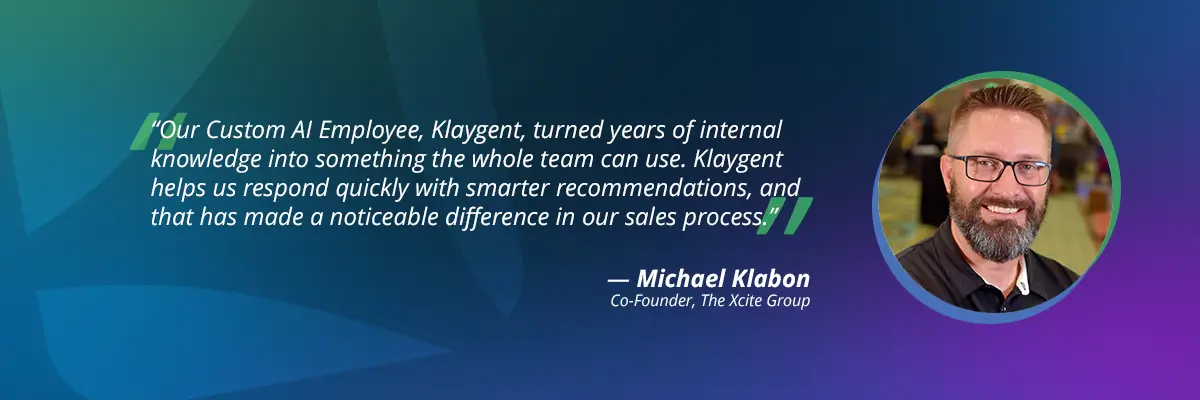
This example highlights how embedded AI employees convert internal knowledge into scalable sales execution.
Core Components of an AI Sales Enablement System
Building an effective AI sales enablement assistant requires four foundational layers.
1. Unified CRM Data Foundation
Your system must begin with clean, structured sales data. Without accurate pipeline visibility, AI cannot generate meaningful recommendations.
This layer includes:
- Clean and standardized pipeline stages
- Full contact lifecycle visibility
- Engagement tracking across channels
- Centralized deal activity history
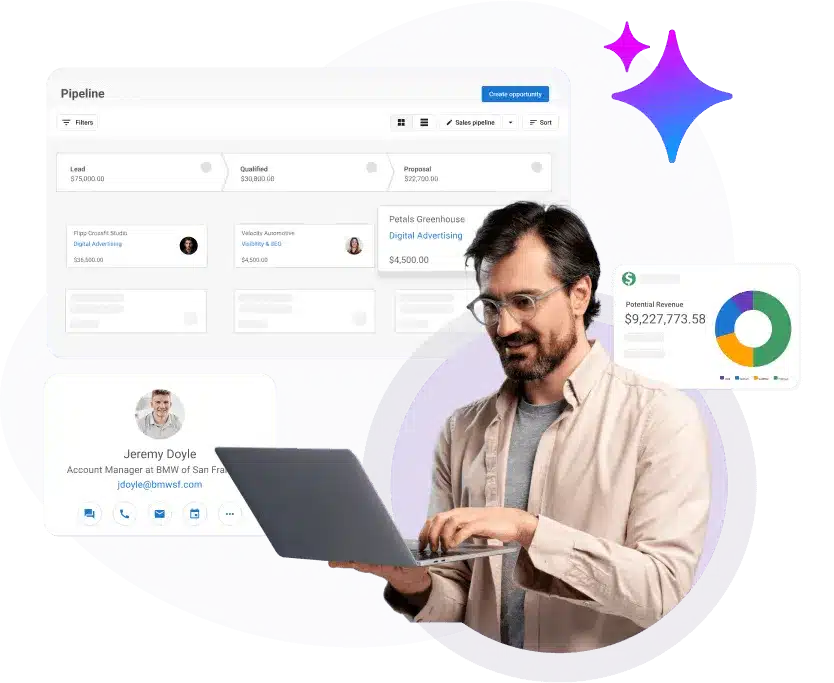
Strong CRM integration and reliable sales pipeline management ensure AI has the structured data needed to generate predictive insights.
2. Sales Workflow Automation Layer
Before introducing advanced intelligence, repetitive tasks should be automated. This improves efficiency and creates consistent data signals for AI analysis.
This layer includes:
- Automated follow-up sequences
- Task triggers based on pipeline movement
- Proposal and quote generation workflows
- Lead routing based on qualification rules
Effective sales workflow automation reduces administrative work and ensures no opportunity is missed.
3. AI Intelligence Layer
Once data and automation are structured, AI can generate real value through analysis and decision support.
This layer delivers:
- Predictive sales insights based on historical performance
- Intelligent lead qualification scoring
- Next-best-action AI recommendations
- Revenue intelligence signals that flag deal risk
This is where your AI sales enablement agent becomes proactive rather than reactive, guiding reps in real time.
4. Integration & Expansion Layer
An AI system should not operate in isolation. It must connect with additional tools and data sources to scale effectively.
This layer includes:
- App integrations
- Complementary sales enablement tools
- Third-party data enrichment services
Expanding through integrated sales enablement tools ensures your AI assistant evolves as your sales strategy grows.
Step-by-Step: How to Build an AI Sales Enablement Assistant
Step 1 – Audit Your Sales Process
Identify operational friction.
Assess:
- Where deals stall
- Manual bottlenecks
- Data silos
- Response time gaps
- Inconsistent follow-up behavior
This diagnostic defines where your AI sales enablement agent will create measurable lift.
Step 2 – Centralize CRM and Sales Data
AI requires structured inputs.
Ensure:
- Clean pipeline structure
- Standardized lifecycle stages
- Complete contact records
- Activity logging discipline
Start with CRM integration for strong sales pipeline management. Data quality determines AI accuracy.
Step 3 – Automate High-Frequency Tasks First
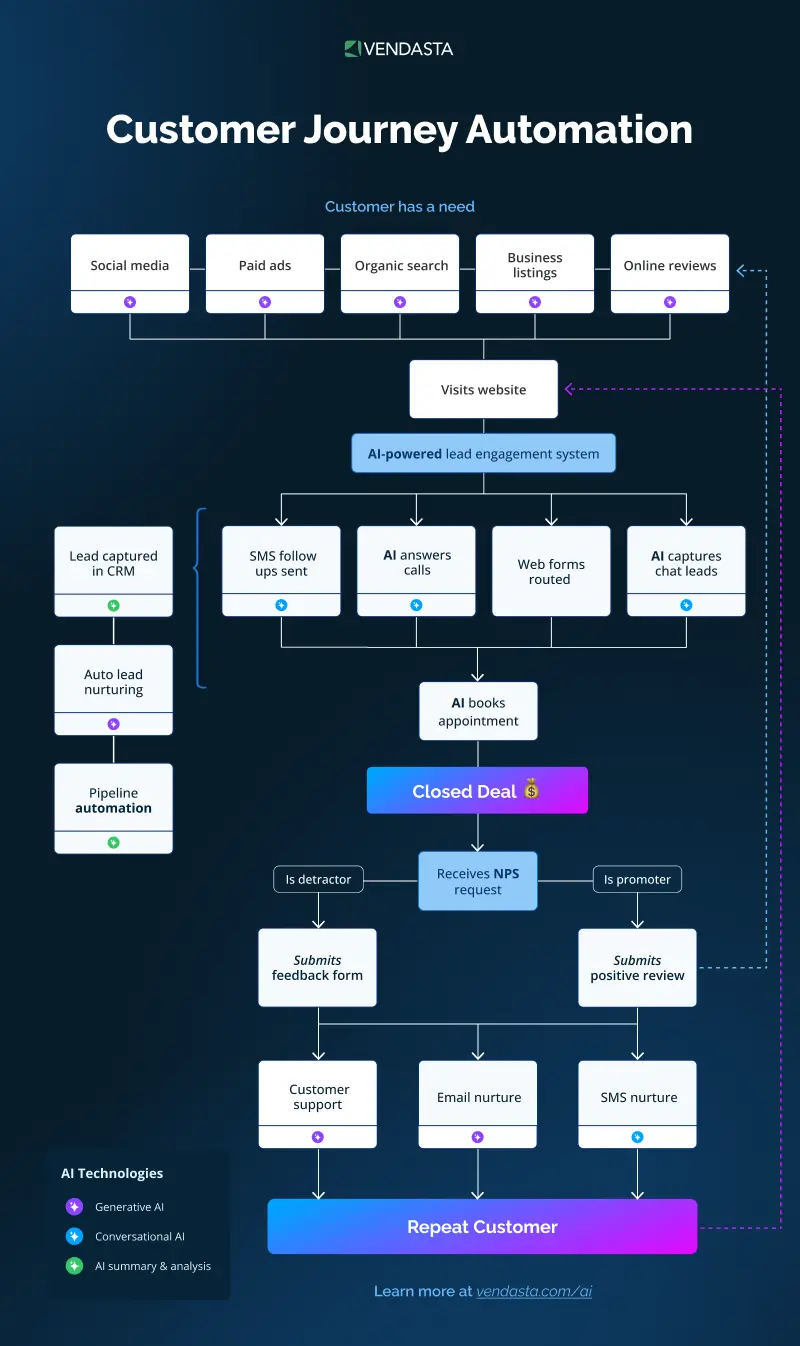
Before deploying deeper AI intelligence, automate repetitive workflows across the customer journey. AI performs best when execution layers are already structured.
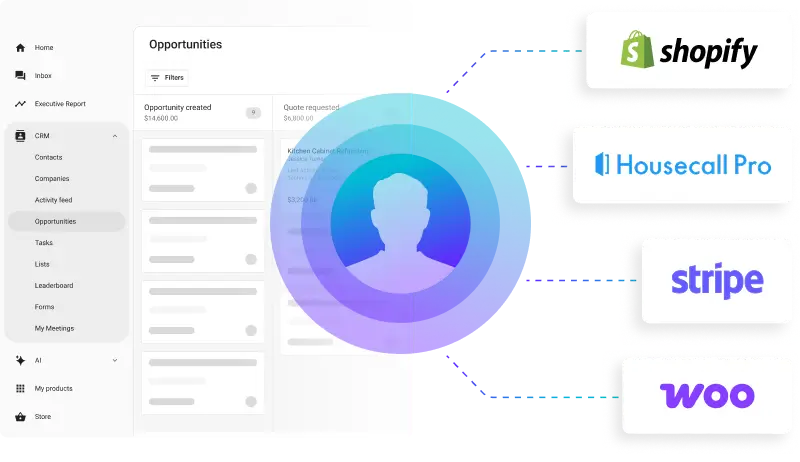
As shown above, customer acquisition and retention involve multiple touchpoints, lead capture, follow-ups, booking, nurturing, and repeat engagement.
Prioritize:
- Follow-ups across SMS, email, and chat
- Appointment confirmations and booking workflows
- Lead qualification triggers captured inside the CRM
- Pipeline reminders and stage-based automation
Automation reduces operational noise across the funnel.
It allows AI to focus on higher-value insights like prioritization, personalization, sentiment detection, and revenue optimization.
Step 4 – Deploy Custom AI Employees
Now assign AI-specific responsibilities.
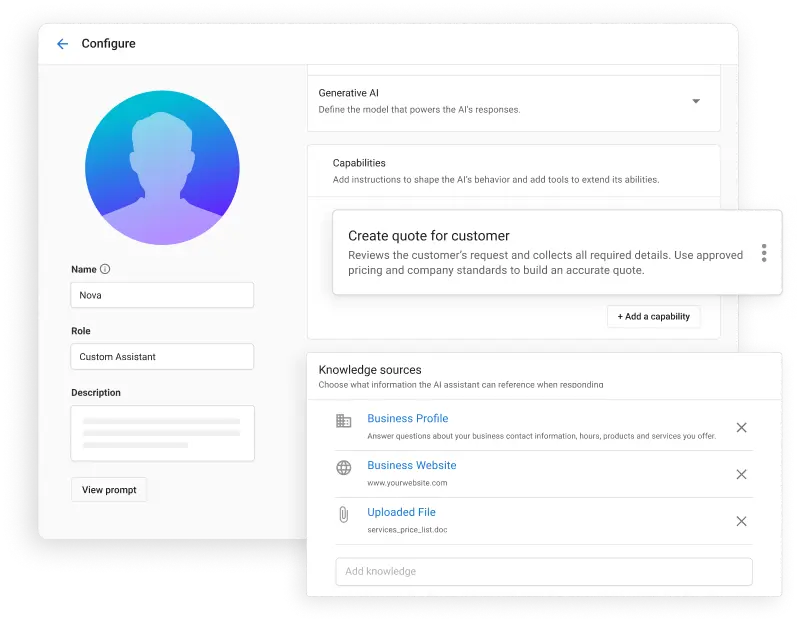
Examples:
Lead scoring
- Predict conversion probability
- Identify high-intent signals
Email drafting
- Context-aware follow-up messages
- Stage-based proposal nudges
Pipeline nudges
- Alert reps when deals stagnate
- Trigger escalation reminders
Your AI sales enablement agent should demonstrate:
- Predictive sales insights
- Intelligent lead qualification
- Behavioral pipeline awareness
At this stage, AI becomes embedded inside your daily sales execution.
When AI is embedded directly into daily workflows, the impact becomes immediate and measurable:
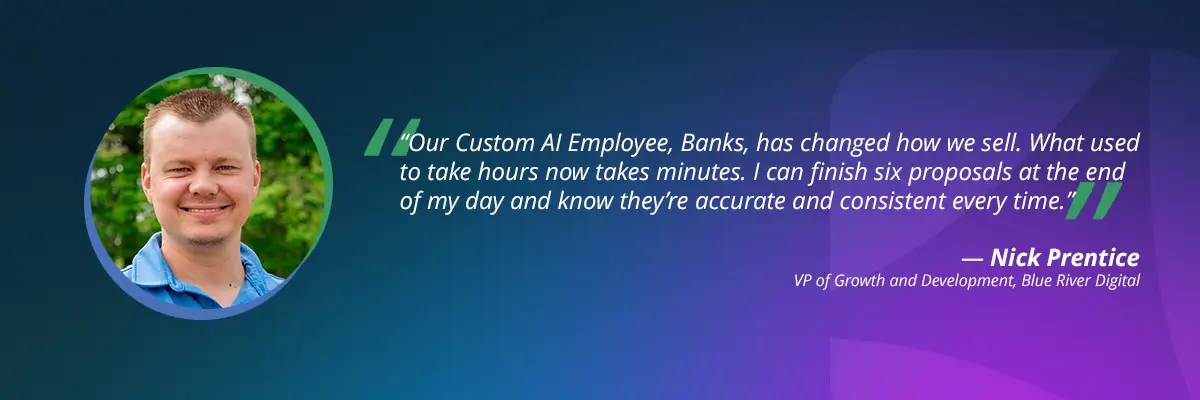
This demonstrates how AI sales enablement shifts from theory to tangible time savings and higher proposal velocity.
Internal AI in Action: Eliminating Information Hunting
In this video, This AI Agent Is Why Sales Reps Always Have the Right Answer on Live Calls, Vendasta demonstrates a powerful internal use case for an AI sales enablement assistant.
Instead of searching Google Drive, Slack threads, or spreadsheets, sales reps simply ask the AI for:
- Product specifications
- Pricing details
- Discount eligibility
- Proposal requirements
The AI retrieves answers from private documents and shows exactly where the information came from. That citation feature builds trust and prevents misinformation during live sales calls.
The example highlights a three-layer structure that reduces hallucination risk:
Layer 1: Knowledge Base
Upload PDFs, spreadsheets, and internal documentation.
Layer 2: Workflow Rules
Define response rules such as pricing restrictions and formatting standards.
Layer 3: Structured Data
Embed hard facts like pricing in structured formats so the AI treats them as fixed data.
This approach transforms static files into an internal AI sales enablement agent that reduces manager interruptions, accelerates onboarding, and improves sales confidence.
For agencies and SMB-focused businesses, the biggest ROI often comes from deploying AI for sales enablement internally before expanding customer-facing AI.
Step 5 – Layer in Predictive & Performance Analytics
Once operational AI is stable, expand into analytics.
Add:
- Forecasting models
- Win-rate pattern recognition
- Sales performance analytics
- Revenue intelligence dashboards
This strengthens strategic decision-making while AI handles tactical execution.
Real-World Use Cases for Custom AI Sales Enablement
Differentiate with an SMB-first lens.
Agencies Managing Multiple SMB Clients
- Standardized follow-up automation
- AI-driven proposal personalization
- Cross-sell detection
- Client-specific pipeline segmentation
AI employees operate across accounts without increasing headcount.

Franchisors Needing Centralized Reporting
- Territory-level pipeline visibility
- Performance benchmarking
- Intelligent coaching prompts
- Underperforming location alerts
AI creates franchise-wide revenue transparency.
MSPs Driving Upsell Revenue
- Renewal reminders
- Service expansion triggers
- AI-driven lifecycle nudges
- Intelligent churn prediction
Custom AI for sales enablement increases account lifetime value.
Software Vendors (ISVs) Scaling Acquisition
- Automated onboarding and feature-adoption nudges
- AI assistants for end-user support
- Trial-to-paid conversion optimization
- In-app behavior-triggered sales plays
AI streamlines the user journey from initial signup to long-term loyalty.
Measuring ROI of AI Sales Enablement
Revenue Lift =
(Close Rate Increase × Average Deal Size × Opportunity Volume)
Core Metrics to Track:
- Sales cycle length
- Win rate
- Speed-to-lead
- Revenue per rep
- Forecast accuracy
- Pipeline velocity
Expected Productivity Gains
Organizations implementing structured AI sales enablement typically observe:
- 15-30% reduction in sales cycle length
- 10-20% win rate improvement
- 25% faster response times
- Increased revenue per rep without increasing headcount
The real ROI comes from compounding efficiency:
- More qualified leads
- Faster follow-ups
- Higher close rates
- Better forecasting confidence
Custom AI employees do not replace your sales team. They multiply it.
Common Mistakes When Building an AI Sales Enablement Assistant
Even well-intentioned AI initiatives fail when foundational elements are overlooked. Here are the most common pitfalls in AI sales enablement deployments.
1. Automating Broken Workflows
If your pipeline stages are unclear or inconsistent, automation simply accelerates confusion.
Common issues:
- Undefined qualification criteria
- Inconsistent follow-up cadences
- Poor lead routing logic
An AI sales enablement agent can only optimize what already works. Fix workflow gaps before layering intelligence.
2. Poor CRM Data Hygiene
AI depends on structured, accurate inputs.
Red flags:
- Missing contact details
- Incomplete lifecycle stages
- Unlogged rep activities
- Duplicate records
Without clean data, predictive sales insights and intelligent lead qualification become unreliable.
Garbage in, garbage out applies directly to AI for sales enablement.
3. No Defined KPIs
Many teams deploy AI without aligning it to measurable revenue goals.
Before implementation, define:
- Close rate targets
- Sales cycle benchmarks
- Speed-to-lead standards
- Revenue per rep goals
Your AI sales enablement assistant should be optimized against clear performance metrics, not abstract efficiency.
4. Over-Automation Without Human Oversight
AI should support reps, not replace judgment.
Risks of over-automation:
- Impersonal messaging
- Poorly timed outreach
- Misinterpreted lead signals
- Automated actions without context
A strong AI sales enablement agent recommends and triggers, but still allows human approval for strategic deals.
Balance automation with human control.
5. Lack of Rep Training
Even the most advanced AI system fails if reps do not trust or understand it.
Common training gaps:
- Ignoring AI-generated nudges
- Not logging activity properly
- Overriding lead scores without context
AI adoption requires onboarding, usage clarity, and reinforcement.
Technology without enablement limits ROI.
Operational AI vs. Enterprise Infrastructure: Choosing the Right Sales Architecture
Not all AI sales enablement solutions are built for SMB ecosystems. Many enterprise platforms focus on data science infrastructure rather than operational execution.
Here’s how major categories differ.
1. Vendasta: Unified AI-Powered Sales Platform Built for SMB Ecosystems
Vendasta is purpose-built for agencies, franchisors, ISVs, and businesses serving SMBs.
As a unified AI-powered sales platform, it combines:
- CRM + automation + integrations in one environment
- Embedded AI sales enablement agent capabilities
- Built-in sales workflow automation
- Predictive sales insights
- Intelligent lead qualification
- Revenue intelligence dashboards
Instead of stitching together multiple tools, your business operates from a centralized system where custom AI employees are embedded directly into sales workflows.
This reduces tool sprawl, accelerates deployment, and enables scalable AI sales enablement without enterprise-level complexity.
Vendasta focuses on operational AI, not just analytics.
2. IBM: Enterprise-Heavy Infrastructure
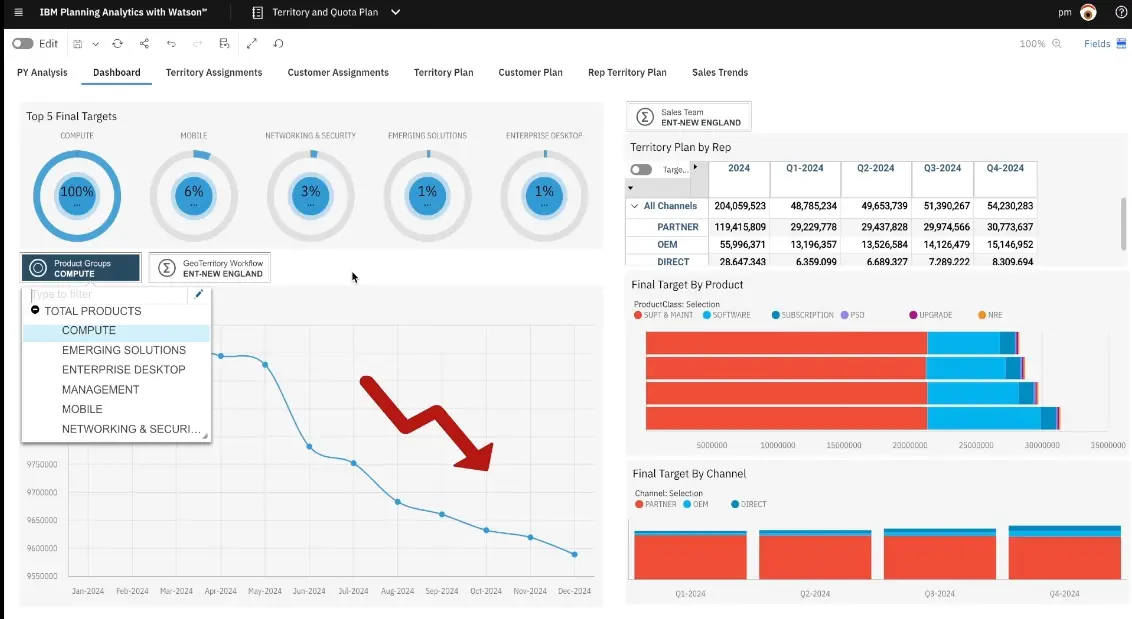
IBM’s AI offerings are:
- Enterprise-focused
- Complex to deploy
- Often data-science dependent
- Built for large-scale transformation initiatives
For SMBs or agencies, these solutions may introduce:
- Long implementation cycles
- High configuration overhead
- Significant internal technical requirements
Powerful, but often excessive for SMB revenue teams.
3. Mindtickle: Coaching-Centric Enablement
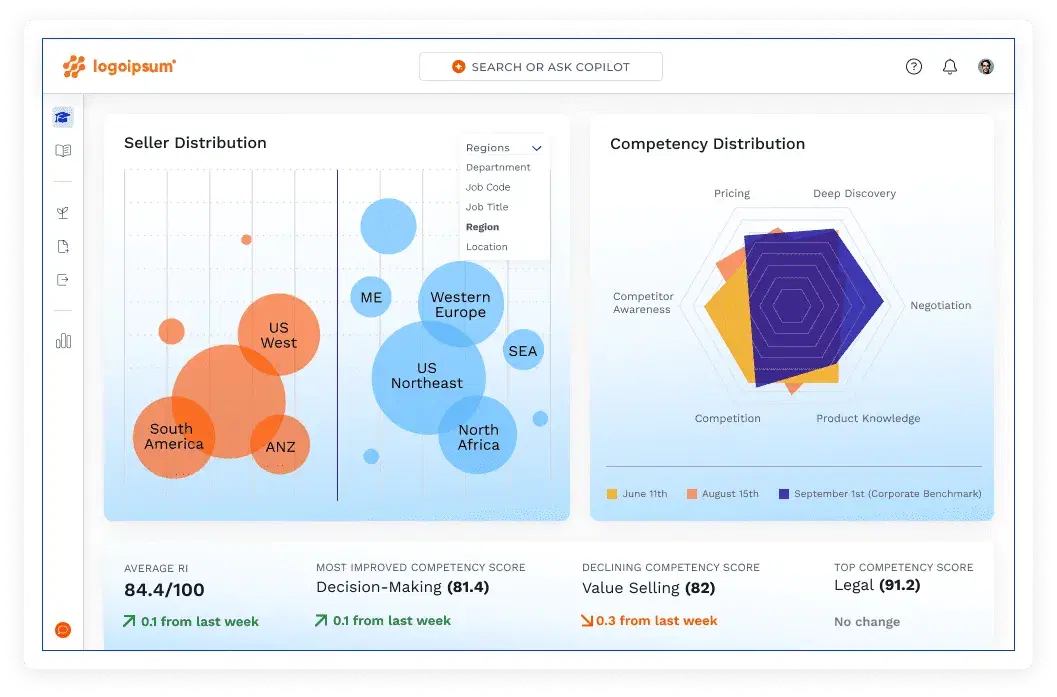
Mindtickle specializes in:
- Sales training
- Readiness assessments
- Coaching analytics
While valuable for performance development, it is not primarily built as an embedded AI sales enablement agent inside CRM workflows.
Its strength lies in rep improvement, not pipeline automation or predictive revenue execution.
4. Snowflake: Data Engineering Focus
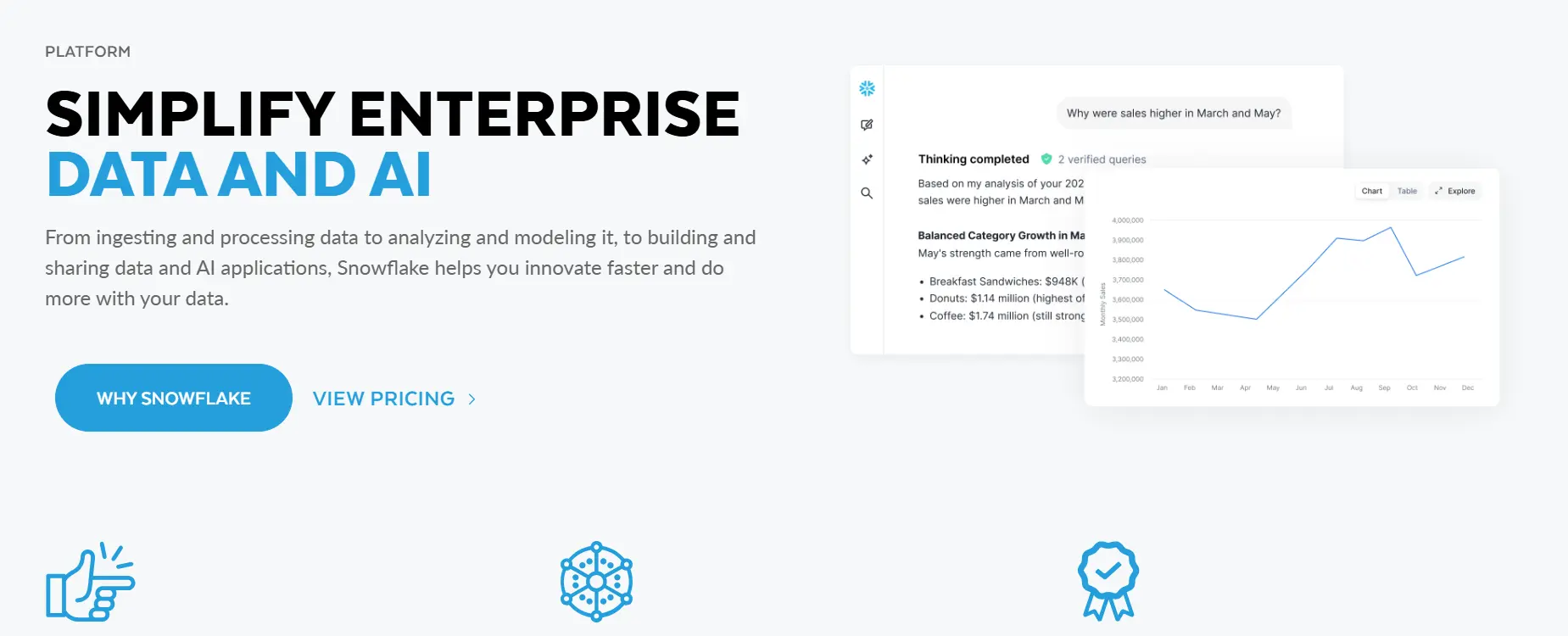
Snowflake excels in:
- Data warehousing
- Enterprise analytics
- Cross-platform data management
However:
- It does not function as a frontline AI assistant
- It requires engineering resources
- It centralizes data but does not autonomously execute sales workflows
It powers infrastructure, but does not act as a custom AI employee inside your sales pipeline.
The Strategic Difference
Enterprise AI platforms focus on infrastructure.
Custom AI assistants focus on execution inside daily revenue workflows.
For SMBs, agencies managing multiple clients, and franchise networks, the winning model is:
- Embedded inside daily sales workflows
- Built around structured CRM data
- Automated but human-guided
- Scalable without data-science teams
The goal of AI sales enablement is not to add complexity. It is to increase revenue performance with fewer manual touches and faster response times.
That requires AI designed for your ecosystem, not generic enterprise architecture.
The Future of AI Sales Enablement Agents
The next phase of the AI sales enablement agent goes beyond task automation and into proactive revenue management. Instead of reacting to stalled deals, AI will identify risk signals early, recommend next-best actions, and trigger timely outreach within defined guardrails.
We’ll see more autonomous AI sales agents that reprioritize pipelines dynamically, adjust follow-ups based on engagement data, and support reps with predictive sales insights in real time. Voice-enabled interactions will also reduce friction, allowing reps to access pipeline intelligence conversationally.
Most importantly, AI for sales enablement will expand across the full customer lifecycle—from acquisition to renewals and expansion, powered by integrated revenue intelligence platforms that unify CRM, automation, and analytics in one ecosystem.
AI Sales Enablement Assistant FAQs
1. What is an AI sales enablement assistant?
An AI sales enablement assistant is software that automates sales tasks, analyzes pipeline data, and provides predictive recommendations to improve close rates. It combines CRM integration, workflow automation, and AI insights to support sales teams more efficiently.
2. How do custom AI employees support sales enablement?
Custom AI employees are configured to handle specific tasks such as lead qualification, follow-up scheduling, and pipeline monitoring. They operate within your CRM and automation systems to deliver targeted AI for sales enablement.
3. What is the difference between AI sales enablement and traditional sales tools?
Traditional tools store and manage data, while AI sales enablement analyzes that data to generate next-best-action recommendations and automate workflows.
4. How long does it take to build an AI sales enablement assistant?
Most SMB-focused implementations can be completed in weeks, depending on CRM structure, workflow complexity, and integration requirements.
5. Do agencies benefit from AI sales enablement agents?
Yes. Agencies managing multiple client pipelines benefit from automation, centralized reporting, and predictive sales insights that scale operations efficiently.
6. Is AI for sales enablement secure?
Reputable platforms implement enterprise-grade security standards, encryption, and access controls to protect sales and customer data.
7. What ROI can businesses expect from AI sales enablement?
ROI typically comes from improved close rates, shorter sales cycles, and reduced administrative overhead.
8. Can AI sales enablement improve forecasting?
Yes. AI analyzes historical deal trends and pipeline activity to generate more accurate revenue projections.
9. What features should AI sales enablement software include?
Key features include CRM integration, sales workflow automation, predictive insights, lead scoring, and performance analytics.
10. How does Vendasta support AI sales enablement?
Vendasta provides a unified platform combining CRM, automation, and marketplace integrations designed specifically for businesses serving SMBs.