About Us
 Careers
 Leadership
 Board
Board Newsroom
Artificial intelligence is a core driver of modern marketing. From real-time ad optimization to personalized customer journeys, AI delivers the speed, efficiency, and insight that today’s SMB clients expect.
But here’s the catch: while the tools are powerful, it is the AI marketing strategy behind them that determines whether clients will understand, trust, and adopt them.
Clients do not need to be dazzled with jargon—they need to see how AI solves real business problems, improves ROI, and works seamlessly with human expertise.
Whether you are launching new services or refining your messaging, these strategies will help you create a compelling, scalable AI marketing strategy.
Accelerate growth with advanced AI tools at your fingertips
TL;DR
- An AI marketing strategy is a structured plan that aligns AI with business goals to attract, engage, and retain customers while improving ROI.
- Core components include clear KPIs, clean unified data, the right tools, workflow integration, and continuous optimization.
- Start small with pilots, prove ROI, then scale across channels and refine using measurable outcomes.
- Avoid pitfalls like over-automation, poor data hygiene, lack of training, weak change management, and set-and-forget deployments.
What Is an AI Marketing Strategy?
An AI marketing strategy is a structured plan for using artificial intelligence to improve how your business attracts, engages, and retains customers.
Instead of just adding AI tools on top of your existing workflow, it connects technology with your broader marketing goals—like driving more qualified leads, improving customer experiences, and increasing lifetime value.
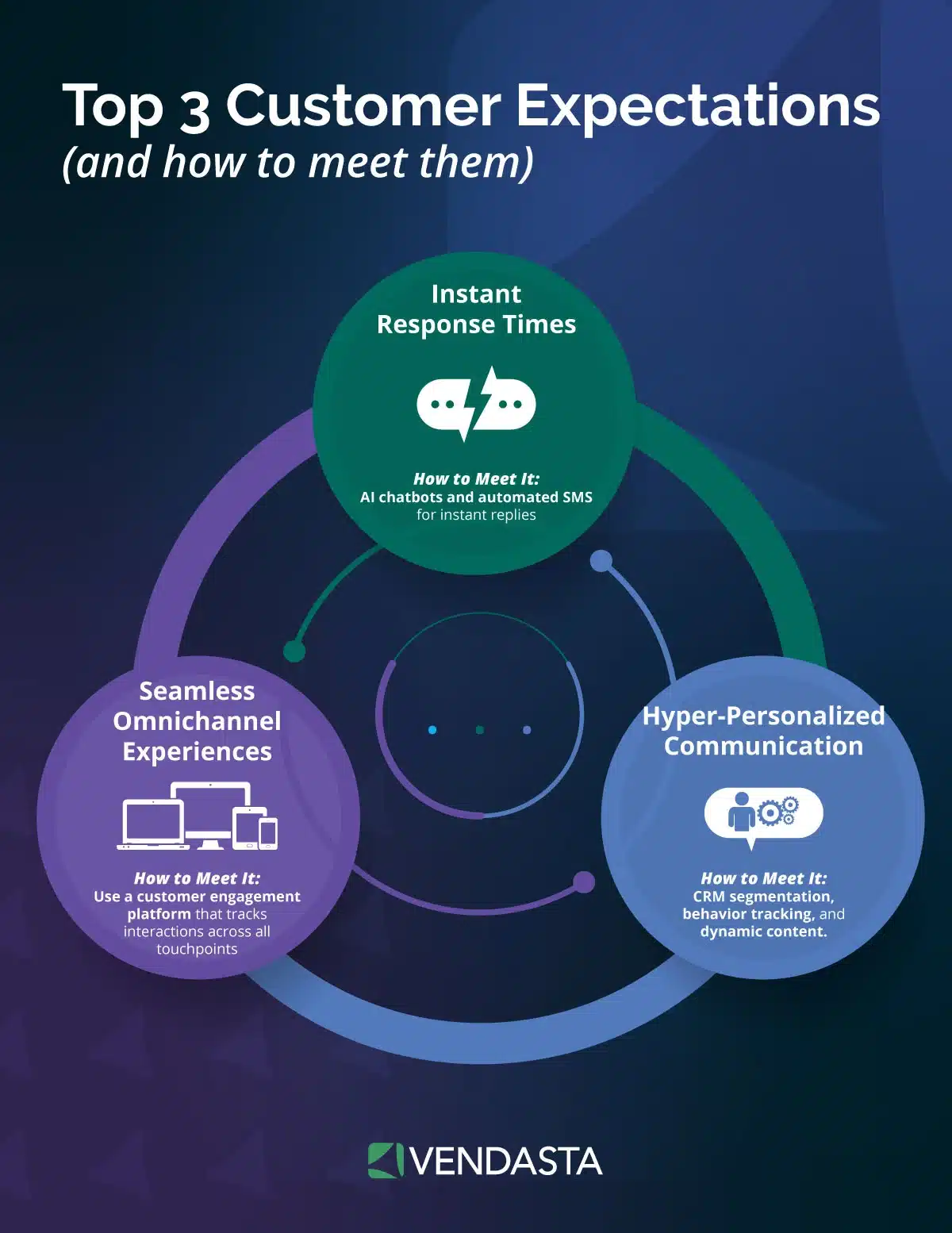
At its core, an AI marketing strategy combines three things:
- Clear business objectives.
- Quality data from across your customer journey.
- The right mix of AI tools and automation.
When these elements work together, businesses can move beyond guesswork. For example, AI can analyze customer behavior to predict who is most likely to purchase, recommend the right products at the right time, or even automate content creation that fits your brand voice.
This shifts marketing from being reactive to proactive—anticipating customer needs instead of just responding to them.
The difference between using AI tools and having an AI marketing strategy comes down to alignment.
A strategy ensures that every AI application, from chatbots to predictive analytics, is tied directly to measurable outcomes. Without this alignment, companies risk wasting time and budget on disconnected tools that do not deliver long-term value.
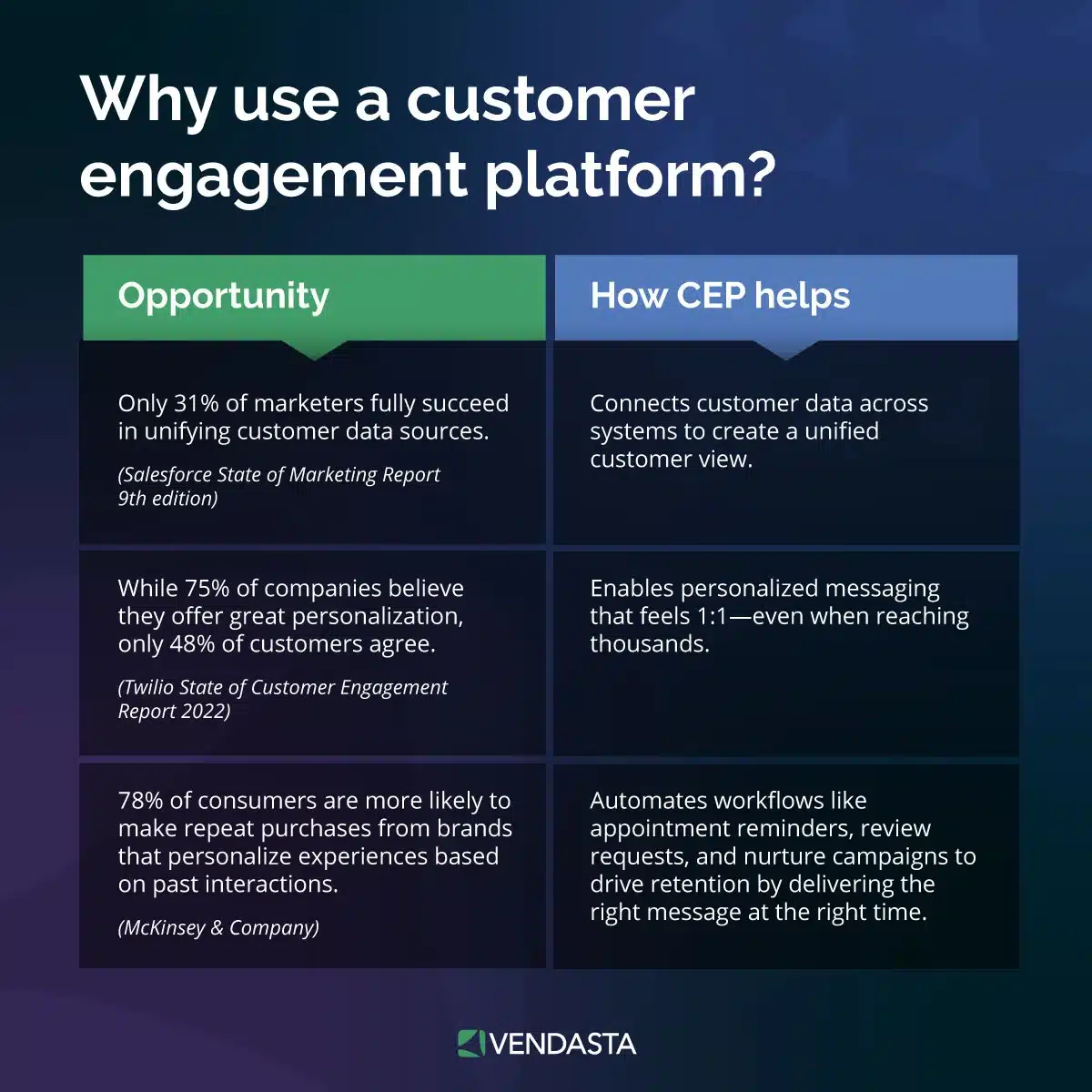
For small and medium-sized businesses (SMBs), building an AI marketing strategy levels the playing field.
With customer engagement platforms like Vendasta, you can integrate AI into your daily operations—automating tasks, personalizing outreach, and giving your team more time to focus on growth rather than manual processes.
The “Artificial Human” Framework: Roles in Your AI Strategy
To build a truly scalable AI marketing strategy, you must stop looking at AI as a single “tool” and start viewing it as a structured digital workforce. The most effective way to manage AI is by mirroring a high-performing human department.
By categorizing your AI usage into three distinct tiers—The Director, The Manager, and The Individual Contributor (IC)—you ensure that your strategy remains focused on results rather than just “generating noise.”
1. The Director (Human Strategy & Vision)
In this framework, you are the Director. AI cannot replace your unique business intuition, your deep understanding of your local market, or your brand’s “soul.”
Your responsibility: Defining the “North Star” metrics, setting the brand voice, and approving the final output.
2. The Manager (Reasoning & Orchestration)
The “Manager” layer is powered by advanced LLMs (Large Language Models) like Claude 3.5 or GPT-4o. These models don’t just “write”; they reason.
Responsibility: Taking the Director’s vision and breaking it down into actionable plans. A “Manager” AI can analyze a 50-page PDF of market research and outline a 12-month content calendar.
The Manager AI bridges the gap between a big idea and a finished product, handling the heavy lifting of logic and organization.
3. The Individual Contributor (Execution & Agentic AI)
This is where the work gets done. “IC” AI agents are specialized, task-oriented bots that perform high-frequency actions without human fatigue.
Responsibility: Writing blog posts, responding to Google Reviews, booking appointments on a calendar, and monitoring social media mentions.
Comparing the Roles: Who Does What?
To visualize how this framework operates in a real-world marketing agency or MSP, refer to the table below:
| Role | Human vs. AI | Primary Function | Key Output |
| Director | Human | Strategy & Approval | Creative Briefs & Budgets |
| Manager | Reasoning AI | Planning & Analysis | Campaign Outlines & Data Summaries |
| IC (Agent) | Agentic AI | Execution & Tasking | Published Blogs, Booked Meetings |
Moving Toward an “Agentic” Future
The most successful AI marketing strategies in 2026 are shifting from “Generative” (making things) to “Agentic” (doing things). Instead of just having an AI that writes an email, you now have an AI that sends the email, monitors the reply, and schedules the sales call in your CRM.
Key Components of a Successful AI Marketing Strategy
Building an effective AI marketing strategy requires more than adopting the latest tools. It’s about creating a framework that aligns technology with your business goals. The following components form the foundation of a winning strategy.
1. Define Business Goals and KPIs
Start by clarifying what you want AI to achieve. Whether it’s boosting lead generation, increasing conversion rates, or improving customer retention, setting clear KPIs ensures every AI initiative is tied to measurable results.
2. Data Collection, Quality, and Governance
AI is only as strong as the data it runs on. Invest in gathering clean, unified data from all customer touchpoints—CRM, website, social media, and email. Good governance ensures compliance and maintains customer trust.
3. Choose the Right AI Tools and Platforms
Select tools that fit your goals and integrate with your existing systems. Look for solutions that support scalability, automation, and personalization. For SMBs, platforms like Vendasta simplify this process by offering AI-driven tools in one place.
4. Integrate AI Into Workflows
AI works best when seamlessly embedded into daily operations. Automate repetitive tasks such as email campaigns, social media scheduling, and lead scoring, so your team can focus on strategy and creativity.
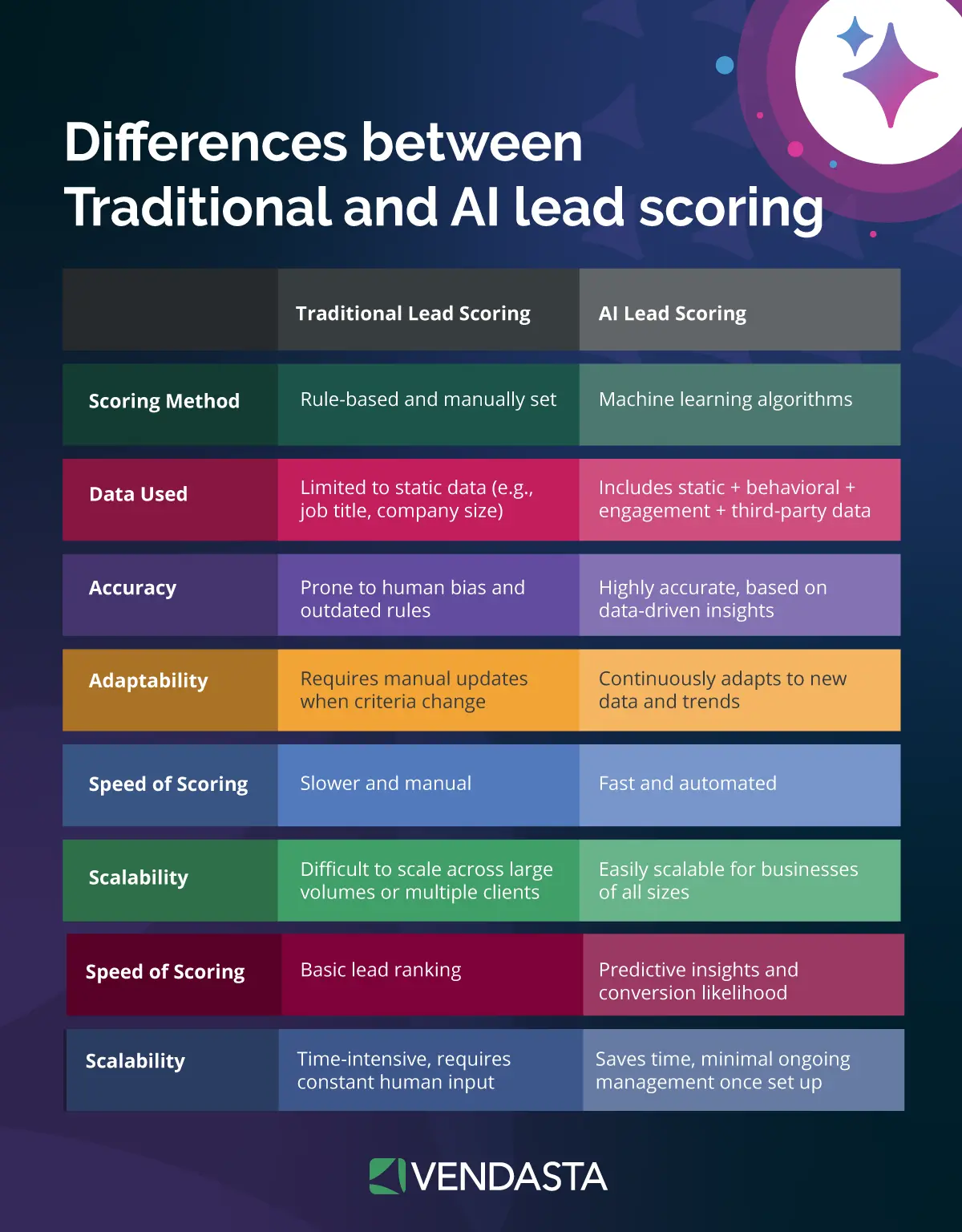
5. Continuous Learning and Optimization.
AI is not a set-and-forget solution. Regularly monitor performance, test new use cases, and refine your approach as customer behavior and technology evolve. Businesses that embrace continuous improvement stay ahead of competitors.
How AI Transforms Marketing in Practice
AI is reshaping marketing from a manual, reactive process into a data-driven, proactive engine for growth.
Instead of relying on guesswork, businesses can use predictive AI to anticipate customer needs, personalize interactions, and optimize campaigns in real time.
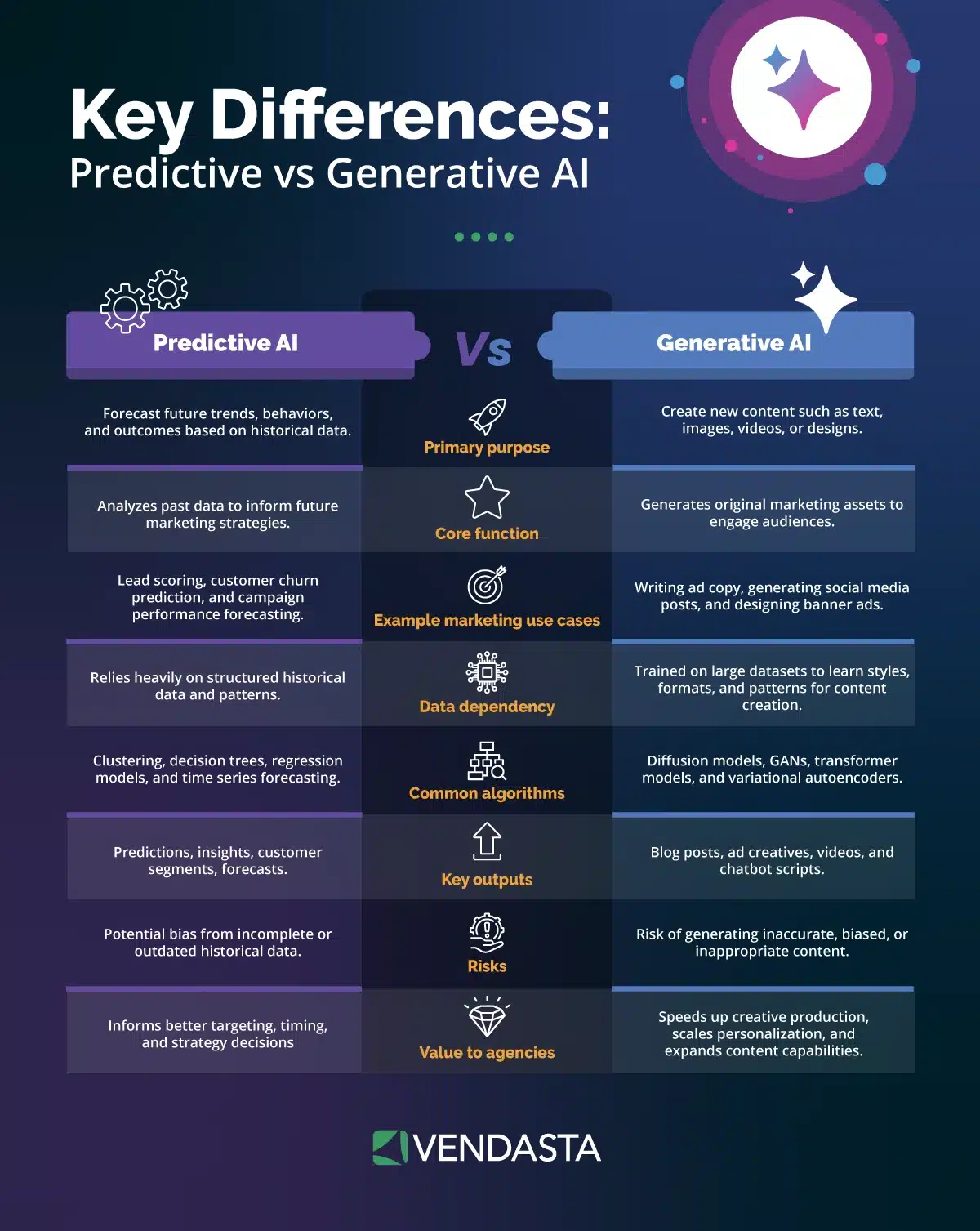
Here are some of the most powerful applications in action.
Predictive Analytics for Customer Behavior
AI analyzes past interactions and purchasing trends to forecast future actions. This allows businesses to identify high-value leads, predict churn, and allocate budget to the most promising opportunities.
Personalized Content and Recommendations
From product suggestions to tailored email campaigns, AI helps deliver the right message at the right moment. Personalized recommendations increase engagement, build loyalty, and boost conversion rates.
Automated Content Generation and Distribution
AI tools can generate blog posts, social captions, or ad copy at scale, while also optimizing delivery across multiple channels. This saves time and ensures consistent messaging without burning out your team.
AI Chatbots and Customer Support
Chatbots powered by natural language processing handle FAQs, schedule appointments, and even complete transactions. Available 24/7, they reduce response times and free human teams to focus on complex customer needs.
By weaving these applications into your strategy, AI transforms marketing into a smarter, faster, and more personalized discipline. This helps your business compete at a level once reserved for enterprise brands.
How AI Enhances Traditional Marketing Frameworks
While many view artificial intelligence as a replacement for foundational marketing, the most effective AI marketing strategy uses technology to supercharge existing frameworks. By applying AI to classic models like STP and the 4 Ps, your business can move from static, broad-stroke campaigns to dynamic, real-time execution.
STP: Segmentation, Targeting, and Positioning in the Age of AI
The traditional STP model often relies on broad demographics: age, location, or job title. AI shifts this toward “hyper-personalization” by analyzing behavioral nuances that the human eye (and traditional software) often misses.
- Micro-Segmentation: AI can identify thousands of sub-segments based on real-time data points, such as browsing intent, past purchase velocity, and even the sentiment of social media interactions.
- Predictive Targeting: Instead of targeting who a customer was, AI targets who they are about to be. It predicts which leads are most likely to convert in the next 48 hours, allowing you to focus your ad spend where it counts.
- Dynamic Positioning: With AI, your value proposition can shift automatically. If a user is price-sensitive, the AI highlights your cost-effectiveness; if they value speed, it emphasizes your rapid turnaround—all on the same landing page.
The 4 Ps: Product, Price, Place, and Promotion
AI doesn’t just change how you talk to customers; it changes the fundamental variables of your offering.
- Product: AI analyzes customer feedback and support tickets at scale to identify “feature gaps.” This allows you to evolve your services based on what SMBs actually need, rather than guesswork.
- Price: Dynamic pricing models allow your business to optimize rates in real-time based on demand, competitor moves, and customer willingness to pay. This ensures you never leave money on the table during peak seasons.
- Place: AI optimizes “placement” by determining exactly where your audience is most active at any given moment, whether that’s a specific niche forum, a LinkedIn feed, or an AI search summary, and ensuring your brand is present there.
Promotion: Beyond just writing ads, AI optimizes the timing and cadence of promotions. It knows that a specific lead is most likely to engage with a promo code on a Tuesday morning and automates the delivery to match that window.
Comparing Traditional vs. AI-Enhanced Frameworks
| Element | Traditional Approach | AI-Enhanced Approach |
| Segmentation | Static demographics (Age, Gender) | Dynamic behaviors (Intent, Sentiment) |
| Pricing | Fixed or seasonal markups | Real-time, demand-based elasticity |
| Promotion | Scheduled “blasts” | Trigger-based, individualized delivery |
| Positioning | One-size-fits-all messaging | Hyper-personalized value propositions |
Reasons to Implement AI Search Optimization in Marketing Strategy
The search landscape has shifted. Traditional SEO—optimizing for a list of blue links—is no longer enough. To remain visible in 2026, your AI marketing strategy must prioritize Generative Engine Optimization (GEO). This ensures your brand is the one cited when a user asks ChatGPT, Claude, or Google’s Gemini for a recommendation.
Key Takeaway: AI search optimization isn’t just about ranking; it’s about becoming the trusted source that AI models use to synthesize answers for your potential customers.
1. Capturing High-Intent Conversational Queries
Users are moving away from fragmented keywords like “best marketing agency” and toward full-sentence questions: “Which marketing agency in Saskatoon has the best ROI for HVAC companies?” AI search engines are designed to answer these complex, long-tail queries directly. By optimizing your content for conversational natural language, you position your business to be the “concise answer” the AI provides.
2. Establishing Authority through “Brand Citations”
Generative AI models prioritize sources that demonstrate high E-E-A-T (Experience, Expertise, Authoritativeness, and Trustworthiness). When you implement AI search optimization, you focus on:
- Structured Data: Helping AI “read” your site’s hierarchy.
- Fact-Based Content: Using statistics and citations that AI models can verify.
- Unique Insights: Providing original data that makes your brand a “primary source.”
3. Dominating the “Zero-Click” Search Reality
With AI Overviews, many users get their answers without ever clicking a link. If your business isn’t optimized to appear inside that AI summary, you are invisible.
Traditional SEO vs. AI Search Optimization (GEO)
| Feature | Traditional SEO | AI Search Optimization (GEO) |
| Primary Goal | Rank #1 on Google | Be the “Answer” in the AI summary |
| Format | Keyword-dense headers | Structured FAQs and bulleted lists |
| Metric | Click-Through Rate (CTR) | Brand mentions and citations |
| User Intent | Information seeking | Problem-solving & direct action |
4. Future-Proofing Your Lead Generation
As more users integrate AI into their daily workflows—using AI to “research for them”—your marketing strategy must adapt to be “machine-readable.” Implementing these optimizations now ensures that as AI assistants become the primary gatekeepers of information, your business remains at the forefront of the conversation.
7 Steps to Design a Winning AI Marketing Strategy
Building a successful AI marketing strategy isn’t about buying every tool on the market; it’s about architecting a system that works while you sleep. Follow this battle-tested, 7-step framework to transform your marketing from a manual grind into an AI-powered growth engine.
Step 1: Set Your “North Star” Metrics
Before touching a single piece of software, define what success looks like. AI can optimize for almost anything, so you must give it a target.
- Key KPIs: Focus on Customer Acquisition Cost (CAC), Lifetime Value (LTV), and Return on Ad Spend (ROAS).
- The Goal: Use AI to lower your CAC by automating lead qualification and raise your LTV through personalized, automated retention campaigns.
Step 2: Audit Your Data Foundation
AI is only as good as the data it’s fed. If your customer information is scattered across spreadsheets and sticky notes, your AI will produce inaccurate results.
- The Solution: You need a unified CRM (Customer Relationship Management) system. Centralizing your data allows your AI to “read” the full history of a customer, leading to smarter predictions and more accurate automation.
Step 3: Map the AI Customer Journey
Walk through your current sales funnel and look for “friction points”—the places where leads go cold because a human didn’t respond fast enough.
- Instant Relief: Deploy an AI Receptionist to handle after-hours inquiries or a chatbot to answer questions instantly. By mapping these gaps, you identify exactly where digital labor can provide the highest ROI.
Step 4: Deploy Your AI Workforce
Now it’s time to hire your digital team. Rather than duct-taping ten different apps together, use an integrated ecosystem.
- The Integration Strategy: Choose a platform that provides a cohesive team of “Individual Contributors” that all talk to the same database. This prevents data silos and ensures your AI tools work in harmony rather than in isolation.
Step 5: Infuse “Human-in-the-Loop” (HITL) Processes
Never “set it and forget it” when it comes to brand reputation. Every AI-generated draft, whether a blog post or a client email, needs a human “Director” to review it.
- Brand Alignment: Use the human touch to ensure the tone is right and the facts are 100% accurate.
- Bold Takeaway: AI provides the draft; humans provide the soul and the final “Stamp of Approval.”
Step 6: Automate the Nurture Sequence
Static email blasts are a thing of the past. A modern AI marketing strategy uses “trigger-based” automation.
- Personalization at Scale: Use AI to monitor real-time behavior. If a lead visits your pricing page three times in one hour, your AI should automatically trigger a personalized outreach email, striking while the iron is hot.
Step 7: Measure, Iterate, and Scale
The final step is to use AI to analyze your performance. Traditional reporting tells you what happened; AI-driven reporting tells you why it happened and what to do next.
Double Down: Use automated reports to see which AI-driven campaigns are moving the needle on your North Star metrics. If a specific AI workflow is driving 40% more traffic, shift more resources there and scale your success.
Common Mistakes to Avoid
While AI can unlock major advantages, many businesses stumble when they rush adoption without a clear plan. Avoiding these marketing automation mistakes ensures your AI marketing strategy drives measurable results.
Over-Reliance on Automation
AI is powerful, but it should not replace human creativity and judgment. Over-automating campaigns can make messaging feel robotic and damage customer trust.
Balance automation with authentic, human-driven engagement.
Poor Data Quality or Siloed Systems
AI depends on accurate, unified data. If your CRM, website, and social platforms are disconnected or filled with inconsistent data, AI insights will be unreliable.
Investing in clean, centralized data is critical.
Lack of Human Oversight and Creativity
AI can generate and optimize, but it cannot fully understand brand tone, context, or ethics.
Marketers must provide guidance, review outputs, and add the creative spark that differentiates your brand.
Ignoring Change Management
Rolling out AI without preparing your team often leads to resistance or underuse.
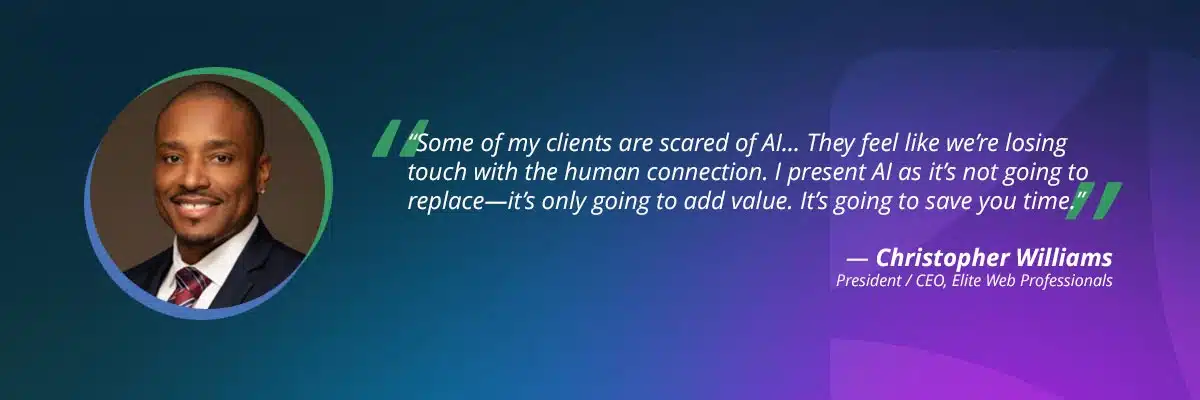
Training and clear communication ensure employees understand how AI supports their roles rather than replaces them.
Treating AI as a One-Time Setup
AI is not “set it and forget it.” Customer behavior, platforms, and algorithms evolve constantly.
Businesses that fail to monitor and optimize AI systems risk falling behind competitors who iterate continuously.
By steering clear of these mistakes, you can turn AI into a sustainable competitive advantage rather than a costly experiment.
Future Trends in AI Marketing
AI in marketing is advancing at a rapid pace, and businesses that stay ahead of the curve will have a significant competitive advantage. The following trends are shaping the future of AI-driven marketing.
Generative AI for Creative Content
AI is evolving beyond simple automation to create original, on-brand content. From ad copy to video scripts, generative AI enables marketers to scale creative output while maintaining quality.
Real-Time Campaign Optimization
AI will increasingly adjust campaigns on the fly—shifting ad spend, personalizing offers, and testing variations instantly. This level of agility ensures higher ROI and faster response to market changes.
Hyper-Personalization at Scale
Marketers will move past broad segments and toward truly individualized experiences. AI will combine behavioral, contextual, and predictive data to deliver personalized messaging to each customer in real time.
Ethical AI and Responsible Use
As adoption grows, so does the need for transparency and ethical practices. Customers expect brands to use AI responsibly, protecting data privacy and avoiding bias in algorithms. Trust will become a key differentiator.
AI Employees and Virtual Assistants
AI will not just support tasks—it will act as digital team members. From managing customer conversations to generating reports, AI employees will give SMBs enterprise-level capabilities at a fraction of the cost.
Keeping pace with these trends allows businesses to future-proof their marketing strategy, ensuring they can adapt quickly as AI continues to evolve.
Leading AI Marketing Tools for 2026
Choosing the right technology is the cornerstone of any AI marketing strategy. While the market is flooded with “point solutions” that solve single problems, the most successful businesses in 2026 prioritize integrated ecosystems that allow data to flow seamlessly between tools.
Below are the top-rated solutions for businesses looking to scale their marketing operations through artificial intelligence.
1. Vendasta: The All-in-One AI Workforce
Vendasta stands alone as the premier AI customer acquisition and engagement platform specifically built for marketing agencies, MSPs, and businesses supporting SMBs. Unlike disjointed tools, it provides a unified environment where your CRM and your AI employees live under one roof.
- Core Strength: It provides a complete AI workforce, including an AI Receptionist to capture leads 24/7, an AI Social Media Manager for localized SEO, and an AI Reputation Specialist to automate review responses.
- Why It Wins: By combining these “Individual Contributors” with robust reporting and a centralized database, Vendasta eliminates the manual data entry that usually plagues growing businesses.
2. Jasper: Best for Enterprise Content Ideation
For large-scale teams that need to generate massive volumes of marketing copy while maintaining strict brand guidelines, Jasper remains a top contender. It is specifically designed for enterprise-level content strategies.
- Core Strength: Its “Brand Voice” feature allows teams to upload style guides so the AI mimics their specific tone across blogs, ads, and emails.
- Why It Wins: It’s an excellent tool for the “Manager” role in your framework, helping to brainstorm creative directions and scale content production across multiple departments.
3. HubSpot AI: Best for Mid-Market Inbound Automation
HubSpot has deeply integrated AI into its classic inbound marketing suite. It is an ideal fit for mid-market companies that already rely heavily on complex email workflows and lead scoring.
- Core Strength: Its AI-powered “Content Remix” tool can take a single blog post and automatically turn it into social posts, emails, and landing pages.
- Why It Wins: It excels at inbound workflow automation, helping marketing managers save hours on manual segmentation and campaign setup.
4. Claude & OpenAI: Best for Strategic Reasoning
When you need a “Manager” to help with the deep thinking, Anthropic’s Claude and OpenAI’s ChatGPT are the industry standards. These are not just content generators; they are reasoning engines.
- Core Strength: These models are best used for strategic planning, data analysis, and complex problem-solving. They can ingest a massive amount of market data and provide a structured 90-day marketing plan in seconds.
- Why It Wins: They serve as the “brain” of your operation, helping the “Director” (you) refine ideas before passing them down to your specialized AI agents for execution.
Comparison of Top AI Marketing Solutions
| Platform | Primary Use Case | Target Audience | Key AI Feature |
| Vendasta | End-to-End AI Workforce | Agencies & MSPs | Integrated AI Employees |
| Jasper | High-Volume Content | Enterprise Teams | Brand Voice Memory |
| HubSpot | Inbound Automation | Mid-Market B2B | AI Workflow Generation |
| Claude/OpenAI | Strategy & Reasoning | All Businesses | Advanced Logic & Analysis |
How Vendasta Supports Your AI Marketing Strategy
Building an AI marketing strategy is one thing—executing it effectively is another. Many small and medium-sized businesses (SMBs) face the challenge of juggling multiple disconnected tools while trying to compete with larger brands.
That is where Vendasta comes in.
Vendasta is an AI customer acquisition and engagement platform built for SMBs and the partners who support them. By combining AI, automation, and your business’s unique data, Vendasta simplifies every stage of the customer journey from awareness to long-term loyalty.
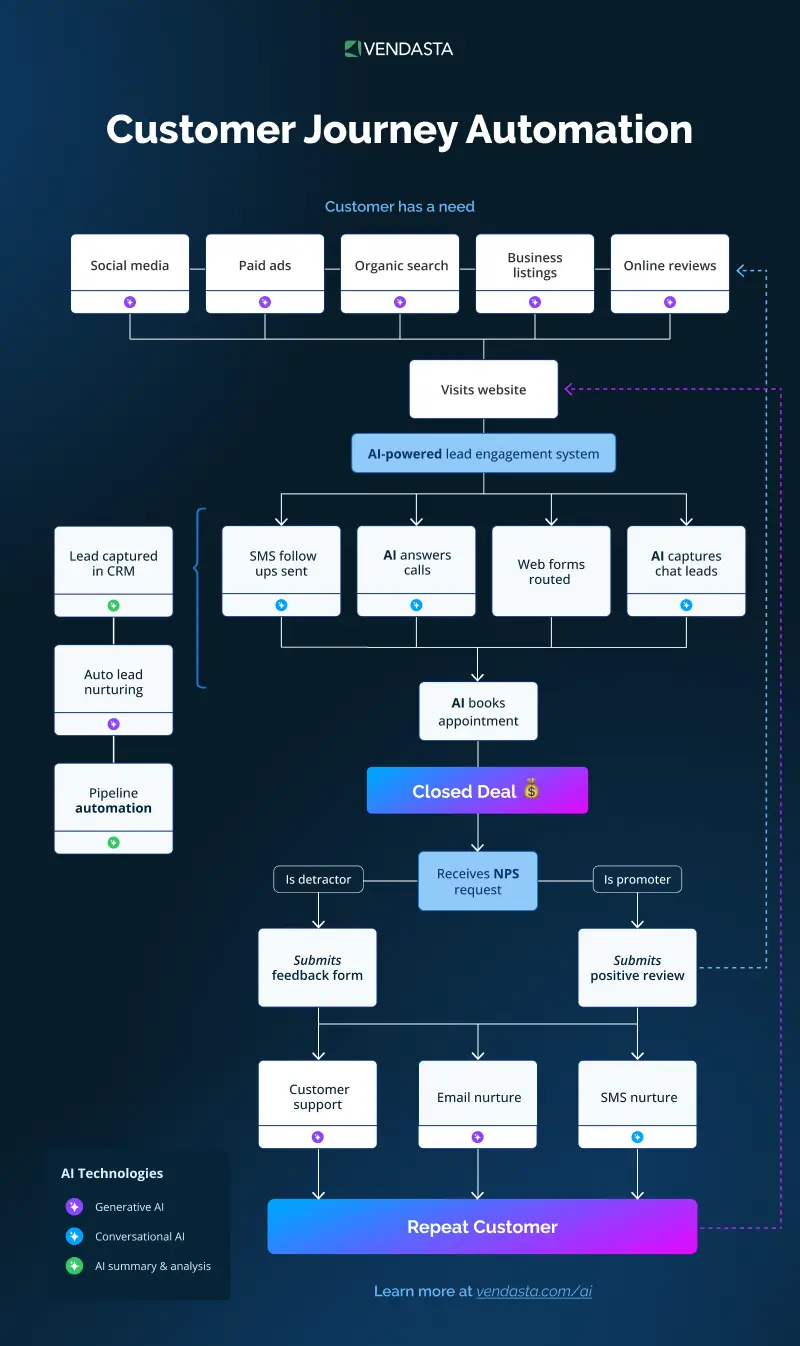
With Vendasta’s AI, you can:
- Automate repetitive marketing and sales tasks with AI employees.
- Personalize outreach at scale through unified customer data.
- Streamline operations by replacing multiple disjointed tools with one platform.
- Deliver measurable results for your business or clients, increasing lifetime value.
For channel partners such as marketing agencies, franchisors, and managed service providers (MSPs), Vendasta provides AI solutions you can resell and manage on behalf of SMBs, including AI search optimization strategies for marketing agencies. This means you can offer enterprise-grade marketing strategies without the overhead of building everything from scratch.
In short, Vendasta helps you turn AI from a buzzword into a practical, revenue-driving strategy.
Turn AI Marketing Strategy Into Growth
An effective AI marketing strategy is no longer optional—it is the framework that determines whether your business can compete and grow in today’s digital-first world.
By aligning clear goals, quality data, and the right AI-powered tools, you can move beyond one-off tactics and build a scalable system that delivers real value.
For SMBs and the partners who support them, the value of AI lies in making marketing smarter, faster, and more personal—without adding complexity.
Vendasta empowers you to put this strategy into action. Schedule a free demo with Vendasta today and see how AI can work for you.
AI Marketing Strategy FAQs
1. What is an AI marketing strategy?
An AI marketing strategy is a plan that integrates artificial intelligence into your marketing efforts to improve efficiency, personalization, and results. It goes beyond using individual tools by aligning AI with your business goals.
2. How does AI improve marketing performance?
AI helps analyze customer data, predict behavior, personalize campaigns, and automate tasks. This leads to higher engagement, better conversion rates, and more efficient use of marketing budgets.
3. Do small businesses really need an AI marketing strategy?
Yes. AI levels the playing field by helping SMBs compete with larger brands. Platforms like Vendasta make it affordable and accessible by offering AI tools that are easy to integrate into existing workflows.
4. What are examples of AI in marketing?
Examples include chatbots, predictive analytics, automated email campaigns, dynamic pricing, and content generation. Each application is designed to improve efficiency and customer experience.
5. How do I start building an AI marketing strategy?
Begin by defining goals, auditing your current tools, and identifying areas where AI adds value. Then, implement pilot projects before scaling across channels. Vendasta simplifies this process by combining AI and CRM tools in one platform.
6. What data is needed for AI marketing?
AI requires clean, structured data from customer interactions, website analytics, CRM records, and social engagement. The better the data quality, the more accurate and effective your AI-driven insights will be.
7. Can AI replace human marketers?
No. AI enhances marketing by handling repetitive tasks and providing insights, but human creativity and strategy remain essential. The best results come from blending human oversight with AI efficiency.
8. What mistakes should I avoid when using AI in marketing?
Common pitfalls include relying too heavily on automation, neglecting data quality, failing to train staff, and treating AI as a one-time setup. Ongoing optimization is key.
9. How does Vendasta’s platform support agencies and partners?
Vendasta offers AI-powered automation tools that agencies, franchisors, and MSPs can resell. This allows partners to deliver enterprise-level strategies to SMB clients at scale.
10. Is AI marketing expensive?
Not necessarily. Many AI solutions are scalable to fit your budget. With Vendasta, you can start small and expand as your business grows, ensuring affordability and ROI at every stage.