About Us
 Careers
 Leadership
 Board
 Newsroom
The local marketing strategies that work for a service business are the cheap ones you can run between jobs: ask every finished customer for a Google review, answer every call and web lead within five minutes, and text or email the customers you already have before paying for new ones. Paid local ads belong later in the sequence, after intake and reviews are in place to convert the leads those ads produce.
If you run a plumbing, roofing, law, or heating, ventilation, and air conditioning (HVAC) operation with nobody at a desk, the order matters as much as the list, because a lead that reaches voicemail wastes every dollar spent upstream of it. Most owners already know they should collect reviews and follow up faster. The harder question is which move to make first when you are also the estimator, the dispatcher, and the person on the roof.
This guide answers that question with a sequence for winning more local customers on a small budget. The nine strategies below run cheapest-first, followed by a comparison table, budget ranges, a measurement plan, and a decision framework for picking your first move.
Attract, convert, and retain more customers with less manual work
TL;DR
- Reviews and fast call answering come first: Both cost almost nothing and raise the conversion rate of every other channel. Start with a review request after each job and a five-minute response standard for every lead.
- Your existing customer list beats paid acquisition: Segmented email and text message (SMS) campaigns, plus a win-back text to customers inactive for 6–12 months, produce booked jobs for the cost of the send.
- Vendasta’s AI Receptionist holds the five-minute standard: It answers calls, texts, and web chat 24/7 and books appointments while you are on a job.
What Makes a Local Marketing Strategy Work
A tactic earns a place on this list when it costs little and produces a booked job within weeks rather than quarters. It must also reach only people inside the area you serve. A roofer with a 20-mile service radius pays for every impression outside it and gets nothing back, so geography is the first filter and cost is the second.
Each strategy below was scored on the same criteria:
- Cost and time to results: Reviews and call answering cost staff time and software, as does outreach to your own list. Ads add a fee per click or per lead on top. A review request lands a review this week. An ad account needs weeks of data before the cost per lead settles.
- Payoff inside your service area: A strategy scores higher when it reaches people who can hire you and raises the conversion rate of the channels you already pay for.
The order runs cheapest, high-payoff move first. Call answering sits near the top even though it involves software, because every strategy below it depends on someone picking up when the lead arrives.
The Best Local Marketing Strategies at a Glance
Use this table to pick a starting point before reading the detail on each strategy:
| Strategy | Cost range | Time to results | Best for | First step this week |
|---|---|---|---|---|
| 1. Earn and respond to reviews | Free to low software cost | Days to weeks | Any business competing in the map pack | Send a review link to every customer from this week’s jobs |
| 2. Answer every call and lead fast | Software cost; no payroll | Immediate | Trades and firms whose owner is on the job all day | Call your own number during a busy hour and time the response |
| 3. Email and SMS your list | Software plus SMS credits | Days | Businesses with a year or more of customer records | Segment the list into active, by service type, and inactive |
| 4. Reactivate past customers | Cost of the send | Days | Seasonal and maintenance trades; recurring legal needs | Pull customers inactive 6–12 months and text one reason to book |
| 5. Launch a referral program | Reward paid per closed job | Weeks | Businesses built on word of mouth | Set one reward and print it on the invoice |
| 6. Community partnerships and events | Sponsorship or event cost | Weeks to months | New businesses and trades with an adjacent partner | Agree a reciprocal referral deal with one adjacent trade |
| 7. Social content with a neighborhood angle | Staff time or software | Weeks | Visual trades: roofing, landscaping, detailing, grooming | Post one finished job tagged with the neighborhood name |
| 8. Geo-targeted local ads | $1,000–$2,500/mo to start on Google; $5–10/day on Facebook | Weeks | Businesses with intake fixed and capacity to fill | Check Local Services Ads eligibility for your category |
| 9. Get found in near-me search | Free to low software cost | Months | Every business with a Google Business Profile | Confirm name, address, phone, and hours match everywhere |
1. Earn and Respond to Reviews
Reviews come first because they raise the conversion rate of every other channel for the cost of a text message. BrightLocal’s 2026 Local Consumer Review Survey found 97% of consumers read reviews for local businesses and 41% always do, so a thin review profile loses jobs before the phone rings.
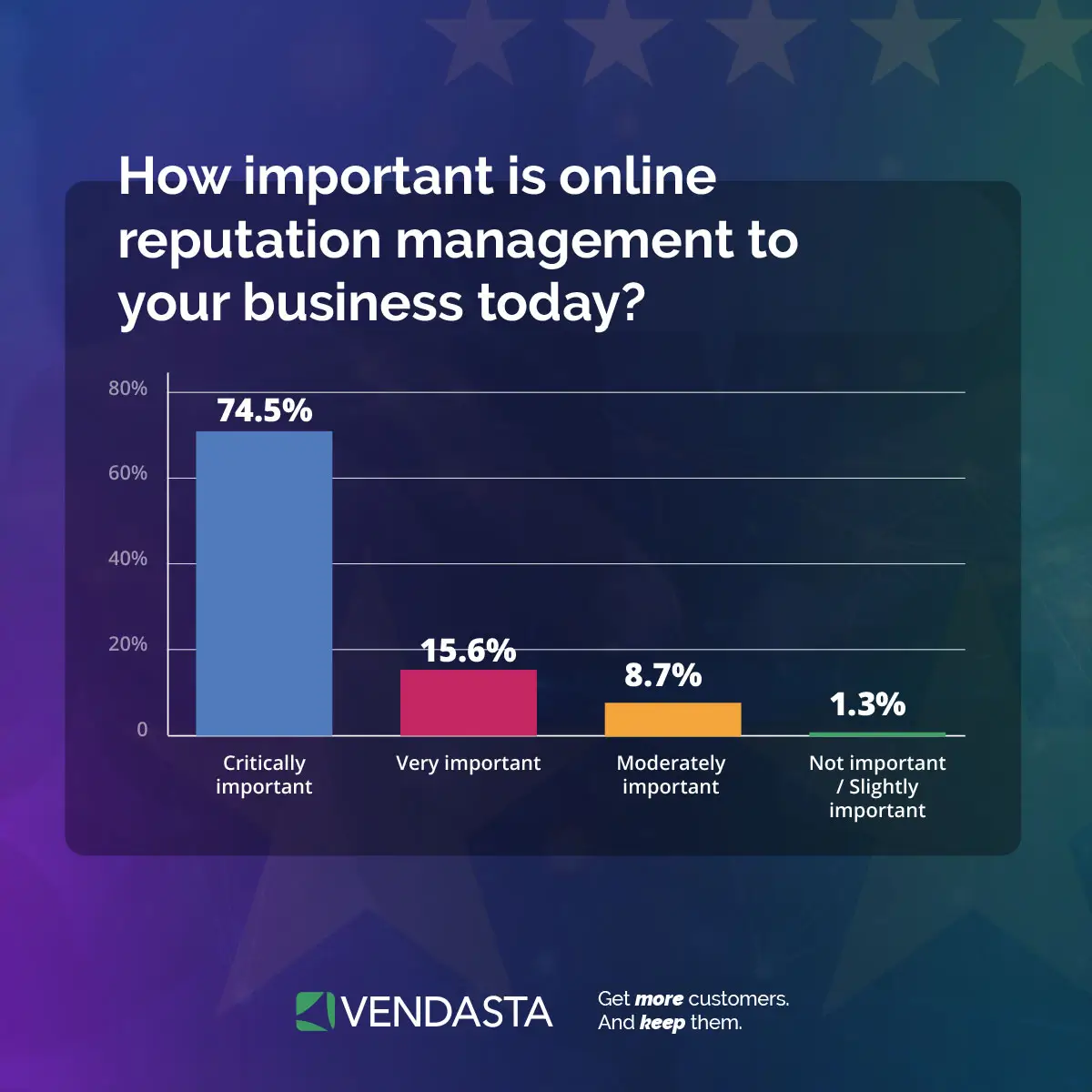
Owners feel the same pressure. Vendasta’s 2026 State of Reputation Management report found 74.5% of the small businesses it surveyed consider reputation management critically important, which makes review requests a priority rather than an extra.
Reviews also feed visibility. Google’s local ranking documentation states that more reviews and positive ratings can help a business’s local ranking.
Whitespark’s 2026 Local Search Ranking Factors survey named review signals as one of the biggest gainers in importance this year, while the same experts ranked the presence of owner responses only 122nd as a local pack factor. Responses earn their keep on conversion rather than position.
Google’s rules are strict, and the penalty is a profile that stops accepting new reviews. Google’s Maps content policy prohibits paying for reviews, offering discounts or free services for them, asking only happy customers (gating), and asking staff to collect a set number of reviews.
It permits asking customers to review a genuine experience, so a shared link or QR code sent to every customer, with no incentive attached, stays within the rules.
Vendasta’s AI Reputation Specialist responds to Google and Facebook reviews in the reviewer’s language under rules you set, such as rating thresholds and approval steps, and suggests responses for more than 100 other review sources. It also sends review requests by email and SMS, and Reputation AI can trigger those requests from completed jobs in Jobber or invoices in QuickBooks Online.
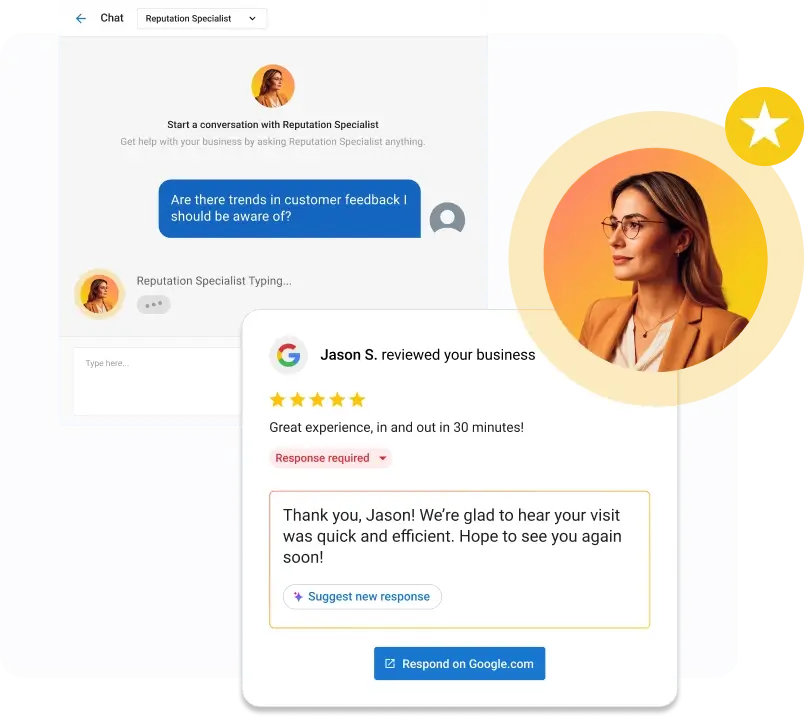
Fred Astaire Dance Studios averaged 50 reviews per store on the platform, and Blue River Digital’s auction-house client collected 21 five-star reviews in 30 days.
Pair review requests with a plan for handling negative feedback publicly and resolving the complaint by phone.
How to Handle a Negative Review
Reply publicly within a day and name the specific problem, then move the fix to a phone call. Saved review response templates make a same-day reply realistic when you are on a job site.
Never offer a refund or gift card for removal. The Federal Trade Commission’s (FTC) 2025 action against NextMed alleged the company offered Amazon gift cards to customers who removed or changed negative reviews, and Google’s policy bans incentives for removing or revising a review outright.
A visible reply pays off with the next customer. SOCi’s Consumer Behavior Index, reported by Customer Experience Dive, found 65% of consumers are more likely to choose a business that responds to reviews.
Your first step this week is to send the same review link to every customer whose job you closed, with no filter on who receives it.
2. Answer Every Inbound Call and Lead Fast
Nothing on this list pays off if the phone rings out. A 2026 mystery-call audit by Lobby, which sells an AI receptionist, placed one call each to 16,051 U.S. and Canadian local service businesses during business hours and found:
- A live person answered 33% of calls. The rest hit voicemail or a menu (48%) or got no answer at all (19%).
- Live-answer rates were 37% for HVAC and 32% for plumbing. General contractors answered 19%.
Missed callers rarely give a second chance. CallRail notes in a 2025 benchmark release that up to 85% of callers whose call goes unanswered won’t call back.
Speed matters almost as much as answering. The Massachusetts Institute of Technology (MIT) and InsideSales.com Lead Response Management Study found the odds of contacting a lead drop 100 times between a five-minute and a 30-minute callback, and the odds of qualifying it drop 21 times.
Those figures come from 2007 web-lead research across business-to-business (B2B) and business-to-consumer (B2C) companies rather than booked local jobs, but a homeowner with a burst pipe and three tabs open behaves the same way.
AI Receptionist answers calls, web chats, and texts 24/7, qualifies each lead against your service list, and books the appointment on your calendar; Vendasta integrates with Jobber, Housecall Pro, and ServiceTitan. Most AI Employees deploy in under 30 minutes after learning from your website and business profile.
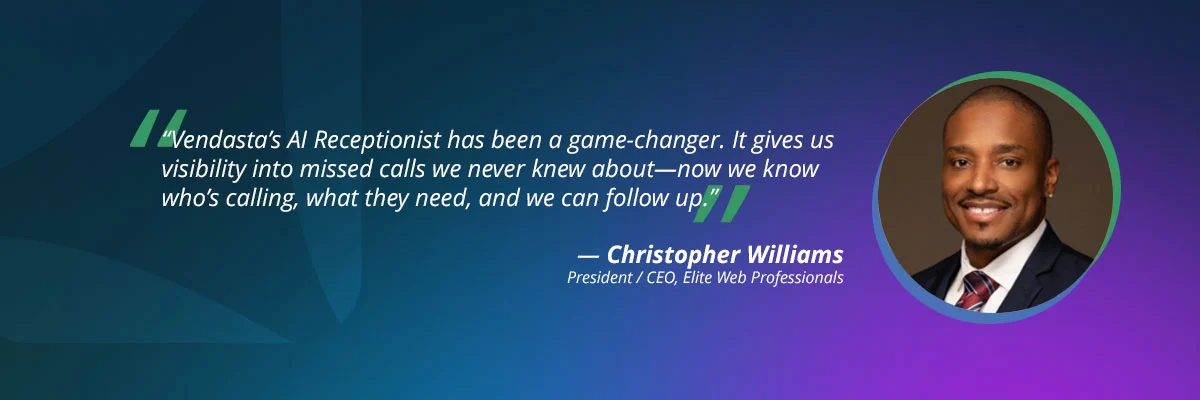
Choice Signature Luxury Car Rental, a client of the agency Elite Web Professionals, used AI Receptionist to handle 1,017 calls and capture 778 qualified leads, a 76% conversion rate over four months.
Across Neighborly’s franchise network, roughly 30% of leads had previously gone uncontacted, and leads converted to revenue rose 372% year over year after AI intake. Vendasta reports a 39.2% lead conversion rate among early AI Workforce adopters, a reported result rather than a guarantee.
Your first step this week is to call your own business number from an unfamiliar phone at 2 p.m. on a Tuesday, count the rings, and write down what a stranger hears. Then set a five-minute response standard for calls and web forms and put one name against it, human or AI.
3. Email and SMS Your Existing Customer List
Marketing to the customers you already have costs the price of the send, while every new customer costs a click, a lead fee, or both. Harvard Business Review puts acquiring a new customer at five to 25 times the cost of retaining an existing one.
Treat that range as a rule of thumb rather than a measured benchmark, but the direction holds for a trade whose customers need the same service every year, which is why your own list comes before paid acquisition.
Automation beats batch sends:
- Klaviyo’s 2026 benchmarks put a good click rate at 5.58% for automated email flows against 1.69% for one-off campaigns.
- Omnisend’s SMS benchmarks show automated texts reached a 20.32% click-to-sent rate in 2025, against 12.38% for campaign blasts.
Track clicks rather than opens. Litmus reports that Apple Mail Privacy Protection now affects roughly 55–60% of all email opens and does not count those as reliable opens.
For a sense of the open rates you will see anyway, Constant Contact’s 2026 averages for January through March show 26.92% for home and building services and 32.31% for legal services.
Vendasta’s Campaigns Pro runs the email and SMS automation inside Business App: an AI email builder that drafts copy and imagery from one prompt, templates, multistep campaigns, segmentation from your customer relationship management (CRM) records, and contact-level engagement tracking.
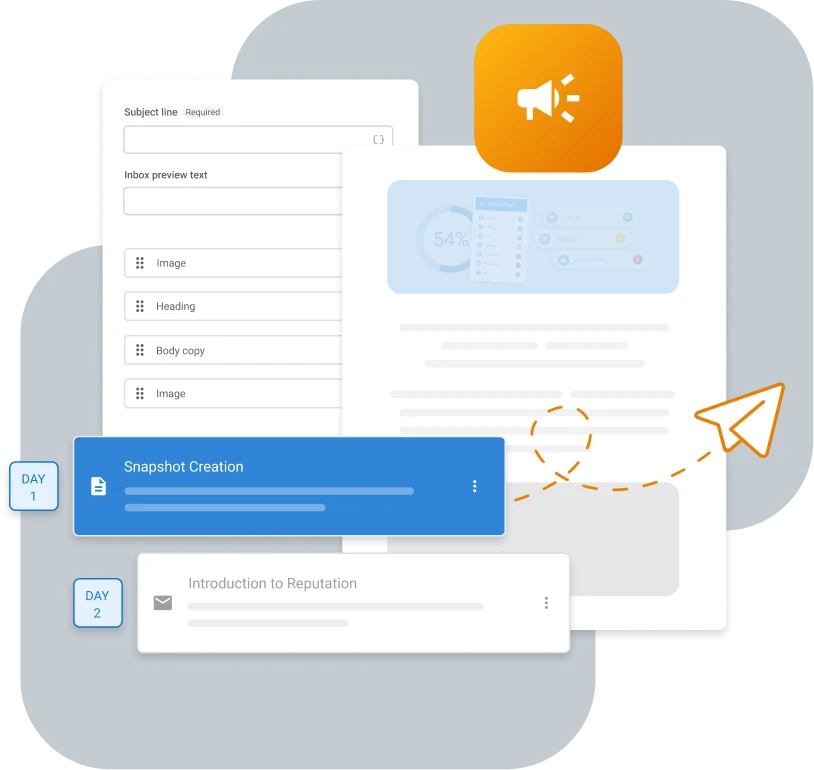
Your first step this week is to segment the list three ways: customers served in the last six months, customers by service type (furnace, AC, estate plan, closing), and customers you have not heard from in a year. Send the first group one seasonal reminder with a booking link.
4. Reactivate Past Customers
Reactivation is the cheapest move on this list because the customer already knows your truck and has already paid you once. Griffin and Lowenstein’s Customer Winback gives the commonly cited odds: a 60–70% chance of selling to an active customer, 20–40% to a lost one, and 5–20% to a prospect.
The authors credit those figures to a study by a firm called Marketing Metrics and publish no method behind them, so treat them as directional.
The same book quotes an MCI sales director who found win-back succeeded three to four times as often as prospecting: a 5% prospect conversion rate implied 15–20% for reactivating inactive customers. Email alone underperforms here, though.
Omnisend’s email benchmarks show customer reactivation emails had the lowest revenue per email ($0.51) and lowest conversion rate (0.54%) of any automated message. A text with a specific reason to book, followed by a call, outperforms a generic “we miss you” email.
Give the reason a date:
- For home services, offer a furnace tune-up before the first frost or a roofer’s post-storm inspection.
- For an estate-planning firm, offer a will review after a marriage or a birth. A change in state law is another reason to book.
Your first step this week is to export every customer with no job in the last 6 to 12 months from Jobber, Housecall Pro, ServiceTitan, or Clio, and send one text that names the service they bought and the reason to book it again. Vendasta’s Campaigns Pro can run the follow-up sequence from that segment.
5. Launch a Referral Program
Word of mouth converts because the trust is borrowed from someone the buyer already knows. Nielsen’s 2021 Trust in Advertising study found recommendations from people they know were the most trusted channel, trusted by 89% of respondents.
Referred customers are also worth more once they arrive. A Journal of Marketing study of bank customers found referred customers were worth at least 16% more than comparable non-referred customers, and later research in the Journal of Marketing Research found referred customers make 31% to 57% more referrals than non-referred customers with similar purchase activity.
Keep the structure simple. MarketingProfs’ referral guidance recommends a two-sided reward, with something for both the referrer and the new customer, paid promptly.
Size the reward with care: Marketing Science research found larger rewards bring in more referred customers but less profitable ones, so a modest credit on the next service is a reasonable starting point.
Keep referral rewards away from review requests. Google prohibits any incentive tied to a review, so the referral card and the review link should never travel in the same message.
Your first step this week is to pick one reward, print it on the invoice and the thank-you text, and ask for the referral at job completion while the customer is still standing in a working kitchen.
6. Build Community Partnerships and Local Events
Offline trust still books jobs for a business whose customers live within 20 miles of the shop. A plumber trading leads with an electrician or a roofer sponsoring the youth hockey team puts a business’s name in front of nearby people who are not searching yet. A family-law firm can reach those same local customers through a free workshop at the library.
The weak point is measurement, and QR codes fix it. Search Engine Journal advises linking QR codes to a URL tagged with Urchin Tracking Module (UTM) parameters and, for print, using a short or vanity link that redirects to the tagged page.
- Give each placement its own code so the yard sign and sponsor banner report separately. Track the workshop handout with its own code, too. Google’s help documentation warns that landing-page redirects can drop UTM parameters, so scan each code and confirm the parameters survive before printing 500 of them.
- Point the code at a page with a scheduling link or quote form. A tracked phone number is another option. A homepage scan tells you the banner was seen but not whether it produced a job.
Your first step this week is to choose one adjacent trade and agree a reciprocal referral arrangement, or pick one local event this quarter and order one tracked QR code for it.
7. Post Social Content With a Neighborhood Angle
Social content works for a service business when the post names the street. A before-and-after of a roof on Maple Avenue, posted in the neighborhood Facebook group with the town’s hashtag, reaches homeowners who can hire you; a generic tip post reaches nobody in particular.
Local Facebook groups and geographic hashtags favor content tied to a place. So do posts on your Google Business Profile.
Keep the mix mostly useful. Finished jobs, seasonal maintenance tips, and neighborhood news should outnumber direct offers, so the occasional promotion lands with people who already recognize your name.
Vendasta’s AI Social Media Manager learns your brand voice and visuals, then generates and schedules platform-adapted posts. It publishes to Google Business Profile, Facebook, Instagram, LinkedIn, X, TikTok, and YouTube, with an approval workflow or full autopilot. You still take the job photos; it writes and posts them.
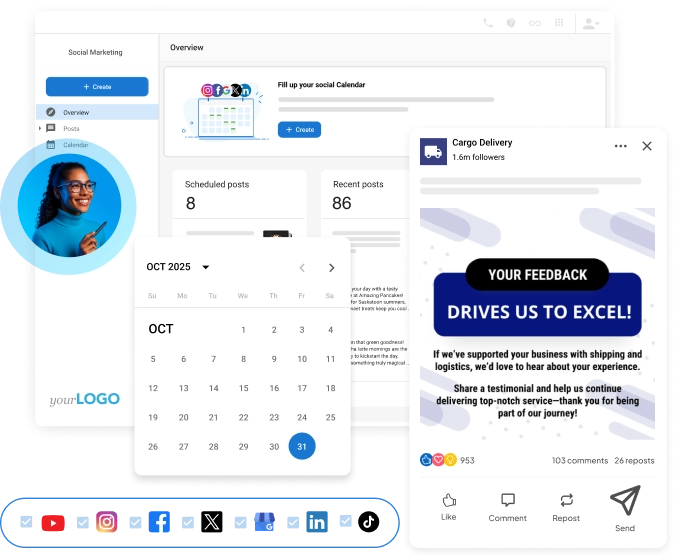
Your first step this week is to photograph one completed job with the customer’s permission, then post it with the neighborhood name in one local group.
8. Run Geo-Targeted Local Ads
Paid ads sit eighth because they pay off only once the seven moves above can convert the leads they produce. Google Ads radius targeting requires a radius of at least 1 km around your shop or any point you choose, and setting the location option to “Presence” shows ads to people who are likely to be located, or regularly located, in that area.
Meta’s location targeting reaches people who live in or were recently in the places you choose, including a radius around a specific address or dropped pin.
For most service businesses, the paid decision comes down to two Google products. Local Services Ads charge per lead and lean on your reviews and responsiveness, which rewards the work done in strategies one and two. Standard Search ads charge per click and give you control over keywords and copy, which suits businesses outside the eligible categories or those chasing specific job types.
Choose between them based on eligibility and the control you need, then use cost benchmarks to plan your budget before any money goes out.
Local Services Ads vs. Standard Google Ads
According to Google’s Local Services Ads help, you pay for valid leads rather than clicks, including answered calls, texts and emails, booking requests, and voicemails.
There is no keyword bidding; Google builds the ad from the business details you provide, shows it at the top of Google Search results, and ranks it on bid, relevance, and responsiveness, along with your rating, number of reviews, and average response time.
Google Guaranteed, Google Screened, and License Verified by Google were folded into a single Google Verified badge starting in October 2025, and screening takes three to four weeks on average after you submit documents.
Eligible categories include electricians, HVAC, plumbers, roofers, locksmiths, landscaping, house cleaning, and moving on the home side, and bankruptcy, criminal, family, immigration, and personal injury on the legal side.
Standard Search gives you keyword control and suits businesses outside those categories or anyone who wants to bid on “emergency” and “same-day” terms.
Search Engine Land’s comparison frames Local Services Ads (LSAs) as quick to set up and Search as the format with more control, and finds both profitable when tracked and optimized.
Two 2026 changes affect the choice. Google began moving LSA accounts into Performance Max campaigns with pay-per-lead goals in August 2026, starting with select U.S. home and storefront service providers, according to Google Ads help, and migrated campaigns lose manual max-cost-per-lead bidding.
Search Engine Land also reports that, since October 1, 2026, some missed LSA calls during business hours count as chargeable leads. That turns call answering into a billing issue as well as a sales one, and AI Receptionist’s 24/7 call answering covers both.
Benchmarks and Managed Campaigns
WordStream’s 2026 Google Ads benchmarks, a vendor dataset of U.S. medians, put home and home improvement at $8.33 per click and $90.92 per lead, and attorneys and legal services at $9.87 per click and $131.63 per lead.
At those per-lead costs, every unanswered ad lead wastes real money, which is why intake comes before ads.
If an agency runs your marketing, it can use Vendasta Ads to generate a campaign plan with keywords, ad copy, geographic targeting, and budget options in under a minute, after which Vendasta’s certified specialists build, launch, and manage the campaign. Advertising Intelligence consolidates performance from Google, Meta, and other platforms in one dashboard.
Your first step this week is to check whether your category qualifies for Local Services Ads and, if it does, start the screening paperwork so the three-to-four-week clock runs while you fix intake.
9. Get Found in Near-Me Search
Near-me visibility rests on a complete profile, consistent listings, and a presence in AI answers. A complete, accurate Google Business Profile matters because Google states that businesses with complete and accurate information are more likely to show in local results.
Vendasta’s Local SEO covers profile optimization and rank tracking on a map grid. Its AI Search Specialist also runs brand visibility reports that show whether ChatGPT, Gemini, and Perplexity mention your business when customers ask for a recommendation.
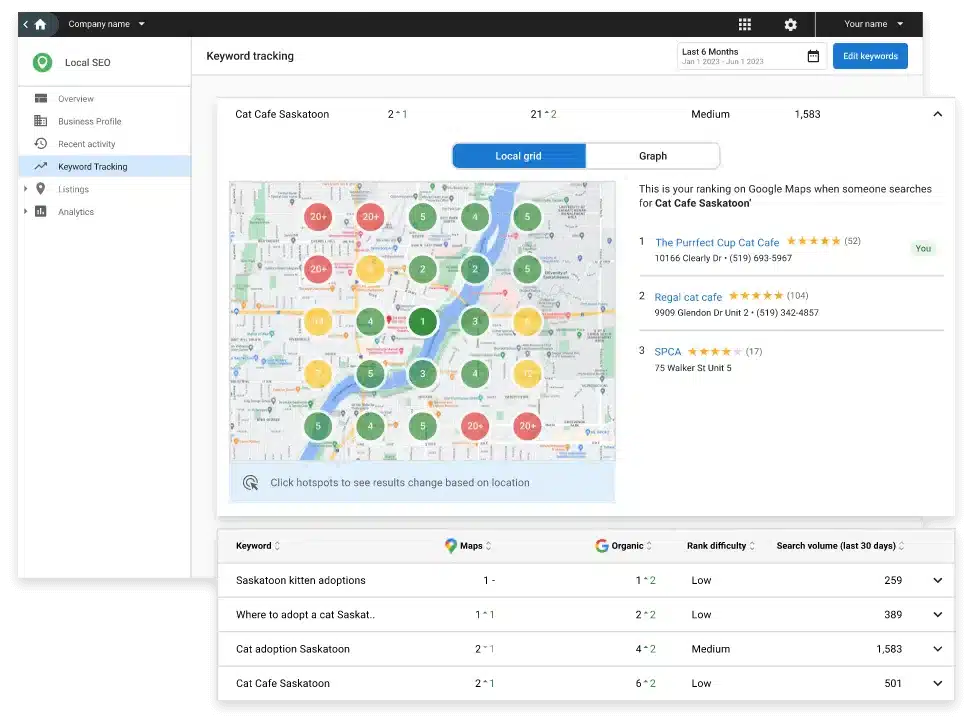
Search Engine Land’s Miriam Ellis describes name, address, and phone (NAP) consistency across directories as less frequently cited as a ranking factor but still important for a trustworthy customer experience. Vendasta’s Listing Sync Pro keeps listings synced across 50+ sites.
How Much to Spend and Where to Start
Most of your competitors spend less than you think. LocaliQ’s 2026 small business marketing trends report, a vendor survey of 300+ owners, found 52% have monthly marketing budgets under $1,000. CO—, the U.S. Chamber of Commerce’s small business site, notes that consumer-facing companies typically spend 5–10% of revenue on marketing.
Sequence the spend so the free moves come first:
- Week one, zero dollars: Send review requests to this week’s customers, fix call answering, and text the inactive list. These three raise conversion on everything that follows.
- Month one, software only: Add segmented email and SMS to the active list and print the referral offer on invoices.
- Months two and three, media spend: Start Local Services Ads if eligible, or a radius-targeted Search campaign, once intake and reviews can carry the leads.
Budget expectations by channel:
- Reviews, referral, win-back: Staff time plus the cost of a text; the referral reward is paid only on a closed job.
- Call answering: Software cost in place of a receptionist’s payroll; Vendasta covers pricing in the demo rather than on this page.
- Email and SMS: Software plus SMS credits.
- Google Ads: WordStream’s budget guidance says small businesses typically start at $1,000–$2,500 per month.
- Facebook and Instagram ads: WordStream suggests starting at $5–10 a day on a daily budget.
- Local Services Ads: Billed per valid lead, with the price set by competing bids from similar local businesses and by lead type, since message leads typically cost less than calls; Google publishes no cost-per-lead table by trade.
How to Measure Local Marketing ROI
Measure the return on investment (ROI) of each channel on booked jobs, not impressions, and give every channel its own phone number. Call tracking assigns a distinct number to the Google Business Profile, each ad campaign, the truck wrap, and the yard signs, so the call log tells you which one rang.
- Google Business Profile performance reporting shows Interactions, Calls (call-button taps), Directions, Website clicks, Messages, and Bookings for verified profiles.
- Since June 2026, Google Analytics 4 (GA4) properties can link directly to a Business Profile and report calls, bookings, directions, and website clicks over a rolling six-month window. Before that link existed, UTM tags on profile links mostly caught website clicks, as Search Engine Journal notes.
- Send a generate_lead event when someone submits a quote request, or create a custom event from form_submit filtered to your quote form, and mark that as a key event. Marking every form_submit would count newsletter and contact forms as conversions too.
- Tag offline placements the same way, in lowercase, because Google treats UTM values as case-sensitive. Search Engine Land’s GBP UTM guide uses gbp as source and organic as medium. There is no official standard for QR codes, so pick one scheme, such as utm_source=qr and utm_medium=print with utm_content for the placement, and apply it to every code.
The AI Employees log every action they take. Vendasta records each call answered, appointment booked, review request sent, and review response posted, with reporting that summarizes them. That log is the proof of performance: a record of booked appointments you can check against your calendar.
Which Local Marketing Strategy Should You Start With
Pick by what is leaking. If you miss calls because you are on the job all day, start with intake: Vendasta’s AI Receptionist and review requests the same week. Add nothing else until the phone is covered. If you have five years of customer records in Jobber or Clio and a quiet shoulder season, start with the win-back text and a segmented email list, then add the referral offer.
If the business is new and the list is short, start with reviews. Add one adjacent-trade partnership and neighborhood posts, and hold ads until you have a response standard. If you clear $1,000 a month for media and your category qualifies, Local Services Ads come next, with Vendasta’s AI Reputation Specialist handling review responses under rules you set.
To see how Vendasta can address this workflow in your business, book a Vendasta demo.
Local Marketing Strategies FAQs
The questions below cover the decisions owners raise most often once they have the list in hand: where to start on a small budget, how reviews and listings affect visibility, and how to tell which channel is producing jobs.
Each answer is short enough to act on between jobs. Where a question depends on Google’s own rules, the answer reflects the policy and help pages cited above.
1. Which local marketing strategy should I start with on a small budget?
Start with the two that cost nothing: a review request to every customer the week the job closes, and a five-minute response standard for calls and web leads. Both raise the conversion rate of everything you add later. Text your inactive customers next, then add ads only once the phone is covered.
2. How do I optimize my Google Business Profile for the map pack?
Fill in every field, keep hours current, add job photos regularly, choose the right primary category, and keep reviews arriving steadily rather than in bursts. Google says complete, accurate profiles are more likely to appear in local results. Vendasta’s Local SEO product page covers rank tracking and profile optimization in detail.
3. Why does name, address, and phone (NAP) consistency matter?
Search Engine Land describes NAP consistency across directories as less frequently cited as a local ranking factor, but a customer who finds two phone numbers trusts neither. Google asks businesses to represent themselves as they are consistently represented and recognized in the real world, so one version everywhere remains the standard for trust.
4. How do reviews affect local search visibility?
Google states that more reviews and positive ratings can help local ranking, and Whitespark’s 2026 expert survey named review signals among the factors gaining the most importance. The same experts ranked owner responses low as a ranking factor, but replies still win customers: 65% of consumers in a SOCi survey prefer businesses that respond.
5. How do geo-targeted ads work for a service area?
Google Ads lets you draw a radius of at least 1 km around any point and show ads to people likely to be in or regularly in it. Meta reaches people who live in or were recently in your chosen area, including a radius around a dropped pin. Set the radius to match the area you will drive to.
6. How do I measure results from local marketing?
Give every channel its own tracked phone number, read the Calls, Directions, and Bookings metrics in Google Business Profile, link that profile to Google Analytics 4, and tag every offline QR code with UTM parameters. Count booked jobs per channel against what that channel cost, and review the numbers monthly.
7. What small business marketing strategies work for a service area?
The ones that stay inside your radius: reviews, fast lead response, email and SMS to your own list, win-back outreach, referral rewards, adjacent-trade partnerships, neighborhood social posts, and radius-targeted ads. Each costs more than the one before it, and the first four cost almost nothing beyond time and a text.
8. Can I offer a reward for referrals and reviews at the same time?
Reward referrals, never reviews. Google’s Maps content policy prohibits payment, discounts, or free services in exchange for reviews, so keep the referral offer and the review link in separate messages. A referral reward paid on a closed job is fine because it is tied to a new customer, not to a rating.
9. Should I use Local Services Ads or Google Ads pay-per-click?
Use Local Services Ads if your trade or practice area qualifies and you want to pay per valid lead with little setup; Google ranks you partly on reviews and response time. Use standard Search ads if you fall outside eligible categories or need keyword control. Both pay off when every lead is tracked.
10. How should I handle a negative review?
Respond publicly within a day and acknowledge the specific complaint. Offer to resolve it by phone. Never offer money, discounts, or free service for removal; Google prohibits it, and the FTC has pursued such incentives. A calm, visible reply sways future customers, who are more likely to choose businesses that respond.