About Us
 Careers
 Leadership
 Board
 Newsroom
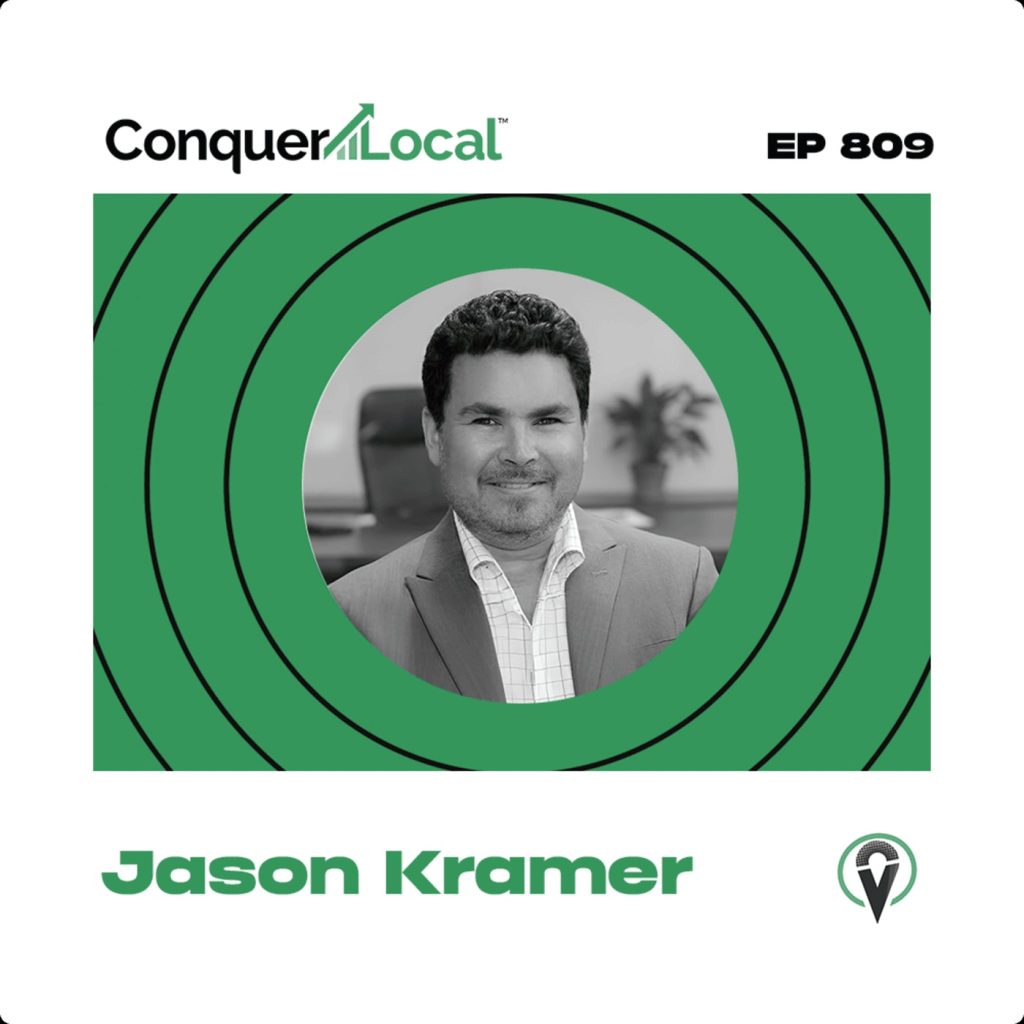
▶️ Watch this episode on YouTube
What if your business is losing 60% of your deals after the first call?🎯
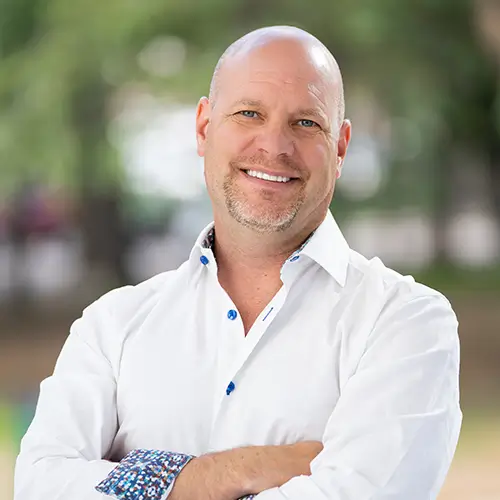
In this episode, we sit down with Jason Kramer, founder of Cultivize and one of the leading voices on CRM-powered sales systems, to break down why most agencies and businesses bleed pipeline revenue and how AI + CRM automation can rescue lost deals you didn’t even know you had.
If your team is still manually taking notes, chasing cold leads, or keeping the pipeline in the owner’s head, you’re leaving massive revenue on the table.
In this episode, you’ll learn:
Why Most businesses Lose Deals After the Discovery Call: The #1 place where good prospects disappear and why speed-to-lead still wins deals.
The Follow-Up Math That Changes Everything: Why 60%+ of prospects aren’t ready today but will buy and how 7–10 personalized steps increase conversions by 30%+
How to Use AI to Rescue “Dead” Leads: Using AI signals to see who’s re-engaging, and how Jason closed deals from year-old prospects.
The exact “good news or bad news?” email that gets same-day replies.
Why your CRM Is Your Sales Brain: The data you must track, how to automate discovery-to-close workflows and why follow-up without a CRM is basically impossible today.
Event & Trade Show Follow-Up (Done Right): How one business generated $1M from an event using his follow-up automation.
Key concepts in this episode:
AI-Powered Follow-Up Systems
CRM Automation for Agencies
Pipeline Leakage & Lost Deals
Follow-Up Email Templates That Convert
Lead Nurturing & Intent Signals
Speed to Lead (and Why It Matters)
Personalized Multi-Step Sequences
LinkedIn Automation for Sales
Event Follow-Up Strategy
Sales Process Playbooks
Data-Driven Sales Prioritization
AI + CRM Integration
How to Keep Leads Warm for 12+ Months
Agency Sales Operations & Systems
If your business is tired of losing deals that should have closed… hit play.
CONNECT WITH Jason Kramer:
💼 https://www.linkedin.com/in/jasonleighkramer/
CONNECT WITH VENDASTA:
📹 Subscribe on youtube.com/@Vendasta
💼 Connect on LinkedIn: linkedin.com/company/vendasta
🐦 Connect on X: x.com/vendasta
📸 Connect on Instagram: instagram.com/vendasta
Thanks for listening! If you enjoyed this podcast… 💜
💬 Leave a review on Apple Podcasts
https://podcasts.apple.com/ca/podcast…
🟢 Leave a rating on Spotify
https://open.spotify.com/show/0KWXAOn…
Vendasta
Vendasta is the leading AI software company for customer acquisition and engagement, helping businesses get more customers—and keep them. Our AI-powered platform unifies marketing, sales, and operational workflows, eliminating the need for fragmented tools and streamlining every stage of the customer journey. Powered by proprietary SMB data, intelligent automation, and AI assistants that handle repetitive tasks, Vendasta helps businesses attract, engage, and retain customers with unmatched efficiency.
Our solutions empower digital agencies, franchisors, and MSPs to scale operations, optimize campaigns, and drive long-term growth.
Transform Your Agency with Vendasta – Get a demo
Transcript
Transcript
You’re not getting back to somebody within a few minutes of them calling you or filling out a form on your website. They’re calling 10 other competitors at the same time. That’s Jason Kramer, founder of Cultivize and the guy businesses call when their leads are slipping through the cracks. After 16 years of running his own agency, Jason saw the single biggest growth killer, broken follow up. So he sold his agency and went all in fixing it. Today, he’s rescuing over 30% of dead leads for his clients without adding more ads, more calls, or more sales reps. But what’s his secret? They closed about $650,000 in revenue, all from this being fully automated. In this episode, you will learn why most businesses are leaking deals after the first discovery call. This problem exists for both small and large businesses, companies that have this figured out. They’re seeing easily a 29% boost in revenue.
How to make your CRM the brain of your agency. The value is now you have all this data in one place. You see all these insights and all these details that’s going to help you know how. How AI bridges the gap between CRM data and action. So I said, okay, well, if you found the LinkedIn profile, wait five days, now send Jeff a personalized LinkedIn invite. I feel like there’s a lot of businesses that are able to work through leads coming in. They have a conversation with a lead. And then after that sort of discovery call, it feels like that’s the stage at which a lot of good leads go to die. Over 60% of people that are coming into any business that are looking at your service or your product, they may not be ready to buy today, but they will eventually buy down the road. And so what we find is a lot of organizations to your point that have the passion, they have this great idea to create a business. But they’ve been running a business for five, 10 plus years. There are hundreds of thousands or millions of dollars in revenue. But what we often find the gap is that they don’t have the systems and processes to be able to convert these window
shoppers into a customer. So if you’re not getting back to somebody within a few minutes of them calling you or filling out a form on your website, and even if it’s generic, even if it’s saying, thank you for reaching out to us, we’ll get back to you by the end of the day or tomorrow morning, some type of communication, they’re calling you, they’re calling 10 other competitors at the same time. And so whoever has that good conversation with them first, has a much better chance at winning that business. About 18 months ago, we brought on a company, they’re in a roofing business. They do about $7 million a year just as far as the size. And I only do that in terms of just showing that this problem exists for both small and large businesses. They do about a thousand quotes a year for roofs. Their average sale is about $14,000, the cost of a new roof.
Because of the volume of how many quotes they were doing, and they only have a sales team of three people, actually when I started with them, they only had two people, after like five weeks or so, if the person wasn’t ready to buy the roof, they would forget about them and move on to the next one. And I said, hold on a second, I said, I said, that’s that’s insane, because maybe they just don’t have $10,000 or $20,000 for a new roof, or maybe they’re waiting for the tax refund, or they’re waiting for whatever to come through to be able to afford you to buy it. And so we created an automated follow up process that every six weeks for a little bit over a year, the system would send an email on behalf of the sales rep. So it would come from John at the roofing company. And I would say, hey, Jeff, we spoke a few months ago, just following up, want to see if you still needed a roof. If you’ve hired anybody, if you have, please let us know, click here. We’d love to know why we lost that business. So we kind of help improve our process. And wouldn’t you know that in just about four months, they closed about $650,000 in revenue. And I’ve even brought back clients that are well over a year
old, even in cultivize, you know, where I just saw the signals. Now, keep in mind, Jeff, these people, at least in my experience, most of them, not all of them, most of them, did not pick up the phone and call me. They didn’t even email me. I just saw that they were doing things that showed a level of interest, some level of intent. So what did I do? I picked up the phone and said, ring, ring, ring. Hey, Jeff, how are you? It’s been a while since we spoke. I didn’t mention anything about me seeing that they were on the website. I just called them at the right time. And because I was able to re-engage them at the right time, it led to me closing the deal. In your experience, do you think that you can do a proper follow-up, either without a CRM or without a CRM that’s properly set up?
Because I feel like the CRM is sort of the central nervous system of the entire sales process. The question is, it’s not that it can’t be done. It doesn’t even make sense to do it that way, especially with all the technology that we have these days. Just a quick example is, when I would have a call with somebody, now granted, I’m in B2B sales. That’s what we do. So we’re on Zoom or on a video call. We’re recording that now and transcribing it. It wasn’t always like that. I would be responsible trying to diligently pay attention to somebody or if you’re in the home service business, going in and talking to somebody face-to-face and taking notes on what they need. Now with AI, you can transpose all those notes and craft your next action or craft the follow-up email back to that person. And it’s so much easier and more efficient if you’re using these tools effectively. And that’s really what comes down to you.
You put up something really valid, which is a lot of sales people think, oh my god, I’m going to spend all these hours every day, every week, by putting data into the CRM. And I have no desire to do that because I just want to sell. We really try to retrain the thought process there that you’re not putting in all this extra data. In most times, the data is going in automatically. But the value is now you have all this data in one place. And the things you were talking about before about the pricing page, you see all these insights and all these details that’s going to help you know how to prioritize your day. And that’s what it comes down to. A salesperson just wants to sell and they want to talk to somebody that’s qualified and that has the opportunity to do business with you. You don’t want to be wasting making 50 call calls and never getting a call back because nobody likes rejection. But if you have the insight to say, okay, I’m more likely to have a good conversation with these people, you’re going to have more success at your job in selling.
I wanted to ask you how you’re using AI right now to gather information or support the process so that you can have sort of a, like, are you using it? And is it improving the follow-up process and your ability to personalize messages so you’re following up like a pro? Yeah. So one thing that we started doing several months ago was working with a company called Apollo. For those listening, don’t know Apollo. Apollo uses AI to gather data about people and companies. Okay? So it’ll give you lots and lots of information. But like in any tool, it takes time, right? It takes time to look somebody up to gather the information. So what we’re doing is we have an automation, a sync that essentially connects our CRM. And we work lots of CRMs, but it doesn’t matter which one you have. We could do this with many. But it connects our CRM.
So when somebody comes, let’s say, to the Cultivize website and fills out a form to download a brochure, right? Like an e-book, let’s say. Or I enter them even manually, right? Let’s say you and I connect on a phone call. Someone introduced us. You go into the CRM. Once that happens, it sees that a new context has been added. And it sends this information that the name of the person there. Usually all I have is the email address. And like their first and last name may be company name. But sometimes we don’t even have that. So it takes that information, bare bones info, okay? And it sends it over to this tool called Apollo automatically. And what Apollo does is then there’s something called Enrichment. It says, okay, here’s Jeff. Now I’m going to find out Jeff’s title. I’m going to find out the website. I’m going to find out the company he works for. I’m going to find his personal LinkedIn profile. I’m going to find all this other information I could possibly find about Jeff. And then once I have it, I’m going to automatically pull it out of Apollo and push it back to the CRM.
Now that’s really helpful because now you don’t have to do any of that research. Now within seconds, more information. I know your title. I know if I’m talking to the right type of person, are you a decision maker or not? I’m taking it a step even beyond that. What I’ve done is I said, okay, well, if you found the LinkedIn profile, because we’re pulling that data in, wait five days, now send Jeff a personalized LinkedIn invite and personalize it based on how Jeff came into our world. Did he download a specific e-book? Did he come in as a potential strategic partner? Did he come in as a podcast host? How did he come into my world? And then based on that, I have all different messaging that thanks them for whatever it was that how we got connected and says, hey, we’d love to connect with you. And when they connect, then there’s additional sequencing happening in LinkedIn that’s specific again to how we met and how we got connected. So that’s just one example of how we use it. And I will tell you, it has saved me, I mean, I can’t even tell you how many hours.
I mean, and it’s embarrassing to say, Jeff, that before this was in place, I would look at the end of every month and be like, oh, there’s 75 new people in my CRM. I now have to manually find those 75 people in LinkedIn and all send them an invite, which usually didn’t always happen, because I’d be busy, right? I was doing other things. So I got really behind and trying to keep that going. AI gives us memory and CRM gives us a system. And the two can work beautifully together. I don’t know if you have any other examples of how the ying and the ying work together to supercharge our experiences. But it’s really helpful to have sort of those recipes in your back pocket. I had years ago, a client that was traveling all around the world. In fact, they were in the veterinary space, Jeff. And they were spending easily $50,000, $75,000 a year on trade shows. And I said to Lori, the owner, I was like, are they even good? Are you even getting any? And this is before they had the CRM in place.
She’s like, oh, yeah, they’re great. We meet tons of people. I’m like, yes, but it’s making you money. The reality of it, Jeff, is that the people who go into these trade shows, there’s a few factors. One, they don’t realize there’s ways to make this more efficient. So obviously, a lot of trade shows today have bad scanners. You can scan a badge. You get all the info to a spreadsheet. But even there, they may not be doing anything with that spreadsheet. They may not even be uploading it to the CRM. A lot of our clients that go to shows where they are collecting business cards, there’s a half a dozen of really good mobile apps that we can connect into most CRMs. So all you do is you take a picture of the business card, you type in some notes on your phone, and then you hit a button, and it automatically not only goes into the CRM, but we can program it where two days later an email goes out from you saying, hey, it was great meeting you a couple of days at the event. We’d love to have another follow-up call with you. So we can make that as efficient as we want to.
Often too, you get people have sign-up sheets. How often have you seen this, Jeff, where there’s a clipboard or a piece of paper at the booth? Hey, just give us your name and your email. Well, that’s not efficient because who’s going to transcribe all that? And can you even read the handwriting? So what do we do? We create an iPad or some other device at the booth. That’s a simple form. They fill it out or we have a QR code. They could scan and not on their phone. They fill out a form and now all their data is going digitally into the CRM right away. You’ve talked about the CRM being the brain of the agency or the business that you’re talking about. So what is the most important information or the scope of the information that needs to live in the CRM in order for you to have really professional follow-up down the road, whether that’s weeks or months later and sound like you still remember everything from the conversations? Many companies will not record how that person found out about them. So what I mean by that is, if somebody calls into your office, ring ring, hi, Jeff, how are you? Thanks for
reaching out the call device. By the way, how’d you find out about us? And not only are you asking the question, you’re being required to pick from a drop-down list of choices in your CRM. I heard you on a podcast. I saw you on Google search. I saw you on Facebook, LinkedIn, whatever the things you do are. So the roofing company, for example, they have, I saw your truck driving around. I saw a yard sign. I got a direct mail piece of the mail. I saw your radio. I heard you on the radio. I saw your TV commercial. All the possible things of how they advertise are all given to that intake team to record that. That’s really powerful because then when you talk to them six months later, you’re like, hey, I remember you reached out to us and found us on Facebook a few months ago, right? Where this person referred you to us. You’re not going to be, you know, seemingly this amazing person that remembers everything. But if you have those details, it’s really helpful to re-spark the conversation, right? So knowing where they came from and who recommended them, if they came as a referral, is critical. Note-taking is really important. But like I said before, if you’re the type of
organization listening today or if you’re a salesperson listening and you do a lot of video calls, there’s infinite supply of transcribing tools that could listen in on the conversation and take notes for you. This is your job to transfer those notes to the CRM or put them somewhere, right? And have access to them. That’s really important. And then the other piece is if you’ve entered into the sales process, it’s having it defined and you hit the nail around the head, Jeff, many companies don’t have a written down sales process. It doesn’t mean they’re not successful. It doesn’t mean they’re not making money. It just means that when they bring in a new person to the team, it’s hard for them to explain like their style and how they sell. They’re just letting the salesperson sort of like figure it out on their own.
So having a written playbook doesn’t really exist that much in a lot of companies we see. It’s more about just, you know, it’s all up here and someone said, and I know people are listening, but I’m just pointing to my head. So the other factor is having a sales funnel, right? What does that process look like? You know, you might have a discovery call. You might have a demo. You might have the proposal. You might have a contract negotiation phase. So knowing somebody where they’re at, and I’m sure, Jeff, you would agree that there are people that we’ve both spoken to that have gone to the proposal phase that just never went forward, never closed.
So it’s good to have to remember and be like, oh, yeah, we sent you a proposal at this date, you know, three months ago, you know, and then you can follow up and you have some talking points. Those are just a few examples. I heard that you’ve got a killer follow-up email that gets an amazing response rate. Do you want to divulge any of your secret?
The email I sent to people, when did I have, it’s like my Hail Mary, right? Like I’m not a quarterback or anything, but for the terminology, right? My Hail Mary is the email says, subject, good news or bad news, question mark. And it’s like, hey, Jeff, we had a great conversation. This is where I use the data from the CRM, right? So it’s like, we had a great conversation on such, such date or three months ago about X, Y, and Z. These were the problems you told me that you had. I’m not sure if you still have those problems. If you do, I’d love to continue the conversation if you’re open to it. And if you’re not, and if you’ve already solved that problem where it doesn’t exist, that’s fine too. And then at the bottom, it just says like, whether it’s good news or bad news, some news would be great. And then, you know, that’s kind of the out for people to be like, oh, like, sorry for wasting your time or starting out getting back to you. We’ve actually hired somebody else. Or, hey, sorry for not getting back to you.
We are still interested, but this is why we haven’t gotten back to you. Give us another few months or what have you. And I will say that easily eight out of 10 times, I get a response the same day when I send out that email.
 Apple Podcasts
 Spotify
 YouTube