About Us
 Careers
 Leadership
 Board
Board Newsroom
AI content optimization for small businesses is quickly becoming the difference between getting found online and getting ignored.
Right now, most businesses are creating content, but it is not bringing in traffic, leads, or visibility. Blog posts sit unnoticed, websites do not rank, and social content rarely reaches the right audience. Meanwhile, competitors who are optimizing their content properly are showing up on Google and inside AI tools like ChatGPT.
The challenge is not effort. It is direction and consistency.
Small businesses do not have the time to research keywords, plan content, write blogs, and optimize everything for search every week. This becomes even more challenging when businesses are also trying to manage multiple marketing campaigns across different channels.
As a result, content becomes inconsistent, rushed, or completely deprioritized. This is where AI changes the game.
Instead of doing everything manually, businesses can now use AI to handle content research, structure, optimization, and publishing in a consistent way. Tools like Vendasta’s AI Blogger take this even further by generating SEO-optimized blog content every week, helping businesses build authority and stay visible without needing to create content from scratch.
Replace busy work with AI employees that take action
TL;DR
- AI content optimization for small businesses helps your content rank and get discovered in search and AI tools
- Consistency matters more than volume when building authority online
- Vendasta’s AI Blogger automates weekly SEO content so your business stays visible without extra effort
What Is AI Content Optimization for Small Businesses?
AI content optimization for small businesses is the process of using artificial intelligence to plan, create, and improve content so it performs better in search engines and AI-driven results.
It is not just about writing blog posts. It is about making sure your content answers real customer questions, is structured properly, and is easy for both search engines and AI tools to understand.
What AI Content Optimization Includes
- Keyword and topic research based on what people are actually searching
- Content structuring using headings, FAQs, and clear sections
- On-page SEO improvements like meta descriptions and internal links
- Search intent alignment so your content matches what users want
- Readability optimization to make content easy to scan and understand

Why It Matters
Search behavior has changed. People are not just clicking links anymore. They are asking questions and expecting direct answers.
To show up in those answers, your content needs to be clear, structured, and useful.
AI content optimization helps small businesses create content that ranks, answers questions, and gets selected by AI systems as a trusted source.
Traditional Content vs AI-Optimized Content
| Traditional Content | AI-Optimized Content |
| Written without clear data | Built using real search insights |
| Inconsistent publishing | Regular and structured output |
| Focused only on keywords | Focused on intent and clarity |
| Hard to scale | Easy to scale with AI tools |
The Real Shift
Most small businesses are not struggling because they lack ideas. They are struggling because they do not have a reliable system.
Instead of creating content occasionally, businesses need a consistent approach that keeps them visible week after week.
This is exactly where AI-powered solutions like Vendasta’s AI Blogger make a difference by turning content creation into an ongoing, automated process rather than a one-time task.
Why AI Content Optimization Matters More Than Ever in 2026
The way people discover information online has fundamentally changed. Traditional search engines are no longer just indexing content—they’re interpreting, summarizing, and delivering direct answers.
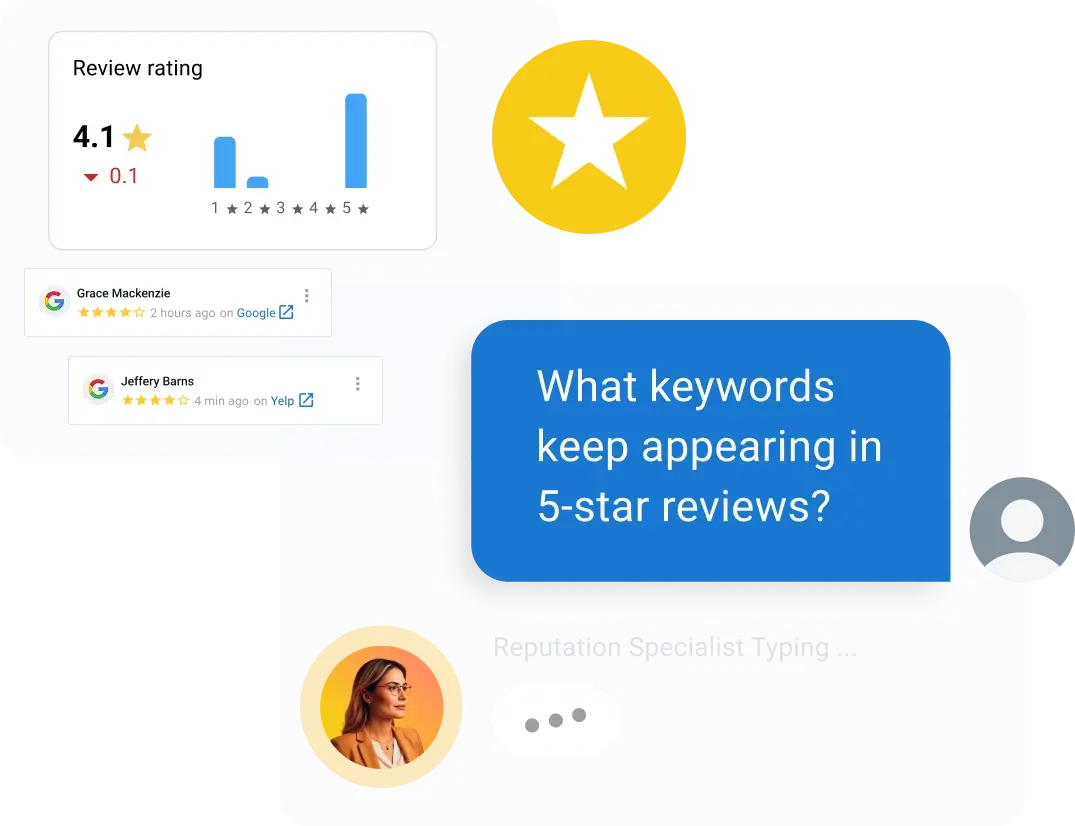
For businesses, this means that simply “ranking on Google” is no longer enough. Your content must now be optimized not just for humans, but for AI systems that decide what gets surfaced. Visibility is also influenced by trust signals, which tools like Reputation AI help strengthen through reviews and brand credibility.
The Rise of AI Search (ChatGPT, Google SGE, Perplexity)
We’ve officially moved from search engines → answer engines.
Instead of clicking through multiple links, users now expect:
- Instant, summarized answers
- Clear, structured insights
- Context-aware responses
AI-powered platforms like ChatGPT, Google’s Search Generative Experience (SGE), and Perplexity are designed to extract and synthesize content, not just rank it.
This shift changes the rules of content creation:
Content must now be:
- Structured → Clear headings (H2, H3), bullet points, and logical flow
- Factual → Accurate, trustworthy, and verifiable information
- Easily extractable → Written in a way AI can parse and reuse
Key shift: If your content isn’t structured for AI, it may never be seen—even if it’s high quality.
The Real Problem Small Businesses Face
Most advice online focuses on “creating better content.” But that’s not the real bottleneck.
From real-world patterns, SMBs consistently face:
- No time to create content → Competing priorities take over
- Inconsistent posting → Long gaps kill momentum and rankings
- Poor content quality → Rushed or unoptimized output
- Low visibility in search → Content isn’t structured for discovery
Most small businesses don’t need better content ideas—they need a system that executes consistently.
Without a repeatable system, even great ideas never translate into traffic, leads, or revenue.
How AI Content Optimization Works (Step-by-Step Guide)
To compete in 2026, content needs to be intentional, structured, and continuously improved. Here’s a practical framework that outperforms generic blogging strategies.
Step 1: Identify Search Intent (What Your Customers Are Asking)
Everything starts with understanding why someone is searching.
There are two primary types of intent:
- Informational → “How to get more local customers”
- Transactional → “Best CRM for small business”
Your content should match the intent exactly:
- Informational → Educate and build trust
- Transactional → Compare, persuade, and convert
Step 2: Use AI for Keyword & Topic Clustering
Modern SEO is no longer about single keywords—it’s about topic ecosystems.
AI helps you:
- Discover long-tail keywords (less competition, higher intent)
- Build FAQ-driven content (perfect for AI answers)
- Expand into semantic variations (how people naturally ask questions)
Example:
Instead of targeting one keyword like “CRM,” build a cluster:
- Best CRM for small business
- Affordable CRM tools
- How to choose a CRM
- CRM vs spreadsheet
This signals authority to both search engines and AI systems.
Step 3: Structure Content for AI & SEO
Structure is no longer optional—it’s a ranking factor.
Use:
- Clear H2 and H3 headings
- Bullet points for scannability
- FAQs for direct answers
- Tables for comparisons
Why this matters:
- Increases chances of appearing in featured snippets
- Makes content easier for AI extraction
- Improves readability for users
Rule: If AI can’t easily extract your key points, it won’t use your content.
Step 4: Optimize for Readability & Engagement
Even the best content fails if it’s hard to read.
Best practices:
- Keep paragraphs to 2–3 lines max
- Use bold text to highlight key insights
- Write in a conversational tone
This improves:
- Time on page
- User engagement
- AI comprehension
Insight: Readability is not just for humans—it directly impacts AI usability.
This becomes even more effective when paired with an AI social media manager that repurposes readable blog content into engaging social posts.

Step 5: Publish Consistently (The #1 Ranking Factor)
Consistency beats perfection.
A weekly publishing cadence:
- Signals authority to search engines
- Builds topical depth over time
- Increases chances of AI discovery
Pair this with:
- Internal linking → Connect related content
- Content clusters → Reinforce expertise
Key takeaway: One great post won’t rank you—consistent output will.
Step 6: Analyze & Improve with AI Insights
Content is never “done.” It’s optimized over time.
Use AI tools to:
- Track performance metrics (traffic, rankings, engagement)
- Identify underperforming content
- Continuously update and improve
This creates a feedback loop:
- Publish
- Measure
- Optimize
- Repeat
The businesses winning in 2026 aren’t creating more content—they’re running smarter, AI-powered content systems.
The Biggest Challenges in AI Content Optimization (and How to Solve Them)
Even with the rise of AI content optimization for small businesses, most SMBs still struggle to see real results. The issue isn’t access to tools—it’s execution, consistency, and strategy.
Let’s break down the biggest real-world challenges and how to solve them using the right AI content optimization tools for small businesses.
Challenge 1: Lack of Time
Small business owners are stretched thin. Marketing often gets pushed behind operations, sales, and customer service.
The problem:
- Content creation is time-consuming
- SEO requires ongoing effort
- Blogging becomes inconsistent or abandoned
Solution: Automation + AI Employees
Modern AI content optimization software for small businesses eliminates manual work by:
- Automating blog creation
- Scheduling and publishing content
- Generating SEO-optimized posts
Instead of hiring writers or spending hours weekly, businesses can leverage:
- Automation tools
- AI employees that handle content end-to-end

Time is no longer a barrier when AI content optimization platforms for small businesses are used correctly.
Challenge 2: Inconsistent Content Production
Consistency is the backbone of SEO—and the biggest failure point for SMBs.
The problem:
- Posting “when there’s time”
- Long gaps between blogs
- No structured content calendar
Why this hurts SEO:
- Search engines prioritize fresh, consistent content
- Irregular posting weakens domain authority
- AI search engines overlook inactive websites
Solution: Systemized Content Production
Using AI content optimization tools for small businesses, you can:
- Automate weekly publishing
- Maintain a consistent cadence
- Build topical authority over time
In AI content optimization for small businesses, consistency beats creativity every time.
Challenge 3: Generic, Low-Quality AI Content
Many businesses adopt AI—but use it incorrectly.
The problem:
- Copy-paste AI outputs
- No differentiation
- Thin, generic content
Risks:
- Duplicate or near-duplicate content
- Poor search rankings
- Low engagement
Solution: Smarter AI Content Optimization
To fix this, advanced AI content optimization software for small businesses should include:
- Brand voice training → Content matches your tone and positioning
- Knowledge base integration → Uses your business data, not generic info
- Structured SEO formatting → Optimized for both users and AI search
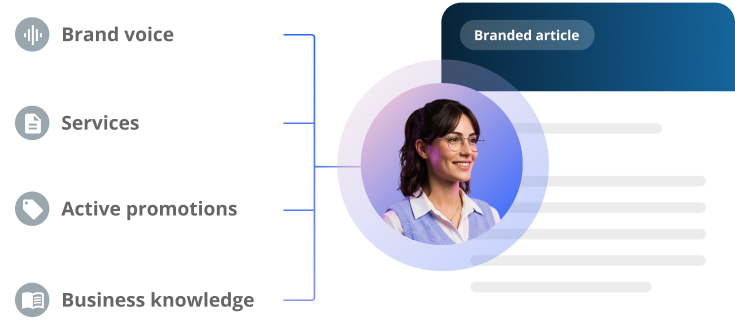
The goal isn’t just AI-generated content—it’s AI-optimized, brand-specific content.
Challenge 4: Not Appearing in AI Search Results
Many SMBs create content—but still don’t show up in ChatGPT, Google SGE, or Perplexity results.
The problem:
- Content isn’t structured
- Information is vague or unverified
- No clear answers for AI to extract
Why this matters:
AI search engines prioritize content that is:
- Clear and structured
- Fact-based
- Easy to summarize
Solution: Optimize for AI Extraction
Effective AI content optimization for small businesses requires:
- Clear H2/H3 structure
- Bullet points and FAQs
- Direct, concise answers
- Factual and trustworthy content
If AI can’t extract your content, it won’t rank it.
Best Tools for AI Content Optimization for Small Businesses
Choosing the right tool is critical. Not all platforms are built for true automation or SEO growth.
Here’s how the top AI content optimization platforms for small businesses compare.
1. Vendasta AI Blogger (Best for Fully Automated SEO Content)
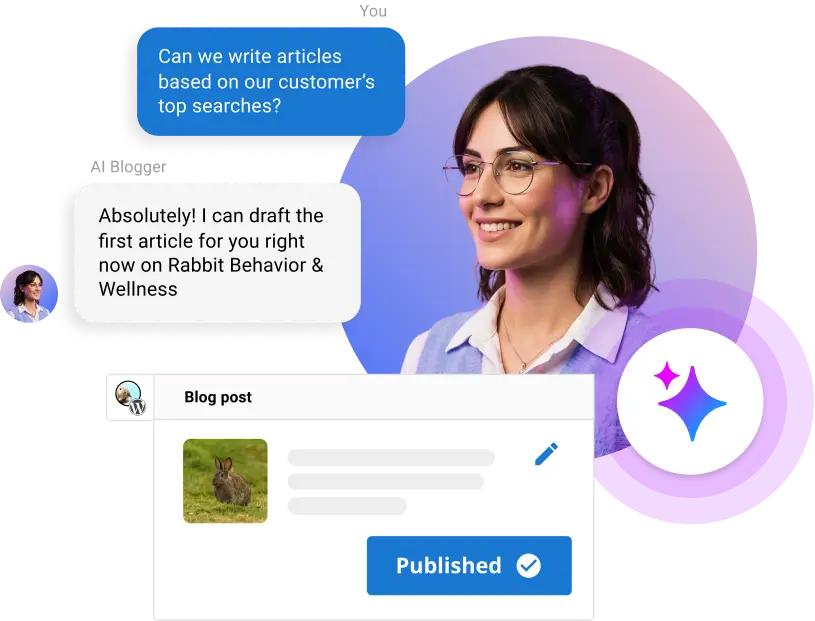
Vendasta’s AI Blogger is designed specifically for AI content optimization for small businesses that want results without manual effort.
Key Features:
- Weekly SEO-optimized blog generation
- Automated publishing directly to WordPress
- Built-in structured headers + keyword targeting
- FAQ-based blog creation aligned with search intent
Unique Angle:
It acts as an “AI employee” that runs your entire blog strategy—from planning to publishing.
Benefits:
- Builds long-term domain authority
- Drives consistent organic traffic
- Eliminates the need for writers or content managers
Vendasta’s AI Blogger turns your website into a continuous SEO growth engine—without hiring writers or managing content.
2. AI SEO Writing Tools (e.g., Jasper, Writerush)
These are popular AI content optimization tools for small businesses, mainly focused on content generation.
Strengths:
- Fast content creation
- Helpful for ideation and drafts
Weakness:
- Requires manual SEO strategy
- No built-in publishing
- No automation for consistency
Useful tools—but not complete AI content optimization software for small businesses.
3. SEO Optimization Platforms (e.g., Surfer SEO, Clearscope)
These platforms specialize in optimizing existing content.
Strengths:
- Strong on-page SEO recommendations
- Keyword and content scoring
Weakness:
- No content creation
- No publishing automation
- Requires manual execution
Great for optimization—but not full AI content optimization platforms for small businesses.
| Feature | Vendasta AI Blogger | Traditional AI Tools | SEO Platforms |
| Automation | ✅ Full | ❌ Partial | ❌ None |
| SEO Optimization | ✅ Built-in | ⚠️ Limited | ✅ Strong |
| Publishing | ✅ Automatic | ❌ Manual | ❌ Manual |
| Consistency | ✅ Weekly | ❌ Depends | ❌ Depends |
Most tools help you create content. Very few help you consistently execute a complete AI content optimization strategy.
That’s why the future of AI content optimization for small businesses isn’t just tools—it’s systems that run automatically, scale consistently, and drive measurable growth.
How Vendasta’s AI Blogger Powers AI Content Optimization at Scale
When it comes to AI content optimization for small businesses, most tools stop at content generation. Vendasta’s AI Blogger goes further—it delivers a fully automated, end-to-end system designed to scale SEO without manual effort.
A Fully Autonomous Content Engine
Vendasta AI Blogger functions as a true AI content optimization platform for small businesses by removing the need for constant input.
What it does:
- Generates weekly SEO-optimized blogs automatically
- Requires no prompting or manual topic planning
- Continuously publishes content to keep your site active
Unlike traditional AI content optimization tools for small businesses, this isn’t just a writing assistant—it’s a complete content engine.
You don’t manage content. The system runs it for you.
Built for SMBs with Limited Time
Time is the biggest constraint for small businesses—and this is where AI content optimization software for small businesses must deliver real value.
Vendasta AI Blogger eliminates:
- Content planning
- Writing and editing
- Publishing and scheduling
This allows business owners to focus on operations while their content strategy runs in the background.
Result:
A hands-free approach to AI content optimization for small businesses.
SEO + Social Content Loop
One of the most powerful aspects of Vendasta’s system is its content amplification loop.
How it works:
- Blog content is automatically created
- Key insights are repurposed into social media posts
- Social channels drive traffic back to the website
This creates a continuous cycle:
Content → Distribution → Traffic → Engagement
Most AI content optimization platforms for small businesses stop at publishing. Vendasta extends into visibility and engagement.
Designed for AI Search Visibility
Vendasta AI Blogger is built specifically for modern search environments, making it ideal for AI content optimization for small businesses.
Each piece of content is:
- Structured with H2s and H3s for AI parsing
- Built with FAQ-based sections for answer engines
- Optimized with targeted keywords and search intent
This ensures content is:
- Easily extractable by AI systems
- More likely to appear in AI-generated answers
- Better positioned for featured snippets
Real Outcome
By using a fully automated system like Vendasta AI Blogger, small businesses achieve:
- More visibility in search and AI platforms
- More leads from organic traffic
- Less effort spent managing content
This is what scalable AI content optimization for small businesses looks like in 2026.
AI Content Optimization Best Practices for Small Businesses
Even with the best AI content optimization tools for small businesses, success depends on following proven strategies.
Focus on What Actually Drives Results
1. Long-Tail Keywords
- Lower competition
- Higher intent
- Better conversion potential
2. FAQ-Based Content
- Matches how users ask questions
- Increases chances of AI extraction
- Improves visibility in answer engines
3. Local SEO
- Target location-specific searches
- Capture high-intent local customers
- Strengthen relevance for SMBs
Use Proven Systems
To maximize results from AI content optimization platforms for small businesses, focus on:
- Consistent publishing schedule (weekly minimum)
- Internal linking to build topic authority
- Content clustering around key themes
Avoid Common Mistakes
Even with AI content optimization software for small businesses, these pitfalls can hurt performance:
- Keyword stuffing → Reduces readability and rankings
- Generic AI content → Low engagement, poor differentiation
- Inconsistent posting → Weakens SEO authority
Conclusion: Why AI Content Optimization Is No Longer Optional
AI search is already changing how customers find businesses. Relying on manual content creation is slow, inconsistent, and hard to scale—especially for SMBs.
With AI content optimization for small businesses, the focus shifts from effort to systems. The right AI content optimization tools for small businesses help you publish consistently, stay visible in AI search, and turn content into a growth engine.
Businesses that adopt this now will gain more visibility, traffic, and leads—while others fall behind.
Try Vendasta AI Blogger or book a demo to see how AI content optimization software for small businesses can automate your growth.
AI Content Optimization for Small Businesses FAQs
1. What is AI content optimization for small businesses?
AI content optimization for small businesses involves using artificial intelligence to create, structure, and refine content so it ranks higher in search engines and appears in AI-generated answers. Tools like Vendasta’s AI Blogger automate this process, ensuring consistent, SEO-friendly content without manual effort.
2. How does AI improve SEO for small businesses?
AI improves SEO by analyzing search intent, optimizing keywords, and structuring content for better readability and ranking. Platforms like Vendasta also automate publishing and ensure consistency, which is critical for improving domain authority and search visibility over time.
3. Do small businesses really need AI for content optimization?
Yes, because manual content creation is time-consuming and inconsistent. AI tools streamline the process, helping small businesses compete with larger brands by producing optimized content regularly and efficiently.
4. How often should small businesses publish optimized content?
Publishing weekly is ideal for building authority and improving rankings. Consistent content signals relevance to search engines and increases your chances of appearing in both traditional and AI-driven search results.
5. What is the best AI tool for content optimization?
The best tool depends on your needs, but Vendasta’s AI Blogger stands out for automation. It handles everything from keyword targeting to publishing, making it ideal for businesses that want results without manual work.
6. Can AI-generated content rank on Google?
Yes, AI-generated content can rank if it is high-quality, relevant, and properly optimized. Structured formatting, accurate information, and consistency are key factors that influence rankings.
7. How does AI content optimization help with AI search tools like ChatGPT?
AI search tools prefer structured, factual, and concise content. Optimized blogs with FAQs, headings, and clear answers are more likely to be selected and cited in AI-generated responses.
8. What are the biggest mistakes in AI content optimization?
Common mistakes include overusing keywords, publishing inconsistent content, and relying on generic AI outputs. Businesses should focus on quality, structure, and aligning content with user intent.
9. How does Vendasta’s AI Blogger work?
Vendasta’s AI Blogger automatically researches, writes, and publishes SEO-optimized blogs weekly. It uses your business data to create relevant content that builds authority, drives traffic, and supports your overall marketing strategy.
10. Is AI content optimization expensive for small businesses?
Not necessarily. Many AI tools are affordable compared to hiring writers or agencies. Vendasta’s solution, for example, provides a cost-effective way to automate content creation while delivering consistent, high-quality results.