About Us
 Careers
 Leadership
 Board
Board Newsroom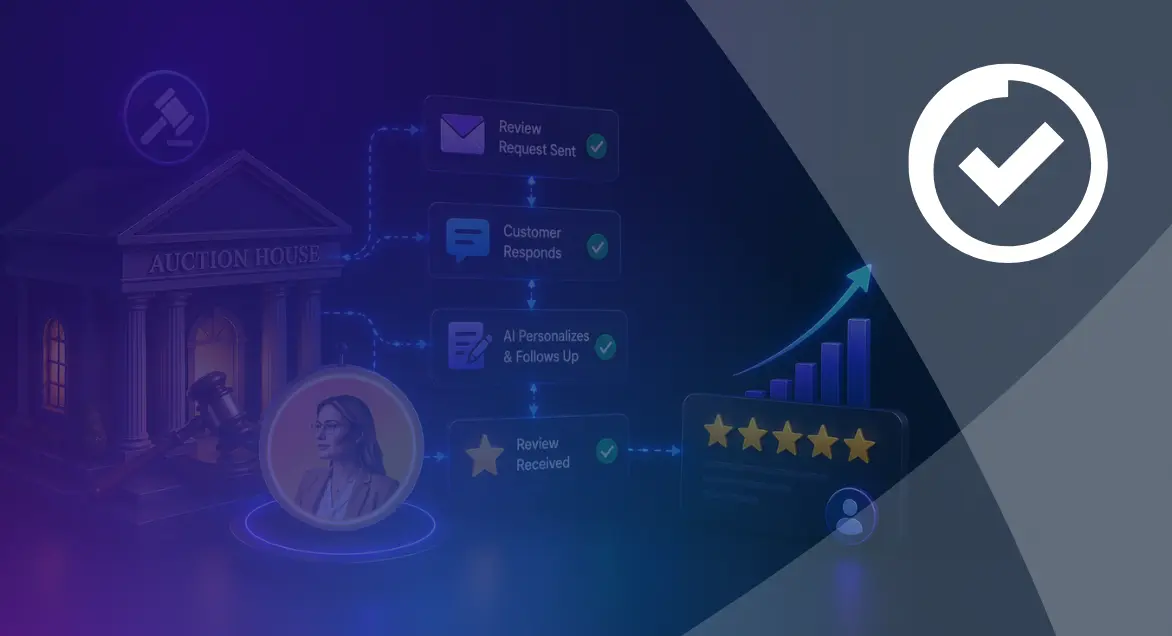
Automated review request strategies are transforming how businesses collect customer feedback because while most companies know reviews matter, consistently getting them is the real challenge.
Customers may have a great experience, yet never leave feedback, and without a structured approach, valuable opportunities slip through the cracks—making it harder to get customers through strong online credibility.
This is where many businesses fall behind. While competitors build strong reputations with a steady stream of 5-star reviews, others rely on manual follow-ups that are inconsistent, time-consuming, and often ignored. The result? Lower visibility in search results, weaker credibility, and lost revenue.
The solution lies in implementing an automated review request strategy powered by AI. In this guide, you’ll learn how an auction house successfully transformed its reputation using an automated review request system and how your business can replicate the same results at scale.
Let AI handle review management while you focus on growth
TL;DR
- Automated review request systems can increase review volume by 2–3x by reaching customers at the right moment
- AI-powered review request automation removes manual effort and improves response rates
- Tools like Vendasta help businesses automate Google review requests and scale reputation growth effortlessly
What is an Automated Review Request?
An automated review request is a system that automatically asks customers for feedback after a specific interaction, such as a purchase, service completion, or support experience, without requiring manual follow-up.
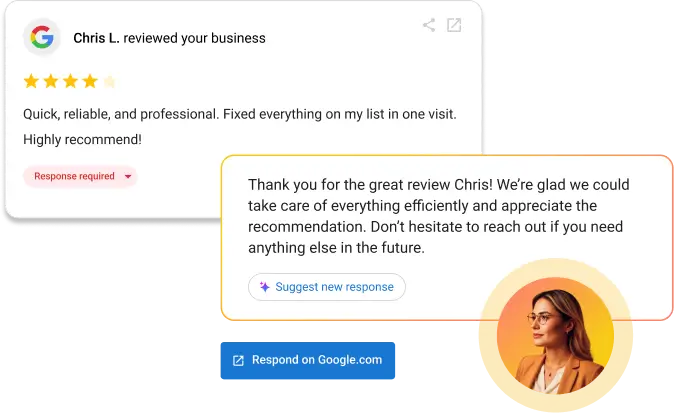
Instead of relying on teams to send emails or texts individually, an automated review request system uses predefined triggers and AI to deliver personalized messages at the optimal time.
At its core, this system ensures that every satisfied customer has an opportunity to leave a review—consistently and at scale.
How Does an Automated Review Request System Work?
An automated review request system follows a simple but powerful workflow:
- Customer interaction occurs: A transaction, service, or engagement is completed.
- Trigger is activated automatically: The system detects the interaction and initiates a review request.
- AI personalizes the message: The request is tailored based on customer behavior, timing, and context.
- Customer receives the request: Delivered via SMS, email, or other channels.
- Customer leaves a review: A direct link makes it easy to submit feedback on platforms like Google.
This process, known as review request automation, removes friction and dramatically increases the likelihood of customers leaving feedback.
Why Automated Review Requests Matter for SMB Growth
Customer reviews are no longer optional—they are a critical growth driver. Research shows that 93% of consumers read online reviews before making a purchase decision, making them one of the most influential factors in modern buying behavior.
An automated review request system directly impacts three key areas:
- Local SEO Rankings: Google prioritizes businesses with frequent, high-quality reviews.
- Customer Trust: A higher volume of positive reviews builds credibility instantly.
- Conversion Rates: Businesses with strong ratings consistently outperform competitors.
What Happens Without Review Request Automation?
Without review request automation, businesses face several challenges:
- Missed opportunities to capture positive feedback
- Inconsistent review collection
- Overrepresentation of negative experiences
- Lower visibility in search results
In contrast, businesses that implement an automated Google review request strategy create a steady, predictable flow of reviews—giving them a significant competitive advantage.
Real Success Story: How an Auction House Used an Automated Review Request System to Generate 21 Five-Star Reviews in 30 Days
One of the biggest challenges with any automated review request strategy is proving that it actually works in real-world scenarios. This auction house case study shows exactly how powerful AI-driven review request automation can be when implemented correctly. The results from the AI Reputation Specialist auction house reviews show what happens when review collection, management, and customer engagement work together through AI.
The Challenge: Missing Out on Automated Social Proof
The auction company had built a strong offline reputation, but their online presence didn’t reflect it.
Like many high-volume businesses, they struggled with:
- No consistent automated review request system in place
- Manual follow-ups that were often forgotten
- Missed opportunities to capture positive customer experiences
- Competitors gaining visibility through stronger online reviews
Without review request automation, valuable social proof was being lost after every successful auction.
The Solution: AI-Powered Automated Review Request System
To solve this, Blue River Digital implemented an AI-driven automated review request system using Vendasta’s AI Reputation Specialist, tailored specifically for the auction industry.
Here’s how the solution worked:
- Custom Branding for Trust: The AI employee was rebranded as “Auction Rated” to align with the business and build instant credibility with bidders.
- Automated Review Request Triggers: The system sent an automated Google review request immediately after each successful auction, capturing feedback at the perfect moment.
- AI-Powered Review Management: The AI didn’t just collect reviews—it also helped respond to them intelligently, ensuring every customer felt acknowledged.
This combination of automated review request automation + AI engagement created a seamless, hands-free system for reputation growth.
The Results: 21 Five-Star Reviews in Just 30 Days
The impact of implementing an automated review request system was immediate and measurable:
- 21 new reviews generated in 30 days
- 100% of reviews were 5-star ratings
- Significant increase in customer engagement
- Organic brand advocacy and referrals increased
Instead of relying on inconsistent manual efforts, the business created a predictable engine for capturing positive feedback.
From Reviews to Revenue: Turning Customers into Brand Advocates
Beyond just collecting reviews, the automated review request strategy created a ripple effect:
- Customers became vocal advocates
- The business gained stronger credibility online
- New customers were acquired through referrals
In fact, the client became such a strong believer in the system that they began actively promoting it—bringing in new business through word of mouth.
Expert Insight
“Since turning on the AI Reputation Specialist, our client saw 21 new five-star reviews in just one month. They love it because it just works; it captures feedback automatically and ensures their reputation reflects the quality of their work.”
— Nick Prentice, VP of Growth and Development at Blue River Digital
Meet the AI Reputation Specialist: Vendasta’s Automated Review Request Solution
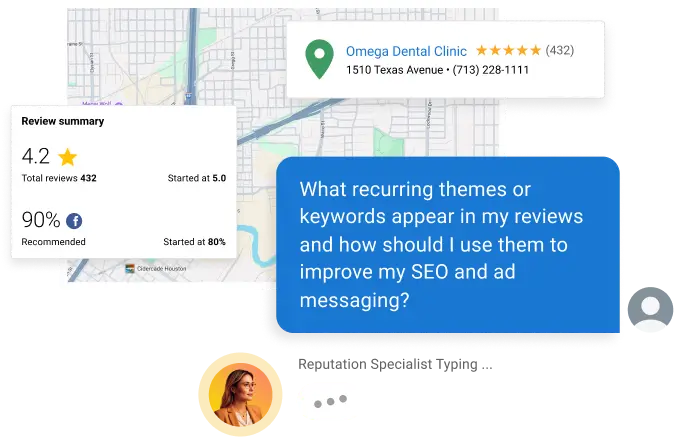
Vendasta’s AI Reputation Specialist is an AI employee built to handle review management end-to-end—generating personalized review responses, posting on customers’ behalf, and sending review requests that encourage positive feedback while handling negative comments carefully. It’s the platform behind the automated review request workflow used in the auction house case study above.
A few things set it apart:
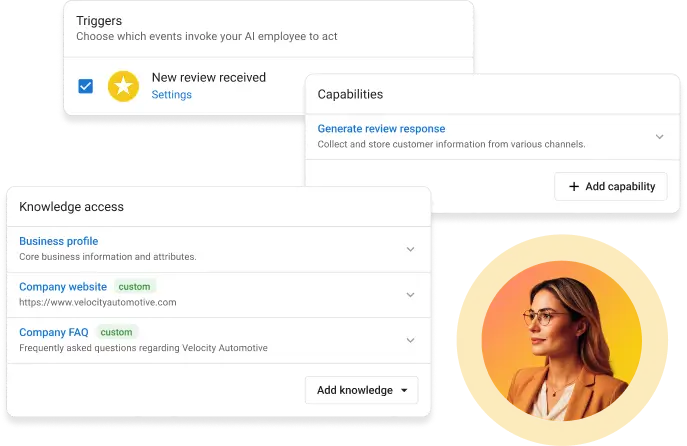
- Reputation-safe, automatic responses: The AI generates context-aware replies on Google and Facebook, automatically matching the language of the original review across major EU languages, with built-in safeguards to keep tone appropriate for both positive and negative reviews.
- Configurable control: Businesses can set rating thresholds, timing, and platform preferences so every automated response reflects their brand standards. Automation doesn’t mean losing control over voice or timing.
- Insights, not just collection: Built-in AI chat surfaces sentiment shifts, keyword trends, and review patterns, turning review and NPS data into actionable recommendations rather than just a growing pile of star ratings.
For businesses like auction houses, where trust and timing in each transaction matter most, this combination (automated requests, on-brand responses, and pattern-level insights) turns review collection from an afterthought into a growth engine.
How to Set Up an Automated Review Request System (Step-by-Step Guide)
Implementing an automated review request system doesn’t have to be complex. With the right strategy and tools, you can turn every customer interaction into an opportunity to collect valuable feedback and grow your online reputation.
Follow this step-by-step framework to build a high-performing automated review request workflow:
Step 1: Identify Key Customer Touchpoints
Start by mapping out where customers are most likely to leave positive feedback.
Common touchpoints include:
- After a successful purchase
- Post-service completion
- Following a positive support interaction
- After event participation (like auctions)
These moments are ideal for triggering an automated Google review request, as customer satisfaction is at its peak.
Step 2: Choose the Right Automated Review Request Tool
Your success depends heavily on the platform you choose. A strong automated review request system should include:
- Multi-channel communication (SMS, email, etc.)
- AI-powered personalization
- CRM and workflow integration
- Review monitoring and response tools
- Sentiment analysis and centralized reporting across locations
Vendasta stands out as a leading solution, offering a fully integrated platform with AI employees like the Reputation Specialist to automate and optimize review collection at scale.
Step 3: Automate Timing and Triggers
Timing is critical in review request automation.
Best practices include:
- Sending requests immediately after a positive interaction
- Using AI to determine optimal send times
- Avoiding delays that reduce response likelihood
An intelligent automated review request system ensures requests are sent when customers are most engaged.
Step 4: Craft High-Converting Review Request Messages
Even with automation, messaging matters.
Effective automated review request messages should:
- Be short and conversational
- Include the customer’s name (personalization)
- Provide a direct review link
- Clearly explain why feedback matters
Example structure:
“Hi [Name], thanks for your recent experience with us! We’d love your feedback—would you mind leaving a quick review here? [Link]”
Step 5: Monitor, Respond, and Optimize
A successful automated review request system doesn’t stop at collection.
You should:
- Track response rates and performance
- Respond to all reviews (positive and negative)
- Use insights to refine your strategy
With AI-powered platforms, this entire process (from request to response) can be streamlined and continuously improved.
Automated Review Request vs Manual Review Collection
When deciding how to collect customer feedback, businesses often compare manual outreach with an automated review request system. While both approaches can generate reviews, the difference in efficiency, scalability, and results is significant.
Here’s a clear comparison:
| Feature | Automated Review Request System | Manual Review Requests |
| Consistency | High (every interaction triggers a request) | Low (depends on staff) |
| Scalability | Easily handles high volume | Limited by time and resources |
| Response Rate | Higher due to timing + automation | Lower due to delays |
| Effort Required | Minimal after setup | Time-consuming |
| Personalization | AI-driven messaging | Manual and inconsistent |
| Speed | Instant or optimized timing | Often delayed |
Why Automation Wins
An automated review request system ensures no opportunity is missed. Every satisfied customer is prompted at the right moment, leading to:
- More consistent review generation
- Higher-quality feedback
- Stronger online reputation
In contrast, manual methods often result in gaps, missed follow-ups, and inconsistent performance.
Businesses using review request automation outperform those relying on manual processes in both volume and quality of reviews.
Best Practices for Automated Google Review Request Success
To maximize results from your automated review request system, it’s important to follow proven best practices. These strategies ensure higher response rates, better customer experiences, and stronger reputation growth.
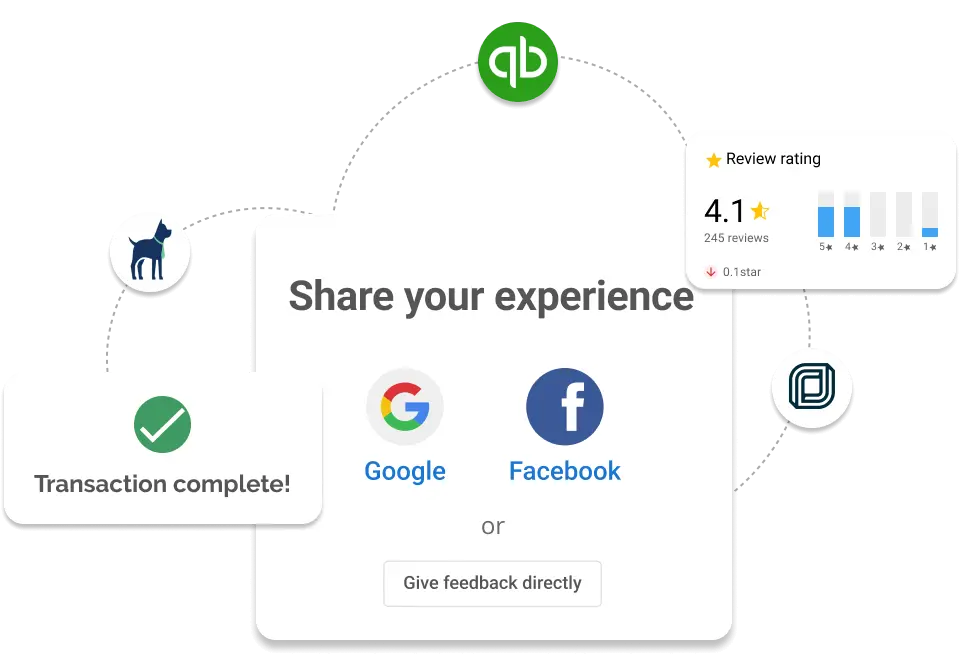
Send Requests at the Right Moment
Timing is everything in automated review request automation.
- Send requests immediately after a positive interaction
- Avoid delays that reduce engagement
- Use AI to optimize timing for each customer
Use SMS for Higher Response Rates
SMS consistently outperforms email in automated Google review request campaigns.
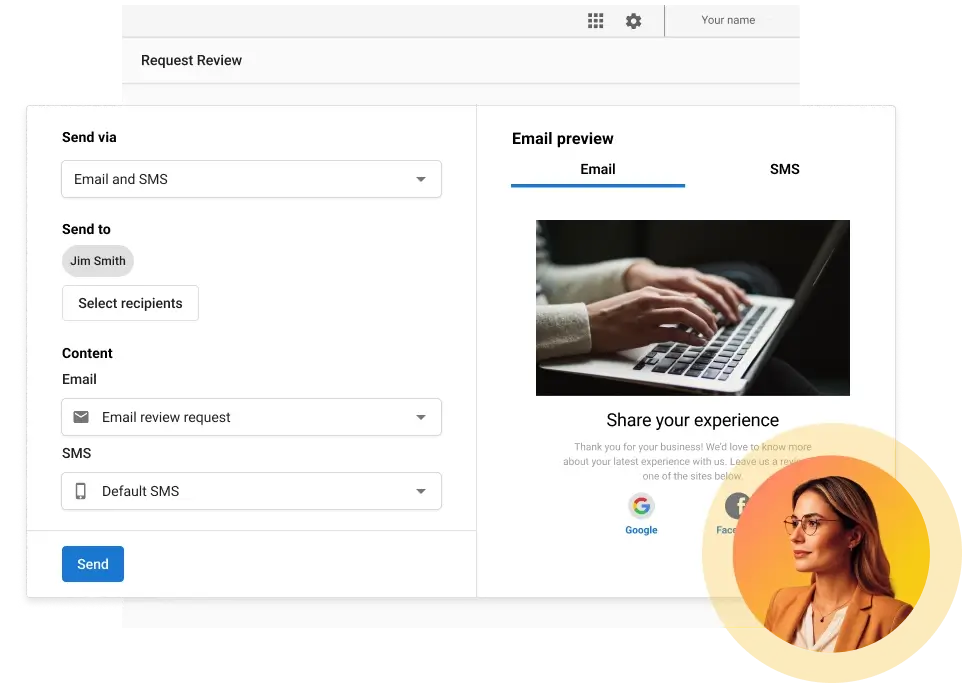
- Higher open rates (often above 90%)
- Faster responses
- More convenient for customers
Personalize Every Review Request
Generic messages don’t perform well. A strong automated review request system uses AI to:
- Include customer names
- Reference the interaction
- Adjust tone based on context
This makes requests feel natural and increases engagement.
Make It Easy to Leave a Review
Reduce friction as much as possible:
- Include direct links to review platforms
- Minimize steps required
- Ensure mobile-friendly experiences
The easier it is, the more likely customers will complete the process.
Respond to Every Review
An effective automated review request strategy doesn’t stop at collecting reviews.
- Thank customers for positive feedback
- Address negative reviews professionally
- Show that your business values input
AI tools can help automate and scale responses without losing personalization.
Common Mistakes to Avoid When Automating Review Requests
Even though automation can dramatically improve your review volume, it’s easy to get it wrong. Many businesses implement tools but fail to see results because of a few critical missteps.
1. Sending Requests at the Wrong Time
Timing is everything. Sending a review request too early (before the customer has experienced the full service) or too late (when the experience is no longer fresh) reduces response rates.
For auction houses, the ideal moment is immediately after a successful transaction—when excitement and satisfaction are at their peak.
2. Using Generic, Robotic Messaging
Customers can instantly tell when a message feels automated in a bad way. If your request sounds cold or templated, it won’t resonate.
AI should enhance personalization, not remove it. The best-performing systems:
- Use the customer’s name
- Reference the transaction
- Match your brand voice
3. Not Responding to Reviews
Automation doesn’t stop at collecting reviews. Ignoring feedback (especially negative reviews) can harm your reputation more than not having reviews at all.
AI-powered responses ensure:
- Every reviewer feels acknowledged
- Your brand appears active and engaged
- Issues are addressed quickly
4. Overloading Customers with Requests
Too many reminders can feel spammy and damage customer relationships.
A smart system should:
- Limit follow-ups
- Stop after a response is received
- Adjust frequency based on engagement
5. Failing to Showcase Reviews
Collecting reviews is only half the battle. If they’re not visible, they won’t impact trust or conversions.
Make sure to:
- Display reviews on your website
- Highlight them in marketing materials
- Share them on social media
6. Not Integrating Reviews Into Your Sales Strategy
Reviews shouldn’t live in isolation. Businesses often miss the opportunity to use them as powerful sales tools.
Top-performing auction houses:
- Reference reviews in listing pages
- Use testimonials in email campaigns
- Leverage social proof during bidding promotions
The Future of AI in Reputation Management
AI-driven review systems are just the beginning. As technology evolves, reputation management is becoming more predictive, personalized, and deeply integrated into the customer journey.
Smarter Personalization at Scale
Future AI systems will go beyond simple personalization. They’ll:
- Analyze customer behavior and sentiment
- Tailor review requests based on personality and engagement style
- Optimize messaging for higher response rates
Predictive Reputation Insights
Instead of reacting to reviews, businesses will be able to anticipate them.
AI will help:
- Identify customers most likely to leave positive feedback
- Flag at-risk experiences before they turn into negative reviews
- Suggest proactive actions to improve satisfaction
Voice and Video Reviews
Text reviews are just the start. Expect a rise in:
- Video testimonials
- Voice-based feedback
- Interactive review formats
These formats will add authenticity and increase trust even further.
Deeper Integration With Business Systems
AI reputation tools will increasingly connect with:
- CRM platforms
- Auction management software
- Marketing automation systems
This creates a seamless feedback loop where customer insights directly influence operations, marketing, and sales strategies.
AI as a Brand Advocate
As seen in the auction house case study, AI doesn’t just collect reviews—it helps turn satisfied customers into promoters.
In the future, AI will:
- Identify potential brand advocates
- Encourage referrals automatically
- Amplify positive sentiment across channels
Conclusion: Turn Every Transaction Into Trust
In today’s digital-first marketplace, your reputation isn’t just a reflection of your business—it is your business.
For auction houses, where trust, timing, and credibility drive every bid, relying on manual review collection is no longer enough. The difference between a business that hopes for reviews and one that systematically earns them comes down to automation.
As the case study showed, implementing an AI-powered review request system didn’t just increase feedback—it transformed the auction house’s reputation into a powerful growth engine—delivering consistent 5-star reviews, building stronger buyer and seller confidence, and driving more referrals.
Most importantly, it removed the friction. No more missed opportunities. No more forgotten follow-ups. Just a system working in the background, capturing authentic customer sentiment at exactly the right moment.
If you’re ready to turn every completed transaction into a 5-star review and build a reputation that drives real revenue, now is the time to act. Book a demo today and see how AI-powered review automation can help you capture more feedback, increase your Google ratings, and turn happy clients into loyal advocates—on autopilot.
Automated Review Request FAQs
1. What is an automated review request?
An automated review request is a system that sends review invitations to customers automatically after an interaction. It uses triggers like purchases or service completion to request feedback via SMS or email, helping businesses consistently collect reviews without manual effort.
2. How does an automated review request system work?
An automated review request system tracks customer interactions and sends review prompts at optimal times. Tools like Vendasta use AI to personalize messages and improve response rates, making it easier for businesses to collect more reviews efficiently.
3. Why is review request automation important?
Review request automation ensures businesses consistently collect customer feedback. It improves online reputation, boosts local SEO rankings, and increases trust by generating a steady stream of recent reviews.
4. How do I automate Google review requests?
You can automate Google review requests using tools like Vendasta that send direct review links via SMS or email. These systems trigger requests automatically after customer interactions, making the process seamless and scalable.
5. What is the best automated review request tool?
The best automated review request tool depends on your needs, but platforms like Vendasta offer AI-powered automation, CRM integration, and multi-channel messaging, making them ideal for SMBs and agencies.
6. Can automated review requests improve SEO?
Yes, automated review requests help generate more frequent and positive reviews, which are a key ranking factor for local SEO. More reviews improve visibility in search results and Google Maps listings.
7. When should I send an automated review request?
The best time to send an automated review request is immediately after a positive customer interaction, such as a completed purchase or service. AI tools can optimize timing for better response rates.
8. Are automated review requests compliant with Google policies?
Yes, automated review requests are compliant as long as businesses do not incentivize or filter reviews unfairly. Tools like Vendasta help ensure compliance while maximizing authentic feedback collection.
9. How many review requests should I send?
You should send one well-timed automated review request per interaction, with a gentle follow-up if needed. Avoid spamming customers, as it can reduce response rates and harm your reputation.
10. Do small businesses need an automated review request system?
Yes, small businesses benefit greatly from automated review request systems. They save time, increase review volume, and help compete with larger brands by improving online reputation and visibility.