About Us
 Careers
 Leadership
 Board
 Newsroom

Choice Signature Luxury Car Rental had a problem that many businesses running automotive lead generation campaigns face: interested prospects were calling, but every unanswered call was quietly becoming a lost opportunity.
Elite Web Professionals set up Vendasta’s AI Receptionist as a 24/7 safety net for the Atlanta-based rental business. Calls still rang to a human first, and if nobody answered within 20 seconds, the AI took over, asked qualifying questions, and captured the details a sales team needed.
Over four months, the system handled 1,017 inbound calls and captured 778 qualified leads, with a 76% conversion rate. That result points to something bigger: automotive lead generation isn’t just about creating more demand, it’s about capturing and responding to that demand before the opportunity moves elsewhere.
Buyers now show up from dozens of directions, including Google, social, inventory pages, phone calls, chat, referrals, and third-party marketplaces. Generating traffic isn’t enough if those leads aren’t captured and followed up quickly.
Ninety-five percent of vehicle buyers use digital as a source of information before ever contacting a dealer, and roughly twice as many automotive consumers start their research online as at a dealership. Most of the funnel is already happening before anyone picks up a phone.
This guide covers what qualifies as a strong automotive lead, why an owned lead generation system matters more than one-off campaigns, the strategies and channels that drive results, and how AI can help capture and qualify leads that would otherwise be missed.
Find, nurture, and convert prospects that are ready to buy
TL;DR
- Automotive lead generation is about qualified opportunities, not just contact information.
- Combining channels, local SEO, paid search, social, referrals, and lead nurturing, outperforms relying on one source.
- Speed matters: Vendasta’s AI Receptionist helped one automotive business turn 1,017 calls into 778 qualified leads in four months, at a 76% conversion rate.
What Is Automotive Lead Generation?
Automotive lead generation is the practice of attracting potential automotive customers and capturing their contact information and buying intent.
It also includes qualifying those prospects, nurturing them over time, and converting them into appointments, test drives, service bookings, or sales.
What Makes an Automotive Lead Qualified?
Not every contact is a sales opportunity. A name and phone number alone don’t tell you much; what actually separates a qualified automotive lead from a casual browser is intent.
| Lower-intent signal | Higher-intent signal |
| Reads an automotive blog | Requests vehicle pricing |
| Watches a generic video | Requests a test drive |
| Browses several models | Asks about a specific VIN |
| Downloads a guide | Submits a financing inquiry |
| Follows a social account | Requests a trade-in valuation |
Signals like these are what make a lead more valuable to a sales team, and it’s why automotive lead generation software and CRM automation exist in the first place: to tell the difference between someone curious and someone ready to buy.
Automotive Lead Generation vs. Automotive Lead Conversion
These terms get used interchangeably, but they describe different stages of the same system. Lead generation creates and captures demand, lead management organizes and routes the opportunity, lead nurturing keeps the business relevant until the buyer is ready, and automotive lead conversion turns the opportunity into an appointment, test drive, service visit, or sale.
A well-built automotive lead generation strategy is designed backward from the conversion you actually want, not just from whichever channel is easiest to run.
Why Is Automotive Lead Generation Important?
A consistent automotive lead generation engine gives a business a predictable way to create new sales opportunities. Without one, a business ends up relying entirely on walk-ins, referrals, or third-party lead providers.
Build a Pipeline You Control
Third-party leads can be sold to several competitors at once, which means a business pays to compete for the same prospect. Owned channels work differently: a website, blog content, CRM, reviews, and customer database all build long-term equity the business actually controls.

Reduce Dependence on Third-Party Lead Marketplaces
Third-party lead sources aren’t inherently bad, but they come with tradeoffs: inconsistent lead quality, direct competition for the same prospect, rising cost per lead, and little ownership over the customer relationship.
The businesses with the strongest automotive lead generation results tend to treat third-party marketplaces as one input among several, not the entire strategy.
Turn Existing Demand Into More Opportunities
Automotive lead generation isn’t only about finding new people. Some of the most overlooked opportunities are already sitting in a business’s own data, including website visitors who didn’t convert, previous leads who went quiet, missed callers, and abandoned forms.
In Cox Automotive’s Car Buyer Journey research, as much as 60% of shoppers submitted a lead online before ever visiting a dealership in person. That’s a meaningful share of real demand showing up digitally, often before a human ever gets involved.
That’s exactly the kind of demand that gets missed without a system to capture, qualify, and route it, which is why AI-driven capture has become part of how automotive businesses approach lead generation. The next section walks through where an AI receptionist fits alongside the rest of the strategy.
What Are the Best Automotive Lead Generation Strategies?
The strongest automotive lead generation strategies combine multiple channels rather than leaning on one source. Each channel plays a different role in the funnel.
| Strategy | Best for | Lead action | Key metric |
| Local SEO | High-intent local searches | Call, visit, or site inquiry | Organic leads |
| Google Ads | Bottom-funnel demand | Pricing or test-drive request | Cost per lead |
| Social ads | Demand generation | Lead form or message | Qualified leads |
| Inventory / VDPs | Vehicle shoppers | Inquiry or test drive | VDP conversion rate |
| Content marketing | Early-stage research | Guide download or read | Leads generated |
| Referrals | Existing customers | Referral submission | Referral leads |
| Live chat | Active shoppers | Conversation | Qualified chats |
| SMS | Lead nurturing | Reply or click | Response rate |
| AI receptionist | Phone leads | Qualification or booking | Leads captured |
| CRM automation | Lead conversion | Follow-up sequence | Appointment rate |
A dedicated local SEO program tends to be the foundation, since it captures shoppers already searching with high-intent phrases like “car dealership near me.”
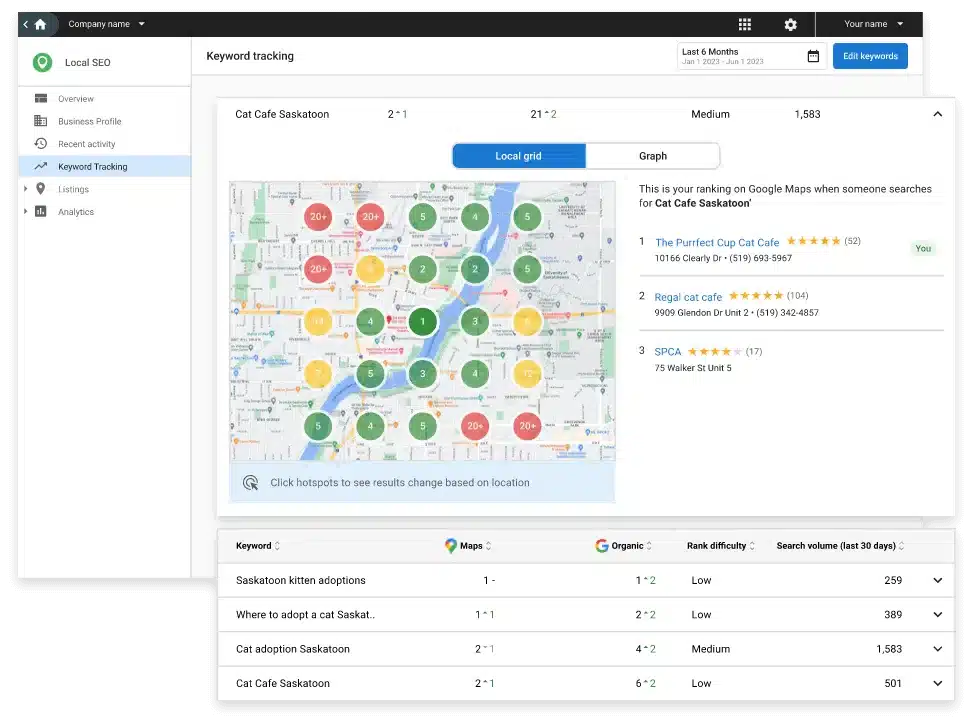
Paid search and social layer on top of that by generating and retargeting demand. But the piece that ties automotive lead generation together as an actual system is what happens after the click: how fast a lead is contacted, whether it’s qualified before a human gets involved, and whether it lands in a CRM the sales team will actually use.
That connective layer, tying together AI receptionists, chat, and automated follow-up, is what separates car dealership lead generation that just fills a database from one that consistently books appointments. It’s what the rest of this guide builds toward.
12 Automotive Lead Generation Ideas That Can Increase Qualified Opportunities
Generating automotive leads gets easier when a business works across several channels at once instead of betting everything on one. Here are twelve ideas that consistently move the needle.
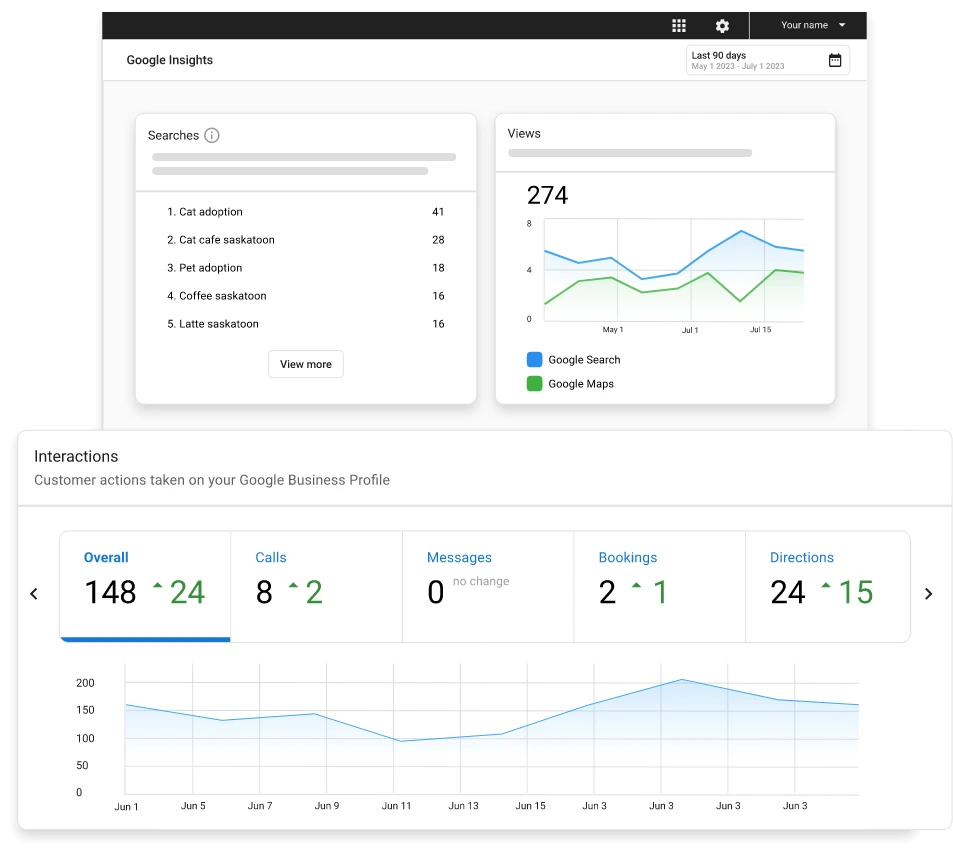
1. Optimize Your Google Business Profile for Local Searches
Accurate hours, photos, services, and a steady stream of reviews all influence whether a nearby shopper finds a business first. Answering the Q&A section and keeping location details current also helps with local search visibility.
2. Create High-Converting Vehicle Detail Pages
A strong vehicle detail page acts like a digital showroom: high-quality photos, a video walkaround, transparent pricing, and clear specifications. Every VDP should also make it easy to ask about financing, request a trade-in valuation, or book a test drive.
At minimum, a VDP should answer what the vehicle is, how much it costs, whether it’s available, and how to book a test drive.
3. Target High-Intent Automotive Searches With Google Ads
Search intent in automotive breaks into tiers: brand searches, model searches, “near me” searches, financing searches, and service searches. Phrases like “used Honda CR-V near me” or “value my car” tend to convert better than broad, top-of-funnel terms.
4. Use Meta and Social Lead Generation
Meta Lead Ads, Instagram, and short-form video content all work well for automotive social lead generation, especially inventory walkarounds and customer testimonials. The strongest social strategy treats it as a funnel: video builds engagement, retargeting brings shoppers back, and a lead form moves them into the CRM.
5. Create Offers That Give Shoppers a Reason to Convert
Vague “Contact Us” buttons underperform specific, value-driven CTAs. Offers like “Get Today’s Price,” “Schedule a Test Drive,” or “Value My Trade-In” give shoppers a clear reason to act right now.
6. Build Automotive Content Around Buyer Questions
Content built around real buyer questions, financing guides, trade-in guides, model comparisons, and EV ownership guides, moves shoppers from informational research toward a commercial decision. Mapping content to the funnel stage keeps a site useful at every point in the buyer’s journey.
7. Use Referral Marketing to Generate Warmer Automotive Leads
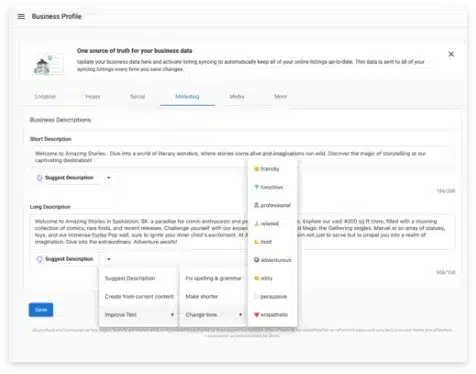
A satisfied customer is one of the most cost-effective automotive sales leads a business can generate. Post-purchase referral requests, dedicated referral landing pages, and simple tracking turn customer satisfaction into another acquisition channel.
8. Re-Engage Old Automotive Leads
Not every past inquiry is a dead end. Lost leads, test-drive no-shows, and past financing inquiries are often still in-market and just need a well-timed re-engagement sequence to come back.
9. Use SMS to Nurture High-Intent Leads
SMS works well for price alerts, test-drive confirmations, appointment reminders, and service follow-ups. Any marketing SMS should only go out where the business has proper consent and a clear opt-out path.
10. Add Live Chat or AI Chat to Your Website
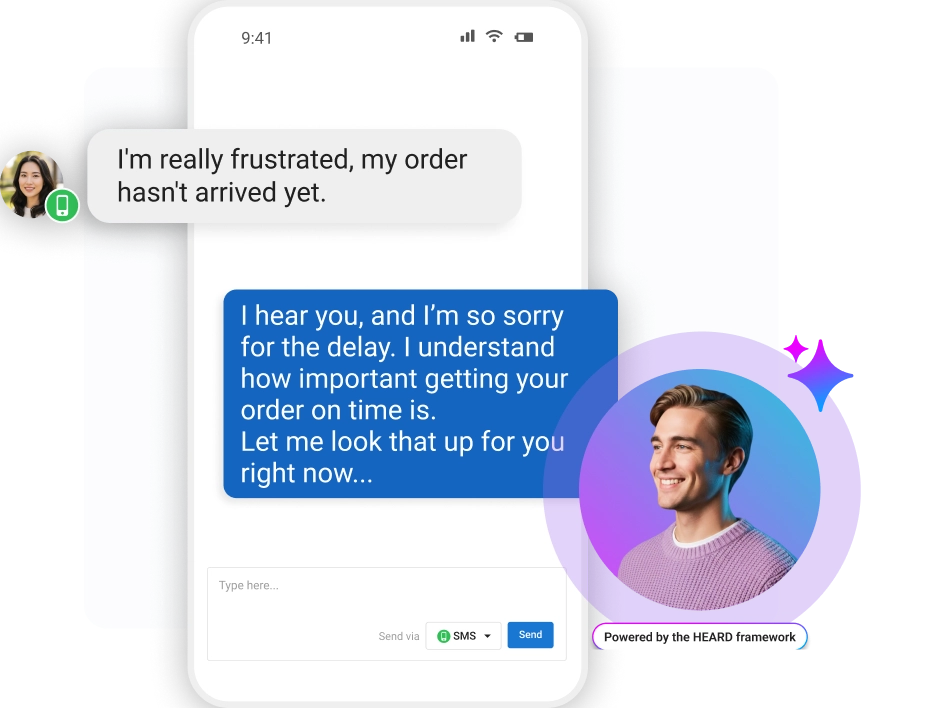
Live chat and AI chat both answer common questions, capture contact information, and qualify shoppers before a human ever joins the conversation. This is one of the areas where Vendasta’s AI Employees can cover after-hours inquiries and route high-intent conversations straight to a sales team.
11. Use AI to Capture Leads You Would Otherwise Miss
Missed calls, after-hours inquiries, and repetitive qualification questions all quietly drain automotive sales leads that never even make it into a CRM. This is exactly the gap Choice Signature Luxury Car Rental closed with an AI receptionist, a pattern documented across several AI employee success stories in other service-based industries too.
12. Connect Every Lead Source to One Follow-Up System
Fragmented lead sources, Google Ads to one inbox, Meta to another, phone calls nowhere at all, cause leads to leak out of the funnel. Routing every channel into a single CRM is what turns isolated campaigns into one connected automotive lead management system.
How AI Improves Automotive Lead Generation
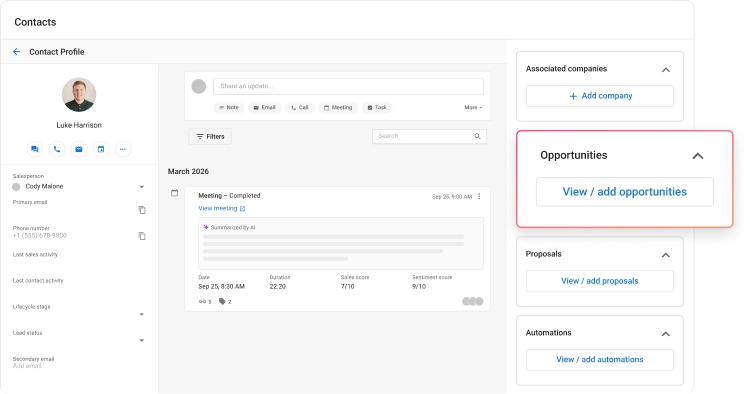
AI improves automotive lead generation by responding to prospects faster, qualifying inquiries automatically, capturing missed opportunities, and helping sales teams prioritize the leads most likely to convert.
It doesn’t replace a sales team. It fills the gaps that happen when no human is available.
AI Lead Generation vs. Traditional Lead Generation
| Traditional Approach | AI-Powered Approach |
| Human responds during business hours | 24/7 response |
| Manual qualification | Automated qualification |
| Voicemail after missed calls | Interactive AI response |
| Manual follow-up | Automated, personalized follow-up |
| Rep searches CRM for context | Conversation summary delivered automatically |
| One conversation at a time | Multiple conversations simultaneously |
| Lead data entered manually | Lead information captured automatically |
What Can an AI Receptionist Do for an Automotive Business?
An AI receptionist can answer inbound calls, capture contact information, and ask qualifying questions specific to the business. It can also identify intent, handle after-hours inquiries, and log everything for the sales team to follow up on.
This kind of automated qualification is what turns a missed call from a dead end into a workable lead, a shift covered in more depth in this breakdown of AI agent use cases across service industries.
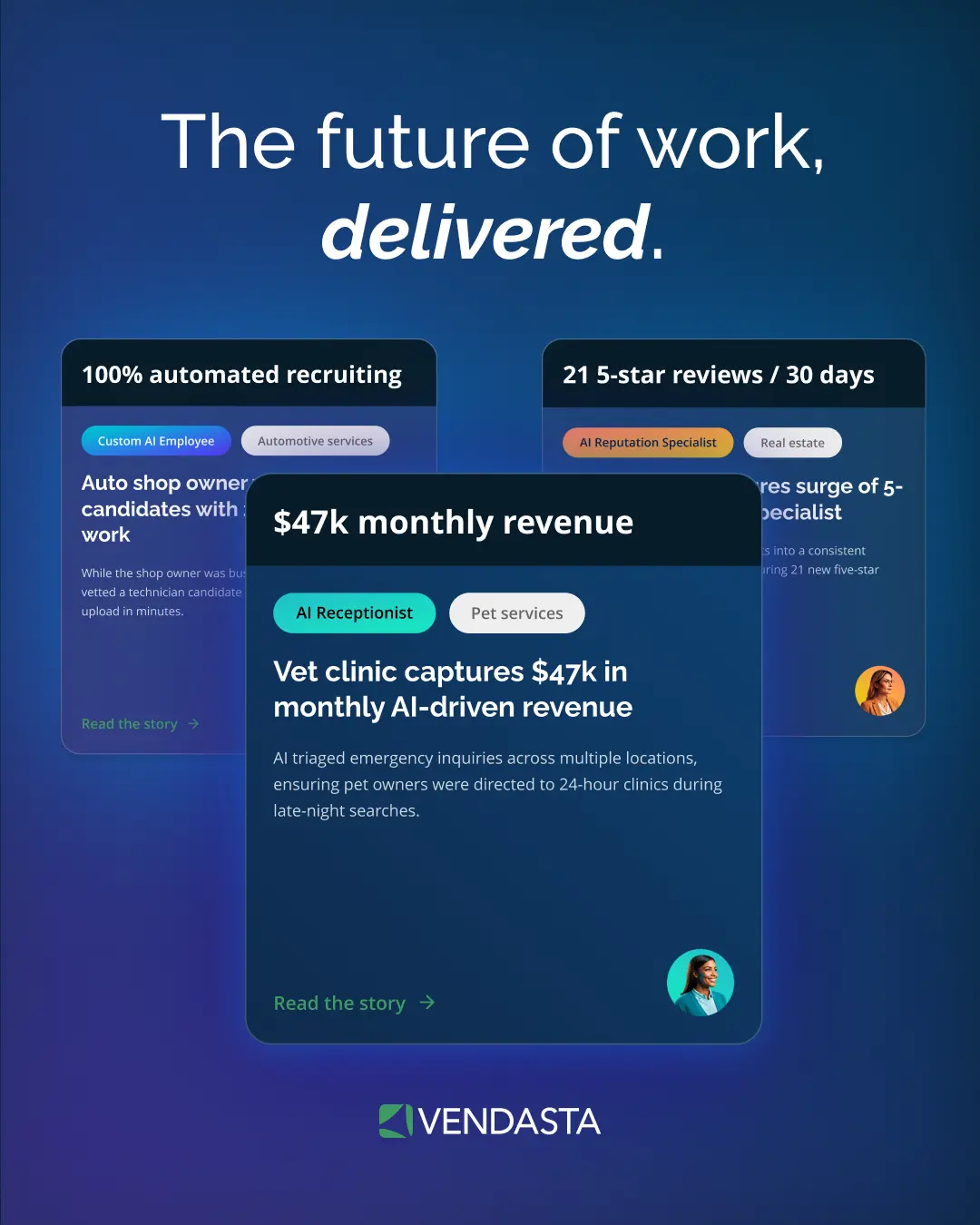
Automotive Lead Generation Success Story: 778 Qualified Leads in 4 Months
This is the clearest example of what AI-driven lead capture can look like in practice, and it’s worth walking through in full.
The Challenge: Missed Calls Were Becoming Missed Revenue
Choice Signature Luxury Car Rental was fielding a steady volume of high-value inquiries, but unanswered calls were quietly turning into lost business. Prospects rarely picked up callbacks from an unfamiliar number, and many assumed the business was inactive or had already booked elsewhere.
The Solution: AI That Answered, Qualified, and Captured Leads
Calls rang to a human first, and if unanswered after 20 seconds, the AI receptionist took over automatically. It was trained to tell the difference between luxury rentals, rideshare rentals, and daily rentals, and to ask the right qualifying questions for each.
The AI captured names, phone numbers, and intent for every conversation, then logged that information for the sales team to follow up on. This level of specificity, distinguishing rental types and educating callers on licensing requirements, is what made the qualification meaningful rather than generic.
The Results
| Metric | Result |
| Inbound calls handled | 1,017 |
| Qualified leads captured | 778 |
| Lead conversion rate | 76% |
| Availability | 24/7 |
| Human-to-AI handoff | 20 seconds |
What This Teaches Us About Automotive Lead Generation
Lead generation doesn’t end when someone raises their hand. The system still needs to capture, qualify, respond, record, route, and follow up before that raised hand becomes a sale.
That end-to-end pattern, not just the AI piece, is what separates automotive businesses that convert consistently from those leaking revenue through missed calls, a theme explored further in this look at AI receptionists for small business.
How to Build an Automotive Lead Generation Funnel That Converts
A working automotive lead generation funnel moves a shopper through six clear stages: attract, convert, qualify, respond, nurture, and convert to sale.
Awareness → Interest → Intent → Lead → Qualified Lead → Appointment → Sale → Retention.
Stage 1: Attract Automotive Shoppers
This stage covers the top-of-funnel channels: SEO, Google Ads, social, video, local search, and referrals. The goal here is simply visibility in front of the right audience.
Stage 2: Convert Interest Into a Lead
Once a shopper is on the site, VDP CTAs, forms, chat, calls, and test-drive requests turn interest into an actual lead. This is where automotive lead generation strategies actually start producing contact information and intent signals.
Stage 3: Qualify the Lead
A qualified lead captures more than a name and number. It includes vehicle interest, budget, timeline, financing needs, and trade-in status.
Stage 4: Respond Immediately
AI, SMS, email, phone, and CRM alerts all play a role in immediate response. The faster a business responds, the more likely that intent is still there when contact happens.
Stage 5: Nurture Until the Buyer Is Ready
Not every qualified lead is ready to buy today, so a nurture sequence keeps the business relevant until they are.
| Timing | Action |
| Immediately | Confirmation and initial response |
| Same day | Helpful vehicle information |
| Day 2 | Follow-up |
| Day 4 | Personalized check-in |
| Day 7 | Offer or test-drive invitation |
| Later | Relevant re-engagement |
This is an illustrative cadence rather than a fixed industry standard, and it should flex based on the vehicle type and buyer urgency.
Stage 6: Convert to an Appointment and Sale
The final stage is where a business tracks contact rate, appointment set rate, show rate, and close rate. These metrics show whether the earlier stages of automotive lead generation are actually producing revenue, not just leads.
How Quickly Should Automotive Businesses Respond to Leads?
Faster response times generally mean fewer prospects moving on to a competitor before a business even makes contact.
A research from MIT’s Sloan School of Management, conducted with InsideSales.com, found that the odds of qualifying a lead drop sharply between the 5-minute and 30-minute mark after it comes in. That drop-off is a big part of why immediate, automated acknowledgment matters even before a human sales rep gets involved.
In practice, that means layering automated acknowledgment, AI coverage after hours, and CRM-based lead routing on top of human follow-up. The goal isn’t to replace the sales conversation, it’s to make sure intent doesn’t cool off while a lead sits in a queue.
This is also where always-on capture tools pay off the most, since platforms built for AI customer acquisition and engagement close exactly the gap this research points to, turning a delayed follow-up into an immediate one.
What Metrics Should You Track for Automotive Lead Generation?
Tracking lead volume alone hides more than it reveals. A useful automotive lead generation dashboard looks at the full path from first contact to closed sale.
| KPI | What It Tells You |
| Cost per lead | Acquisition efficiency |
| Qualified lead rate | Lead quality |
| Contact rate | Follow-up effectiveness |
| Response time | Speed to engagement |
| Appointment set rate | Lead-to-appointment efficiency |
| Appointment show rate | Lead quality plus follow-up strength |
| Close rate | Sales effectiveness |
| Cost per sale | True acquisition efficiency |
| Revenue per lead | Financial value |
| Source-to-sale rate | Channel quality |
Why CPL Isn’t Enough
A low cost per lead can look great on a report and still be a bad investment. Consider two campaigns: Campaign A spends $20 per lead and generates 100 leads with 2 sales, while Campaign B spends $40 per lead and generates 50 leads with 5 sales.
Campaign B has a higher CPL but delivers more than double the sales, which makes it the stronger campaign despite the “worse” cost per lead. Optimizing for cost per qualified opportunity and cost per sale, rather than the cheapest lead, is what actually protects the automotive lead generation budget.
What Are the Best Automotive Lead Generation Tools?
The right mix of tools is what actually helps a business get customers, so it’s more useful to organize solutions by the job each one needs to do than to list twenty generic names.
| Solution / Category | Best For | Example Providers | What It Should Help You Do |
| AI-powered lead capture and CRM | Connected lead capture, qualification, and engagement | Vendasta | Capture, qualify, and engage leads across one connected workflow |
| Dealership CRM | Lead management and sales pipeline | VinSolutions, DealerSocket, CDK Global | Store, route, track, and nurture leads |
| Google Ads | High-intent demand | Google Ads, Google Vehicle Ads | Capture active searchers |
| Meta Ads | Demand generation | Meta Lead Ads | Reach and retarget prospects |
| Local SEO platform | Local visibility | Vendasta Local SEO | Generate organic local leads |
| Chat / AI conversation platform | Website engagement | Gubagoo, Impel, CarNow, Podium | Answer and qualify visitors 24/7 |
| SMS platform | Lead nurturing | Podium, ActivEngage | Follow up and re-engage |
| Analytics and attribution | Attribution | Google Analytics, CallRail | Connect campaigns to outcomes |
Vendasta sits at the top of that list because it isn’t just another point solution bolted onto the funnel. Instead of asking a business to stitch together a chatbot from one vendor, a CRM from another, and a separate follow-up tool from a third, custom AI employees are trained on a business’s own data, rules, and workflows, so lead capture, qualification, and follow-up happen inside one connected system.
Dealership-specific CRMs like VinSolutions and DealerSocket are strong at managing the sales pipeline once a lead exists, and automotive chat platforms like Gubagoo, Impel, and CarNow are purpose-built for vehicle-specific conversations on a VDP. Where Vendasta differentiates is in tying capture, qualification, and follow-up together across channels, including phone, so a business isn’t paying for three or four separate automotive lead generation tools that don’t talk to each other.
How to Create an Automotive Lead Generation Strategy Step by Step
Building a working automotive lead generation strategy comes down to six practical steps, each one building on the last.
Step 1: Define Your Highest-Value Customer
Start by identifying the vehicle or service type, location, buyer intent, and budget of the customer worth the most to the business over time. This single decision shapes every channel and message that follows.
Step 2: Map Every Existing Lead Source
Audit organic search, paid search, social, website, phone, chat, referrals, third-party marketplaces, and the existing customer database. Most businesses find leads coming from more places than they expected once this is written down.
Step 3: Identify Where Leads Are Leaking
Look specifically for missed calls, slow responses, abandoned forms, poor CRM routing, and a lack of re-engagement. These leaks are usually where automotive lead generation efforts quietly lose the most value.
Step 4: Build Your Conversion Paths
For each channel, map out the full path: source, CTA, capture, qualification, CRM, follow-up, appointment, and sale. A channel without a clear path to conversion is generating attention, not leads.
Step 5: Automate Repetitive Lead-Handling Tasks
Prioritize automation for immediate responses, qualification questions, CRM entry, follow-up sequences, and re-engagement. These are the tasks most likely to get delayed or skipped when a team is busy.
Step 6: Measure and Optimize
Review lead volume, lead quality, response time, appointment rate, close rate, and cost per sale on a regular cadence. A strategy only improves if these numbers are checked often enough to catch problems early.
How Can Your Business Use Vendasta for Automotive Lead Generation?
Vendasta’s role in automotive lead generation isn’t limited to a single tool. It spans capture, qualification, visibility, and everything that comes after a lead is generated.
Capture Leads When Humans Aren’t Available
Missed calls and after-hours inquiries are two of the most common places automotive leads disappear. An AI receptionist acts as a 24/7 layer that picks up exactly where human availability ends.

Qualify Leads Before Sales Follow Up
Rather than passing every caller straight to a salesperson, the AI can ask business-specific qualifying questions first. That means a sales team only spends time on conversations that already have context and intent behind them.
Give Your Team Visibility Into Missed Opportunities
The Choice Signature Luxury Car Rental results make this concrete: 1,017 calls handled, 778 qualified leads captured, and a 76% conversion rate. Just as important as the numbers is the visibility it gave the team into who was calling and what they actually needed.
Expand Beyond Lead Capture
Lead capture is often just the starting point. Businesses can build custom AI employees trained on their own data to handle sales follow-up, reputation management, and other workflows beyond a single automotive lead generation task.
The Automotive Lead Generation Playbook: Capture More, Respond Faster, Convert Better
Every idea covered so far fits into three simple phases: generate demand, capture and qualify it, and convert it into revenue.
Generate demand through SEO, Google Ads, social, content, referrals, and local marketing.
Capture and qualify demand through the website, VDPs, forms, chat, phone, and an AI receptionist.
Convert and nurture demand through the CRM, SMS, email, human follow-up, and appointment scheduling.
The goal was never to simply generate more automotive leads. It’s to build a system that captures every meaningful opportunity, responds while intent is still high, qualifies the right prospects, and gives the sales team the context to close.
That’s exactly what separates a business collecting names from one converting them, and it’s the gap AI employees are increasingly built to close.
Choice Signature Luxury Car Rental didn’t rebuild its entire sales process to capture 778 qualified leads. It just stopped letting the phone ring into nothing.
The only real question left is how many of those calls, chats, and after-hours inquiries your own business is still letting slip through tonight. Book a demo and watch an AI receptionist qualify a real lead in minutes, not months.
Automotive Lead Generation FAQs
1. What are AI automations for digital marketing agencies?
AI automations for digital marketing agencies use AI to run repetitive marketing workflows automatically, unlike basic rule-based automation, which only triggers fixed actions from predefined conditions.
2. How does AI workflow automation help digital marketing agencies?
AI workflow automation for digital marketing agencies reduces repetitive work, speeds up lead response, and standardizes delivery by interpreting data and deciding actions, not just triggering fixed tasks.
3. What marketing tasks can agencies automate with AI?
Agencies automate lead capture, qualification, follow-up, content creation, SEO research, social media, paid ads, reporting, CRM updates, customer support, and review management.
4. What is the difference between AI automation and an AI employee?
Automation handles one defined workflow. An AI employee performs multiple related tasks using business-specific data, similar to Vendasta’s role-based AI Employees.
5. What are the best AI workflow automation tools for digital marketing agencies?
The best fit depends on agency needs. Evaluate integrations, multi-client support, business data use, human controls, and scalability, like Vendasta’s connected AI workforce.
6. Can AI automation help digital marketing agencies manage more clients?
Yes. One Vendasta partner used a custom AI employee to cut content production time by 90%, freeing capacity to support more clients.
7. How do I start using AI workflow automation in my digital marketing agency?
Start with one repetitive workflow, like reporting or lead follow-up. Measure current time and cost, automate it, then compare results against your baseline.
8. Is AI automation safe for client marketing data?
Safety depends on the platform, not the category. Evaluate security, permissions, privacy practices, and human approval controls before automating sensitive client workflows.
9. How much does AI workflow automation cost for a digital marketing agency?
Cost varies by platform, users, complexity, and integrations. Focus on ROI, comparing subscription cost against hours saved, leads captured, and revenue influenced.
10. Can Vendasta automate marketing workflows for digital marketing agencies?
Yes. Vendasta’s AI Employees, including the AI Receptionist and AI Reputation Specialist, automate work using business data, with proven results in Vendasta’s success stories.